
Fiat 1000Tipla: The Ugliest Minivan in Europe, Running a 1,294-HP Corvette Z06 Engine at Le Mans
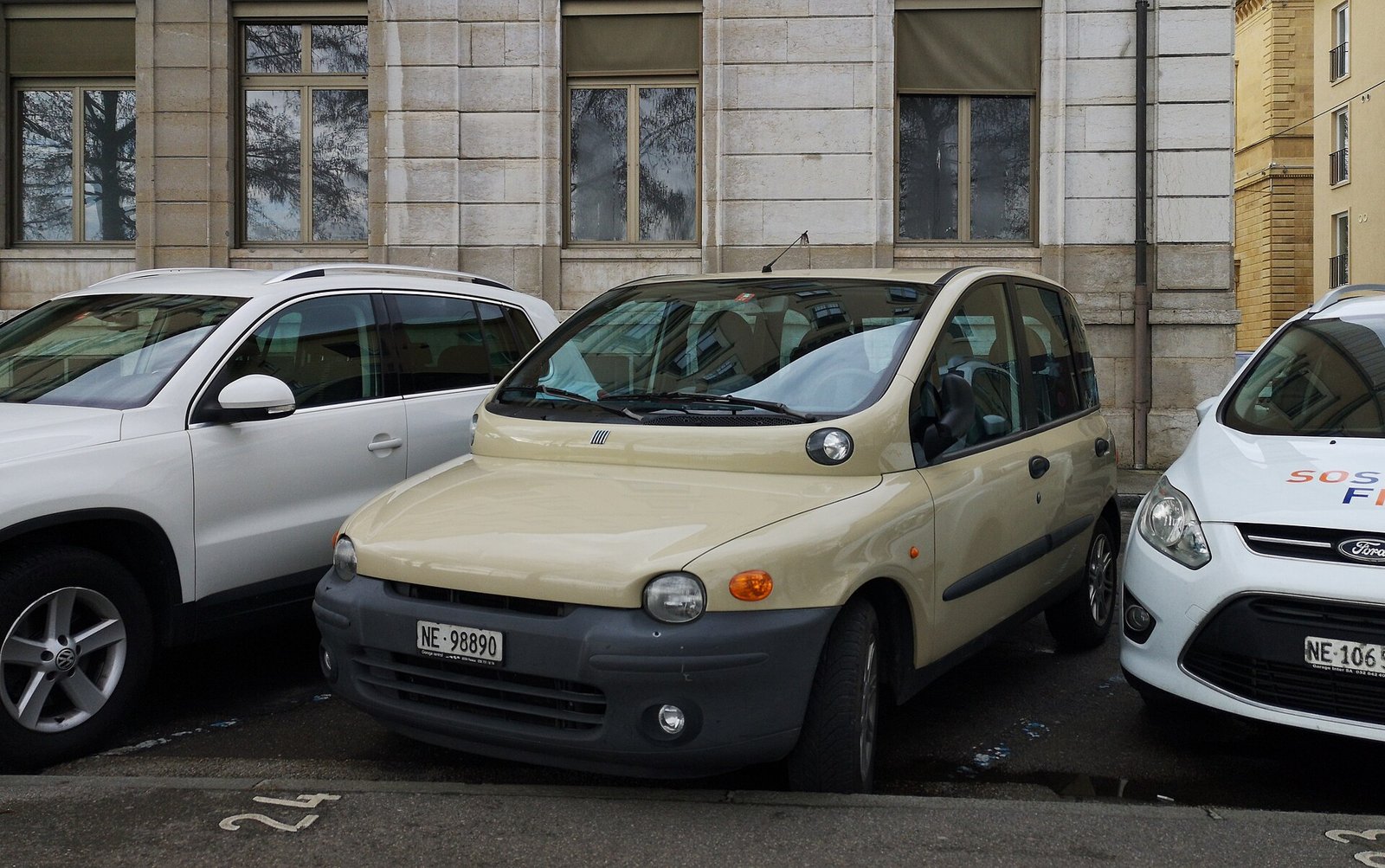
Americans never got the Fiat Multipla. The closest most of them came was New York, where the Museum of Modern Art put it in an exhibition about automotive design in 1999. Europe got the full experience: a six-seat minivan with two rows of three seats, a strange step under the windshield that made it look like it had a second face, and a reputation as the ugliest car ever sold. British newspapers put it at or near the top of every ugly-car list.
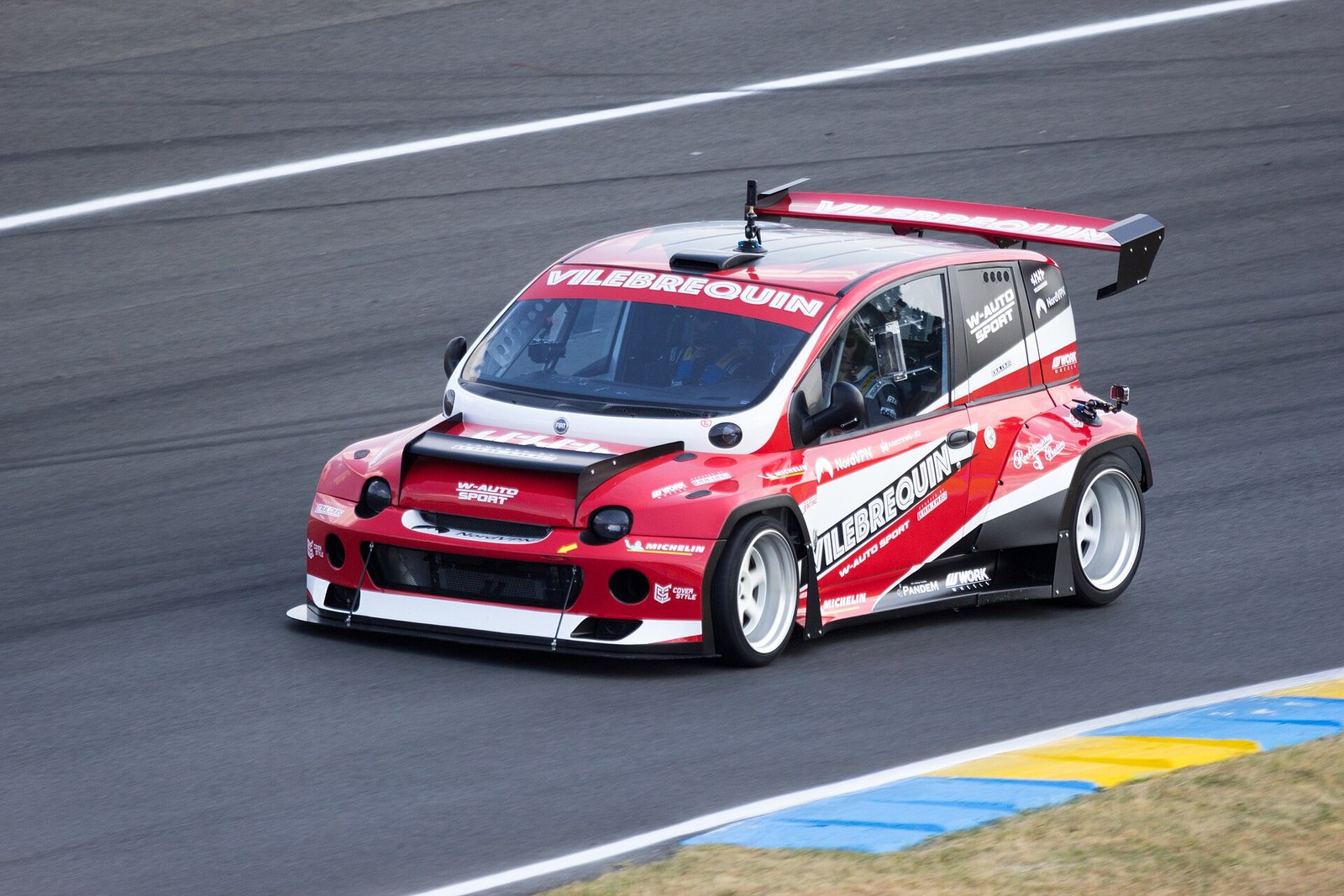
So when two French YouTubers decided to drop a Corvette Z06 drivetrain under one, tune the supercharged LT4 to 1,294 PS, which is about 1,276 hp, and take it to Le Mans, it was the most European possible way to honor an American V8. The result is the 1000Tipla, and it went faster on the Mulsanne Straight than the camera car chasing it.
A Joke That Raised a Million Euros
Vilebrequin is one of France’s biggest car channels on YouTube, run by Sylvain Lévy and Pierre Chabrier. The name means crankshaft. In September 2020 they launched a crowdfunding campaign on KissKissBankBank, the French equivalent of Kickstarter, with a ridiculous pitch: buy a Multipla and give it 1,000 horsepower. The target was €50,000.
They raised €1,096,111 from about 19,000 backers. A joke video turned into a build with a supercar budget and nineteen thousand people waiting to see whether two YouTubers could deliver.
Why It Needed a Corvette
The Multipla was never designed for power. It rode on a stretched version of Fiat’s Bravo/Brava platform, with a semi-spaceframe body, and its strongest engine, a 1.9-liter turbodiesel, made around 120 hp. Asking that chassis to handle ten times as much was never going to work.
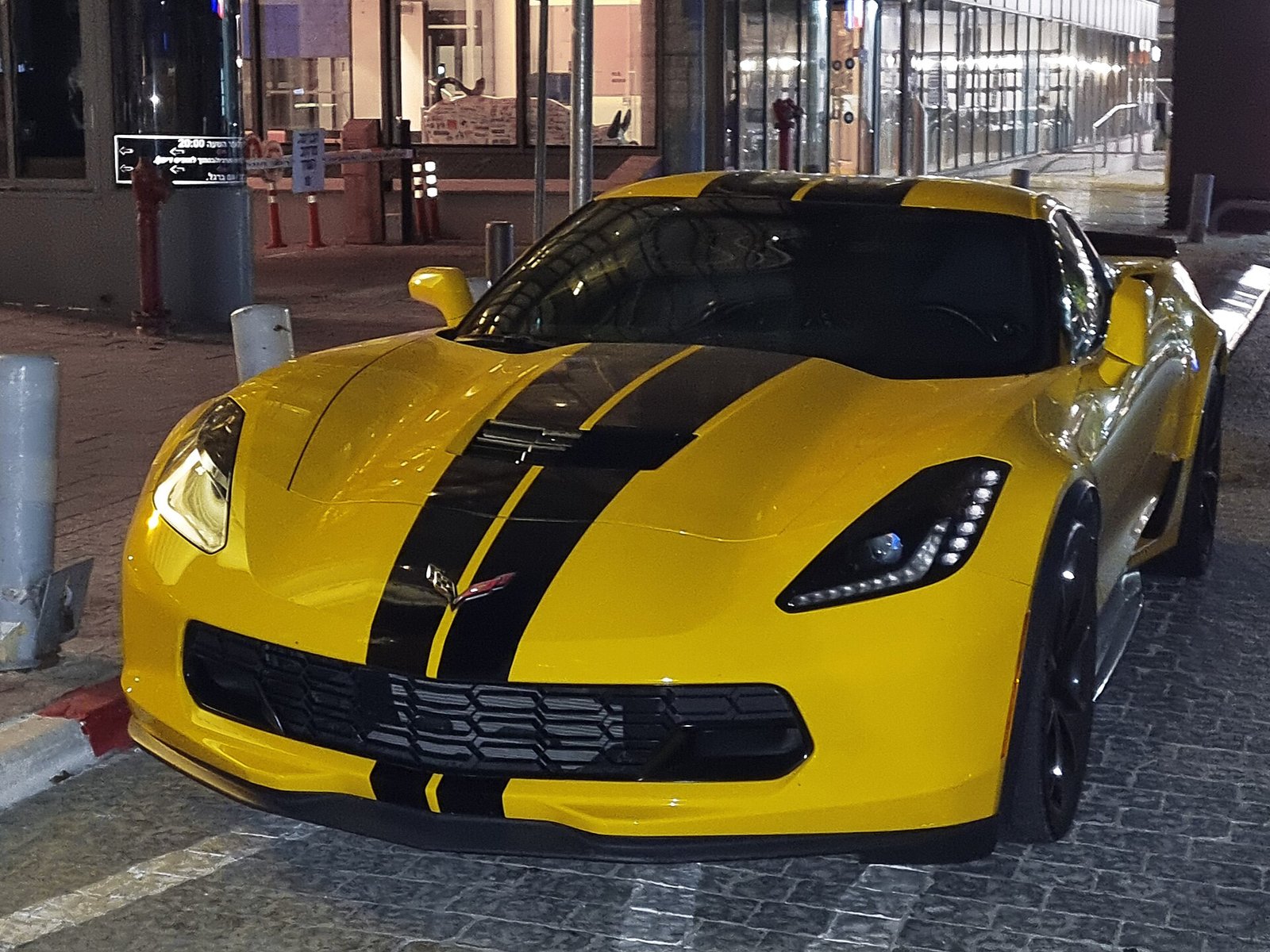
The answer came in a shipping container from the United States: a wrecked Chevrolet Corvette C7 Z06. That meant the LT4, GM’s 6.2-liter supercharged small-block V8, rated at 650 hp and 650 lb-ft in American trim. The Corvette also donated its aluminum chassis, its eight-speed automatic and its rear-drive layout.
The plan was simple to say and hard to do: keep the Corvette underneath and fit the Multipla’s body on top. French shop W Auto Sport handled the engineering, adding tubular reinforcement, building new mounting points for the body and replacing the suspension with adjustable racing coilovers. What came out wasn’t a Multipla or a Corvette. It was a third thing wearing one car’s face and the other’s guts.
The Most American Answer Possible
In the United States, there’s a running joke that the answer to any project is an LS swap. GM’s small-block V8 family, from the LS engines of the late 1990s to the current LT generation, has ended up in everything from Miatas to old BMWs to Toyota pickups, because it’s compact for a V8, light, cheap to find in junkyards and responds well to tuning. A pushrod V8 with two valves per cylinder sounds old-fashioned on paper, but it packages small and makes huge torque. That’s exactly why it fits in places where a modern quad-cam V8 wouldn’t.
Vilebrequin took the idea further than most American builders would. They didn’t just swap the engine; they swapped the whole car underneath. The Multipla effectively became a Corvette with a minivan shell, which solved the hardest problem in any big-power swap: what the chassis, brakes, cooling and transmission do once the engine works. The Corvette already had answers for all of that, engineered by GM for a car that ran at Le Mans in GT racing.
There’s an irony here that French fans enjoyed. The Corvette is America’s sports car, and in Europe it has long been seen as a muscle car with a big engine and not much finesse. Two Frenchmen used it to rescue the most mocked Italian car of its generation, and the combination worked well enough to embarrass a Porsche on the most famous straight in endurance racing.
It also explains the scale of the build. A wrecked Z06 is far cheaper than a new one, and in the American market salvage cars are easy to buy and export. Shipping one across the Atlantic, stripping it and rebuilding it under a Fiat body took more than two years and most of the crowdfunding money, but the result was a car with a proven chassis rather than a one-off frame built from scratch.
Turning an LT4 Into a 1,276-HP Engine
The LT4 is already a serious engine: aluminum block, a 1.7-liter Eaton supercharger, direct injection and variable valve timing. W Auto Sport went through the internals with a new crankshaft (fitting, given the channel’s name), new injectors, a modified supercharger for more boost and a bespoke calibration.
On the dyno, it went past the target. The car had to be partly disassembled to fit on the rollers, and the repeated runs damaged the dyno itself. The final figures were 1,294 PS and 1,581 Nm, about 1,166 lb-ft of torque. That’s more than a Ferrari 812 Superfast (800 PS) or a Lamborghini Aventador SVJ (770 PS) by a wide margin. A top speed of 381 km/h, about 237 mph, was mentioned from those tests, but it has never been confirmed on a track, so treat it as unverified.
Japanese Aero on an Italian Face
If the hardware was American, the look came from Japan. Vilebrequin asked Kei Miura, founder of Rocket Bunny and the man behind widebody kits for the Toyota 86, Nissan 370Z and BMW E36, to design one for a Multipla. It was probably not on his career bucket list.
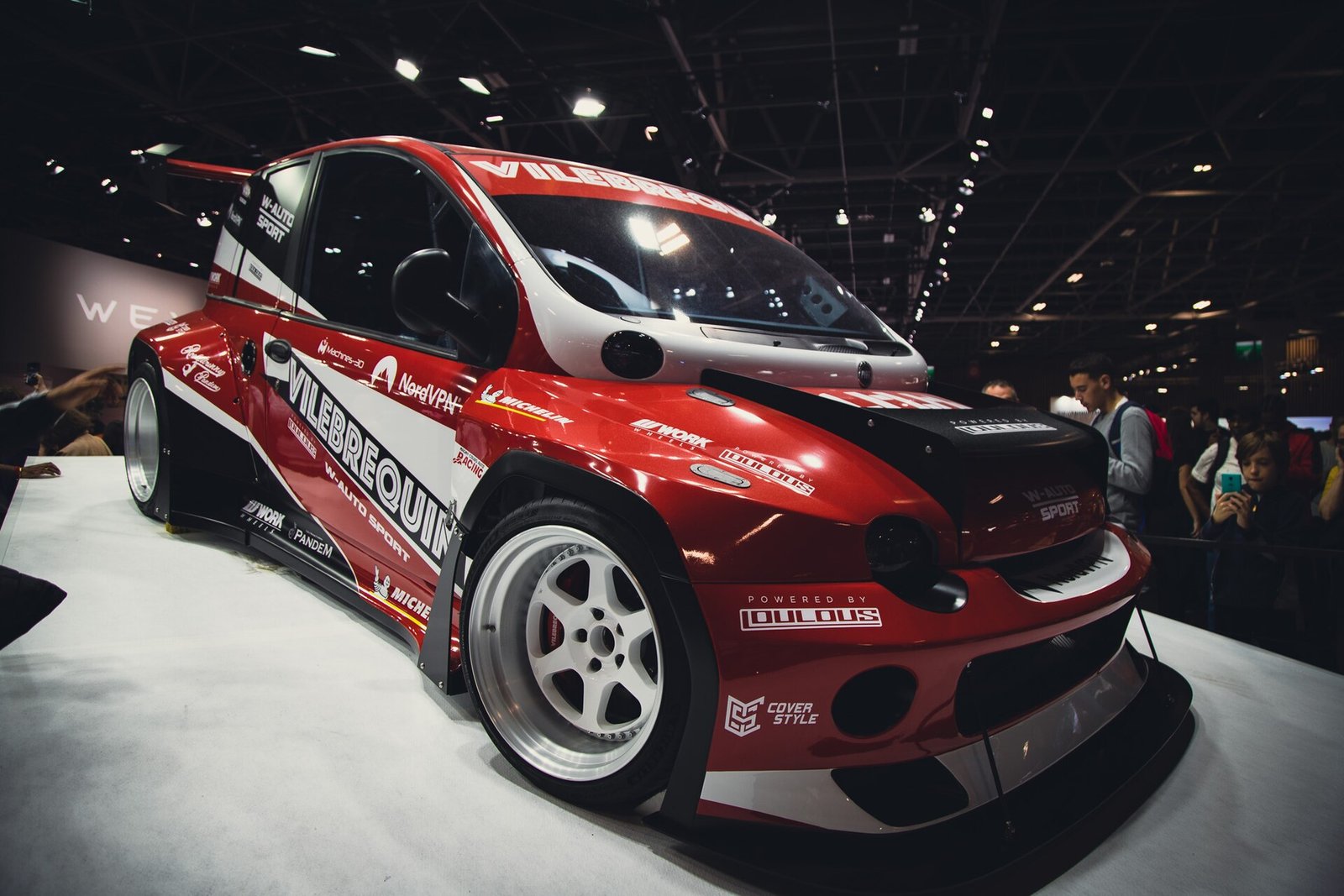
The custom kit turned a school-run minivan into something that looks like it escaped from a time-attack paddock: huge fender flares, working vents and a rear wing from another planet. The wheels are custom Work rims made for the project, wrapped in Michelin Pilot Sport 4S tires in specific sizes, with Michelin as the main sponsor. The exhaust exits through four central pipes and was measured at 129 decibels, louder than a rock concert and far above what many tracks allow on ordinary track days. Backers even voted on the livery: an early blue-and-yellow scheme was dropped for red, white and black after the community complained.
Le Mans, June 2023
The 1000Tipla was first shown to the public at the Paris Motor Show in October 2022, where former Ferrari team boss Jean Todt stopped by to see it. Its first run on a circuit came on June 4, 2023, at Magny-Cours, during an event called the Merguez Tuning Show, named after a French grilled sausage.
Three days later it was on the Circuit de la Sarthe for the centenary edition of the 24 Hours of Le Mans, running demonstration laps on the same tarmac as the Porsche 917, the Ford GT40 and the Audi R18. The camera car was a Porsche 997 Turbo modified to GT2 RS specification, roughly 750 hp, carrying about €70,000 of filming equipment. It was supposed to lead and shoot the Multipla. The Multipla pulled away from it immediately.
Sylvain drove the first four laps and Pierre the next four. On the Mulsanne, which the French call the Hunaudières, they saw 280 km/h in sixth gear. What scared them wasn’t the speed but the instability: the car was heavy for its torsional stiffness and moved around worryingly at high speed. Pierre finished his laps with a gearbox issue and a cockpit getting hotter by the minute. After eight laps, about 100 km, the passenger window was coming loose and the 80-liter tank was empty. The best speed recorded was 292.6 km/h, almost 182 mph.
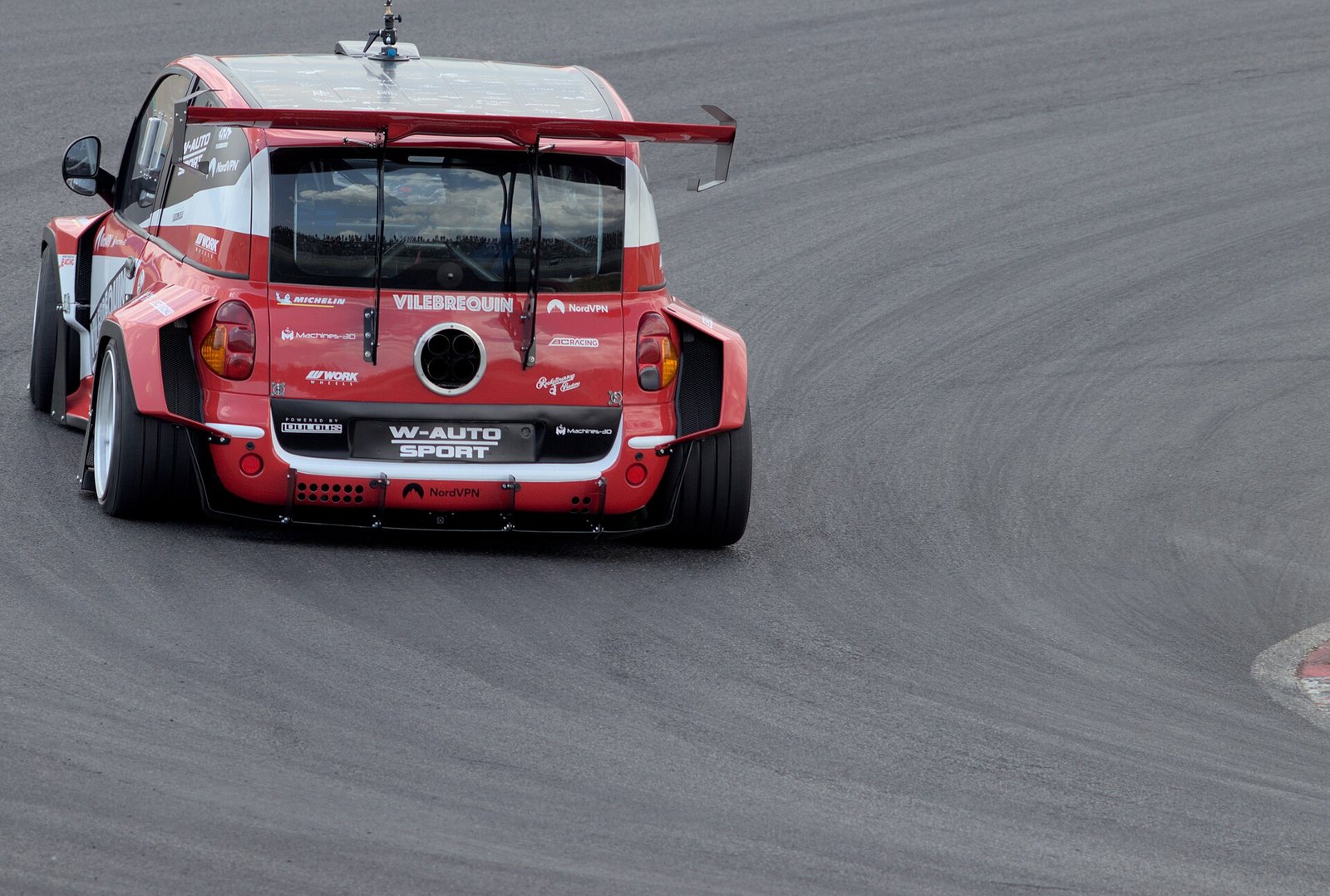
A Fiat Multipla, at 182 mph, at Le Mans. With a body shaped like a phone booth, on a chassis never meant to carry it, driven by two YouTubers who admitted the car scared them.
Still Running in 2025
The car didn’t retire. In October 2025 it was the official pace car at GP Explorer 3, the YouTuber race event created by French creator Squeezie on the Bugatti circuit at Le Mans. Sylvain, who won the first GP Explorer as a driver, took Pierre Fillon, president of the ACO, the club that runs the 24 Hours, for a ride. The head of the most prestigious endurance race in the world, riding shotgun in a 1,294-PS Multipla.
The Espace F1 Comparison
Every story about the 1000Tipla mentions the Renault Espace F1 of 1994, another European minivan turned into a weapon. Renault and Matra built it around a Williams Formula 1 chassis with a 3.5-liter V10 of about 820 hp under an Espace body, as a demonstration of what the company’s F1 program could do.
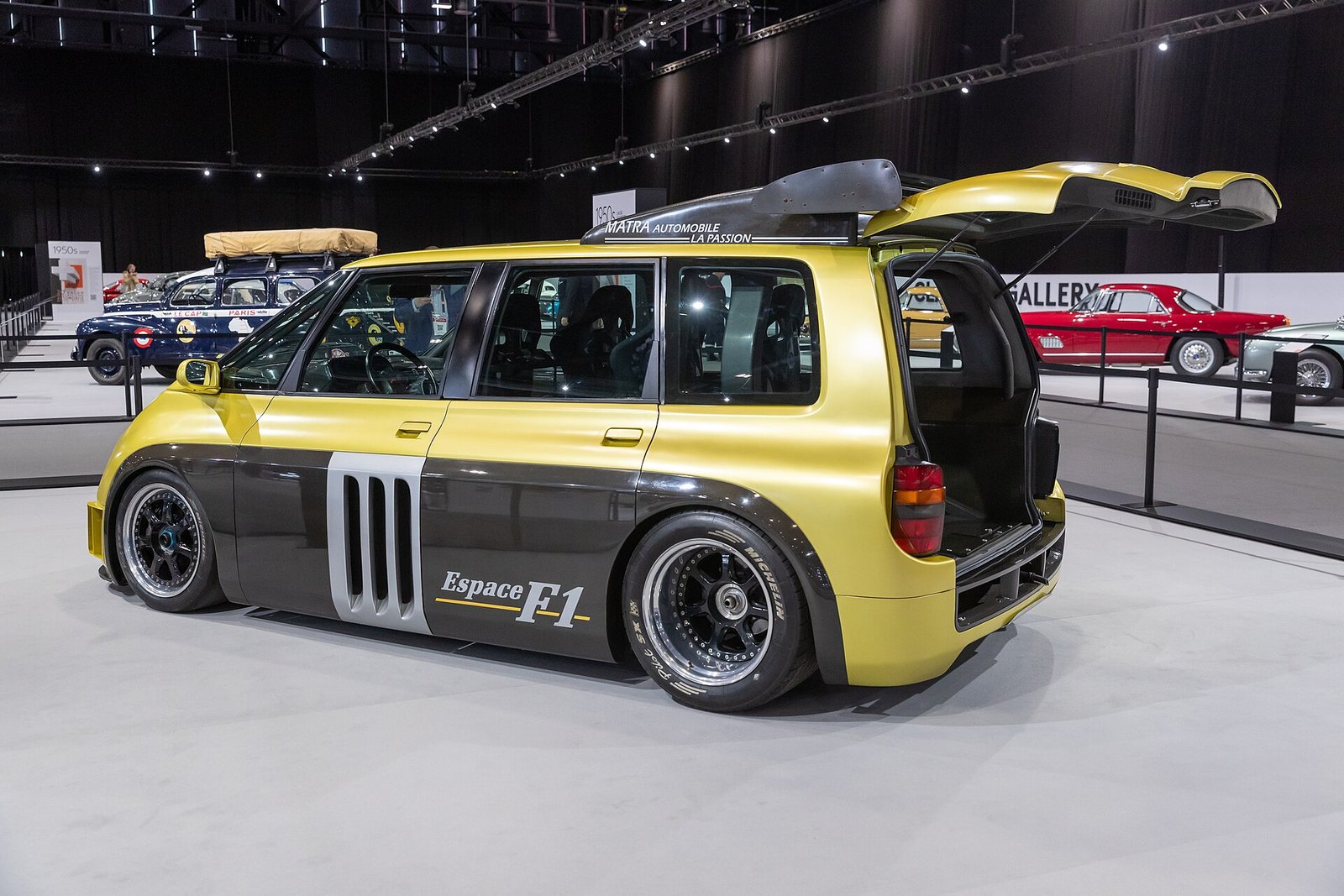
The difference is how you use them. The Espace F1 needed a crew of technicians to fire up; it was an F1 car in a costume. The 1000Tipla can be started by one person and it has Apple CarPlay. Within the limits of a car that measures 129 dB and empties 80 liters in 100 km, it works as a car. It also wasn’t paid for by a manufacturer’s marketing budget, but by thousands of fans who wanted to see a joke taken seriously.
The Original Multipla Deserved Better
At NEC we respect the donor car, so it’s worth remembering what the Multipla actually was. Launched in 1998 and designed by Roberto Giolito, it was shorter than a three-door Bravo but wider than many luxury sedans, which allowed three proper seats in each of its two rows. Top Gear named it Car of the Year in 2000 and its magazine voted it family car of the year several years running. MoMA in New York showed it as an example of design. Fiat even offered a Blupower version designed to run on compressed natural gas.
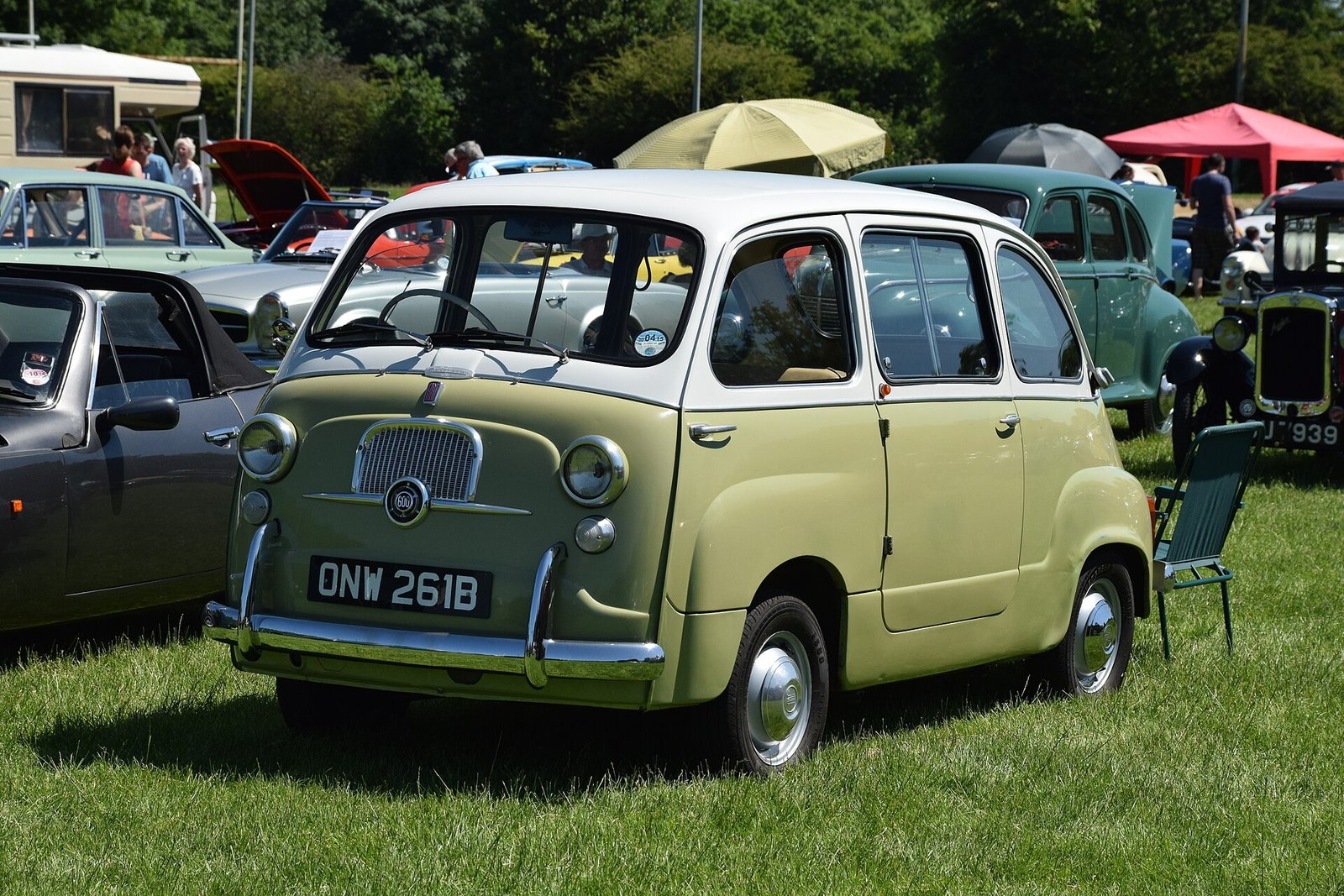
The name itself goes back further, to the 1956 Fiat 600 Multipla, a tiny rear-engined six-seater that was one of the first modern minivans. Spain had its own version, the SEAT 600 Múltiple, based on that Fiat and presented in Barcelona, at a time when the SEAT 600 was putting Spain on wheels. Fiat has never been afraid of making unusual cars on purpose, as the Fiat Coupé designed by Ohio-born Chris Bangle proved in the 1990s.
By the Numbers
- Body: first-generation Fiat Multipla (type 186) with a custom Rocket Bunny widebody.
- Chassis and drivetrain: wrecked Corvette C7 Z06, aluminum frame with tubular reinforcement, eight-speed automatic, rear-wheel drive.
- Engine: GM LT4 6.2-liter supercharged V8, 650 hp stock, 1,294 PS (about 1,276 hp) and 1,581 Nm (about 1,166 lb-ft) as built.
- Weight: about 1,400 kg, roughly 3,090 pounds. Exhaust noise: 129 dB.
- Best recorded speed: 292.6 km/h (about 182 mph) at Le Mans, June 2023.
- Funding: €1,096,111 from about 19,000 backers.
Check you’re still alive.
Photos: 1000Tipla, Kevin Decherf (CC BY-SA 2.0), WikiGenesis (CC BY-SA 4.0) and mickael LE ROUZIC (CC BY 2.0); Corvette Z06, בר (CC BY-SA 3.0); Multipla, crash71100 (CC0); Espace F1, Matti Blume (CC BY-SA 4.0); 600 Multipla, Andrew Riley (CC BY-SA 4.0). Via Wikimedia Commons.