
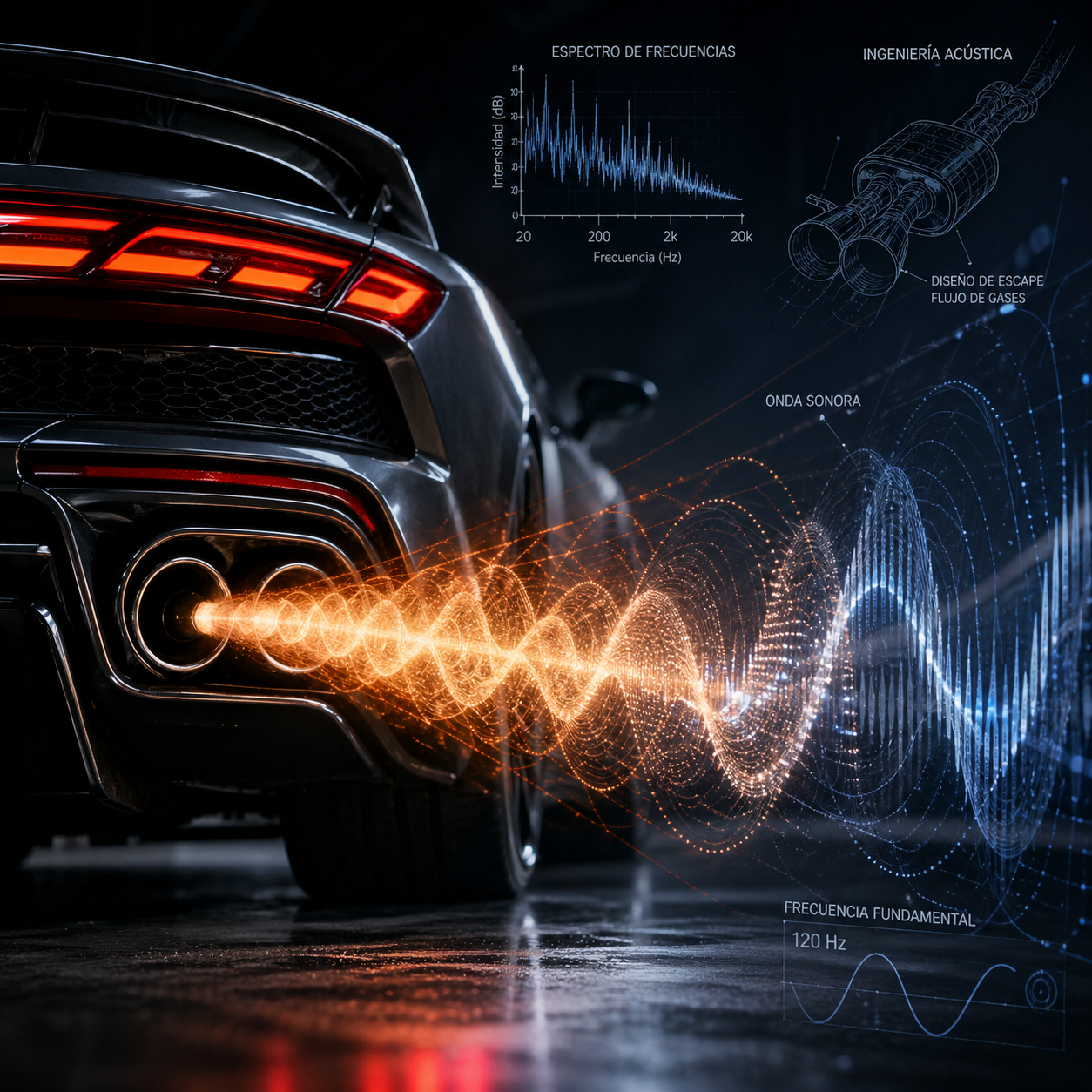
THE INVISIBLE SYMPHONY
The engineers who decide how your car sounds (and how it makes you feel)
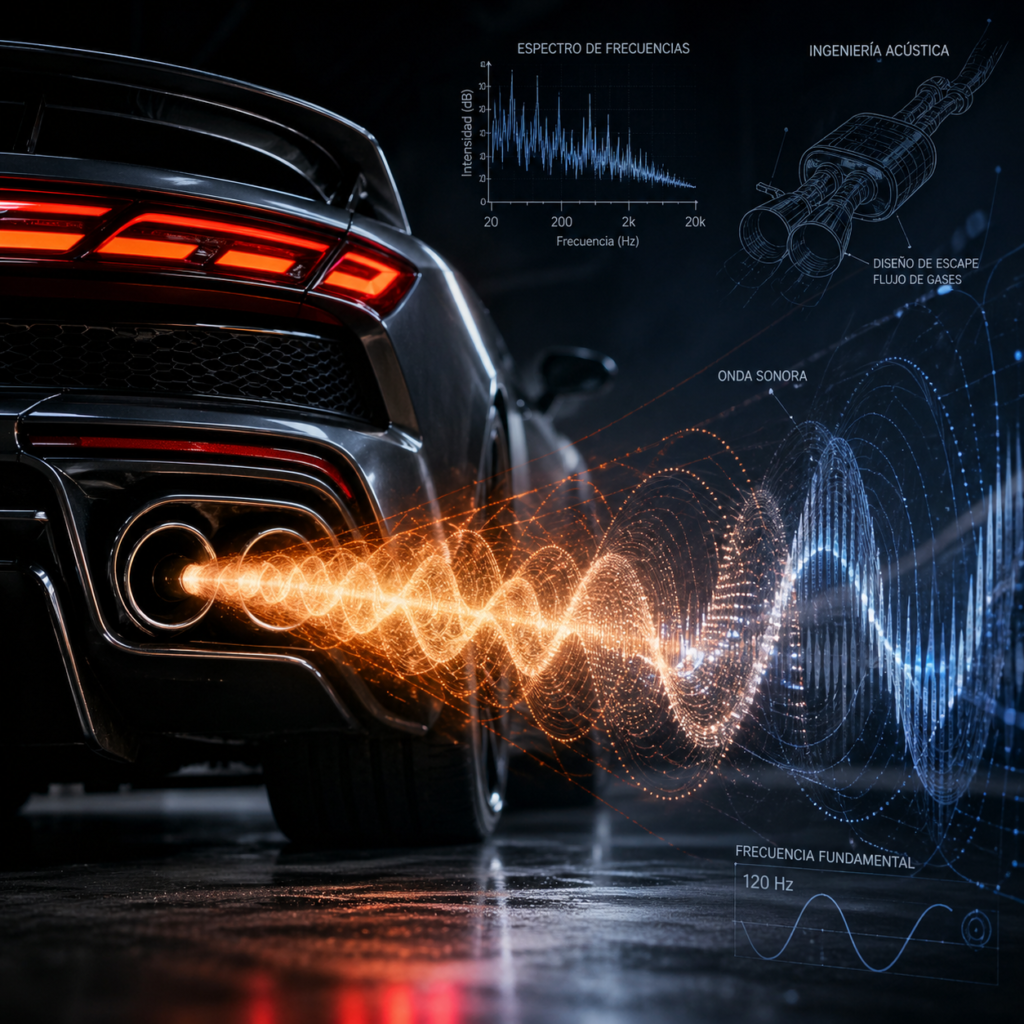
Close your eyes for a second. Think about the last time you shut a car door at a dealership. That firm, deep thud followed by a precise click that told you “this is well built.” That sound that made you feel solidity, safety, money well spent.
It’s a lie.
Not entirely, but mostly. That sound is manufactured. Engineered. Every brand employs engineers whose sole purpose is to achieve that exact thud, using specific combinations of foam, acoustic dampeners, and latch mechanisms calibrated to the millimetre. Without all that work, closing a car door would sound like what it actually is: two sheets of pressed metal colliding. Something like slamming a school locker. Not confidence-inspiring. Not inspiring at all.
Ford admitted it openly: the sound of the door is their first opportunity to make buyers feel quality. Mercedes has Tobias Beitz, an engineer whose literal job title is “manager of sound quality and design,” whose entire career revolves around making sure every door on every model sounds exactly the way the brand needs it to sound. Jonathan Berger, a professor at Stanford University, ran an experiment with his students: he played them the closing sound of eight different car doors and asked them to rank them from cheapest to most expensive. Every single one associated the deep, short thud with an understated after-sound with the most premium door.
You do this every time you get into a car. You do it without thinking. And someone decided exactly what you were going to feel.
Welcome to psychoacoustics. The science of how your brain interprets sound and what emotions it attaches to each one. And welcome to NVH engineering — Noise, Vibration, Harshness — the most invisible, least understood, and most powerful discipline in the entire car industry.
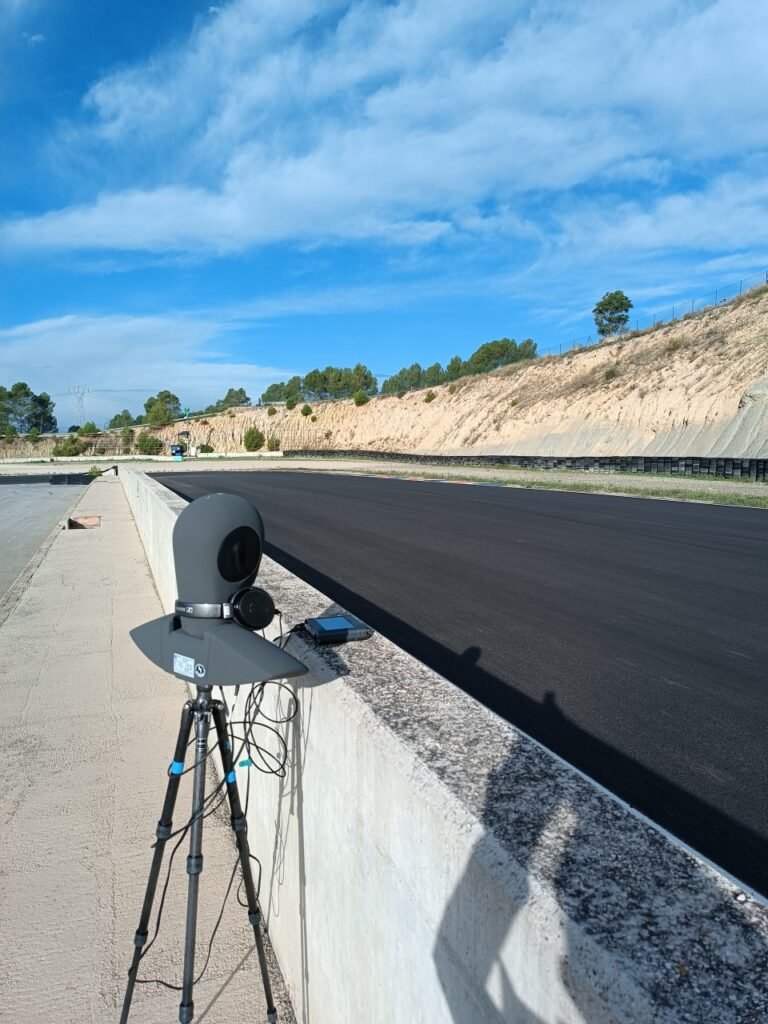
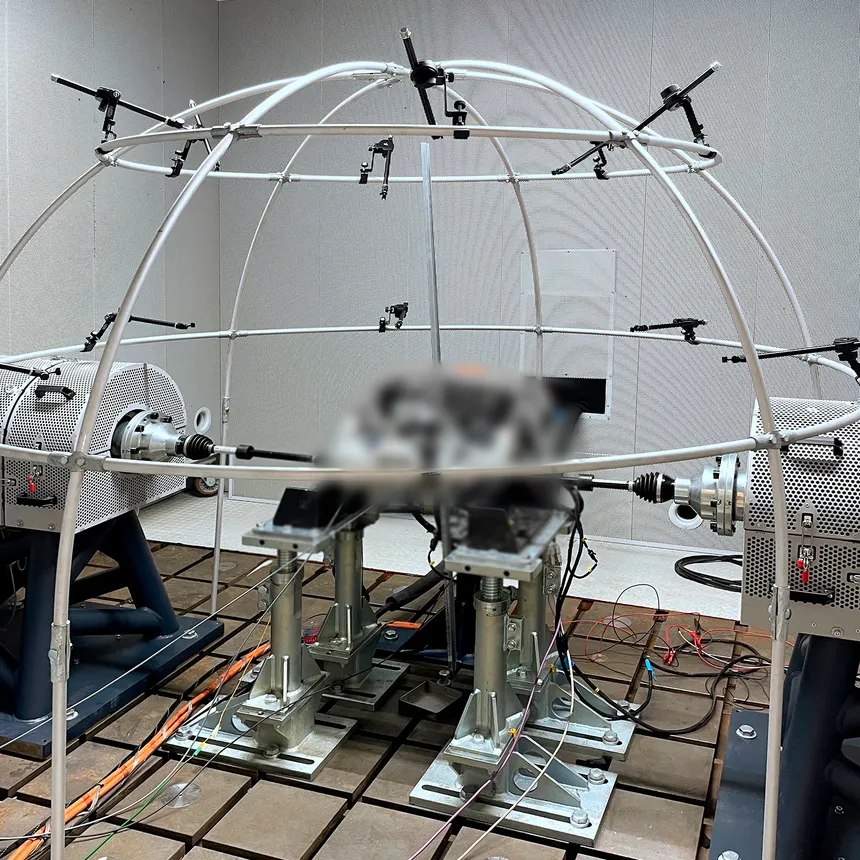
Andrea Andolina is an NVH engineer specialising in hybrid vehicles. Italian, from Monza. He has worked on the acoustic development of supercars and GTs at two of the most important British car manufacturers in the world. When you ask him what he does, he sums it up with a clarity that catches you off guard: “NVH is what you perceive through your ears, your touch, and your body. We work so that a person can enjoy their car according to their preferences.”
Sounds simple. It isn’t.
Behind that sentence lies a universe of frequencies, harmonics, transmission paths, sound-absorbing materials, subjective listening panels, and psychoacoustic metrics that most people don’t even know exist. Noise in a car is measured across a range of 20 to 20,000 Hz. Vibrations sit between 0.5 and 1,000 Hz. Harshness — the perceived roughness — is the coupling between the two. Each of those elements can make a car feel like a masterpiece or a tin can. And every single one is designed.
In an NVH engineer’s daily work, one of the fundamental methods is Transfer Path Analysis — TPA. It’s the tool that maps how noise and vibration travel from their source to your ears. Andrea explains it with an example anyone can recognise: “Think about steering wheel vibration at high speed. The source might be a misaligned wheel. The vibrations travel through the suspension and steering system. And they reach your hands, even your feet. It’s about identifying where the problem comes from, how it travels, and how it reaches you, so you can reduce it.”
Source, path, receiver. Three words that define an entire career.

But here’s where everything changes: the NVH engineer doesn’t just eliminate noise. They design it. Choose it. Compose it. Every car brand has what engineers call a sonic DNA — a unique acoustic character that lets you tell one car from another with your eyes closed. That’s not chance. It’s the result of a process that starts before the first prototype is ever built.
Andrea defines it this way: “That DNA is the distinctive character of each brand. A McLaren V8 sounds different from a Ferrari or an Aston Martin.” It’s not a matter of taste. It’s engineering applied from the moment a company decides to launch a new product. Engineers define what they call vehicle positioning — where that car sits relative to the competition and relative to the brand’s own lineup. Acoustic benchmarks are established. Targets are set for sound content (the quality of what you hear) and sound levels (the quantity of noise). And every component is worked on, from the engine intake to the exhaust exit, to achieve an acoustic signature that’s recognisable, coherent, and emotionally precise.
Think about that. Research by CSM International found that nearly 40% of luxury vehicle buyers could identify car brands solely by the startup sound and driving mode transitions. Not by the design. Not by the badge. By the sound. That doesn’t happen by accident.
And this is where the NVH engineer’s job becomes something almost philosophical. Because in a high-performance sports car, it’s not enough to remove everything that annoys. You have to preserve everything that thrills. And those two things — comfort and emotion — live in permanent tension.
Andrea uses two cars to explain it, and the comparison is perfect: “In NVH we can distinguish between refinement and engagement. They’re almost opposites if you compare a McLaren Senna with an Aston Martin DBX.”
Think about that. The Senna is an extreme machine, a track weapon with a number plate. Everything about it is designed to maximise the connection between driver and car. “In a Senna you can forgive a certain vibration in the steering wheel,” Andrea explains, “because at high revs you’re looking precisely to feel the engine and the machine.” The DBX, on the other hand, is a GT. A car built to cross continents. There, you filter more, isolate more, take care of comfort without surrendering sporting character.
But isolation has a price. Always. Every sound-absorbing material, every dampener, every active solution adds weight. And in an extreme car built for performance, every gram matters. That’s the invisible war between the NVH engineer and the lightweight engineer. One wants silence. The other wants grams. And the car you drive is the result of that negotiation.
Now let’s get to the topic that burns in forums, dealerships, and garages around the world. Artificial sound.
Many modern cars — and we’re not just talking about EVs — amplify or modify engine sound through the cabin speakers. They’re called symposers (physical devices that channel intake noise into the cabin) or ENE — Engine Noise Enhancement (electronic amplification of engine sound). Some manufacturers’ current models have ENE permanently activated, with no option to turn it off. Some owners consider it a betrayal of mechanical authenticity.
I asked Andrea what he thinks. His answer was the kind you don’t forget: “You’re talking to someone who likes real sound.”
He went further: “I remember a boss, during a testing event, saying that sound is the first sensation you perceive from a car, and that it should always have a technical origin.”
Read that sentence twice. Sound should always have a technical origin. Not a speaker. Not software. An engine, an intake, an exhaust, a turbo, a wastegate. Something real producing something real.
Andrea gives two examples that nail it: the McLaren P1, whose sonic signature comes from the intake sound and the wastegate — something mechanical, something that exists — and the Ferrari Enzo, whose V12 speaks for itself without anyone needing to put a microphone in front of it.
But the world has changed. Emissions regulations are tightening relentlessly. Exhausts sound less and less. And to recover some of that lost character, some manufacturers turn to artificial sound. The most extreme example is the Hyundai Ioniq 5 N, an electric car that simulates gear changes and combustion engine sound through its speakers. All fabricated. All digital.
Andrea is clear: “I’d prefer the magic of engines to be maintained with less restrictive regulations, and for electric cars to be accepted for what they are, without trying to make them sound like a combustion car.”
There’s your debate. And it has no easy answer. Because in the end, as he himself acknowledges, “it all depends on how marketing wants to position the car and the type of buyer it’s aimed at.” The engineer designs. Marketing decides. And you, the one paying, receive the result of that negotiation without ever knowing it took place.
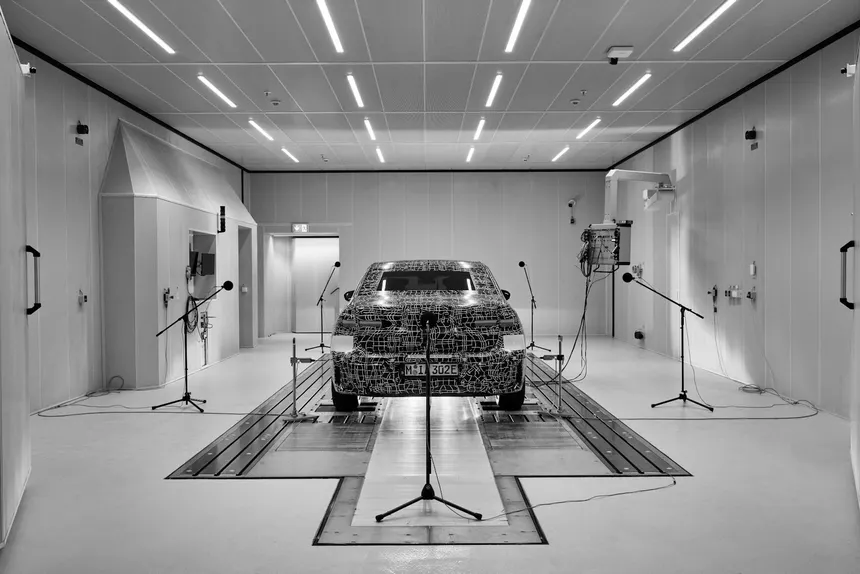
And then there are hybrids. The territory where Andrea has specialised, and where NVH engineering reaches its highest level of complexity.
A hybrid car isn’t a car with two engines. It’s a car with two acoustic personalities that have to coexist without you ever noticing the seam. There’s a combustion engine that roars, vibrates, breathes. And there’s an electric motor that hums at very high frequencies, silent as a scalpel. When the car switches from one to the other — and it does so constantly, dozens of times in every journey — there’s an acoustic discontinuity that your brain registers immediately. If the transition is harsh, the car feels schizophrenic. If it’s too smooth, you lose the sense of what’s happening.
The challenges, according to Andrea, are enormous. In electric mode, the engine’s silence exposes noises and creaks that combustion used to mask — what engineers call low frequency noise masking. Suddenly you hear the body structure working, interior plastics rubbing, tyre noise against the road. Everything the combustion engine used to cover up is now there, naked.
On top of that, electric motors generate their own noise: high-frequency whine, inverter harmonics, electromagnetic vibrations that didn’t exist in a conventional powertrain. And when we’re talking about hybrid supercars producing over 800 horsepower, the challenge multiplies, because in brutal accelerations it’s difficult to convey clear sensations to the driver in such a short time.
The transition between modes — that moment when the combustion engine fires up or shuts down and the electric motor takes or relinquishes control — is a joint effort between powertrain and NVH departments. “The transition has to be smooth,” Andrea says, “but at the same time it has to tell the driver which mode they’re in.” The car can’t lie to you, but it can’t scare you either.
And at the end of this entire road, there’s absolute silence. The pure electric car.
European AVAS regulation — Acoustic Vehicle Alerting System — under UNECE Regulation No. 138, requires all electric and hybrid vehicles to emit a continuous sound of at least 56 decibels at speeds below 20 km/h. The reason is as simple as it is vital: to protect pedestrians and visually impaired people who cannot hear a car approaching that, by nature, makes no noise.
But the regulation doesn’t specify what sound. Only how much. And that has opened an enormous door.
BMW hired Hans Zimmer — the composer behind Interstellar, Inception, Gladiator, The Dark Knight — to design the sound of their electric vehicles. Rolls-Royce went the opposite direction: they removed some of the acoustic insulation from the Phantom because total silence was disorienting for passengers. Too much silence can be just as uncomfortable as too much noise.
Every brand is creating its own acoustic signature for cars that, from the factory, are mute. It’s a completely new field. A blank canvas. And the question floating in the air is unavoidable: can the designed sound of an EV ever become as iconic as the roar of a V12?
Andrea doesn’t hide behind corporate language: “I don’t think it can ever be as iconic as the roar of a combustion engine, but I’m convinced it should characterise each brand, like an acoustic signature.”
That’s the key. It’s not about imitating what was. It’s about building what will be. And the engineer who designs that signature — the note that identifies an electric car as clearly as the howl of a V10 identifies a Lamborghini — will have changed automotive history forever.
There’s something Andrea said near the end of our conversation that stayed with me. I asked if there was a specific car sound that had marked him personally. His answer was that of someone born inside mechanical music.
“I’m from Monza. Since I was a child, I’ve been surrounded by the sound of F1 cars, at night and during track sessions during the day.”
Imagine that. Being a kid and falling asleep to the echo of a Formula 1 V10 bouncing through the trees of the Autodromo Nazionale di Monza. Growing up with that soundtrack. And then dedicating your professional life to understanding why certain sounds make the hair on the back of your neck stand up and others leave you cold.
Throughout his career, Andrea has been able to deconstruct those sensations and turn them into data: “I’ve been able to recognise and analyse different sonic signatures, like the Ferrari Enzo in its classic configuration, Ducati with its desmodromic system, and the McLaren P1 with its characteristic wastegate sound.”
Three machines. Three unmistakable acoustic signatures. And an engineer who understands them with the same clarity a musician understands a score.
The last question I asked him was the hardest: if he could tell any car enthusiast one thing about his work that they don’t know and should — what would it be?
His answer tells you everything you need to know about this profession: “What an NVH engineer considers ideal doesn’t always make it into the final product, because vehicle design involves many compromises. It’s methodical work, but with a clearly passionate dimension. In recent years, that emotional side has been constrained by increasingly strict regulations, but the engineer’s role is precisely to interpret those restrictions and find solutions that preserve driving pleasure.”
Read it again. The NVH engineer is the last defender of driving pleasure in a world that legislates against it. Every day they sit in front of a wall of restrictions — weight, emissions, noise, cost, marketing — and their job is to find the gap where emotion can slip through.
Next time you start a car, close your eyes for a second. Listen to the startup. Close the door. Lower the window. Hit the throttle. Everything you hear was decided by someone. Every frequency, every vibration, every silence. There’s an engineer behind every one of those sounds who will probably never receive your gratitude, because their work is designed so that you never know it exists.
Now you know.
Check you’re still alive.
1 thought on “THE INVISIBLE SYMPHONY”