

Leasing vs. Financing vs. Cars as Assets: The Truth Nobody Tells You (With Real Numbers)
Introduction: The Elephant in the Showroom
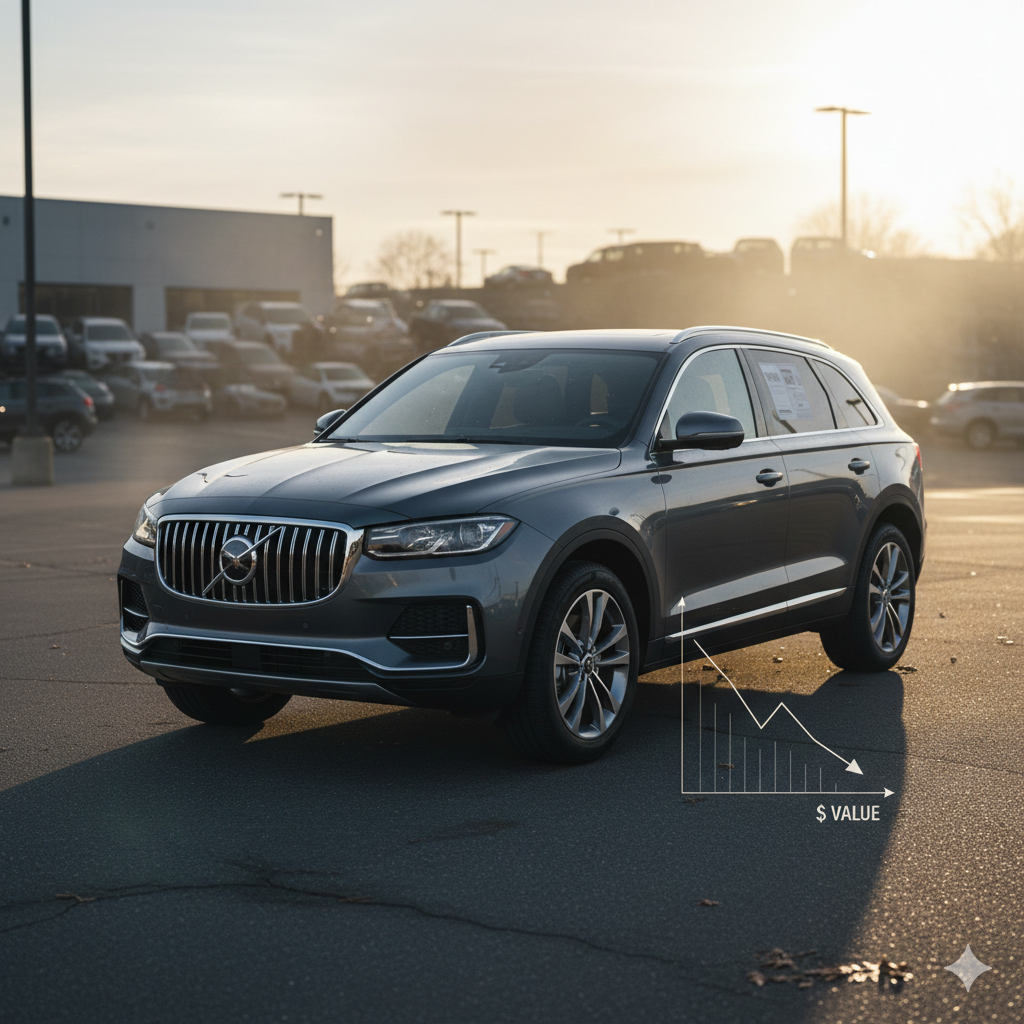
People don’t like talking about this because it forces them to face the bad decisions they’ve already made. When you’ve just signed a 72-month financing deal for a car that loses 20% of its value the second you drive it off the lot, the last thing you want to hear is that you could have done better.
But here we are. At Not Enough Cylinders, we aren’t here to tell you what you want to hear—we’re here to tell you what you need to know.
We’re going to break down the three ways to put a car in your driveway as an individual—not as a business, where tax laws change the game—and we’re going to do something revolutionary: use real numbers.
Option 1: Financing — The “I Own It” Illusion
This is the path most people take. The logic sounds solid: “I’d rather pay for something that will eventually be mine.” Fine. Let’s see what that actually means.
The Scenario You buy a new car for $40,000, financed for 6 years (72 months) with a real APR of 7-8% (ignore the “0.9%” ads—those come with strings most people never read).
5-Year Cost Breakdown:
- Total Payments (Principal + Interest): ~$48,000 – $50,000
- Full Coverage Insurance (5 years): ~$6,000 – $8,000
- Maintenance & Repairs: ~$3,500 – $5,000
- Tires (2 sets): ~$1,200 – $1,800
- Registration & Fees: ~$1,000
- Total Cash Out (5 years): Between $59,700 and $65,800
- Resale Value at Year 5: $16,000 – $20,000 (50-60% depreciation)
- Real Cost of Ownership: Between $40,000 and $49,000
And you call that “yours”? What you actually have is an asset that lost more than half its value while you paid the bank interest for the “privilege” of watching it depreciate. That is not an investment. It’s a liability on wheels.
Option 2: Leasing — Paying for Someone Else to Deal with the Headache
This is where people get divided. Those who do the math get it. Those blinded by the “but you don’t own it” mentality don’t.
The Scenario An equivalent car with a lease payment of $450/month, $0 down (sign and drive).
- Total Cost (5 years/60 months): $27,000
- Everything included: The car is always under warranty. No maintenance costs. No major repairs.
The Key: Zero Risk Engine light at Year 3? Not your problem. Major transmission failure? Not your problem. The car gets stolen? GAP insurance covers it; you just get a new one.
You just drive. Your payment is fixed, no matter what happens. The risk always belongs to the leasing company. For someone who just needs to get from Point A to Point B and values financial predictability, leasing is mathematically superior to financing in the vast majority of cases.
Option 3: Cars as Real Assets — The Game Very Few Understand
This is Not Enough Cylinders territory. There is a third way that most people don’t even contemplate: buying a car that actually works as an investment.
The Logic is Simple Instead of buying a new car that hemorrhages value from second one, you buy a car that appreciates. We’re talking about classics, “youngtimers,” limited editions, and iconic models that the market recognizes as rising assets.
Real-World Examples:
- BMW E30 325i: A decade ago, you could find them for $5,000. Today? Clean examples are pushing $20,000 – $25,000.
- Porsche 964: Sold for $45k in 2015. Today? It’s a $100k+ car all day long.
- Acura Integra Type R: These have tripled in value over the last few years.
These cars don’t lose money. They make it. They are real assets that you can actually enjoy, drive, and share. The catch? You need knowledge. You have to know the market, the history, and the mechanical state. Knowledge is the barrier to entry, and that’s exactly what protects the value.
The EV Trap: A Warning for Private Buyers

Financing an Electric Vehicle (EV) as a private individual is currently the worst financial move you can make. Here’s why:
- Brutal Depreciation: EVs depreciate faster than gas cars. Every new model brings more range and better tech, making last year’s EV feel like last year’s iPhone—still functional, but worth way less.
- Battery Uncertainty: The battery is 30-40% of the car’s value. Its degradation is inevitable, and out-of-warranty replacement can cost $10k to $20k. If you financed it, you own that risk.
- Unknown Residual Value: Nobody knows what a 2024 EV will be worth in 2030. Traditional valuation models don’t apply to rapidly evolving tech.
For a business, EVs make sense due to tax credits and depreciation write-offs. For a private individual financing one for 6 years? The math is merciless.
Conclusion: Which Group Are You In?
- The Financer: Paying more for higher risk to end up with a depreciated asset. This is the worst option, yet the most popular because “owning it” sounds good—even if the bank really owns it until that 72nd payment clears.
- The Leaser: Understands a car is a tool, not a status symbol. They pay for the usage, the bank takes the risk, and they keep their cash liquid. Smart.
- The Collector/Investor: Understands the real game. They know true luxury isn’t a new car with a plastic smell; it’s a classic with a story that’s worth more every time the sun sets.
Which one are you?
If this article made you think, share it with someone about to sign a 7-year car loan. You might just save them from a decision that will cost them five figures.