
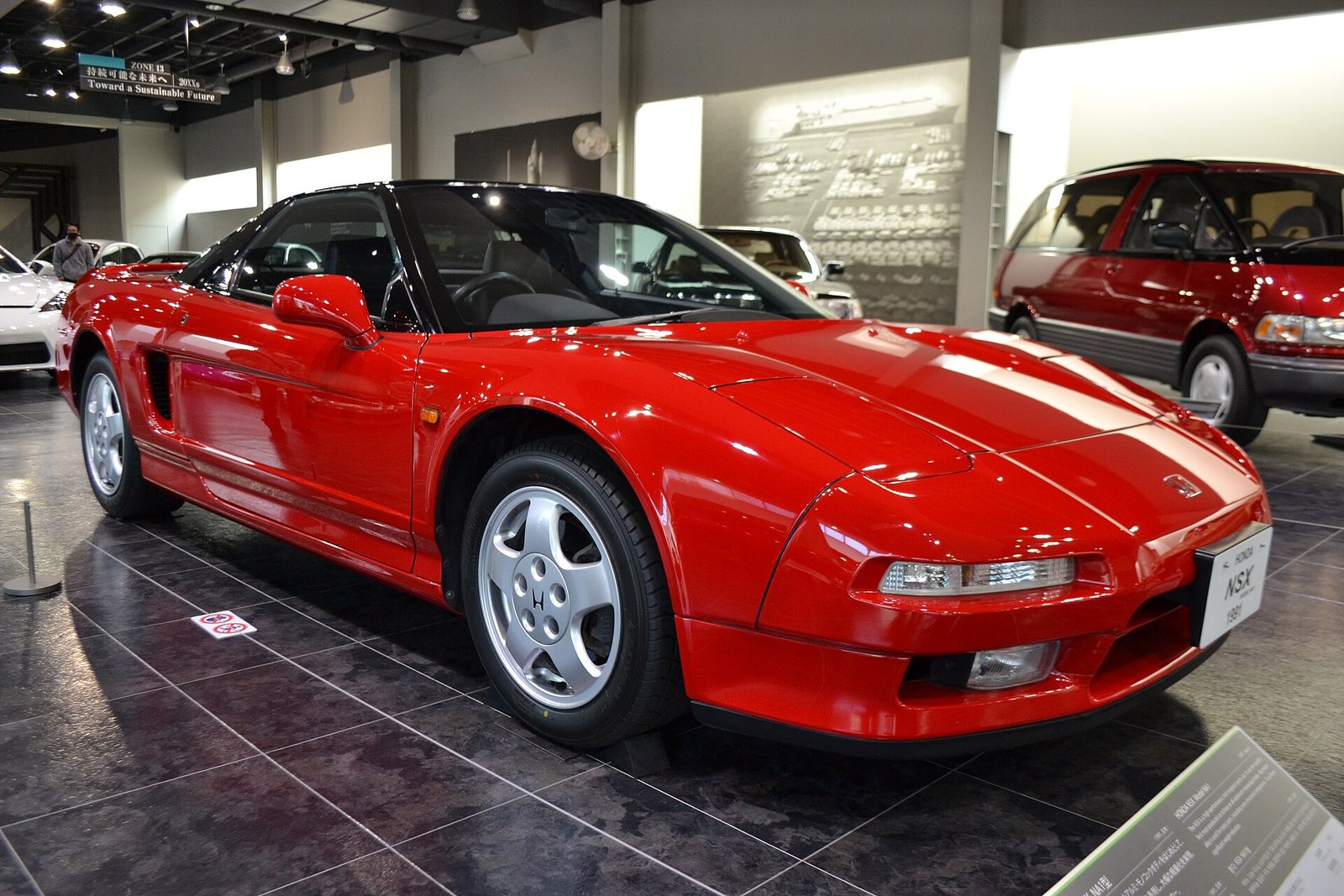
In 1991, about $60,000 bought you a mid-engined exotic with a V6 that revved past 8,000 rpm, titanium connecting rods, an all-aluminum body and chassis, and air conditioning that actually worked. It wore an Acura badge, came from a Honda dealer network that mostly sold Accords, and you could drive it to work every single day.
A Ferrari 348 cost a lot more, needed the engine out for major belt service, and liked to remind you who was in charge.
The Acura NSX, sold as the Honda NSX everywhere else, is the car that proved a supercar didn’t have to be fragile, temperamental or miserable to live with. It made Ferrari, Porsche and everybody else rethink what they were selling. And it was shaped, in part, by one sentence from Ayrton Senna.
Why Acura needed a halo
Context first. Honda launched Acura in the US in 1986, the first Japanese luxury brand here, ahead of Lexus and Infiniti. The Legend and Integra sold well, but a luxury brand needs a halo car, something that makes people walk into the showroom just to look.
At the same time, Honda was crushing Formula 1. In 1988, McLaren-Honda cars won fifteen of sixteen Grands Prix. Senna won his first world title, with teammate Alain Prost second. Honda was the engine company that had humiliated Ferrari on the track. The plan was to do the same thing on the road.
The target was specific. Back in 1984, Honda had commissioned Pininfarina, yes, Ferrari’s own design house, to build a concept called the HP-X, short for Honda Pininfarina eXperimental. The production car’s engineering benchmark was the Ferrari 328: match it or beat it on everything measurable, and sell it for considerably less. When Ferrari replaced the 328 with the 348 in 1989, Honda simply moved the target.
"A little fragile"
February 1989, Suzuka. Senna, fresh off that first championship, was in Japan with the team. Honda’s engineers showed him the prototype, then called NS-X, and asked him to drive it. His verdict stung: it felt "a little fragile." He also said he wasn’t sure he was the right person to judge a production car.
He didn’t need to be. At almost the same time, Honda development driver Motoharu Kurosawa was finding the same weakness at the Nürburgring, where a test mule was being reinforced piece by piece and the data sent back to Japan. About eight months after Suzuka, the production structure was more than 50 percent stiffer, with very little added weight.
That the work happened at the Nürburgring matters. The old Nordschleife, with its jumps, compressions and endless changes of camber, finds every weakness in a chassis. Today every carmaker goes there to set lap times for marketing. In 1989, sending a road car prototype there for months of development was far less common than it is now, and it’s one of the reasons the NSX drove the way it did. Senna’s comment gave the engineers the push. The Ring gave them the proof.
You may have seen the famous footage of Senna lapping Suzuka in an NSX wearing loafers and white socks. That clip comes from the early ’90s, with a finished car. It’s often mixed up with the 1989 test, but it isn’t the same moment. Senna did own NSXs himself; one 1991 car was imported by Honda’s Portuguese distributor and registered in March 1991, according to RM Sotheby’s documentation.
What made it special
Aluminum everything
The NSX was the first production car with an all-aluminum monocoque. For a mid-engined car, where every pound behind the seats affects how it handles, that mattered enormously. Ferrari didn’t move to an aluminum chassis until the 360 Modena in 1999, nearly a decade later.
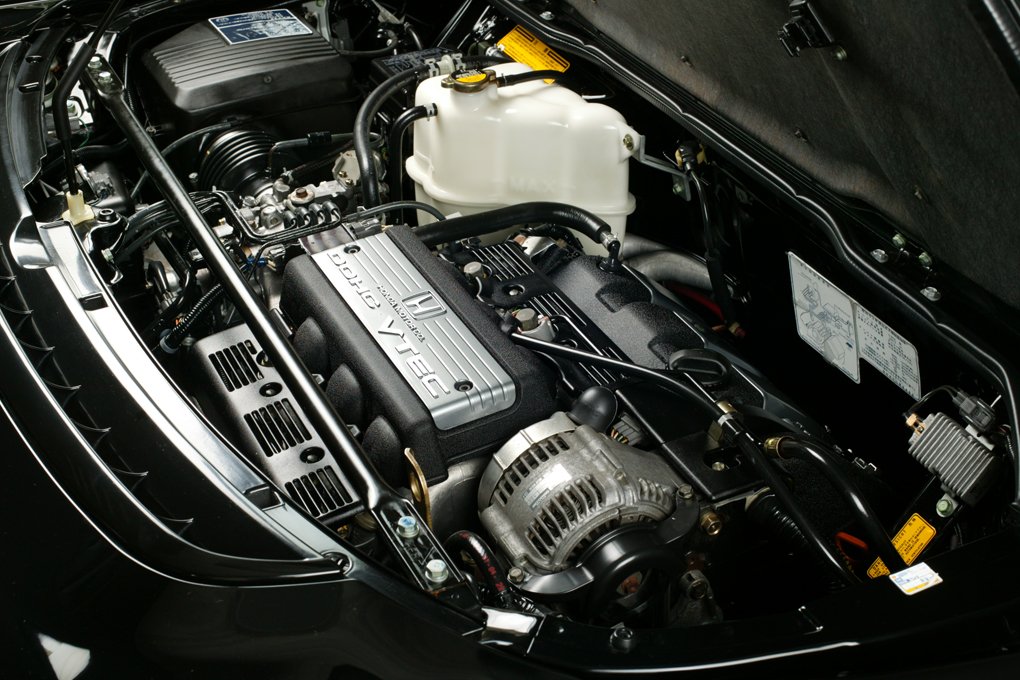
The C30A V6
The 3.0-liter C30A V6 made 270 hp in the US. Japanese-market cars were rated at 280 PS, the ceiling of the informal agreement among Japanese carmakers that capped advertised power for years. That "gentlemen’s agreement" held from the late ’80s until 2004, which is why the Supra, the Skyline GT-R, the RX-7 and the NSX all claimed the same 280 PS in their home market, whatever their engines actually made. It revved to 8,000 rpm and had titanium connecting rods, a first for a production car.
It also had VTEC, Honda’s variable valve timing. If you’ve never had it explained: the engine has two sets of cam profiles. At low revs, mild cams keep it smooth and economical. Above a set rpm, oil pressure pushes a pin that locks the valves onto a much more aggressive cam, opening them further and for longer. It’s like having two engines in one, and in an NSX you feel the switch in your spine.
A cockpit you could see out of
Honda said the cabin was inspired by the canopy of an F-16 fighter. The windshield sat far forward and the pillars were thin, so for once in a mid-engined exotic you could actually see the road and the cars around you. Combined with the air conditioning, the light clutch and the Honda reliability, it was the first supercar you could genuinely commute in.
The Gordon Murray story
Gordon Murray, the designer of the McLaren F1, drove the NSX in Japan in the late ’80s while planning his own car. His account has been quoted countless times: the moment he drove the "little" NSX, all the benchmark cars he had been using, Ferraris, Porsches, Lamborghinis, vanished from his mind. The F1 would have to be faster than the NSX, but the NSX’s ride and handling became the new target.
Murray also tried to get Honda to build a more powerful engine for the F1. Honda said no. The McLaren ended up with a BMW V12, but the benchmark for how it should feel on the road was Japanese.
NSX versus Ferrari 348
On paper, they were close:
- Engine: 3.0-liter VTEC V6 against a 3.4-liter V8.
- Power: 270 hp against roughly 300.
- Weight: similar, with the NSX around 1,370 kg, about 3,020 pounds.
- Price: the NSX for around $60,000 in the US; the Ferrari for a lot more.
Performance was in the same ballpark. Ownership wasn’t. The 348 earned a reputation for expensive, fiddly maintenance. The NSX earned one for running like a Civic. It’s not hard to find high-mileage NSXs still on their original engines. Try that with a 348.
How it grew up
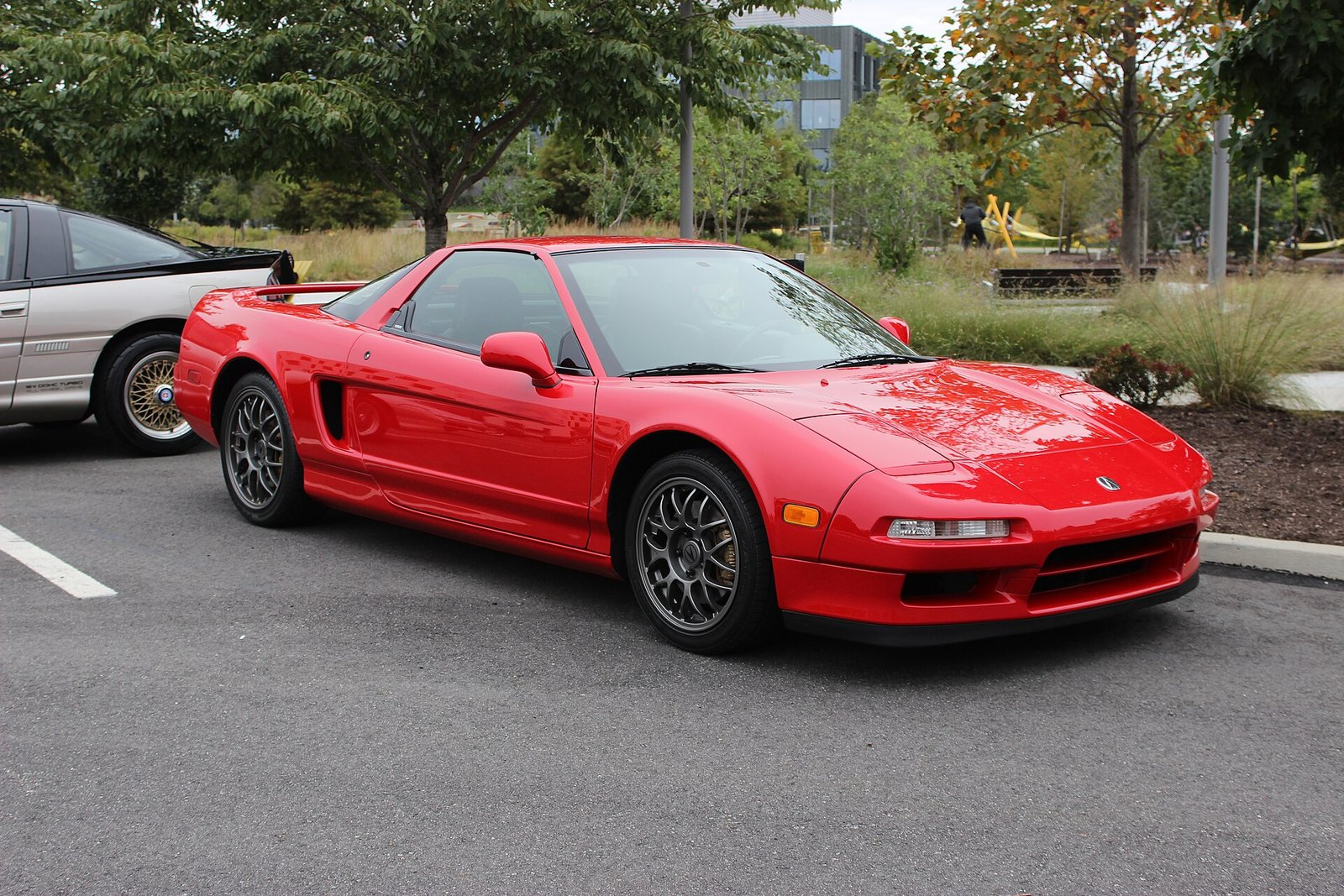
The NSX stayed in production for fifteen years, and it changed along the way. In 1995 came the NSX-T, with a removable targa roof. In 1997, American cars got a bigger 3.2-liter engine, rated at 290 hp, paired with a six-speed manual; automatic cars kept the 3.0. In 2002, the pop-up headlights gave way to fixed units, which purists still argue about. Underneath, the basic recipe never changed: aluminum, a high-revving V6 behind the seats, and a car you could use every day.
That long run was also its weakness. By the mid-2000s, an NSX costing around $90,000 with roughly 290 hp was up against cars with far more power for less money, and sales dried up. Production ended in 2005.
The second act, built in Ohio
When the NSX returned for 2017, it came home to America in a way the original never did. The second-generation car, a twin-turbo V6 hybrid with three electric motors and all-wheel drive, was built at Honda’s Performance Manufacturing Center in Marysville, Ohio. It was a technical tour de force and an expensive one, and it never quite captured the original’s magic. Honda ended it with the 2022 NSX Type S, a final limited run, most of them earmarked for the US.
The special ones
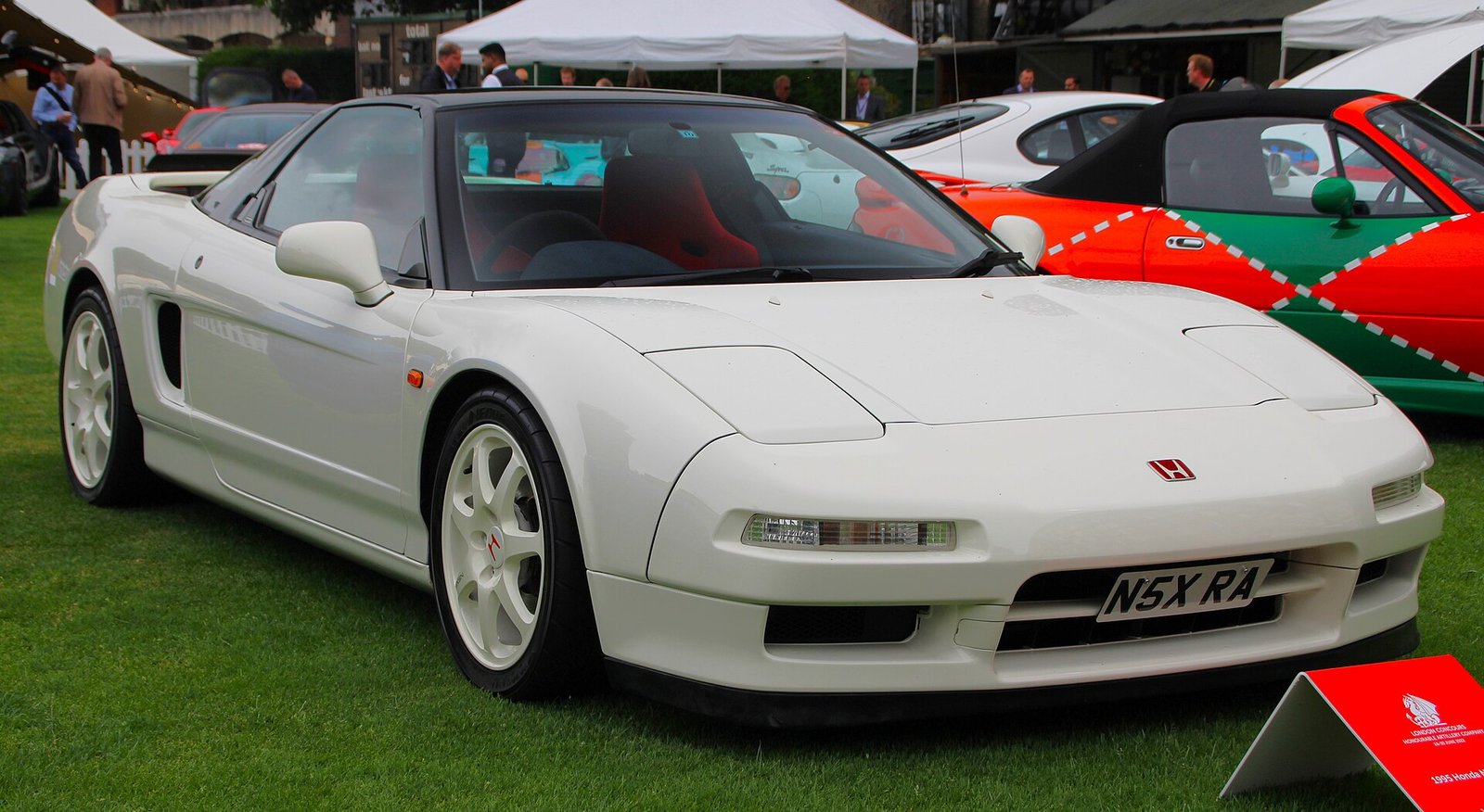
The NSX Type R of 1992 to 1995 was Japan-only: 483 cars, all in Championship White, with the air conditioning, stereo, much of the sound deadening and the spare tire removed, and lightweight Recaro seats added. It shed about 120 kg, down to around 1,230.
The NSX-R of 2002, again Japan-only, ran to 140 cars, with a 3.2-liter engine rated at 280 PS, a six-speed manual and a carbon-fiber hood. The NSX-R GT of 2005 was the rarest of all: five cars, built to homologate Honda’s Super GT racer.
America got its own special: the 1999 Alex Zanardi Edition, 51 cars in Formula Red, celebrating Zanardi’s back-to-back CART titles with Honda power. Zanardi, who lost both legs in his 2001 crash at the Lausitzring, kept one of them.
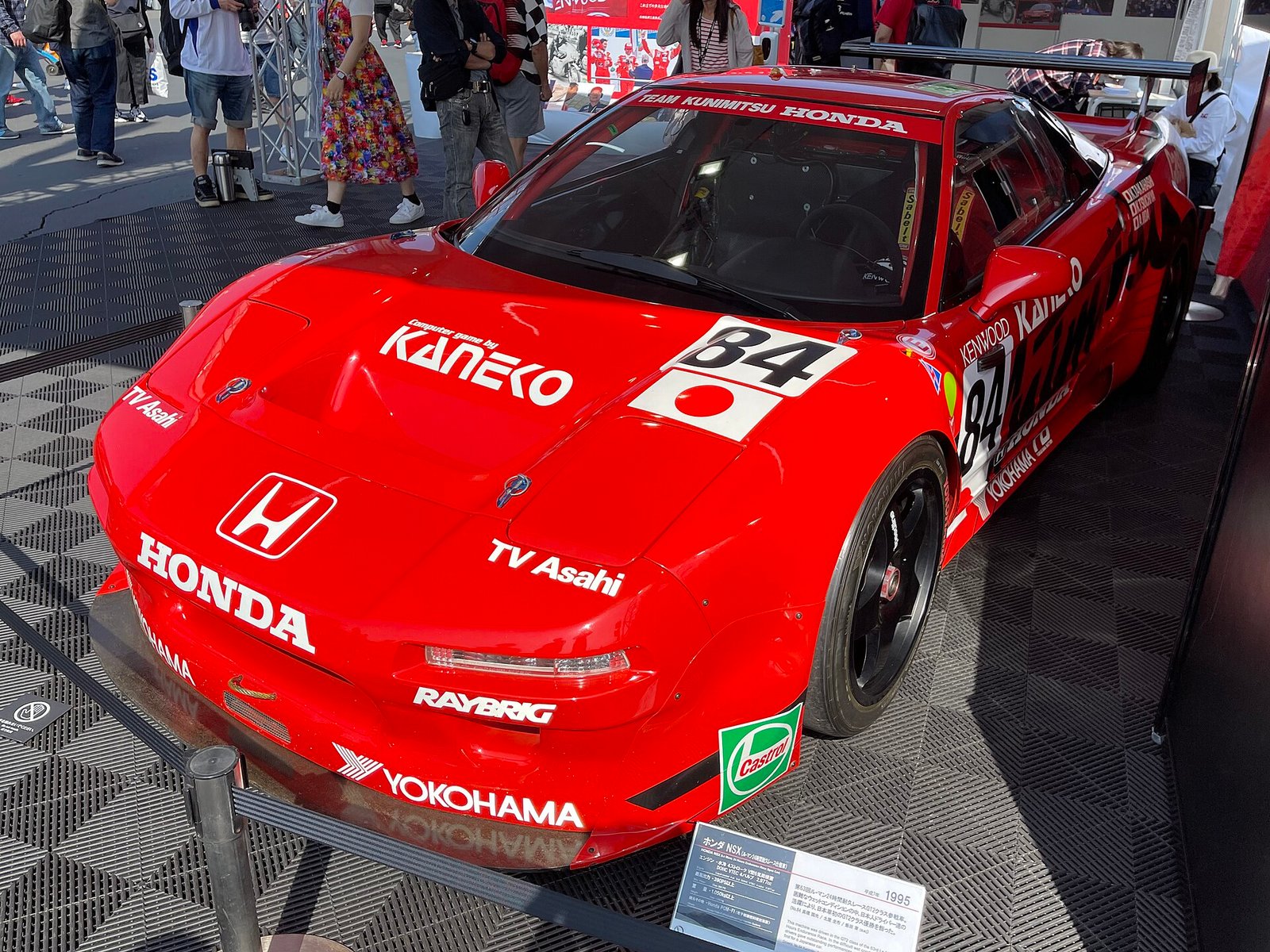
The NSX raced too. At Le Mans in 1995, an NSX driven by Kunimitsu Takahashi, Keiichi Tsuchiya and Akira Iida won the GT2 class.
A Spanish footnote
We write from Spain, where the NSX was almost a ghost. Of the 18,685 first-generation cars built from 1990 to 2005, about 1,500 went to Europe, and only 39 were sold through Honda’s official dealers in Spain, according to Spanish magazine Autofácil. A few more arrived through parallel imports. Its price, converted to today’s euros, was about €69,000. In America, where Acura had built a real dealer network, the NSX was a rare sight. In Spain, it was practically a rumor.
The car that woke up Ferrari
Enzo Ferrari died in 1988, before the NSX reached customers. But Maranello got the message. The F355 of 1994 arrived with far better build quality, ergonomics and reliability than the 348. Calling it a direct answer to the NSX is an interpretation, not an official statement, but the timing and the leap in quality speak for themselves. Murray put it bluntly: the NSX woke up not only Ferrari but Porsche, and pushed the whole supercar industry forward.
Japan noticed too. Years later, the Lexus LFA carried the same idea: prove that Japan could build the best supercar in the world on its own terms.
Why it still matters
There are faster Japanese cars, rarer ones, more powerful ones. None changed the rules like the NSX. It’s the car that proved Japan could beat Europe at its own game, the car Senna helped sharpen and the car the creator of the McLaren F1 used as his reference.
The market has caught on. For years, early NSXs were the bargain exotic, the car you bought when you wanted mid-engine drama without Italian repair bills. That window has been closing as the kids who grew up with posters of it, and with Gran Turismo, reach the age where they can write the check. Clean, original, low-mileage cars, and especially the rare Type R and Zanardi models, now trade at serious collector money.
It isn’t a "Japanese Ferrari" because it wanted to be a Ferrari. It’s a "Japanese Ferrari" because it forced Ferrari to become more like it.
Check you’re still alive.
Photos: 先従隗始 (CC0); Tennen-Gas (CC BY-SA 3.0); Jacob Frey 4A (CC BY 2.0); MrWalkr (CC BY-SA 4.0); Tokumeigakarinoaoshima (CC BY-SA 4.0). Via Wikimedia Commons.