
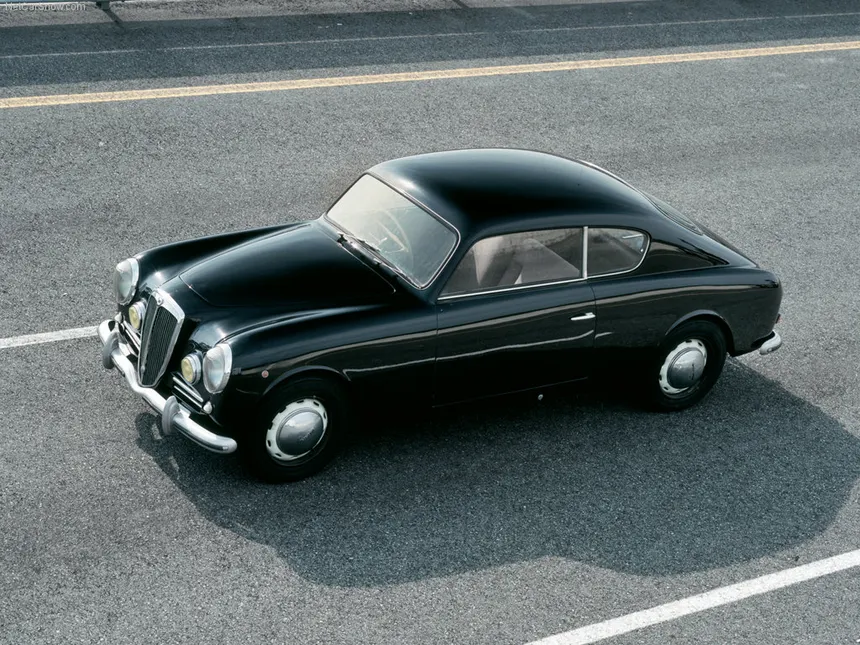
Lancia Aurelia B20 GT: the car that invented the modern Grand Tourer
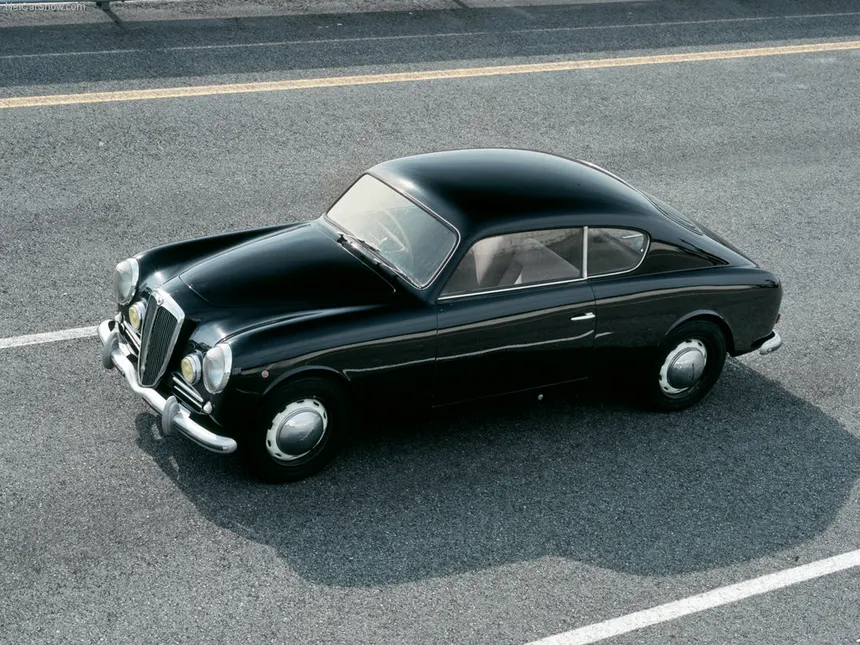
Here’s the question almost nobody answers correctly. What was the first modern Grand Tourer in history? The category currently occupied by the Aston Martin DB12, the Bentley Continental, the Ferrari Roma, the Maserati GranTurismo. The big, fast, elegant car that can cross Europe with two suitcases in the back and then turn up at a track day without embarrassing itself. Where does that whole genre come from?
The usual three answers and only one of them is right.
Answer one: Ferrari. The 250 GT of 1956. The most popular guess and the wrong one.
Answer two: Mercedes. The 300 SL Gullwing of 1954. Closer chronologically. Still not the answer.
Answer three, the correct one: the Lancia Aurelia B20 GT, unveiled at the Turin Salon in April 1951.
Three years before the Gullwing. Five years before the 250 GT. The Aurelia B20 GT isn’t just the first serious Italian Grand Tourer. It’s the car that defines what a GT is: V6 engine mounted longitudinally up front, rear transaxle for balanced weight distribution, 2+2 coupé bodywork, capable of running Le Mans the week after taking the family to the South of France. That template, that formula, that DNA, comes from a car most people under fifty have never seen on the road.
And to make it even better, the engine powering it was also the first V6 ever produced in a series-production car.
This is the story of the Aurelia B20 GT. The car that changed how Italian motoring was thought about. And the perfect bridge between the Vincenzo Lancia era and the Jano era. Without it, nothing that came afterwards at Lancia would quite make sense.
The context: 1937-1950, the lost years
To understand why the Aurelia matters so much, you have to understand where Lancia was coming from just before.
In February 1937 Vincenzo Lancia died of a heart attack. The company passed into the hands of his widow Adele Miglietti and his son Gianni, who was only twelve. Adele ran the business through a critical decade. The Second World War came and went. Allied bombing raids on Turin damaged parts of the factory. The immediate postwar reconstruction years saw Lancia, like every Italian manufacturer, having to rebuild from the ground up.
In 1947 a new engineer joined the technical direction of the company. Vittorio Jano. The man who at Alfa Romeo had designed the P2, winner of the first ever Grand Prix World Championship, the P3 that Nuvolari used to humiliate the Nazi state programmes at the Nürburgring, and half a dozen more racing thoroughbreds. Jano had been pushed out of Alfa Romeo in 1937 — the same year Vincenzo died. Historical coincidence. Ten years later, Adele and Gianni brought him back to Lancia.
Jano arrived as technical director. He took over a team that had been working on an ambitious project for years: the car that would replace the ageing Aprilia and Ardea. A car conceived from scratch for the postwar world. A car that would prove that Lancia, even without Vincenzo, could still be what it had always been: the most technically advanced manufacturer in Italy.
That project was named Aurelia. The first version was unveiled in March 1950, in B10 saloon trim, as a four-door berlina.
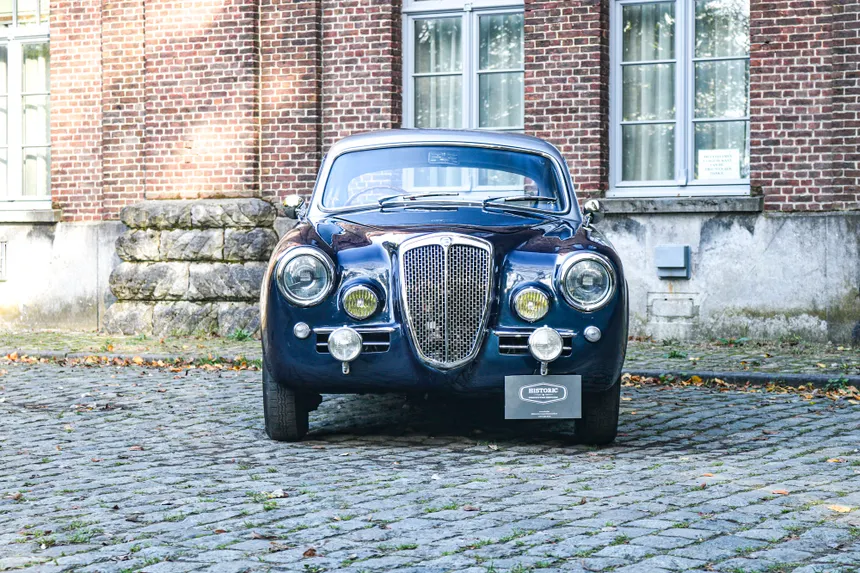
The engine: the first production V6 in history
Stop here for a second. This is important, and worth telling properly so the credit doesn’t get diluted.
The Aurelia’s V6 is one of the most significant engines in the history of the car. The dry fact is enough: it’s the first production V6 to reach the market commercially. There had been experiments before — prototype V6s in marine applications, in aircraft engines, in one-offs. But a road car you could buy at the dealership, with six cylinders arranged in a V, the first one was the Aurelia’s.
Who designed it? Here you have to be precise, because popular accounts tend to simplify. The Aurelia engine was developed under the technical direction of Vittorio Jano, but the engineer directly responsible for the calculation, development and refinement was Francesco De Virgilio. De Virgilio had been working at Lancia since 1943 under Jano, and had been turning over the idea of a V6 since the end of the war. A second engineer, Ettore Zaccone-Mina, also contributed to the development. Jano signed off on the overall direction, but the actual technical hand was De Virgilio’s.
This matters because when someone says “Jano designed the first V6”, they’re attributing credit that isn’t entirely his to claim. The fair way to put it is this: under Jano’s technical direction, Lancia’s engineering team, led by De Virgilio, developed the world’s first production V6. Shared attribution. As it should be.
What was so special about the engine itself? Three things.
One. The 60-degree angle between the two banks. De Virgilio tried several bank angles before settling on 60. And that decision is the one that has defined the V6 ever since. Sixty degrees is the angle at which a V6 generates the minimum inherent imbalance, where the first-order vibrations cancel almost perfectly. Today, essentially every performance V6 in the world runs 60 degrees. Mercedes, Audi, Toyota, Honda, BMW — all of them. That technical decision was made by De Virgilio on a drawing board in Turin around 1947.
Two. Construction entirely in aluminium, both block and heads. While the rest of European production engines were built from cast iron, the Aurelia came with a light-alloy unit. More expensive to manufacture. More complicated. But lighter, better cooled, technically superior. Lancia, true to the Vincenzo philosophy of “engineering first, business after”, went with aluminium despite the cost.
Three. Hemispherical combustion chambers. Another decision that in 1950 was almost exclusive to racing engines. Hemispherical chambers allow bigger valves and better cylinder filling. What Maserati or Ferrari did only on competition cars, Lancia put in a family saloon as standard.
Initial displacement: 1,991cc. Power: 56 horsepower in the B10 saloon, later scaled up to 75 and 80 in subsequent versions. The B20 GT started at 75bhp and grew to 118bhp in the most powerful versions with the 2,451cc engine.
The numbers aren’t huge. But the engine was very light, and mechanically smoother than anything else in its era.
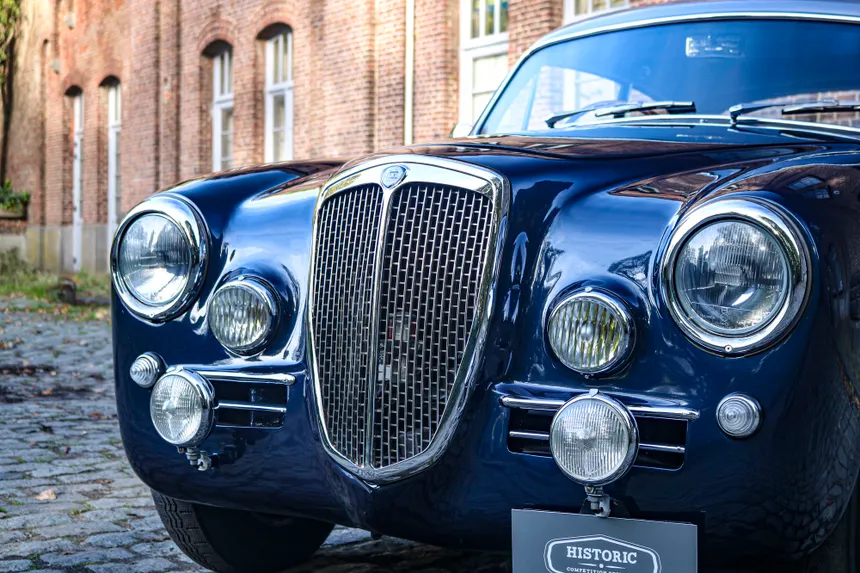
The B10 saloon: the dress rehearsal
The Aurelia arrived at the Turin Salon of March 1950 as a four-door saloon. Designation B10. In-house body design, elegant lines for the period, nothing particularly provocative on the surface.
The mechanical package, though, was from a different planet.
Monocoque construction — a direct inheritance of the Vincenzo philosophy, the same approach as the Lambda of 1922. Independent front suspension with Lancia’s signature sliding-pillar system. Independent rear suspension with semi-trailing arms — genuinely innovative in 1950, when most saloons still ran a live rear axle. Rear transaxle, meaning the gearbox integrated into the rear axle for better weight distribution. Drum brakes on all four wheels, with the rears mounted inboard beside the differential to reduce unsprung weight. Worm-and-sector steering.
And a detail almost nobody tells you about: the Aurelia was the first production car in the world to fit radial tyres as standard. Yes. Most people know the V6 fact. Almost nobody knows the radial-tyre one. But it’s verifiable. Ahead of Michelin’s own road cars, ahead of Pirelli’s mainstream lineup, ahead of Continental — the Aurelia was running radials when radials weren’t yet standard equipment.
The B10 saloon sold well by Lancia standards. But what really put the Aurelia name into automotive history came the following year.
1951: the B20 GT is born
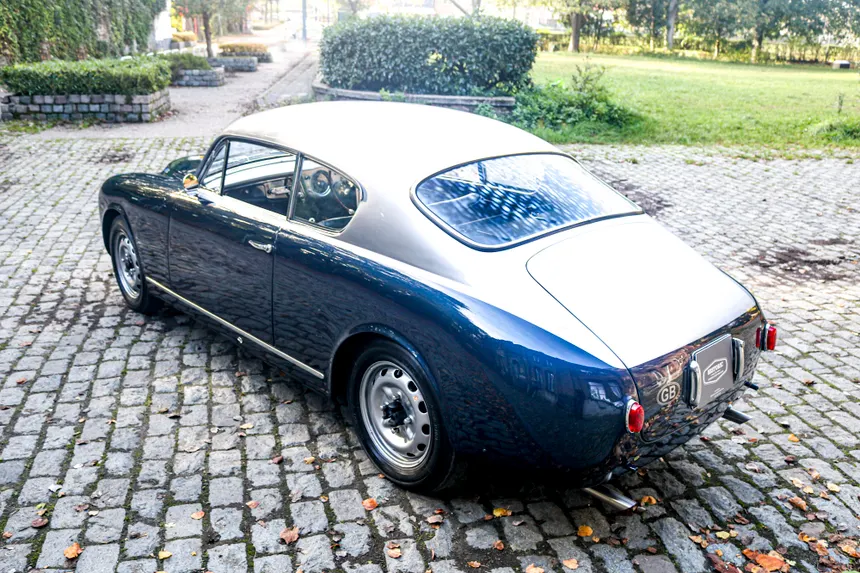
In the spring of 1951, Lancia introduced an Aurelia variant that changed the game. They called it the B20 GT. A two-door 2+2 coupé, with a wheelbase 200mm shorter than the saloon, lower, stiffer, with the saloon’s mechanicals recalibrated for sport.
The body was designed by Mario Felice Boano, a coachbuilder then working at Ghia. Pinin Farina took over production after the first 98 cars. So the earliest B20 GTs came out of Ghia with Boano’s lines. The later ones came from Pinin Farina with the same lines, but industrialised.
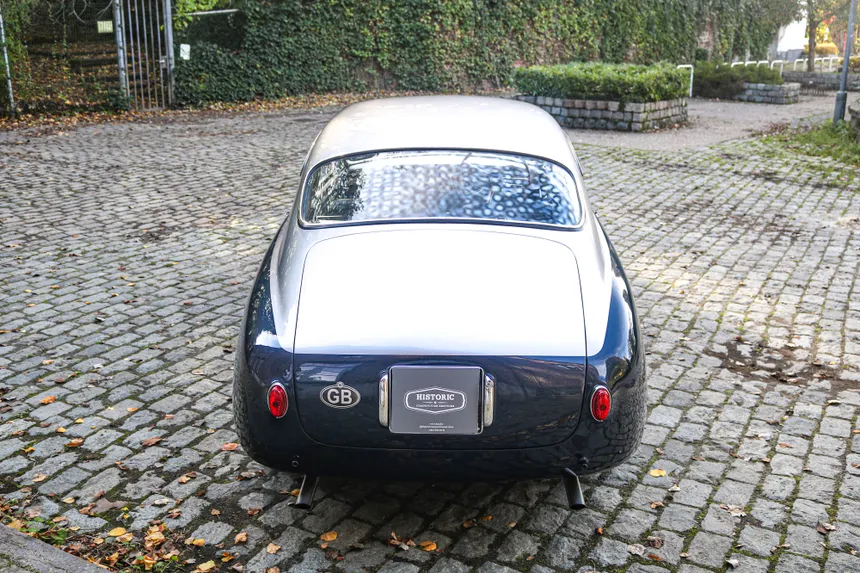
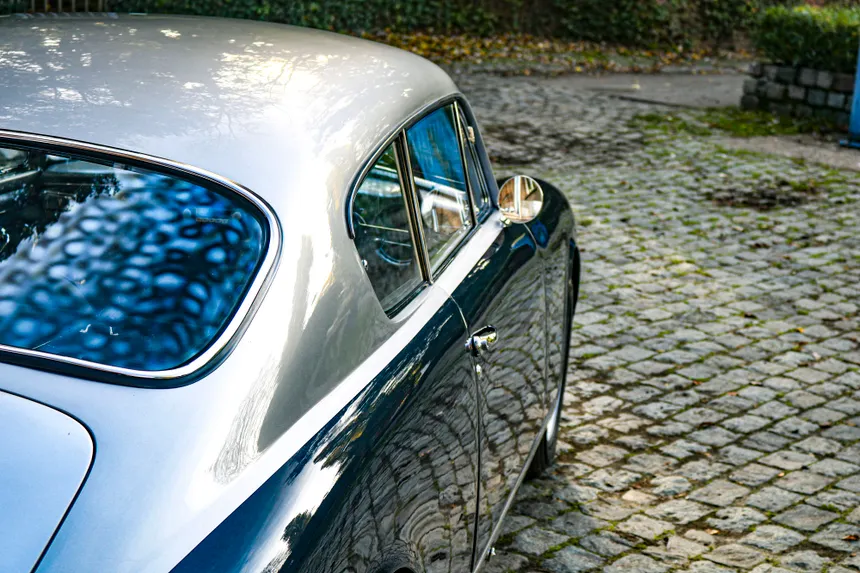
What they all had in common was a clean, elongated silhouette with a fastback roofline that in 1951 was genuinely new. It wasn’t a tall flat-roofed coupé like an American Thunderbird. It wasn’t a chopped saloon like many European cars of the time. It was a GT designed from scratch as a sporting coupé, with every aerodynamic decision aimed at high cruising speeds.
Mechanically, the B20 GT shared its base with the B10 but with several upgrades. Stiffer suspension. Bigger brakes. A more highly tuned engine — 75 horsepower at first, more in the second series. And above all, a torsional chassis stiffness that gave the car a dynamic behaviour that put nearly every sporting rival of the era to shame.
The price? Expensive. Properly expensive. A B20 GT in 1951 cost more than a Ferrari 166 Inter, according to period comparison data. Lancia wasn’t a premium brand by accident. And this car specifically was positioned as a luxury sporting product.
The 1951 Mille Miglia: the car proves itself
Here comes the part that changed how the B20 GT was perceived across the whole of Europe.
In April 1951, just weeks after the unveiling, Lancia entered four B20 GTs in the Mille Miglia. The most punishing race on the European calendar: a thousand miles (around 1,600 kilometres) of open Italian roads, running from Brescia down to Rome and back. Night stages, rain, mountain passes, city centres, flat plains. No mercy.
Important detail: the cars weren’t entered as official Lancia entries. They were entered in the drivers’ own names. Lancia didn’t want to appear as a factory team if the cars didn’t finish. It was a classic piece of Vincenzo-philosophy strategy that had stuck around even though Vincenzo had been dead for fourteen years. The brand was participating, but discreetly. If the cars won, fine. If they lost, also fine — they weren’t officially Lancias.
The driver who’d take the car into history was Giovanni Bracco. Born in June 1908, a well-regarded Italian racing driver, with Mille Miglia experience going back to 1938. His navigator was Umberto Maglioli, another important figure who’d later drive for Ferrari.
Bracco and Maglioli left Brescia at 3:20 in the morning of Sunday 29 April. A torrential rain came down. The Italian roads turned into slippery rivers. And while the Ferrari 340 Americas with their 4.1-litre V12s and 220 horsepower struggled to keep traction, Bracco’s B20 GT — with its humble two-litre 75-horsepower V6 but with the transaxle keeping weight distribution balanced and independent suspension that ate the water — started reeling them in.
Bracco actually led the race outright at some points. Led with a car that had less than half the displacement and less than a third of the power of the leading Ferraris.
They finished second outright. Only beaten by the Ferrari 340 America of Luigi Villoresi and Pasquale Cassani. But the context of that second place was more impressive than the Ferrari’s win. Bracco had defeated cars with double the displacement. In a road-going GT, not a competition prototype. In rain. In open-road conditions. Against Maranello’s best.
That Mille Miglia is what put the Aurelia B20 GT on the European motorsport map seriously. From that day on, everyone in Europe knew that a Lancia road car, taken straight from the dealership with barely any modifications, could go head-to-head with cars costing three times as much and theoretically far superior.
Le Mans, Targa Florio, Liège-Rome-Liège
The Mille Miglia success kicked open the door to a brutal 1951 season for the B20 GT. Bracco and his navigator Lurani drove the same Aurelia from Italy to France to take part in the Le Mans 24 Hours. They drove there, slept, raced the 24 hours, won their class (the 2-litre category), and finished 12th overall. In 1951. With a car that was essentially what any buyer could pick up at the Turin showroom.
In 1952, Lancia prepared seven “Corsa” versions of the B20 GT — more highly tuned variants but still recognisably road cars — and released them across Europe. The results were spectacular. Giro di Sicilia 1952: 2nd, 3rd and 4th overall. Mille Miglia 1952: 3rd, 5th, 6th and 8th overall. Targa Florio 1952: 1st, 2nd and 3rd. Complete podium. Coppa d’Oro delle Dolomiti 1952: 4th, 6th, 8th and 9th. And at the Carrera Panamericana in 1952, with a supercharger fitted, 4th overall crossing Mexico.
In 1953 the outright win came at the Liège-Rome-Liège, one of the toughest rallies on the calendar, with a B20 GT.
And, in a final paradox, in 1958 — seven years after its debut — an Aurelia B20 GT driven by Luigi Villoresi with Basadona as navigator took outright victory at the Greek Acropolis Rally. A seven-year-old car beating substantially newer rivals to win a championship round.
Nineteen significant race wins in 1951 alone. That’s hard to believe today. But the period sporting yearbooks have it all documented.
Why it’s the father of the modern GT
You’ve got the facts. Now the conceptual angle, which is what actually matters.
The B20 GT invents a category: the car that’s simultaneously sporting and capable of touring. What the British would later call a “grand tourer”. Until then, sporting cars were roadsters or spiders — light convertibles with no usable boot, designed for getting home on a Sunday after a session at Brooklands or Monza. Touring cars were comfortable but heavy and slow saloons. The two categories were separate.
The Aurelia merges them. It’s a 2+2 coupé with a boot. You can take your wife, two friends, suitcases and coats, and do Turin to Nice in a morning in comfort. But you can also, on Saturday afternoon, take it onto a circuit or a good mountain road and race against proper sports cars.
That idea is exactly what Ferrari copied five years later with the 250 GT. What Aston Martin copied with the DB4 in 1958. What Mercedes copied with the 300 SL Coupé. What Maserati copied with the 3500 GT in 1957. Each with their own interpretation, yes. But the category — the modern GT — was already invented. By the Aurelia B20 GT. In 1951.
And one more thing. The B20 GT introduces the mechanical template that defines the Italian GT for half a century: longitudinal front engine, rear transaxle, independent suspension, light bodywork. That template appears again in Ferraris (the Daytonas, the 365 GTB/4s, the 456s, the 612s, today’s Romas), in Maseratis (the 3200 GT, the GranTurismo), in Alfa Romeos (the Montreal). The Italian transaxle layout is born here. Without the Aurelia, that production layout doesn’t exist.
Pop culture: the Aurelia almost everyone has seen without knowing
A curious cultural footnote. The B24 Spider (the convertible Aurelia, launched in 1955) is one of the most photographed Italian cars in cinema history. It plays a central role in Dino Risi’s “Il Sorpasso” of 1962, with Vittorio Gassman and Jean-Louis Trintignant. The film is widely considered one of the great postwar Italian comedies. The red B24 Spider is practically another character.
And the B20 GT — the coupé — appears in a Tintin story, “The Calculus Affair”, published by Hergé in 1956. In the car chase that anchors the plot, there’s a B20 GT that almost every Tintin reader has seen without knowing it was a Lancia.
The car is much more present in Italian and European 50s and 60s culture than people realise. They’ve just seen it without recognising it. What they do recognise is that kind of car. That genre. That format. And that genre was invented by the Aurelia.
What it’s worth today
A first-series B20 GT in good condition sells today for between €80,000 and €150,000 depending on condition. A first series with documented motorsport history — the ones that ran the Mille Miglia or Le Mans in 1951 with identified drivers — can reach and exceed €300,000. The one that belonged to Lorenzo Bandini, the Formula 1 driver who died at Monaco in 1967, is in a Greek collection and its real value is the subject of private speculation among collectors.
Compared to a Ferrari 250 GT from the same period (which sells for several million), the Aurelia remains, technically speaking, undervalued. And that’s probably because the bulk of the market doesn’t yet understand that they were looking at the direct ancestor of the entire category, not just another Lancia.
Why it matters
The Aurelia B20 GT matters because it’s the car that proved the Vincenzo Lancia philosophy — engineering first, business after — could survive Vincenzo. It’s the car that proved Jano was the right engineer to take the brand to the next level. It’s the car that put De Virgilio’s name in the history of the engine. It’s the car that let Bracco show that a road-going GT could beat racing prototypes.
And, most importantly, it’s the car that invented an entire category. Without the Aurelia, the Italian GTs as we know them don’t exist. Ferrari learned from the Aurelia. Maserati learned from the Aurelia. Alfa Romeo learned from the Aurelia. And every German and British GT that came afterwards learned, indirectly, from the technical decisions made around a drawing board in Turin between 1947 and 1951.
Some cars change history by winning races. Some change it by selling in massive numbers. And some change it by inventing categories. The Aurelia B20 GT belongs to the third group. Which is the rarest of the three.
Next time you see an Aston Martin DB12, a Bentley Continental GT, a Maserati GranTurismo, or a Ferrari Roma drive past, remember that behind all of them, at the origin, there’s a 1951 Italian coupé. Aluminium V6. Rear transaxle. Second outright in a rain-soaked Mille Miglia, driven by a man called Bracco who beat Ferraris with double the displacement.
It’s a Lancia. The engineering was De Virgilio’s under Jano. The body was Boano’s, built by Pinin Farina. And it was called the Aurelia B20 GT.
It invented the entire genre. And it’s quietly becoming, year by year, one of the most interesting classics out there. If you ever get the chance to see one up close, stop.
Check you’re still alive.