The Spanish 4×4 That Beat the Defender, Then Bankrupted Its Own Factory
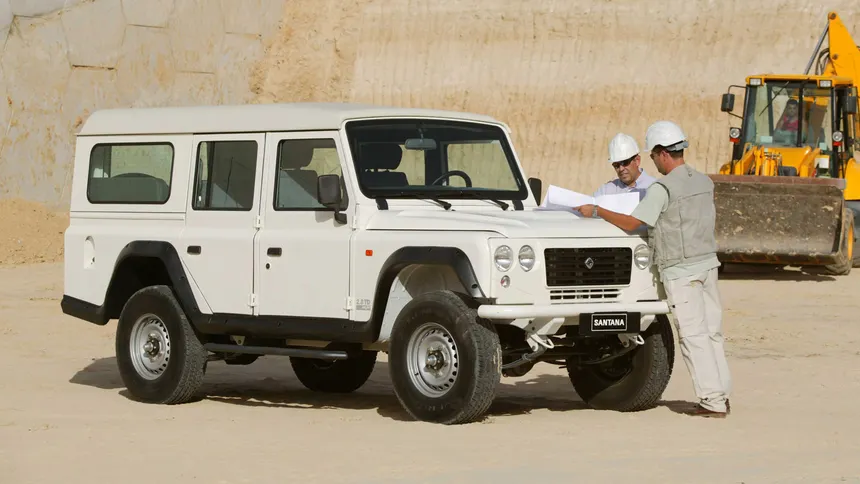
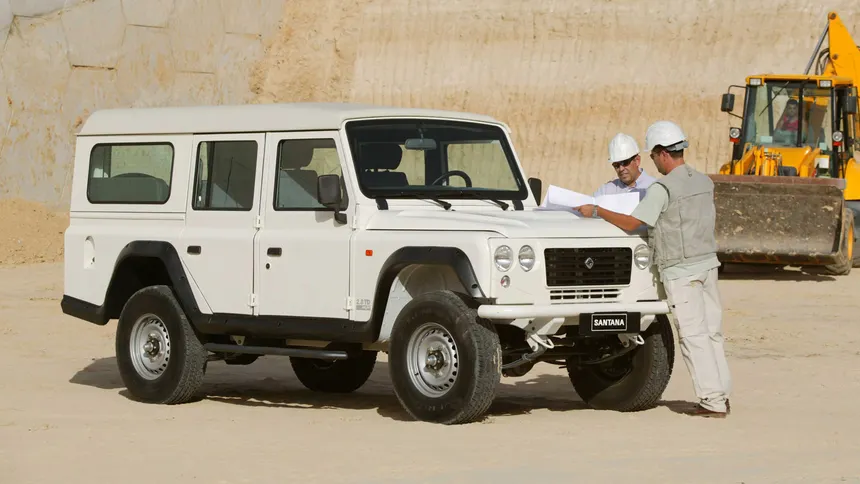
Top Gear built an entire personality around the idea that the Defender was unbeatable — slow, agricultural, and somehow untouchable, the automotive equivalent of a national monument nobody was allowed to criticise. In July 2005, a British magazine tested that assumption properly. “4×4 Magazine” lined up ten off-roaders from international manufacturers, put them through their paces, and handed the win to a Spanish outsider. It beat the Defender. It beat the Discovery. It beat the Nissan Patrol. The winning vehicle wasn’t a show-stand curiosity — it was a working 4×4 built in Linares, Jaén, by a company that had spent half a century assembling Land Rovers under license and had finally built something entirely its own. It was called the Aníbal. Six years later, that same company went bankrupt. This is the story of how you can win the engineering argument and still lose everything, and why that distinction matters more to us than any headline ever could.
From license assembler to manufacturer in its own right
To understand the Aníbal, you need the backstory. Santana Motor S.A., born as Metalúrgica de Santa Ana, had assembled Land Rovers under British license from 1961 to 1983, when that agreement collapsed. After the split, the Linares plant kept building Land Rover-derived models without depending on Solihull, culminating in the Santana 2500 of the eighties and nineties. The Aníbal was a direct evolution of that 2500 — Santana even used up leftover 2500 components while launching the new model, a genuinely pragmatic piece of industrial housekeeping rather than brand romance.
The name carries local weight. Carthaginian general Hannibal Barca, according to tradition, married Himilce, a native of Cástulo — an Iberian settlement whose ruins sit within the modern boundaries of Linares. It’s a nod to local history, not a marketing department’s invention. Outside Spain the model sold as the PS10, because the name Hannibal was already trademarked by Hummer’s manufacturer.
It’s worth noting that Spain wasn’t the only country to face this exact problem — a domestic army needing a Jeep-style off-roader — and choose a different route to solve it. Italy went the from-scratch path decades earlier with the Fiat Campagnola, designed in-house by Dante Giacosa and preferred by the army over a costlier proposal from Alfa Romeo. Spain, by contrast, spent thirty years building somebody else’s car under license before finally attempting a ground-up design of its own with the Aníbal. Two very different routes to the same military requirement, arriving at very different outcomes.
The Aníbal debuted on 23 May 2002 at the Madrid Motor Show, offered in three- and five-door bodies plus single- and double-cab pickup variants. A closed, long-wheelbase, three-door prototype existed but never reached production. Development cost €19 million — a serious sum for a plant Santana’s size. Styling brought little that was new, and the company was upfront about why: this was a working vehicle, built for toughness over looks, a philosophy any mechanic understands even if the styling department resents it.
The spec sheet of a workhorse
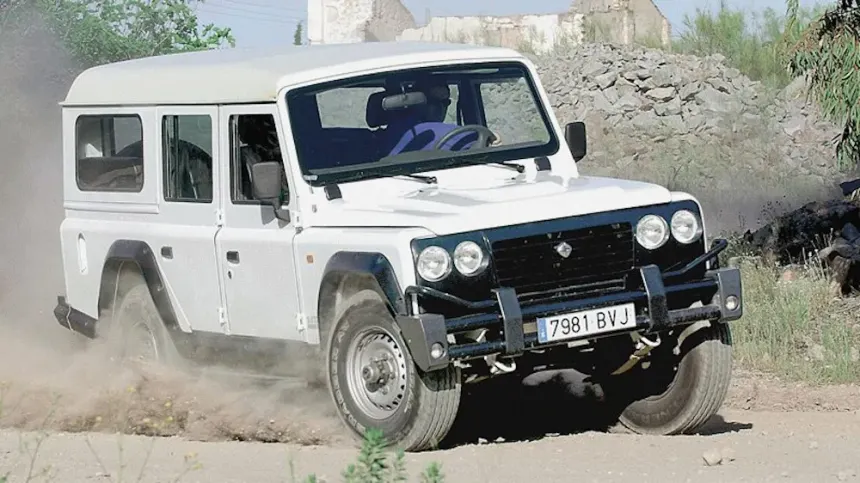
Mechanically, the Aníbal — badged PS10 for export — ran a 2.8-litre IVECO PS10 8140.43 turbodiesel producing 125hp, paired with a five-speed manual gearbox, 4×4 drive and a low-range transfer case. Gross vehicle weight sat around 3,050kg, kerb weight at 2,140kg, and payload capacity reached 1,000kg. With an auxiliary brake fitted, towing capacity climbed to 3,000kg. These are numbers built for hard work, not showroom flattery — the kind of spec sheet that reads better on a workshop wall than in a glossy brochure.
Its value-for-money against rivals like the Land Rover Defender or the Hummer opened serious doors. This wasn’t a punt into the unknown, either: once the old Santana 2500 was withdrawn from sale, a follow-up demand study estimated the market could absorb around 6,000 units of a professionally-oriented off-roader in the segment the Aníbal was built to fill. Spain’s Ministry of Defence certified the Aníbal as the official off-roader of the Spanish Army and ordered up to 1,700 units across two contracts — an initial 150, followed by a further 1,325 — comfortably clearing the minimum contractual order of 750 vehicles over five years. France and the Czech Republic signed contracts for a lightweight version too, while the UK and Moroccan armies ran trials, and Santana submitted documentation for a Belgian army tender. The car also sold into civilian markets across Europe with some commercial success, though not every version reached every country — the short-wheelbase variant, for instance, never made it to the UK.
The award that changed everything, on paper
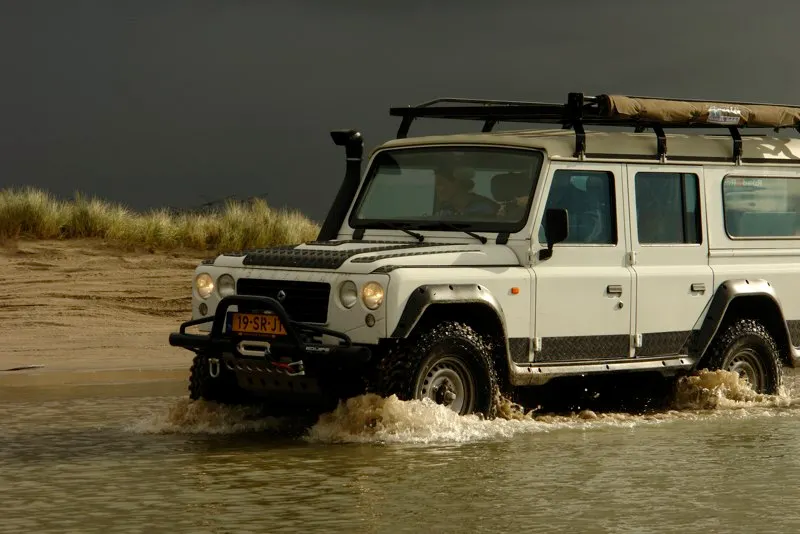
The “4×4 Magazine” recognition in July 2005 wasn’t a minor trade-press nod. This was a British publication, on its own home turf, testing the Aníbal against the segment’s established royalty — Defender, Discovery, Patrol — and awarding victory to the Spanish newcomer. For a plant that had spent decades being defined as “the licensed assembler,” that headline was proof Linares could design, not just build. By the 2006 Madrid Motor Show, interest was even coming from Italian specialist vehicle manufacturers who saw the Aníbal as a solid platform to build on.
On paper, and on the test track, the Aníbal won. The problem — as anyone who’s ever spent real time in a workshop already knows — is that a test track isn’t where a military vehicle earns its reputation. That happens over thousands of hours in the field, under conditions no magazine road test can replicate: extreme heat, sustained overloading, long stretches without proper maintenance windows, and drivers who don’t have the luxury of babying a gearbox the way a journalist does for a week-long review.
Where the engineering won and the factory floor lost
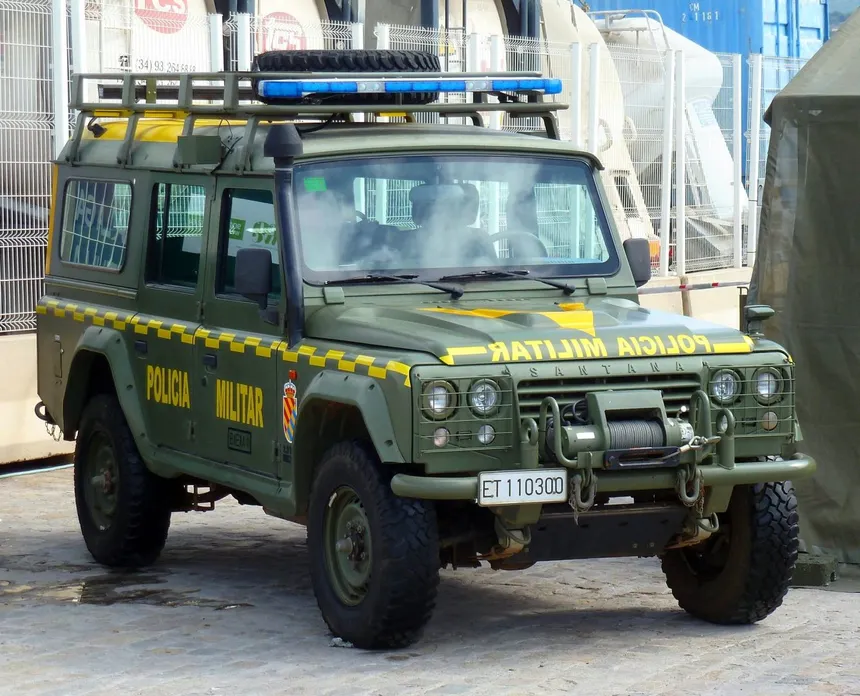
Industrial production of the Aníbal began in 2004, and problems surfaced fast. Premature corrosion, oil leaks, recurring mechanical failures — exactly the kind of defects that don’t show up in a week-long press test but accumulate year after year in a military fleet that can’t afford to fail. In 2008 the Spanish Army made a drastic call: it grounded its entire Aníbal fleet after a series of accidents linked to those failures.
That’s the exact point where the story splits in two. The same vehicle that had been crowned the world’s best off-roader by the British press two years earlier was now parked in Spanish barracks over manufacturing defects that should never have gone this far. This wasn’t a design failure — the 2005 award rules that out — it was an industrial execution failure: quality control on the production line simply didn’t match what the engineering had promised. For anyone who’s turned a wrench, this is the hardest part of the story to tell: a genuinely capable engine and chassis, undone not by a flawed blueprint but by plant-floor decisions nobody corrected in time, batch after batch, while the orders kept coming in faster than the fixes did.
The ending followed predictably. Santana took one last shot, partnering with Iveco between 2006 and 2009 to develop the Massif, a direct successor to the Aníbal — and it fared no better commercially. By then the market wanted multi-purpose vehicles, equally comfortable on and off road, a space where more modern competitors simply had the edge. The combined failure of both models, layered onto losses that had already topped €300 million by 2001, pushed Santana Motor into definitive bankruptcy in 2011 — closing a factory that started out building farm tools and ended up, for one brief moment, building the best off-roader in the world according to the British specialist press.
From the UME to “the potato”: the nickname that says it all
One detail sums up what the Aníbal actually meant to the people who had to live with it day to day, better than any technical report could. In 2005 — the same year the British press crowned it world champion — the Spanish government created the UME, the Military Emergency Unit, headquartered at Torrejón de Ardoz. Among that newly formed unit’s initial equipment were somewhere between 225 and 250 Aníbal units, depending on the source. That timing wasn’t a coincidence, and for years the vehicle carried the unofficial nickname “the UME’s car.”
The technical reports that fleet generated, though, left no room for ambiguity. Documented faults included chassis crossmember failures, misaligned tow hooks, and fatigue in the bolts securing the leaf springs, on top of the corrosion and oil leaks already mentioned. Among the soldiers actually driving it, the vehicle earned a nickname that needs no translation: “la patata” — the potato. According to accounts gathered by the specialist press, the Aníbal reportedly “broke down every 5,000km,” a failure rate that’s simply unworkable for a military vehicle expected to stay operational on real deployments, not just controlled exercises.
Santana’s response to the 2008 crisis didn’t do the reputation any favours either. The company publicly stated that the transmission fault detected only affected one vehicle out of a hundred inspected, and that the fleet would be back in service three weeks after meetings with the Ministry of Defence. Spanish newspaper El Confidencial went as far as reporting that some repairs were carried out using glue — whatever the full truth behind that claim, it captures the gap between what the factory could actually deliver and what a military vehicle needs. The real replacement arrived much later than anyone expected: the VMTT, a new tactical light military vehicle, only began replacing the ageing and battered Aníbal from 2023 onward — more than two decades after that promising debut at the Madrid show.
The lesson that actually matters
This is why the story earns its place here rather than filed away as another dead-brand obituary. The Aníbal proves something anyone who’s ever worked under a bonnet already knows: winning on the test track and surviving on the street are two entirely different disciplines, and the second one is far less forgiving. A factory can design the best off-roader in the world and still go under if quality control on the assembly line can’t keep pace with what the design promised. This wasn’t an engineers’ failure. It was an execution failure — decisions made, or not made, on the production floor, quietly compounding until an entire army fleet had to be parked.
It took the Spanish Army twenty long years to replace that ageing Aníbal: it wasn’t until 2023 that a genuine heir, the VMTT, arrived. Two decades is a long time for a country to keep relying on a vehicle its own troops nicknamed “the potato,” patched together in barracks workshops while the paperwork for a proper replacement crawled through procurement. The Linares plant proved it could design. It never got the chance to prove it could hold that quality on the line for as long as a military vehicle needs to truly earn its reputation, and that gap — between a trophy on paper and a fleet that actually holds up — is the whole story in one sentence.
Check you’re still alive.