Matra: From Missiles to Le Mans – The Craziest Story in French Automotive History
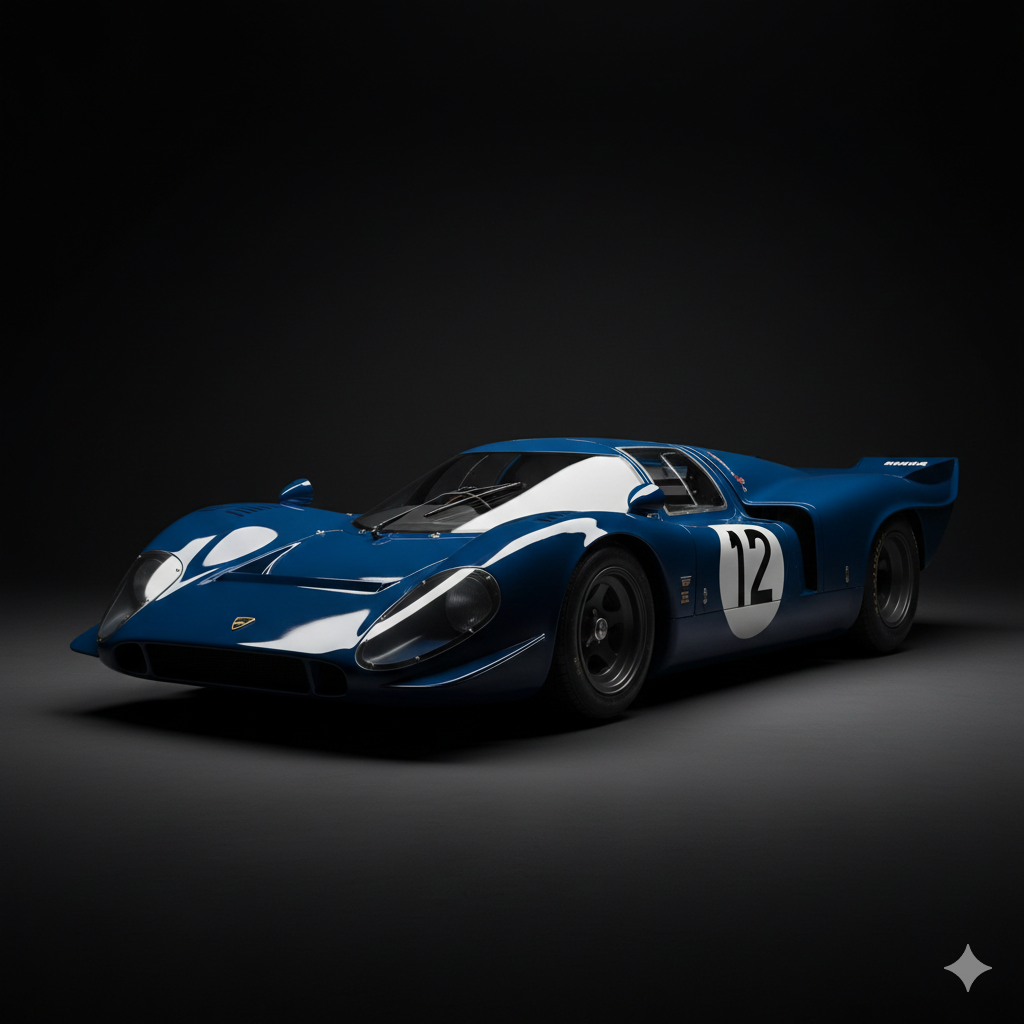
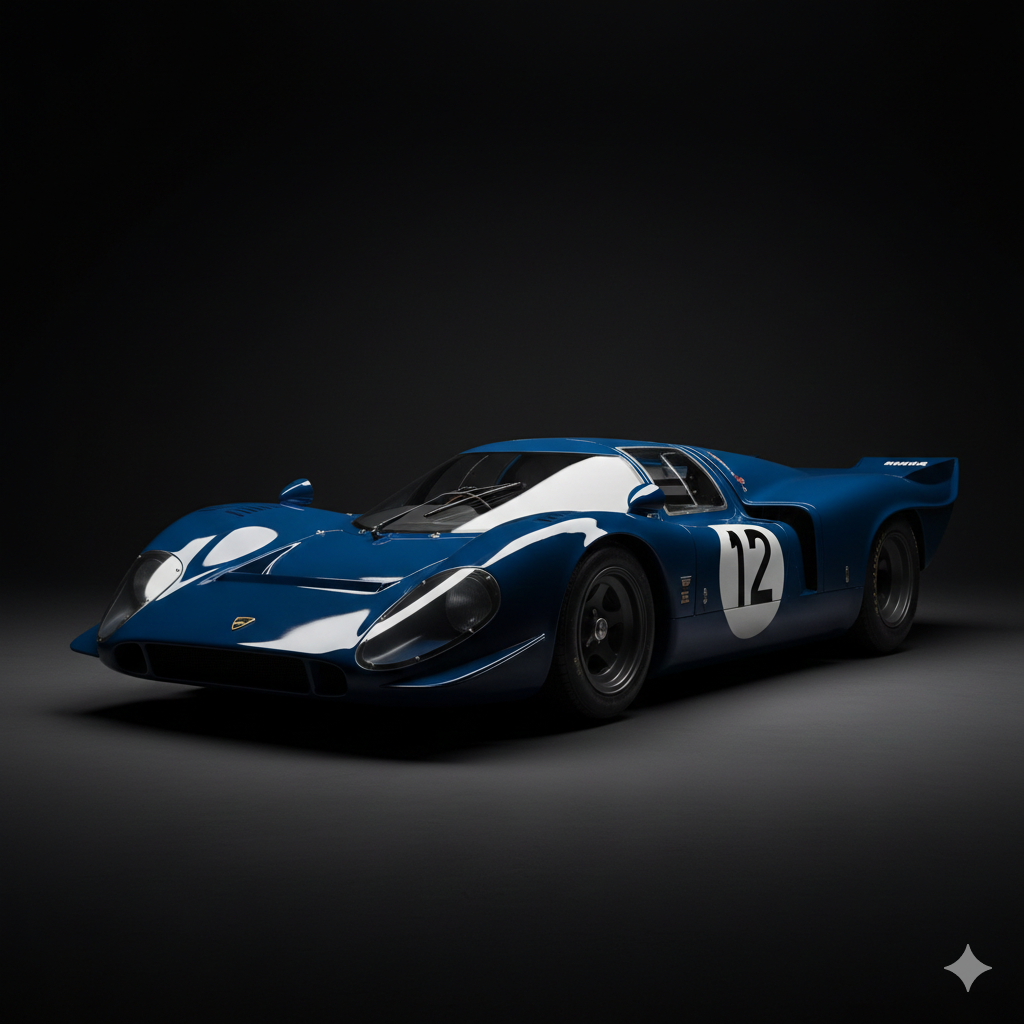
With racing as their calling card, Matra needed a production car that could reach a wider audience. The problem with the Djet and the M530 was that they sold in tiny numbers, partly because Matra lacked its own dealer network.
The fix arrived in 1969 when Matra signed a deal with Simca. This rebranded their racing efforts as Matra-Simca and granted them access to Simca’s dealer network across France and the Common Market. The first fruit of this marriage was the Matra-Simca Bagheera, unveiled to the public at the 1973 24 Hours of Le Mans.

The Bagheera was a mid-engine coupe with a feature that was absolutely unique: three-abreast seating. This wasn’t a conventional 2+2. It literally had three front seats, made possible by the absence of a transmission tunnel thanks to the transverse mid-engine layout. Philippe Guédon, Matra’s head of engineering, pushed for this because he thought the “symbolic” rear seats in most coupes were useless. Better to have three real seats than four fake ones.
The name came from the black panther, Bagheera, in Rudyard Kipling’s The Jungle Book. Its drag coefficient ($Cx$) of 0.33 was exceptional for the era—a direct hand-me-down from Matra’s aerospace expertise.
Mechanically, it scavenged parts from the Simca 1100: an 84-hp 1,294cc engine, gearbox, and suspension. The launch was a spectacle: 500 yellow Bagheeras were waiting at Simca dealerships across France on day one. By late 1973, production hit 65 cars a day, and by June 1974, they had moved over 10,000 units.
But it wasn’t all sunshine. In 1975, the Bagheera won the ADAC Silberne Zitrone (Silver Lemon)—the dubious honor given by the German auto club to the new car with the most quality issues. Complaints ranged from cabin leaks to various mechanical failures. The biggest killer? The steel chassis had zero rust protection. While the polyester body didn’t rust, the skeleton underneath simply disintegrated.
Yet, it also won the 1973 Style Auto Award, beating out the Lancia Stratos, the Lancia Beta Coupe, and the Ferrari Dino 308 GT4. Only Matra could build a car that won awards for being the most beautiful and the worst-built at the same time. They produced 47,802 Bagheeras until production ceased in April 1980.
Rancho: The Crossover Before the Word Existed
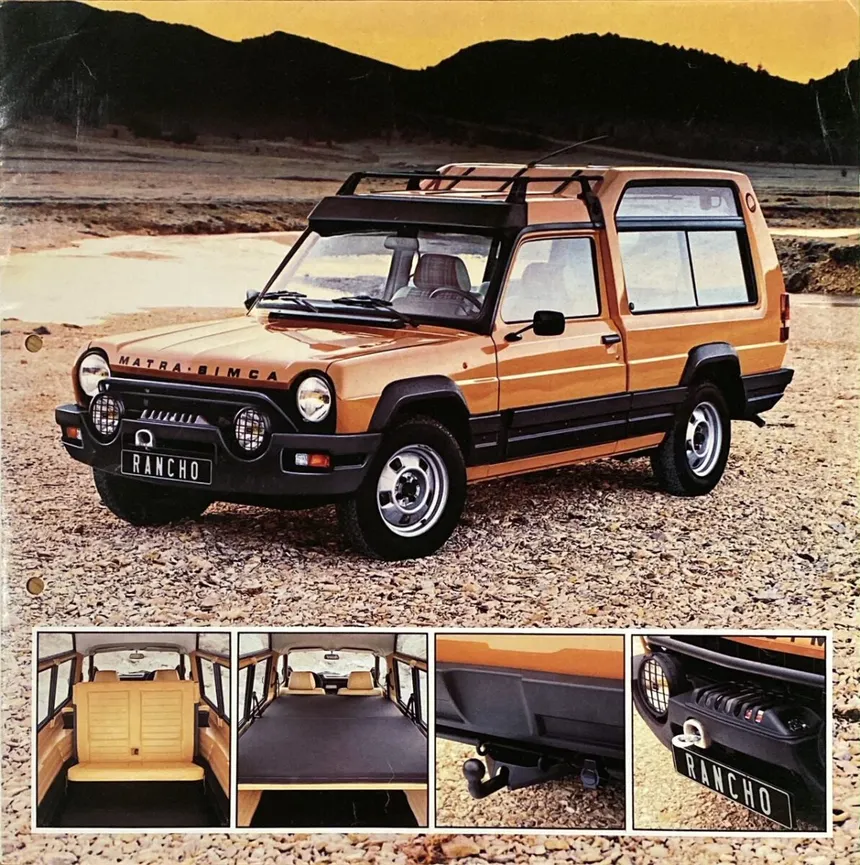
In 1977, before the world invented the term “crossover,” Matra launched the Matra-Simca Rancho. Designed by Antonis Volanis—the same man behind the Bagheera—the Rancho was a fascinating mashup. It took the Simca 1100 van platform, added a massive fiberglass rear body with tons of glass, black plastic trim for a “rugged” look, and a split rear tailgate in the style of a Range Rover.
The stated inspiration was the Range Rover, but at a fraction of the cost and complexity. The Rancho promised the image of an adventurous off-roader for the price of a family car. Small detail: it was front-wheel drive. Zero real off-road capability. It was a poser, but a brilliant one.
It was a commercial hit with over 56,000 units built. This was the conceptual forefather of the crossovers that dominate the market today. Thirty years before the Nissan Qashqai, Matra understood that people wanted cars that looked like they went on adventures, even if they never left the pavement.
A brutal stat on build quality: out of the thousands of Ranchos exported to the UK, only three remained on the road as of 2017. Corrosion ate the rest.
Murena: Technical Redemption
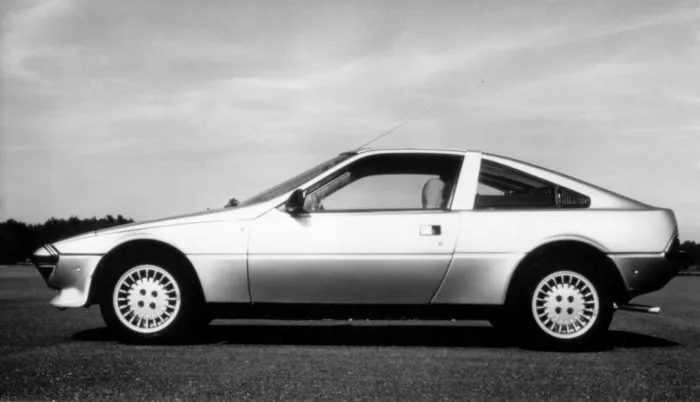
In 1980, Matra launched the Bagheera’s successor: the Talbot-Matra Murena (the name changed because Peugeot bought Chrysler Europe and replaced the Simca brand with Talbot).
The Murena was designed to fix every single one of the Bagheera’s sins. The biggest change was a chassis that was completely hot-dip galvanized—a first for Matra—offering a six-year anti-corrosion warranty. The body remained fiberglass-epoxy, making the car practically immune to rust.
It kept the three-abreast seating, but now each seat was individual, with the center one folding down into an armrest. It offered a 1.6L (92 hp) and a 2.2L (118 hp) engine, both mid-mounted. A later version, the Murena S, pushed the 2.2L to 142 hp with a performance kit.
The Murena had a cleaner, sharper design than the Bagheera, with echoes of the Lotus Esprit. It cost half as much as comparable mid-engine sports cars, making it an absolute steal.
But the Murena has a dark chapter. Matra engineers developed a 180-hp, 16-valve prototype with aggressive wide fenders. Peugeot, controlling Matra’s fate, vetoed it. Even wilder: they once stuffed a 3.0L Formula 1 V12 into a Murena chassis. Naturally, that stayed in the experimental phase.
Production ended prematurely in July 1983. Renault, Matra’s new partner, demanded the factory be converted for a different vehicle. The common consensus? Renault killed the Murena because, at less than half the price, it was a threat to the Alpine built in Dieppe. Only 10,680 Murenas were built. A magnificent car murdered in its prime.
Espace: The Minivan That Changed Europe
If Matra’s story ended there, it would be enough. But the biggest commercial hit was yet to come.
Matra developed a utility vehicle concept to replace the Rancho. They pitched it to Peugeot first; they passed. Then they pitched it to Renault, who snatched it up and bought Matra’s car division to secure the design and factory.
The result was the Renault Espace, launched in 1984. Built by Matra at their Romorantin plant, it was the first purpose-built European minivan. It was a massive success that defined an entire segment for decades. Matra built the first three generations of the Espace. But when Renault decided to build the fourth generation in-house, Matra lost the contract that kept the lights on. In 2003, Matra Automobiles went bankrupt and its assets were sold off.
Over a million vehicles left the Romorantin lines between the early 60s and 2003. An entire industrial era, born almost by accident from a missile factory.
Trivia You Didn’t Know
- The Djet Factor: The Matra Djet is older, rarer, and dynamically superior to the Alpine A110. Yet, an A110 is worth ten times more today. The difference is purely cultural.
- The Volanis Touch: Antonis Volanis designed the Bagheera, Murena, Rancho, and Espace. Apparently, he also designed the Citroën Xsara Picasso—proving even geniuses have bad days.
- M1 Clone: Germany’s Saier developed a body kit for the Murena to make it look like a BMW M1. BMW successfully sued them.
- Sailing Matras: Matra briefly built sailboats. Their 14-foot fiberglass catamaran, the Capricorne, featured an innovative self-draining double hull before the project was scrapped.
- The F1 Espace: The crown jewel of the Matra museum in Romorantin is the Espace F1—an unholy marriage between an Espace body and a Formula 1 engine.
The Legacy of Those Who Dared
The Matra story is a French tragedy. It’s a company that proved it could innovate, compete, and win at the highest level, yet was passed around like an “unwanted child” from Simca to Chrysler, to Peugeot, to Renault. Every owner exploited their talent but stifled their sporting soul.
Still, the legacy is massive. Matra built the first production mid-engine sports car. They won F1 in a way no one has repeated. They dominated Le Mans three years straight with their own engine. They invented the Crossover and the European Minivan.
Today, Matra is reduced to making electric bikes and scooters. But rumors of a comeback persist. The IDEC Sport team recently revived the iconic Matra blue racing livery at Le Mans, and there are whispers about a Djet resurrection.
Matra deserves to be remembered as the crown jewel of post-war French motorsport. A missile company that aimed for the stars and, against all odds, hit them.
Did you know the Matra story? Which one fascinates you more: the pioneering Djet, the three-seat Bagheera, or the Murena killed before its time? Let me know in the comments.
Next step: Would you like me to generate a 1024×1024 cinematic image of the Matra-Simca Bagheera in its original “Sunburst Orange” color, highlighting its unique three-seat interior?