
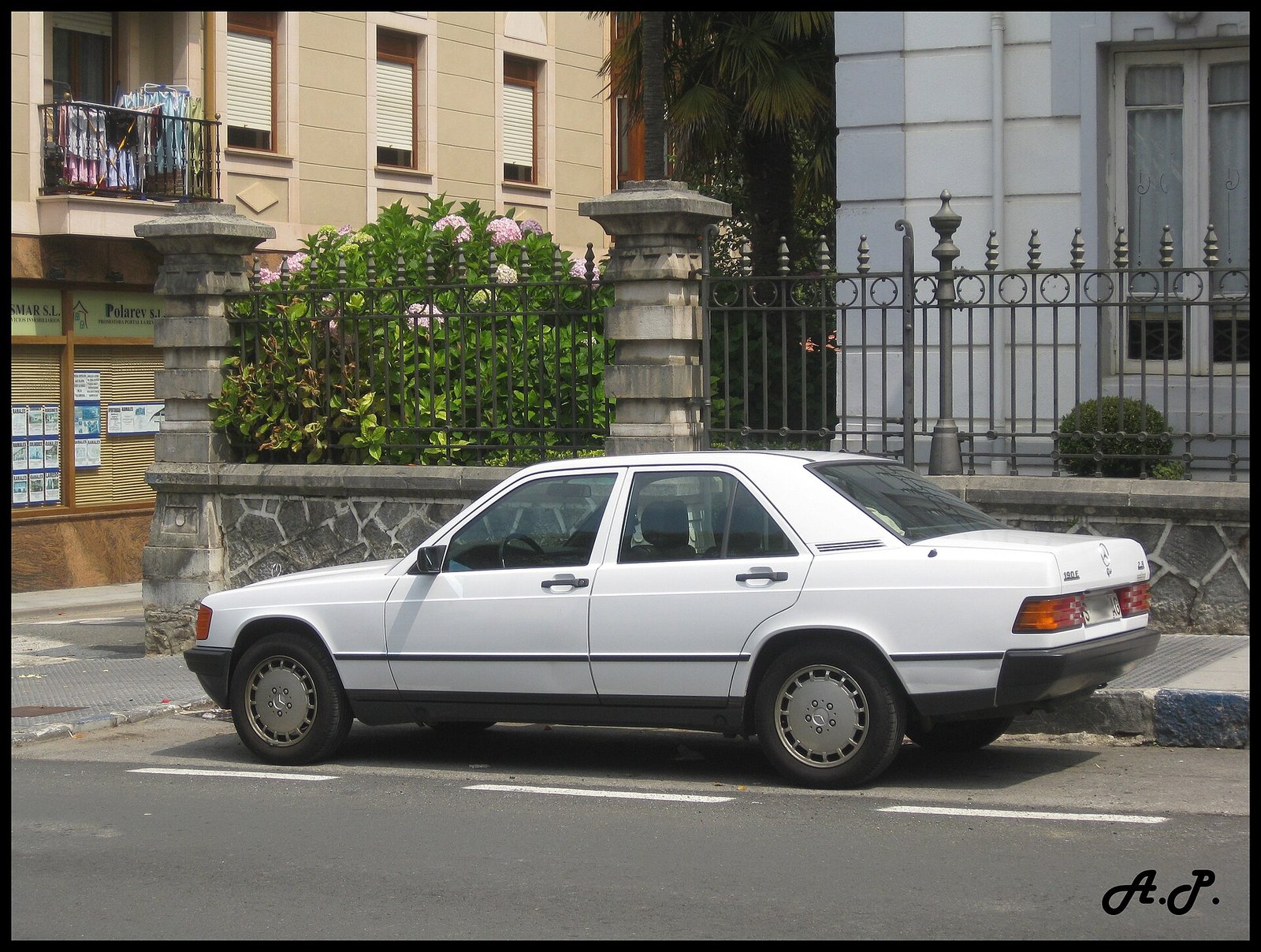
A brand-new electric car rolls off the truck already owing the planet more carbon than my car will burn in the next five years. That is the part the dealership skips. My car is 23 years old, has more than 186,000 miles on it (300,000 km, for the record) and drinks about 27.7 miles per gallon, which over here is 8.5 liters per 100 km. Its carbon bill was paid two decades ago. Yours starts the day you sign.
So before anyone tells me to trade it in for something with a charge port, let’s put the numbers on the bar and see who’s buying the next round.
The bill comes before the car does
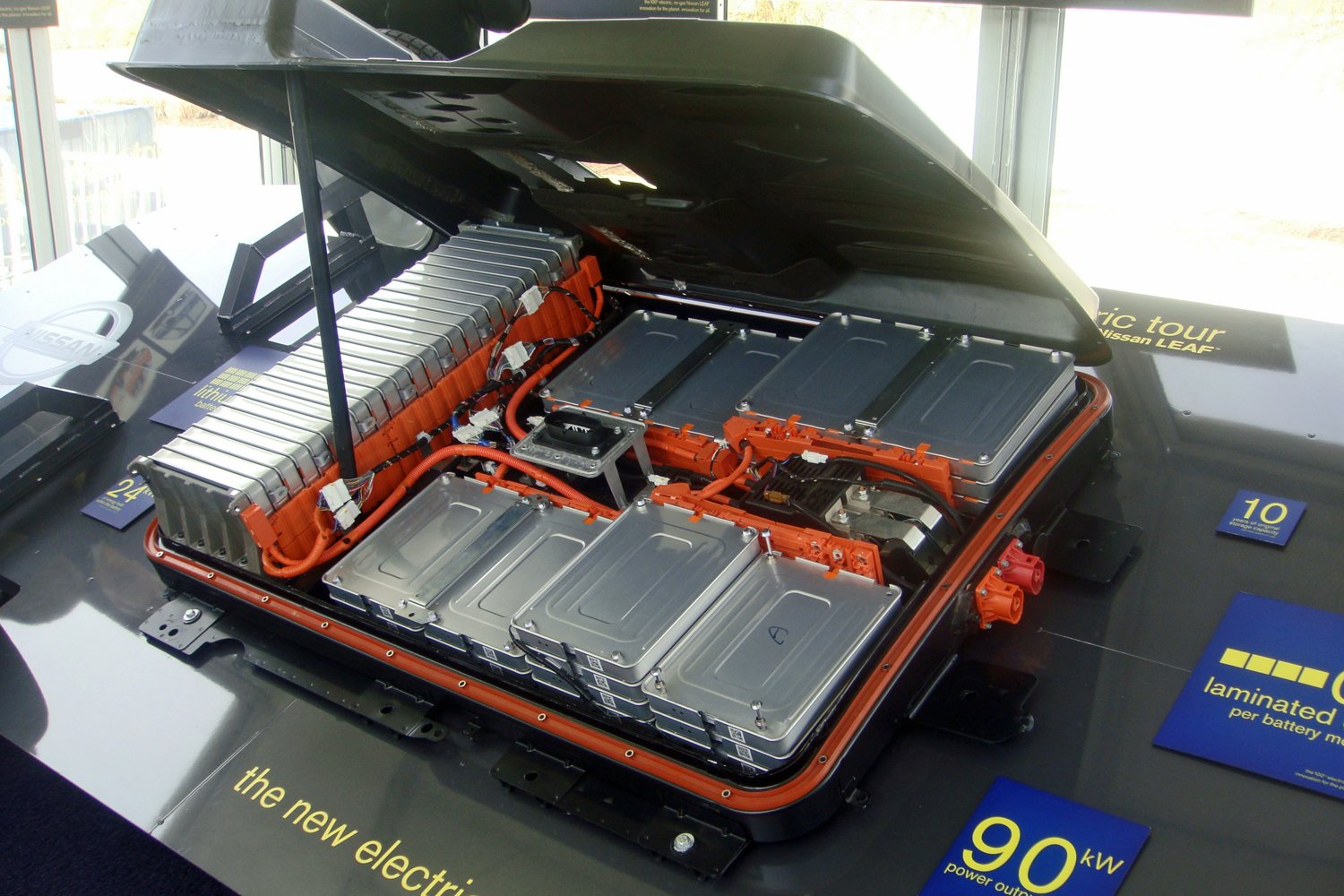
Every car is born dirty. Steel, aluminum, glass, plastics, paint, shipping. An electric car adds the most carbon-hungry part of all: the battery. Mining and refining lithium, nickel, cobalt and graphite, then baking all of that into cells in factories that run around the clock, is where most of the extra footprint comes from.
How much extra? Don’t take a YouTuber’s word for it, and don’t take mine. Take the carmakers’.
Volkswagen published its own life-cycle numbers for the ID.3, the compact hatch built in Zwickau and pitched as the Golf of the electric era. Building one ID.3 puts about 14 metric tons of CO2 into the air, and VW itself says more than 40 percent of that comes from the battery. Its own engineers put the production footprint of an electric car at roughly one and a half times that of a comparable gas or diesel car.
Polestar went further, and that’s the number that should be framed and hung in every EV showroom in America. In 2020 the Volvo-born brand published a full life-cycle study of the Polestar 2. When it leaves the factory, a Polestar 2 is carrying 26.2 metric tons of CO2. The gas-powered Volvo XC40 it was compared against, built on a related platform, leaves with 16.1. The company’s own CEO admitted at the time that the data wasn’t exactly pleasant reading. Credit where it’s due: they printed it anyway, which is more than most of the industry has done.
That’s the head start. Ten tons before the first mile, on a car that isn’t even huge.
How long until the EV pays it back
Here’s where the anti-EV crowd usually gets sloppy, so let’s be precise.
Polestar’s own figures say its car has to be driven about 78,000 km (roughly 48,500 miles) on Europe’s average electricity mix before it comes out ahead of the gas XC40. On the global average mix, which still burns a lot of coal, the figure jumps to 112,000 km, or about 69,600 miles. Charge it on nothing but wind and it still needs 50,000 km, a little over 31,000 miles.
The International Council on Clean Transportation, a research group that built most of its reputation by catching Volkswagen’s diesel cheat in 2015, ran the same kind of numbers for Europe in 2025. Their medium-size EV lands at 63 grams of CO2-equivalent per kilometer over its whole life, against 235 for a gasoline car. In their model, the EV’s extra factory emissions are wiped out after about 17,000 km, so one or two years of normal driving.
Both of those comparisons have one thing in common. They pit a new EV against a new gas car. Nobody asks the question that matters to a guy who already has a car in the garage that runs fine.
The comparison nobody runs: the car you already own
If I sell my old car to the crusher and buy a new EV, the planet doesn’t get to subtract the emissions of building a new gas car. That car never gets built. The whole factory bill of the EV is new carbon, and my old car’s factory bill is already sunk. So the real question is how long the EV takes to repay its entire birth certificate out of what it saves per mile compared to my old car.
Let’s do it with numbers, and let’s rig them against my own car so nobody can say I cheated.
Start with the EV’s birth certificate at 20 tons instead of VW’s 14, because VW’s figure assumes its cell supplier, LG, runs its Polish plant on certified green power. Poland made 61 percent of its electricity from coal in 2023. A green certificate doesn’t change which electrons come down the wire, and most of the world’s cells are made in China anyway, on a grid still leaning hard on coal. Then use 20 kWh per 100 km for real-world driving instead of the 15.5 kWh the ID.3 is rated at in Europe’s WLTP test, which already includes charger losses. Add 10 percent for losses on the grid between the power plant and the outlet. Charge it all on Spain’s grid, which Red Eléctrica measured at 102 grams of CO2 per kWh in 2024, one of the cleanest in Europe.
Now my car. The EPA says a gallon of gasoline releases 8,887 grams of CO2 when it burns. At 27.7 mpg that’s about 200 grams per kilometer out of the tailpipe, roughly 3 tons a year over 15,000 km (9,300 miles). I’ll even add a third on top for pumping, shipping and refining the gasoline, the low end of what European well-to-wheel studies put on it.
The EV needs about 82,000 km, close to 51,000 miles, to break even with my car. At my pace, five and a half years. A big one like the Polestar 2 needs about seven. That’s my own arithmetic on published numbers, and anyone with a calculator can check it.
Seven years of payments before your green purchase turns green. That is the fine print.
Plug it in in West Virginia
Over here, where your electrons come from depends on your zip code. In West Virginia, more than 80 percent of the electricity comes from coal-fired plants. Missouri ranked fourth in the nation in 2024 for coal’s share of in-state generation, at close to 57 percent. Plug a car in there and the "zero emissions" badge on the tailgate is describing the car, not the smokestack.

In Europe the extreme case is Poland, where coal made 61 percent of the country’s electricity in 2023. When researchers from Cambridge, Exeter and Nijmegen modeled 59 regions of the world for a paper published in Nature Sustainability in 2020, Poland was one of the handful of places where an EV couldn’t clearly beat a gas car on lifetime emissions.
The EV fans will point out that the same paper has the EV winning in 53 of those 59 regions, and the IEA says a mid-size EV sold in the US in 2023 ends its life about 65 percent cleaner than a gas car. Read the small print, though. Every one of those lifetime wins assumes the EV keeps running for 15 to 20 years and well over 120,000 miles. Hold that thought, because that’s exactly where the math gets shaky.
What’s under the floor
The battery doesn’t just cost carbon. It weighs a ton. Sometimes literally.
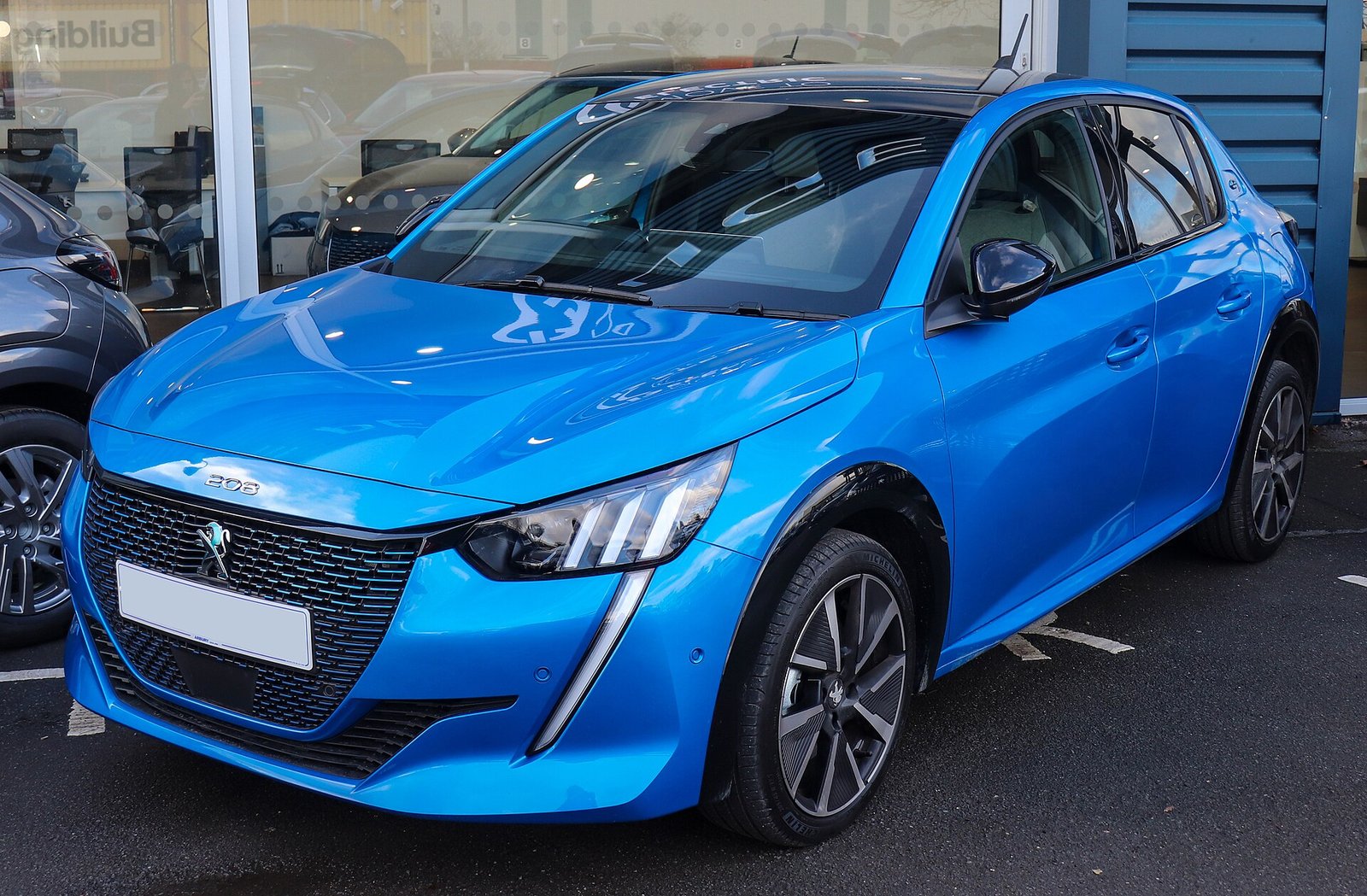
GMC’s Hummer EV Edition 1 tips the scales at 9,063 pounds. The battery alone is 2,923 pounds, about what a whole Honda Civic sedan weighs. Smaller cars tell the same story with less drama. Peugeot sells its 208 supermini in Europe with a 1.2-liter, 100 hp gas engine at 1,177 kg, and as the e-208 at 1,430 kg. Same body, 253 kg (558 lb) heavier, all of it battery and its armor.
That weight has to be hauled up to speed every time the light turns green, and it beats up everything between the body and the blacktop.
Tires first. Emissions Analytics, a British testing outfit, measured tire wear throwing off about 1,850 times more particles than the tailpipe of a modern car, and every extra 500 kg, which is what a big battery weighs, pushes tire emissions up 21 percent. No "zero emissions" sticker counts a gram of it, and some of that dust is fine enough to end up in your lungs.
Then the suspension. Ask any shop. Kwik Fit, Britain’s biggest tire and repair chain, and GMB, which makes wheel bearings and chassis parts, both say the same thing: more weight cracks bushings sooner and eats wheel bearings, shocks and alignment faster. Instant electric torque and regenerative braking load the control arms every time you launch and every time you lift.
Then the road. Highway engineers have used the "fourth power law" since the AASHO Road Test, run in Illinois between 1958 and 1960: pavement damage climbs with axle weight raised to the fourth power. By that rule, axles carrying a third more weight do about three times the damage. Fair is fair: any car is a rounding error next to an 18-wheeler, and some engineers now argue the rule is too steep. The direction doesn’t change.
You feel it behind the wheel too. More mass means more inertia in every lane change and more energy to scrub off under braking, and carmakers cover it with wider tires, bigger brakes and software. Stability control has been mandatory on every new car in the EU since November 2014, gas or electric, but in a two-ton car it works a lot harder. In 2021 Sweden’s Teknikens Värld ran Ford’s Mustang Mach-E through its famous moose test. It lost it above 68 km/h (42 mph) when 72 km/h is the pass mark, and the magazine blamed stability control that was too slow to catch the swinging tail. The battery sits low, and other EVs in the same test passed. They passed with a computer cleaning up after the weight.
And weight breeds weight. A heavier battery needs a stronger structure to hold it and protect it in a crash, the stronger structure adds pounds, and the extra pounds want more battery for the same range. The EU is paying for a research project, Fatigue4Light, to make EV chassis up to 30 percent lighter. Governments don’t fund fixes for problems that don’t exist.
In Britain, the British Parking Association warned in 2023 that many multi-story garages built in the 1960s and 70s were designed for much lighter cars. One of the structural engineers behind its report said flat out that some of the oldest garages in poor condition could collapse. A loaded Tesla Model 3 weighs about 2.2 metric tons, more than 50 percent heavier than a Ford Cortina from that era.
The salvage yard doesn’t want it
In March 2023 Reuters published an investigation that should be required reading for anyone who believes in the "circular economy." For many EVs there is no way to repair or even assess a battery pack after a minor crash, so insurers total cars with very few miles on them. Reuters went through salvage auctions in the US and Europe and found plenty of low-mileage Teslas, plus Nissans, Hyundais, BMWs and others. The pack can be up to half the price of the car, so replacing it rarely makes sense. Experts it interviewed said the structural pack in the Texas-built Model Y has "zero repairability." In Britain, with no plant to recycle car batteries at the time, salvage yards were stacking them in shipping containers.
Then there’s fire. A damaged lithium cell can go into thermal runaway, a chain reaction that needs no spark and can kick off hours or days after the wreck, then flare up again once it looks dead. Firefighters’ guidance says to quarantine EVs with damaged packs, and CTIF, the international firefighters’ association, cites safety distances of about 4 meters, 13 feet, for a passenger car. No yard wants that parked next to a shed full of oil and gasoline.
The ten-year wall
Remember those 15 to 20 years? Here’s the wall an old EV runs into, and a gas car doesn’t.
Take the Nissan Leaf, the first mass-market EV, on sale in the US since December 2010. A new 24 kWh pack for a first-generation Leaf runs about $8,500 to $9,500 at a dealer, plus seven or eight hours of labor. Nissan Canada once quoted $15,000 for the battery in a 2013 Leaf, more than the whole car was worth. When the battery in a ten-year-old EV goes bad, nobody replaces it. The car gets parted out or crushed. A gas engine with 186,000 miles gets a head gasket and a timing belt from any shop in town and keeps going.
So let’s rerun the numbers with a shorter life. Ten years at 15,000 km is 150,000 km, about 93,000 miles. In my rigged-for-the-EV math, it spends the first 82,000 km just paying off its birth certificate, which leaves a margin of about 68,000 km, some 16 tons of CO2, before the crusher. A big one keeps about 43,000 km. And if a dumb fender-bender totals it at year five, which is exactly what Reuters found happening, it goes to the scrapyard without ever breaking even. My car, meanwhile, is still on the road.
The Atacama, Kolwezi and Halmahera

Lithium mostly comes from two places: hard rock in Australia, and brine pumped out from under the salt flats of the "Lithium Triangle" where Chile, Argentina and Bolivia meet. In Chile’s Salar de Atacama, the brine is spread across giant evaporation ponds you can see from orbit. You’ll see "half a million gallons of water per ton of lithium" quoted everywhere. Be careful with that one: published studies give wildly different water figures depending on whether they count brine, fresh water or evaporation. What a University of Chile team did measure, using satellite data from 2020 to 2023, is a chunk of the salt flat about eight by five kilometers sinking by one to two centimeters a year as the brine is pumped out faster than the aquifer refills.

Cobalt is the darker chapter. In 2016 Amnesty International documented children as young as seven digging cobalt by hand in the Democratic Republic of Congo, which at the time supplied roughly half the world’s output. Nickel brings us to Indonesia, now the biggest producer on the planet. A 2024 report by Climate Rights International counted at least 5,331 hectares of forest, about 13,000 acres, cleared for nickel mining on the island of Halmahera alone.
To be fair, plenty of today’s EVs run on lithium-iron-phosphate cells, LFP for short, which use no cobalt and no nickel at all. Ask which chemistry is in the car before you buy it. Most salesmen won’t know.
The 5 percent that never existed
You’ve probably read that only 5 percent of lithium batteries get recycled. It gets repeated everywhere, this site included. It’s wrong, and it’s worth knowing why.
The figure traces back to a 2016 Friends of the Earth briefing that measured how many lithium batteries were collected in the EU, mostly phones and laptops, compared to how many were sold. Collection, not recycling, and not car batteries. A Guardian piece repeated it in 2017, and from there it went everywhere. Battery analyst Hans Melin estimated in 2023 that around 59 percent of lithium-ion batteries reaching end of life worldwide were being recycled, though even he would tell you the data is thin.
You don’t need the fake number anyway. Recycling a car battery means discharging it, having it pulled apart by technicians trained for high voltage, separating nasty chemistry and shipping it to a specialist plant, of which there are still few. The volumes look small today because most packs are still inside cars on the road. The real test comes when this decade’s wave of EVs hits the end of the line, all at once.
September 30, 2025: the experiment America ran
People who defend EVs like to say the market is choosing them. People who hate them say the market only buys them with a gun to its head. America ran the test.
The $7,500 federal tax credit for new EVs ended on September 30, 2025. Buyers rushed in before the deadline and the third quarter set a record. Then the fourth quarter came, and according to Cox Automotive, EV sales fell 36 percent compared with the same quarter a year earlier, and 46 percent from the summer peak. Over the full year Americans still bought 1.27 million battery-powered cars, just 2 percent short of 2024’s record, so the market didn’t collapse. But the cliff after the subsidy tells you how much of the demand was the car, and how much was the check.
Norway sits at the other end. In 2025, 95.9 percent of new cars sold there were fully electric. Norway also exempted EVs from the taxes that make a gas car painfully expensive there, so its market didn’t vote freely either. It voted with a thumb on the scale.
Europe blinked too. On December 16, 2025, the European Commission proposed softening the 2035 rule that would have required every new car to be zero-emission, swapping it for a 90 percent cut in CO2 against 2021 levels. The proposal still has to get through the member states and the European Parliament.
The Spanish view from the bar
I’m writing from Spain, so here’s the view from my end of the counter, and it cuts both ways.
Spain made 56.8 percent of its electricity from renewables in 2024, the best year Red Eléctrica has ever recorded. If there’s a country where an EV earns its keep quickly, it’s this one. Yet less than 9 percent of new cars sold in Spain in 2025 were fully electric, and the average car on Spanish roads is 14.6 years old, the oldest the national carmakers’ association, ANFAC, has ever measured. Spain also sorts cars with an environmental sticker based mostly on registration date, which shuts many old cars out of city centers through low emission zones whatever they actually emit. For comparison, S&P Global Mobility puts the American average at 12.8 years, and 14.5 for passenger cars specifically. People on both sides of the Atlantic are keeping their cars longer, and price has a lot more to do with it than ideology.
The green buildout here isn’t spotless either. In three villages of Jaén province, the heart of Spain’s olive oil country, olive groves are being cleared to make room for solar farms. A local campaign claims 100,000 trees, the developer says 36,000, and the regional government says 13,000. Nobody agrees on the number, but the trees are still coming down. In Cáceres, two proposed lithium mines that would supply European battery plants have been fought in court and in the street for years.
And Spain builds the cars too. Stellantis’ plant in Figueruelas, outside Zaragoza, assembles the Peugeot e-208, the electric Opel Corsa and the new Lancia Ypsilon. Volkswagen’s battery company PowerCo is building a cell plant in Sagunto, near Valencia, that has already slipped to 2027.
Beijing owns the middle of the chain
The IEA says China held about 85 percent of the world’s battery-cell manufacturing capacity in 2024, and it refines roughly two thirds of the world’s lithium chemicals. It doesn’t need to dig the ore to control the business. It owns the refineries and the factories in the middle. Trading dependence on Middle Eastern oil for dependence on Chinese cathodes is a deal Washington and Brussels signed with their eyes half open.
Keep it running
Add it up: a 10 to 26 ton debt at birth, half a ton of extra weight grinding through tires, bushings and pavement, packs nobody can fix after a fender-bender, a ten-year wall, mines on three continents and a sales chart that dives the day the check stops. The cleanest car in your driveway is very often the one that’s already there. It’s paid its factory bill. It keeps a mechanic down the street in business. It doesn’t need a mine on the other side of the world to keep going. Every year you keep a healthy car on the road is a year the next one doesn’t have to be built.
My car was built 23 years ago. I bought it, I’ve looked after it, and at 186,000 miles it’s still pulling its weight. As long as it runs, the most useful thing anyone can do with it for the air we breathe is keep it alive.
Photos: Mariordo (CC BY-SA 3.0); PGEGiEK (CC BY-SA 4.0); Vauxford (CC BY-SA 4.0); NASA (public domain); IIED (CC BY 2.5); Spanish Coches (CC BY 2.0). Via Wikimedia Commons.
Check you’re still alive.