Chinese engines: the war Europe didn’t want to see
You’ve been told the same story for years. The petrol engine is dying. The future is electric. Internal combustion is the past. Repeated often enough that most people now believe it without checking.
So let’s check.
While Europe was busy closing engine plants and German manufacturers were announcing the death of the ICE in unison, the Chinese were doing something rather different. They were building petrol engines. They were building petrol engines with thermal efficiencies no European or Japanese manufacturer has ever matched. And they were doing it without making any noise about it.
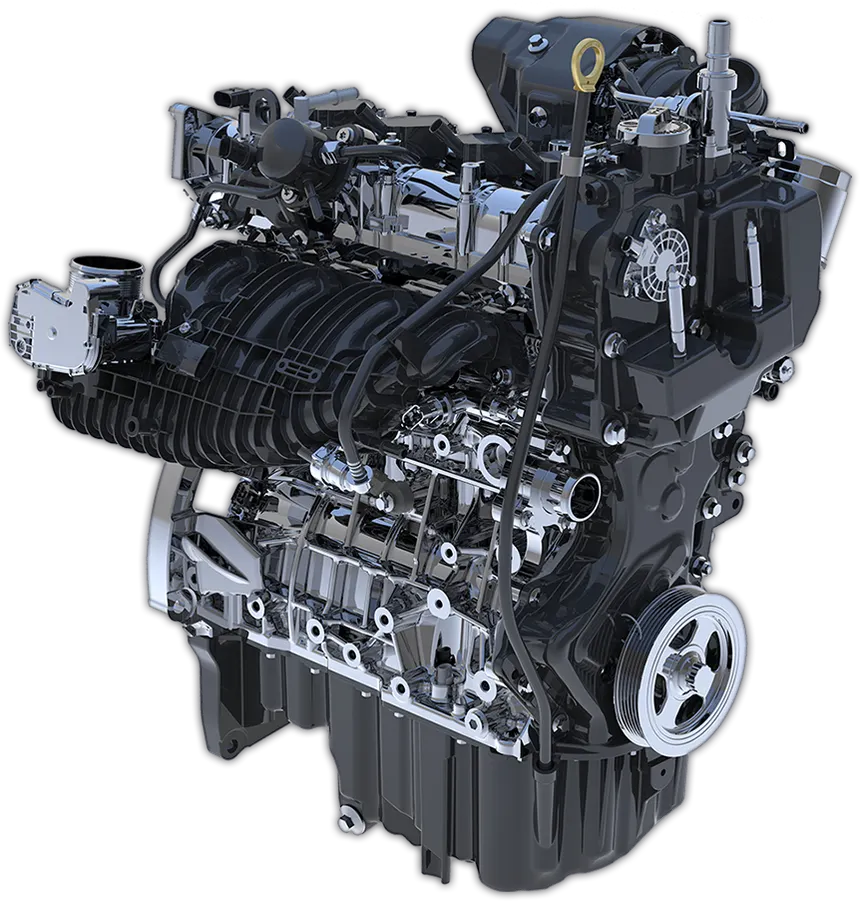
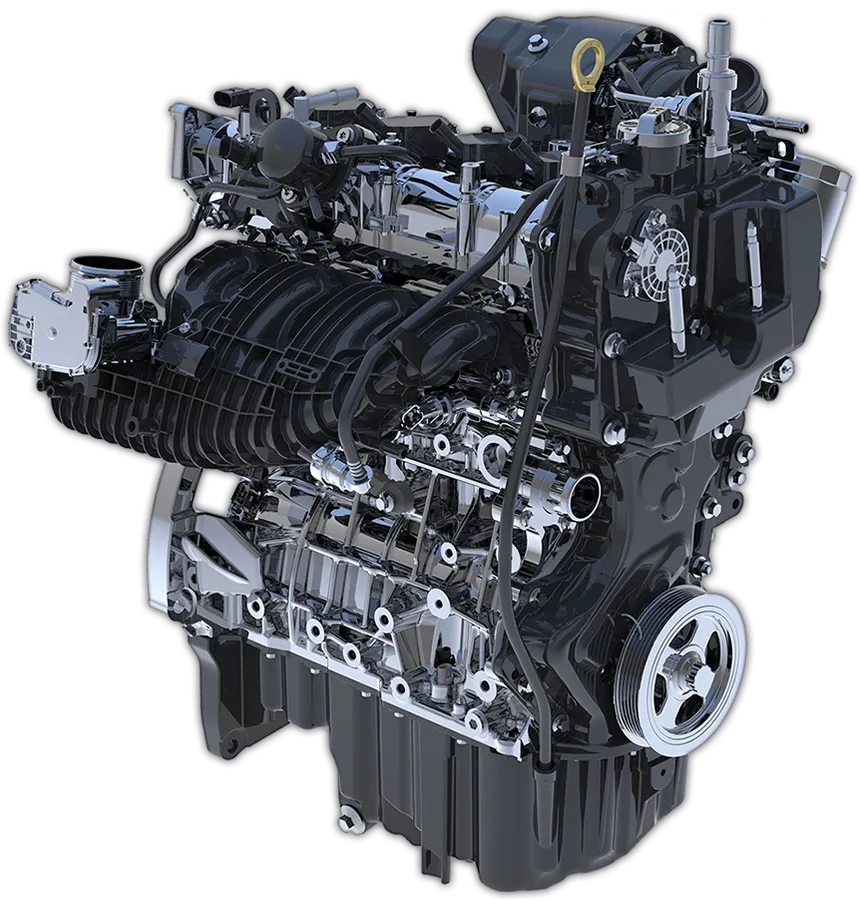
As you read this, there is a Chinese petrol engine in production with a Guinness World Record certified thermal efficiency of 48.41%. For context: Formula 1 power units sit around 50%. A modern European or American petrol engine typically operates between 35 and 40%. The Toyota Prius hybrid, regarded as the global efficiency benchmark for 28 years, peaks at around 41%. The Chinese are building street-legal engines that almost touch what a Mercedes F1 unit can manage.
Here’s what happened while nobody in Europe was watching. By the end of this piece you’ll have to decide for yourself whether it’s an engineering story or something rather darker.
BYD: the one who opened the gates
We start with BYD because BYD was first. In November 2020, the Chinese manufacturer unveiled the Xiaoyun engine, a 1.5-litre four-cylinder designed exclusively for hybrid use, with no intention of driving a car solo. The headline figure that day: 43.04% peak brake thermal efficiency. At that moment, it was the most thermally efficient production petrol engine on Earth.
The recipe wasn’t a secret. Compression ratio 15.5:1, Atkinson cycle, cooled EGR, long stroke-to-bore ratio, removal of mechanical accessory drives in favour of electric ancillaries, split cooling between cylinder head and block. None of these individual elements were revolutionary. But the combination, optimised exclusively for operation inside a DM-i hybrid system, was.
Five years later, BYD has refined that same concept across four further generations. The DM 5.0, launched in 2024, pushed the figure to 46.06%. And in March 2026, BYD announced the DM 6.0, which officially exceeds 48% thermal efficiency and delivers combined ranges of up to 2,300 kilometres on a single tank and a single charge. Read that again. Two thousand three hundred kilometres without stopping to refuel or recharge. Fifteen years ago that figure would have been science fiction.
How many DM-i hybrid vehicles has BYD sold since 2021? Millions. Literally. BYD became the world’s biggest manufacturer of electrified vehicles in 2024, overtaking Tesla. And roughly half of that lead is not pure battery-electric. It is plug-in hybrids with a petrol engine inside. A petrol engine more efficient than anything Volkswagen, Stellantis, BMW, Mercedes or Ford currently builds.
Geely: the Guinness record almost nobody has reported
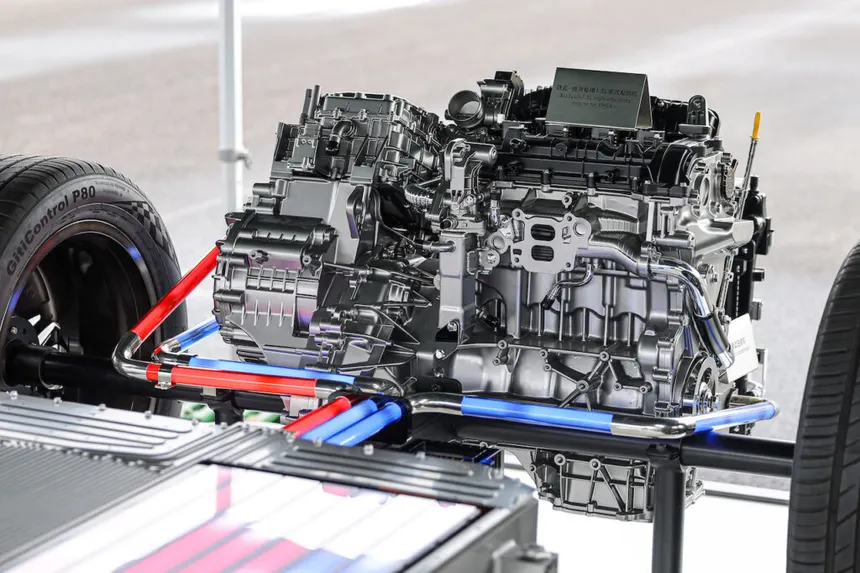
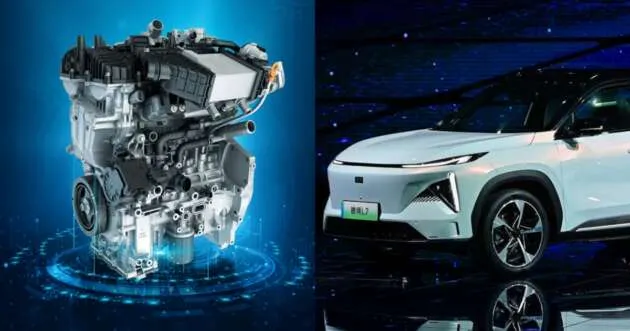
On 13 April 2026, Geely launched a new hybrid system called i-HEV with a petrol engine they call the BHE15. The official certified figure: 48.41% brake thermal efficiency. A Guinness World Record, formally verified by independent bodies.
That number is now the world ceiling for a production petrol engine. And Geely has put it inside the Geely Emgrand, a compact saloon that sells for around €12,000 in China, with a Guinness-certified fuel economy of 106 miles per gallon in mostly highway driving. A €12,000 car achieving what no Japanese hybrid has ever managed.
How did they pull it off? Geely lays out the engineering in detail. A stroke-to-bore ratio of 1.39 — a very long stroke, an obsessive efficiency optimisation. Compression ratio 15.5:1. Direct injection at 500 bar. Ignition system delivering 150 millijoules per spark, a brutal figure. Miller-cycle valve timing. A combustion system they call “Fire Tornado”, with intense in-chamber swirl to accelerate flame propagation. Internal friction reduced by 16.3% through precision machining, DLC coatings and ultra-low-viscosity engine oil. The R&D behind it reads more like aerospace than mass-market automotive.
One critical detail: this engine never operates alone. It’s integrated into a P1+P3 electric motor layout (one motor on the crankshaft, the other at the transmission output). The petrol engine only ever spins inside its sweet spot of efficiency, while the electric motors handle the rest. The philosophy is the same as the one Aramco unveiled with its DHE — which we covered in NEC — but with a crucial difference: the Chinese have been mass-producing this approach for five years while Aramco is still showing prototypes at trade fairs.
Chery: the one aiming for 48% with proprietary tech
The third player is Chery, a company with 27 years of proprietary engine R&D. In October 2025, its export brand Omoda & Jaecoo announced at its International User Summit a petrol engine with a declared target of 48% thermal efficiency. Important nuance, because it matters: that 48% is a declared target, not in production yet. Chery’s currently-in-production unit, the fifth-generation CSH (Chery Super Hybrid), comes in at 44.5%. Strong figure, but not as brutal as Geely’s or BYD’s.
Where Chery does land a punch is in its recipe. Its 48% prototype includes an expansion ratio of 26:1 (not compression — expansion — pushing the Miller cycle to its theoretical extreme), a triple-link dual-curve mechanism that allows different stroke lengths for compression and expansion (Honda has been chasing this idea for a decade without getting it to production), 35% EGR rates and ceramic thermal insulation coatings. If Chery brings it to the road, it changes the field. If they don’t, it stays a concept with headlines. NEC doesn’t sign promises. We wait until it’s running.
For 2025, Chery announced plans to launch 39 hybrid models. Thirty-nine. While European manufacturers launch one or two a year and trumpet it as an industrial milestone.
Great Wall and the second tier
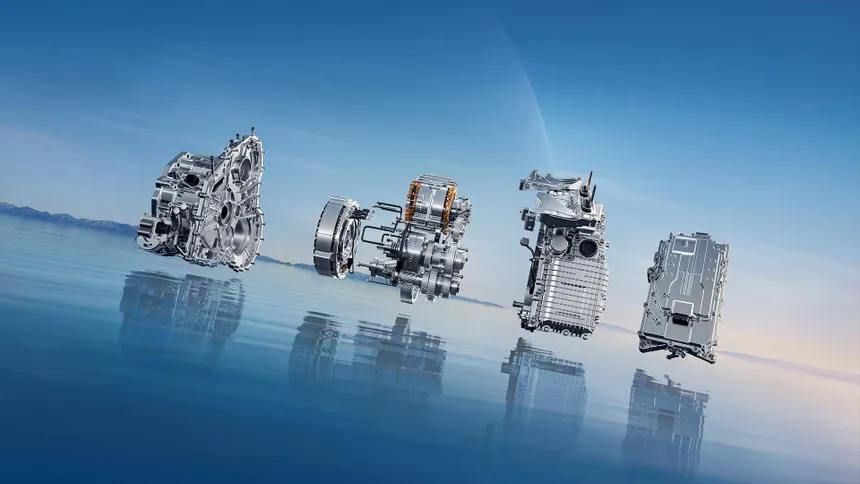
To round out the picture: Great Wall Motor (GWM), another Chinese giant, plays a different game. Its 4N20 engine, fitted to the Haval H6 GT, declares 38% thermal efficiency. A solid engine, but compared to BYD, Geely or Chery, it’s outside the 48% war. Where Great Wall does have a story is its proprietary Hi4 hybrid system in PHEV and full-hybrid variants, which it plans to deploy across its entire range. Other Chinese names worth tracking on the same board: Changan, GAC Trumpchi and Li Auto. None of them lead in thermal efficiency, but all are entering the European market and all carry a petrol engine of some kind inside.
In other words: even the Chinese manufacturers NOT leading the thermal efficiency war are building petrol engines superior to anything coming out of European plants today.
What Europe was doing meanwhile
This is where the story gets heavy.
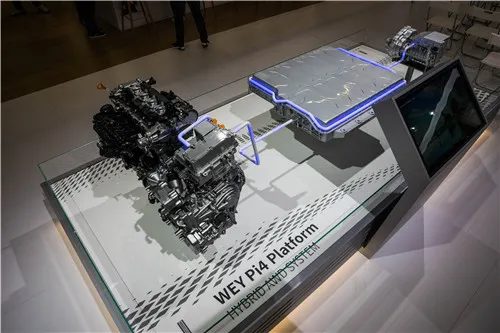
While the Chinese were optimising five generations of hybrid petrol engines, Europe was doing the following. In 2019, the European Commission unveiled the Green Deal. In 2022, the European Parliament approved an effective ban on new internal combustion vehicle sales from 2035. In parallel, Stellantis closed plants. Volkswagen cut headcount. Audi paused new V6 development. Mercedes announced (and later partially walked back) the end of combustion. Renault moved all its engines off its balance sheet and into a joint venture, Horse Powertrain, which later took Saudi Aramco onto its share register.
The European combustion industry isn’t reinventing itself. It’s being dismantled. That’s not opinion: that’s closed plants, lost jobs, cancelled R&D programmes and high-cylinder-count engines that simply will not be built any more.
And there’s one more figure. One that’s hard to swallow. According to the Center for Strategic and International Studies (CSIS), a serious U.S. think tank, the Chinese government injected at least $230.8 billion into its electric vehicle industry between 2009 and 2023. That figure is, by CSIS’s own admission, a conservative estimate, because it excludes local subsidies and support to the wider supply chain. CATL alone, the battery giant, received $809 million in government subsidies in 2023. BYD received $2.1 billion in 2022 alone.
Between 2018 and 2023, China tripled its annual investment in the sector. We’re talking $45.3 billion in 2023 alone. In other words: the Chinese government, simultaneously, was financing the electric transition inside its own country with stratospheric figures, while its manufacturers kept optimising petrol engines at a pace no European R&D team can match — because European R&D teams are being dismantled.
The hard question
Now put the pieces together. And think.
Europe voluntarily decided to ban the technology in which it held a century of advantage — the internal combustion engine — in pursuit of an electric transition that, conveniently, depends on batteries controlled by China, rare earth minerals controlled by China and industrial supply chains controlled by China. Meanwhile, China spent $230 billion growing its electric industry to the necessary scale, and at the same time, without pausing for a single day, kept refining petrol engines into the most efficient combustion units in industrial history.
You tell me. Is this a series of rational and disconnected decisions taken independently by each actor? Or is it something else?
I won’t sign the answer for you. NEC isn’t a geopolitics publication. NEC is a motor publication. But the data are there. And the data don’t lie.
What I can tell you, without dressing it up, is this. If in ten years you’re driving a hybrid car — because I guarantee you’ll be driving a hybrid, not a pure EV — and you look under the bonnet, there’s a high probability that the engine was designed by a team in Hangzhou, in Shenzhen or in Wuhu. Not in Stuttgart. Not in Munich. Not in Wolfsburg. And certainly not in Valencia, Pamplona or Vigo.
The Chinese aren’t copying anyone. Not any more. They’re now defining the global state of the art in combustion engineering, while we were deciding that combustion no longer mattered.
What comes next
Geely will roll out i-HEV across the Xingrui and Xingyue L during 2026. BYD will progressively fit DM 6.0 to the entire Qin, Han, Song, Yuan, Sealion, Seal and Tang ranges. Chery will deploy its 39 hybrid models across export markets including Europe, through Omoda and Jaecoo. All of them arriving on Spanish, Italian and German showroom floors with prices between €18,000 and €35,000 for cars that do what a Mercedes E-Class hybrid doesn’t do for €70,000.
What do you think happens to your Volkswagen Tiguan hybrid when, in the dealership next door, there’s a Jaecoo 7 PHEV with a 44.5%-thermal-efficiency engine, 1,200 km combined range and a price tag €12,000 lower?
We both know the answer. So do the boardrooms in Wolfsburg. And that’s why, in Wolfsburg, Munich and Stuttgart, nobody has been sleeping easy for months.
The combustion engine isn’t dead. We took the oxygen off it voluntarily, while the Chinese refined their version to within a whisker of Formula 1. Whether we still have time to react, or whether — once again — we’ll be left watching, that remains to be seen.
Check you’re still alive.