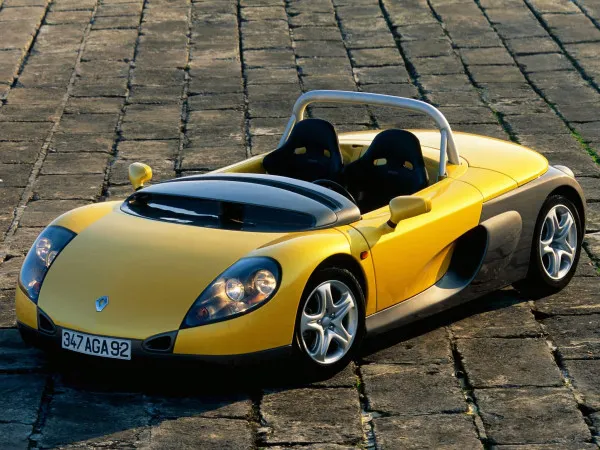
Renault Sport Spider: The Car That Dared to Take Your Windscreen Away
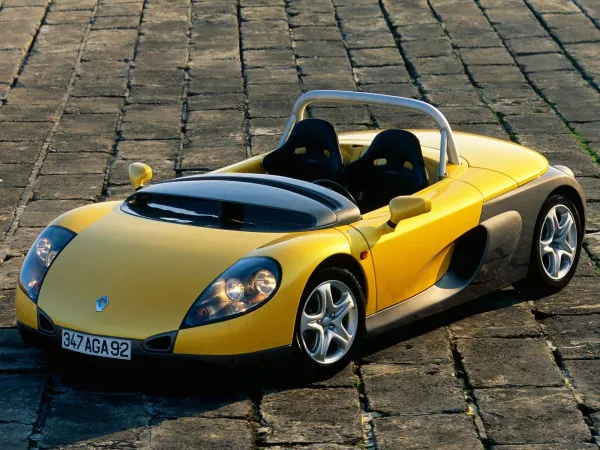
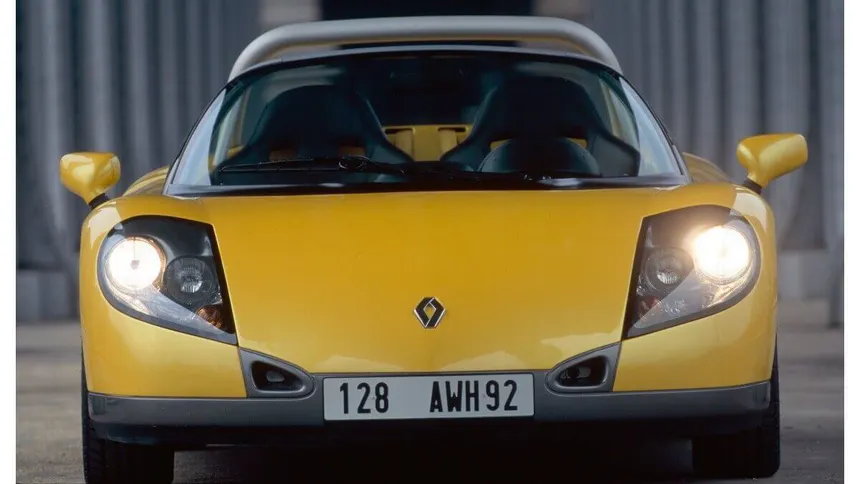
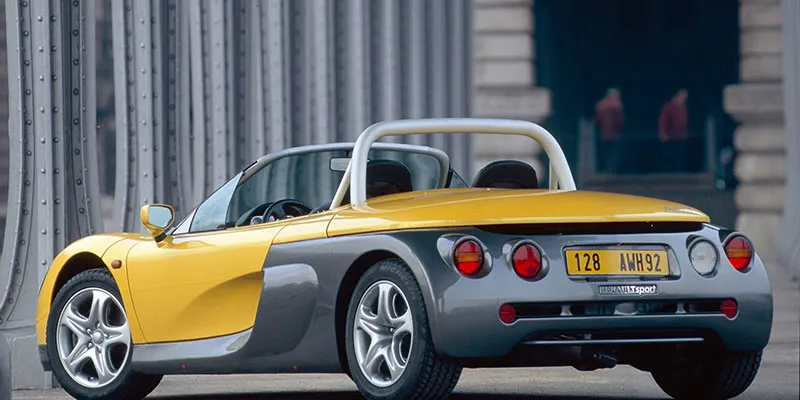
Picture a product meeting at Renault in the mid-1990s. Someone stands up and says: “Let’s build a two-seater. No roof. No windscreen. We’ll fit an air deflector instead, and we’ll tell customers to wear a crash helmet on the road.” In any sane company, that person gets walked quietly to the door. At Renault, they built the thing and sold it. That car was the Renault Sport Spider, and the fact that almost nobody remembers it tells you everything about how the world treats honesty when it shows up wearing the wrong clothes.
If you grew up watching British motoring telly, you may half-remember the Spider from a different angle entirely. Not as a road car, but as the swarm of identical machines buzzing around the support races at the British Touring Car Championship, with a young Jason Plato winning nearly everything in sight. We’ll get to that, because that is where the Spider finally made sense. But first we have to talk about the road car, and about the one thing that defines it: aluminium.
The aluminium tub, and the trap inside it
Here is where the Spider earns your respect and trips over its own feet in the same breath.
The chassis is aluminium. A welded, extruded box structure, with composite plastic body panels bolted on top. On paper this is exactly what you want in a car like this. Light, stiff, a skeleton that won’t flex when you load it up mid-corner. The philosophy is textbook: take weight out wherever you can, add material only where it’s structurally necessary, and let physics do the rest.
There’s a story, the kind that gets passed around workshops, that when a senior Renault figure first saw the bare chassis, he genuinely thought it was the industrial jig used to assemble the car, not the car’s own structure. It was that bulky. And that bulk is the detail aluminium never lets you forget.
Because the road-going Spider weighed 930 kg. A number that sounds fantastic until you put it next to the car that donated its engine. The Clio Williams, an ordinary steel hot hatch with doors, glass, a roof and a back seat, sat somewhere around 980 kg depending on the version and the source you trust. Call it fifty kilos either way. All that exotic aluminium architecture, all that radical engineering effort, saved you roughly the weight of a passenger against a Clio. And much of even that modest saving was eaten by the sheer size of the tub itself.
This is what happens when you work aluminium without decades of accumulated know-how. Yes, aluminium is lighter than steel for a given volume. But it’s also less stiff. To hit the same rigidity you need more material, thicker sections, wider profiles, and the weight you saved quietly walks back in through the side door. Aluminium isn’t magic. It’s a material with rules, and you’d better know those rules cold before they make you pay. Renault was learning on the job, in live production, with real cars rolling out of the Alpine plant in Dieppe.
There’s a second thing aluminium demands that steel forgives far more readily: the joints. You can weld a steel chassis and understand exactly what’s happening, because we’ve been welding steel for a century. Aluminium behaves differently under heat. The welds need different treatment, different profiles, a different way of thinking about the whole structure. That’s why the Spider’s tub ended up such a bulky box. Not because anyone wanted it big, but because giving it rigidity with that material and that level of experience meant adding volume. Every centimetre of that tub is an engineering decision made by people discovering the route as they walked it. The Elise, using the same raw material from the same Norwegian supplier but a bonding technique rather than welding, solved the identical problem with two hundred fewer kilos. The difference isn’t the aluminium. It’s how you work it.
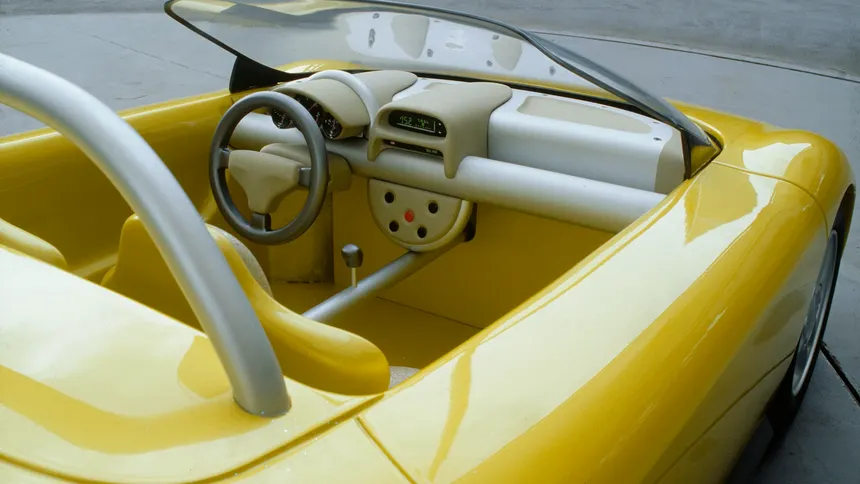
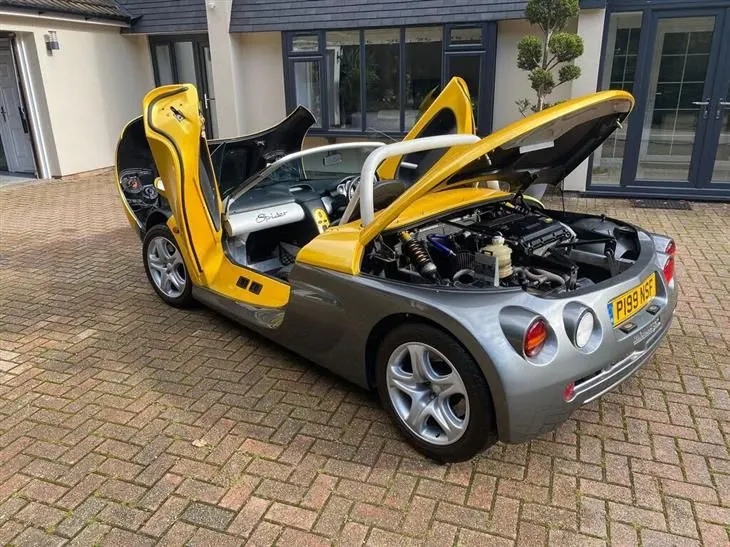
And one thing needs spelling out, because the Spider was not a fully aluminium car, and pretending otherwise would be selling you a line. The core, the central monocoque wrapped around the driver, is indeed that welded, extruded aluminium structure. But the suspension and the engine-gearbox assembly hang off a steel subframe bolted to the aluminium tub. That’s standard practice for this kind of build: aluminium gives you the stiff, light cell, and steel handles the concentrated load points, the places where the suspension is feeding forces in and out over every bump and every corner, because there steel is easier to calculate, cheaper to make and more forgiving. Mixing materials isn’t cheating. It’s putting each one where it does its best work. And the Spider hid a lovely detail in there too: the powertrain wasn’t bolted rigidly to the chassis but mounted on an oscillating, aeronautically-inspired hinge that all but eliminated engine vibration reaching the rest of the car. You don’t expect that kind of finesse from something so agricultural on the outside.
And let’s be clear about something, no half-measures: the Spider is not a badly built car. It’s a car built with the candour of someone attempting something hard for the first time and not hiding the seams. That oversized tub is, in its own way, a document. It tells you exactly where Renault stood with aluminium in 1996. It tells you what they knew and what they hadn’t figured out yet. And for anyone who enjoys understanding machines from the inside, that’s worth more than a flawless finish that teaches you nothing.
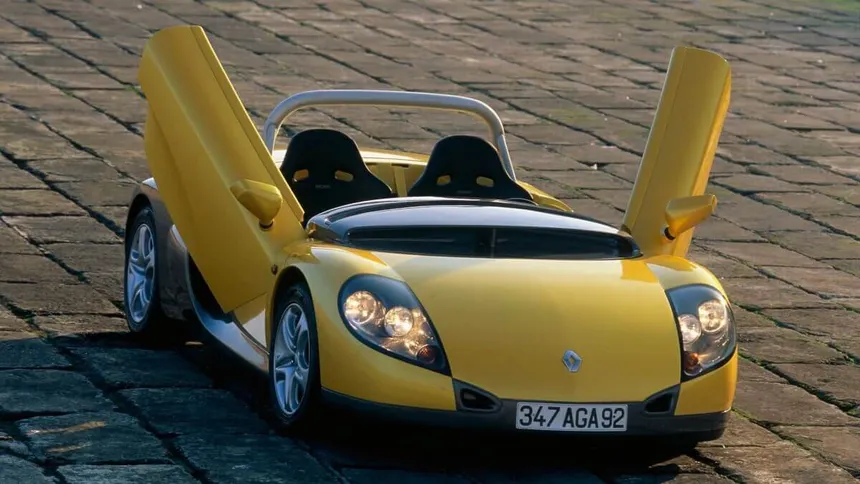
A familiar engine, turned back to front
Behind the driver, mid-mounted, sits the F7R. A 1,998cc four-cylinder, sixteen valves, 150 PS. The same lump as the Clio Williams and the Mégane Coupé, rotated 180 degrees and dropped where it belongs in a car that means business.
And there’s no trickery here. Naturally aspirated, no turbo to muffle the soundtrack or soften the throttle. A five-speed manual. Rear-wheel drive. Double wishbones at all four corners. And the part that matters most, the part that defines the whole character: no electronics riding to your rescue. No ABS. No traction control. No brake servo. No power steering. On the early cars, not even a heater.
You, the engine, four tyres and the laws of physics. That’s the deal. Brake too late and you’ve braked too late. Get greedy with the throttle on corner exit and the rear axle will let you know without asking permission. There’s no ECU listening in and quietly correcting your mistakes. You’re on your own. The Chris Harris fantasy of a car that talks to you and demands everything of you, built a good twenty years before that became a YouTube genre.
For context: the Spider would do 0-100 km/h in around 6.5 seconds and run out at roughly 215 km/h. In 1996, with 150 horsepower, that wasn’t a headline-grabbing figure. A Porsche Boxster of the same year, with 204 horsepower, would walk away from it in a straight line. But the Spider was never about straight lines. It was about corners, about loading the chassis, about the unfiltered sensation of a car pinned to the tarmac feeding information straight up through the wheel.
And turning the engine through 180 degrees wasn’t some bored engineer’s flourish. In the Clio the unit sits up front, driving the front wheels. To put it behind the driver turning the rears, the obvious route would have been to redesign half the car. Renault did something cleverer and cheaper: it took the engine-and-gearbox package as it was and spun it round. What pointed at the nose in the Clio points at the tail in the Spider. That’s the engineering of using what you already have rather than reinventing what already works. It’s the kind of solution that makes a spanner-wielder grin, because it’s exactly what you’d do on the bench if someone handed you that problem and a tight budget. Take a good part and put it where the car needs it, instead of fabricating a new one for the sake of it.
The payoff is a rearward weight bias and a low centre of gravity, precisely what a corner-hungry car wants. With the mass concentrated in the middle, between the axles, the Spider changes direction with an agility no power figure will ever convey. That, not the stopwatch on a straight, is what truly defines this car.
The elephant in the room is called Lotus Elise
You cannot discuss the Spider without discussing the Elise, because they arrived almost together, chasing the same idea, and ended up worlds apart.
Both were light mid-engined two-seaters with aluminium chassis. The structures even came from the same Norwegian supplier, albeit using different bonding techniques. Same recipe on paper. But the Elise weighed 723 kg. Two hundred kilos less than the Spider. Two hundred. That gap is the difference between knowing how to work aluminium and learning how to work aluminium.
And the market read it instantly. Lotus sold more than ten thousand Series 1 Elises. Renault built somewhere around 1,640 road-going Spiders between 1996 and 1999, plus roughly 90 Trophy competition cars. The Elise scooped performance car of the year awards, won handling comparisons, became a living legend that ran for decades. The Spider didn’t even make the shortlists. Too expensive, too uncompromising, and in the end not even light enough to justify the sacrifice.
That’s the part that stings. The idea was brilliant. The execution stopped halfway. Renault gambled hard and lost the product battle. But here’s the twist: it didn’t lose everything.
What the Spider actually left behind
Because the Spider was the first car ever to wear the Renault Sport badge. The first. Everything that came afterwards (the Clio RS models that embarrassed cars costing twice as much, the Mégane RS that went chasing Nürburgring records, the entire culture of scalpel-sharp French hot hatches) traces straight back to this windscreen-less oddity hand-built by Alpine in Dieppe.
The product failed. The brand born from it became enormous. That’s a legacy that never showed up on a 1997 balance sheet but still defines Renault today.
The Spider Trophy: when the car finally made sense
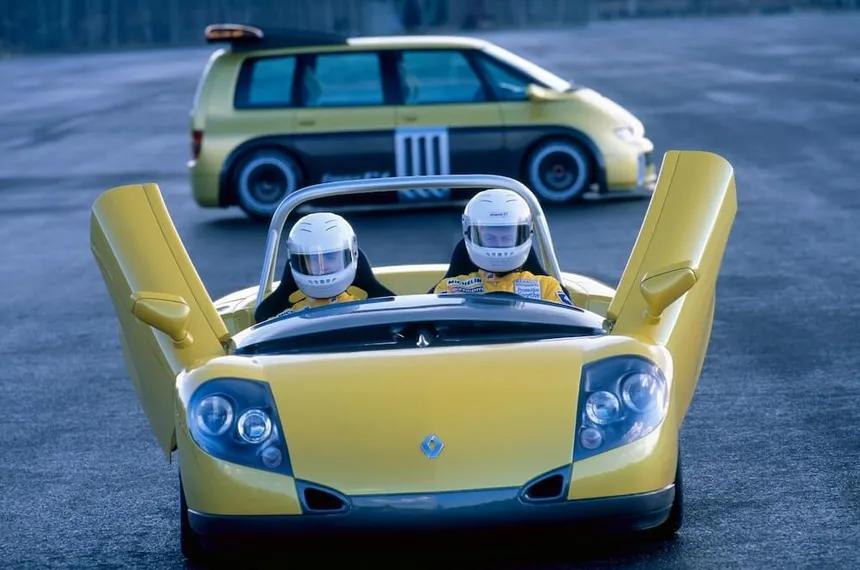
If the road Spider was an experiment with question marks hanging over it, the Spider Trophy was exactly what the car had wanted to be from the first sketch. A one-make European series, identical cars, young drivers fighting wheel to wheel, supporting Formula 1 weekends and the BTCC.
The race engine was lifted to 180 bhp. It started with the original H-pattern manual, but by the end of the first season every car had switched to a six-speed Sadev sequential. Bilstein suspension. Slick tyres. The car stripped of everything that was pointless on the road and finally, on track, didn’t need justifying.
And it made names. Jason Plato, later a BTCC great and a familiar face on British motoring television, demolished the inaugural UK Spider Cup with eleven wins from fourteen races. Then in 1999 Andy Priaulx did something even more brutal: he won all thirteen races of the thirteen contested, took pole for every single one, and set fastest lap in all but two. That’s not winning a championship. That’s signing the competition’s death certificate.
The Trophy proved the concept worked in the right setting. The problem was never the idea of a radical mid-engined two-seater. The problem was trying to sell one with number plates to people who had to pay for it, drive it in the rain, and park it on the street.
So what was the Spider, in the end?
It was an act of nerve. One of those decisions a healthy marketing committee would never have signed off, and which deserves respect precisely for that reason. Renault allowed itself to build a car that made no commercial sense, weighed more than it promised, sold badly, and aged into a collector’s curiosity that plenty of people can’t even identify when they see it parked.
But it was also the car that dared to take your windscreen away to remind you that driving, real driving, is about you and the machine and nothing else. No screens in between. No warnings. No safety net.
It wasn’t perfect. Aluminium beat it on weight, the Elise beat it on the market, and time filed it away as a footnote. But few cars have ever been so clear about what they wanted to be. And in a world where cars look more like living rooms on wheels every year, that clarity is worth far more now than it was then.
Climb into one, if you ever get lucky enough to find one. Put the helmet on, because it means it. Fire up that four-cylinder snarling right behind your skull. Find a road full of corners and feel the car talk to you through the wheel, the seat, your hands.
Then check you’re still alive.