
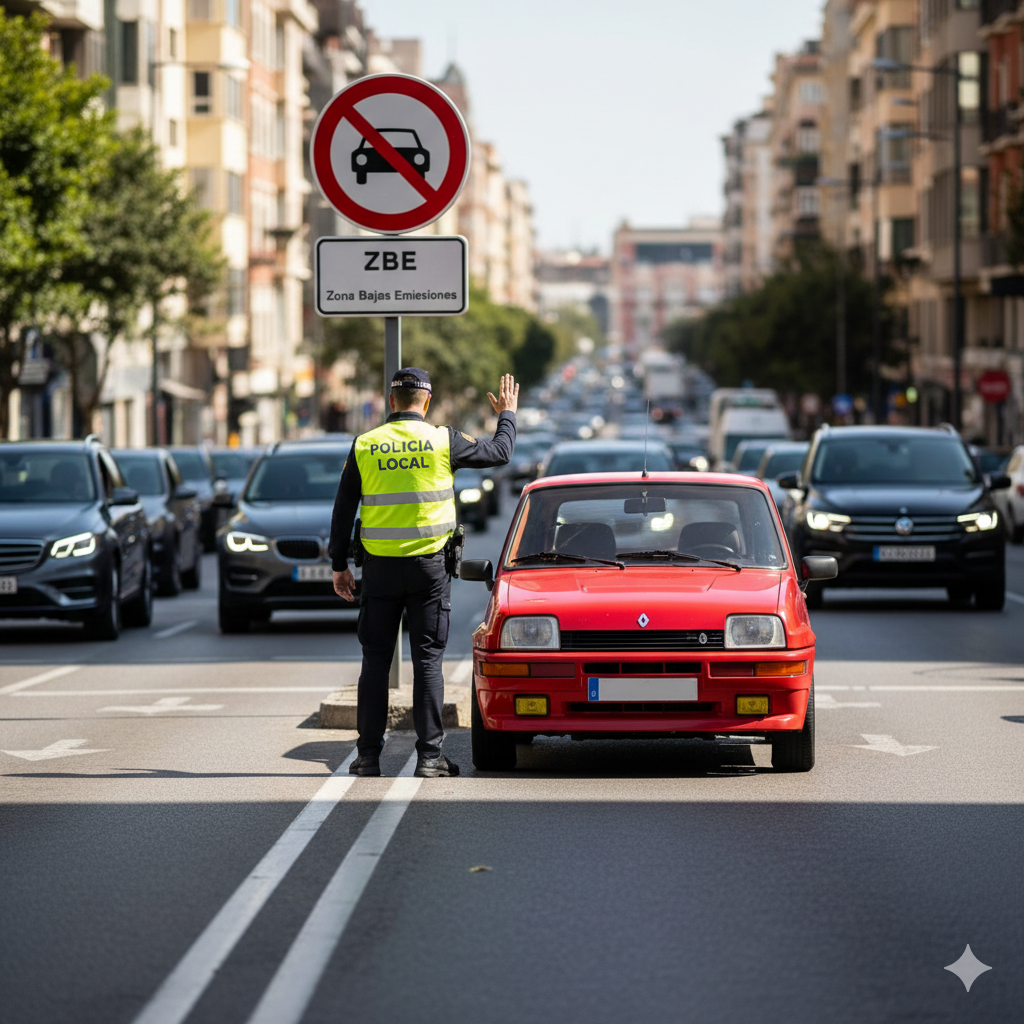
Low Emission Zones: The Green Trap That Punishes Those Who Can Least Afford It
Spain’s LEZs don’t filter pollution. They filter income. And they sell it to you as ecology.
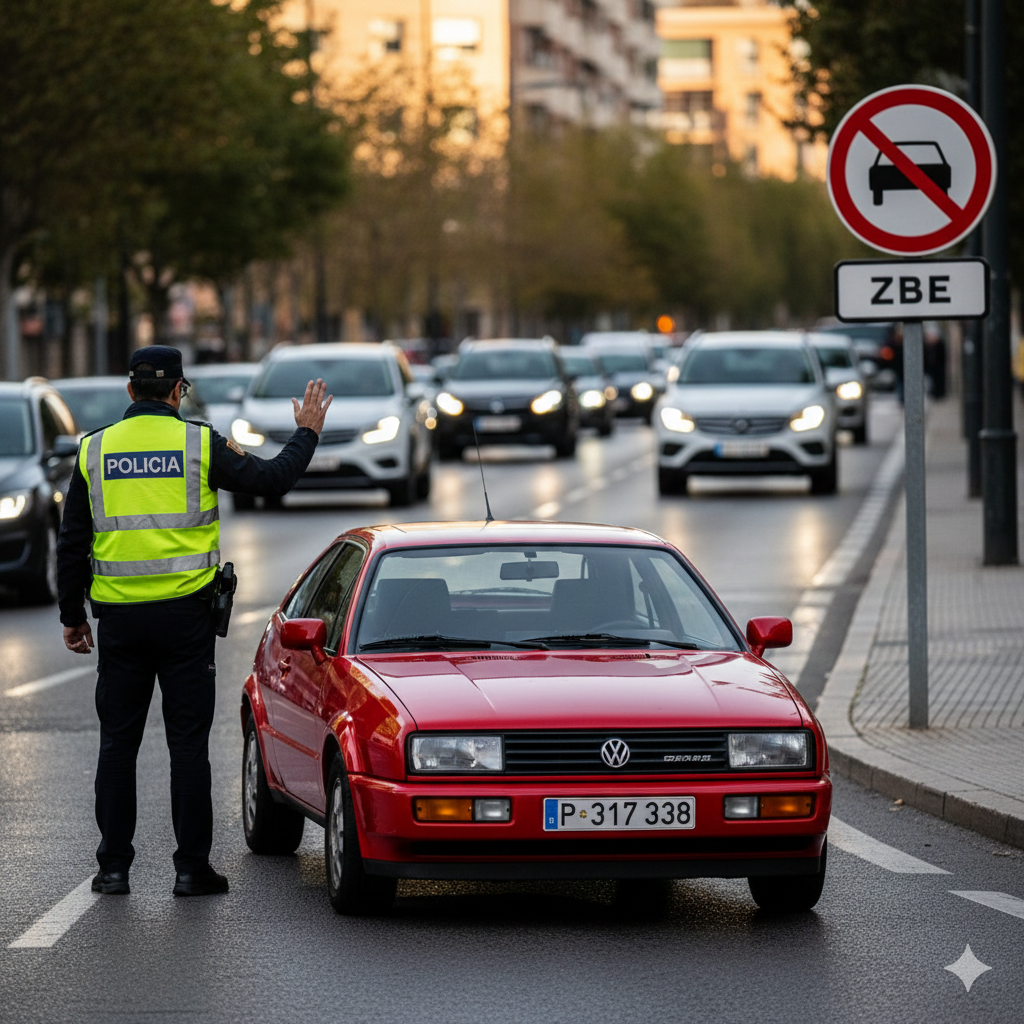
I’m going to say something a lot of people think but very few dare to write: Low Emission Zones are not an environmental measure. They’re an economic measure dressed in green. A hidden urban toll that punishes those who can’t afford a new car and rewards those driving a two-tonne SUV with an ECO sticker.
And before anyone calls me a climate denier, let me be clear: I’ve had my hands inside engines for over 30 years. I’ve diagnosed more cars than politicians have signed regulations. I’ve seen how a well-maintained Euro 4 diesel leaves the workshop running like a Swiss watch. And I’ve seen how a brand-new plug-in hybrid runs exclusively on petrol because its owner never bothers to charge it. Guess which one is allowed into the LEZ and which one isn’t?
The label system: an ID that measures your year of birth, not your emissions
Spain’s DGT environmental label system doesn’t measure real emissions. It measures registration date. Full stop. A petrol car registered in 2006 gets a C label. A 2005 diesel gets a B. A petrol car from before 2000 gets no label at all — banished from the city like a leper.
But the system doesn’t distinguish between a 2004 Polo 1.4 emitting 140 g/km of CO₂ and a 2023 BMW X5 with a C label emitting 180 g/km and weighing 2,200 kilos. The Polo can’t get in. The X5 can. Where’s the environmental logic?
And here’s the worst part: according to EU data, many plug-in hybrids consume up to three times more than their official figures because their owners never plug them in. They run permanently on combustion, carrying an extra 200 kg of dead battery weight. But they wear an ECO label. They park for free, drive without restrictions, and feel wonderfully green while emitting more than my 1990 Corrado G60.
The numbers nobody wants to put on the table
The average age of Spain’s vehicle fleet has reached 14.5 years in 2025, according to ANFAC’s IDEAUTO report using DGT data. We have the second oldest fleet in Europe, behind only Greece.
But the numbers really hurt when you break them down:
- 12.9 million passenger cars are over 15 years old. Nearly half the fleet.
- 8.5 million vehicles are over 20 years old.
- Electrified vehicles (pure electric and plug-in hybrid) represent just 1.6% of the total fleet.
- Vehicles with no label plus B-label vehicles together account for 59.2% of the fleet. Six out of ten cars in Spain.
Now think about that. Six out of ten cars in Spain are at risk of being expelled from cities. Not because they pollute more than a new SUV, but because they’re old. And being old in Spain — whether you’re a person or a car — is getting more expensive every day.
The solution? Buy a new car. If you can.
This is where the trap snaps shut. The average price of a new passenger car in Spain sits around €23,700, according to the Tax Agency. The average gross annual salary is €28,050 according to Spain’s National Statistics Institute. In other words, a new car costs nearly an entire year’s salary.
And the trend isn’t improving. Over the last decade, car prices have risen 47%. Salaries? 10.4%. Cars are going up four times faster than what you earn. Manufacturers have stopped making small, affordable cars to focus on ever-larger, more tech-laden, more expensive SUVs.
Government incentives? The MOVES Plan was a mirage for many. It required you to front the money and wait months for reimbursement. Perfect if you have a financial cushion. Useless if you live paycheck to paycheck — which is the reality for millions of families.
Meanwhile, the ratio of new to used cars sold has gone from 7.5:1 in 2020 to 4.3:1 in 2025. The second-hand market is booming because new cars are out of reach. But of course, buying a 15-year-old used car won’t get you a label. You’re trapped.
The public transport paradox
“Use public transport,” they say. Brilliant. If you live in central Madrid or Barcelona, you probably can. But if you live in a peripheral neighbourhood, in an industrial area, in a town that technically falls within a municipality required to implement an LEZ… what bus do you catch at 6 AM to get to your factory shift?
Over 150 municipalities are required to implement LEZs, but by the end of 2025 only 34.3% had them fully operational. Delays pile up, legal challenges multiply, and those that do enforce them use wildly different criteria. Valencia rejected implementing theirs according to national regulations. Madrid extended its moratorium for unlabelled vehicles until December 2026. Barcelona restricts B-label cars during pollution episodes. Every city does its own thing, and the driver has no idea what to expect.
What would actually reduce pollution
If we genuinely wanted to cut urban emissions, we’d do things differently:
We’d measure real emissions per kilometre, not registration year. An inspection-based system with actual exhaust gas analysis would reclassify thousands of vehicles that are unfairly penalised and expose others that pass the filter simply for being new.
We’d incentivise maintenance of the existing fleet instead of forced scrapping. A car well maintained for 20 years has a lower total carbon footprint (manufacturing + use) than buying a new car every five years. The pollution from manufacturing a vehicle is enormous, and nobody counts it.
We’d invest in real public transport before banning private vehicles. You can’t take the car away from someone who has no alternative. That’s not ecology — that’s classism.
We’d tax vehicle weight, not age. A 2,200 kg SUV destroys more road surface, generates more brake and tyre particles, and takes up more urban space than a lightweight hatchback from any era. With Euro 7, even the EU acknowledges that particulate emissions from brake and tyre wear are a real problem, especially in heavy vehicles.
This isn’t about ecology. It’s about money.
LEZs in their current form are a hidden tax on poverty. They don’t eliminate pollution from city centres. They eliminate poor people from city centres. The cars keep coming in — they’re just more expensive ones now.
And the subliminal message is devastating: if you can’t afford a new car, you don’t deserve to move freely through your own city. If you drive an old car, you’re a second-class citizen. It doesn’t matter that you’ve maintained it impeccably. It doesn’t matter that it emits less than your neighbour’s Range Rover. Your label says you’re part of the problem.
I believe in reducing emissions. I believe in clean air. I believe in a better future for our children. But I don’t believe in using ecology as an excuse to create a two-speed society where mobility depends on your bank balance.
LEZs need a deep reform based on real data, not political marketing. And until they get one, they’ll remain exactly what they are: a green trap for the poor.
I’m Toni. Over 30 years among engines, robotics, and production lines. I write what I see, not what sounds good. If this made you think, share it. If you disagree, write to me. But don’t come at me with the official narrative — I’ve spent too many years smelling engine oil to swallow it.
1 thought on “LOW EMISSION ZONES”