The Spanish Factory That Started Fixing Solihull’s Homework
Chris Harris once said the joy of an old Land Rover is that it forgives you for everything except neglect. Fair enough. But nobody in Britain ever built the version that admits the factory itself needed forgiving too. That version was built in Spain, by a company that started out making farm ploughs, and it’s called the Santana Ligero. Its stablemate, the Santana 2000, tells the same story from a different angle. Between them, they’re proof that a licensee can outgrow its licensor, quietly and steadily, one disc brake and one turbodiesel engine at a time.
From ploughshares to press tools
The company behind this had no business building off-roaders. Metalúrgica de Santa Ana was founded in 1955 in Jaén, southern Spain, with a start-up capital so small it would barely cover a modern PR budget, under a state industrial development scheme called Plan Jaén. Its job was agricultural machinery. Then, in 1956, it signed a licensing deal with The Rover Company to assemble Land Rovers on Spanish soil — the same arrangement Rover had elsewhere with Minerva in Belgium or Tempo in Germany, all designed to plug the gap between what Solihull could build and what the world wanted to buy.
Spain pushed for the newer Series II rather than the ageing Series I the British initially proposed, and won that argument. Assembly began in 1958 from CKD kits shipped from Solihull, with local content climbing steadily until Spanish-made parts reached one hundred percent by 1968. For two decades, Santana did what a licensee is supposed to do: it built somebody else’s car, competently, with the occasional home-grown variant like the 1976 six-cylinder 109 or the 1978 Cazorla special edition. Nothing revolutionary. Then the parent company started falling apart.
When the boss can’t pay the bills, the branch office starts thinking for itself
By the late 1970s British Leyland, then Land Rover’s owner, was in genuine crisis — strikes, underinvestment, quality that swung wildly depending on which shift built your car. And this is the detail that matters to anyone who’s actually turned a wrench: while the parent company bled out, the Spanish subsidiary quietly started solving problems Solihull wasn’t getting around to.
Santana introduced anatomical seats, disc brakes, turbodiesel engines, taper-leaf and coil springs, and civilian-spec Forward Control versions before Land Rover offered any of it. That’s not marketing gloss, that’s a documented sequence of engineering decisions. Once a licensee starts fixing the parent brand’s unsolved problems, it has stopped being a branch office. It’s become a manufacturer that still happens to pay royalties for a badge.
1980: the civilian Lightweight that Land Rover never dared build
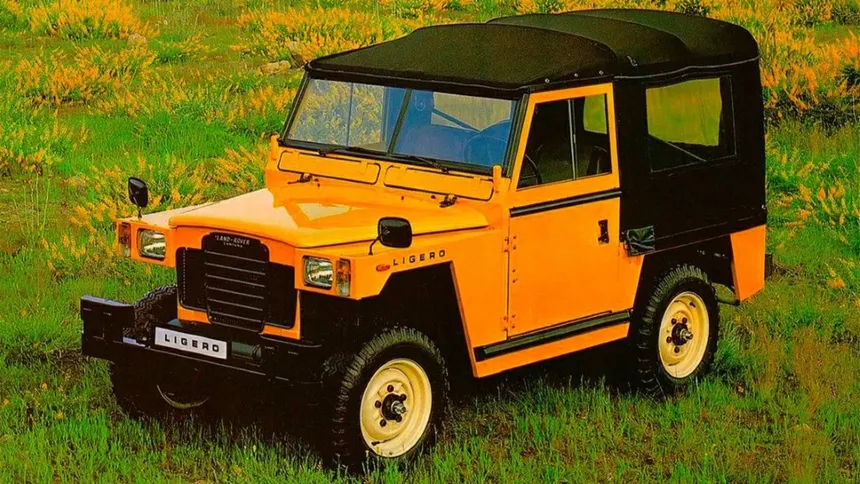
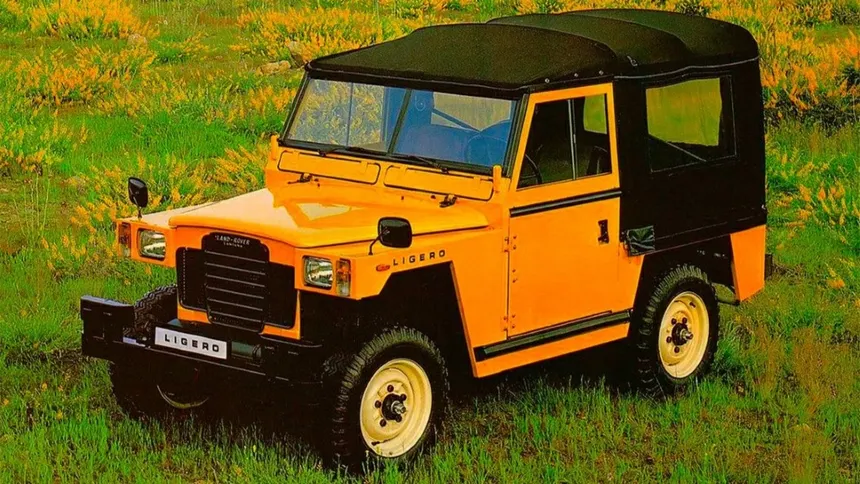
That climate of technical independence produced the 88 Ligero in 1980. Its starting point was the 88 M, the lightweight short-wheelbase military variant already serving with the Spanish Army. Santana civilianised it: same rugged body, now finished in loud, youthful colours — yellow, green, white, red, even orange — with the round military headlights swapped for units borrowed from the SEAT 127, better suited to volume production and less obviously army-issue. Mechanically it kept the familiar 2,286cc block, offered in diesel (67hp) and petrol (81hp) form. Nothing exotic there.
The point was never the engine. It was the gesture. There was no British equivalent — Land Rover never released a civilian version of its own military Lightweight. Santana did, aimed squarely at a young, leisure-driven audience the British parent hadn’t even identified as a market. The chassis also gained code 150, with an extended wheelbase allowing up to 1,500kg of payload, and the 88 Ligero even made it onto Spanish cinema screens in “Jugando con la muerte” (José Antonio de la Loma, 1982) — tough and utterly believable, exactly as a working vehicle should be.
The Santana 2000: the sibling that raised the stakes
Running alongside the Ligero, the Santana 2000 represented the other half of this same independence movement. Where the Ligero was a civilian reading of the military 88, the 2000 concentrated the whole range upgrade into one model: turbodiesel engines, disc brakes, improved suspension, better trim. Both cars shared one ambition — proving Linares could build an off-roader with its own character, using the Land Rover architecture as a starting point rather than a ceiling.
That distinction changes the whole story. The lazy version says “Spanish factory that copied the British one.” The accurate version, built from actual dates and engineering decisions rather than assumptions, says that for a defined stretch of the 1980s the student was correcting the teacher’s homework while the teacher argued with its own board of directors.
Worth putting some numbers against that claim, because vague praise doesn’t survive contact with a spec sheet. The short-wheelbase 88 Ligero weighed in at around 1,318kg; the long-wheelbase 109 on the same 150-code chassis sat close to that unladen but carried more payload. The entry diesel, a 2,052cc unit good for 52hp, was adequate at best for hauling that weight around, on tracks that could turn to mud in the space of a single afternoon — which is exactly why the Santana 2000’s turbodiesel wasn’t some indulgent upmarket flourish. It was a genuine requirement for anyone who wanted a leisure off-roader with more urgency than the bare minimum needed to avoid getting stuck.
A car built to come apart, not just to drive
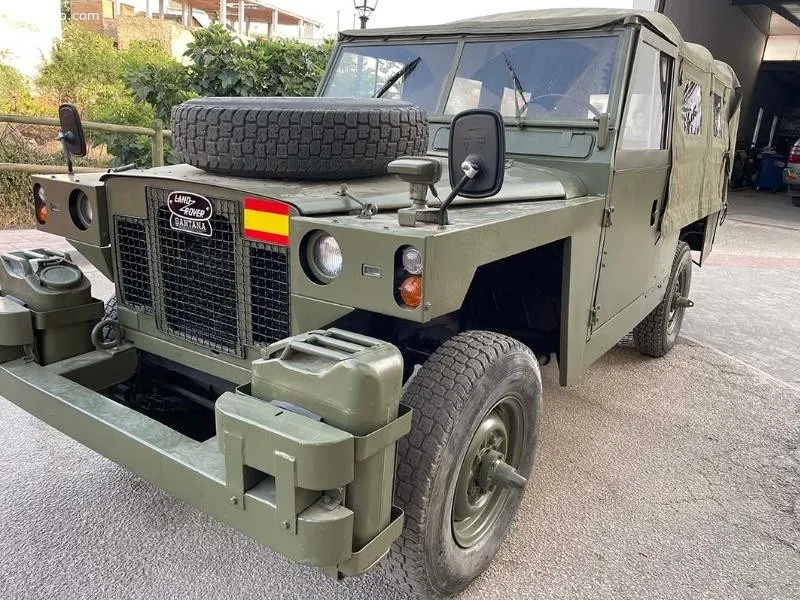
Here’s a nuance most write-ups get wrong, and it’s worth being precise about it: the Ligero wasn’t a straight copy of the British half-tonne military Lightweight. Reference sources are clear on this, and it matches what anyone who’s actually had one up on a ramp will tell you — it was a parallel development that shares little with its English cousin beyond the general idea of a stripped-down off-roader built for air-portability and light tactical use. Santana started from its own 88 M, already in Spanish Army service since the late 1960s, and adapted it on its own terms rather than tracing someone else’s blueprint.
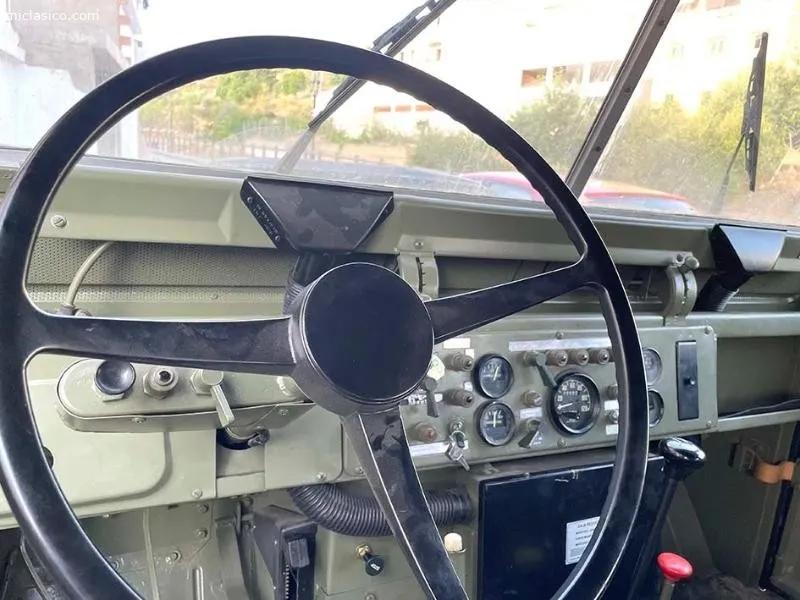
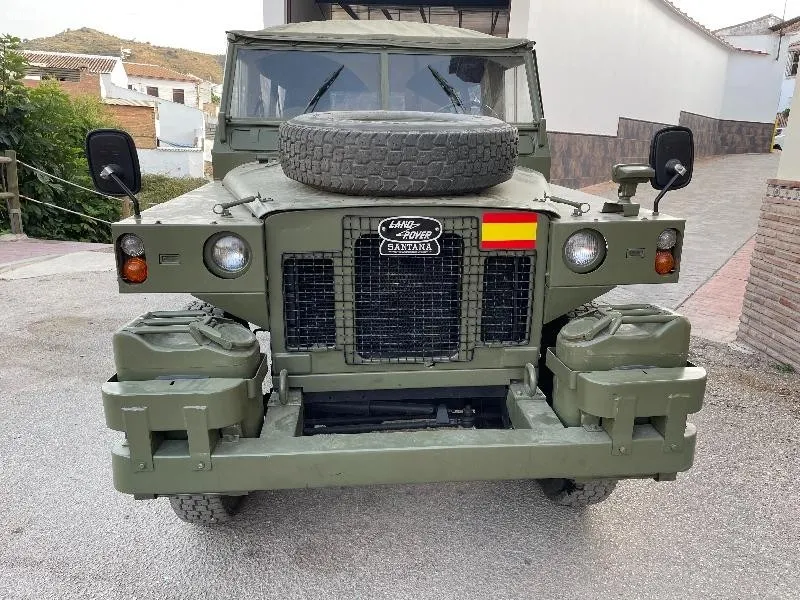
That independence shows up in the everyday details, which is usually where you find out whether a car was built for the road or just for the barracks. The civilian Ligero kept the military’s folding windscreen and the option to remove the doors entirely — both classic field-vehicle solutions that Santana chose not to strip out for the leisure market, keeping the utilitarian spirit intact even though the buyer was now more likely to be a weekend enthusiast than a conscript. The canvas roof came standard, with a fibreglass hardtop available as an option, and underneath that canvas Santana added a roll bar the original military spec never had — a nod to civilian buyers who’d be pushing the car into terrain no trained soldier would have attempted without backup. In the back, buyers could choose between bench seating or individual seats, a configuration choice that shows Santana understood exactly who it was selling to: families, hunters, mountain enthusiasts, not just military units.
And here’s a detail that quietly undercuts the “weekend toy” framing: a substantial share of the Ligero and wider 88/109 range ended up with the Guardia Civil and various defence bodies, each fitted out to its own spec, alongside fleets used by utility companies, farmers, and hunters who needed something that could swallow rough terrain without demanding comfort in return. The Ligero, in other words, never fully shed its identity as a working tool, no matter how many coats of yellow or orange paint Santana put on it to sell the leisure angle.
1983: the license ends, Suzuki arrives
The formal break came in 1983, when Santana Motor Company ended its agreement with Land Rover and Suzuki stepped in as a shareholder. The Santana name survived thanks to mediation from SEAT, allowing the brand to keep trading despite losing its British license. The company kept building models visually close to the Land Rover Series and the future Defender, but no longer dependent on Solihull for anything, sourcing its own suppliers and setting its own development priorities for the first time in nearly three decades. By 1989, Rover had sold off its remaining stake entirely.
The commercial killing blow to the Ligero, though, didn’t come from paperwork — it came from the market. In 1982 Santana had already signed with Suzuki to build its own leisure 4×4 in Linares, the Suzuki Santana: newer, cheaper, and better aimed at the young urban buyer the Ligero itself had been chasing. Japanese competition made the Ligero commercially redundant almost overnight, and production ended in 1985. The surviving range was refreshed in 1987 with widened wheel arches and the black-slat grille already seen on the 1983 Super and Turbo versions, relaunched as the Santana 2500 and 3500.
It’s worth remembering that none of this happened in a vacuum. Across Europe, the 1950s had already produced at least one other country that solved the same problem — a domestic army wanting a Jeep-style off-roader — without leaning on a foreign licence at all. Italy went its own way with the Fiat Campagnola, designed in-house by Dante Giacosa and chosen over a pricier in-house rival from Alfa Romeo. Spain took the opposite route entirely: rather than design from a blank sheet, it built somebody else’s car for three decades and then, gradually, earned the right to stop asking permission. Neither path is inherently the better one. But it’s the Spanish route that produced the more interesting story, precisely because nobody expected a licensee to start out-engineering its own licensor.
Why this matters, and why it isn’t a collector’s footnote
This is where the story earns its place here rather than in some nostalgia listicle. This isn’t a retro curiosity for someone chasing a barn find. It’s documented proof that a factory in a province with zero automotive tradition — founded to build ploughs — reached the engineering maturity to get ahead of its own licensor on decisions as unglamorous as disc brakes or coil-spring suspension. That doesn’t happen by luck. It happens because someone had their hands inside the gearbox solving real problems for real owners, while a boardroom in another country argued about whether there was budget left to keep existing at all.The Ligero and the Santana 2000 aren’t the happy ending of this story — that comes later, with more light and considerably more shadow, and we’ll get to it in another piece — but they mark the exact moment Linares stopped being a satellite plant and became a manufacturer with a voice of its own. That’s the part worth remembering: not the orange paint job, but the engineering call behind every part Santana fitted without anyone in Solihull asking for it. It’s a small, unglamorous story about a licensee that quietly stopped waiting for permission, and it deserves better than being filed under “quirky Spanish curio” the next time someone spots one at a classic show.
Check you’re still alive.