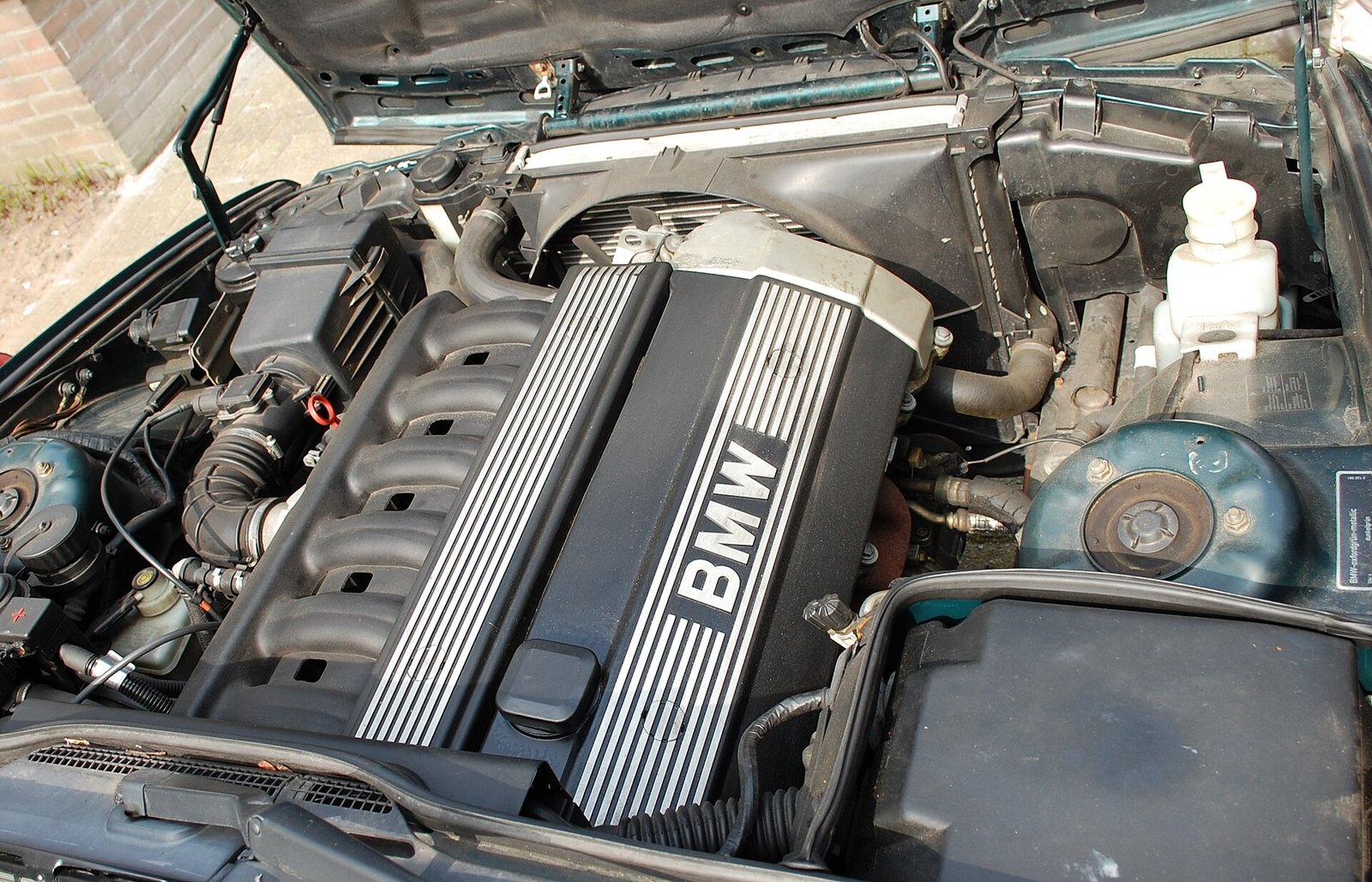
In America, the inline-six hero story has one name in it, and it’s Toyota’s. The 2JZ got the Supra, the movies, the YouTube channels and the thousand-horsepower dyno pulls. Meanwhile, BMW had built its own iron-block straight-six at the start of the ’90s, put it in a car millions of people bought to commute in, and quietly watched it become the foundation for an entire generation of track cars, drift cars and budget builds. It’s called the M50B25. It never had Hollywood. It had mileage, and a lot of people who learned to wrench on it.
In short: the BMW M50B25 is a 2.5-litre inline-six with an iron block, aluminium head, twin cams, 24 valves and a timing chain. It debuted in 1990 in the E34 and powered the E36 325i. It made 192 PS, and from September 1992 the M50TU version added VANOS, BMW’s first variable valve timing. Its iron block makes it a favourite base for turbo builds.
Where it came from
The M50 debuted in 1990 in the E34 5 Series, as the 520i and 525i, and a year later in the E36 3 Series. American buyers met it in the 325i, the car that, from the 1992 model year, was the heart of BMW’s US lineup. In US trim it was rated at 189 hp.
It replaced the M20, the six that powered the ’80s BMWs, and the jump was huge. The M20 had a single overhead cam, two valves per cylinder and a rubber timing belt. The M50 brought dual overhead cams, four valves per cylinder and a timing chain.
That chain matters more than it sounds. A belt has to be replaced on schedule, and if one snaps on an engine like the M20, the valves hit the pistons and the engine is junk. A well-lubricated chain lasts far longer. The M50 also got individual ignition coils for each cylinder, a knock sensor to protect the engine when fuel ignites too early, and Bosch Motronic engine management.
And it kept what many people consider its secret weapon: a cast-iron block under an aluminum head. Just as the industry was switching to aluminum blocks to save weight, BMW stuck with iron. It’s heavier, but it’s stiff, it handles heat and high combustion pressure well, and it doesn’t distort easily. In a stock commuter car, that’s a quiet advantage. In an engine someone’s about to bolt a turbo onto, it’s gold.
The numbers
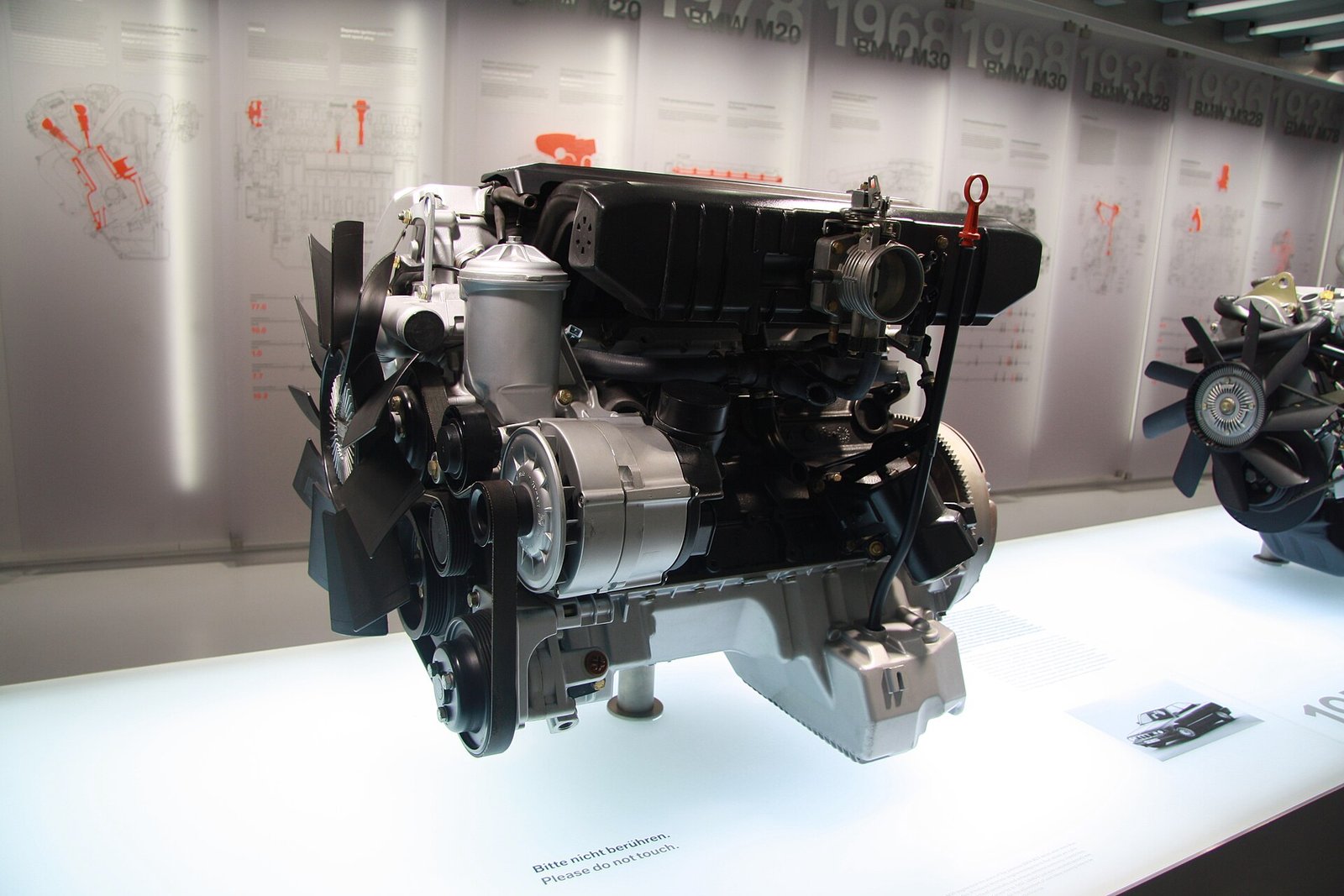
The 2.5-liter M50B25 displaces 2,494 cc, with an 84 mm bore and a 75 mm stroke. The piston travels less than the cylinder is wide, which engineers call oversquare, and that helps an engine rev freely. Compression was 10.0:1, meaning the piston squeezes the air-fuel mixture to a tenth of its original volume before it fires. That’s a healthy figure for pump gas in 1990, and it’s one of the first things turbo builders deal with: a common trick is a thicker head gasket to bring compression down before adding boost. In European form it made 192 PS at 6,000 rpm and 245 Nm, about 181 lb-ft, at 4,700 rpm.
For context, Toyota’s 2.5-liter 1JZ-GE inline-six, launched in 1990, made around 180 PS. The 3.0-liter 2JZ-GE of 1991, with half a liter more, made around 220. Mercedes’ 3.0-liter 24-valve M104, the engine in the 300CE coupe, also made 220. On 2.5 liters, the BMW was right in that company, and it was being built in huge numbers for everyday sedans, not for a limited-run sports car.
VANOS: BMW’s first variable valve timing
In September 1992, BMW updated the engine as the M50TU, mainly to meet European emissions rules. It brought something historic: VANOS, BMW’s first variable valve timing system, acting on the intake cam.
What it does is shift the opening of the intake valves slightly earlier or later depending on engine speed. Low revs want one thing, high revs want another, and a fixed camshaft is always a compromise. VANOS splits the difference. Peak power didn’t change, still 192 PS, but torque rose to 250 Nm and arrived sooner, at 4,200 rpm. That’s the part you feel pulling away from a light. If you want the basics of how an engine breathes in the first place, see our explainer on naturally aspirated engines.
The 2JZ comparison
The comparison isn’t random. Both are inline-sixes, both have iron blocks, and both were built with a lot of margin. A straight-six is one of the most naturally balanced engine layouts there is: its internal forces largely cancel out, so it doesn’t need balance shafts. Less vibration, less stress on parts, longer life.
The difference is in how they were born. The twin-turbo 2JZ-GTE in the A80 Supra left the factory designed for boost. The M50 didn’t. It was a naturally aspirated engine for family sedans. The fact that tuners ended up turbocharging it and pulling numbers far beyond stock says a lot about how it was engineered. Enthusiast forums across Europe and the US document turbo M50 builds well past 400 hp. Those are private projects with their own parts and tunes, and there’s no factory data to back a specific figure. What you can say is that the iron block is why people dare to try.
Then there’s marketing. The 2JZ was in the Supra and soaked up all the attention that Japanese car culture got from movies and video games in the 2000s. The M50 did its job in sedans and coupes people bought to drive to work.
What America got, and what it didn’t
The M50 story has a uniquely American twist. When BMW built its first E36 M3 around the M50-derived S50 engine, Europe got the 3.0-liter S50B30 with 286 PS. North America got a different, simpler S50B30US rated at 240 hp, which shared more with the regular M50 than with the European M3 engine. From 1996, US M3s switched to the S52. American enthusiasts complained about being shortchanged for years, and the story of how the M3 evolved through every generation is in our BMW M3 history.
There’s a second twist. The M50’s successor, the M52 of 1994, moved to an aluminum block with a special cylinder coating called Nikasil, which reacts badly to high-sulfur gasoline. Because US fuel at the time had more sulfur, North American M52s kept an iron block. In other words, America held on to iron longer than Europe did, and that’s one reason so many US E36s make such good project cars today.
The intake every BMW nerd wanted
Here’s a detail that tells you how good the M50’s breathing was. In the US enthusiast world, one of the best-known cheap upgrades for later E36s with the M52 and S52 engines was to bolt on the intake manifold from an M50. The M50 manifold, with its shorter runners and higher flow, helps the engine breathe better at high rpm, and it was available for next to nothing from any junkyard. An engine from 1990 donating parts to make its own successors faster: that’s not something most engines can say.
The forgotten first home: the E34 5 Series
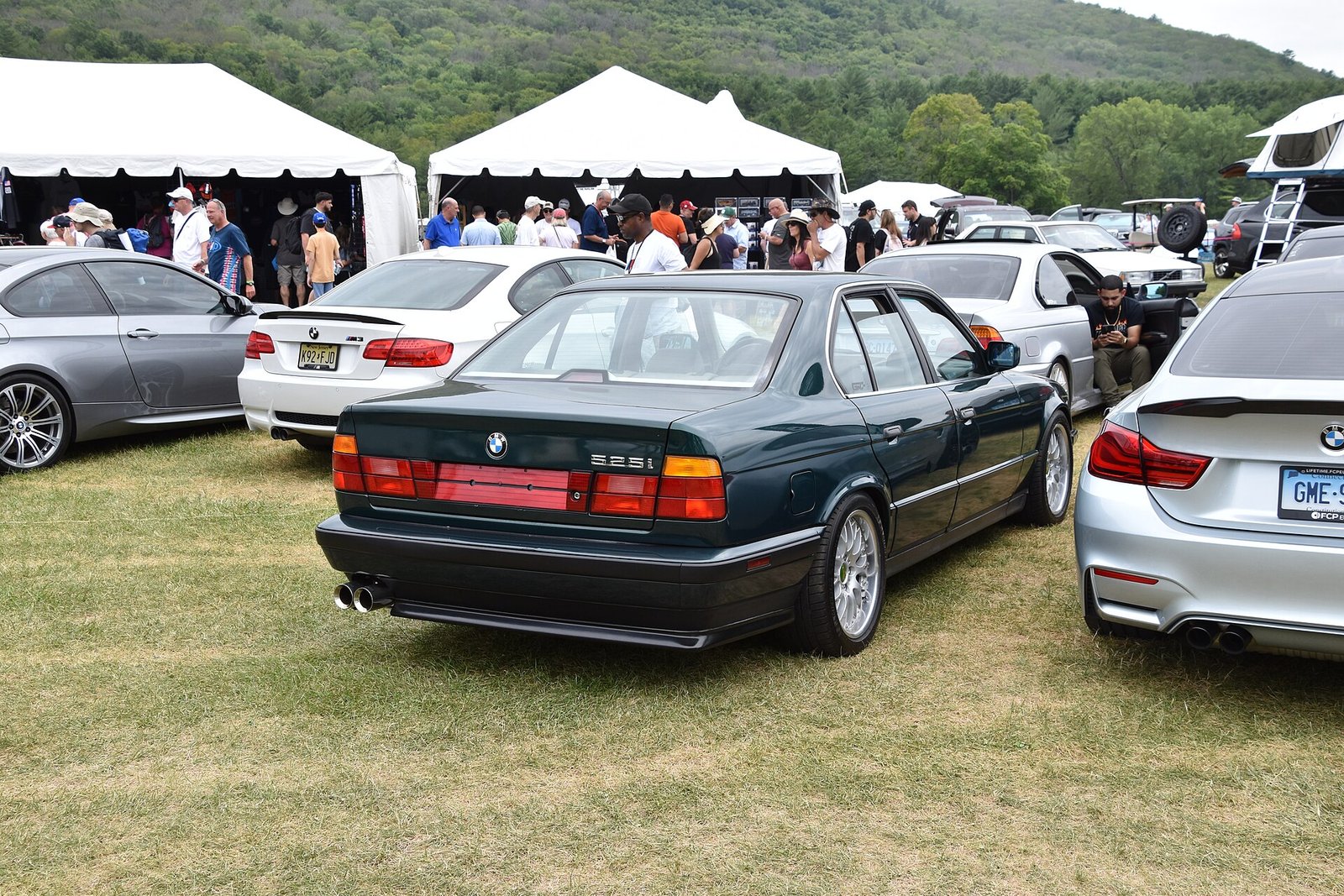
Most people link the M50 to the E36, but its first home was the E34 5 Series, the midsize executive sedan BMW sold from 1988. In 1990, the 525i became one of the first cars to get it, and it turned a comfortable, slightly heavy sedan into something that pulled happily to the redline. The E34 525i is one of the most underrated BMWs of its era today: a solid, handsome sedan with the same iron-block six as the E36, and far fewer people fighting over it at auction. If you want an M50 without paying the drift-car premium that clean E36s now carry, it’s the obvious place to start.
The perfect chassis for it
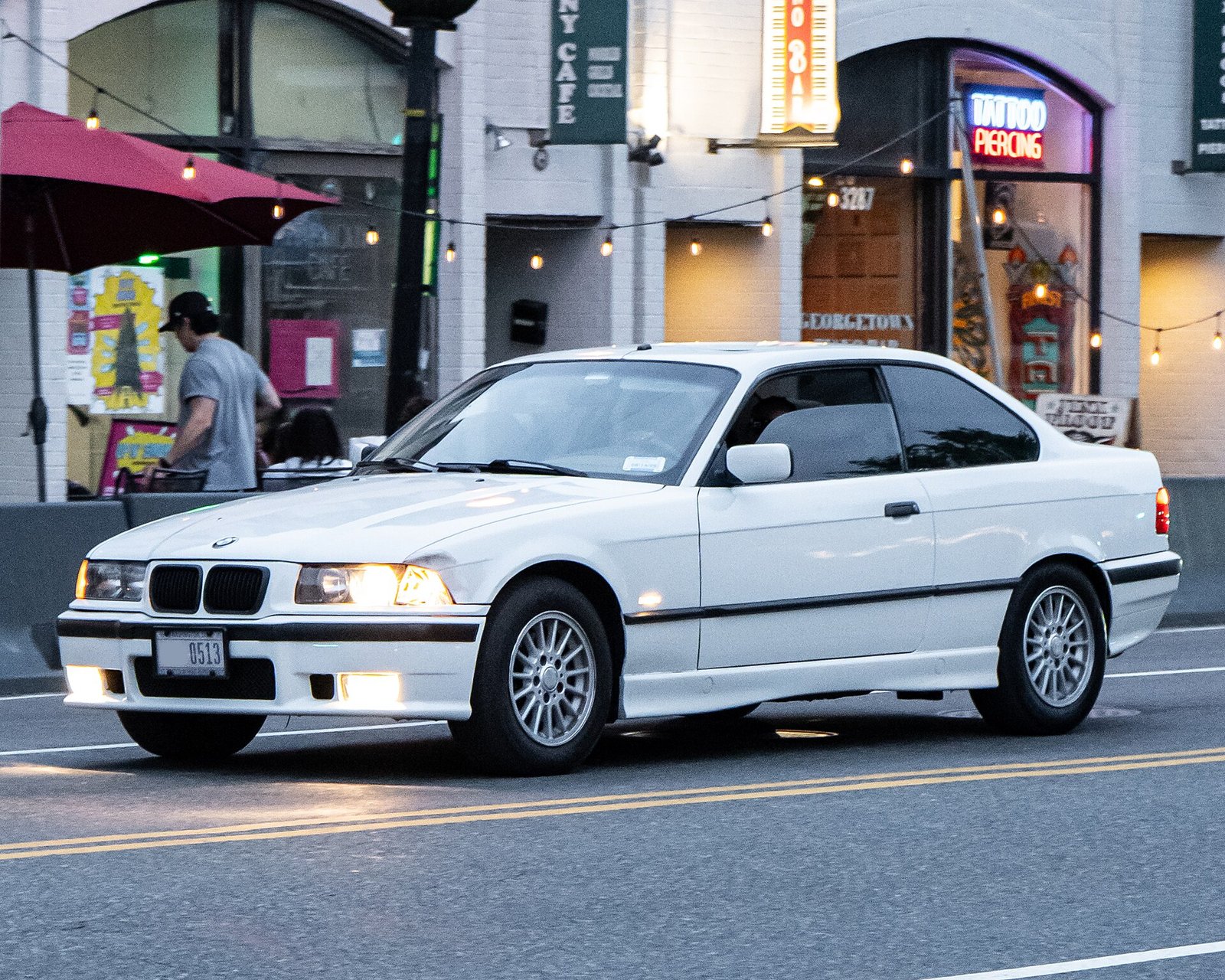
The E36 is one of those cars history treated unfairly. For years it was "the cheap 3 Series," the one you bought for little money once the E30 had become a collectible and the E46 was still too new. That affordability is exactly what made it such a good platform.
The E36 brought a multi-link rear suspension, the "Z-axle" derived from the Z1 roadster, replacing the E30’s semi-trailing arms, which had a reputation for doing odd things at the limit. With the engine mounted lengthwise, set back in the bay, and rear-wheel drive, weight distribution came out close to 50/50. The 325i rewarded a good driver and forgave a lot from a bad one.
Why iron holds up
It’s worth spelling out why a tuner prefers an iron block. When you add a turbo, every combustion event pushes much harder on the cylinder. That pressure tries to distort the bores and lift the head off the block. Aluminum is lighter and sheds heat better, but it’s softer: to handle very high pressures it needs reinforcement, steel liners or a dedicated design. Cast iron is heavier, but far stiffer. The bores stay round, the head gasket has a better time, and the whole assembly tolerates abuse that would be risky in aluminum.
What breaks
No engine lives forever, and the M50 has well-known weak spots. The valve cover gasket hardens with age and weeps oil, more messy than serious. The cooling system, like on most BMWs of the era, needs attention: water pump, thermostat, radiator and hoses should be replaced before they fail, because overheating can do real damage. And on the VANOS engines, the seals in the VANOS unit wear out, making the system rattle and lose effectiveness; rebuild kits exist. Look after those, change the oil on time, and high-mileage M50s are common.
Buying one today
An E36 325i is still relatively affordable, though clean, rust-free and unmolested examples aren’t cheap anymore. Before buying, check for oil leaks from the valve cover and the oil filter housing, watch the temperature gauge in traffic, listen for a metallic rattle at idle on VANOS cars, and ask for cooling-system service records. And be very wary of cars already wearing a turbo installed by someone with no name and no receipts.
The Spanish connection
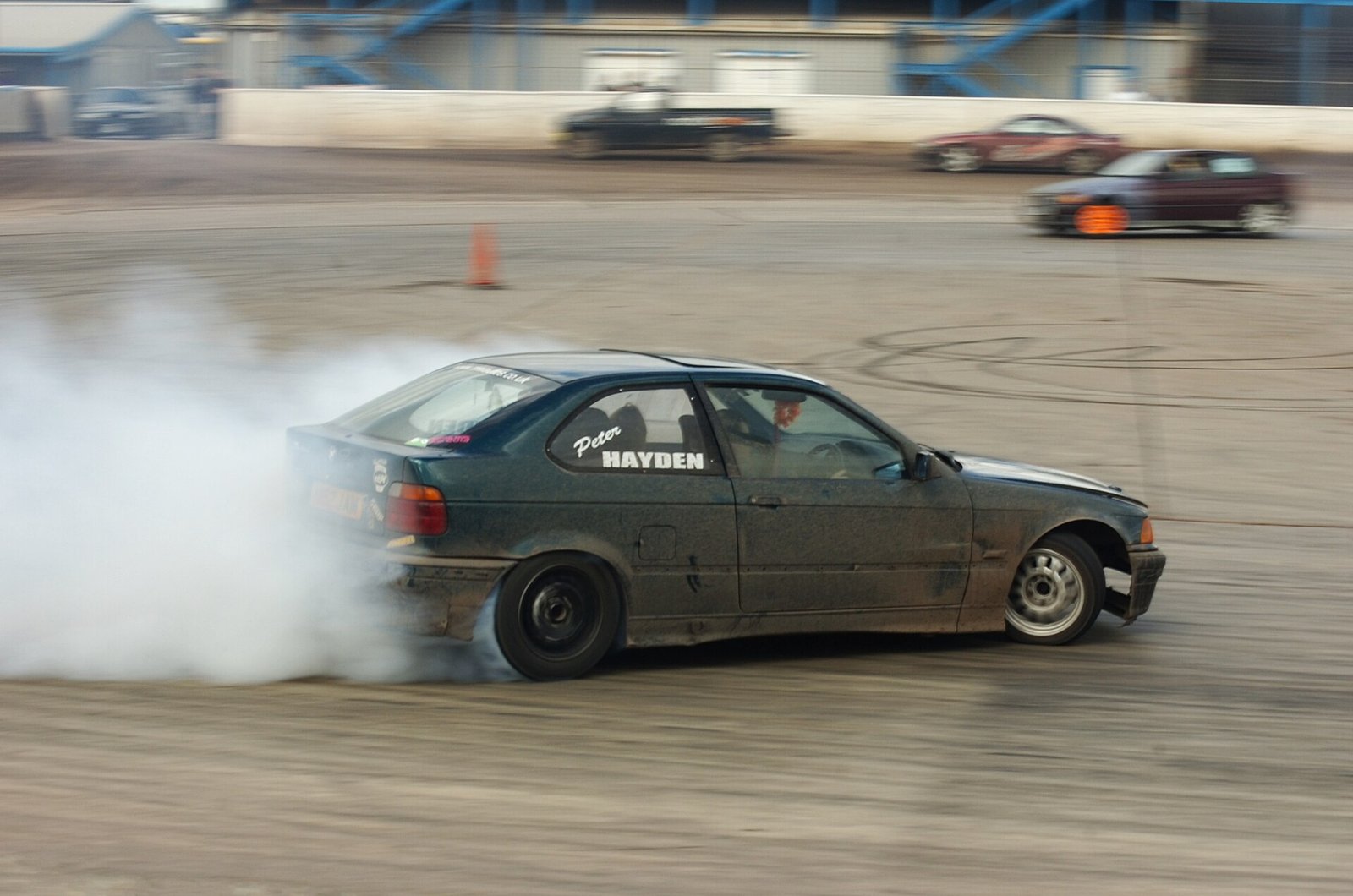
We write from Spain, where the E36 has become the drift car of choice for anyone on a budget: rear-wheel drive, an inline-six, cheap parts and a huge body of shared knowledge. When the European Drift Masters series came to Cheste, near Valencia, in October 2024, one of the Spanish wild cards was Rubén Bolaños, billed as a Spanish champion, driving a BMW E36. We don’t know what engine is in his car, so we won’t make one up. But the Spanish champion showing up in the same chassis that came from the factory with the M50 says a lot about where this family ended up.
What it leaves behind
The M50B25 is proof that you don’t need a movie to make a legend. An iron block, six cylinders in a row, a timing chain and engineering done with margin to spare. Let the 2JZ have the headlines and the posters on bedroom walls. Anyone who’s opened the hood of an E36 knows what’s under there.
BMW M50B25 FAQ
What are the BMW M50B25 specs?
2,494 cc, 84 mm bore and 75 mm stroke, 10.0:1 compression, 192 PS at 6,000 rpm and 245 Nm at 4,700 rpm in European form. In US-spec E36 325i form it was rated at 189 hp.
What is the difference between the M50 and the M50TU?
The M50TU, from September 1992, added VANOS variable valve timing on the intake cam. Peak power stayed at 192 PS, but torque rose to 250 Nm and arrived earlier, at 4,200 rpm.
Is the M50B25 good for a turbo?
It is a popular base because of its cast-iron block, which is stiff and handles heat and combustion pressure well. A common first step is a thicker head gasket to lower compression before adding boost, and private turbo builds well past 400 hp are documented.
Check you’re still alive.
Photos: C.Bakker (public domain); Jiří Sedláček (CC BY-SA 4.0); Charles from Port Chester, New York (CC BY 2.0); OWS Photography (CC BY 4.0); Lewis Collard (CC0). Via Wikimedia Commons.