Fiat Dino: the car Ferrari needed Fiat to build
In 1965, Enzo Ferrari has a problem.
The FIA has changed the rules for Formula 2 from 1967 onwards. The engines will have to be based on production units — at least 500 examples of the engine block manufactured and sold in a calendar year to qualify for homologation. Ferrari has developed a 65-degree, two-litre V6 — technically designed by Vittorio Jano, refined by Franco Rocchi, and christened Dino in tribute to Alfredo Ferrari, Enzo’s son, who had died in 1956 aged 24 after working on precisely that kind of compact V6 project for F2.
The engine is ready. Ferrari knows it wants to race F2 with it. And he can’t. Because to produce 500 units of that engine in a single year, Enzo would need Maranello to build at least 500 road cars carrying it. And Ferrari in 1965 didn’t build 500 cars a year total, across every model in the range. The factory couldn’t cope. And nobody at Ferrari had any intention of scaling it — that wasn’t the Ferrari business.
Ferrari needs someone else to build the car for him. Someone with industrial capacity. Someone who can produce 500 units in a matter of months without quality slipping. In Italy there is one company that can. That company is called Fiat.
And here begins the story of a strange car. A Fiat with a Ferrari engine. A Ferrari with a Fiat badge. The only time in history the two houses would build the same engine in parallel, in separate plants, for two different cars sharing the same surname: Dino.
The Turin pact
Enzo Ferrari and Vittorio Valletta meet in Turin in mid-1965. On the table: an industrial agreement never seen before between the two houses. Fiat would build the Dino V6s at its Rivalta (Turin) plant. Ferrari would also fit them, at Maranello, in its own Dino models. And Fiat, additionally, would produce the Fiat Dino road cars to hit the volume needed to homologate the engine for F2.
Enzo initially insisted on building the engines himself in Maranello. Fiat management refused. Argument: we don’t want production delays because of dependence on Ferrari. Valletta’s Fiat knew exactly how Maranello worked — with hand-built quality, with flexible timing, with Enzo personally reviewing pieces before signing them off. That wasn’t going to give Fiat 500 units in 12 months. The engines would be built by Fiat, and Ferrari would internally buy them at industrial cost.
It was a symbolic setback for Ferrari. But Enzo accepted. He needed F2 more than pride. The deal was signed in late 1965. And Fiat had four months to produce a car.
Turin Motor Show, October 1966: the Fiat Dino Spider is born
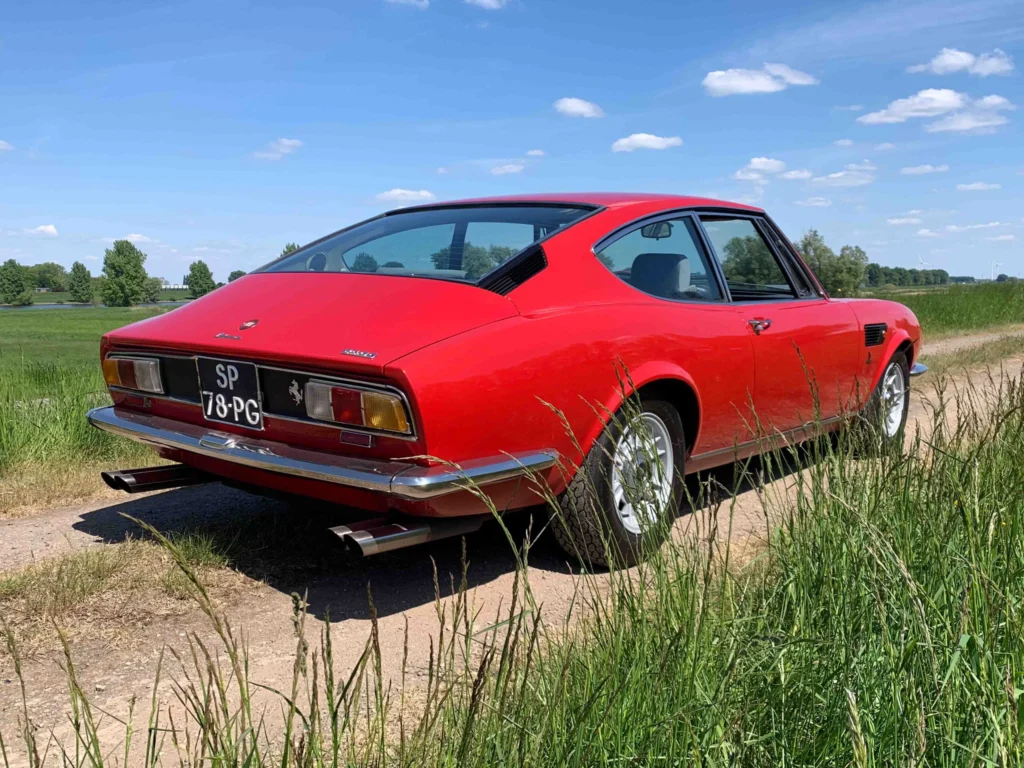
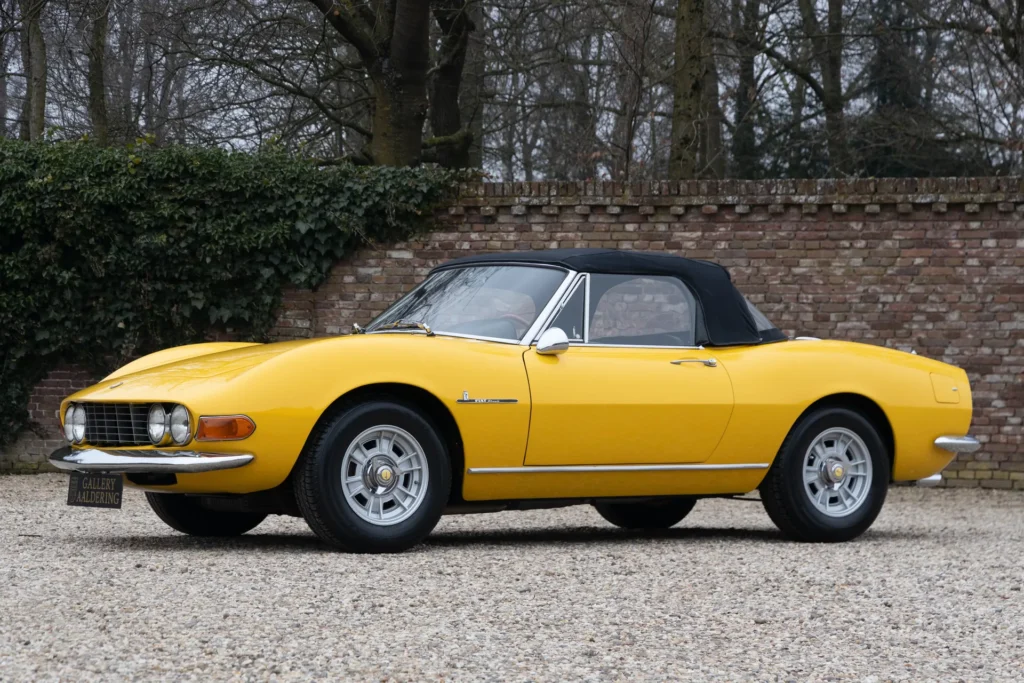
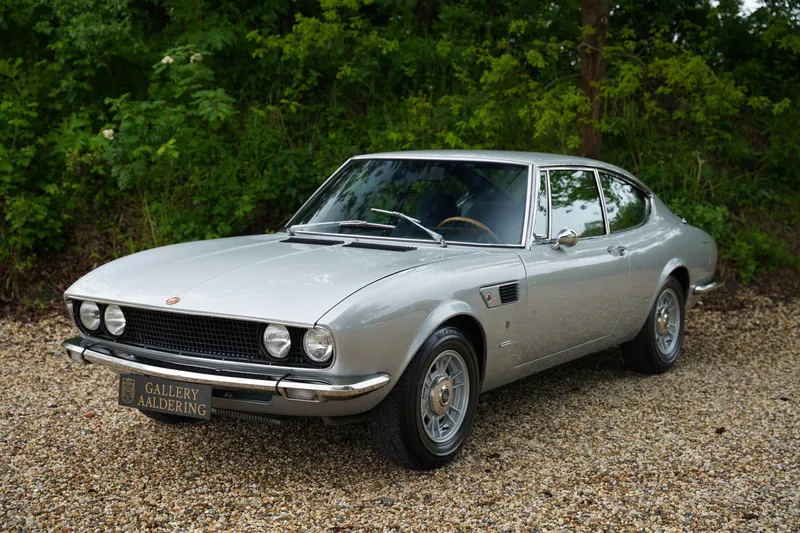
Fiat doesn’t do things by halves. It commissions two cars with the same engine. A Spider, two-seat convertible, with Pininfarina bodywork, to build volume through Italian romance. And a Coupé, more practical 2+2, with Bertone bodywork, for customers who wanted the Ferrari V6 but couldn’t give up the option of putting the mother-in-law in the back.
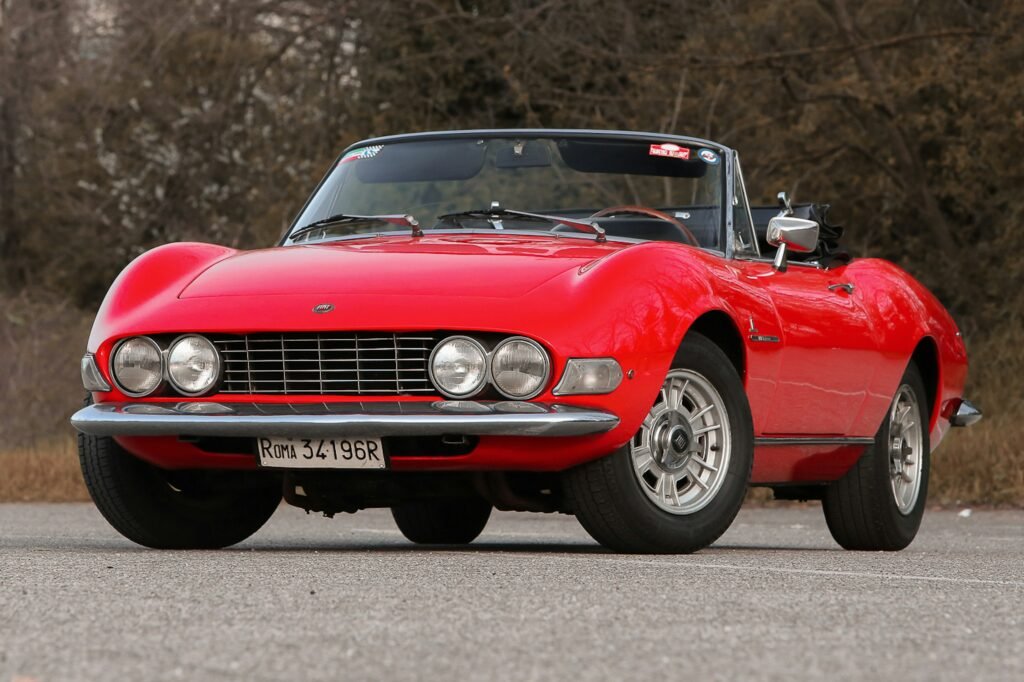
The Spider Pininfarina is unveiled at the Turin Motor Show in October 1966. It’s designed by Filippo Sapino — 28 years old, Pininfarina’s rising talent. It’s a clean, elegant roadster, with a sharp nose and long bonnet, subtly inspired by the Ferrari 275 GTB. Cromodora spoked wheels, round headlights, low beltline. Kerb weight: 1,150 kg. Length: 4,109 mm. Wheelbase: 2,280 mm — significantly shorter than the Coupé’s.
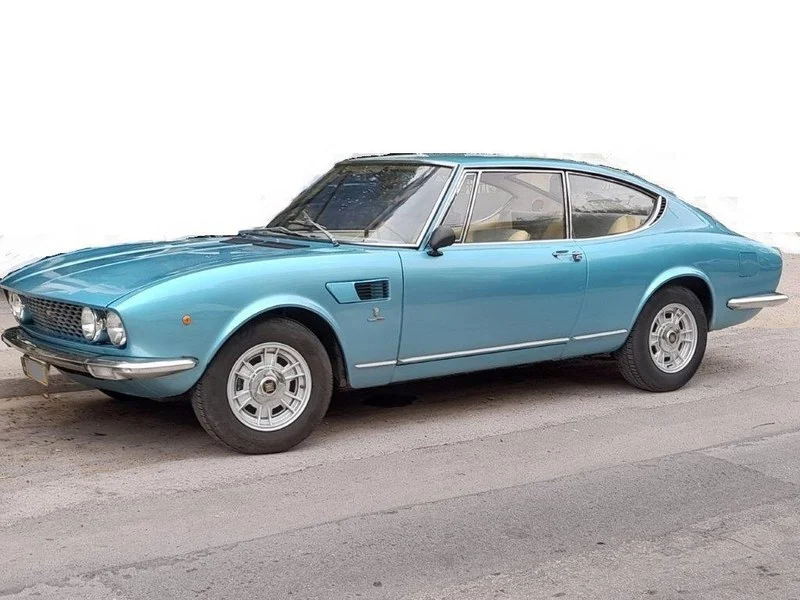
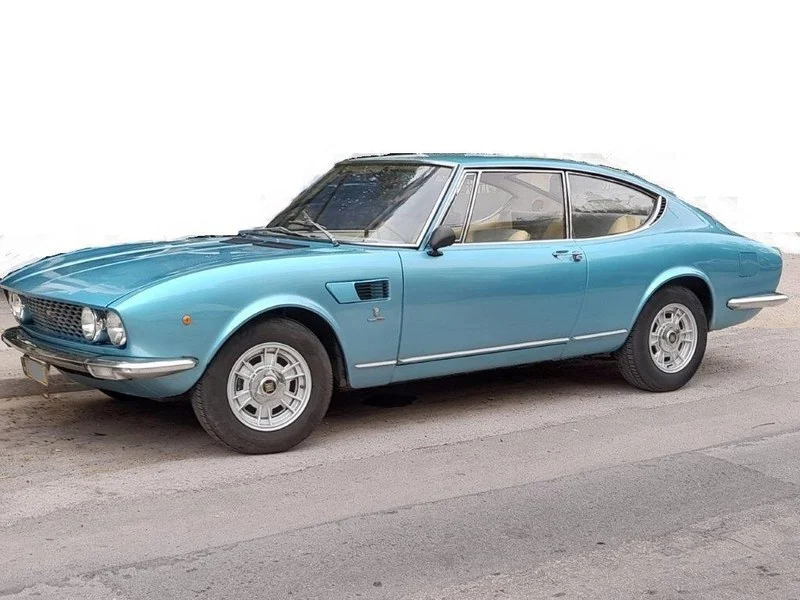
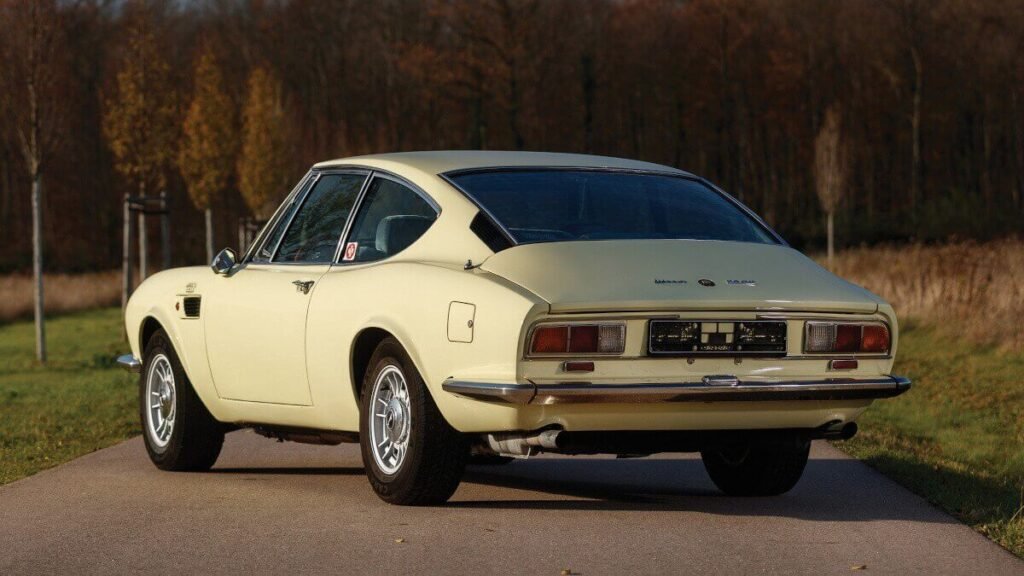
The Coupé Bertone arrives six months later, at the Geneva Motor Show in March 1967. It’s signed by Marcello Gandini — yes, the same Gandini who would give us the Lamborghini Miura in 1966 and the Countach in 1974. But the original Coupé Bertone project came from Giorgetto Giugiaro, who had made the initial sketch in 1963 before leaving Bertone to found Italdesign. When the project was picked back up, Gandini inherited Giugiaro’s work and finished it. Result: a more angular 2+2, more bourgeois than the Spider, wheelbase 2,550 mm (270 mm longer than the Spider). Kerb weight: 1,270 kg.
Two coachbuilders working in parallel on the same engine and the same mechanical package, with opposite identities. In Italy people talk about the Fiat Dino as if it were one car, but really it’s two different products with two different personalities. Sophia Loren and Marcello Mastroianni going on a road trip together.
The engine: when Fiat and Ferrari build the same block
Here’s the technically fascinating part.
The Dino V6 tipo 156B/166B, two litres, 65-degree bank angle, dual overhead camshafts (DOHC), aluminium block and heads, three Weber carburettors. Design by Vittorio Jano, refined by Franco Rocchi. In the Fiat Dino, Fiat declared 158 hp at 7,200 rpm. In the Ferrari Dino 206 GT, Ferrari declared 180 hp for the same engine.
180 vs 158. The gap is interesting. How can the same engine produce 22 hp differently depending on who fits it?
Answer: it can’t. The engines are identical. They come off the same Rivalta line. What changes is the power declaration standard. Ferrari quoted SAE gross figures (engine alone, on the dyno, no auxiliaries). Fiat quoted DIN net figures (complete engine with all auxiliaries fitted, real-world conditions). The gap between these standards on a small, high-revving engine like the Dino is right around 12-14%. Adjust for the standard, both figures match.
Important detail: in 1968, the Fiat Dino got electronic ignition. It was one of the first production cars in the world to have it — earlier than Chrysler (1971) and earlier than most of the European market. That detail has been forgotten. The first real application of electronic ignition on a serial European car was a Fiat with a Ferrari engine.
1969: the big change — 2.4 litres and move to Maranello
In 1969 the second generation of the Fiat Dino arrives. Four major changes:
New engine. The two-litre V6 is replaced by a 2.4-litre unit. Cast iron block instead of aluminium — worse weight but better durability, and needed to match the technical evolution towards the Ferrari Dino 246 launched that same year also in 2.4-litre form. Power: 178 hp. Torque: much better, especially at lower revs (39 lb-ft more torque, with the peak coming 1,400 rpm lower). Daily-driving significantly improved.
New rear suspension. The rigid rear axle with semi-elliptic leaf springs on the Dino 2000 Coupé (and single-leaf on the 2000 Spider) is gone. In comes independent rear suspension. A brutal dynamic change: the Dino goes from a car of body roll and vintage feel to a modern GT.
Bigger brakes. Larger ventilated discs on all four wheels.
Production relocated. And this is the historically remarkable detail. Fiat Dino production moves from the Fiat Rivalta plant to Ferrari’s Maranello plant. Yes, you read that correctly: from 1969 onwards, Fiat Dinos are built on the same assembly line as the Ferrari Dino 246 GTs. A worker in Maranello could be assembling a Fiat Dino Coupé on Monday and a Ferrari Dino 246 GT on Tuesday. It’s the only case in industry history where a “popular” brand is built on the same line as a supercar brand.
Why the move? Two reasons. First: in 1969, Fiat took 50% of Ferrari. They were no longer two separate companies with a specific agreement. They were one company with industrial synergies. Fiat needed to use surplus capacity at Maranello. Second: the build quality of the Fiat Dino 2000s built at Rivalta had drawn criticism. Owners complained about vibrations, uneven finish, mediocre tolerances. Moving production to Maranello — where craftsmen were trained for precision work — was a direct answer to those complaints.
Fiat Dinos from 1969 onwards are, technically, partly Ferrari cars. To the point that serious collectors today distinguish between “Rivalta Dinos” (pre-1969, more rustic) and “Maranello Dinos” (post-1969, more refined). The second are worth more at auction.
On the track: the “other” Dino racing
While Fiat and Ferrari put out the road-going Dinos, on the tracks ran a different Dino: the Ferrari Dino 206 S, a mid-engined sports prototype, of which only 18 units were built between 1966 and 1967. Mid-mounted 2-litre V6 from the same Dino block, tuned to 220 hp. Tubular chassis, aluminium body, 654 kg. It ran at Le Mans and at the Targa Florio, with modest results.
In Formula 2, with the engine homologated thanks to the 500 Fiat Dinos produced, Ferrari ran partial seasons in 1967 and 1968 without winning the title — the dominant force was the Ford Cosworth FVA in the Brabham and the Matra. But technically, the objective was met: Ferrari got into F2 thanks to Fiat Dinos being sold in ordinary Italian dealerships.
Commercially, Fiat got what it wanted. It got the prestige of saying “car with Ferrari engine”. It attracted buyers who would never have looked at a Fiat 130. And it positioned itself in a segment the brand had never touched.
Numbers: what sold, and what didn’t
Total Fiat Dino production across its life (1966-1973):
- Fiat Dino Spider 2000 (1966-1969): 1,163 units
- Fiat Dino Coupé 2000 (1967-1969): 3,670 units
- Fiat Dino Spider 2400 (1969-1972): 424 units
- Fiat Dino Coupé 2400 (1969-1973): 2,398 units
Total: 7,655 units over seven years. Well below what Fiat had hoped commercially. The Coupé sold reasonably. The Spider became a rare bird.
Compare with the 124 Sport Spider, which Fiat launched at the same 1966 Turin show also with Pininfarina bodywork. Nearly 200,000 units between 1966 and 1985. Nineteen years in production. Sale price in 1973: USD 3,259. A Fiat Dino Spider 2000 in the same year cost USD 7,830. More than double. The Fiat Dino was expensive. Very expensive. It got dangerously close to a Porsche 911 price and was only USD 2,000 below a Ferrari 246 GT — which carried the same engine.
That price was the death sentence. A sports car buyer in 1970 asked himself: if the Fiat Dino costs as much as a Porsche, why buy a Fiat? And if it costs almost as much as a Ferrari, why not spend the extra USD 2,000 and take home the Ferrari? Fiat got stuck in a commercial no-man’s land. Good car, bad market positioning.
1973: the end
Production ended in 1973. Two reasons: the oil crisis that started in October of that year, and new emissions regulations that were going to make it impossible to keep selling a Ferrari V6 without deep modifications that didn’t justify the Dino’s low production volumes. Fiat shut the line.
Ferrari, however, kept the Dino engine going for a couple more years — the 246 GT continued into 1974 with minor updates. And then the V6 Dino engine disappeared from Ferrari’s catalogue for good when the 308 GTB arrived with its V8. The V6 Dino, technically, died with the Fiat Dino.
What’s left today: the least-Fiat Fiat and the least-Ferrari Ferrari
The Fiat Dino has a strange collector status. It’s the only Fiat with a Ferrari engine — a rare object, desirable, with impeccable technical pedigree. And yet, on the market, it remains undervalued.
Current prices:
- Fiat Dino Spider 2000: EUR 80,000 – 150,000 in good condition
- Fiat Dino Spider 2400: EUR 120,000 – 200,000
- Fiat Dino Coupé 2000: EUR 40,000 – 80,000
- Fiat Dino Coupé 2400: EUR 60,000 – 120,000
Compare with a Ferrari Dino 246 GT (the Maranello brother): between EUR 400,000 and 750,000. Identical engine. Similar chassis. Only the badge and the logo change.
This is where the collector world shows exactly what it’s buying. It doesn’t buy engineering. It buys the brand. The Fiat Dino with a Ferrari badge on the bonnet would multiply its auction value five times over. Without changing a single bolt. Same car, five times the price.
That’s exactly why the Fiat Dino is still, for the collector with more technical taste than money, one of the best deals on the Italian classic market. A Ferrari V6 with Pininfarina or Bertone bodywork, at the price of a used Porsche 911. Buying cheap what others pay gold-plated prices for.
The car that was an industrial operation
The Fiat Dino wasn’t a car designed to succeed commercially. It was an industrial operation dressed up as a car. Ferrari needed a homologated engine. Fiat needed to raise its brand ladder. Each used the other. The result was a car that today nobody calls “Ferrari masterpiece” nor “great Fiat”, that lives in historical no-man’s land, but which brings together things no other car in history brings together:
- V6 engine designed with the input of Enzo Ferrari’s son
- Built by Fiat at Rivalta (early years) and by Ferrari at Maranello (later years)
- Bodywork by Pininfarina (Spider) and Bertone (Coupé, with Giugiaro/Gandini signatures)
- One of the first European production cars with electronic ignition
- Industrial bridge between the two most important Italian houses of the twentieth century
Too important to be forgotten. Too atypical to be popular. It lives in the no-man’s land where the most interesting cars are born: the ones not made to sell, but to solve a specific industrial problem. And the problem here was very specific: Enzo Ferrari wanted to race in Formula 2. That’s the origin. Nothing more. And nothing less.
Check you’re still alive.