
Subaru Boxer Engine: Why Outback Owners Keep Forgiving a Motor That Keeps Eating Head Gaskets

If you’ve ever bought a used Outback or Forester in the Northeast or Colorado, somebody has told you about the head gaskets. Probably your mechanic, possibly your brother-in-law. And somehow, they said it while recommending the car anyway. The Subaru boxer engine has one of the best-documented flaw lists in the American used-car market and one of the most loyal followings. People who’ve paid a $2,000 repair bill go right back and buy another. That takes some explaining.
The short answer is that the same flat layout causing the trouble also gives the cars the things people love about them. Subaru has built its entire identity on that bargain since the 1960s, while everybody except Porsche walked away from the idea.
In short: a boxer engine lays its cylinders flat in two opposed banks, which gives Subaru a low centre of gravity, natural balance and a perfect fit for its Symmetrical AWD. The price, especially on the older EJ engines, has been head gasket failures and repair bills around $2,000. Owners keep forgiving it because the same layout gives the cars the handling and character they love.
What a Boxer Actually Is
American cars have mostly had their cylinders standing up, in a row or in a V. A boxer lays them flat, in two opposed banks on either side of the crankshaft, 180 degrees apart. Each pair of opposing pistons moves in and out at the same time, like a pair of boxers throwing punches at each other, which is where the name comes from. Each piston has its own crankpin.
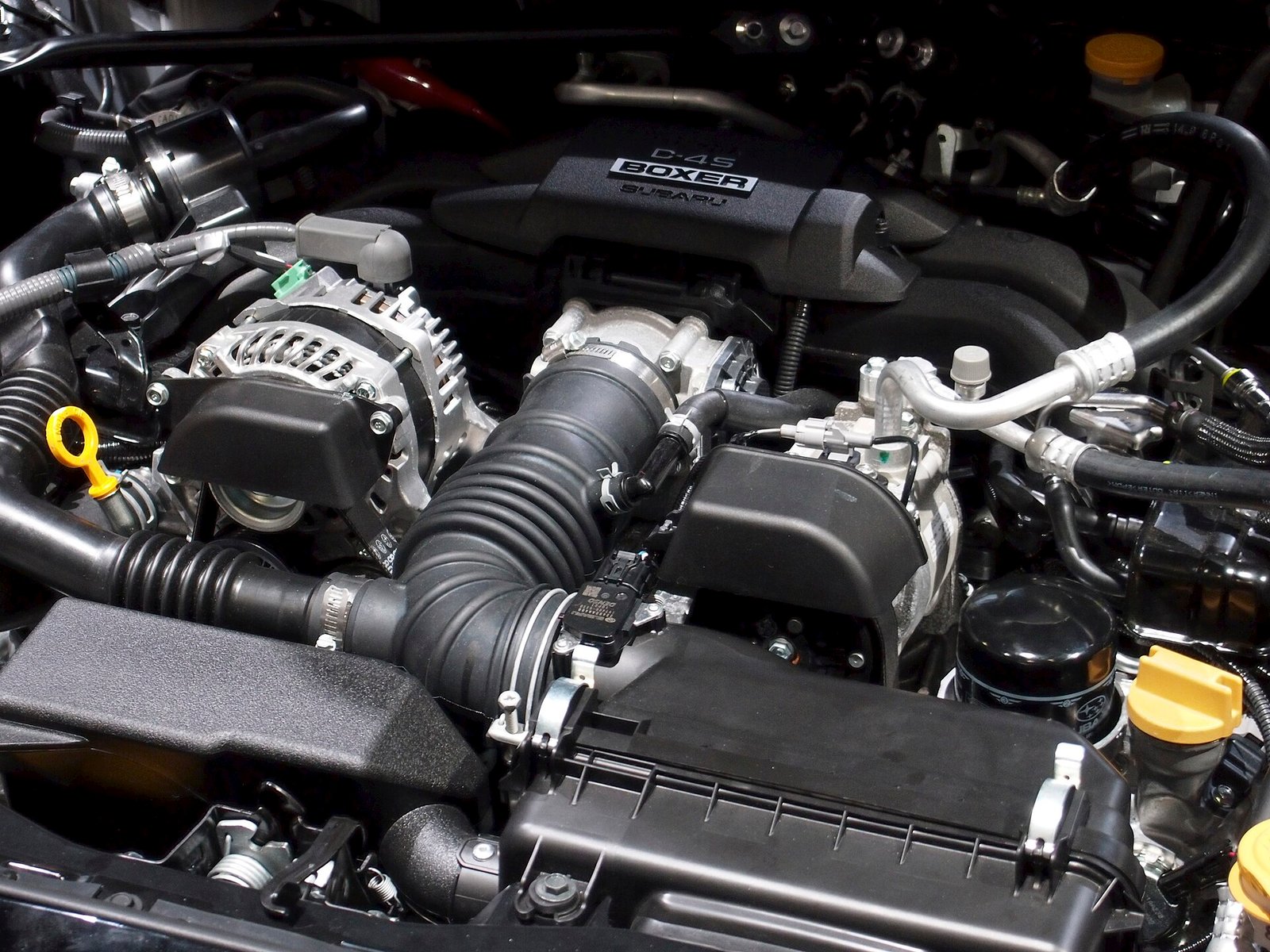
That last detail matters, since the term gets used loosely. Ferrari’s flat-12s, like the one in the Testarossa, have opposed pistons sharing crankpins, so they move in the same direction, and technically they’re 180-degree V12s and not true boxers. Subaru’s engine is the real thing, and so is the one in a Porsche 911. Americans of a certain age will think of two other examples: the air-cooled VW Beetle, and the Chevrolet Corvair, the flat-six that General Motors put in the back of a compact and Ralph Nader made famous for other reasons.
Subaru’s first one arrived in the Subaru 1000 of 1966. Americans didn’t get a Subaru with it until later. The brand’s first U.S. import, under Malcolm Bricklin in 1968, was the tiny two-stroke 360, which Consumer Reports rated "not acceptable." It’s fair to say the company has come a long way.
Why Subaru Won’t Let It Go
The flat layout puts the engine’s mass very low in the car, and that’s the main selling point. A lower center of gravity means less body lean and a car that feels more planted than its suspension might suggest. You can feel it in a WRX on a back road, or even in a Crosstrek on a wet interstate on-ramp.
There’s also balance. In a flat four, the primary inertial forces from opposing pistons cancel out, so it doesn’t need the balance shafts that many large inline-fours use. And the layout suits all-wheel drive. Since the engine sits low and lengthwise, it lines up straight with the transmission and driveshaft, and the Symmetrical AWD system Subaru has advertised for decades has about the same parts on both sides of the car. For someone who lives on a dirt road in Vermont or who commutes in Denver snow, that’s a pretty convincing pitch. It helps to explain why the brand does so well in those places.
Subaru also claims a safety advantage: in a frontal crash, a low, flat engine tends to slide beneath the cabin rather than coming into it. The company has made safety a big part of its U.S. marketing for years, along with the dog commercials.
The Rumble
The other thing that sold these engines was a sound. Older turbo Subarus burble unevenly at idle and at low revs, in a way no other four-cylinder does. Owners describe it as a V8 running on three and a half cylinders, and they love it. Walk through any car show and you’ll hear a WRX with an aftermarket exhaust before you see it.
It came from unequal-length exhaust headers. In the classic EJ engines, the pipes from one side of the engine had a longer path to the turbo than the pipes from the other. That made the exhaust pulses arrive out of step, giving you that lumpy rhythm. Engineers know unequal-length headers are less efficient, which is why race teams usually don’t choose them. Subaru kept them for years anyway. Asking it to get rid of the rumble would’ve been like asking Harley-Davidson to make a quiet V-twin.
The FA engine family changed that. With direct injection and equal-length headers, new WRXs sound smoother, more ordinary and less like a Subaru, and arguments about it continue on every forum you can find. Owners who want the old noise buy unequal-length headers on the aftermarket, which is probably the most Subaru thing imaginable.
The EJ: The Legend and the Repair Bill
The EJ family, which arrived in 1989, is responsible for both halves of the reputation. It ran for decades, from 1.6-liter naturally aspirated versions up to the 2.5-liter turbo in the STI, which stayed on sale in America until 2021. The WRX didn’t officially reach the U.S. until the 2002 model year, after a decade of American kids watching it on grainy rally videos and playing Gran Turismo. When it finally got here, tuning shops were waiting.
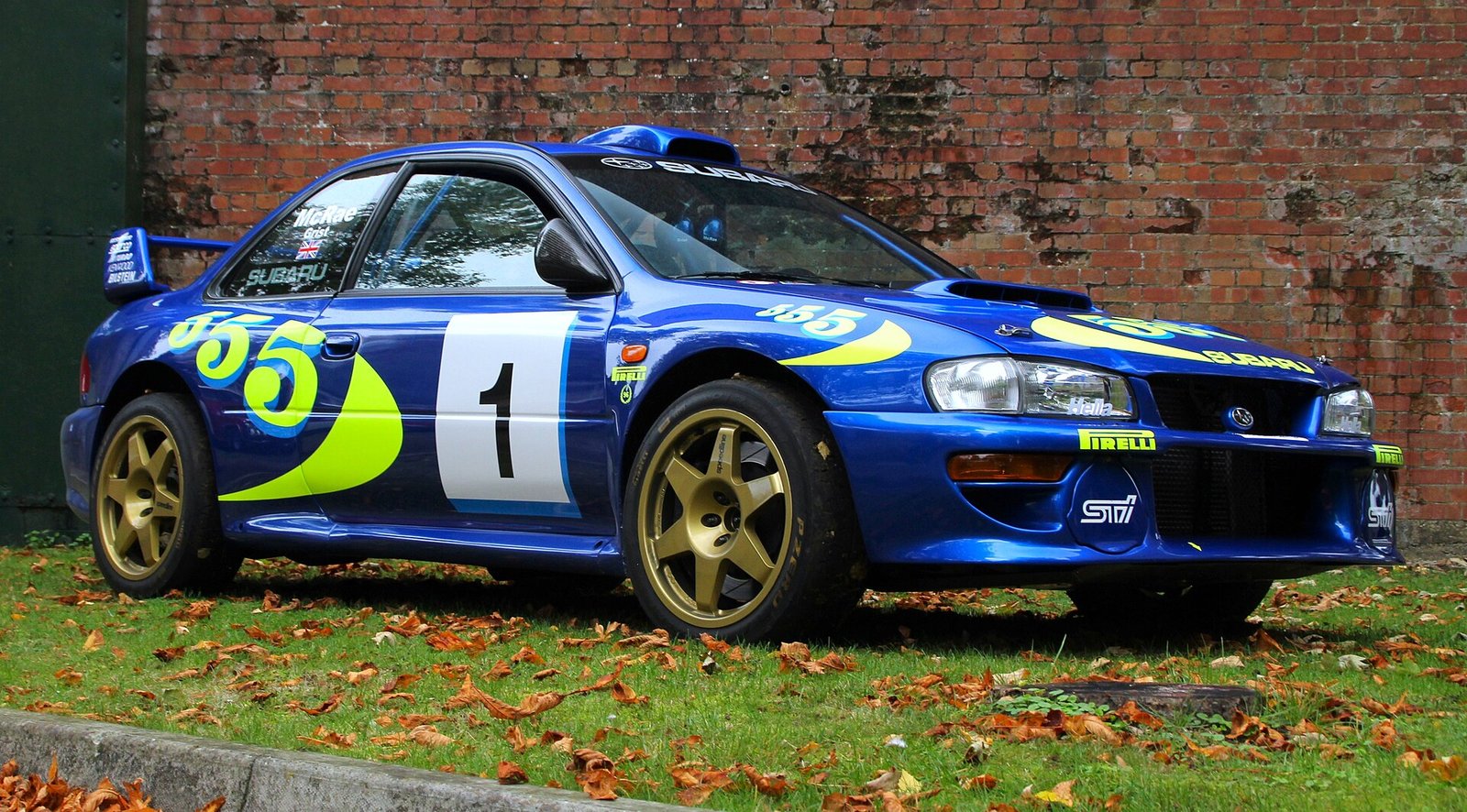
The EJ20 turbo is the engine that made the Impreza WRX famous in the rest of the world. With a reflash, a bigger turbo and a free-flowing exhaust, it could go from 220 to 280 hp stock to over 400 with reasonable reliability, and past 600 with serious work. In competition, versions of that engine powered the Impreza to world rally titles with Colin McRae, Richard Burns and Petter Solberg. So here’s the paradox: the engine that could survive Rally Finland could also leave you on the side of I-95.
What Actually Goes Wrong
The problems are well documented, and they’re more than forum legend.
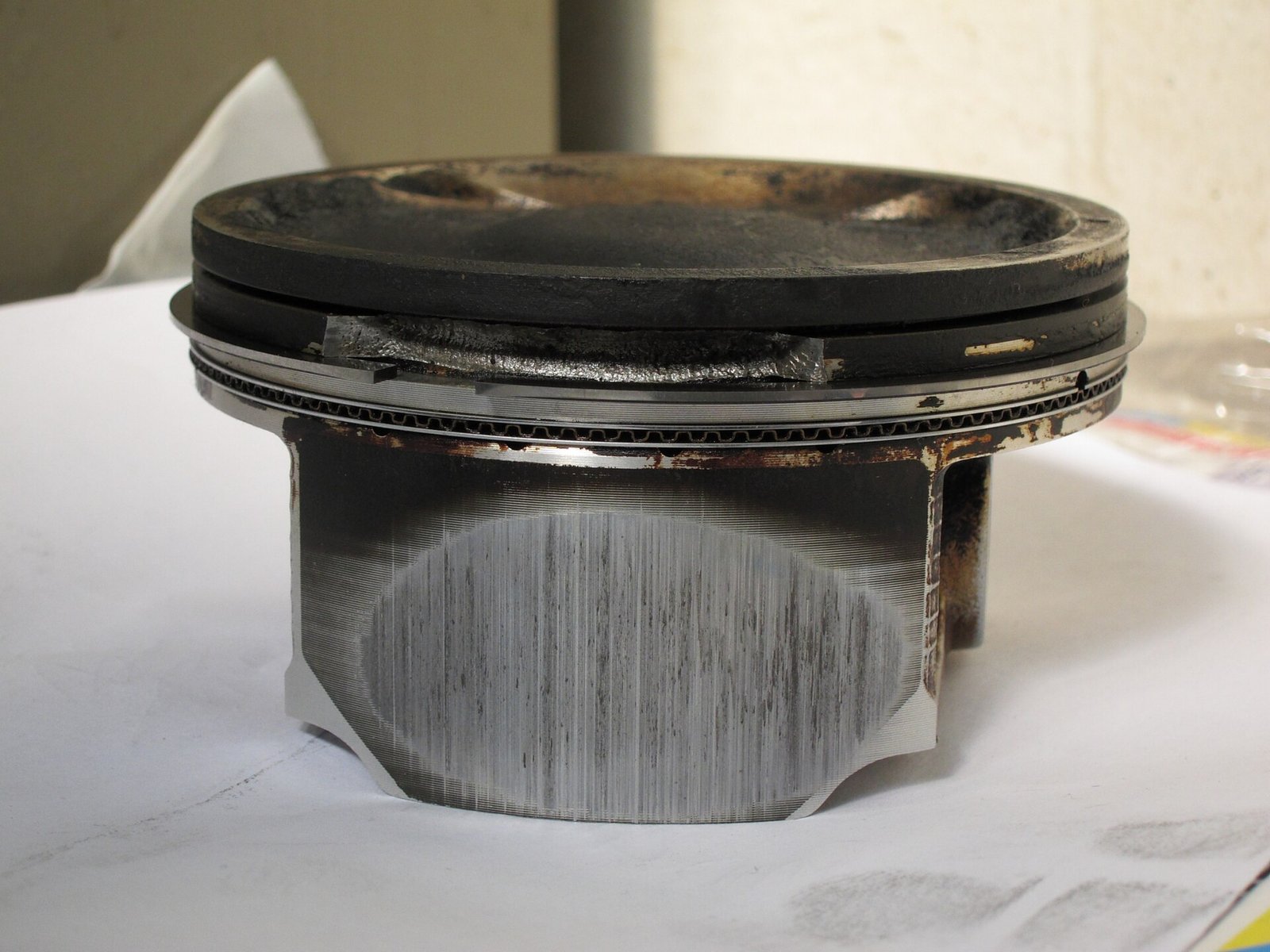
Head gaskets come first. The naturally aspirated EJ25 is the classic offender. On a flat engine, oil and coolant can sit against the gasket when the car is shut off, instead of draining down as they would in an upright engine, and as materials cool and contract at different rates, the seal suffers. The trouble was worst in cars from about 1999 to 2010, which used single-layer gaskets that proved inadequate. You’d usually see an external coolant leak first: greenish stains low on the engine. In bad cases, coolant got into the oil or the combustion chamber. Replacing them means a big job, and on American cars it became such a known item that used-car ads in New England mention "head gaskets done" the way others mention a new roof.
Oil consumption is the next item. EJs and, to a lesser degree, later engines tend to burn more than normal. Flat cylinders are part of the reason, since piston rings working horizontally don’t scrape oil from the walls quite as effectively. Subaru faced a class action over oil use in its FB engines in the U.S. in the 2010s, and agreed to extended coverage for some owners. Check the dipstick at every other fill-up on these cars. You’ll be glad you did.
Then there are rod bearings in high-output versions, especially STI EJ25s. They can fail under stress, above all when somebody hammers a cold engine or adds a lot of power. Spun bearings have ended many a young man’s love affair with his STI, and they’re a staple of Subaru YouTube.
Finally, routine work can be a pain. With cylinder heads out at the far sides of the engine bay, spark plugs are hard to reach. A 20-minute job on a Civic can take an hour, with scraped knuckles. Some shops charge accordingly.
So Why Do People Forgive It?
Because when it’s working, and most of the time it is, the cars are a lot of fun. A WRX STI with the EJ25 is one of the most entertaining daily drivers ever made. Low weight, symmetrical all-wheel drive and a turbo that comes on with a shove give it a planted, playful feel, and on a wet or snowy road it’s close to unbeatable at its price. Regular Outbacks and Foresters give you a milder form of the same thing, and they keep going for a long time if you stay on top of them. That’s why you still see so many of them with 200,000 miles and a roof box in Portland, Maine, and Portland, Oregon.
There’s a culture around it too. Subaru owners wave at each other in parts of the country. The company sponsors dog adoption weekends and national parks, and the community, from the rally fans to the Outback crowd, treats the engine’s quirks the way Harley riders treat oil spots on the garage floor. It’s a bit like Stockholm syndrome, but they know that.
From EJ to FA, and the Rest
The modern FA and FB families fixed a lot. Direct injection, equal-length headers, better materials and tighter tolerances have taken care of many of the chronic problems. The FA20 in the Subaru BRZ and Toyota 86, called the Scion FR-S here at first, showed that a boxer could be a high-revving motor too. It made 200 hp from a naturally aspirated 2.0 and revved past 7,000 rpm, with a feel closer to a motorcycle than a typical economy four. Toyota took notice, buying into Subaru and using the engine in its own sports car, which tells you plenty.
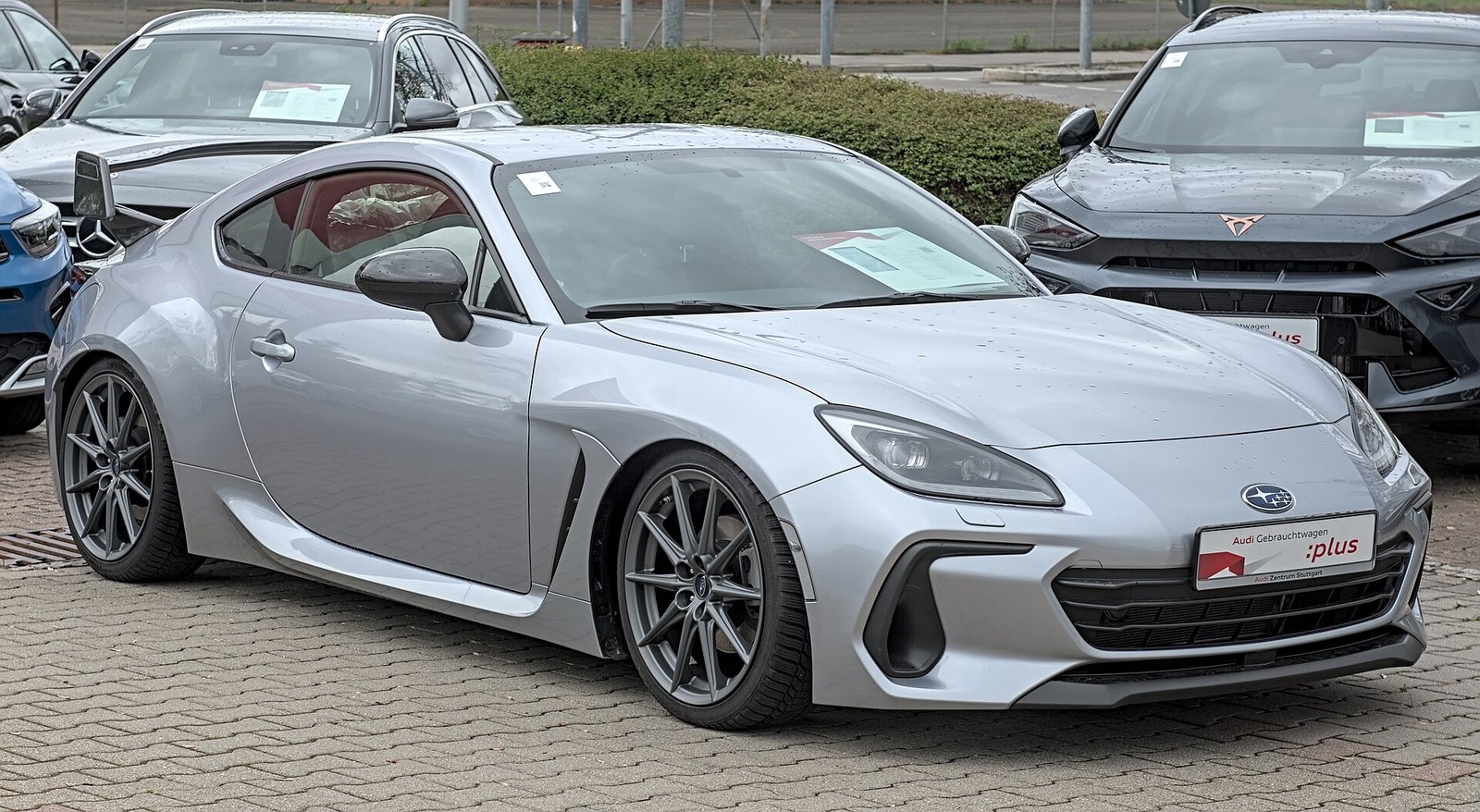
The FA24 turbo in the current WRX makes 271 hp, with smoother and more linear delivery than the old EJ25. By any objective measure, it’s a better engine. It’s more efficient, more refined and more reliable. Many purists think it has lost something anyway, and they aren’t entirely wrong. That’s a complaint you hear about nearly every modern engine.
There’s a Spanish footnote worth a mention here. The 1995 world title that made McRae a star was won at the Rally Catalunya with team orders in favor of his teammate, Madrid’s Carlos Sainz, who had won Monte Carlo and Portugal that year in the same boxer-powered car. You can read about that in our history of the Impreza 22B.
Rally Proved the Point
Everything about the engine makes sense once you look at the stage results. World rally cars of the 1990s and 2000s took a beating that would’ve destroyed most road engines: jumping, sliding, hitting rocks, running flat out for days in terrible conditions. The Group A and WRC Imprezas with the EJ20 didn’t just survive it. Subaru won three straight manufacturers’ titles from 1995 to 1997. And Colin McRae, who drove like every corner had personally insulted him, was trusting his neck to it.
It’s easy to wonder why the road cars couldn’t always be as tough as the race engines. The answer is mostly that race engines get rebuilt constantly and that nobody leaves them with old coolant for eight years. The road cars get whatever the owner gets around to doing.
The Verdict
The Subaru boxer isn’t perfect, and it never will be. It has known problems that competitors avoided by using a more conventional layout, and it costs more time and money to keep up than an equivalent Toyota four. Nobody who’s replaced a set of head gaskets will tell you otherwise.
But it does what it was built to do: low center of gravity, natural balance, a straight line to all four wheels and a driving feel few engines can match at the price. Someone in Colorado will tell you the same thing, while pouring in another quart of oil on the way to the trailhead, with the dog watching from the back seat.
Subaru boxer engine FAQ
Are Subaru boxer engines reliable?
Generally yes, but the older EJ engines in particular are known for head gasket failures, with repairs often around $2,000. Later FA and FB engines improved on many of the old weak points.
Why does Subaru use a boxer engine?
Because the flat layout keeps the engine’s mass low, which lowers the centre of gravity, it is naturally balanced without balance shafts, and it lines up neatly with Subaru’s Symmetrical All-Wheel Drive.
What is a boxer engine?
An engine with its cylinders laid flat in two opposed banks either side of the crankshaft. Each pair of opposing pistons moves in and out at the same time, like boxers throwing punches, and each piston has its own crankpin.
Check you’re still alive.
Photos: Subaru EJ20, Iamjosemom (CC BY 4.0); Subaru boxer, Chad Kainz (CC BY 2.0); BRZ, Alexander Migl (CC BY-SA 4.0); Impreza WRC, MrWalkr (CC BY-SA 4.0); piston, Phil Sangwell (CC BY 2.0). Via Wikimedia Commons.