Porsche 996: The Hated 911 That Saved the Company

Every dynasty has a black sheep. For the Porsche 911, that black sheep has fried egg headlights, a ticking time bomb for a bearing, and the eternal shame of sharing parts with a Boxster.
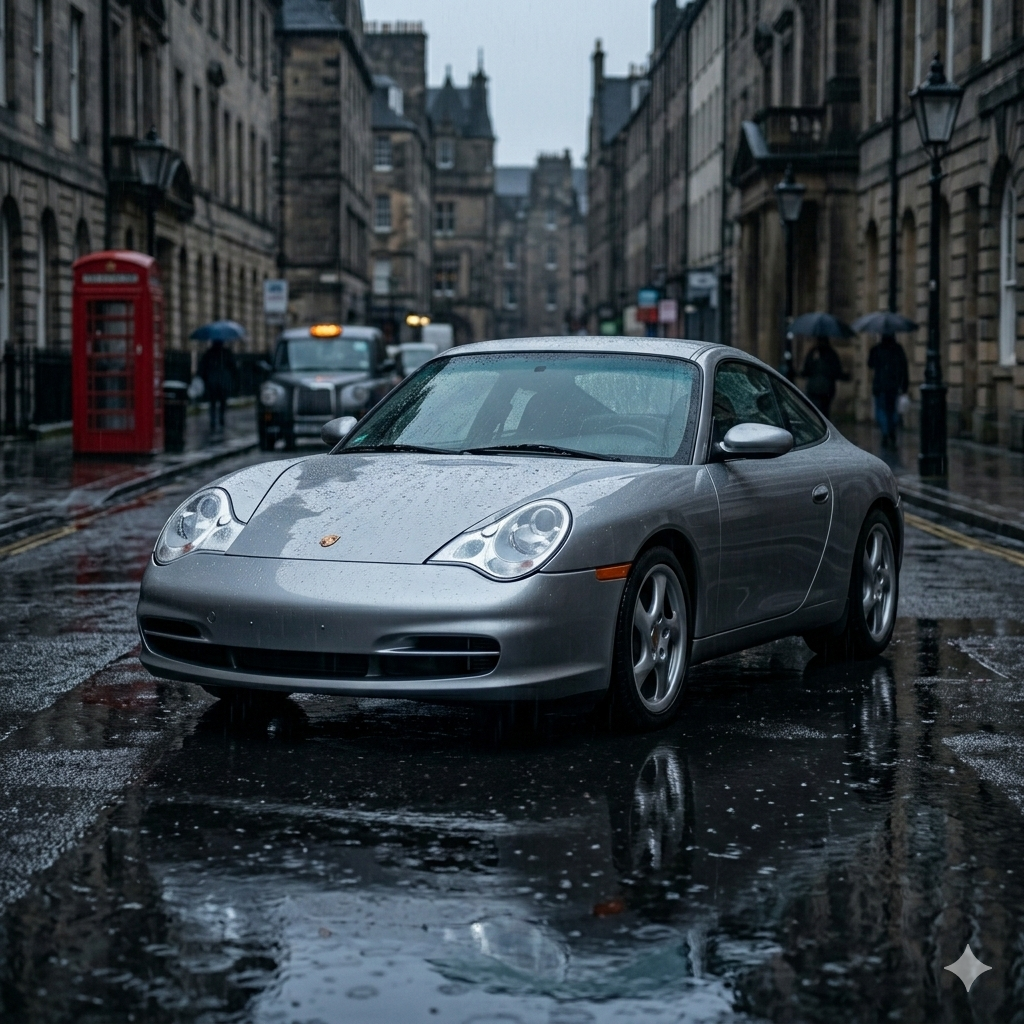
The Porsche 996, produced from 1998 to 2004, is the most hated 911 generation in history. Purists despise it for killing air cooling. Owners fear it for the IMS bearing that can destroy the engine without warning. Enthusiasts mock it for headlights that look like someone stuck eggs on the front end.
And yet, without the 996, there might not be a Porsche today. This is the story of how the worst 911 saved the entire company — and why the enthusiast community’s hatred of it reveals more about them than it does about the car.
The Crisis Nobody Talks About
In the mid-1990s, Porsche was in genuine financial trouble. This isn’t hyperbole or revisionist history — the company was losing money, production volumes had cratered, and there were serious discussions about whether Porsche could survive as an independent manufacturer.
The numbers were dire. Annual production had dropped below 15,000 units in the early 1990s, down from peaks of over 50,000 in the 1980s. For context, Porsche now sells over 300,000 cars a year. The company was haemorrhaging money throughout the late 1980s and early 1990s, with outdated manufacturing processes, an aging product lineup, and a cost structure that was completely unsustainable at the volumes they were selling.
The 993 was a brilliant car but an expensive one to produce. Its air-cooled engine couldn’t meet upcoming emission standards without radical and costly modifications that would have driven the price even higher. The manufacturing process was labour-intensive, relying on techniques that hadn’t fundamentally changed since the 1960s. Every car Porsche sold was costing more to build than it should, and the margins were evaporating.
Enter Wendelin Wiedeking, who became CEO in 1993 and essentially saved the company through two parallel strategies: implementing Toyota’s lean manufacturing principles throughout the factory (which reduced costs dramatically) and making the brutal decision to build the next 911 and the new Boxster on a shared platform.
This was the decision that changed everything — and the one that purists have never forgiven.
The Unforgivable Sin: Cost-Sharing
The 996’s cardinal sin wasn’t water cooling. It wasn’t the headlights. It was the shared front end with the Boxster.
From the A-pillar forward, the 996 and the first-generation Boxster (986) were essentially identical. Same headlights, same dashboard architecture, same door handles, same windshield, same front fenders. For a car that cost twice as much as the Boxster, this was a devastating blow to perceived value. The cost savings were enormous — sharing the entire front structure between two models dramatically reduced tooling costs and simplified the supply chain — but the psychological damage to the 911’s brand equity was equally enormous.
Imagine buying a Rolex and discovering it shares its case with a Timex. That’s how 911 buyers felt. The 996 was the first 911 that made its owners feel like they hadn’t spent enough money. Previous 911s had always felt special, handcrafted, exclusive. The 996 felt like a product of financial necessity, which is exactly what it was.
The headlights became the visual symbol of this compromise. The 993’s elegant, rounded headlamps — which had perfectly captured the 911’s traditional face while feeling thoroughly modern — were replaced by teardrop-shaped units that immediately earned the “fried egg” nickname. They weren’t objectively ugly in isolation — the 996 is actually a clean, well-proportioned car when viewed without the baggage of 911 history — but they were unmistakably different from the 911 lineage, and they screamed “cost reduction” to anyone who knew what to look for. Which was everyone.
The interior was perhaps even more damaging than the exterior. The 993’s cabin had felt like a special place — slightly cramped, perhaps, but purposeful and driver-focused. The 996’s interior was dominated by the Boxster-shared dashboard, which looked and felt like it belonged in a car costing half the price. The materials were adequate but uninspiring. The design was functional but forgettable. For a car that was supposed to represent the pinnacle of Porsche’s sports car engineering, the interior felt like an afterthought.
The IMS Bearing: Engineering’s Dirty Secret
If the headlights were the aesthetic wound, the intermediate shaft (IMS) bearing was the mechanical one — a design flaw that has haunted the 996 since the early 2000s and shows no signs of fading from the conversation.
The 996’s M96 engine was a clean-sheet design — Porsche’s first water-cooled flat-six for the 911, built from the ground up rather than evolved from the air-cooled engine. It was lighter, more powerful relative to its displacement, and more thermally efficient than the air-cooled engine it replaced. On paper, it was a better engine in almost every respect.
But it had a fatal flaw. The M96 used a single-row ball bearing to support the intermediate shaft that drives the camshafts via a chain. This bearing is lubricated by oil mist rather than direct pressure feed — a design choice that saves complexity and reduces parasitic losses but creates a single point of failure that, when it goes, takes the entire engine with it.
When the IMS bearing fails — and it does, in an estimated 5-10% of engines depending on who you ask and how they define “failure” — the result is catastrophic. The bearing disintegrates, sending metal debris throughout the oil system. The debris contaminates the crankcase, damages bearing surfaces throughout the engine, and scores cylinder walls. A €5 bearing turns into a €15,000-€25,000 engine rebuild, or more commonly, a complete engine replacement.
The failure is unpredictable. It can happen at 30,000 km or 200,000 km. There are no reliable warning signs before it’s too late. The first indication is usually a sudden loss of oil pressure, by which point the damage is already done. This randomness is what makes the IMS bearing so psychologically damaging to 996 ownership — you can maintain the car perfectly, change the oil religiously, and still lose the engine to a design flaw that Porsche has never officially acknowledged as a defect.
In fairness, the IMS bearing can be replaced preventively for around €1,500-€3,000 depending on the type of replacement bearing used and the labour rates in your market. The LN Engineering retrofit bearing, which uses a ceramic hybrid design with direct oil feed, largely eliminates the risk. Many owners have done this and driven worry-free for hundreds of thousands of kilometres afterward. And many 996 engines have run 200,000+ km on the original bearing without issues.
But the reputational damage was done long ago, and the market has priced it in permanently. The IMS bearing is the reason that a 996 Carrera costs a third of what a 993 Carrera costs, despite being objectively the more capable car.
Beyond the IMS, the M96 engine also suffers from a second known issue: cylinder bore scoring. This manifests as vertical scratches on the cylinder walls that compromise piston ring sealing, causing excessive oil consumption and progressive compression loss. The exact cause remains debated — some attribute it to fragments of the Lokasil coating breaking away, others to localised cooling problems — but the result is the same: a repair bill that can easily exceed €10,000 if caught late. These two issues combined have created a reputation for mechanical fragility that is not entirely deserved but has become permanently embedded in the market’s perception.
The Redemption: 996 GT3 and GT2
Here’s where the narrative gets complicated, because while the base 996 was a cost-reduced compromise designed to save a company, the GT variants were anything but compromised.
The 996 GT3 used a naturally aspirated 3.6-litre engine derived from the GT1 racing car — the Mezger engine, named after its designer Hans Mezger, which shared virtually nothing with the M96 engine in the base Carrera. No IMS bearing issue. No bore scoring concerns. This was a race-derived engine in every meaningful sense, producing 360 horsepower in its first iteration and 381 in the later Mk2. It was lighter, harder, louder, and completely uncompromised — a car built for drivers who wanted a racing experience with number plates.
The 996 GT3 RS went further still, with lightweight body panels, a fixed rear wing, reduced sound deadening, and a stripped interior. It was homologation special in the classic Porsche tradition — a car built because racing regulations required it, and offered to the public almost as an afterthought.
The 996 GT2 was a twin-turbocharged, rear-wheel-drive weapon producing 462 horsepower. It was the widowmaker reborn — no all-wheel drive, no stability control in early versions, and enough power to overwhelm the rear tyres in third gear on a cold day. The GT2 was a car for people who considered the 911 Turbo too safe and too predictable, which is a sentence that should tell you everything about the type of person who bought one.
Both the GT3 and GT2 are now among the most desirable modern Porsches, with values that have multiplied several times over. The 996 GT3 RS, in particular, has become a collector piece trading at €250,000-€400,000 — roughly ten times what a base 996 Carrera costs.
The irony is painful: the same generation that killed the 911’s credibility among purists produced two of the greatest driving machines Porsche has ever built.
The 996 Today: Bargain or Liability?
The 996 remains the cheapest way to own a Porsche 911, and for a certain type of buyer, it represents extraordinary value.
Base Carreras can be found for €25,000-€40,000 — less than many hot hatchbacks and roughly a quarter of what the cheapest 993 costs. The Turbo, which uses a different engine without the IMS bearing concern and produces 420 horsepower with all-wheel drive, sits around €50,000-€80,000. For the performance it offers, the 996 Turbo might be the single best value proposition in the entire Porsche range — a car that can embarrass modern supercars for the price of a well-optioned BMW 3 Series.
For buyers willing to address the IMS bearing preventively and accept the aesthetics, the 996 offers remarkable value. The driving experience is genuinely good — the chassis is communicative, the steering has feel that modern 911s have lost, and the overall dynamic balance is excellent. It’s a proper 911 in every way that matters, burdened by a reputation problem that is part legitimate concern and part irrational prejudice.
But will the 996 ever appreciate significantly? Probably not to 993 levels. The stigma is too deeply embedded, and the market has abundant supply. The 996 will likely remain the 911 that pragmatists love and purists pretend doesn’t exist.
What the 996 Teaches Us
The 996 is proof that sometimes the right business decision is the wrong enthusiast decision — and that both can be true simultaneously.
Porsche needed to cut costs to survive. They did. The company went from near-bankruptcy to becoming the most profitable car manufacturer per unit in the world. The 996 and Boxster platform saved Porsche, funded the Cayenne development that transformed the company’s finances permanently, and enabled every subsequent model including the 997, 991, and 992 that purists now celebrate as worthy successors to the air-cooled legacy.
Without the 996, there is no modern Porsche. Every GT3 RS, every air-cooled restoration, every Porsche Club event, every Instagram post of a Singer reimagination exists because Wendelin Wiedeking made the unpopular decision to share headlights with a Boxster.
The 996 is the 911 that Porsche wants you to forget. It should be the one they’re most grateful for.
4 thoughts on “PORSCHE 996”