Porsche 996: the "fried egg" 911 that purists hated and that kept Porsche alive
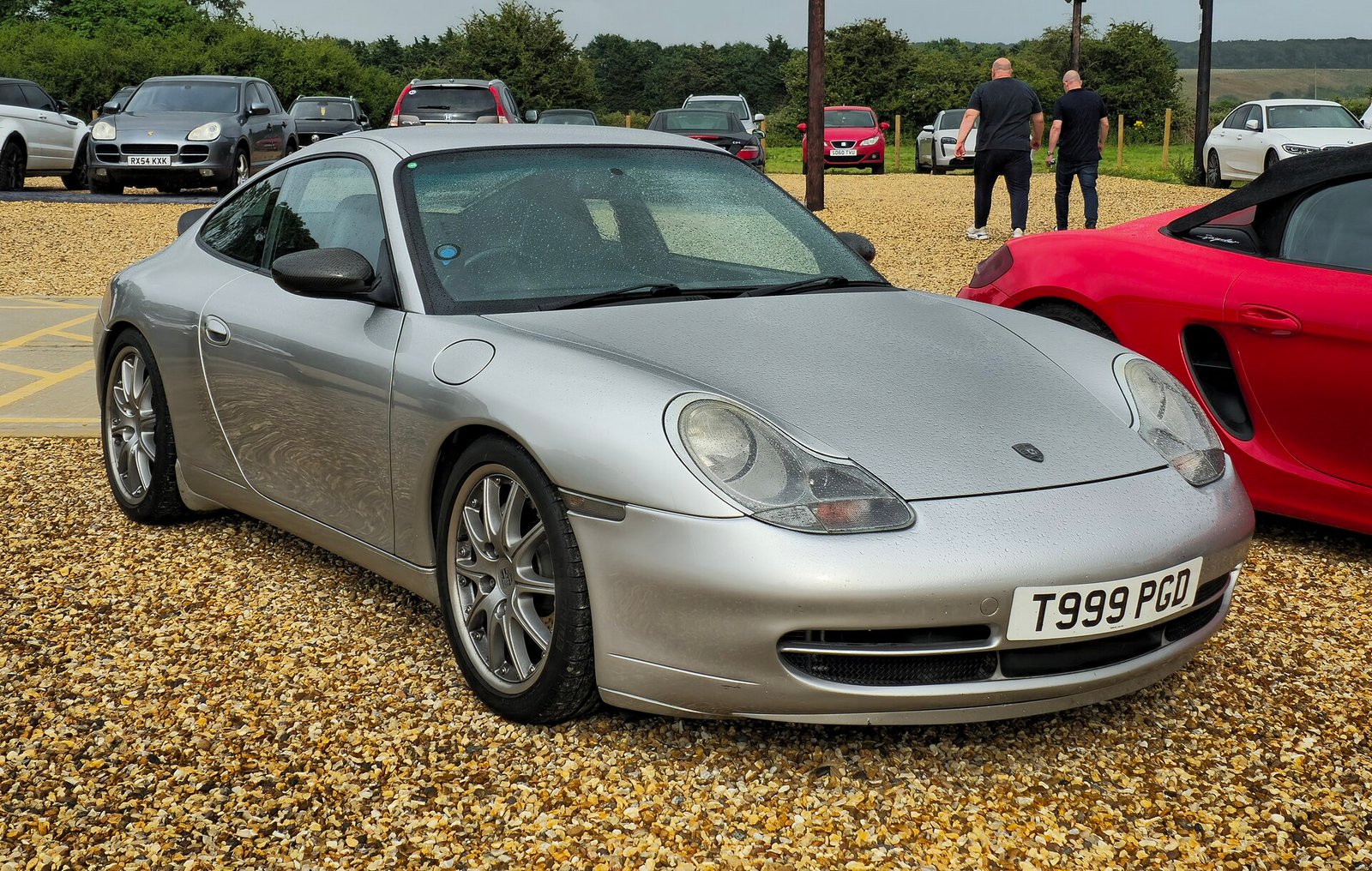
For twenty years the Porsche 996 has been the 911 that enthusiasts love to mock. It killed air cooling. Its headlights look like fried eggs. It shares its nose with a Boxster. Its engine carries the three most feared letters in the Porsche world: IMS. And yet the car built from 1998 to 2005 is also the reason there’s a Porsche company left to build the 911 at all, and it spawned some of the greatest driver’s cars of its era, including the first GT3 Americans could buy new. Here’s why the most hated 911 may also be the most important one.
A company running out of road
In the early nineties Porsche was in serious trouble. Sales in its key American market had collapsed after the boom of the mid-eighties. Worldwide production had fallen from around 50,000 cars a year at its peak to fewer than 15,000. The 911 was built in a labor-intensive way that hadn’t changed fundamentally in decades, and the company’s other models, the front-engined 928 and 968, were aging and expensive. There was open speculation that Porsche might be swallowed by a bigger carmaker.
In 1993 Wendelin Wiedeking took charge. He brought in Japanese consultants, adopted Toyota-style lean manufacturing on the Zuffenhausen floor and cut costs aggressively. He also made the most important product decision in modern Porsche history: the next 911 and a new entry-level roadster, the Boxster, would be developed together and share as many parts as possible.
Air cooling had to go
The car the 996 replaced, the 993, is now one of the most valuable 911s ever made, the last air-cooled one. But it was expensive to build, and its air-cooled flat-six was running out of road against tightening emissions and noise rules worldwide. Porsche needed an engine that could keep growing in power while getting cleaner.
The answer was the M96, the first water-cooled flat-six in a 911. It was lighter, more powerful for its size and more efficient than the air-cooled engine. The 996 Carrera launched with 3.4 liters and 300 metric horsepower, about 296 hp, and later grew to 3.6 liters and 320 PS. The body was also all-new, longer, wider and stiffer than the 993, with a much roomier cabin. On paper it was better in almost every measurable way.
Bigger, slipperier, more comfortable
The new body changed the 911’s proportions more than any update since 1963. The 996 was roughly 18 centimeters, about seven inches, longer than the 993, with a wheelbase about eight centimeters longer, which made the car calmer at high speed and gave the rear seats a little more room. Its drag coefficient dropped to around 0.30, better than the 993’s, helping both top speed and fuel economy.
Inside, the change was even bigger. The cabin was wider and easier to get into, the air conditioning finally worked properly and the driving position suited taller drivers better than any earlier 911. Porsche kept one tradition, the ignition key on the left of the steering wheel, a nod to the racing days when drivers ran to their cars at Le Mans starts. But the dashboard came from the Boxster program, the plastics looked cheaper than before, and the pop-out cupholders became a running joke among owners because they broke so easily. Owners got a better car to live with every day and a less special one to sit in.
The Boxster problem
The trouble was what you could see. From the windshield forward, the 996 and the first-generation Boxster were nearly identical: the same front fenders, the same headlights, the same doors and much of the same dashboard. The savings were huge. The damage to the 911’s image was bigger.
Imagine paying twice the price of a Boxster and seeing the same face in the parking lot next to you. That’s how many 911 buyers felt. The new headlights, teardrop-shaped units that merged the main beam and indicators, got the "fried egg" nickname almost immediately. Seen without the weight of 911 history, the 996 is a clean, well-proportioned car. But it didn’t look like a 911 to people who’d grown up with round headlights, and the plain, plasticky interior made things worse.
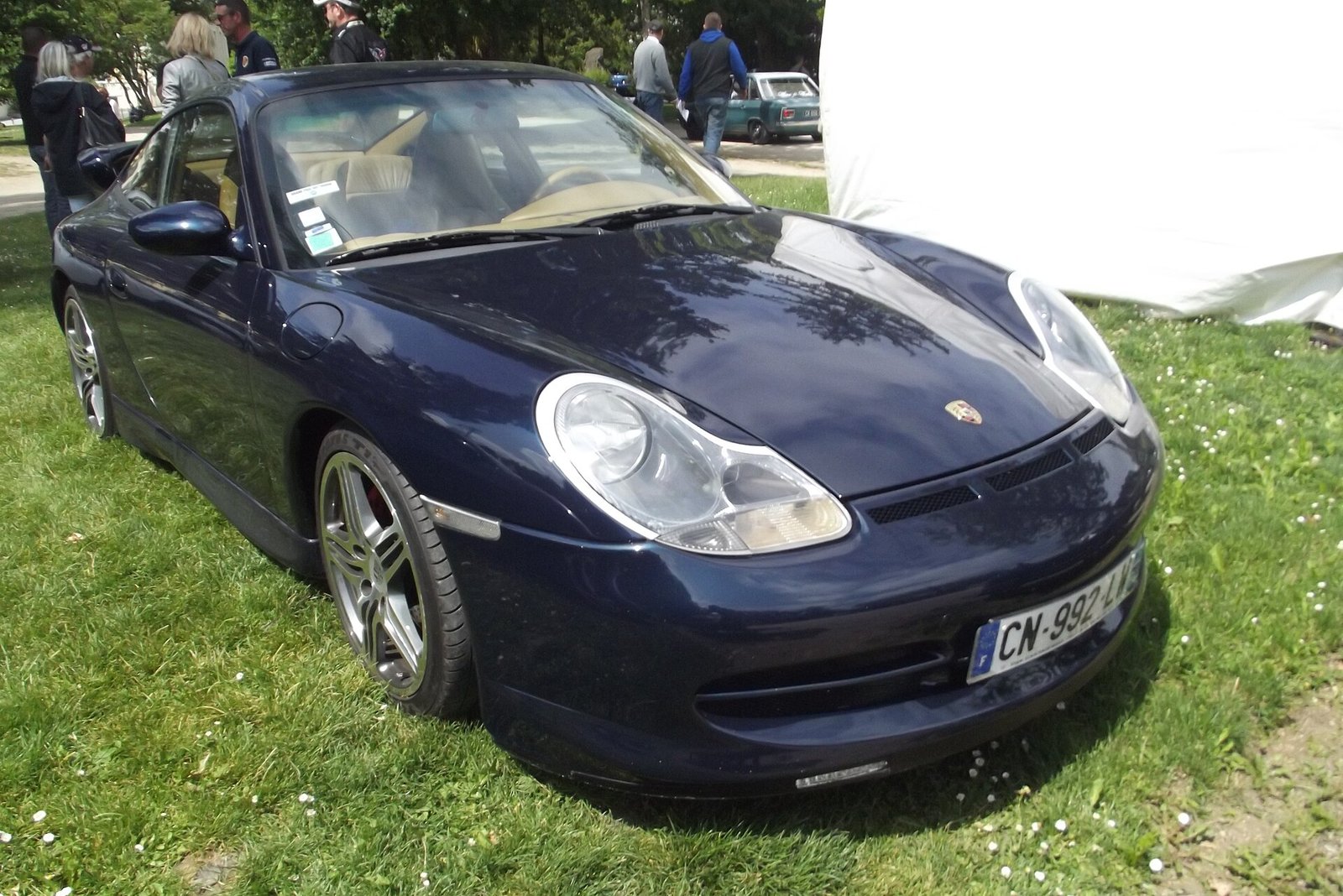
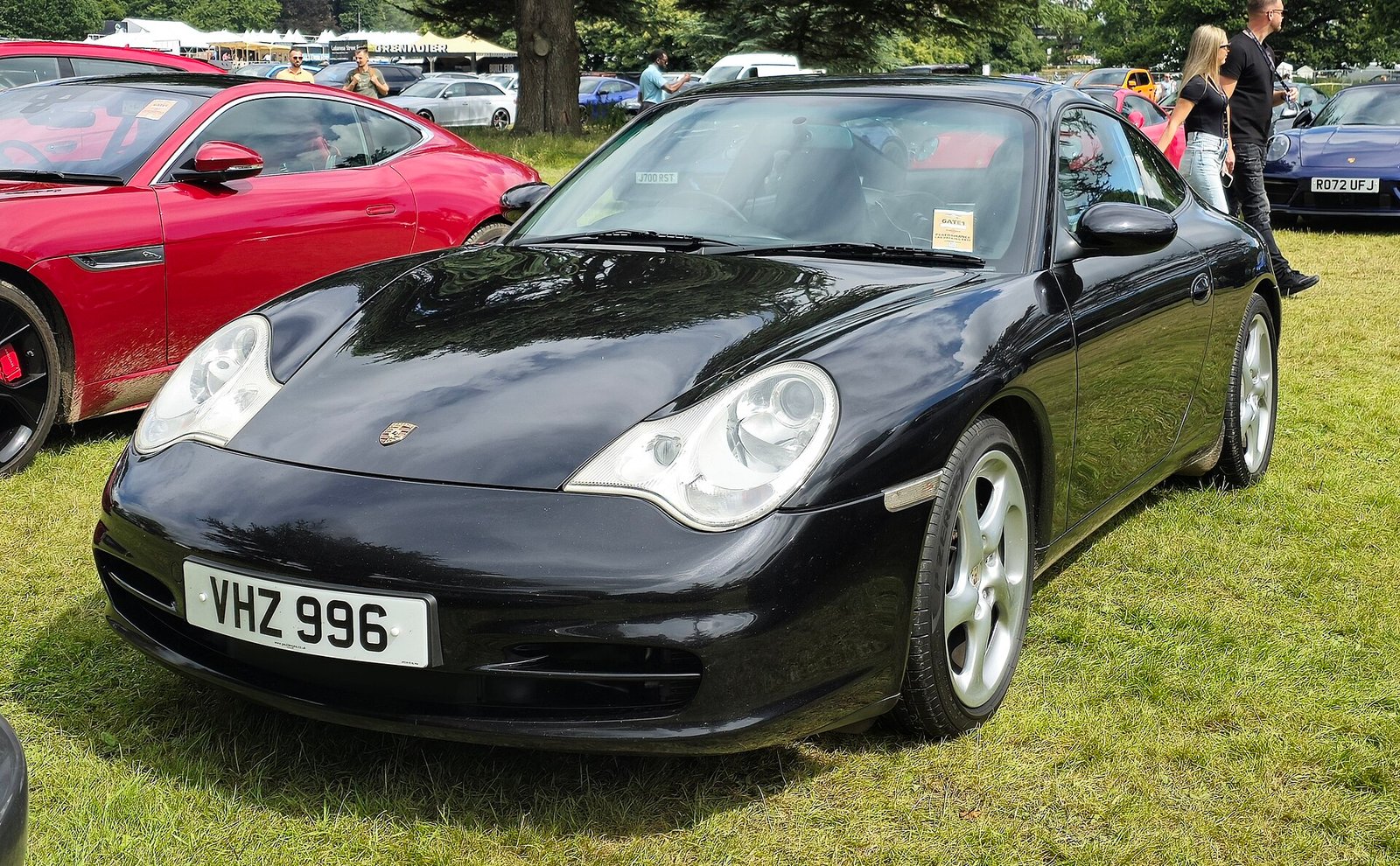
Porsche partly answered the criticism with a facelift for 2002, giving the Carrera the cleaner headlights of the 996 Turbo. By then the reputation was set.
The IMS bearing
If the headlights were the cosmetic wound, the intermediate shaft bearing was the mechanical one. The M96 uses an intermediate shaft to drive the camshafts, supported at one end by a sealed ball bearing that isn’t fed directly with pressurized oil. When that bearing fails, it can come apart and send metal through the engine, and the usual result is a destroyed motor.
How often it happens is endlessly debated. Estimates for the most vulnerable single-row bearings run into the high single digits as a percentage of engines, while many cars cover huge mileages without trouble. The problem is the randomness: failures can strike a well-maintained car at low mileage with little warning. In the United States, owners took Porsche to court, and a class action over IMS failures ended in a settlement in 2013 that offered partial reimbursement for some owners.
The aftermarket found a fix. Companies such as LN Engineering developed replacement bearings, including ceramic hybrid designs and versions fed directly with oil, that greatly reduce the risk. Many owners now treat an IMS retrofit, often done alongside a clutch replacement, as routine maintenance. The M96 has a second known weakness, bore scoring, where the cylinder walls become scratched, leading to oil consumption and, eventually, an expensive rebuild.
The Mezger exceptions
Here’s where the 996 story flips. Not every 996 used the M96. The Turbo, the GT2 and the GT3 used the Mezger engine, named after Porsche’s legendary engineer Hans Mezger and derived from the racing engine of the Porsche 911 GT1. It has a completely different design, with no IMS problem and no bore scoring, and it’s one of the most respected engines Porsche has ever built.
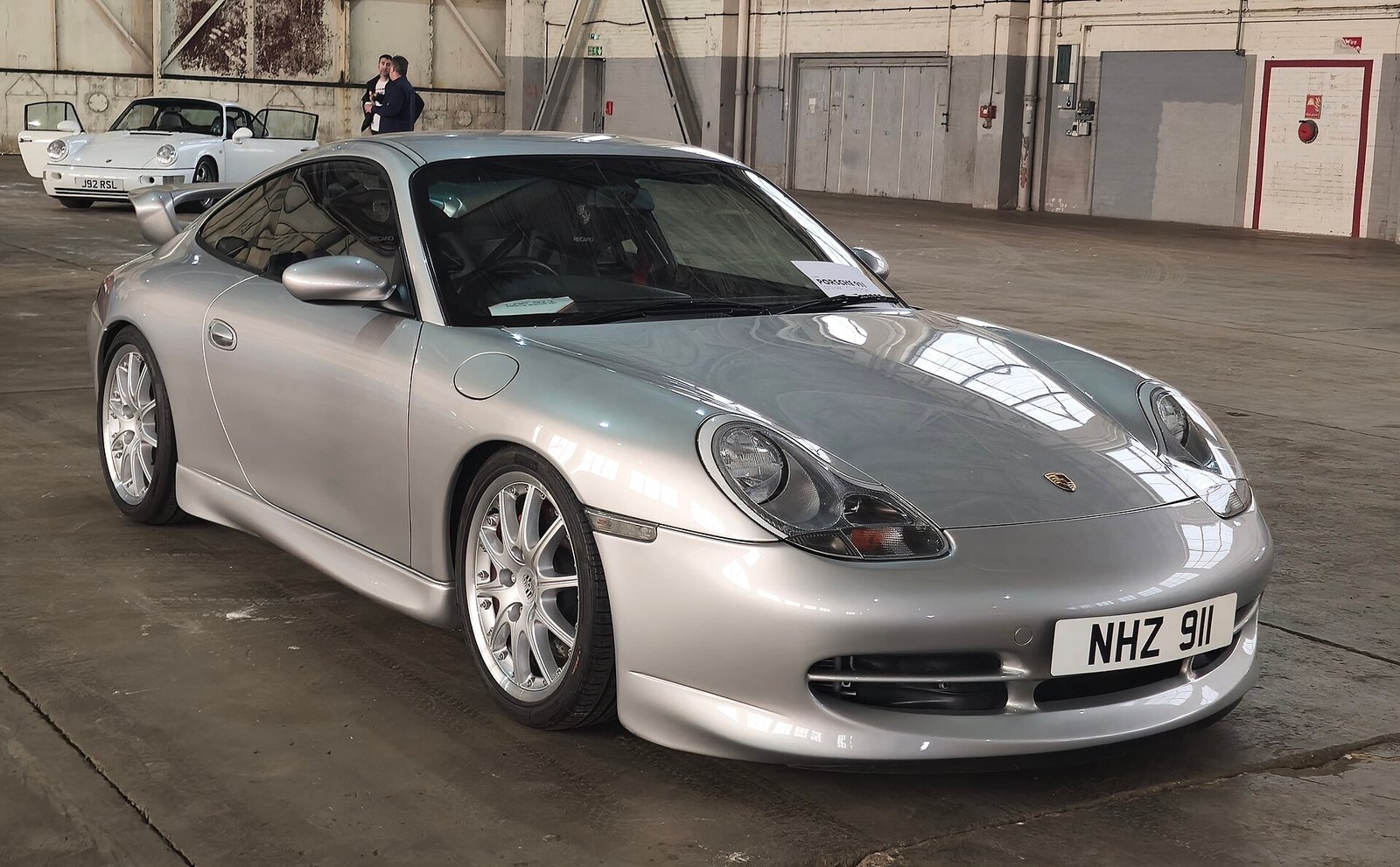
The 996 GT3 of 1999 put a naturally aspirated 3.6-liter Mezger flat-six with 360 PS into a lighter, stiffer 911 developed for the track. It was sold in Europe first. American buyers had to wait until the facelifted 2004 GT3, with 381 PS, which became the first GT3 officially sold in the United States, a landmark for US Porsche fans. The GT3 RS added lighter panels, a fixed rear wing and a stripped interior, a homologation special in the classic Porsche tradition.
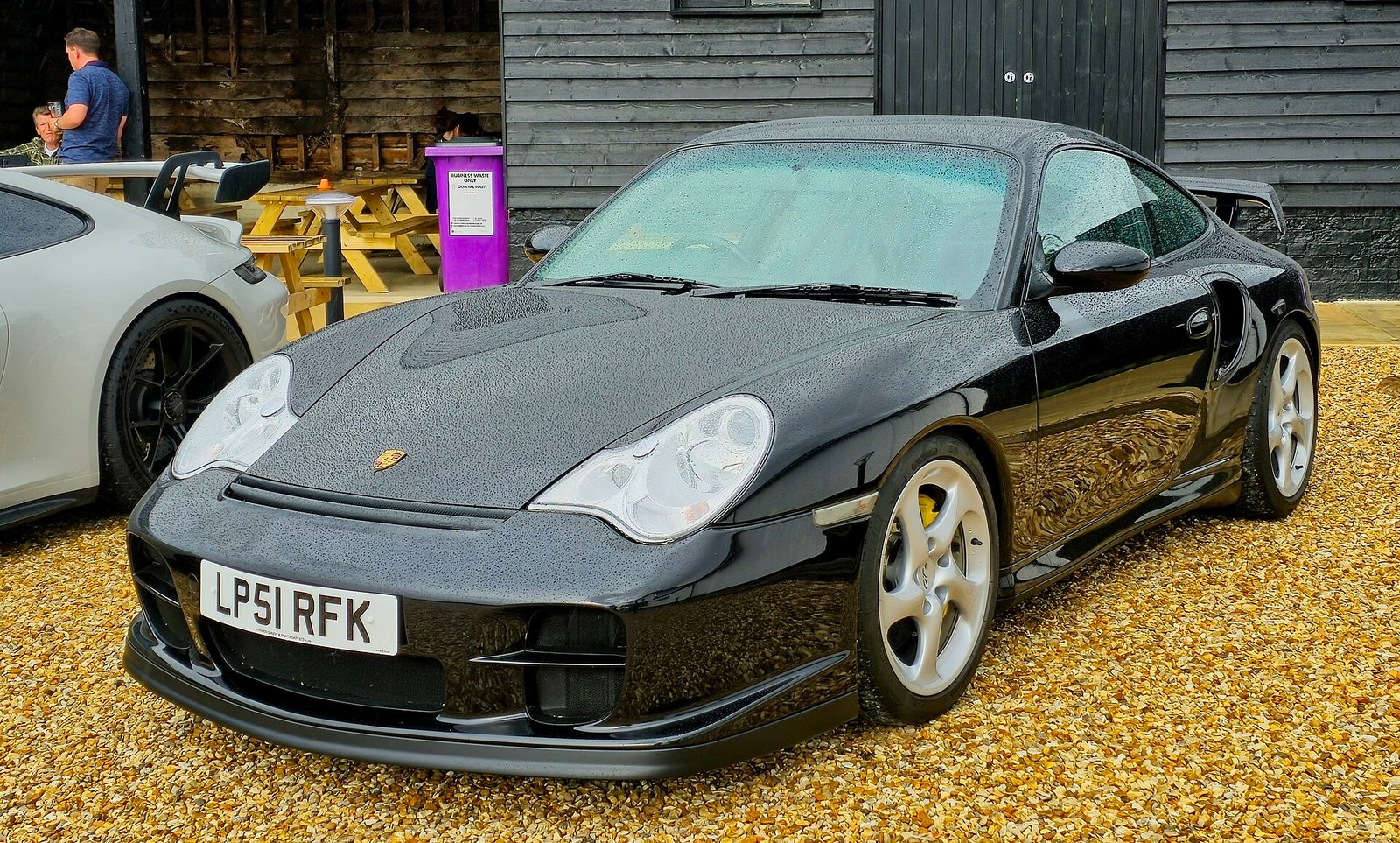
The 996 Turbo, with a twin-turbo 3.6-liter Mezger making 420 PS and all-wheel drive, was one of the fastest cars on sale in its day and remains a performance bargain. The GT2 was the wild one: 462 PS, rear-wheel drive only and, in its early form, no stability control. It was a car for drivers who found the Turbo too safe.
Winning at Daytona and Le Mans
The 996 also had a serious racing career, and much of it happened in America. The GT3 became the basis for Porsche’s customer race cars, the GT3 Cup for one-make series around the world and the GT3-R, GT3-RS and GT3-RSR for GT racing. Those cars won their class at Le Mans several times in the early 2000s and dominated GT racing in the American Le Mans Series.
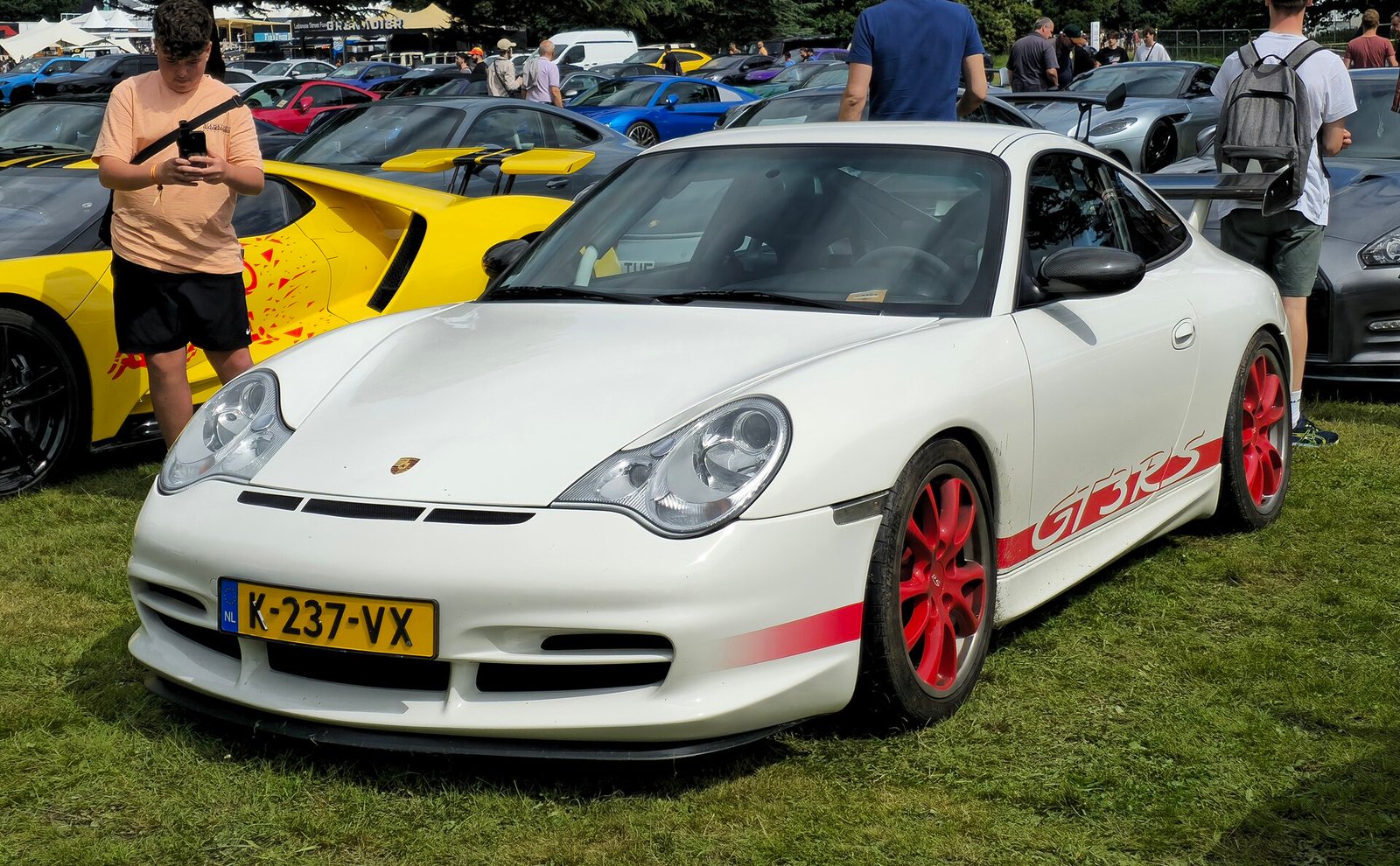
The biggest win came in 2003. At the Rolex 24 at Daytona, a 996 GT3-RS entered by The Racer’s Group of California, driven by Kevin Buckler, Michael Schrom, Timo Bernhard and Jörg Bergmeister, won the race outright, beating faster prototypes over 24 hours. A production-based 911 taking the overall win at Daytona was a reminder that the "hated" generation could do things few cars could.
More body styles, more power
Porsche kept expanding the range. The Carrera 4 brought all-wheel drive, and the Carrera 4S of 2002 combined it with the wide rear body of the Turbo, a favorite with buyers who wanted the Turbo look without the Turbo price. The 996 Targa of 2002 introduced a large sliding glass roof instead of the classic removable panel and roll hoop, a design that divided opinion just like the headlights.
At the top, the Turbo could be ordered with the factory X50 package, which raised output to 450 PS, and the Turbo S of 2005 made that power standard along with carbon-ceramic brakes. There were also Cabriolet versions of the Carrera and the Turbo, which sold strongly in sunny American markets such as California and Florida. By the end of production the 996 family had become one of the broadest 911 ranges Porsche had ever offered.
Selling the water-cooled idea in America
For American dealers, the 996 had to win over a loyal and very traditional customer base. Many longtime owners refused to trade their air-cooled cars, and some stayed away from the brand for years. At the same time the 996 brought new buyers who wanted a more comfortable, more reliable and easier-to-live-with 911, with better air conditioning, more interior space and longer service intervals. Those buyers, along with the Boxster, helped rebuild Porsche’s American business after the lean years of the early nineties.
The Boxster that saved Zuffenhausen
The parts-sharing plan worked. The Boxster, launched in 1996, sold far better than any Porsche in years, and the 996 benefited from the same lower costs. Porsche returned to profit and, by the early 2000s, was one of the most profitable carmakers in the world per vehicle sold. That money paid for the Cayenne SUV, launched in 2002, which transformed the company’s finances and made today’s Porsche possible.
Purists hated the logic, but it’s hard to argue with the result. Every modern GT3, every celebrated restoration of an air-cooled 911 and even the boutique "reimagined" 911s built by companies like California’s Singer exist in a world where Porsche survived, and it survived partly because Wiedeking was willing to give the 911 a Boxster’s face.
The Porsche 996 as a used car
Today the 996 is still the cheapest way into a 911, especially the Carrera models. That price reflects both the looks and the IMS fear. For a buyer who budgets for an IMS retrofit and checks for bore scoring with a borescope inspection, it can be a rewarding car. The steering has a natural feel that later electrically assisted 911s lost, the chassis is communicative and the water-cooled engine revs happily.
The Mezger-engined cars are a different market. Good 996 Turbos have climbed steadily, and GT3s, GT3 RSs and GT2s now sell for many times the price of a Carrera. They’re among the most sought-after modern Porsches, proof that the 996 generation produced greatness alongside its compromises.
What the 996 teaches
The 996 shows that the right business decision can be the wrong enthusiast decision, and that both can be true at once. Porsche had to cut costs to survive, and it did. The car that carried that burden became the black sheep of the 911 family, while its successor, the 997 of 2004, brought back round headlights and won the purists back. The fried-egg headlights, once the target of every joke, have become the easiest way to spot the car that changed Porsche’s history.
Without the 996 there might be no modern Porsche, and certainly not the one we know. Its history sits between the Porsche 993, the last air-cooled 911, and everything that came after, and the full family story is in our history of the Porsche 911. For production details, see the Porsche 996 page on Wikipedia.
Check you’re still alive.
Photos via Wikimedia Commons: 996 Carrera, GT3, GT3 RS, GT2 and 2003 Carrera, Calreyn88 (CC BY-SA 4.0); 996 Carrera 3.4, Handelsgeselschaft (CC BY-SA 4.0).