Peugeot 205 GTI: the benchmark hot hatch America almost got
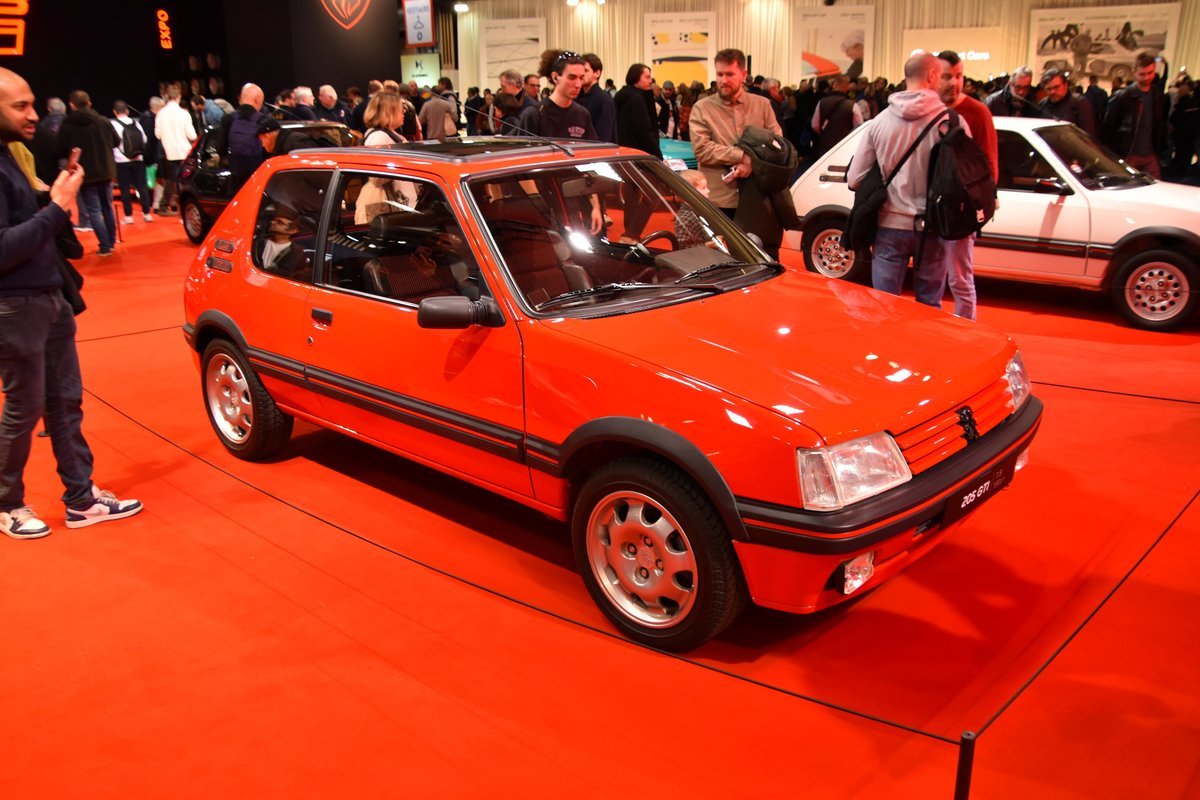
In 1984 Motor Trend reported that Peugeot was “seriously considering” bringing the 205 GTI to the United States. It never happened. Peugeot kept selling Americans the 505 sedan and wagon, added the 405 late in the decade, and in 1991 left the market for good. Renault did much the same with the Medallion, so the French small car most worth knowing about stayed on the other side of the Atlantic.
What America got instead tells you what it missed. The hot hatches on sale in 1984 were the Pennsylvania-built Rabbit GTI with around 90 hp and the Dodge Omni GLH, Carroll Shelby’s “Goes Like Hell” special with a 2.2-liter four. Both were fun. Neither handled like the little Peugeot, and in Europe the 205 GTI quickly became the car every other hatchback got measured against. In 1990 the British magazine CAR named the 205 its car of the decade.
1,874 pounds
The numbers start with the scale. The first GTI, the 1.6 shown in March 1984, weighed 850 kg, or about 1,874 lb. That’s lighter than a Mazda Miata, which arrived five years later and is still the usual reference for a light car. A current Peugeot 208 is roughly 600 lb heavier. We’ve written about why weight and safety aren’t the same thing using another light French car, the Saxo VTS. The 205 is where that school of thought began.
The engine was the XU5J, a 1.6-liter four with an aluminum block and head, Bosch LE2-Jetronic fuel injection and 105 hp at 6,250 rpm. Peugeot revised it in 1986 for 115 hp. That doesn’t sound like much until you divide by the weight. Peugeot’s approach was the opposite of Detroit’s: instead of adding engine, it removed mass.
Put it next to the Omni GLH and the gap is obvious. Shelby’s 1984 GLH made 110 hp from 2.2 liters and weighed around 2,200 lb. For 1985 a turbo version arrived with 146 hp, and it would run to 60 in under eight seconds. On paper the Dodge beat the Peugeot. On a twisty road it was a straight-line car with a lot of torque steer, and the 205 was gone at the first set of bends.
The chassis did the rest. It was lowered, with stiffer springs and dampers, anti-roll bars at both ends, and a front track about 1.6 inches wider than the rear. That made the nose bite into corners harder than anything else in the class. The steering had no power assist and told you exactly what each front tire was doing.
The car that kept Peugeot alive
None of this was a luxury project. In the early eighties Peugeot was drowning. It had taken over Citroën in the mid-seventies and Chrysler’s European business in 1978, and by 1982 the group carried a debt that sources put at around 30 billion francs. The family brought in Jacques Calvet, a former civil servant and banker, to clean up the books. French writers still say the 205 saved Peugeot from a bankruptcy everyone saw coming.
The 205 went on sale on February 24, 1983, and it was designed in-house. People often credit Pininfarina, and the Italians did pitch a proposal, but Gérard Welter’s team won the internal shoot-out and the design was signed off in 1980. Pininfarina got the cabriolet. Peugeot had a profit again by 1985, and over its life the 205 family sold about 5.3 million cars. The GTI was the halo that made the cheap versions feel cool.
The 1.9 and its 130 hp
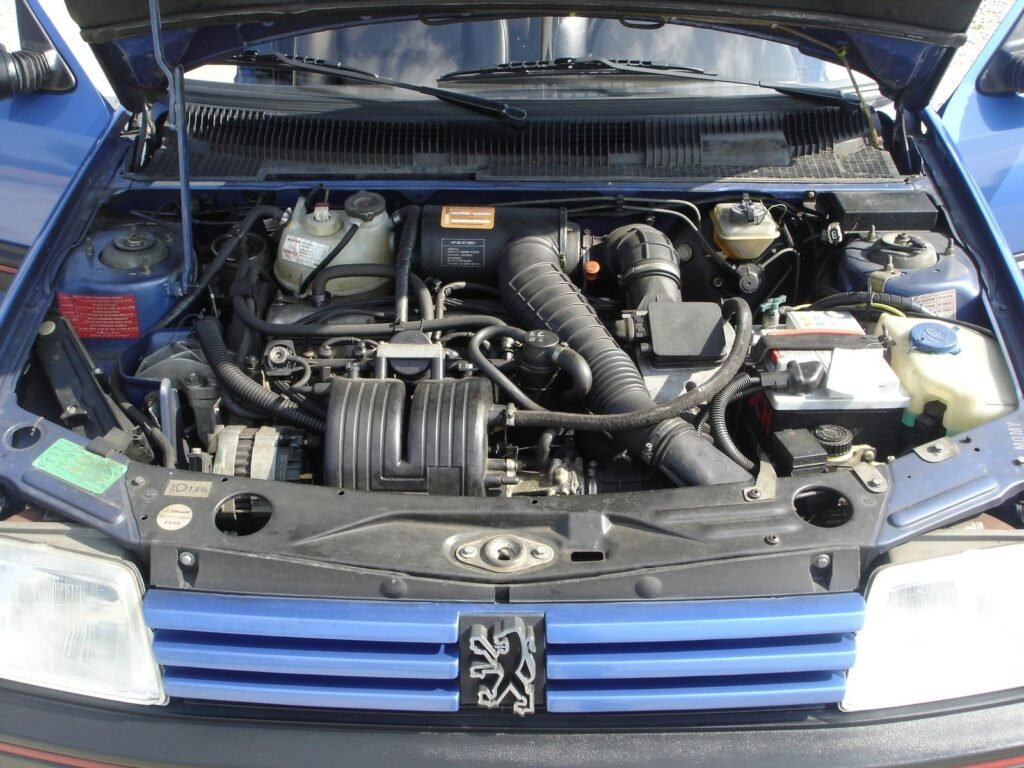
The bigger version appeared at the 1986 Paris show and went on sale at the end of that year. The XU9J kept the bore and stretched the stroke from 73 to 88 mm, for 1,905 cc and 130 hp, with much more low-end and mid-range pull. It got four-wheel disc brakes (the 1.6 still had rear drums) and 15-inch Speedline wheels. At 875 to 880 kg, depending on the source, it topped out at 128 mph and ran 0-60 in under eight seconds. Catalytic-converter versions in the early nineties dropped to 122 hp.
Owners still argue about which is better. The 1.6 has a lighter nose and loves revs. The 1.9 pulls harder from low speed but carries more weight up front. Both have their defenders, and both are right.
Lift-off oversteer
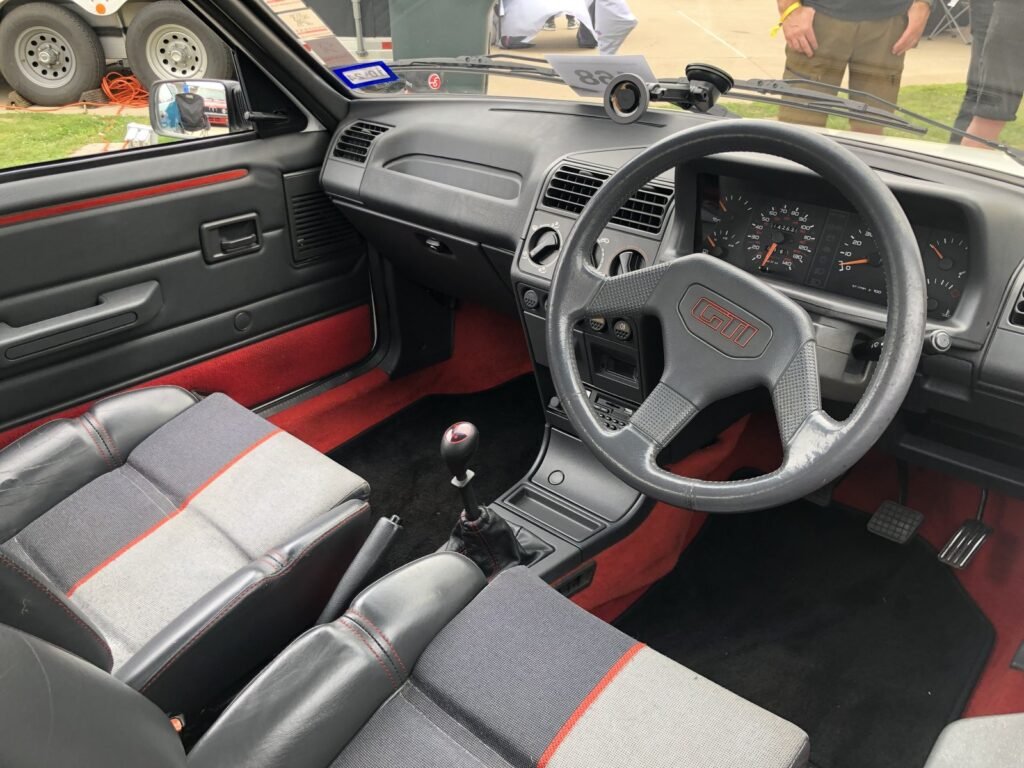
The same chassis had a trap in it. Enter a corner too fast, lift off the gas the way most drivers instinctively do, and the rear of a 205 GTI goes light. The car used a trailing-arm rear axle with transverse torsion bars, and with so little weight over it the tail lost grip suddenly and swung wide. Catch it with a quick steering correction and you were fine. Miss it and you were facing backward or in the ditch.
A skilled driver used that behavior on purpose to rotate the car into a turn. A typical buyer who had picked the GTI because everyone wanted one met it without warning, often on a wet roundabout. That’s why the 205 has two reputations at once: the car that taught a generation of Europeans to drive, and the car that scared a good number of them.
What Peugeot sent instead
When Peugeot finally gave Americans a hot car, it was a sedan. The 405 arrived at the end of 1988 in three versions, and the top one, the Mi16, had a 150 hp 16-valve 1.9, a twin-cam version of the same XU engine family that powered the 205 GTI 1.9. The magazines liked it. Buyers mostly didn’t show up: Peugeot sold just over 11,000 405s in the US between 1989 and 1991, and in August 1991 Paris sent word that sales in the US and Canada were over.
A small hatch with no power steering, no automatic and a reputation for swapping ends would have been a hard sell to dealers who couldn’t move a 405. Peugeot never put that reasoning on paper, but the numbers say enough. The 205 GTI stayed in Europe, and the Americans who know it found it in magazines, not on a dealer lot.
Group B
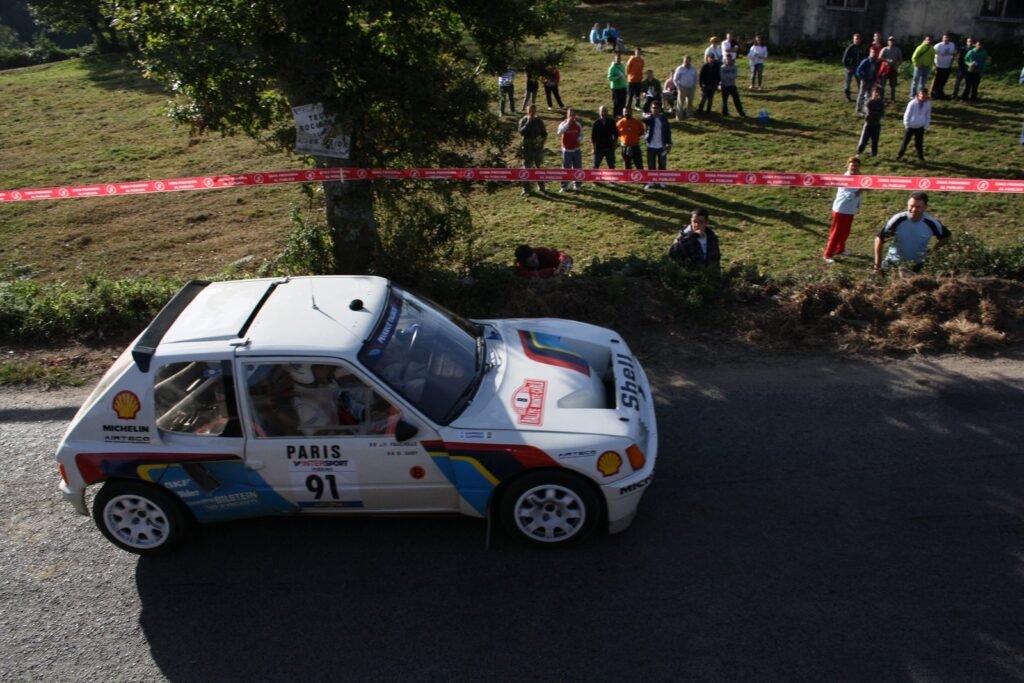
The GTI’s image owed a lot to a car that shared only its name. The 205 Turbo 16 had a mid-mounted 1.8-liter turbo engine, all-wheel drive and a purpose-built chassis under a body shaped like a 205. Peugeot built 200 road versions to homologate it.
It won the World Rally Championship for manufacturers in 1985 and 1986, in the Group B era, when rally cars had so much power and so little protection that the class was banned after 1986. Timo Salonen took the drivers’ title in 1985 and Juha Kankkunen in 1986. After Group B, the championship went to Group A cars like the Lancia Delta Integrale, and Peugeot took the T16 to the desert: Ari Vatanen won the Paris-Dakar in 1987 and Kankkunen in 1988. The 205 did race in America once: Vatanen took a T16 up Pikes Peak in 1987 and finished second to Walter Röhrl’s Audi, then came back in 1988 and won with the 405 T16. Each win helped sell GTIs, though the road car shared nothing important with the rally car.
The Chrysler connection
There’s an American thread in the 205 story that almost nobody tells. GTIs came from France, but more than 1.1 million 205s were built in Villaverde, in Madrid, at a plant Chrysler had once owned. It started as the factory of Eduardo Barreiros, a Spanish engine maker who sold out to Chrysler in the sixties. When Peugeot’s parent, PSA, bought Chrysler Europe in 1978, the plant came with it. Villaverde built the 205 from 1984 to 1999, and in the nineties it made almost all of them.
Spanish tariffs required a share of local parts, so the first Spanish 205s couldn’t use the French engines. They used the Simca engines Madrid was already building for the Talbot Horizon, the European cousin of the Dodge Omni. Those engines were bulkier, so Spanish 205s had a bulge in the hood.
That gave Spain a car the rest of the world never saw: the 205 GTX, sold from 1986 to 1992 and known locally as “the Villaverde GTI.” It had the GTI’s skirts and spoiler, a 1,592 cc Talbot engine with a twin-choke Weber and 94 hp, 13-inch wheels and the same 850 kg. A period test measured 110 mph and just under 10 seconds to 62 mph. Its known weakness was a distributor so exposed that heavy rain could stall the car.
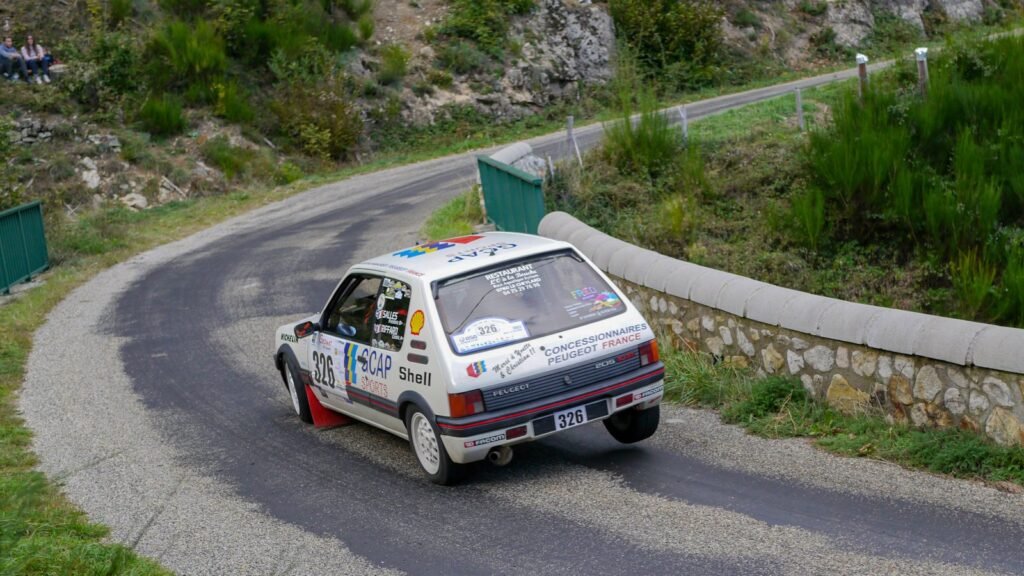
Spain also turned the GTI into a driving school. In 1986 Peugeot España launched the Desafío Peugeot, a one-make series inside the Spanish rally championship, with 205 GTIs. It became the biggest field in the championship, and the prize was serious: the winner got a works drive with Peugeot Sport España the next season. Luis Ramos won in 1986, Roland Holke in 1987, Jesús Saiz in 1988 and Javier Azcona in 1989. From 1990 the series switched to the lighter 1.3-liter 205 Rallye. A good part of a generation of Spanish rally drivers learned their trade in the same car that punished amateurs on the road.
Spain’s car-building history goes back further than most people think: the country’s first car factory started out building electric cars.
Buying one now
Every 205 GTI is now past the 25-year mark, so it can be imported into the US legally. The usual checks apply, plus a few specific ones. Rust attacks the trunk floor, suspension mounts, front inner fenders and the joint between firewall and floor. Rust in odd places often means old crash damage, so look closely at the front frame rails.
Mechanically, high-mileage engines smoke on startup or on overrun because of worn valve stem seals, and the gearbox synchros for third and fourth are the weak point. The best-known 205 problem is in the rear axle: the needle bearings in the trailing arms wear out, the rear wheels start leaning in at the top, and if it’s ignored the axle is ruined. Look at the rear wheels from behind before you buy.
Peugeot built around 300,000 GTIs across both engines (one French source counts 294,514). Rust, crashes and amateur tuning have removed a large share. An unmodified car is no longer cheap. In 2022 the French auction house Aguttes sold a 1987 1.9 with 6,928 km on the clock for €82,960, well over its estimate of €45,000 to €65,000. The same car had changed hands at auction in 2019 for €47,524. Good ones are rare, and the market knows it. It belongs on any list of 80s and 90s cars with soul. If you want a German rival from the same years, the Golf Rallye G60 is a very different idea of what a fast hatchback should be.
What it left
The 205 GTI was never the fastest or most powerful car in its class. It combined low weight, a chassis that turned in like nothing else and an engine that was just enough, and that combination is still the reference. It also bit drivers who lifted at the wrong moment, and both facts belong in the story.
Check you’re still alive.
Photos: red Peugeot 205 GTI 1.9, Charles from Port Chester, New York (CC0); XU9J engine, CrazyD (CC BY-SA 3.0); interior, TKOIII (CC BY 4.0); 205 Turbo 16, Jorjum (CC BY-SA 3.0); 205 GTI 1.6 at the Rallye de l’Ardèche, Kakoula10 (CC BY-SA 4.0). Via Wikimedia Commons.