The Spanish Phoenix: The Complete Story of Domingo Ochoa and the GTA Spano

There is a myth that transcends civilizations and has fascinated humanity since the dawn of memory: the Phoenix, a legendary creature that burns to ashes and rises from them stronger, brighter, more unstoppable than before. The Phoenix is real. He is Spanish. His name is Domingo Ochoa. And his fire is not mythological: it runs on high-octane fuel, ten cylinders, twin turbos, and a story of resilience so epic that if it weren’t true, no one would believe it.
This is not the story of just another supercar. This is the story of a Valencian mechanic with more talent in his hands than many engineers carry in their heads — a man with the guts to do what nobody in Spain had dared to do in decades: go head-to-head with Ferrari, Lamborghini, and Koenigsegg from an industrial estate in the outskirts of Valencia. A man who has been knocked down more times than most people have ever stood up, and who now, in 2026, rises from the ashes with a goal that would make any manufacturer on the planet tremble: breaking the 250 mph barrier with a car built in Spain.
Welcome to the complete story of the GTA Spano and its creator, Domingo Ochoa.
From a Workshop in Torrente to the Hollywood Red Carpet
To understand the GTA Spano, you have to understand Domingo Ochoa.
Born in 1964 in Valencia, the son of a humble working-class family, Ochoa didn’t have his path paved with money or connections. What he did have was an obsession with engines that would change his life forever. At thirteen, when most kids dreamed of becoming soccer players, young Domingo was already up to his elbows in grease inside a small workshop in Torrente, learning the trade from his master mechanic Pepe Fuertes and his brother-in-law Antonio Velduque.
His school didn’t have blackboards or desks: it had hydraulic jacks, torque wrenches, and rally cars from the Valencia region that needed to be race-ready by morning.
That workshop education gave him something no university ever could: an intimate understanding of how a car works from the inside out. It wasn’t theory. It was touching, smelling, feeling, and solving. Later, another fundamental mentor would shape his path in motorsport: Toni Lozano, who opened the doors to the world of racing and provided invaluable training that would cement everything that came after.
At 21, Ochoa took a leap that many would call providential: he joined the Ferrari workshop owned by Adrián Campos in Valencia. Yes, the same Adrián Campos — the Spanish Formula 1 driver who would later found racing teams and help pave the way to F1 for several drivers, including Fernando Alonso.
For seven years, Domingo breathed Italian mechanical excellence while absorbing the standards of motorsport’s elite. It was there that the dream began to crystallize. If others could do it, why not him? Why not Spain?
GTA Motor: The Champions’ Breeding Ground
In 1994, at just 29 years old and with a determination that bordered on recklessness, Domingo Ochoa founded GTA Motor as a Hyundai dealership — the Korean brand had just arrived in Europe. He didn’t start by designing hypercars. And in parallel, he dove into where real racers are forged: competition, with his GTA Motor Competición racing team.
GTA Motor Competición quickly became a feared and respected outfit on the Spanish and European circuits, preparing the brutal American-built Mosler MT900-R and competing across an impressive range of championships: Formula Renault, Copa Hyundai, Copa Seat, Formula 3, Super Toyota, Spanish GT Championship, Euro International GT Open, and even crossing the Atlantic to race in the United States through the Superleague Formula, the 24 Hours of Daytona, and the 12 Hours of Sebring.
Results came fast. GTA Motor Competición was racking up victories by wide margins, even unsettling a brand as prestigious as Ferrari on track — which sparked more than one heated dispute behind closed doors among rival teams.
The team became a pipeline for world-class talent who would go on to leave their mark in Formula 1 and international categories: Marc Gené, María de Villota, Jaime Alguersuari, Roberto Merhi, Carmen Jordá, Dani Clos, Borja García, Manuel Gião, José Manuel Pérez-Aicart, Lucas Guerrero, and Matthias Lauda, among others.
A genuine talent factory that confirmed one thing: Domingo Ochoa didn’t just know about cars — he knew how to build winning teams.
But Ochoa wasn’t satisfied with winning races. Every victory, every technical improvement applied to the competition cars, every problem solved on track fed a dream he had been nurturing since his earliest days in that workshop in Torrente. The team had accumulated extraordinary know-how. They had the capability. They had the talent. All that was missing was the courage to take the leap. And Domingo Ochoa never lacked courage.
The Birth of a Legend: Spania GTA and the Spano Project
In 2007, after more than a decade dominating circuits, Ochoa made the riskiest decision of his life: founding Spania GTA as a hypercar brand. The goal was as clear as it was ambitious: to create a Spanish supercar capable of standing toe-to-toe with the most exclusive marques on the planet. Not a replica, not a tribute, not a toy with flag stickers: a real car, with proprietary technology, original design, and a Spanish soul.
For the logo, Ochoa chose a wolf. It wasn’t by chance. The surname Ochoa comes from the Basque “Otxoa,” which derives from “Otsoa”: wolf. An animal that works in packs, feared and respected. Exactly what Domingo intended his brand to be.
The first obstacle was the engine. Ochoa knew the heart of the car would define everything. He looked to Mercedes AMG — the same engines Horacio Pagani used in his exclusive Zonda and Huayra. But AMG wanted him to finance the entire project for around six million euros. It was unfeasible — he simply didn’t have that budget. Far from giving up, Ochoa searched for alternatives and found Ilmor Engineering, a firm world-renowned for its Formula 1 collaboration, operating out of Detroit. Ilmor supplied V10 blocks derived from the Dodge Viper engine, but extensively modified and optimized. The cost was substantially lower and the mechanical foundation was brutal.
Development began in the most romantic way possible: in Domingo’s home garage, between races, optimizing every component on a shoestring budget. Simultaneously, they set up the official factory in an industrial unit at the Polígono Industrial Casanova in Ribarroja del Turia, Valencia, where up to 80% of the car’s components would be handcrafted on site.
The technical team was critical. Domingo had Sento Pallardó as chief engineer from the competition years and head of the engineering and design department, and together they assembled a group of the best young Valencian engineers available. Everything was developed in-house, from design to engineering, including technical solutions that had never been applied to a production car before.
First Generation: Valencia Introduces Its Hypercar to the World
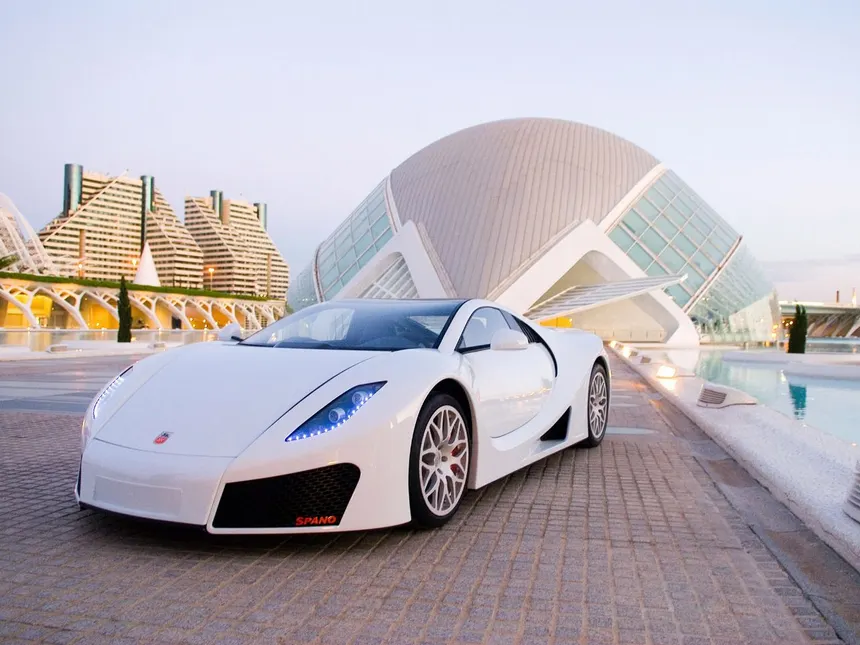
On April 29, 2009, in a setting that couldn’t have been more cinematic, the GTA Spano was unveiled before a select group at L’Hemisfèric, inside Valencia’s iconic City of Arts and Sciences.
That prototype carried a supercharged 8.3-liter V10 producing 780 horsepower on regular gasoline and up to 820 hp on E85 bioethanol.
But unveiling a car is only the beginning. Surviving afterward is the hard part.
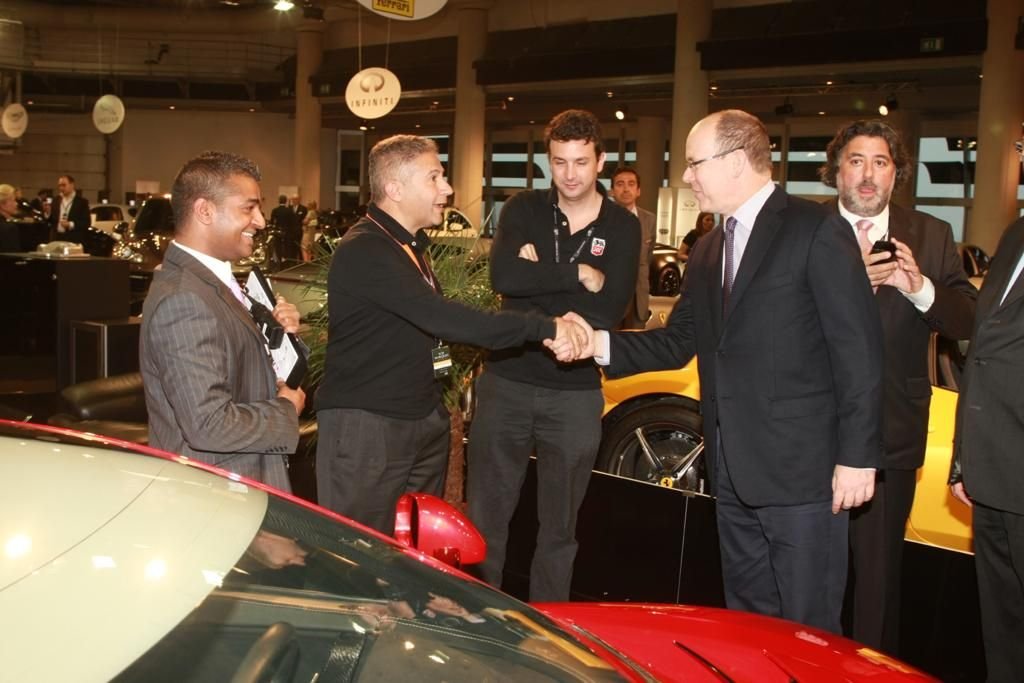
In 2010, the GTA Spano made its international public debut at Top Marques Monaco, where it caused a sensation. Prince Albert was visibly impressed by the vehicle’s technology. In 2011 came the moment of truth: the Geneva Motor Show, Europe’s most important stage for automotive debuts. The GTA Spano arrived with the dignity of a gladiator entering the Colosseum, and the world took notice of the Spanish hypercar.
But while the car was triumphing abroad, the reception in Spain was lukewarm at best. The 2008 financial crisis had ravaged everything. Investors and public institutions that had initially backed the project fled. Funding evaporated.
Domingo Ochoa traveled the globe searching for the capital that Spain denied him. He received offers and contracts from the United States, Dubai, and Saudi Arabia, and even signed agreements averaging 18 million euros with investors from Bahrain, Jordan, and Singapore — all conditional on relocating the factory to their respective countries. The temptation was enormous. But Domingo Ochoa wanted the GTA Spano to be Spanish. Built in Spain. By Spaniards. So the world would know what this country was capable of. The foreign investors didn’t want to lose the opportunity of creating that image and technology in their own nations, and every proposal ultimately came with the same condition: move the factory. Domingo, trusting that Spain would eventually support his project, refused every time.
The logical thing would have been to quit. But that’s not Domingo Ochoa’s character.
The Evolution: Graphene, Power, and the Geneva, Monaco, and Dubai Motor Shows as Launchpads
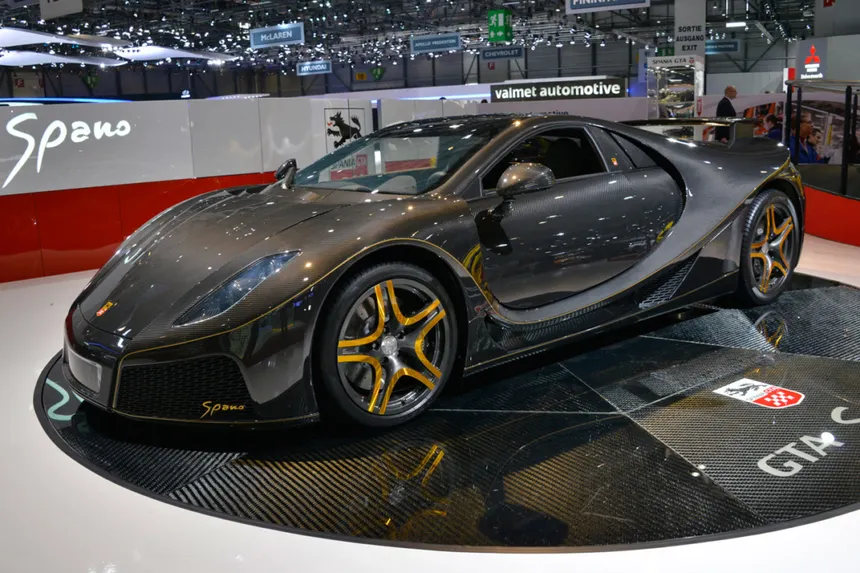
Despite financial difficulties that seemed eternal, the GTA Spano kept evolving. In 2013, a new version was presented at Geneva with significant improvements in chassis, aerodynamics, and power. The V10, now at 8.4 liters and twin-turbocharged, reached 900 hp and 1,200 Nm (885 lb-ft) of torque. It was also shown at the Monaco and Dubai Motor Shows, where investors close to Crown Prince Sheikh Mohammed Bin Rashid Al Maktoum were fascinated by the carbon fiber model with gold accents.
The Dubai royal family placed a reservation on that unit but requested that the gold-colored accents be made from real gold. The GTA Spano Carbon Look returned to Spain to evaluate the request and carry it out, but…
The Chassis That Saved His Life
On a technical level, what Spania GTA was creating was revolutionary. The monocoque chassis utilized “honeycomb” technology — a structure shaped like a beehive made from carbon fiber, titanium, and Kevlar that achieved four times the rigidity of many competing supercars, with a monocoque weight of just 123 pounds (56 kg). The total vehicle weight in running order, with all fluids and comfort equipment included, sat at 2,976 lbs (1,350 kg) — roughly 440 pounds less than its direct competition.
On December 18, 2013, that technology saved its creator’s life.
During an exhibition event where the GTA Spano Carbon Look was present — while the team was still evaluating the exclusive gold work requested by the Sheikh of Dubai — a cardboard element placed under the pedals to protect the floor mats became lodged, jamming the accelerator pedal to the floor for 150 meters (roughly 500 feet) of uncontrolled acceleration that ended in a head-on impact against a truck at 109 mph (176 km/h).
The honeycomb monocoque chassis performed exactly as it had been designed. It absorbed the impact. It protected the driver. Domingo Ochoa survived. But the consequences were devastating: 18 fractures, 170 stitches, months in a wheelchair, and a rehabilitation that lasted five years. The company decided to keep the incident under wraps to avoid reputational damage, but that crash marked Ochoa in ways that went far beyond the scars. His own car had saved his life. The technology that he and his team had developed had performed under the most extreme conditions imaginable. There was no better proof of quality. No better testament to what the GTA Spano was capable of.
But the unit was destroyed — and the Dubai sale with it. A devastating financial loss for a company that was perpetually underfunded.
Five months later, while Ochoa was sitting at home on a Saturday with his leg elevated, still deep in rehabilitation, another crushing blow landed. A second completed unit, finished in yellow, was rear-ended during transport from a social event. The operators decided to continue the drive back to the factory — and five minutes from arrival, the car caught fire, destroying another asset of incalculable value at the worst possible time.
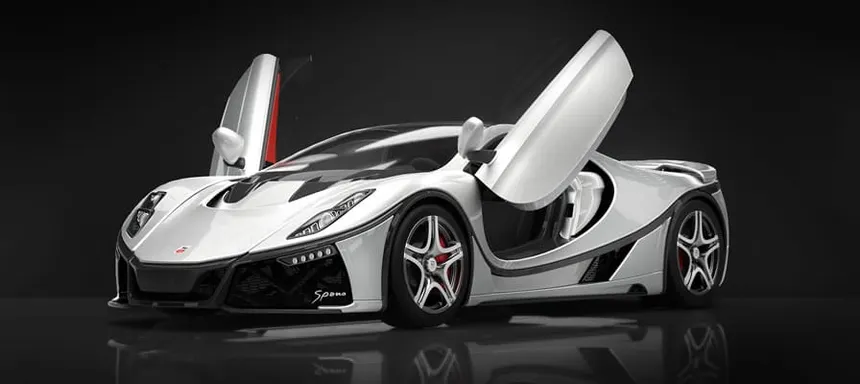
Following those blows, Ochoa kept fighting for funding and secured a small Valencian investor who allowed them to redesign the car. It was in March 2015 when the GTA Spano delivered its masterstroke. At the Geneva Motor Show, Spania GTA presented the definitive version: a complete redesign, with 925 hp and 1,220 Nm (900 lb-ft) of torque, a 7-speed sequential transmission built by CIMA — the same supplier that works with Koenigsegg and Pagani — and an innovation that would make automotive history. The GTA Spano became the first car in the world to incorporate graphene into its structure, thanks to a collaboration with the Spanish firm Graphenano. Graphene was applied to the monocoque chassis, the bodywork, the starter battery, and even the upholstery leather.
The numbers were staggering: 0 to 62 mph in 2.9 seconds. Top speed exceeding 230 mph (370 km/h). A panoramic moonroof with smart glass whose opacity could be electronically controlled from the cabin. An active rear wing that adjusted aerodynamic downforce based on speed. And all of it handcrafted in Valencia, with production limited to 99 units and a price starting at €900,000, climbing above one million depending on specification.
The international press response was extraordinary. Several outlets ranked the GTA Spano among the five best cars at the show — a monumental recognition considering Geneva is the most demanding showcase in Europe. From that series, 12 units were built, of which 7 were sold to clients in Singapore, China, the United States, and the United Arab Emirates. Dealerships were established under the Spania GTA umbrella in Singapore (Spania GTA Asia Pacific Private LTD), London (Spania GTA UK), the UAE, and Miami.
One anecdote perfectly encapsulates Domingo Ochoa’s spirit. At an international event, a Qatari collector approached, interested in the car, and compared it to his Ferrari LaFerrari — the crown jewel of his private collection. Ochoa, without blinking, challenged him: if the GTA Spano beat the track-prepared LaFerrari by more than two seconds on circuit, the collector would pay an extra €200,000 on top of the car’s price. If it didn’t, Ochoa would subtract the same amount. The client accepted, purchased the car for €1.4 million in circuit configuration and, as the story goes, left more than satisfied with his acquisition. He paid the difference.
Hollywood Calls Valencia: Need for Speed and the Conquest of the Screen
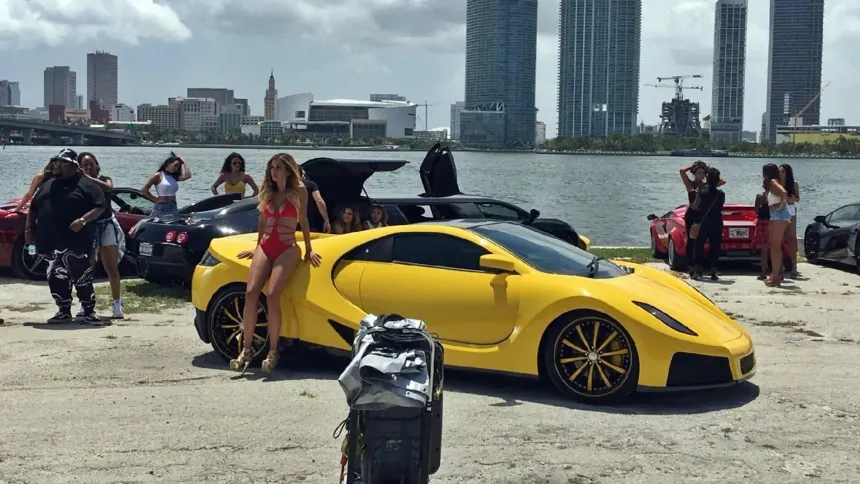
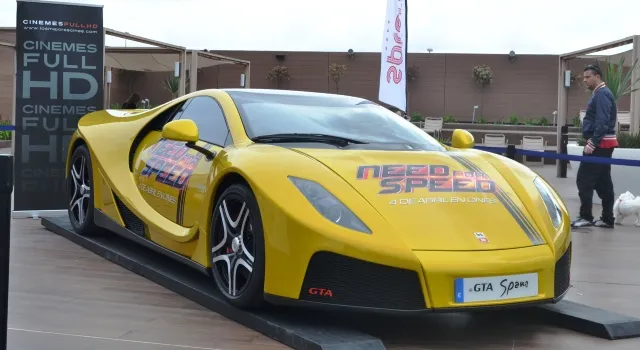
If there’s one chapter in the GTA Spano’s story that catapulted its image globally, it was the car’s appearance on the big screen. In 2013, DreamWorks contacted Domingo Ochoa directly with an extraordinary proposal: the GTA Spano would appear in the film “Need for Speed,” the cinematic adaptation of the legendary video game franchise, starring Aaron Paul — the unforgettable Jesse Pinkman from Breaking Bad.
What made the GTA Spano’s participation truly special was a detail that very few people know: it was the only real car used for the static shots in the entire film. While every other supercar that appeared on screen — the McLaren P1, Bugatti Veyron Super Sport, Koenigsegg Agera, Lamborghini Sesto Elemento — were replicas built on other vehicles’ chassis, the Spano was authentic. The genuine article. A Spanish car sharing the screen with the most exclusive names in the automotive world, and the only real one among them.
The unit used in filming, finished in a striking yellow, didn’t just appear in scenes — it was selected by DreamWorks to promote the film. It graced the red carpet on the Hollywood Walk of Fame and became one of the most recognizable images of the promotional campaign. That unit was later listed for sale by Super Garage Marbella at €1.5 million.
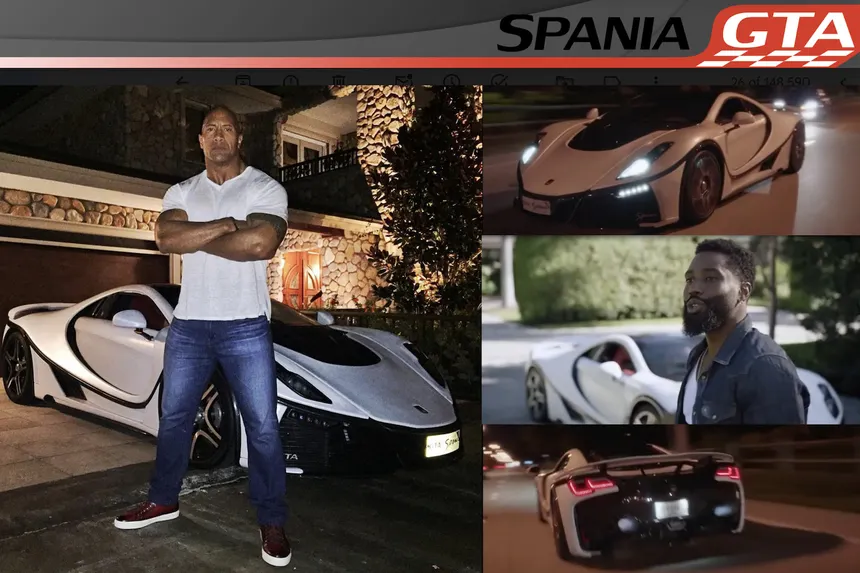
But Hollywood didn’t stop there. HBO expressed interest in featuring the GTA Spano alongside Dwayne “The Rock” Johnson in the series “Ballers” (season 2, episode 7), solidifying the Spanish supercar’s presence in top-tier American entertainment. In 2018, the Spano also appeared in the Spanish film “El mejor verano de mi vida” (“The Best Summer of My Life”), proving that its visual appeal worked as effectively in an American blockbuster as in a domestic comedy.
The Virtual GTA Spano: King of Video Games
If its presence on real roads was limited by the exclusivity of production, in the digital universe the GTA Spano experienced a genuine second life that gave it global recognition impossible to achieve through conventional means. Millions of gamers worldwide have driven the Spanish supercar across their screens, turning it into a digital ambassador for Spanish engineering for an entire generation of automotive enthusiasts.
The list of titles featuring the GTA Spano is impressive and spans the most important franchises in the racing game industry: Need for Speed: Rivals, where it appeared as both a racer and an RCPD police unit in the DLC Complete Movie Pack tied to the film; Need for Speed: Edge, featuring in this Asia-exclusive release; Forza Horizon 3, integrated into the catalog of over 350 vehicles in Playground Games’ open-world simulator; Forza Horizon 4, one of more than 450 cars available in the UK-set installment; Forza Motorsport 7, present in Microsoft’s most technical racing simulator; DriveClub, integrated into Evolution Studios’ PlayStation 4 exclusive; Asphalt 8: Airborne, one of the star cars in Gameloft’s most-downloaded mobile racing title; and CSR Racing 2, added in November 2016 to the game that had accumulated 190 million downloads.
These licensing deals with giants like Microsoft, Sony, and Gameloft meant not only rights revenue but extraordinary visibility. The GTA Spano reached PlayStation, Xbox, PC, and mobile platforms, connecting with hundreds of millions of players worldwide. For many young car enthusiasts, their first encounter with a Spanish supercar was a virtual one — behind the wheel of a GTA Spano in one of these franchises.
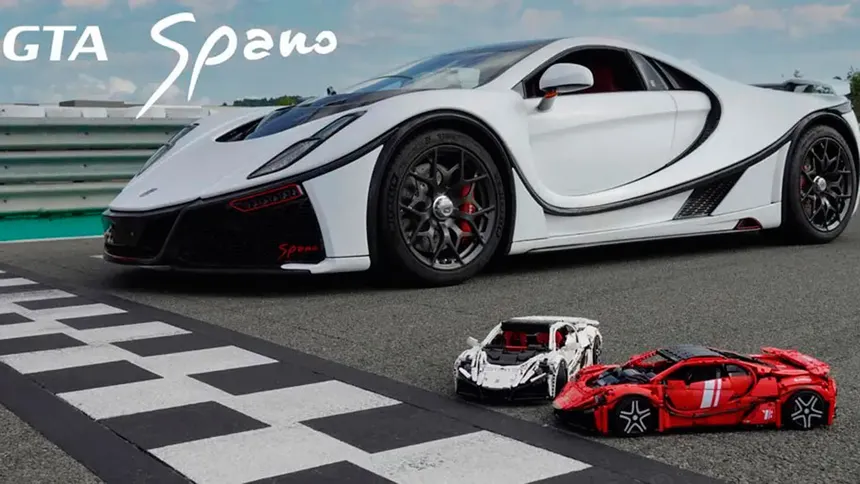
And one particular detail deserves special mention: in October 2021, RC toy company BuWizz proposed a collaboration with Spania GTA to build a remote-controlled GTA Spano made from LEGO bricks. That model aimed to be the fastest in the world in its category. And it succeeded — 22.7 mph (36.5 km/h), earning an entry in the Guinness Book of World Records. From the concrete of a Valencian industrial estate to toy shelves across half the planet.
The Desert Crossing: The Dark Side of the Dream
It would be dishonest to tell the story of the GTA Spano without addressing the shadows. Because they existed, and they were long and deep.
The reality of entrepreneurship in Spain for a project of this magnitude is brutal. Ochoa summed it up in devastating fashion during his appearance on the television program “Horizonte,” hosted by Iker Jiménez, in April 2024. He arrived at the TV studio with the GTA Spano in a moment that moved the audience: the creator of a car that had appeared in DreamWorks and HBO productions, that had conquered the world’s most exclusive motor shows, that had been driven by millions in video games, was financially ruined.
The financial difficulties were constant. Spanish banks never backed the project with the conviction it deserved. The investment needed to sustain artisanal hypercar production is enormous, and without adequate institutional or financial support, the brand was trapped in an exhausting cycle of seeking funding, barely securing it, advancing a step, and needing more. Ochoa traveled the world seeking capital. He received tempting offers from multiple countries to relocate production outside Spain, but he always refused. His car would be Spanish. Built in Spain. Or it wouldn’t exist at all.
To the financial problems came legal ones. The original factory was subjected to banking seizures and forced evacuations that severely damaged the company’s viability. And just when it seemed things couldn’t get any worse, came the DANA.
The DANA: When the Water Tried to Erase the Dream
The night of October 29, 2024, changed Valencia forever. The worst meteorological catastrophe in decades struck the province with unprecedented violence. The Polígono Industrial Casanova in Ribarroja del Turia, where Spania GTA had its facilities, sat at the epicenter of one of the most devastated zones.
What happened there was, in Domingo Ochoa’s own words, both a near-miracle and a partial tragedy. Of the approximately 500 businesses operating in the industrial estate, only three units — positioned in a specific corner — were spared total flooding. Spania GTA’s was one of them, though it didn’t escape partial inundation. Just meters further downhill, a retaining wall above a ravine collapsed, releasing a torrent that caused catastrophic damage to everything else, submerging the remaining companies under more than six feet of water and mud.
Tragically, two completed units that had been stored in other facilities within the same industrial estate were destroyed — a devastating loss for the company.
The water didn’t enter the main unit with full force, but the material damage to external storage was significant. The company was forced to relocate all its warehouses, and it was precisely during that forced reorganization that parts began surfacing from the surviving drawers and shelves — enough to assemble a new car. A first-generation carbon fiber chassis. A body shell. Various components. And one of the 8.0-liter V10 engines designed by Ilmor.
The question arose almost instinctively: What if we build it?
The Phoenix Rises: GTA Spano E&D and the 250 MPH Challenge
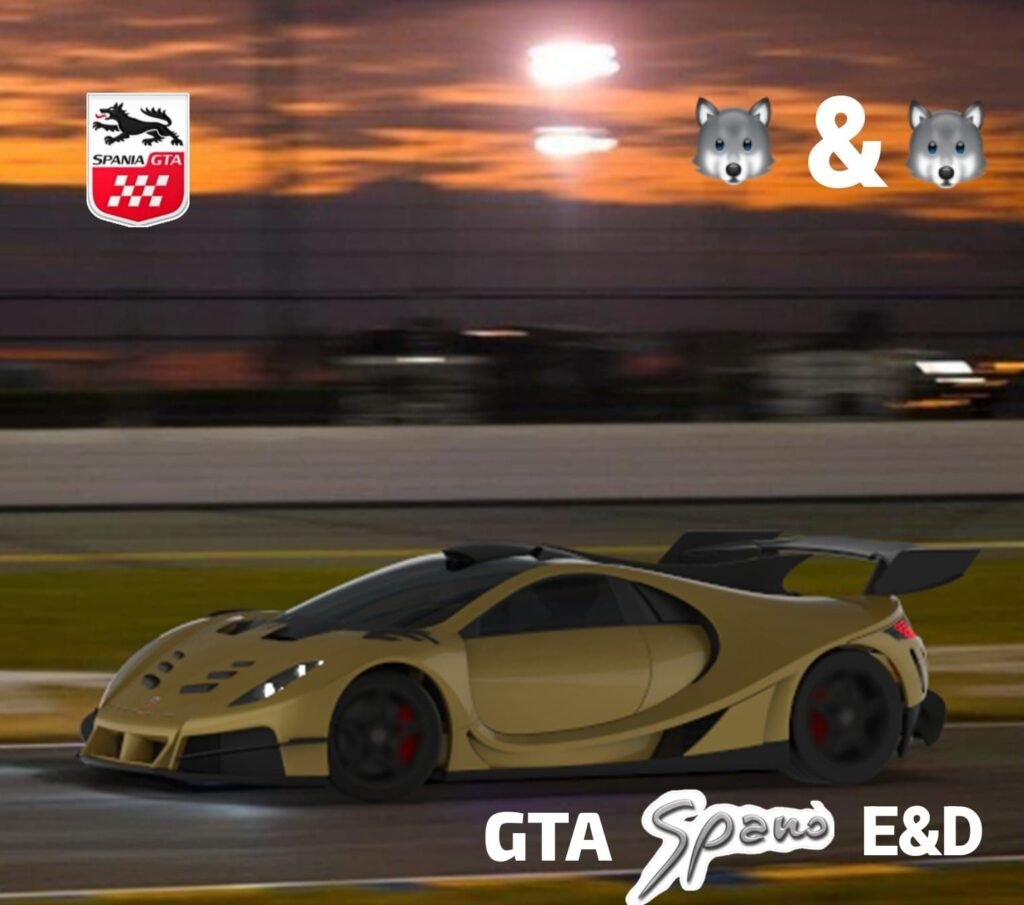
This is how the most personal and emotional project in Spania GTA’s entire history was born: the GTA Spano E&D, where the initials stand for “Ethan & Domingo.” Father and son. Two generations united in the construction, hand by hand, of a unique piece — a one-off destined to become legend.
The goal is as clear as it is absolute: break the 250 mph barrier (400 km/h). A speed never achieved by a vehicle manufactured in Spain. A milestone that would place the GTA Spano and Domingo Ochoa in the history books of motorsport — not just Spanish, but worldwide.
The project is built around the first-generation carbon fiber chassis recovered after the DANA, mated to the 8.0-liter Ilmor V10 pushing close to 1,200 horsepower. But reaching 250 mph isn’t just a matter of power. Aerodynamics are critical, and the Spania GTA team has developed five active aerodynamic systems currently being verified through CFD (Computational Fluid Dynamics) simulations to ensure the car can slice through the air with the efficiency required at speeds that very few cars in the world have ever reached.
The interior will be functional but will maintain GTA’s usual standard, with original dashboards — including a right-hand-drive version for international markets — found in the surviving storage, being fitted to the chassis and sent for upholstering to Tapizados Llop in Valencia.
Domingo Ochoa has confirmed the chosen venue for the record attempt: Ciudad Real Airport, which has the longest straight of any such facility in Spain. The plan is to make the attempt during the second quarter of 2026, conditions permitting.
This unique unit will serve as a technological laboratory and a preview of a future “R” series, more radical and focused exclusively on extreme track performance. Once the record is achieved, the GTA Spano E&D will go on sale as an unrepeatable collector’s piece: the first and only Spanish-built car capable of breaking 250 mph.
Domingo posts weekly updates on the project via his LinkedIn profile, opening the workshop doors to the entire world, showing every advance, every part assembled, every technical decision. A radical transparency that contrasts with the industry’s usual secrecy and has generated a growing community of followers who accompany the project with passion.
The Legacy: Much More Than a Car
The story of Domingo Ochoa and the GTA Spano transcends the story of an automobile by a long way. It is the story of a country with a chronic problem believing in its own talent. It is the story of a financial system that failed to see the potential of a project the rest of the world celebrated. Ochoa himself summed it up with devastating clarity during his talk at the Polytechnic University of Valencia:
“In Spain there is no shortage of talent or guts — what’s missing are politicians who have any.” — Domingo Ochoa, Polytechnic University of Valencia
It is the story of a mechanic who started tearing apart engines at 13 in a small-town workshop and ended up creating a car that Hollywood, Microsoft, Sony, Gameloft, HBO, and DreamWorks all wanted for their productions.
The GTA Spano has been compared to Ferrari. It has competed against them on track and won. It has been exhibited in Geneva, Monaco, Dubai, Macao, Singapore, London, Marbella, Madrid, Barcelona, and Goodwood. It has been driven by millions of people in the world’s biggest video games. It has appeared in Hollywood films and hit television series. It was the first car in the world to use graphene in its structure. It saved its creator’s life at 109 mph.
And yet, in Spain, far too many people still don’t know it exists.
Domingo Ochoa is the heir to a Spanish tradition of automotive excellence that stretches back to the glories of Hispano-Suiza and the legendary Pegaso Z-102 and Z-103 designed by Wifredo Ricart. Those brands, now extinct or reborn as different projects, proved in their time that Spain had the talent and ambition to compete at the highest level. Ochoa picked up that torch and kept it burning against wind, tide, economic crises, ruthless banks, suffocating bureaucracy, a near-fatal crash, and the worst natural disaster in Valencia’s recent history.
The Phoenix Doesn’t Ask Permission to Burn
There’s one detail in this story that deserves to be told as a closing, because it defines everything. When Domingo Ochoa was asked on Horizonte how he felt about being called “the Spanish Ferrari,” his answer was revealing. At first, he didn’t like it, because in many ways his product was more exclusive. But eventually he accepted it with pride, because Ferrari is the global benchmark, and being compared to them as a young brand born in Valencia is, in itself, an extraordinary recognition.
But Ochoa never wanted to be Ferrari. He wanted to be something Ferrari is not: Spanish. And he succeeded.
Now, at nearly 61 years old, with more scars than trophies but with a determination that hasn’t wavered one millimeter since that workshop in Torrente, Domingo Ochoa is building, with his own hands and those of his son Ethan, the car that intends to make history. A car born from the literal ashes of a catastrophe. A car that carries in its DNA more than 40 years of racing experience, the most advanced automotive technology in the world, and the unbreakable stubbornness of a Valencian who refused to surrender when the entire world told him to.
250 mph. That’s the number. That’s the challenge. That’s the figure that will separate the GTA Spano E&D from everything Spain has ever produced on four wheels.
The Phoenix doesn’t ask permission to burn. It only needs a spark.
And Domingo Ochoa has always had fire to spare.
And we, at Not Enough Cylinders, will be there to tell the story. Next chapter coming soon…
Domingo Ochoa posts weekly updates on the GTA Spano E&D project on his LinkedIn profile. For collaborations or professional inquiries: d.ochoa@spaniagta.com
3 thoughts on “GTA SPANO”