
GTA Spano: the Spanish hypercar with a Viper-based V10 that Hollywood borrowed for Need for Speed
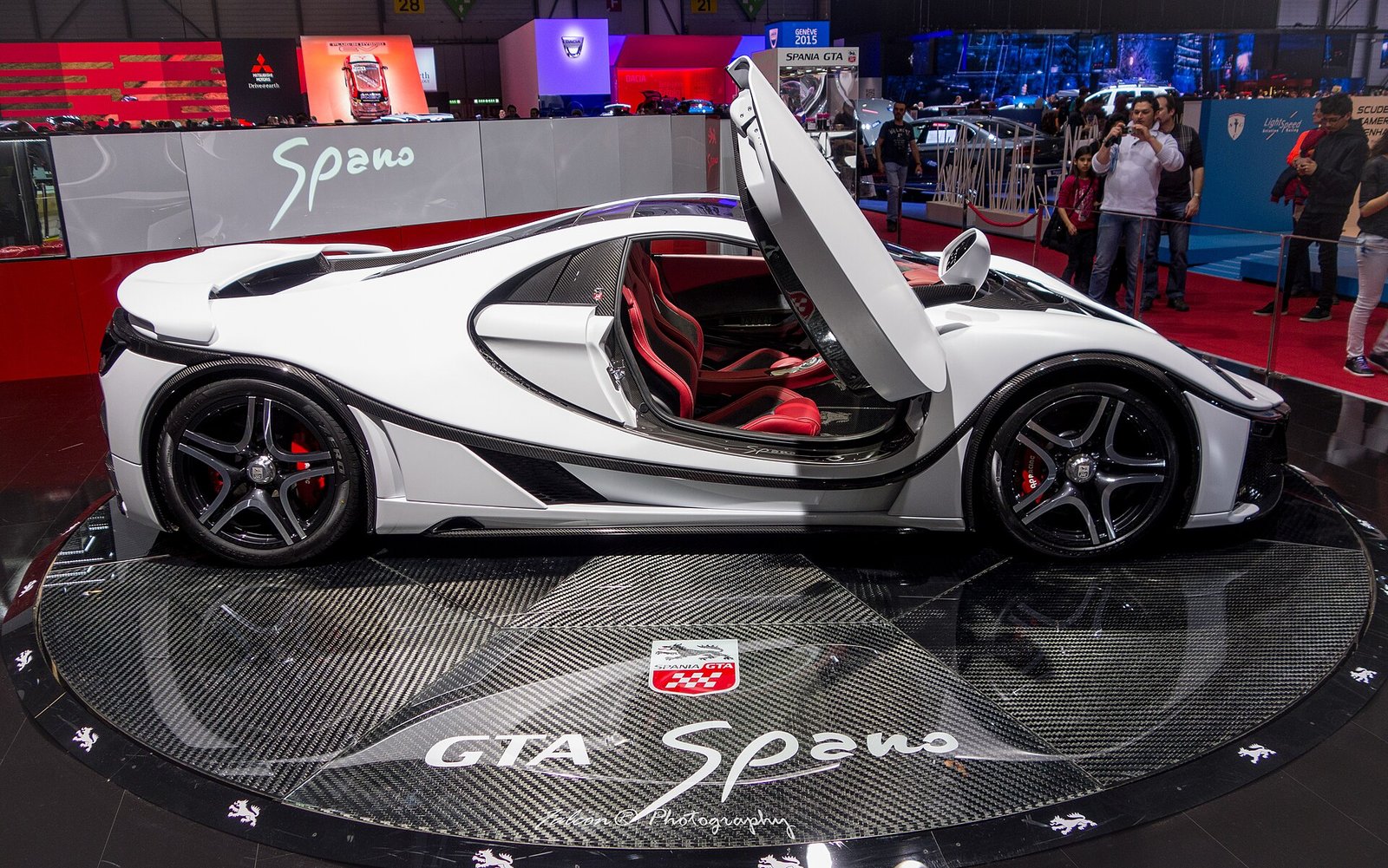
If you saw the 2014 movie Need for Speed, starring Aaron Paul, you saw a yellow supercar most Americans had never heard of. It wasn’t a McLaren, a Bugatti or a Koenigsegg. It was a GTA Spano, a mid-engine hypercar built by hand in an industrial park near Valencia, Spain, with a twin-turbo V10 derived from the Dodge Viper’s engine. Behind it stands one of the most stubborn people in the car business, a Valencian mechanic named Domingo Ochoa, whose story has more crashes, comebacks and near-misses than most Hollywood scripts. In 2026 he’s building one more GTA Spano with his son, and the target is a number no Spanish car has ever reached: 400 km/h, about 250 mph.
A mechanic, not a millionaire
Domingo Ochoa was born in Valencia in 1964 into a working-class family. There was no family fortune and no shortcut into the car world. At thirteen, when most kids his age dreamed of playing soccer, he was already working in a small shop in the town of Torrent, near Valencia, learning the trade from a mentor named Pepe Fuertes and from his brother-in-law, Antonio Velduque. His classroom was a workshop full of jacks, socket wrenches and rally cars from the Valencia region that had to be ready for the next event.
That kind of education gave him something no university could: a physical, intuitive understanding of how a car works. Another mentor, Toni Lozano, opened the door to racing. At twenty-one Ochoa joined the Ferrari workshop in Valencia owned by Adrián Campos, the Spanish former Formula 1 driver who later ran racing teams and helped young drivers on their way to F1, Fernando Alonso among them. Ochoa spent seven years there, absorbing Italian standards and the habits of top-level motorsport. Somewhere in that shop a question took shape: if Ferrari could do it, why not a Spaniard?
From Hyundai dealer to racing team
In 1994, at twenty-nine, Ochoa founded GTA Motor. It started as a dealership for Hyundai, which was just establishing itself in Europe at the time. In parallel he set up a racing team, GTA Motor Competición, and that’s where the real education happened.
The team became a respected and feared name on Spanish and European circuits. It prepared the American Mosler MT900R, the Florida-built GT race car, and raced across an impressive range of series: Formula Renault, one-make Hyundai and SEAT cups, Formula 3, Spanish GT and the International GT Open. According to Ochoa’s own account of the team’s history, it also took its program across the Atlantic, with entries connected to Superleague Formula, the Rolex 24 at Daytona and the 12 Hours of Sebring.
The list of drivers who passed through the team is long. It includes Marc Gené, who became a Ferrari test driver and Le Mans winner, María de Villota, Jaime Alguersuari, who reached Formula 1 with Toro Rosso, Roberto Merhi, Dani Clos and Mathias Lauda, son of Niki Lauda. For a small team from Valencia, that’s a remarkable alumni list. Running a team that produced drivers like that taught Ochoa how to spot talent, how to manage tight budgets and how to keep cars reliable under pressure, all skills he would need when he moved from preparing other people’s race cars to building his own road car from scratch.
The decision to build a hypercar
Winning races wasn’t enough. In 2007, after more than a decade in competition, Ochoa founded Spania GTA as a hypercar brand. The goal was blunt: build a Spanish car that could stand next to the most exclusive machines in the world. Not a replica, not a kit car with a flag sticker, but a car with its own engineering, its own design and its own identity.
He chose a wolf for the logo. His surname, Ochoa, comes from the Basque Otxoa, from otsoa, meaning wolf: an animal that works in a pack and is respected and feared. That was the image he wanted.
The first big decision was the engine. Ochoa first approached Mercedes-AMG, whose V12 powers Horacio Pagani‘s Zonda and Huayra, but the price of a dedicated engine program, around six million euros according to his account, was out of reach. He turned instead to Ilmor Engineering, the British engine company famous for its work in Formula 1 and Indy car racing, which also has a base in Michigan. Ilmor supplied V10 engines derived from the Dodge Viper’s big V10, heavily reworked. For an American reader, that’s the fun part of the story: the heart of Spain’s hypercar has roots in Detroit’s most outrageous sports car.
The Viper connection explained
For Americans, the most surprising part of the GTA Spano is under the engine cover. The Dodge Viper arrived in 1992 with an 8.0-liter V10 making 400 hp, an engine whose aluminum version was developed with help from Lamborghini, which Chrysler owned at the time. The V10 grew to 8.3 liters and 500 hp in the 2003 SRT-10 and to 8.4 liters and 600 hp in 2008. Those three displacements map neatly onto the Spano’s history: an 8.3-liter supercharged engine in the first prototype, an 8.4-liter twin-turbo in the later cars and an 8.0-liter unit in the E&D record car.
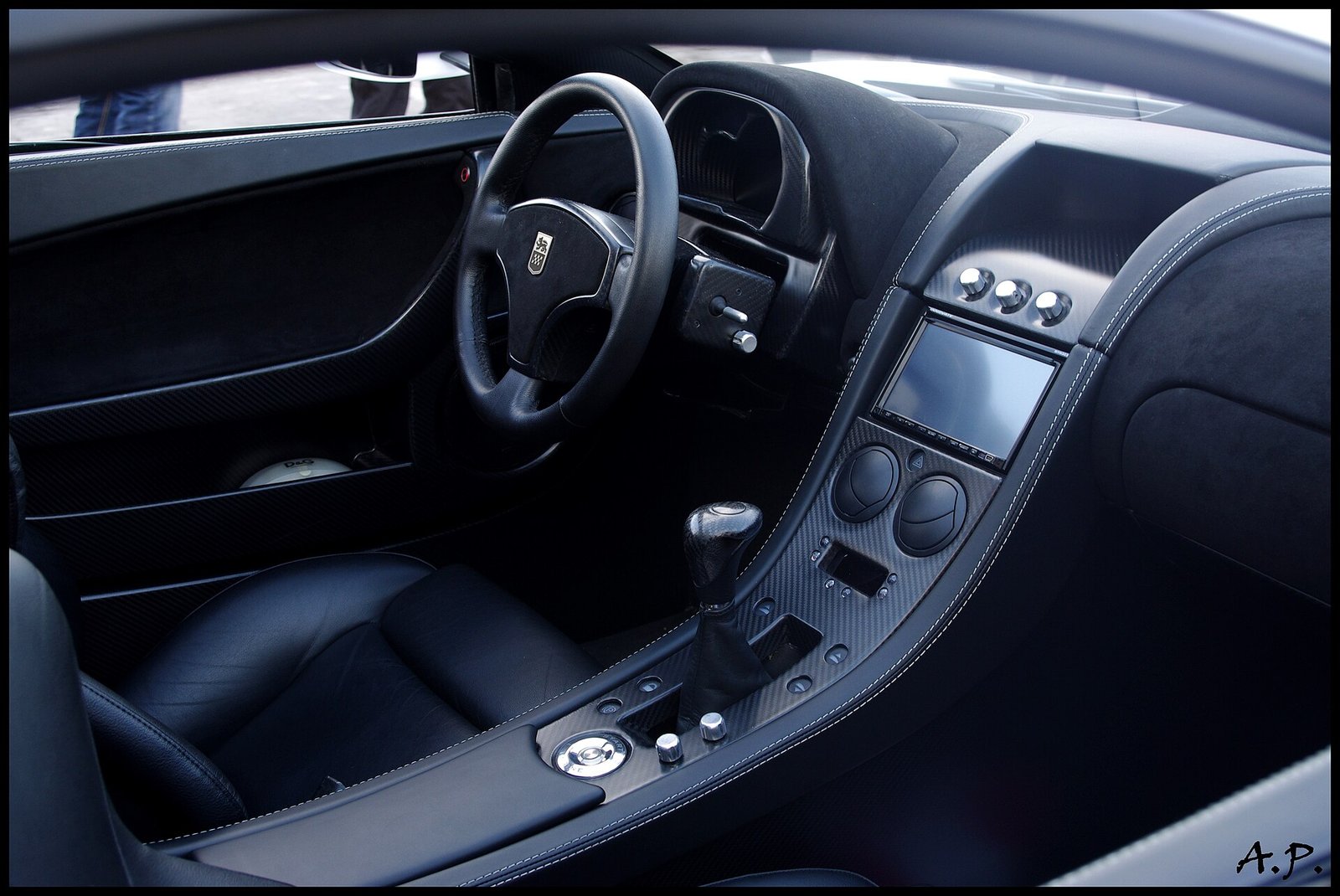
A big-displacement American pushrod V10 sounds like an odd heart for a European hypercar, but it made sense for a small company. The basic engine was strong, proven and available, and its huge torque meant the Spano didn’t need extreme revs to be fast. Ilmor’s job was to turn it into something that could live with forced induction and run at full load for long periods, which is exactly the kind of work a racing engine company does best.
Ilmor: from Indianapolis to Valencia
Ilmor isn’t a random supplier. The company was founded in England in 1983 by engineers Mario Illien and Paul Morgan, with backing from Roger Penske, to build Indy car engines. Ilmor-designed engines went on to win the Indianapolis 500 many times, and in Formula 1 the Mercedes-badged engines Ilmor developed powered McLaren to the world championships of 1998 and 1999. The company also has an American base in Michigan, close to Detroit. For a tiny Spanish hypercar maker, getting an engine program from a firm with that pedigree was a statement of intent.
The Mosler years
Ochoa’s racing team had another American link worth explaining. The Mosler MT900R it prepared was built by Mosler Automotive in Riviera Beach, Florida, the company founded by the investor and car enthusiast Warren Mosler. The MT900 was a lightweight, mid-engine GT car with a carbon structure and a Chevrolet V8, designed to beat European exotics on a much smaller budget. Running and developing that car taught Ochoa’s engineers a great deal about carbon chassis, mid-engine packaging and big American V8s, all lessons that would show up later in the Spano.
A garage in Valencia and a factory in an industrial park
Development started in the most romantic way possible: in the garage of Ochoa’s own house, between race weekends, on a minimal budget. At the same time the company set up its factory in the Casanova industrial park in Riba-roja de Túria, just outside Valencia, where it would build by hand roughly 80 percent of the car’s components.
The technical team was led by Sento Pallardó, Ochoa’s chief engineer from the racing years, who became head of engineering and design. Together they recruited some of the best young engineers in the Valencia area. Almost everything was done in-house, from styling to chassis engineering, with technical ideas the team believed no production car had used before.
Debut at the City of Arts and Sciences
On April 29, 2009, the first GTA Spano was unveiled to a select audience at L’Hemisfèric, the eye-shaped building at the heart of Valencia’s futuristic City of Arts and Sciences. The prototype used a supercharged 8.3-liter V10 rated at 780 hp on gasoline and about 820 hp on E85 ethanol.
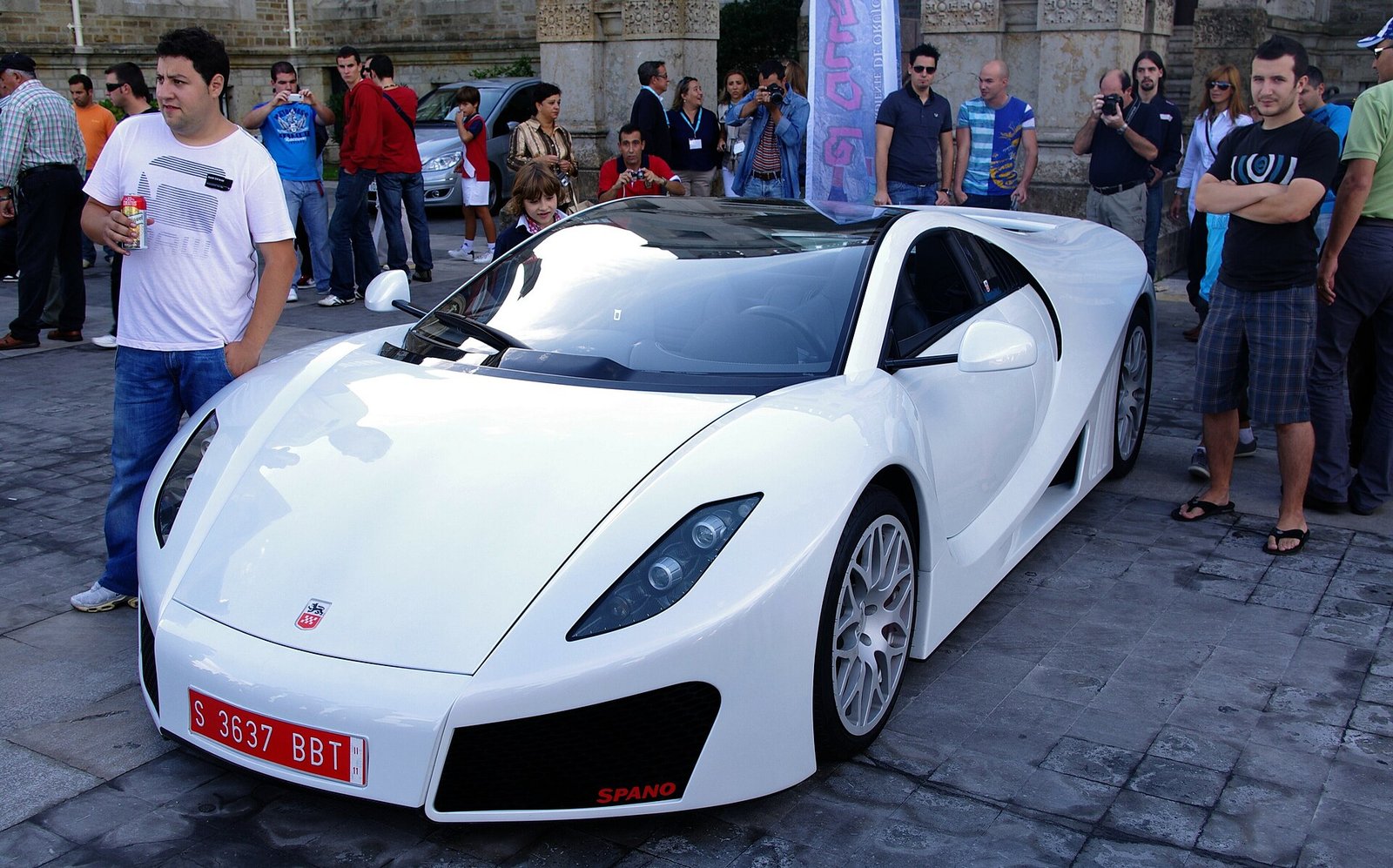
The Spano made its international debut at Top Marques Monaco in 2010, where Prince Albert took a close interest in the car, and in 2011 it went to the Geneva Motor Show, the toughest stage in Europe for a new car. Abroad, the reaction was enthusiastic. At home it was lukewarm at best. The 2008 financial crisis had hammered Spain, and the investors and public bodies that had backed the project early on pulled out.
Building a hypercar in the middle of a crisis
It’s hard to overstate how bad Spain’s timing was. The GTA Spano was unveiled in 2009, just as the global financial crisis hit Spain harder than almost any other European country. A housing bubble burst, banks collapsed into rescues and mergers, and in 2012 Spain needed a European bailout for its banking sector. Unemployment climbed to around 26 percent in 2013. The Valencia region, heavily exposed to construction and to its regional savings banks, was among the worst hit.
In that climate, a small company asking for millions to build million-euro sports cars had almost no chance with Spanish lenders. Public bodies that had shown interest in a prestige project had their own budgets slashed. Ochoa was trying to launch the most expensive product a carmaker can build at the exact moment his country had the least money to spare.
Offers to leave Spain
Ochoa traveled the world looking for money. He says he received offers from the United States, Dubai and Saudi Arabia, and even signed agreements worth around 18 million euros on average with investors from Bahrain, Jordan and Singapore. There was always a condition: move the factory there. Each time, he refused. He wanted the GTA Spano to be built in Spain, by Spaniards, to show what the country could do. In hindsight it was a choice that cost him dearly, and it’s the key to understanding the man.
The 2013 car and a golden request from Dubai
Despite the money problems, the car kept evolving. In 2013 a revised version appeared at Geneva with an 8.4-liter twin-turbo V10 rated at about 900 hp and 1,200 Nm of torque, along with chassis and aerodynamic improvements. The car was also shown in Monaco and Dubai, where, according to Ochoa, investors close to the ruling family of Dubai were fascinated by a carbon-fiber show car with gold-colored details and placed a reservation on it, asking that the gold accents be made of real gold. The car returned to Spain so the work could be evaluated.

A crash at 176 km/h
What Spania GTA was building was technically ambitious. The monocoque used a honeycomb structure in carbon fiber, titanium and Kevlar, which the company said weighed only about 56 kg and was four times stiffer than many rival chassis. The complete car weighed around 1,350 kg with fluids and comfort equipment, roughly 200 kg less than its direct competitors, according to the company.
On December 18, 2013, that structure was tested in the worst possible way. During an exhibition event, a piece of cardboard placed under the pedals to protect the floor mats got stuck and jammed the accelerator wide open. The car accelerated out of control for about 150 meters and hit a truck head-on at 176 km/h, about 109 mph. Ochoa was driving.
The monocoque did what it was designed to do. It absorbed the impact and protected the driver. Ochoa survived, but with 18 fractures, around 170 stitches, months in a wheelchair and a recovery that stretched over five years. The company kept the incident quiet at the time to avoid damaging its reputation. For Ochoa it was proof of the car’s engineering written on his own body. It was also a financial disaster: the car was destroyed and the sale was lost, a blow few small companies could absorb.
Five months later, while he was recovering at home, another blow arrived. A second yellow car was hit from behind while being transported back from an event, the transport continued, and the car caught fire minutes from the factory. Another irreplaceable asset was gone.
Geneva 2015 and the graphene car
Ochoa kept fighting for money. A small Valencian investor came on board and allowed a full redesign, and in March 2015 the GTA Spano made its strongest statement. The definitive version shown at Geneva had about 925 hp and 1,220 Nm, a seven-speed sequential gearbox from CIMA, the Italian supplier that has also worked with Koenigsegg and Pagani, and a world first that made headlines. Through a partnership with the Spanish company Graphenano, the Spano was presented as the first car to use graphene in its structure, applied to the monocoque, the bodywork, the starter battery and even the upholstery.

The quoted performance was 0 to 100 km/h in 2.9 seconds and a top speed above 370 km/h, about 230 mph. The roof used smart glass whose opacity could be changed from inside the car, and an active rear wing adjusted downforce with speed. Production was limited to 99 cars, priced from around 900,000 euros to more than a million depending on specification.
The reception was the best the project had ever had. Several international outlets listed the Spano among the best cars of the show. According to the company, 12 cars of that series were built and seven were sold to customers in Singapore, China, the United States and the United Arab Emirates. Spania GTA opened sales operations in Singapore, London, the Emirates and Miami.
One story, told by people close to the brand, sums up Ochoa’s character. A Qatari collector compared the Spano with his LaFerrari. Ochoa made him a bet: if the Spano beat a track-prepared LaFerrari by more than two seconds a lap, the buyer would pay 200,000 euros more; if not, Ochoa would knock the same amount off. The customer bought a track-spec car for 1.4 million euros and, the story goes, paid the difference.
What graphene actually is
Graphene sounds like marketing until you know what it is. It’s a single layer of carbon atoms arranged in a honeycomb pattern, the thinnest material known, and extraordinarily strong and conductive for its weight. It was first isolated in 2004 at the University of Manchester by Andre Geim and Konstantin Novoselov, who won the Nobel Prize in Physics for the work in 2010.
In a car, graphene is usually added in small amounts to composite resins, coatings or battery materials, where it can improve stiffness, strength, heat transfer or electrical performance. That’s how the Spano used it, in partnership with the Spanish company Graphenano: as an additive in the carbon structure, body panels, battery and upholstery, rather than as a car made of pure graphene. It was still a genuine first for a production car announcement, and a clever way for a small brand to show it could work with materials the big companies were only starting to explore.
Hollywood calls Valencia
The chapter that made the Spano famous worldwide came from Hollywood. In 2013 DreamWorks contacted Ochoa about using the car in Need for Speed, the film adaptation of the video game franchise. According to Ochoa, the Spano was the only genuine car among the hypercars used in the static scenes, while the others, a McLaren P1, a Bugatti Veyron Super Sport, a Koenigsegg Agera and a Lamborghini Sesto Elemento, were replicas built on other chassis for filming.
The yellow car used for filming was also chosen for the film’s promotion and appeared at events on Hollywood Boulevard. It was later offered for sale by a dealer in Marbella for 1.5 million euros. HBO used the Spano in the series Ballers, in an episode of its second season alongside Dwayne Johnson, and in 2018 it appeared in the Spanish comedy El mejor verano de mi vida.
A car built in an industrial park in Valencia ended up on screens in both blockbusters and local comedies. For a brand with almost no advertising budget, that exposure was priceless. Millions of people who would never see a Spano on the street saw one on a cinema screen or a television, and many of them went looking for it online afterward.
King of the video games
On real roads the Spano was rare. In video games it was everywhere. It appeared in Need for Speed Rivals, linked to the film, in Forza Horizon 3 and 4, Forza Motorsport 7, DriveClub, Asphalt 8: Airborne and CSR Racing 2, among others. For many young American car fans, the first Spanish hypercar they ever drove was a GTA Spano on an Xbox or PlayStation. Those licensing deals with companies like Microsoft, Sony and Gameloft brought income and a level of visibility no small manufacturer could have bought.
There’s also a toy footnote. In 2021 the Slovenian company BuWizz, which makes motors and batteries for LEGO models, proposed a radio-controlled GTA Spano built from LEGO parts. The model was certified by Guinness World Records as the fastest of its kind, at 36.5 km/h. From the concrete floor of a Valencia industrial park to toy tables around the world.
The long desert
Skipping the dark years would cheat the story, and Ochoa. Running a hypercar company in Spain without major financial backing was brutal. Spanish banks never committed to the project. Each round of funding allowed a step forward and then the money ran out again. The factory faced repossession actions from banks, operations had to be restructured and moved, and the company’s viability was badly damaged. In April 2024 Ochoa appeared on the Spanish television program Horizonte with the car and admitted, in front of a national audience, that the man behind a car seen in DreamWorks and HBO productions and driven by millions of gamers was broke.

The flood of October 2024
Then came the DANA. On the night of October 29, 2024, catastrophic flash floods hit the province of Valencia, the worst weather disaster in Spain in decades. The Casanova industrial park in Riba-roja was in one of the hardest-hit areas. According to Ochoa, of roughly 500 businesses in the park, only three buildings in one corner escaped total flooding, and his was one of them, though it still took water. A retaining wall on a nearby ravine collapsed and buried most of the park under more than two meters of water and mud.
Two finished cars stored in another building in the same park were destroyed. The company had to move all its storage, and while emptying boxes and shelves it found something unexpected: enough parts to build another car. A first-generation carbon chassis, a body, assorted components and one of the 8.0-liter Ilmor V10 engines.
The GTA Spano E&D and the 400 km/h challenge
That discovery became the most personal project in Spania GTA’s history: the GTA Spano E&D, for Ethan and Domingo, father and son building a one-off together. The goal is simple to say and hard to do: exceed 400 km/h, about 249 mph, a speed no Spanish-built car has ever reached.

The car uses the rescued first-generation carbon chassis and the 8.0-liter Ilmor V10, tuned to close to 1,200 hp. Power alone won’t get there, so the team has developed five active aerodynamic systems, being checked with computational fluid dynamics before the attempt. The interior keeps the usual GTA standard, using original dashboards found in the surviving boxes, one of them right-hand drive, retrimmed by a Valencia upholsterer.
Ochoa has said the record attempt will take place at the Ciudad Real airport, which has one of the longest straight runways available for this kind of run in Spain, during the second quarter of 2026 if conditions allow. The one-off is meant to be the testbed for a future "R" series focused on extreme track performance, and after the attempt it will be offered for sale as a unique collector’s piece. Ochoa posts weekly progress updates on LinkedIn, an unusual level of openness in an industry that loves secrecy.
How a top-speed record actually works
Saying a car will hit 400 km/h and proving it are different things. Serious top-speed claims are measured with GPS-based timing equipment and, for an official record, the run is usually made in both directions within a short window, with the average of the two counted. That cancels out the effect of wind and any slight slope. It’s how Koenigsegg’s Agera RS set its 447 km/h, about 277 mph, average on a closed public road in Nevada in 2017.
Space is the other problem. To reach 400 km/h a car needs a long run-up and an equally long safety margin to slow down. That’s why the GTA Spano E&D is heading for the Ciudad Real airport in central Spain, an airport built for international traffic that ended up largely unused, with a runway around four kilometers long. Few places in Spain offer that much flat, straight pavement. Even there, a run at that speed is a serious engineering and safety exercise, with tires, aerodynamics and cooling all pushed to their limits.
America’s own hypercar dreamers
Americans have seen this kind of story before. In the late eighties and early nineties Vector tried to build an American supercar with aerospace-inspired engineering and struggled with money and management. Saleen launched the mid-engine S7 in 2000. In 2007 the small SSC company from Washington State claimed the title of world’s fastest production car with its Ultimate Aero at about 256 mph, and Hennessey’s Venom GT later reached about 270 mph in a one-way run. Like Spania GTA, these companies were tiny compared with the established exotic brands, and like Spania GTA they relied on big American engines, enormous ambition and very little room for error.
What sets Ochoa apart is that he tried to do it from a country with almost no modern tradition of high-end car manufacturing, and without the deep pool of suppliers and specialist engineers that surrounds Detroit, Los Angeles or the English Midlands.
Why so many hypercar startups fail
The GTA Spano’s struggles aren’t unusual. Building a hypercar is one of the hardest businesses in the car world. You need millions just to design and crash-test a car that you might sell a few dozen times. Every car is hand-built, so costs don’t fall much with volume. Certification for road use in different markets is expensive and slow. And the customers are a tiny group of collectors who can choose between Ferrari, Lamborghini, McLaren, Pagani and Koenigsegg, brands with long histories and resale values to match.
Most new hypercar brands either find a deep-pocketed backer, become engineering consultancies for others or disappear. Spania GTA’s refusal to move abroad meant turning down exactly the kind of backers that keep such companies alive. Whether that was stubbornness or principle depends on who you ask. For Ochoa, it was never a question.
Spain’s other hypercar projects
The Spano isn’t alone in Spain. Tramontana, from Catalonia, built an extreme open-cockpit hypercar in small numbers. Hispano Suiza, the historic Barcelona brand, returned as an electric hypercar maker with the Carmen, developed with the Barcelona engineering firm QEV Technologies. And Koenigsegg builds carbon structures for its cars at a factory near Girona. Each of those projects shows that Spain has the skills. The GTA Spano was simply the first to put a Spanish hypercar on the stand at Geneva and on a Hollywood movie poster.
A father-and-son build
There’s something old-fashioned about the E&D project, and that’s part of its appeal. Most hypercars today are developed by teams of hundreds with simulators and supplier networks spread across continents. The E&D is being assembled largely by a father and his son, using parts that survived a flood, in a building that barely escaped it, and documented week by week on social media. Every bolt that goes in is a small act of defiance against the disaster that nearly wiped out the company.
For Ethan Ochoa it’s also an apprenticeship of the kind his father had in Torrent in the seventies: learning a trade by doing it, next to someone who has spent a lifetime at it. Whatever the speedometer shows at Ciudad Real, that handover of knowledge may be the project’s most important result.
What the story says about Spain
The story of Domingo Ochoa and the GTA Spano is bigger than one car. It’s about a country that has a chronic problem believing in its own talent, and a financial system that didn’t see the potential that foreign investors and Hollywood studios saw right away. Ochoa put it bluntly in a talk at the Polytechnic University of Valencia: Spain, he said, has plenty of talent and courage, but lacks politicians with the same.
The Spano has been shown in Geneva, Monaco, Dubai, Macau, Singapore, London, Marbella, Madrid, Barcelona and Goodwood. It has raced against Ferrari and, according to its maker, beaten it. It was presented as the first car with graphene in its structure. It saved its creator’s life at 176 km/h. And yet plenty of people in Spain still don’t know it exists.
Ochoa sees himself as an heir to a Spanish tradition of automotive excellence that runs back to Hispano-Suiza and to Wifredo Ricart’s Pegaso Z-102, cars that proved Spain could compete at the highest level. Those brands disappeared or were reborn as different projects. Ochoa picked up the torch and kept it lit through recessions, ruthless banks, suffocating bureaucracy, a near-fatal crash and the worst natural disaster in Valencia’s recent history. Spain’s other carbon-fiber hypercar story, Koenigsegg’s factory in Catalonia, shows the same skills exist elsewhere in the country.
The Spanish Ferrari, and why he never wanted to be one
When Horizonte asked Ochoa how he felt about being called "the Spanish Ferrari," his answer was revealing. At first he didn’t like it, because he felt his car was more exclusive in many ways. Later he accepted it with pride, because Ferrari is the world reference and being compared to it as a young brand from Valencia is recognition in itself. But Ochoa never wanted to be Ferrari. He wanted to be something Ferrari isn’t: Spanish.
Now, at close to sixty-one, with more scars than trophies, he’s building with his own hands, and with his son Ethan’s, the car he hopes will make history. It’s a car born from the literal wreckage of a disaster, carrying more than forty years of racing experience and the stubbornness of a man who refused to quit when everyone told him to. For a sense of how wild the hypercar world he set out to join really is, look at Detroit’s own contribution to the madness, the Dodge Viper, whose V10 family sits at the root of the Spano’s engine.
You can follow the brand’s official background on the GTA Spano page on Wikipedia. Four hundred kilometers an hour is the number that will separate the GTA Spano E&D from everything Spain has ever built on four wheels. The phoenix doesn’t ask permission to burn. It just needs a spark, and Domingo Ochoa has always had fire to spare.
Check you’re still alive.
Photos via Wikimedia Commons: GTA Spano 2015, Falcon Photography (CC BY-SA 2.0); Geneva 2013 car, Clément Bucco-Lechat (CC BY-SA 3.0); 2010 car and interior, Spanish Coches (CC BY 2.0); GTA Spano, Alexandre Prévot (CC BY-SA 2.0).