
The Great Weight Lie: Your SUV Doesn’t Protect You — It Makes You a Projectile
There’s an idea the car industry has been selling for decades as though it were a law of physics: that a bigger, heavier car is a safer car. You bought it. I bought it. Governments endorse it. Insurance companies reward it. Manufacturers exploit it.
But it’s a lie.
This isn’t opinion. It’s physics. And physics doesn’t negotiate.
The Dogma Nobody Questions
Colin Chapman, founder of Lotus and one of the most brilliant engineers in automotive history, had it figured out: “Don’t bother to give me more power, just reduce the weight.” He won world championships with cars that weighed half as much as the competition. Because he understood something the modern industry has chosen to forget: lightness isn’t a limitation. It’s the supreme engineering virtue.
Today, manufacturers sell you the exact opposite. The industry narrative is that a 2,100 kg SUV “gives you more safety.” What they’re really giving you is destructive advantage against everything smaller than you. You’ve bought a battering ram. You haven’t bought safety.
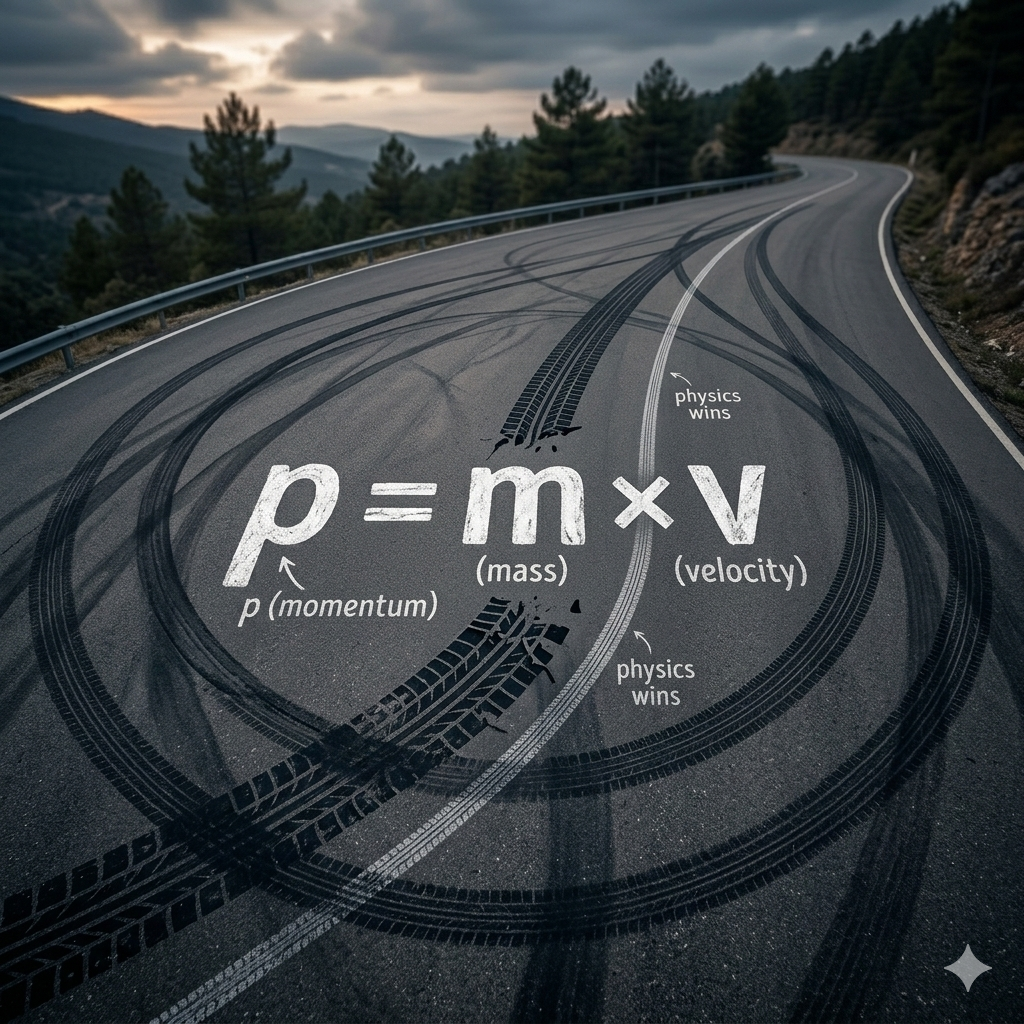
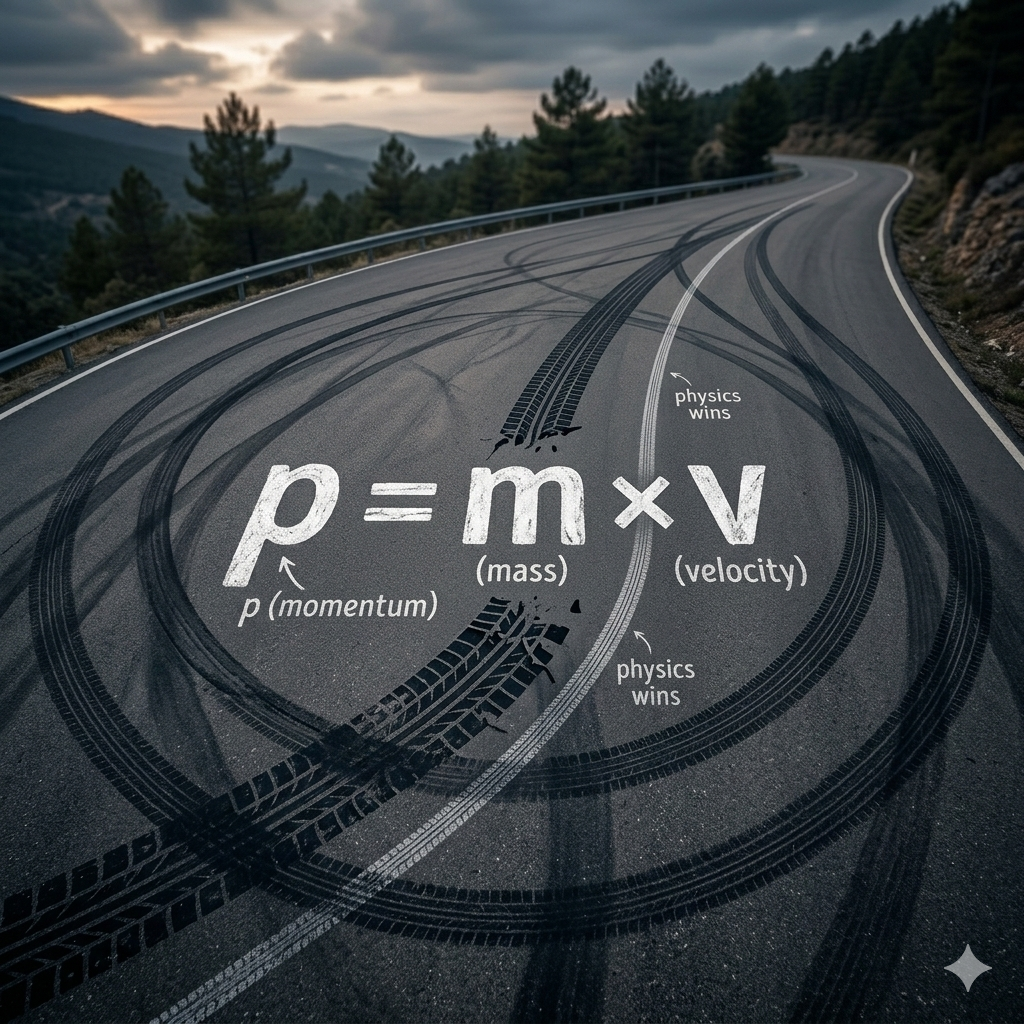
The equation is high-school level: p = m·v (momentum = mass × velocity). In a collision between two vehicles, the energy transferred to the lighter one is proportional to the mass difference. A 2,100 kg SUV hitting a 1,000 kg city car isn’t “safer for everyone.” It’s a death sentence for the occupant of the small car.
The IIHS (Insurance Institute for Highway Safety) has proven this with data from nearly 18,000 pedestrian crashes: vehicles with hood heights above 40 inches (102 cm) are 45% more likely to cause pedestrian fatalities than cars with hood heights of 30 inches (76 cm) or less and a sloping profile. This isn’t opinion. These are bodies counted.
When hood height reaches pickup-truck territory and crash speed increases from 15 mph to 35 mph, the risk of serious injury jumps from 11% to a devastating 91% — compared to 52% with a median-height car. The impact geometry changes entirely: the blow hits the torso and head, not the legs. Biomechanically, it’s catastrophic.
Cars Have Doubled Their Weight in 50 Years — And Nobody Asked Your Permission
Let’s look at the numbers:
- VW Golf Mk1 (1974): ~800 kg → Golf 8 (2020): ~1,350 kg
- Peugeot 205 GTI (1984): ~875 kg → Peugeot 308 (current): ~1,400 kg
- Fiat Uno Turbo (1985): ~850 kg → Fiat 500e electric: ~1,365 kg
- Tesla Model Y: 2,054 kg
- GMC Hummer EV: 4,100 kg (yes, four point one metric tons — a small truck wearing the skin of a car)
The average weight of new cars sold in Europe increased by 21% between 2001 and 2022. In the US, the average car weighed 1,452 kg (3,200 lbs) in 1981 and 1,890 kg (4,166 lbs) by 2020 — nearly 440 kg more. That’s not evolution. That’s mass inflation dressed up as progress.
And here’s the question nobody asks: why are they heavier? Because they’re safer? No. They’re heavier because they’re bigger (because buyers want them bigger), because they’re packed with technology, because lithium-ion batteries are absurdly heavy, and because the industry doesn’t care about weight as long as the word “premium” appears on the price tag. Weight isn’t a consequence of safety. It’s a consequence of marketing.
The Formula That Destroys Roads — And Your Wallet
There’s an equation that electric SUV manufacturers don’t want you to know. It’s called the AASHTO Pavement Damage Formula (American Association of State Highway and Transportation Officials), and it’s the international standard for calculating road deterioration.
It states: pavement damage is proportional to the axle weight raised to the fourth power.
Translation: a car that weighs twice as much doesn’t cause twice the road damage. It causes 16 times more damage. A car that weighs three times as much causes 81 times more damage. It’s a brutal exponential function.
This means a Hummer EV at 4,100 kg doesn’t just wear the road a bit more than a Golf. It pulverizes it at a level civil engineers never anticipated when they designed that infrastructure. The same applies to bridges, multi-story car parks, and underground parking facilities.
The British Parking Association (BPA) has published reports warning that multi-story car parks built in the 1960s and 1970s were not designed for vehicles exceeding 2 tonnes. Structural engineer Chris Whapples, a BPA member, stated plainly: if a vehicle exceeds the load the structure was designed to support, the consequences could be catastrophic. France is already acting: since 2022, there’s a “malus au poids” (weight penalty tax) charging €10 per kilogram above 1,800 kg (threshold reduced to 1,600 kg in 2024, and heading to 1,500 kg in 2026). Electric vehicles were exempt — but that exemption expires in July 2026.
Why? Because weight has real consequences, and someone has to pay for them. That someone is you, the taxpayer.
Tires: The Hidden Bill Nobody Wants to Show You
Emissions Analytics, a London-based independent emissions testing company, has published data that should be front-page news:
- For every 454 kg (1,000 lbs) of additional vehicle weight, tire wear increases by approximately 20%.
- A Tesla Model Y generates 26% more tire particulate pollution than a comparable Kia hybrid.
- EV tires wear out 20% to 50% faster than those on combustion vehicles, according to cross-referenced data from Emissions Analytics, Michelin, and Bridgestone.
- A single car sheds nearly 4 kg (9 lbs) of tire rubber per year on average. Globally, that amounts to 6 million metric tonnes of tire particles annually, most of it going directly into soil and water.
This isn’t just about money (though it matters: EV-specific tires cost significantly more and need replacing more frequently). This is about microplastics. About chemical compounds like 6PPD-quinone, a rubber derivative that was discovered to be lethal to Pacific coho salmon and is present in urban waterways worldwide.
Electric cars have no tailpipe. But they have four tires emitting 1,850 times more particles than what comes out of a modern combustion engine’s exhaust with a particulate filter, according to Emissions Analytics’ own data.
You eliminate tailpipe CO₂ and multiply tire particulate pollution. That’s not clean progress. That’s trading one problem for another.
ESP: The Engineering Solution to the Problem the Industry Created
Now comes the argument that truly makes the industry uncomfortable. The one they don’t want you to understand.
The ESP (Electronic Stability Program) became mandatory in the European Union on November 1, 2014 for all newly registered vehicles (new model types had required it since November 2011). Bosch, the system’s inventor, describes it as the most important safety technology after the seatbelt, capable of preventing up to 80% of skid-related accidents. Since its introduction, ESP has prevented over 190,000 accidents and saved more than 6,000 lives across Europe.
All of this is true. ESP saves lives. It works. I don’t question that.
What I question is why it’s needed.
ESP works by cutting engine torque and selectively applying brakes to correct oversteer and understeer. What it’s correcting is the inertia of 1,500, 1,800, 2,100 kg trying to travel in a straight line when the road says turn. It’s compensating for the fact that the car is too heavy to be dynamically competent without electronic assistance.
ESP doesn’t make you a good driver. It rescues you from the car being ungovernable.
Think about it: did a Citroën Saxo VTS at 935 kg need ESP? No. Its inertia was manageable, predictable, correctable by an experienced driver. The understeer arrived progressively, announced itself, and could be managed by lifting off the throttle and adjusting the line. It was a car that talked through your hands.
And a Tesla Model 3 Performance at 1,836 kg? Without ESP, that car is a missile. It has double the mass and instant electric torque from 0 rpm. Its cornering inertia is that of a small truck that also accelerates like a sports car. Without the electronics constantly cutting torque and braking individual wheels, physics collects its debt at the first tight bend.
Active safety systems are an engineering solution to a problem the industry created by selling mass as safety. They’re not an advance. They’re a patch. A patch that works, yes. But a patch nonetheless.
Saxo VTS vs Tesla Model 3 Performance: The Mountain Pass That Settles the Debate
Let’s put this in a real context. A mountain pass with tight hairpins, elevation changes, and repeated heavy braking. Spirited but legal driving.
| Specification | Citroën Saxo VTS 16v | Tesla Model 3 Performance |
|---|---|---|
| Weight | ~935 kg (DIN) | ~1,836 kg |
| Power | 120 PS (118 bhp) | ~460 PS |
| Power-to-weight | ~7.8 kg/PS | ~4.0 kg/PS |
| Centre of gravity | Somewhat high, but minimal mass | Low (floor-mounted batteries), but enormous mass |
| Repeated braking | Short stops, quick recovery, repeat | Heat buildup, progressive fade, larger discs but far more mass to arrest |
| Without ESP | Predictable understeer, correctable | A nearly 2-tonne projectile with instant torque |
| Tires | 185/55 R14, cheap, readily available | 235/35 R20 (or similar), expensive, faster wear |
| Dynamic running costs | Cheap pads, discs, and tires | Everything oversized and proportionally more expensive |
In a straight line, the Tesla destroys the Saxo. That’s not debatable. 460 PS versus 120, with all-wheel drive and instant torque.
But on a mountain pass, the story reverses completely.
The Saxo enters each corner with 935 kg of inertia. It brakes late, turns cleanly, exits fast. Weight transfer is minimal because there’s barely any weight to transfer. The brakes stay fresh because they’re not absorbing the kinetic energy of 1,836 kg — just 935. The tires work within their window because the mechanical load is proportional to the mass. Everything works because physics is on your side.
The Tesla enters each corner with nearly double the mass. The inertia wants to continue straight. The ESP cuts, brakes, corrects. The brakes absorb double the kinetic energy. After five tight hairpins, the discs are hot. After ten, fade begins. The tires, though wider and stickier, are supporting double the lateral load. They degrade faster.
And if you disable the ESP on the Tesla, there’s no debate. There’s a crash. Because 1,836 kg with instant torque and no electronic stability control isn’t a car — it’s a weapon.
The Argument the Industry Cannot Counter
The industry sells you weight as safety. Then sells you electronics to compensate for the weight’s consequences. Then charges you more for the tires the weight destroys faster. Then charges you more for the brakes the weight overheats sooner. Then the weight destroys the roads, and you pay with your taxes for the asphalt repairs that AASHTO says suffer exponential damage.
It’s a perfect cycle. And you’re the one paying at every turn.
The safest car isn’t the heaviest. It’s the one that brakes better, turns better, and consumes fewer resources to do the same job. It’s the one with the best relationship between mass, dynamics, and braking capability. It’s the one that doesn’t need a computer intervening 25 times per second to stop you from killing yourself.
France has understood this and penalizes weight. The British Parking Association warns about infrastructure. Emissions Analytics documents tire particulate pollution. The IIHS counts pedestrians killed by hoods that are too high.
And you? Do you still believe that more tonnes means more safety?
Physics says no.
And physics doesn’t negotiate.
Did this make you think? Share, comment, and tell me whether you believe a Saxo VTS on a mountain pass would teach the Tesla a lesson. Spoiler: it would.
Not Enough Cylinders — Grease on the hands and no filter on the mouth.