
In April 2018, Ford told investors it would stop selling almost all of its passenger cars in North America. The Fiesta, the Focus, the Fusion, the Taurus: gone. The Mustang would stay. Everything else would be trucks, SUVs and crossovers. Within a few years, the company that put America on wheels with the Model T barely sold a single sedan here.
Ford didn’t do that because SUVs are better cars. It did it because they’re better business. Higher prices, fatter margins, and a set of federal rules that, for decades, treated a family crossover more like a work truck than a car.
That’s the con. Let’s take it apart.
How a "work vehicle" became the family car
The story starts with fuel economy rules. When Congress created the Corporate Average Fuel Economy standards in the 1970s, passenger cars got the strict targets. Light trucks, the vehicles farmers and contractors needed, got looser ones. American Motors lobbied to have its Jeeps classified as light trucks, and the government agreed.
Carmakers spent the next decades widening that door. Four-wheel drive, a high enough gross weight, enough ground clearance, or seats that folded into a flat cargo floor could all help a vehicle count as a truck. Even the Chrysler PT Cruiser squeezed into the light-truck category. Rule changes later shifted the math toward a vehicle’s footprint, which gave automakers another reason to build bigger.
The result is what you see in every parking lot in America. The family car turned into a tall, heavy wagon that the regulations, for a long time, treated like a pickup.
Engineering in reverse
Here’s the physics nobody in the commercials talks about.
Take a car platform that engineers spent years optimizing for comfort, stability and efficiency. Then raise it. Move the center of gravity up. Add bodywork and weight. Fit bigger wheels. Make the front end taller and blunter so it pushes more air. You’ve made the car worse at almost everything a car does, and you can charge more for it.
The International Energy Agency puts numbers on it: the average SUV weighs 200 to 300 kg more than a medium-size car, roughly 450 to 650 pounds, and emits around 20 percent more CO2. More weight means more energy to accelerate, more to stop and more load on tires and suspension. More height and frontal area means more drag, which at highway speed is what burns most of your fuel.
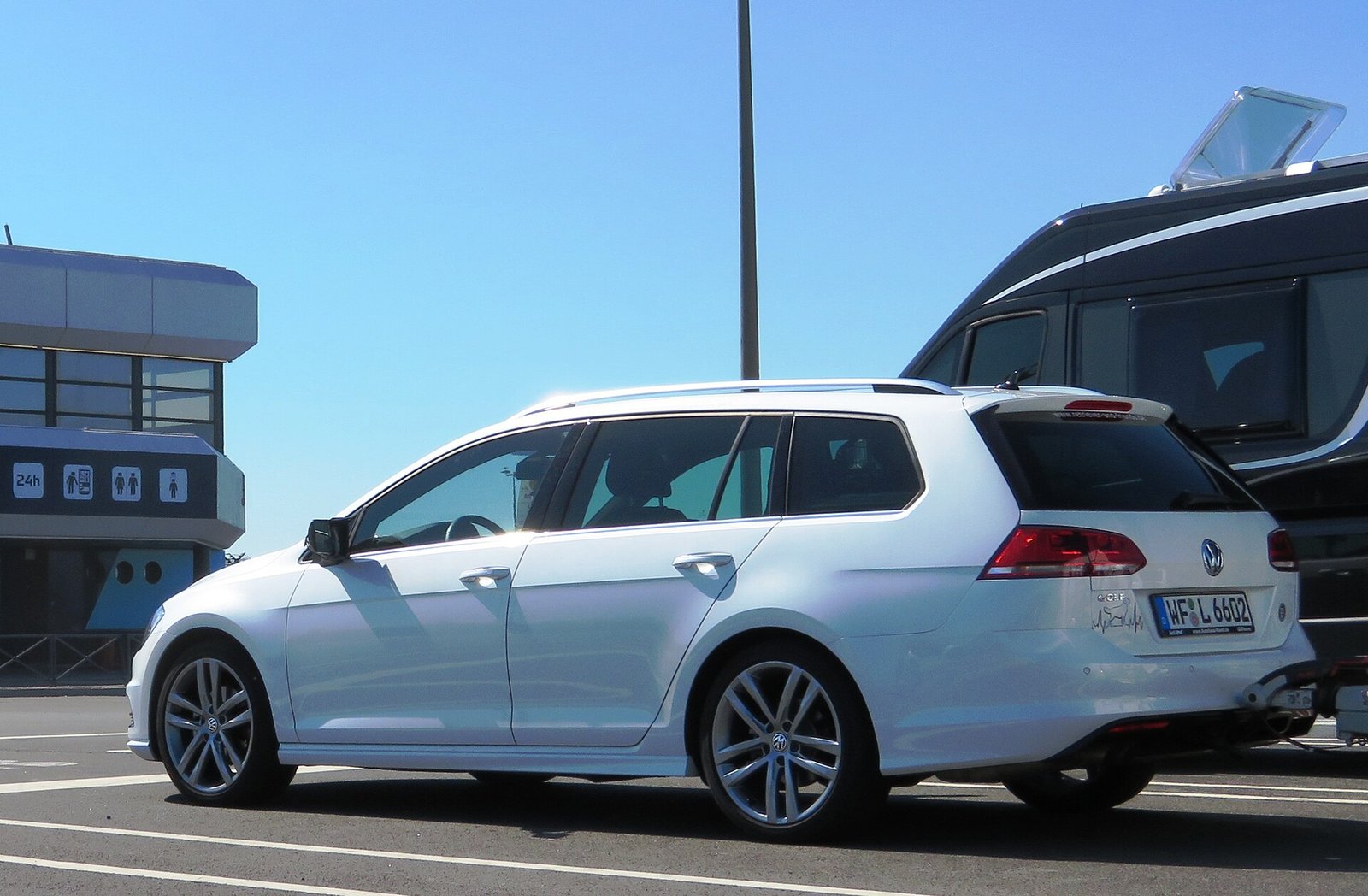
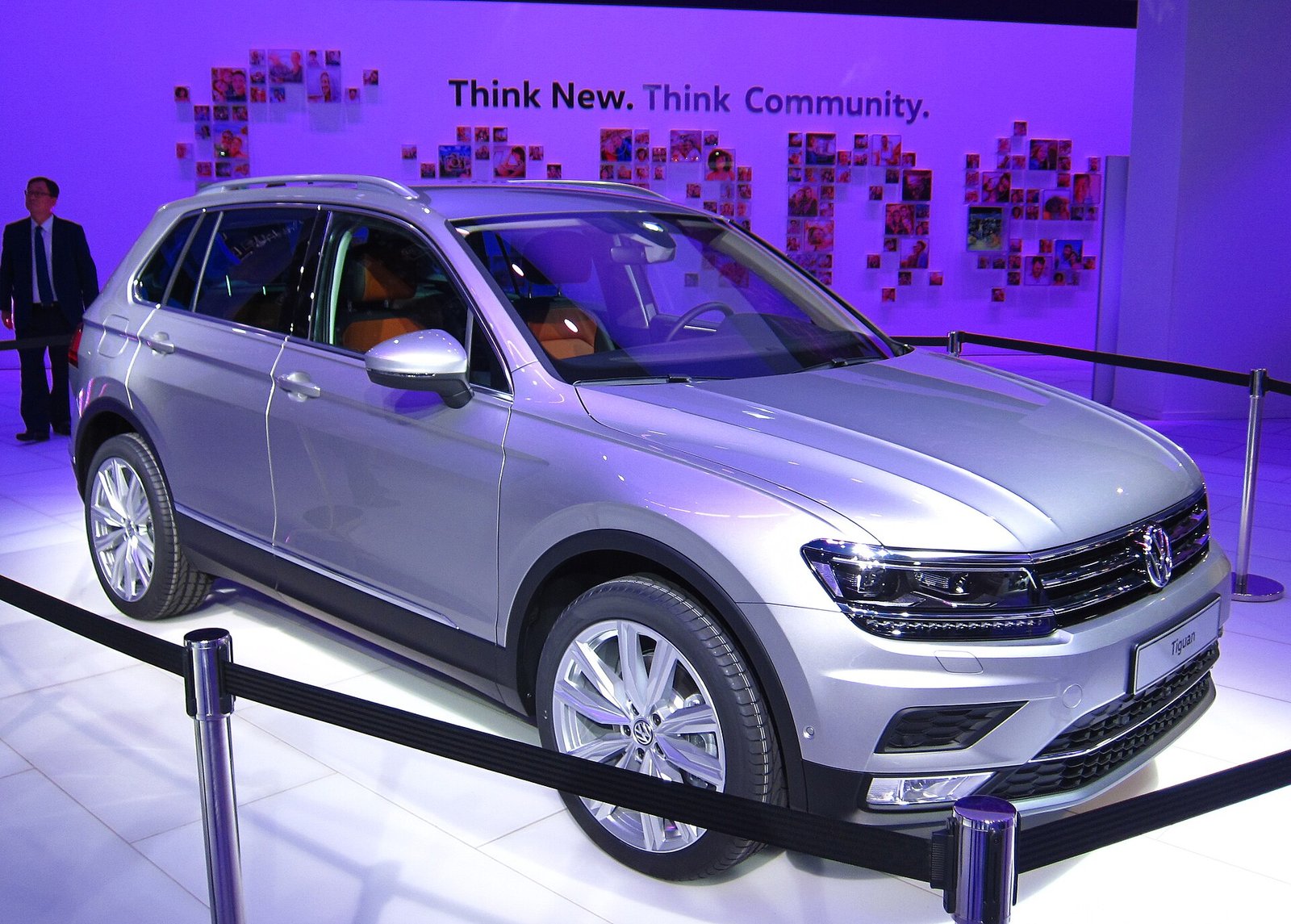
Look at any brand that sells a car and a crossover on the same platform. Volkswagen’s Tiguan shares its MQB underpinnings with the Golf. Porsche’s Macan was built on the technical base of the Audi Q5, which shares its architecture with the A4 and A5. In each case, the lower car is lighter, more efficient and better to drive. The taller one sells. Because it makes you feel big.
The "space" myth
"I need the room for the kids."
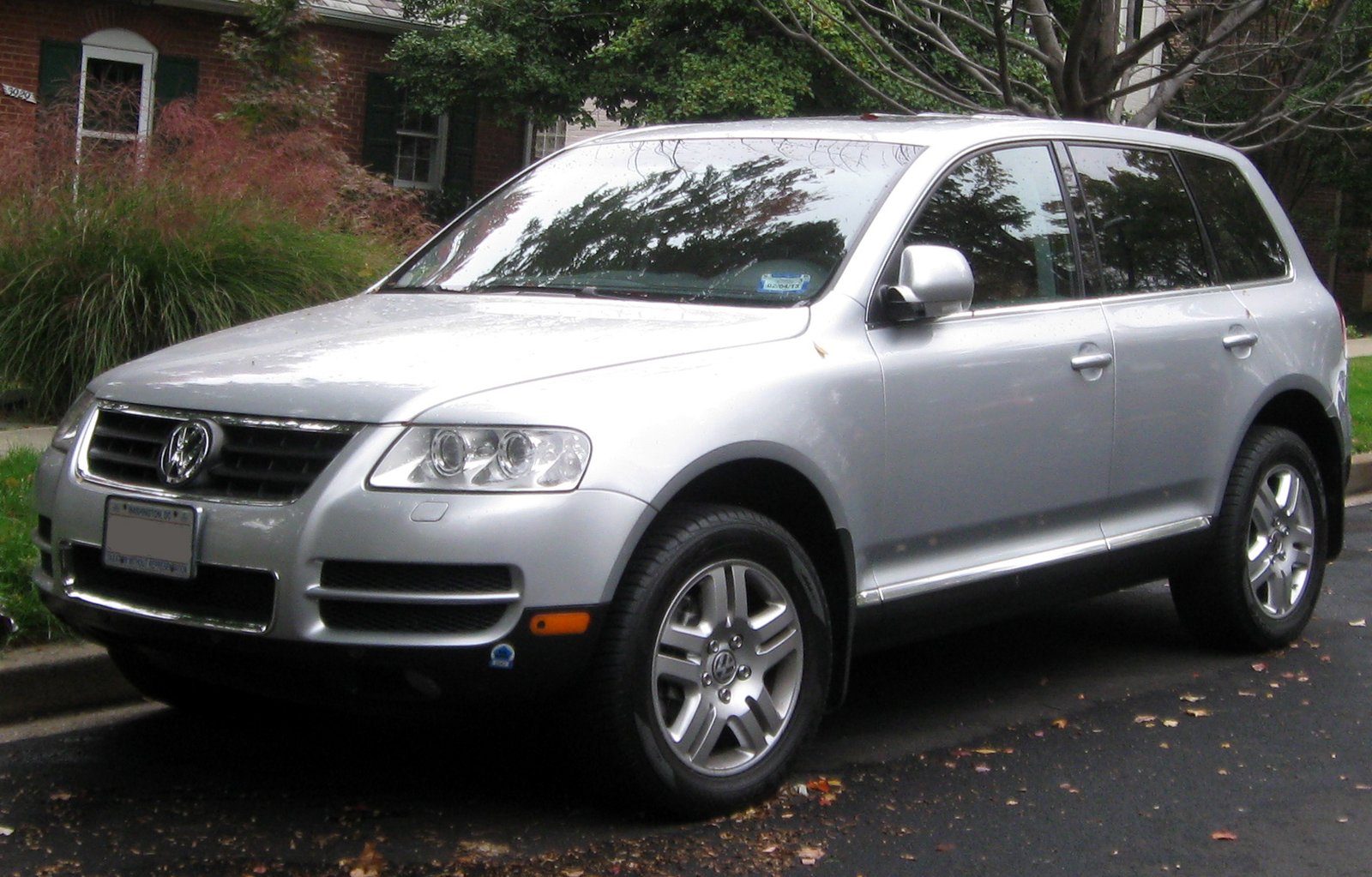
It’s the most common justification and the weakest one. A Škoda Superb wagon, sold in Europe, has 660 liters of cargo space. A current Volkswagen Touareg, much heavier and much more expensive, has 810. Yes, the SUV has a bit more. But the ratio of weight, space, price and fuel is absurd. And a wagon’s load floor is lower and flatter, so you’re not lifting groceries to chest height.
Americans got talked out of wagons decades ago, first by the minivan and then by the SUV. In much of Europe, the wagon survived. Families there carry the same kids and the same dogs in cars that weigh less, use less fuel and handle better.
In the back seat, a compact crossover usually gives you about the same legroom as the hatchback it’s based on. What grows is the headroom, not the space where your knees go.
The fake off-roader
A real off-road vehicle has a low-range transfer case, a second set of gears that multiplies torque at crawling speeds. It has locking differentials, which force the wheels on an axle to turn together so the one with grip isn’t left spinning uselessly while the other hangs in the air. It has approach, breakover and departure angles designed for actual obstacles, and skid plates underneath.
Most crossovers have none of that. A RAV4, a Rogue, a CR-V or an Escape is a passenger car on stilts, usually front-wheel drive, with optional all-wheel drive that sends power to the rear axle when the front tires start to slip. It’s emergency traction, not a four-wheel-drive system. We’ve broken down the difference in do you actually need all-wheel drive.
Want something that would actually outdo many of them in snow and mud? A 1990s Audi quattro sedan or wagon with a Torsen center differential and permanent all-wheel drive. Simple, mechanical, and exactly what it claims to be.
Why height is a problem
A quick physics lesson, because it explains most of this. Every vehicle has a center of gravity, the point where its weight effectively sits. In a corner or a sudden swerve, the tires push sideways at road level while the weight pushes outward at the center of gravity. The higher that point, the more leverage it has to tip the body over and the more the body leans. Engineers fight this with stiffer springs, thicker anti-roll bars and electronic stability control, which brakes individual wheels to keep the car in line. They mostly succeed today. But they’re spending weight, money and comfort to fix a problem they created by raising the car in the first place.
Americans learned the cost of that the hard way. In August 2000, Firestone recalled about 6.5 million tires after a wave of tread separations, many of them on Ford Explorers, led to rollover crashes. The SUV boom of the ’90s had put millions of families into tall, truck-based vehicles that were far less forgiving when something went wrong at highway speed than the sedans they replaced. Stability control and better design have narrowed that gap since. They haven’t changed the physics. We dig into the weight side of the argument in the great weight lie.
Who pays the price
The high seating position makes drivers feel safe. They see farther. But for everyone outside the vehicle, the picture is different.
In 2023, the Insurance Institute for Highway Safety studied nearly 18,000 pedestrian crashes. It found that pickups, SUVs and vans with hood heights above 40 inches were about 45 percent more likely to kill a pedestrian than vehicles with hoods 30 inches high or lower and a sloping front. Among vehicles with hoods between 30 and 40 inches, blunt fronts were 26 percent deadlier than sloped ones. The physics is simple: a tall, flat front end hits an adult in the torso and head, and a child in the head, instead of the legs.
That’s not a small side effect. It’s the direct consequence of the design that sells. And a heavier vehicle carries more energy into any crash, so the car it hits, and the people inside that car, absorb more of it. Your crossover’s five-star rating is about protecting you. Nobody gives out stars for what it does to the other guy.
The global bill
The IEA says SUVs took 48 percent of global car sales in 2023, a record. The more than 360 million SUVs on the world’s roads emitted about 1 billion tonnes of CO2 that year. If SUVs were a country, they’d be the fifth-largest emitter on the planet. That assessment comes from an agency that has nothing against cars.
Then there’s the plug-in hybrid trick. Many SUVs now come as plug-ins that post spectacular official fuel economy. Real life is different. A 2022 study by the ICCT and Germany’s Fraunhofer Institute, based on about 9,000 European plug-in hybrids, found real-world fuel use three to five times higher than the official figures: about 4.0 to 4.4 liters per 100 km for private cars, roughly 53 to 59 mpg, and 7.6 to 8.4 for company cars, around 28 to 31 mpg, versus 1.6 to 1.7 in the lab. Plenty of owners simply don’t plug them in. They buy them for tax breaks and city access, not to burn less fuel. It’s the same kind of accounting we pulled apart in electric cars versus old cars: the label on the window and the reality on the road are two different things.
A view from Spain
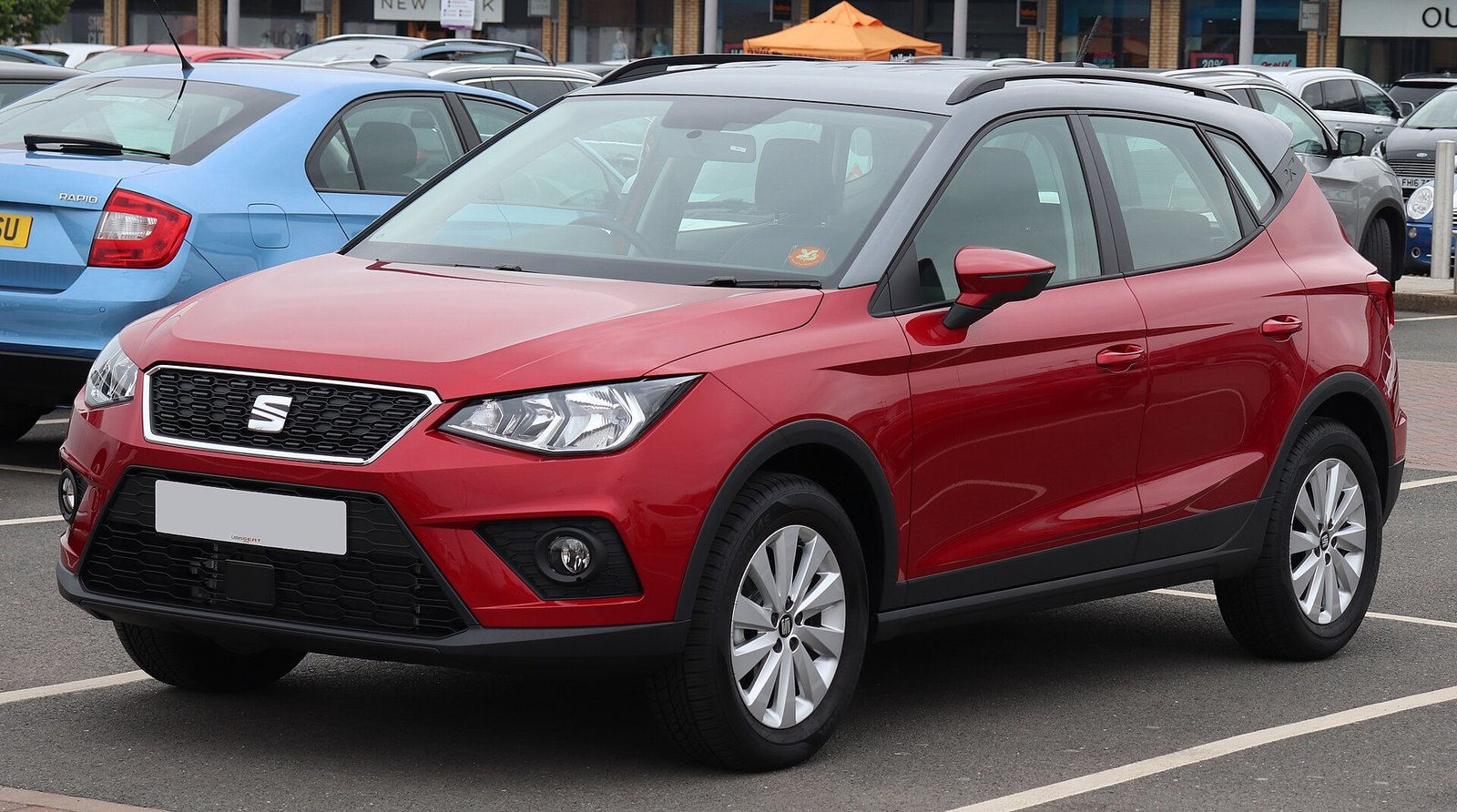
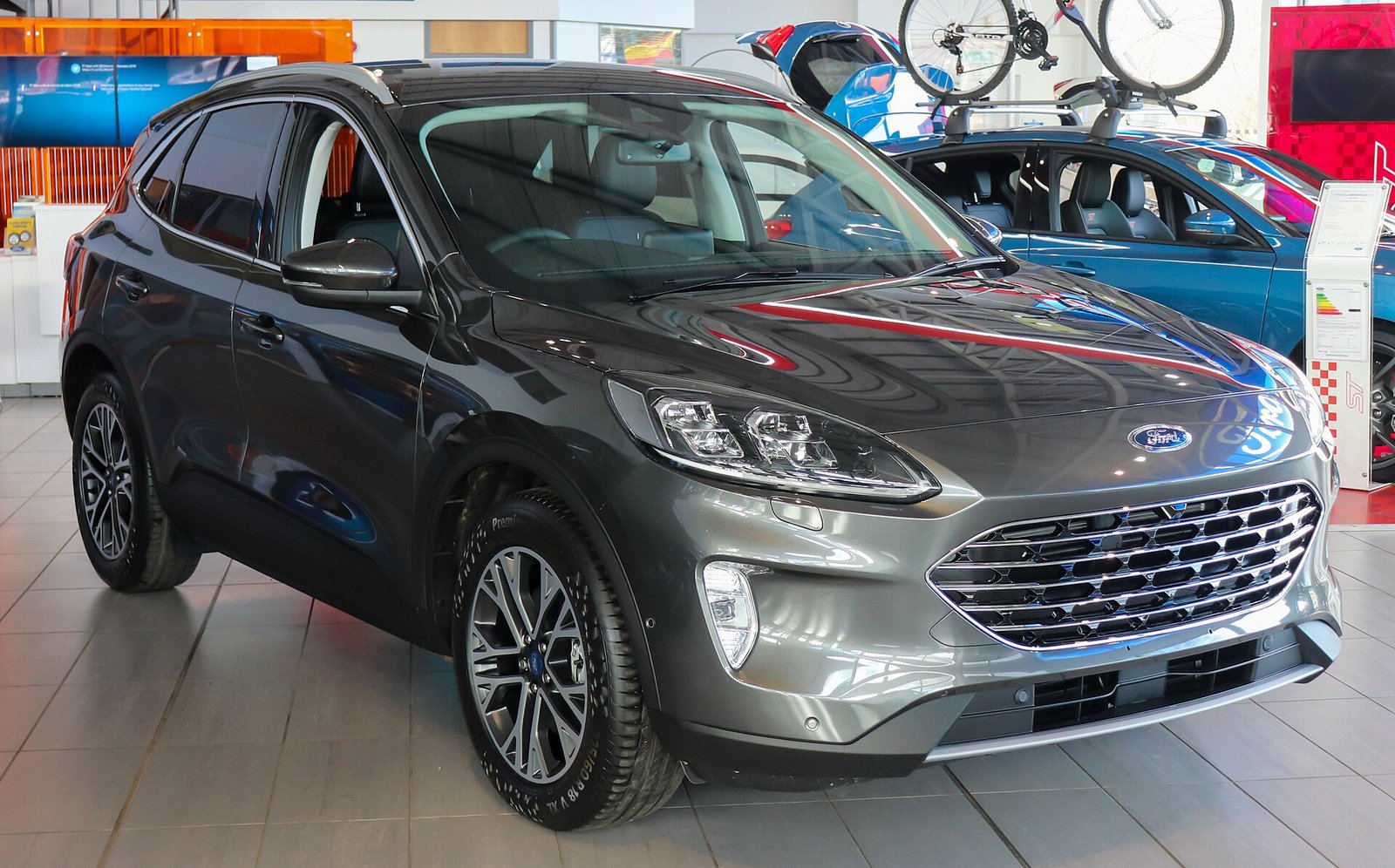
We write from Spain, where Americans might expect the small-car Europe of their vacation memories. Not anymore. In 2025, SUVs took about 62 percent of all new cars sold in Spain, roughly 714,000 out of 1,148,650. And Spain doesn’t just buy them; it builds them. The SEAT Arona comes from Martorell, near Barcelona. The Ford Kuga, a close cousin of the Escape Americans know, is built in Almussafes, near Valencia. Stellantis builds the Peugeot 2008 in Vigo.
So the SUV isn’t an American quirk that Europe resisted. It’s a global trend that America started and the rest of the world copied, regulations and all. Spain even hands plug-in hybrids its "zero emissions" badge, which opens city centers and free parking, based on the lab numbers, not the real ones.
The alternative nobody wants to see
If you need space, buy a minivan or a wagon. They carry more, ride lower, use less fuel and usually cost less.
If you need to haul, buy an actual truck and use it like one; we’ve argued about that in why Europe pretends it doesn’t need pickups. If you really go off-road, buy a real off-roader: a Jeep Wrangler, a Toyota 4Runner or Land Cruiser, a Bronco. Vehicles built for mud and rocks, not for the school drop-off line.
If you need to sit high to feel safe, maybe the problem isn’t the car. Maybe it’s the road full of other people who made the same choice.
And if somebody tells you their crossover is "sporty" because it has 300 hp and a Sport button that stiffens the steering, remind them that a Golf R, with real all-wheel drive and a lot less weight, would leave it behind on any track.
What’s left when the marketing stops
SUVs aren’t bad vehicles. They’re unnecessary ones. They’re the answer to a question nobody asked, built by companies that discovered people will pay more to sit above everyone else, and by regulators who, for a long time, let them call it a truck.
Every SUV sold is a car or a wagon that didn’t get built: more weight, more space, more fuel, less fun. All for a feeling.
Next time a commercial shows a crossover fording a river, ask yourself when you last drove through one. The numbers don’t lie. The marketing does.
Patient zero has a name: the 1990 Volkswagen Golf Country, a lifted Golf nobody wanted to buy.
Check you’re still alive.
Photos: Rutger van der Maar (CC BY 2.0); Charles01 (CC BY-SA 4.0); IFCAR (public domain); Vauxford (CC BY-SA 4.0); Vauxford (CC BY-SA 4.0). Via Wikimedia Commons.