
Volkswagen Golf Country: the lifted Golf Europe laughed at, built where they make the G-Wagen
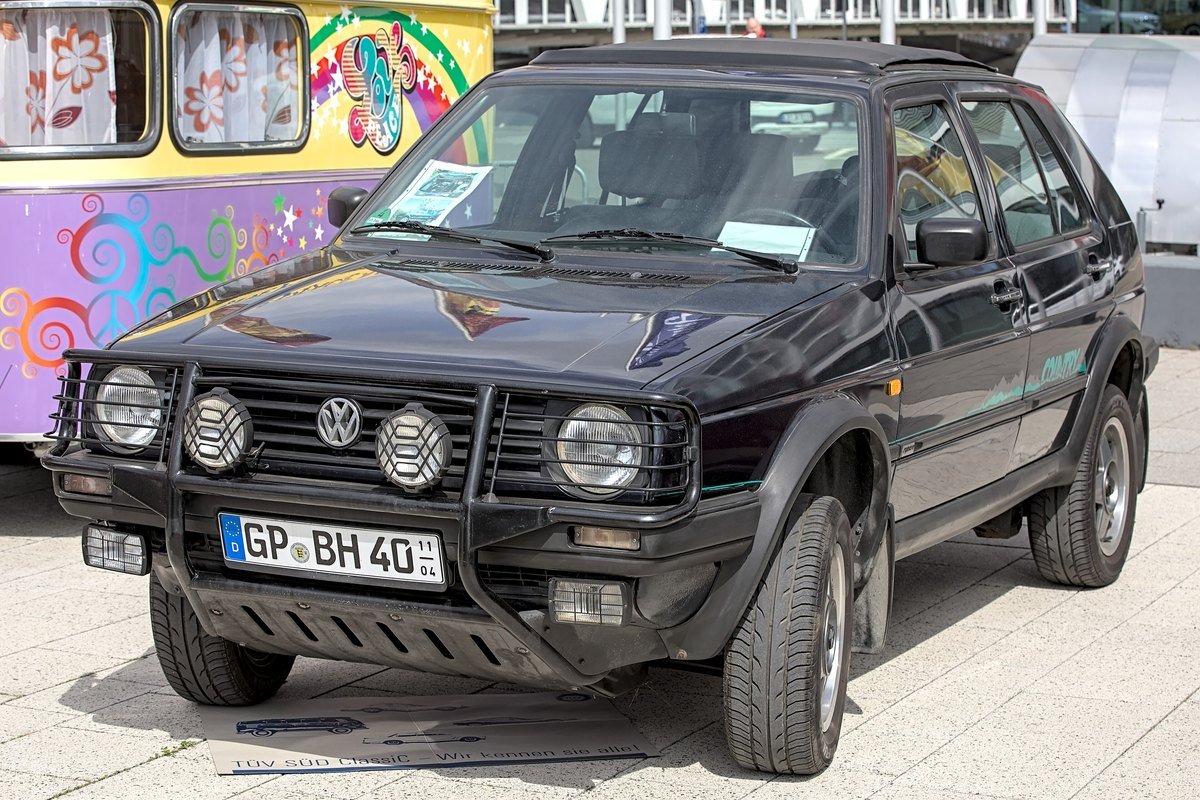
Every Volkswagen showroom in America is now full of tall hatchbacks with plastic fender trim and all-wheel drive badges, and nobody thinks twice about it. In 1990, Volkswagen tried selling exactly that idea in Europe, and Europe laughed it out of the room. The car was the Golf Country: a second-generation Golf jacked up on a steel frame, fitted with a bull bar, driving lights and a spare tire hanging off the hatch, and converted by hand in the same Austrian factory that built the Mercedes G-Class. It lasted about eighteen months. Fewer than 8,000 were made. It never came to the United States.
It was also, give or take a few details, a Tiguan seventeen years early.
America got there first
Before anyone crowns Volkswagen the inventor of the crossover, credit where it is due. In August 1979 American Motors introduced the AMC Eagle for the 1980 model year: a Concord compact with full-time four-wheel drive, a viscous coupling to split torque between the axles, and a body sitting three inches higher than the car it was based on. AMC sold almost 200,000 of them through 1987, and plenty of historians call it the first crossover, long before the word existed. France had its Simca Rancho in 1977, a front-drive wagon dressed up as an explorer. The Soviets had the Lada Niva the same year, a real off-roader with a compact car’s body.
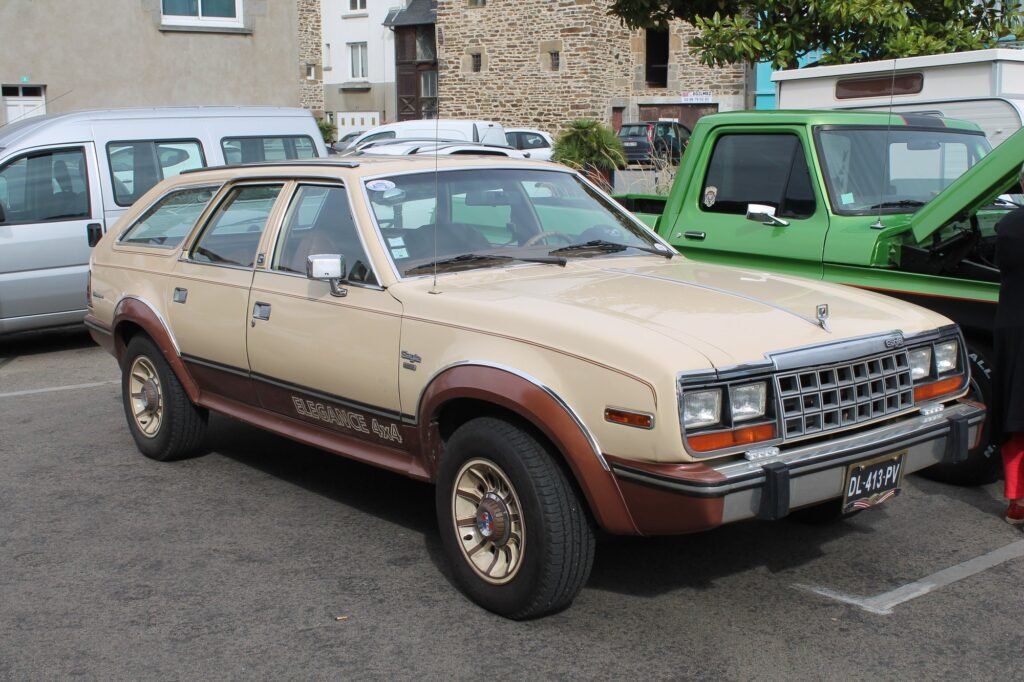
What makes the Golf Country different is the starting point. AMC was a struggling underdog looking for a niche. Volkswagen took the Golf, the default car of an entire continent, and lifted it. If the Eagle was the first crossover, the Country was the first time a giant tried one and blinked.
The concept that dealers would not let die
Volkswagen showed the idea in 1989 as a concept called the Golf Montana. Dealers started taking orders before there was any plan to build it, and Wolfsburg decided it had better make the thing. The base was the Golf CL Syncro five-door, the all-wheel-drive version of the Mk2 that VW had been selling in Europe since the late eighties. (For the hot-hatch side of the same generation, see our story on the Mk2 and Mk3 GTI.)
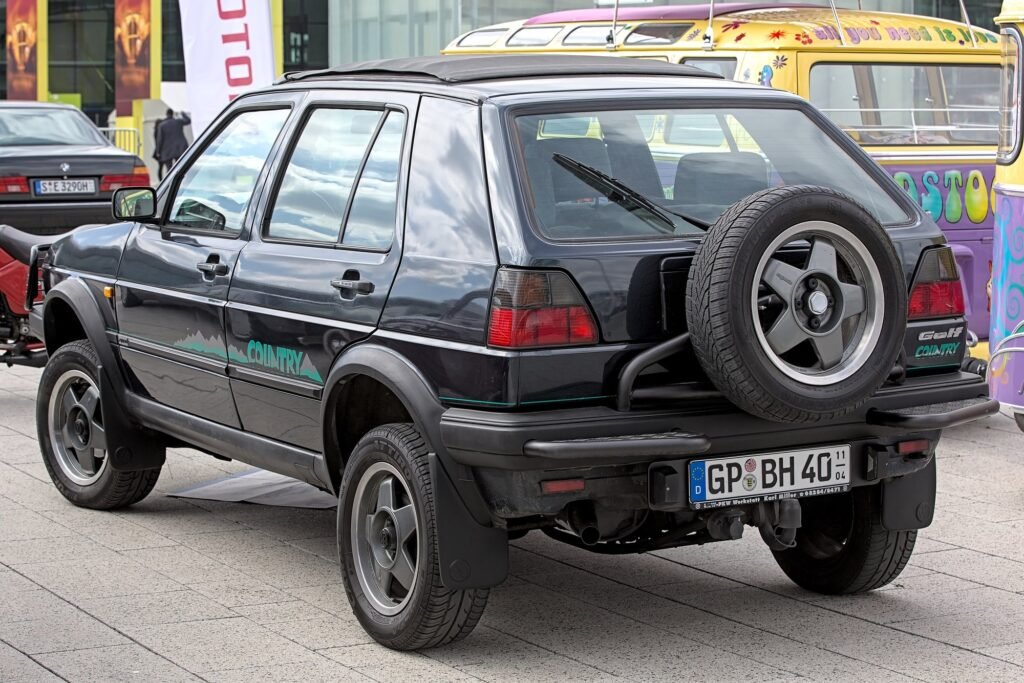
The conversion was too specialized for the main assembly line, so Volkswagen shipped finished cars from Wolfsburg to Graz, Austria, to Steyr-Daimler-Puch, the company behind the Haflinger and Pinzgauer military off-roaders and the plant that assembled the Mercedes G-Class. Production started in the spring of 1990.
Steyr’s engineers lifted the body 120 mm (4.7 inches) onto a tubular steel subframe, lowered the engine, stiffened the springs and added the hardware: a front bull bar with driving lights, a steel skid plate, protective tubes on the rear bumper and a swing-away carrier for the full-size spare. Ground clearance rose to 180 mm, about 7.1 inches, which is 63 mm more than a regular Golf Syncro. That is roughly what a modern compact crossover offers.
Not an off-roader, and it never pretended to be
Under the hood was the regular 1.8-liter injected four from a normal Golf, with 98 PS (about 97 hp) and 105 lb-ft of torque. In a heavier, taller car, it took 12.3 seconds to reach 62 mph and topped out at about 96 mph.
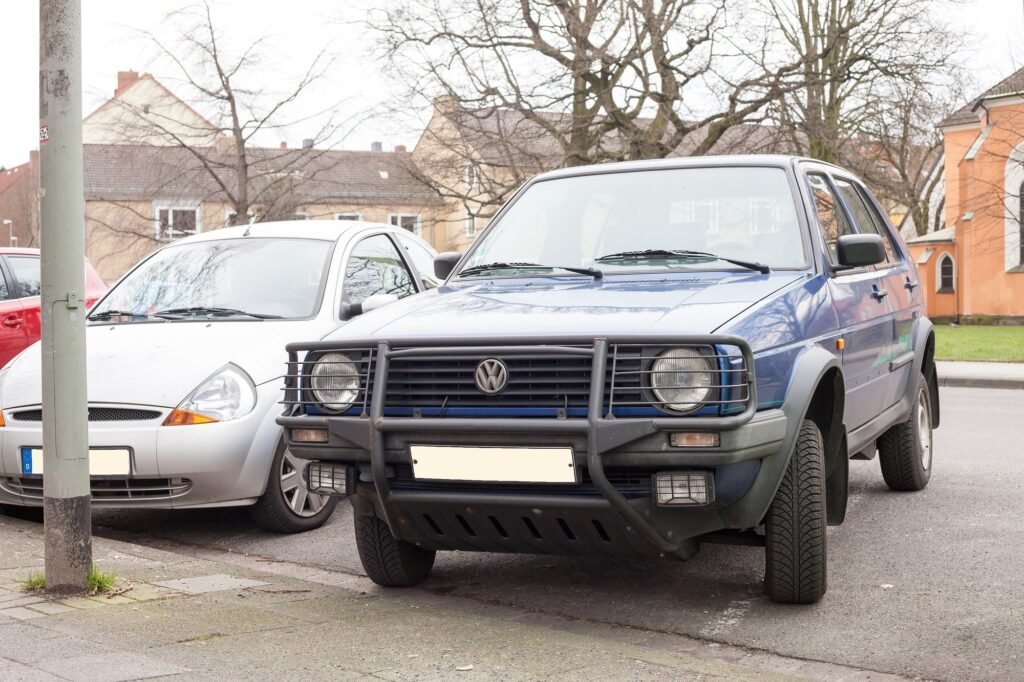
The Syncro system used a viscous coupling between the axles. Think of it as a sealed drum full of thin plates bathed in thick silicone fluid: when the front wheels start spinning faster than the rears, the fluid stiffens and drags torque to the back. It works automatically and it works well on snow, gravel and wet grass. What the Country did not have were locking differentials, which force both wheels on an axle to turn together when one loses grip, or a low-range transfer case, the crawler gear that lets a real 4×4 creep up steep rocks. It came on regular road tires. In other words, it did exactly what most people buying a crossover today actually need, and nothing more. For a deeper look at whether you need all-wheel drive at all, we have written about that too.
Volkswagen’s odd off-road family
The Country did not come out of nowhere. Volkswagen had a habit of building strange go-anywhere machines. In the late sixties it developed the Type 181 for the West German army, a doorless, flat-sided utility vehicle built on Beetle mechanicals, which American buyers got in 1973 and 1974 as the Volkswagen Thing. Then came the Iltis, a proper military 4×4 developed with Audi at the end of the seventies, whose all-wheel-drive testing in the snow convinced Audi engineers that a fast road car with four driven wheels could work. That idea became the Audi Quattro, and the Quattro changed rallying forever.
The Golf Syncro grew out of the same thinking, and the Country was what happened when someone at VW asked a simple question: if the Syncro can go off the pavement, why not make it look like it can? The answer turned out to be a car that looked more capable than it was, which, if you think about it, describes most crossovers sold today.
Too early, too expensive
The Country cost up to 30 percent more than a regular Golf. It arrived when the Mk2 was already seven years old and the Mk3 was due in a year. It was slow, it was not a serious off-roader, and buyers in 1990 had no category in their heads for it. Volkswagen planned around 15,000 cars. It built 7,735, special editions included, and quietly ended production at the end of 1991. There was no Mk3 Golf Country. VW did not try again until the 2007 Tiguan, sixteen years later.
The irony is that a German off-road magazine, Off Road, had written in 1989 that there was a gap in the market between real off-roaders and all-wheel-drive passenger cars. Volkswagen saw the gap clearly. It just guessed wrong about the price people would pay to fill it.
The special ones: Allround, Chrom and a GTI for employees only
The first special edition, the Allround, arrived in July 1990: forest green only, steel wheels, vinyl upholstery, 160 built. In early 1991 came the Chrom Edition: black paint, chrome trim, cream leather seats and an electric folding fabric sunroof, priced at 52,200 Deutsche Marks. Just 558 were built.
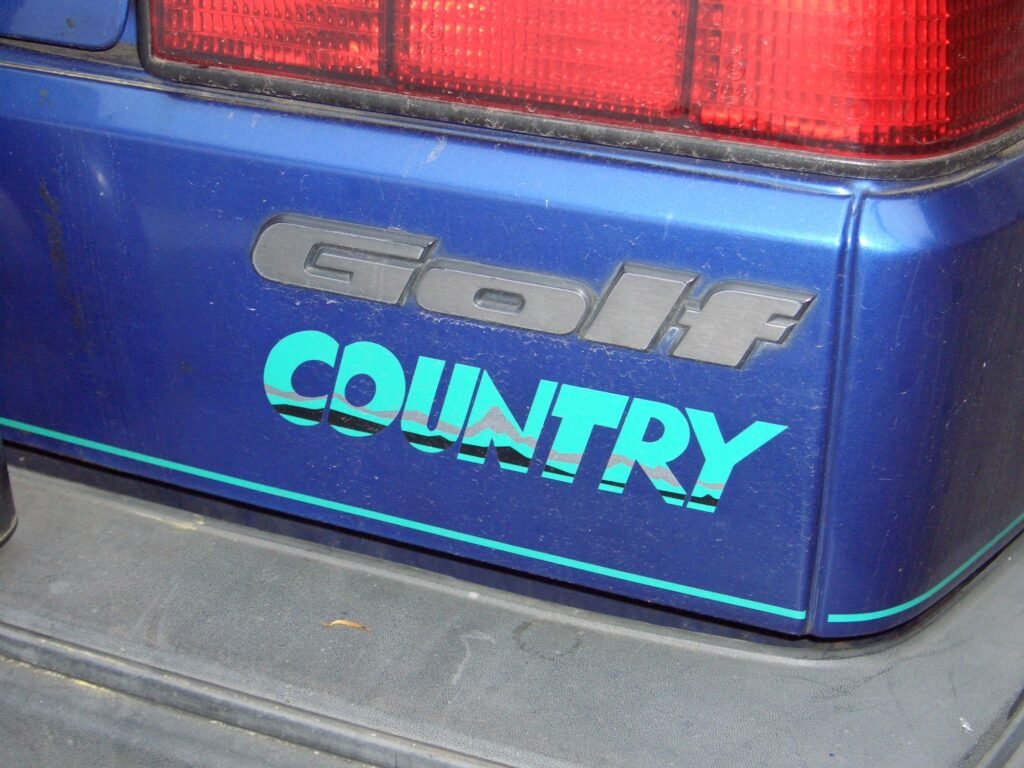
The holy grail is the Golf Country GTI, also called the Wolfsburg Edition. Volkswagen put the 1.8 engine from the GTI into the Country and built only 50 of them, all reserved for its own employees. It was a car that money could not buy at a dealership.
Meanwhile, in southern Spain
Here is the part of the story that rarely gets told outside Spain. While the Golf Country was dying in German showrooms, a factory in Linares, in Andalusia, was proving that the small SUV formula worked when the price was right. Santana Motor had been building Land Rovers under license since 1961 and had teamed up with Suzuki in 1985 to build the Samurai, the little 4×4 Americans knew as a Suzuki Samurai too. In 1991 Suzuki became Santana’s majority shareholder, and from 1992 the Linares plant built the Suzuki Vitara, the same small SUV sold in America as the Suzuki Sidekick and its Geo Tracker twin. In 1992 Santana built more than 35,000 vehicles between its Land Rover and Suzuki lines.
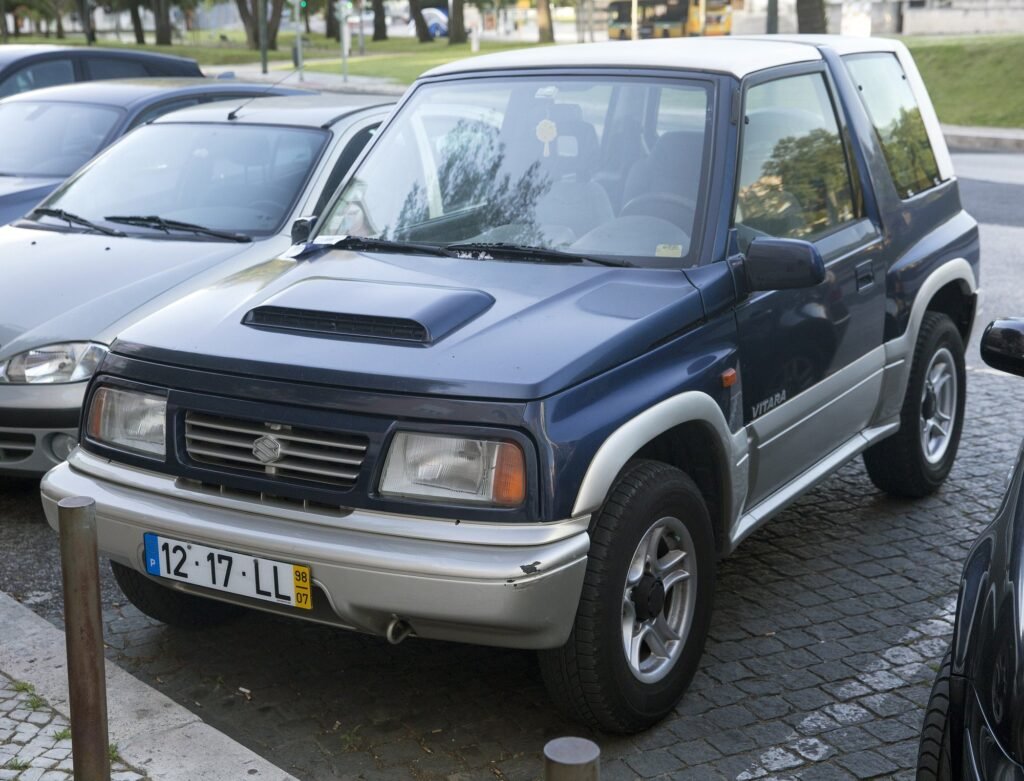
So while Wolfsburg buried the idea, Spanish workers were building compact SUVs in volume, fifteen years before the first Tiguan.
The Italian cousin: a convertible crossover
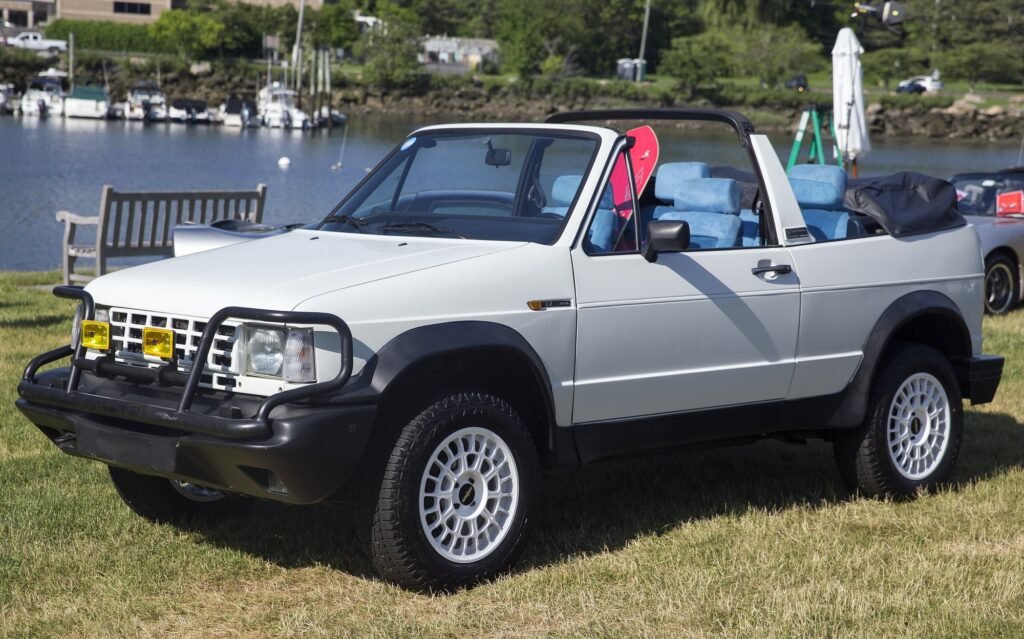
The strangest branch of the family tree grew in Italy. Automobili Biagini, a division of ACM, took the Golf Country’s Syncro running gear and bolted it under the body of a first-generation Golf Cabriolet, the car Americans bought as the Rabbit Convertible and later simply as the Cabriolet. The result was the Biagini Passo: a lifted, all-wheel-drive convertible, possibly the first convertible crossover ever made. Headlights came from a Fiat Panda, taillights from an Opel Kadett, the steering wheel from Nardi and the seats from Recaro. It used a 97 hp 1.8 (some Italian cars had a 2.0) and was built in Atessa, in central Italy, from 1990 to 1993. Estimates of production range from about 300 to as few as 65. Volkswagen itself later called the Passo a “conceptual predecessor” of its 2020 T-Roc Cabriolet.
Living with one
From behind the wheel, the Country gave you a view over traffic no other Golf could, the commanding driving position that every crossover ad now sells. On pavement it drove like a Golf Syncro that had eaten too much: a bit more body roll, a bit less precision, nothing dramatic. On dirt, snow or a muddy field it simply kept going where a normal compact would have stopped.
Today, clean, unrusted cars with all their original off-road trim are genuine collector’s items, especially in Germany and Austria, where an active scene restores them carefully. Allrounds, Chrom Editions and the 50 Country GTIs, when one surfaces, bring museum-piece money. If you go shopping, the things to check are the ones that made it a Country: the tubular subframe, the skid plate and the spare-wheel carrier are specific parts, hard to find and expensive to remake, and a car missing them is just a tall Golf Syncro. Because every Golf Country is now more than 25 years old, any of them can legally be imported into the US.
The ideas that won
It took other carmakers to prove the Country right. Toyota launched the RAV4 in 1994, a small car-based SUV that reached American showrooms in 1996 and became a best-seller. Subaru took a Legacy wagon, raised it, cladded it and sold it from 1995 as the Outback, with Crocodile Dundee himself, Paul Hogan, in the commercials. Both did exactly what the Golf Country had done: take a normal car, add ride height, all-wheel drive and some rugged trim, and charge for the image. Both were priced like normal cars, which is the part Volkswagen missed.
Volkswagen eventually came back to the idea in America with the Golf SportWagen Alltrack, a raised, all-wheel-drive Golf wagon sold here from 2017 to 2019, and of course with the Tiguan and the Atlas. None of them carries a spare tire on the back anymore. Some ideas really did die in 1991.
What the joke got right
The Golf Country was a commercial failure, and it deserved to be on the terms of 1990: too expensive, too slow, too strange. But it described, almost exactly, the car that would take over the world twenty years later. We have argued that the SUV boom is one of the industry’s great cons, and if that is true, the Country was patient zero. Built in the G-Wagen’s factory, sold to almost nobody and copied by an Italian with a convertible, it is proof that the future sometimes shows up dressed as a punchline.
Check you’re still alive.
Photos: Alexander Migl (CC BY-SA 4.0); Kev22 (CC BY-SA 4.0); ZedBoy Slim (CC BY-SA 4.0); Detectandpreserve (CC BY-SA 3.0); Mr.choppers (CC BY-SA 3.0). Wikimedia Commons.