Golf Cabriolet Mk1: Seven
Let’s get one thing straight before we start: I’m about to spoil the ending of Se7en. If you haven’t seen it, close this, go watch it, come back. I’ll wait. You’ve had since 1995.
Still here? Good.
Here’s what makes that film a masterpiece instead of a cheap shocker. John Doe doesn’t kill for the thrill. He kills to teach. Every body he leaves behind is a deadly sin, staged with the precision of a surgeon: the glutton fed to death, the greedy man bled out, the proud one made to choose between dying and living disfigured. Seven bodies, seven sermons. And when Doe finally wins — because he does win, that’s the whole point — he doesn’t run or fight. He turns himself in, hands you his work in broad daylight, and makes you look at it. The tension doesn’t resolve by hiding anything. It resolves by showing you everything. You leave gutted, not relieved.
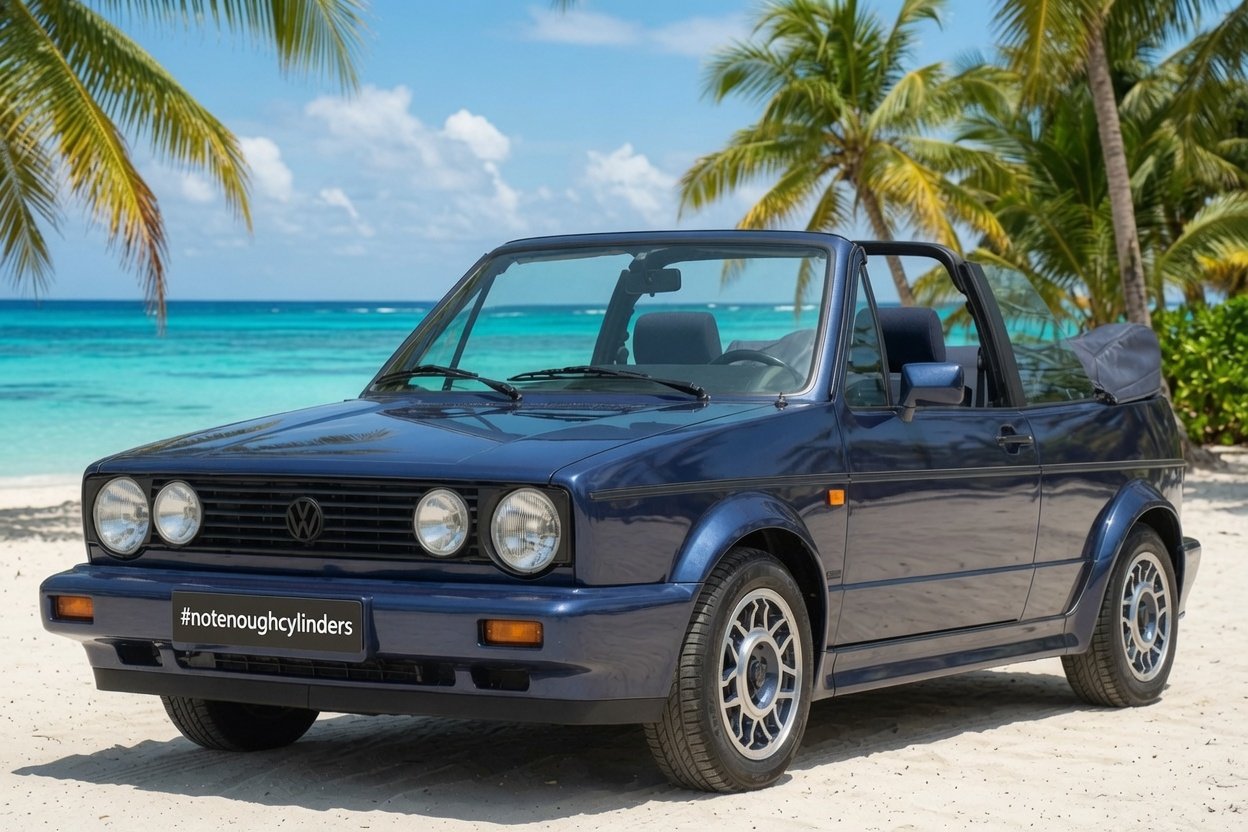
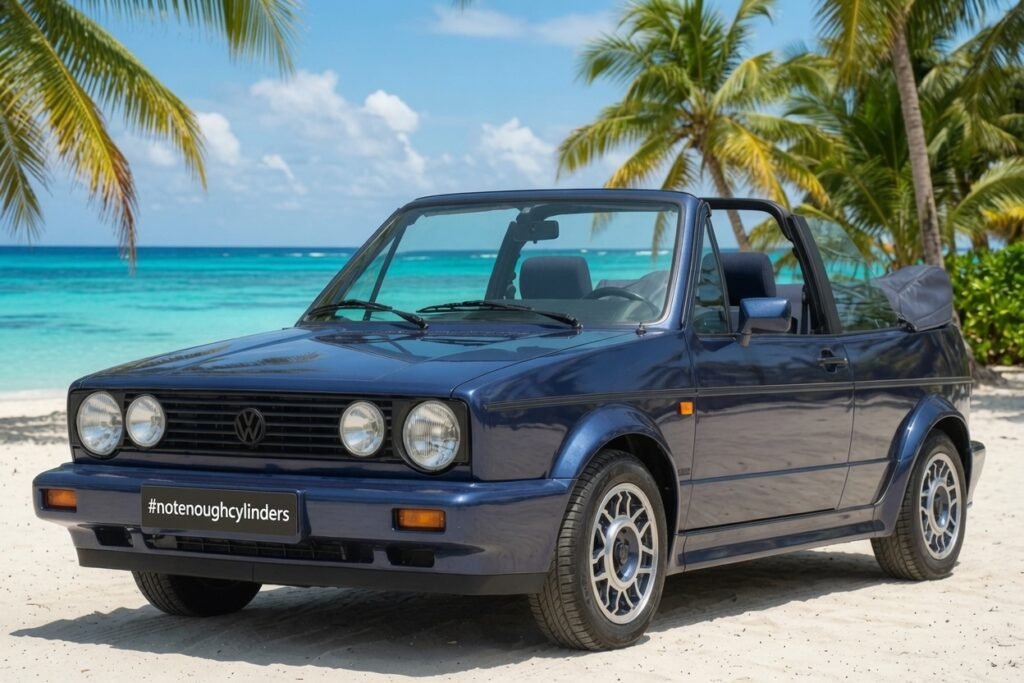
I’ve spent over 30 years doing this, and there’s one in my garage that does to me exactly what that box does to Detective Mills. A Golf Mk1 Cabriolet. My pride and joy. And one day I worked out that this car is a seven-sins sermon, same as the film. I was just the last one to open the box and see who the sinner really was.
Let me walk you through it. In order. Like Doe.
First sin: pride
Nobody asked Karmann to build this car.
Volkswagen didn’t want a convertible Golf. It was the coachbuilders in Osnabrück — the people who’d been stitching fabric roofs onto half of Germany for decades, Beetle Cabrio included — who took the Golf on their own initiative, cut the roof off, and in 1976 marched into Wolfsburg to tell the biggest carmaker in the country: look what we did without you.
That’s proper pride. The nerve to think you can improve another man’s car without asking. And the prototype they brought was hat-off stuff: no bar, a flat rear line, the hood tucking away below the sill. Smooth, clean, perfect. Giugiaro‘s straight-edged origami, now open to the sky. The most elegant shoebox you can picture.
And here’s a detail almost nobody knows, and it tells you everything. That first bar-less prototype, the pretty one, hid heavy-duty threaded mounting points behind the rear side trim panels. Fixings, ready for a roll bar. From day one, Karmann tested both versions in parallel: the one they wanted to show off, and the one they knew they’d have to accept. They had the sin bolted in behind the panel before anyone said it out loud. They knew what was coming.
Karmann sinned through pride. And out came a masterpiece.
Second sin: wrath
Volkswagen answered with a fist on the table.
The company’s safety chief, Ernst Fiala — the man they called the Pope of Safety — looked at that gorgeous prototype and said three words: not without a bar. No debate, no middle ground, no listening. Bar, or no car.
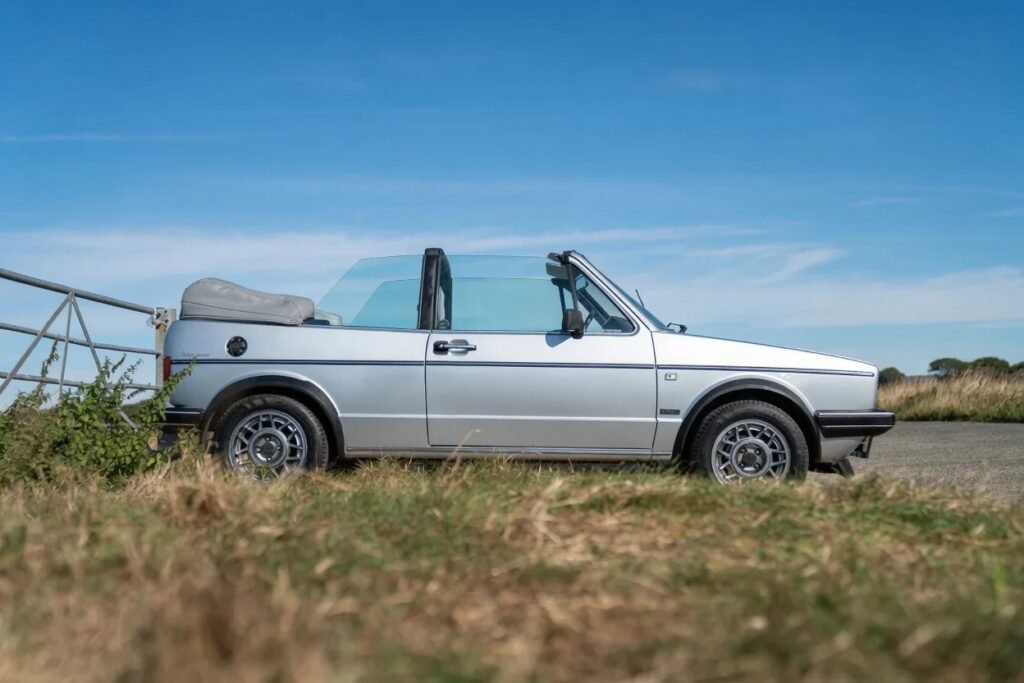
So Karmann had no choice but to weld a roll bar to the B-pillars, straight across the middle of the car, right where they’d wanted nothing at all. They ran a tube of steel through the cleanest design they’d ever drawn, by force.
Institutional wrath. A suit trampling another man’s work because he’s the one who gives the orders, and that’s that.
Third sin: greed
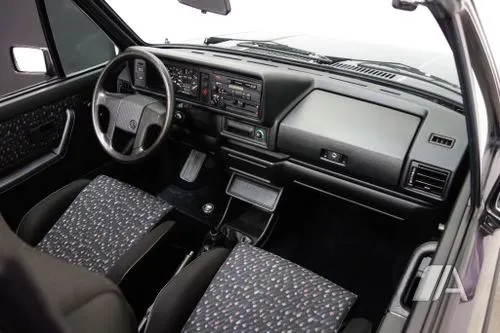
But make no mistake — that bar wasn’t fear of somebody getting hurt. It was fear of losing money.
Fiala had one eye on American rollover legislation barrelling down the pipe in the late seventies, the kind that threatened to lock any structure-less convertible out of the biggest market on earth. The States were the goldmine. And without a bar, there’d be no way to sell there the day the law bit. Bar, or goodbye to the market that actually paid the bills.
So the bar wasn’t born of safety. It was born of the balance sheet. Of the cold sum of not being shut out of where the money was. Greed in a lab coat, dressed up as caution. The imposition had a motive, and the motive was the cash register.
Fourth sin: envy
Look at what everyone else was doing with a problem like this.
The Porsche 911 Targa had its hoop. Half the convertible market of the era was hiding its reinforcements, wrapping them, blending them into something that looked like anything else, burying the compromise under chrome and trim so nobody could see the patch job. The whole industry envying the clean line it had lost and pretending it hadn’t lost it. Dressing up the corpse to make it look alive. This is where Chris Harris would tell you most cars are wearing clothes to hide the shape underneath — and he’d be right.
Karmann could have done the same. Take the bar they’d been forced to accept and disguise it until it vanished. Apologise for it. Hide it the way everyone hides what embarrasses them.
Think about how the British market treated the drop-top around then, too. The convertible was a fair-weather toy, an MG or a Triumph, something you accepted would flex and shudder and leak because that was the price of open air. The whole class had made peace with the compromise by pretending the compromise wasn’t there — floppy shells sold on charm, not structure. A convertible was supposed to be worse than the car it was based on, and everybody agreed to look the other way.
Karmann didn’t. And that’s where they walk away from the flock.
Fifth sin: sloth
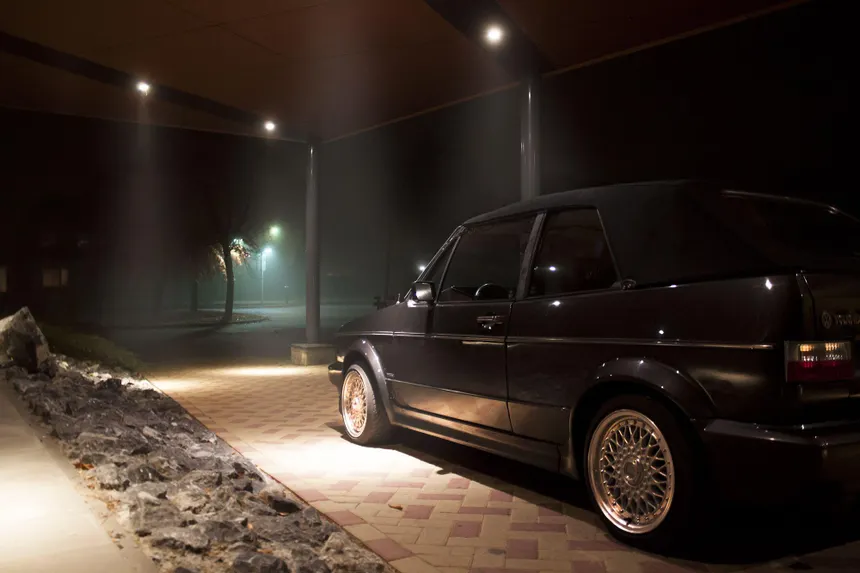
They left the bar raw.
No wrapping, no trim, no chrome to soften it, no cover to disguise it. A bare steel hoop across the whole car, out in the open, like the handle on a basket. The “sin” of not bothering to hide the thing that should embarrass you.
The Germans, who don’t do subtle nicknames, christened it on the spot with two names that say it all: Erdbeerkörbchen, strawberry basket. And Henkelmann, the handled lunch-tin the factory worker carried to his shift. Strawberry basket. Lunch-tin. Nobody pretended it was elegant. They called it what it was: an ugly handle in the middle of a car.
But that sloth — that refusal to disguise — was the bravest call of the whole project. Karmann didn’t hide the imposition. They handed it over in broad daylight, heads up. Exactly like Doe delivering each body: unsigned, but never hidden, forcing you to look.
Sixth sin: gluttony
And then that ugly handle starts to eat.
Because the hoop that looked like dead weight doesn’t do one job. It does four. It’s the roll bar the law demanded. It’s the anchor point for the front seatbelts. It’s the structural support for the hood. And it’s the one thing that stops this car being just another shoebox among a million.
One element devouring four functions at once. The thing that looked like the sin, the surplus, the blemish, turns out to be the hardest-working part of the whole car. Pure gluttony: it eats everything and it wears it well.
And this was no bodge tacked onto a normal Golf. The Cabrio didn’t roll down a Volkswagen line to have its roof sawn off later. It was built whole at Karmann in Osnabrück, from the stamping of the panels to final assembly, the body reinforced from the foundations up to live without a roof. Volkswagen only shipped in the engine, suspension and interior for Karmann to fit. The bar wasn’t a patch on a normal Golf — it was the spine of a body designed entirely around that steel. The sin wasn’t sitting on top of the car. The car was built around the sin.
This is where, if you’re paying attention, you start to smell the twist. The thing you thought was the flaw has been the one indispensable part all along.
Seventh sin: lust
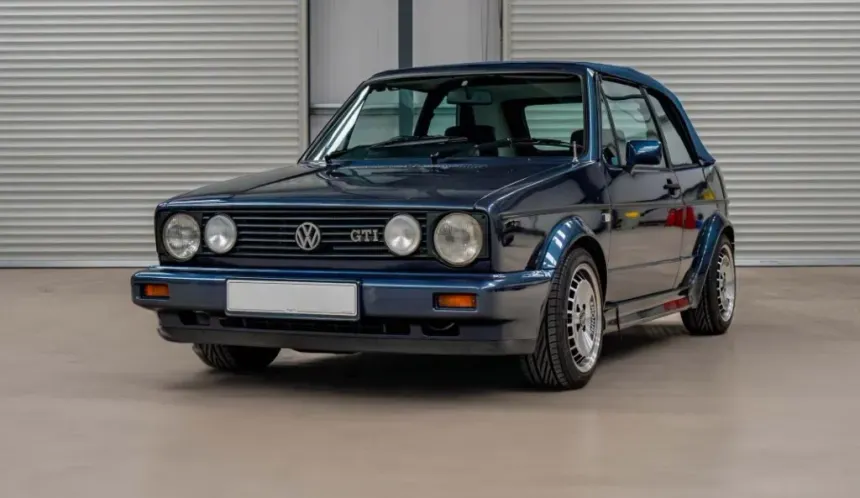
Volkswagen sold it with a slogan that was an invitation: Sun, Moon and Cabriolet.
It became the summer car. Top down, arm out, the one that pulled in the eighties. In the States, where they sold it as the Rabbit Convertible, it turned into an object of desire in a country that was quietly killing off the affordable drop-top. Volkswagen kept selling it so long that the Cabrio skipped the entire next Golf generation, the Mk2, which never got a convertible at all. While the rest of the range changed its skin, the Cabrio stayed exactly the same, steel hoop and all, because there was nothing to improve. It already was what it was meant to be.
By the time they finally retired it, in 1993, it was the best-selling convertible in the world, ahead of the Beetle itself. Getting on for 400,000 units. Four hundred thousand cars, wanted, photographed, remembered.
And you know why people remember them? Not for the clean line. The clean line gets forgotten. They remember them for the steel. For the flaw.
The sinner
When you meet someone with one eye of each colour, that person stops being just another face. They become genuine. You remember them. The whole face could be forgettable, but that error, that fault, that thing that doesn’t match, is exactly what makes you never forget them.
The Golf Cabrio’s bar is one eye of each colour. Without it, the car is correct and forgettable — the clean shell of a prototype that was never built. With it, with that steel hoop driven across it that supposedly ruins the looks, there’s no other car like it on earth.
Seven sins built that car. Pride, wrath, greed, envy, sloth, gluttony and lust, each one welding its own piece. But the sinner is missing. And here comes my confession, because the sinner is me — and I didn’t commit one of the seven. I committed all of them at once.
For years I looked at that bar as the flaw. The steel that stole the purity from a perfect design. The thing that spoiled the shoebox. Every time I saw it I thought about the smooth prototype that was never built and felt a pang, as if the good car were the other one, the one that never existed.
And that wasn’t my sin. My sin was believing I had the right to judge it. Over 30 years doing this, and I reckoned experience gave me the eye, the authority, the licence to decide what was right and what was wrong about that car. That was my pride. My greed, wanting the perfect prototype for myself instead of the real car. My envy of a clean line that never existed. My sloth, not bothering to understand why the bar was there in the first place. The sum of all seven, committed by believing I knew how to look.
The seventh sin in Se7en isn’t just another victim. It’s Doe turning himself in to complete his own masterpiece, and the detective taking his revenge to finish it off. The sinner is always closer than you think.
I saw it on an ordinary day, folding the hood down, my hand closed around that lunch-tin handle. A lifetime gripping what I thought was the flaw to open the car, never realising I was gripping the one thing that made that car that car. The sinner was me. The one who judged the error without understanding the error was the face. The one who needed a film to open a box that had been in front of his nose the whole time, running clear across the car, with two market-stall nicknames pinned on it by half a country.
The steel won. Like the killer won in the film. And like the film, it doesn’t leave me at peace: it leaves me staring at that strawberry basket, knowing it won, that it was always going to win, that it was the plan from day one and I was the last to find out.
Check you’re still alive.