Volkswagen Golf GTI Mk2 and Mk3: Pennsylvania’s GTI, the weight problem and the VR6
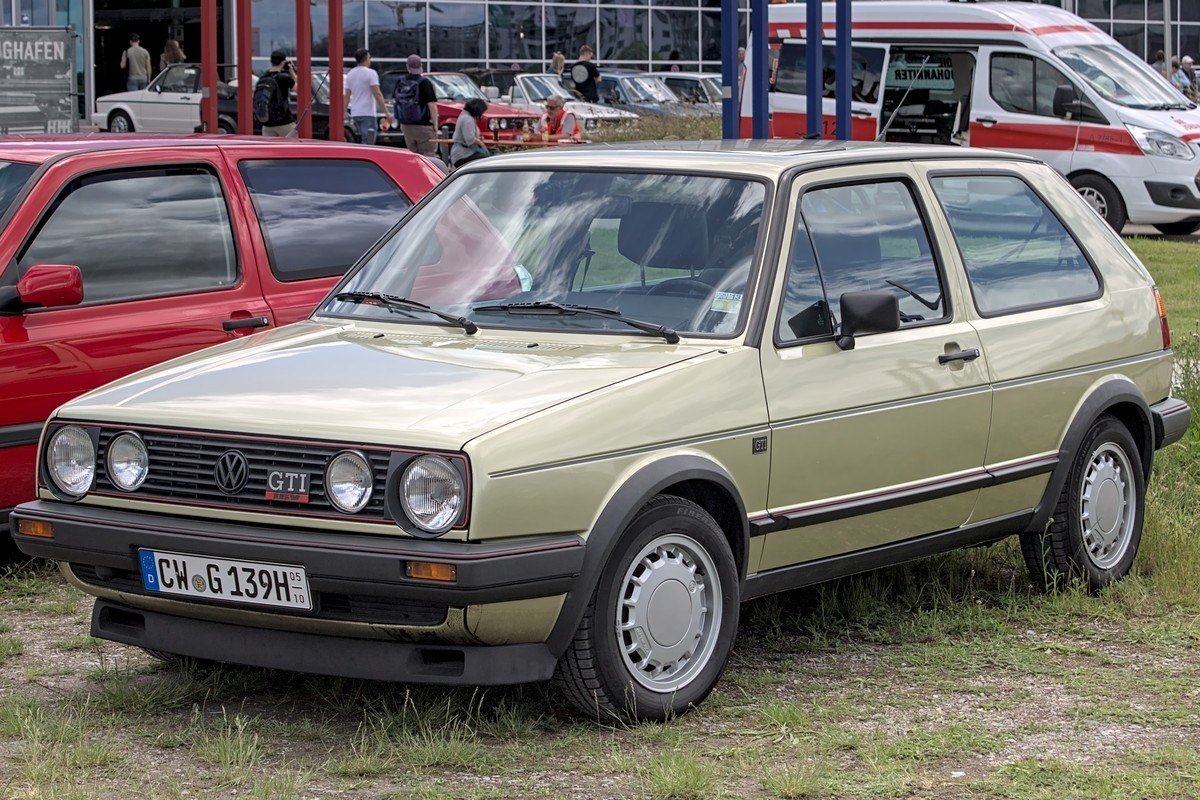
America got the second-generation GTI before it ever got a car called Golf GTI. Volkswagen of America sold it simply as the “GTI”, a model of its own, and some of the early ones were bolted together in a factory in Westmoreland County, Pennsylvania. Motor Trend named it Car of the Year for 1985. Then the third generation showed up late, heavy and dogged by quality trouble, and the only thing that saved its reputation on this side of the Atlantic was a six-cylinder engine nobody expected to find in a hatchback.
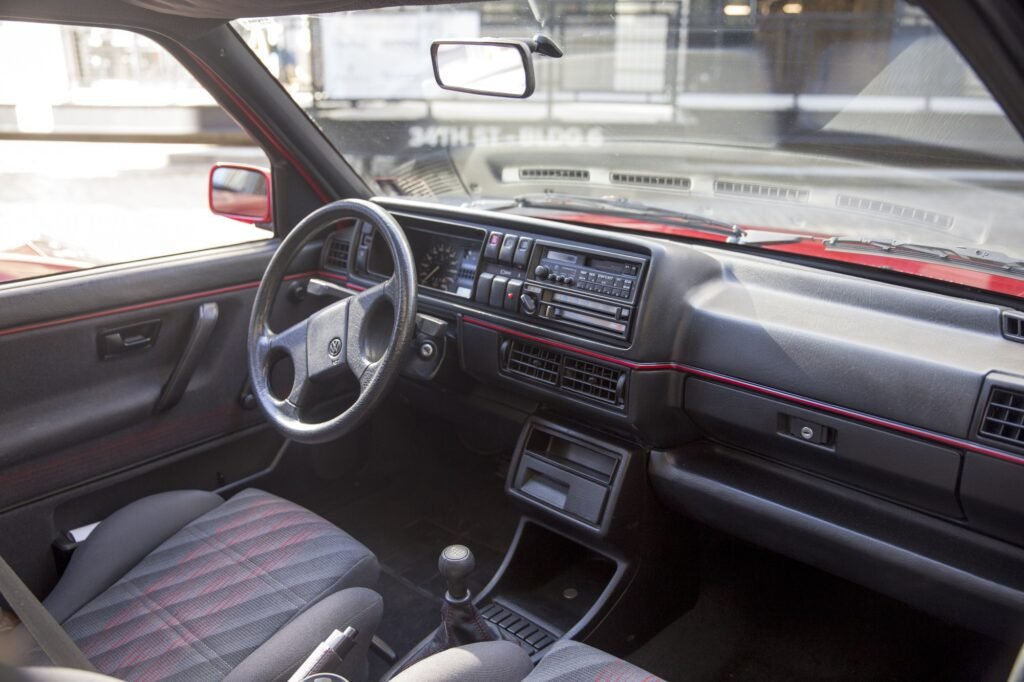
These two cars are blood relatives. The Mk3 is basically a stretched, updated Mk2. Yet they ended up with opposite reputations. The Mk2 is the one purists pick when someone asks which GTI was the best. The Mk3 is the one that got mocked for years and is only now getting the respect it earned with the VR6. (The story starts with the Mk1 GTI, the car Americans first knew as the Rabbit GTI.)
A GTI built in Pennsylvania
The Mk2 Golf debuted at the Frankfurt show in September 1983, and in the US it arrived as a 1985 model. That meant something specific here. Volkswagen’s Westmoreland Assembly plant in New Stanton, Pennsylvania, had been building Rabbits since April 1978, and it switched to the Mk2 Golf and GTI from 1985. The plant was a bold bet that never paid off. It was designed for 20,000 workers and around 240,000 cars a year, but sales of small cars collapsed after the fuel crisis faded, and by the mid-eighties it was running at about 40% capacity and losing around $120 million a year. Volkswagen closed it on July 14, 1988. After that, North American Golfs came from Puebla, Mexico.
The American GTI started with a 1.8-liter eight-valve four rated at 100 to 102 hp, depending on the year. In Europe the same engine, with Bosch K-Jetronic mechanical fuel injection, made 112 PS. Mechanical injection sounds primitive, and it was, but it gave the engine a fat, eager midrange. You didn’t need to wring it out to make it move, and on a back road that mattered more than any spec sheet.
Sixteen valves and a supercharger
The big jump came with the GTI 16V, launched in Germany in March 1986 and in the US for 1987. Sixteen valves means four per cylinder instead of two. Think of an engine as an air pump: give it more doors for air to come in and exhaust to go out, and it breathes far better at high rpm. The European 16V made 139 PS without a catalytic converter and 129 PS with one. Volkswagen quoted 0-62 mph in 8.5 seconds and a top speed of 208 km/h, about 129 mph.
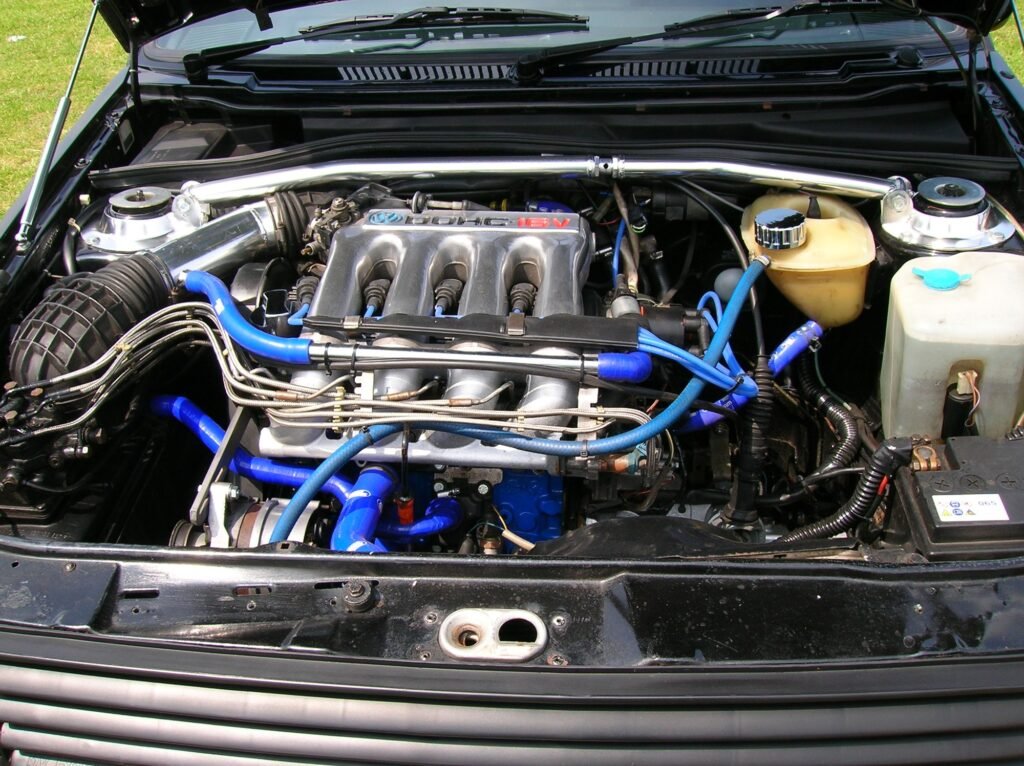
Then America got its own version. For 1990 through 1992 the US GTI 16V used a 2.0-liter twin-cam, engine code 9A, rated at 134 hp at 5,800 rpm and 133 lb-ft. Europe never got that engine in the GTI. Those last US Mk2 GTIs are now the ones collectors chase. One 1991 GTI 16V sold on Bring a Trailer for $42,500 in March 2022, according to German Cars For Sale Blog. That’s serious money for a car that sold as an affordable runabout.
Europe went another way in 1990 with the Golf G60: an eight-valve 1.8 with a scroll-type “G-Lader” supercharger driven by the engine, 160 PS and 225 Nm (166 lb-ft) at just 3,500 rpm. Volkswagen claimed 8.3 seconds to 62 mph and 216 km/h, roughly 134 mph. The G60 never came to the US as a Golf, though Americans could buy the same supercharged engine in the Corrado.
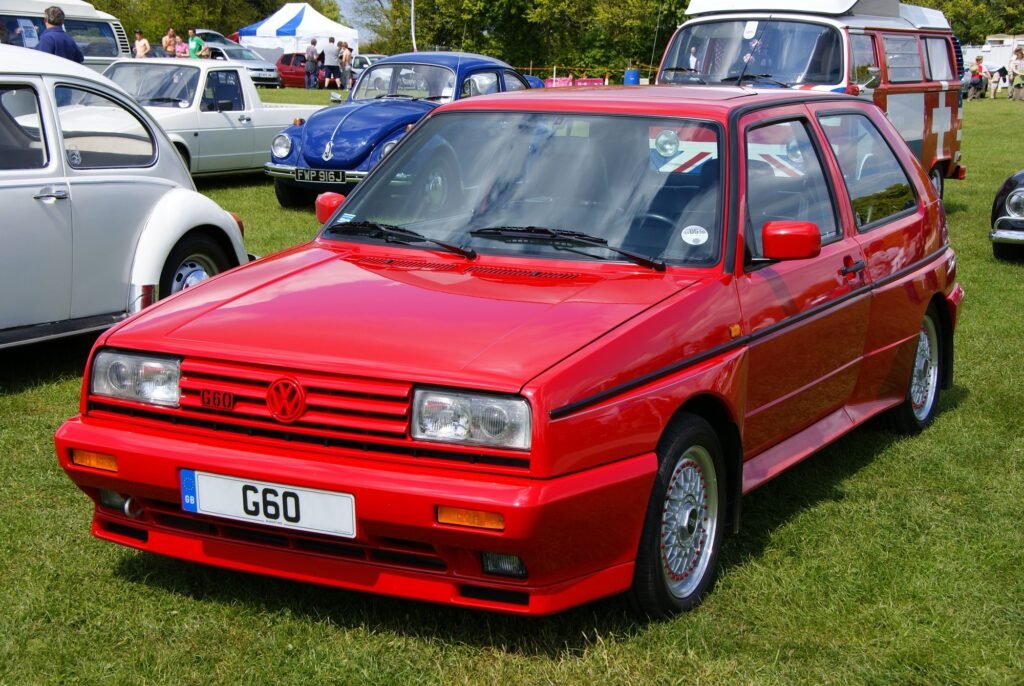
The wildest Mk2s also stayed in Europe. The Rallye Golf G60 of 1989 was a Group A homologation special with Syncro all-wheel drive, a 1,763 cc supercharged engine and about 5,000 units built in Brussels. Volkswagen sent two to the US for testing and five more for evaluation, and a planned “Rallye GTI” for the American market never happened. Then there was the Golf G60 Limited, hand-built by Volkswagen Motorsport with sixteen valves, a supercharger, all-wheel drive and 210 PS. They built 71.
Why the Mk2 wears the crown
The Mk2 didn’t win on any single number. It won on balance. It was solid where the first car was flimsy, refined where the first car was raw, and it still felt like a car on your side rather than one trying to throw you off the road. Europe was full of tough competition. The Peugeot 205 GTI 1.9 of 1986 had 130 PS and a tail that came around if you lifted mid-corner. The Renault 5 GT Turbo of 1985 hit you with boost all at once. The Opel Kadett GSi 16V of 1988, sold in Britain as the Vauxhall Astra GTE 16V, had 150 PS and 1,010 kg, more engine than any naturally aspirated Golf.
The Golf answered with build quality and composure. Volkswagen built 628,000 Mk2 GTIs between 1984 and 1991, and in November 1990 it celebrated one million GTIs across all generations. Owners still argue over whether the torquey 8V or the rev-hungry 16V is the better car. The fact that both sides have a point tells you how good the basic car was.
Late, heavy and rusty
The Mk3 Golf launched in continental Europe in August 1991, and it was the first Volkswagen ever named European Car of the Year. It was also the first Golf with airbags, offered from 1992, and it was much stronger in a crash than anything before it. All that safety came with weight. Volkswagen quotes the European Mk3 GTI with a 2.0-liter eight-valve at 115 PS and 1,035 kg, and 10.1 seconds to 62 mph. A catalyzed Mk2 8V from 1991 weighed 907 kg. That’s more than 120 kg extra, about 280 lb, for eight more horsepower. In January 1993 the 16V version arrived with 150 PS, 8.3 seconds and 215 km/h. On paper it was the most powerful GTI yet. On the road it felt softer and slower to react than the Mk2.
Americans had to wait. Volkswagen of America rejected Golfs and Jettas from the Mexican plant over quality problems, and then labor trouble at Puebla delayed production. The Mk3 trickled into a few markets such as San Diego and Canada as a 1993 model, and most of the country didn’t see it until 1994.
The Mk3 had another problem that showed up later. The steel Volkswagen used at the time rusted, and many Mk3s rotted in the floor pan, the door sills and the rear hatch. In Europe, the press called the Mk3 a GTI in name only, and sales show the damage. Volkswagen built 327,000 Mk3 GTIs through December 1997, about half the Mk2 total.
Weight only got worse from there. We’ve written about the great weight lie, and over at Not Enough Battery we looked at the extreme case of the GMC Hummer EV’s weight problem.
The VR6
What saved the Mk3 was the VR6. While the four-cylinder GTI struggled with the extra weight, Volkswagen put a six-cylinder in the Golf.
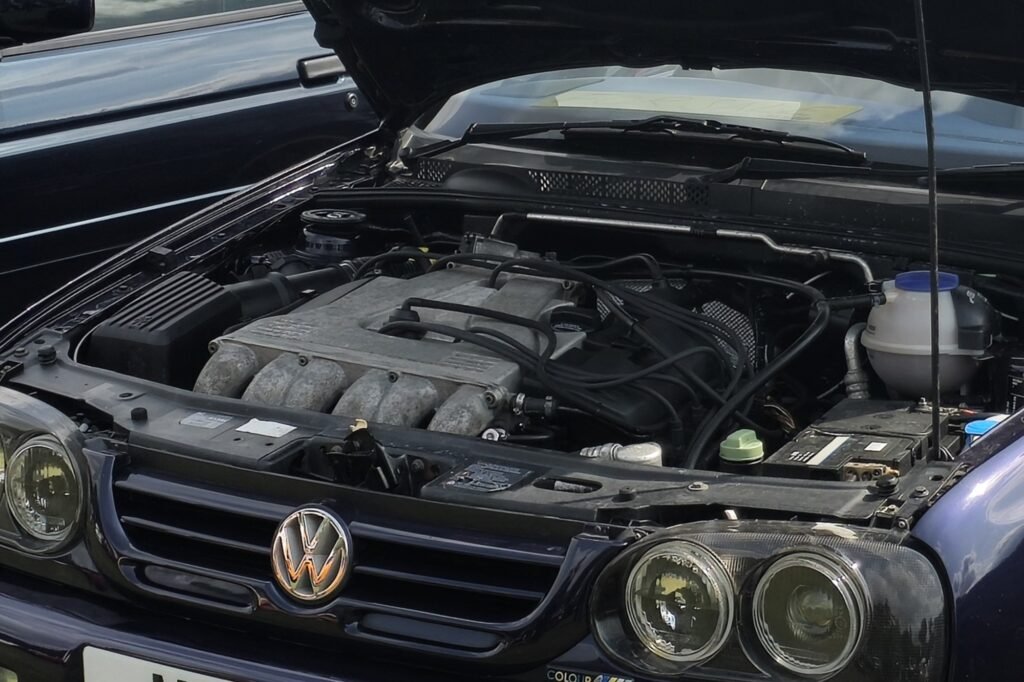
The trick is clever. A normal V6 is too wide to sit sideways in a small car’s engine bay, and an inline-six is too long. Volkswagen narrowed the angle between the two cylinder banks to just 15 degrees, so tight that all six cylinders share a single cylinder head, like a widened four. The name combines V for a V engine and R for Reihenmotor, German for inline engine. The result fit where a four used to go, with smooth torque and a growl no four-cylinder GTI could match. We go deep on the engine in the VR6 story. Even the narrow-V idea had history: Lancia used narrow-angle V4s as far back as 1922.
The VR6 debuted in 1991 in the Passat and the Corrado. In the Golf, the 2.8-liter made 174 PS, or 172 hp by American measure. French testers clocked 225 km/h, or 140 mph, carrying 1,213 kg. In 1994 a 2.9-liter VR6 Syncro arrived with 190 PS and all-wheel drive, sold only as a five-door and weighing close to 1,400 kg. In the US the VR6 GTI landed as the car enthusiasts actually wanted: a hatchback with the soundtrack of a much bigger car, priced well below a BMW 3 Series.
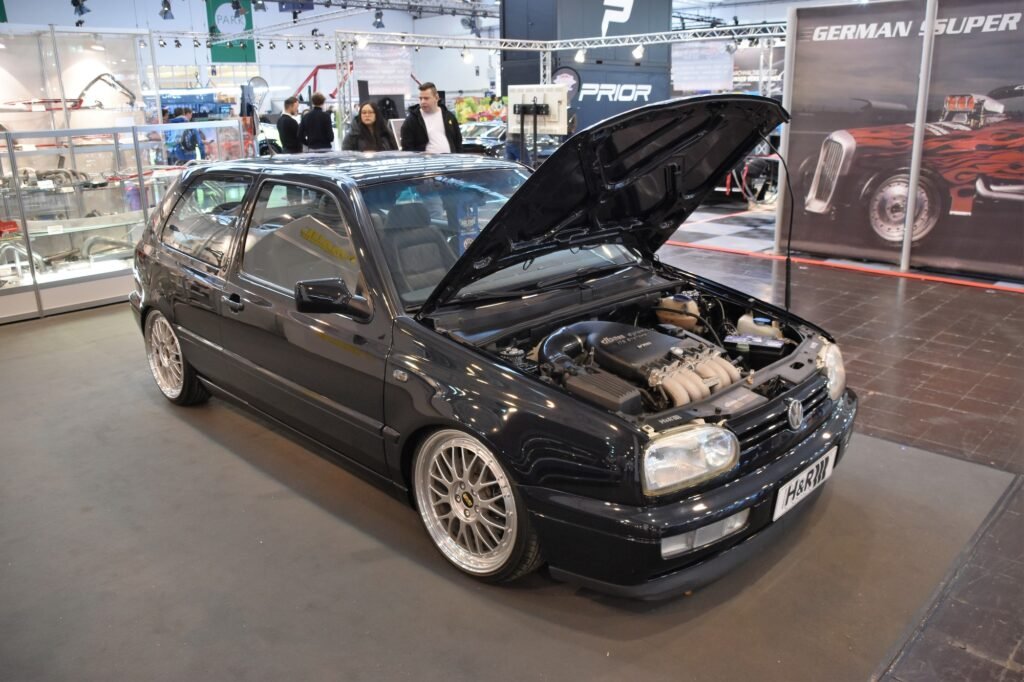
The VR6 had a weak spot, and owners know it. The timing chains sit at the transmission end of the engine, and when the tensioners and guides wear out, the engine rattles like marbles in a can. It’s an interference engine, so if the chain skips a tooth, the valves hit the pistons. Add overheating that could take out head gaskets, and you have every VR6 forum thread in one paragraph.
The Spanish connection Americans never hear about
Neither the Mk2 nor the Mk3 was built in Spain, but Spain sits right in the middle of this story. In 1982 the Spanish brand SEAT signed a deal with Volkswagen, and SEAT dealers started selling German cars. On June 18, 1986, Volkswagen bought 51% of the formerly state-owned company, and by 1990 SEAT was a wholly owned subsidiary.
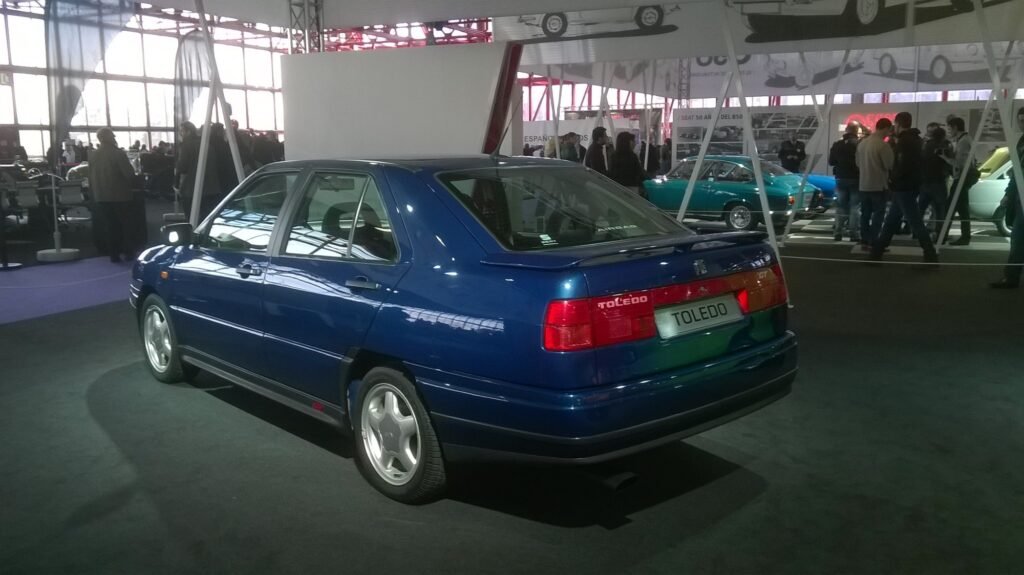
Then came the SEAT Toledo in May 1991, designed by Giorgetto Giugiaro and built in Spain on the Mk2 Golf’s A2 platform. The first SEAT engineered under Volkswagen ownership was a Mk2 underneath. And the ABF engine, the 2.0-liter 16-valve, 150 PS unit from the Mk3 GTI 16V that the press had dismissed, went into the Toledo GTI 16V from 1994 and then into the 1996 Ibiza GTI 16V Cupra. That was the first car ever to wear the Cupra name, and it ran 0-100 km/h in 8.2 seconds with a 217 km/h top speed. Its rally version won the World Rally Championship’s Formula 2 title in 1996, 1997 and 1998. The engine from the GTI that supposedly had no spark won three world titles for a Spanish brand.
Buying one now
The Mk2, especially the 16V, is an established classic, and prices keep climbing. US-market 2.0 16V cars are the hot ticket. Finding an unmodified one is the hard part: check the door bottoms, wheel arches and floor seams for rust, and be wary of anything that went through a tuning phase. On a G60 in Europe, find out the state of the supercharger, because rebuilds aren’t cheap.
The Mk3 is where the opportunity is. For years nobody wanted one, prices fell through the floor and plenty were scrapped. That neglect has turned clean survivors into rare cars, and the VR6 has gone from unloved used car to cult object. Ask about the timing chains, listen to the engine cold, and pull up the carpets to look at the floor. Limited editions like the 1996 GTI 20th Anniversary, with Recaro seats and 16-inch BBS wheels (1,000 built across 8V, 16V and TDI versions in Europe), get the most attention.
What they left behind
The Mk2 proved a cult car could grow up without losing itself. It took everything good about the original, dropped the flimsiness and landed on a balance many think Volkswagen never matched again.
The Mk3 bent to the pressures of its time. It got safer and heavier and paid for it with bad press and rust. But when the four-cylinder formula ran out of road, Volkswagen didn’t just keep adding weight to it. It dropped in a six. Its 16-valve four went on to win three world titles in a Spanish car.
What came next, with the Mk4 GTI, is a different argument, and the VR6 had plenty to say in it too. If you like your eighties and nineties cars with more character than horsepower, here’s our list of cars with soul.
Check you’re still alive.
Photos: Alexander-93 (CC BY-SA 4.0), Mr.choppers (CC BY-SA 3.0), Helena from Yorkshire (CC BY-SA 2.0), Chris Sampson (CC BY 2.0), Calreyn88 (CC BY-SA 4.0), Charles from Port Chester, New York (CC BY 2.0), Juancar22 (CC BY-SA 4.0), via Wikimedia Commons.