
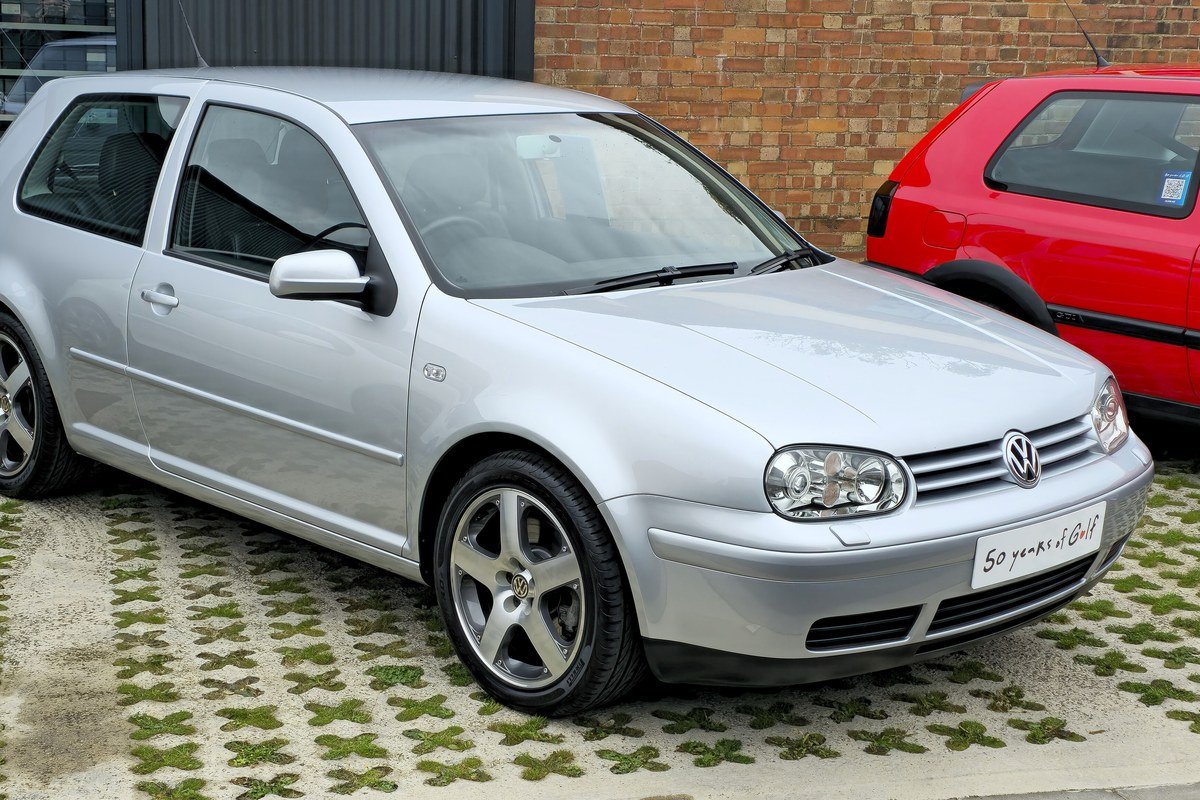
Volkswagen Golf GTI Mk4: the GTI that went soft, and the R32 that made up for it
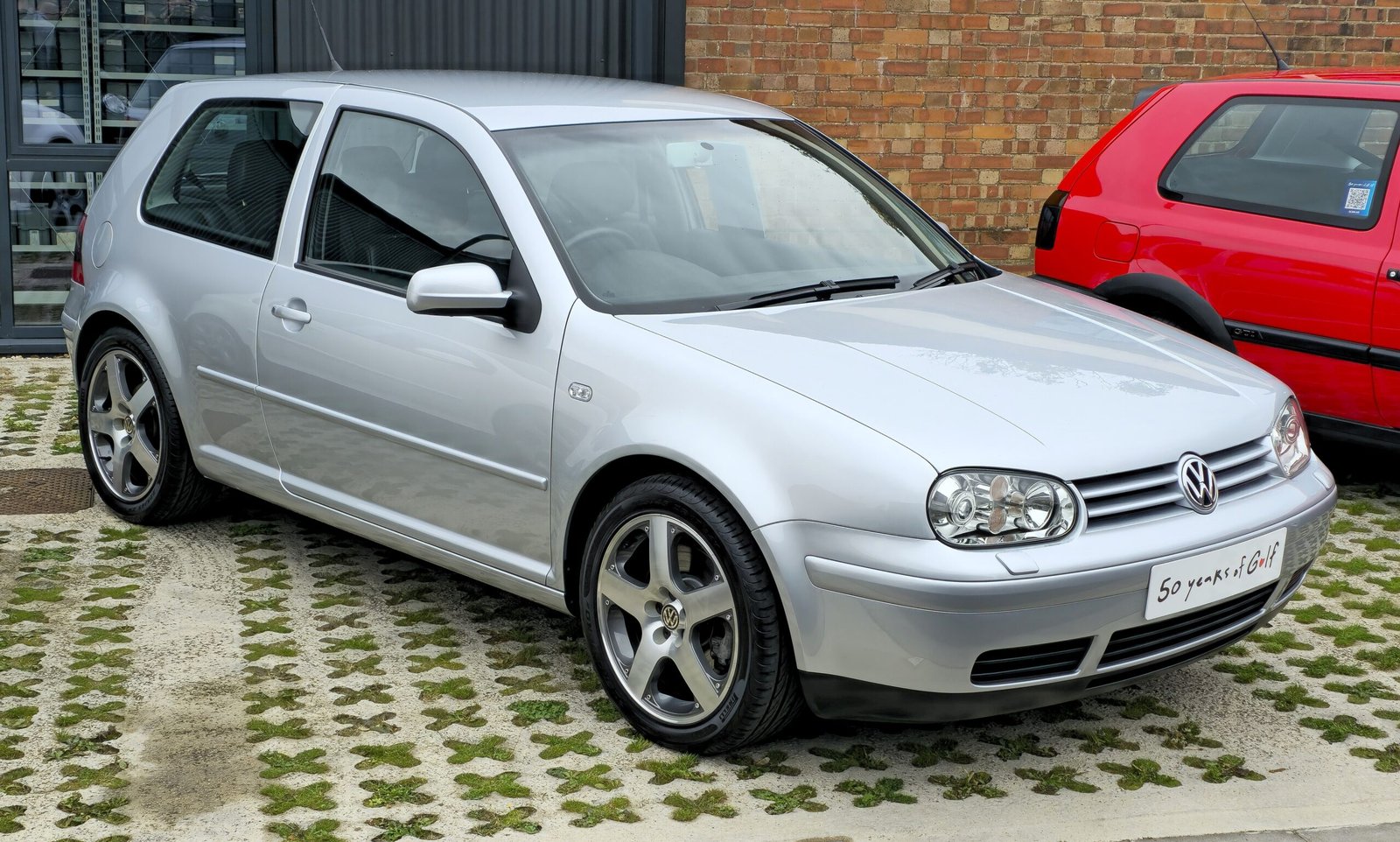
The Mk4 is the GTI Americans bought by the truckload and enthusiasts still can’t quite forgive. Volkswagen sold it here from 1999 to 2005, it put VW back on the map in the United States, it had an interior that shamed cars costing twice as much, and as a GTI it was a letdown. Car people knew it at the time. Volkswagen knew it too, which is why it spent the next decade trying to buy the name back.
And then there’s the twist. Hidden in the same generation was the R32, a 240-horsepower, all-wheel-drive Golf that became the first series-production car on the planet with a dual-clutch gearbox, and that Americans snapped up so fast the whole allocation was gone in thirteen months. One generation, two completely different stories. Here are both.
A cheap car with an expensive door
Start with what Volkswagen got right, because it got a lot right. The fourth-generation Golf was unveiled at the Frankfurt show in September 1997, and the brief was simple: move the Golf upmarket. Stop selling a well-built economy hatch and sell something that felt like a small Audi.
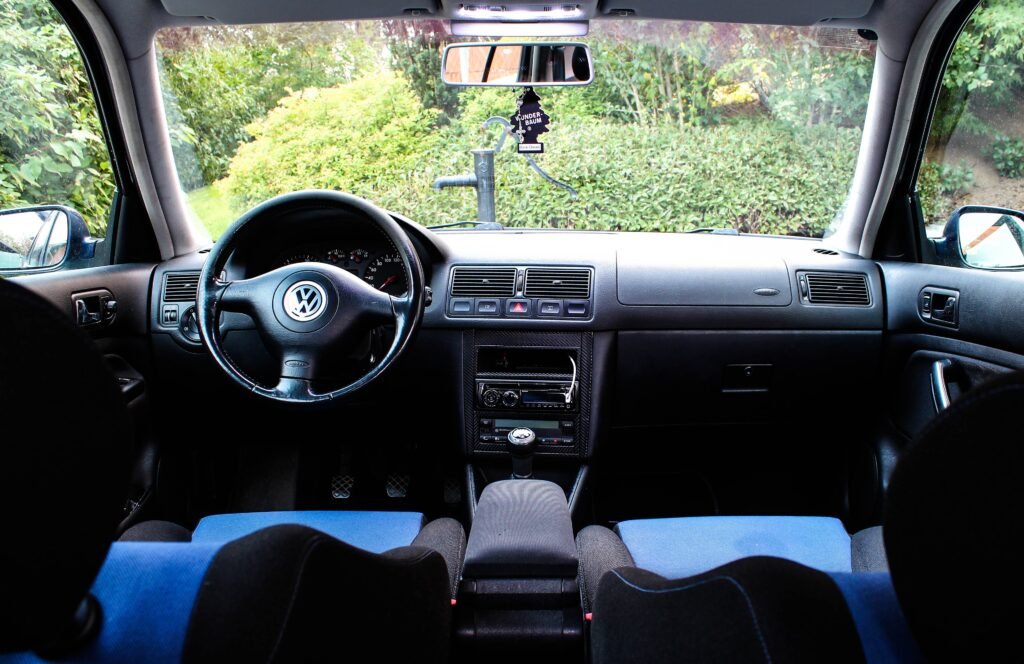
It did, because underneath it practically was one. The Mk4 sat on the group’s A4 platform, also called PQ34, the same hardware under the 1996 Audi A3 and later the Audi TT, the New Beetle, the Jetta and Skoda’s Octavia. The cabin used soft-touch plastics where Ford and GM used hard ones, the panel gaps were tight, and the doors closed with a thud you’d expect from a German sedan. The body was fully galvanized and came with a twelve-year corrosion warranty, and the roof was laser-welded. In 1999, that was not normal for a compact car you could buy at a strip-mall dealership.
It worked. Volkswagen puts Golf IV production at around 4.9 million worldwide, and in America the Mk4 Golf and Jetta did more than anything else to pull the brand out of its early-’90s slump. The rest of the industry spent years copying the formula.
All that quality came with a weight penalty, though. And the car that paid for it was the one with the red stripe on the grille.
A trim level with a famous name
Start with the part VW dealers didn’t advertise: in the 1999.5 model year, the base GTI had a 2.0-liter eight-valve four making 115 horsepower. That’s the engine from a Golf GL with a badge on the hatch. The interesting GTIs were the GLS 1.8T, with a turbocharged twenty-valve four making 150 hp, and the GLX VR6, with the narrow-angle 2.8-liter six making 174 hp. In mid-2002 the VR6 got a 24-valve head and 200 hp, and the 1.8T went up to 180 hp.
On paper that’s decent. A 180-hp 1.8T ran 0-62 mph in 7.9 seconds and topped out around 138 mph, and it weighed somewhere between 2,650 and 2,750 pounds depending on whose numbers you trust. The problem was how it felt. Bigger, heavier, softer and quieter than the Mk2 that made the name, it drove with poise and zero excitement. Fast in a sedated way. The press said so plainly: a Golf in a GTI costume.
If you want a sense of how far the weight had crept, the original Peugeot 205 GTI of 1984, the car Europe used as its hot-hatch yardstick, weighed about 1,875 pounds. We’ve written about why weight and safety aren’t the same thing, and the Mk4 is an early case study. The trend never reversed: today a GMC Hummer EV weighs over 9,000 pounds, more than three Mk4 GTIs put together.
The VR6 deserves a word, because it’s the one engine in the range with real character. A normal V6 splits its cylinders into two banks 60 or 90 degrees apart, which makes it wide. Volkswagen’s VR6 closed that angle to 15 degrees, so tight that both banks share a single cylinder head. The result is a six short and narrow enough to sit sideways in a compact’s engine bay, with a raspy, uneven howl no four-cylinder can fake. It was the GTI engine of choice for people who cared, and the 24-valve 200-hp version from 2002 is the one to look for.
Volkswagen built 164,859 Golf IV GTIs in total, a big number for a car with so little reputation left among enthusiasts. Plenty of Mk4 GTIs sold here were built not in Germany but in Brazil, according to owners and enthusiast sources, which says something too. The car had become a product line. A good one, but a product line.
The coil packs that sent half a million cars back to the dealer
Every car has the failure that defines it, and the 1.8T’s was ignition coils. On that engine, each spark plug has its own coil sitting right on top of it, and they started dying in large numbers. The symptoms were a flashing check-engine light, stumbling, and a car running on three cylinders. In February 2003 Volkswagen recalled about 850,000 vehicles worldwide, roughly 530,000 of them in the United States. Ask anyone who owned one; they remember.
The other thing people blame the 1.8T for is oil sludge. Here the record needs straightening. The U.S. class-action settlement over 1.8T sludge covered the Passat and the Audi A4, not the Golf or GTI. That doesn’t make a neglected 1.8T Golf immune. It means it wasn’t the car the lawsuit was about.
The rivals didn’t go soft
While Volkswagen polished its GTI, the competition sharpened theirs, and American buyers suddenly had choices. Ford’s SVT Focus arrived for 2002 with 170 hp and a chassis the magazines couldn’t stop praising. Honda sold the Civic Si hatchback with 160 hp. Mazda had the Mazdaspeed Protegé, and Dodge dropped the Neon SRT-4 with a turbo and 215 hp for 2003, a car that was crude, cheap and faster than any GTI on the lot.
In Europe it was worse. Peugeot had the 206 RC, Renault the Clio 172, Ford the 215-hp Focus RS, Honda the 200-hp Civic Type R. The GTI, which had invented the segment in 1976, was now selling image and build quality instead of fun.
The Spanish cousin that out-GTI’d the GTI
Here’s a piece of the story most American readers never heard, because the cars never came here. Volkswagen owns SEAT, and from October 1999 SEAT built the León in Martorell, near Barcelona, on the very same platform as the Golf. SEAT had no interest in being sensible. The León Cupra got the 204-hp V6 with all-wheel drive in 2000, and in 2002 came the León Cupra R: the same 1.8T as the GTI, turned up to 210 hp, then 225 hp from May 2003.
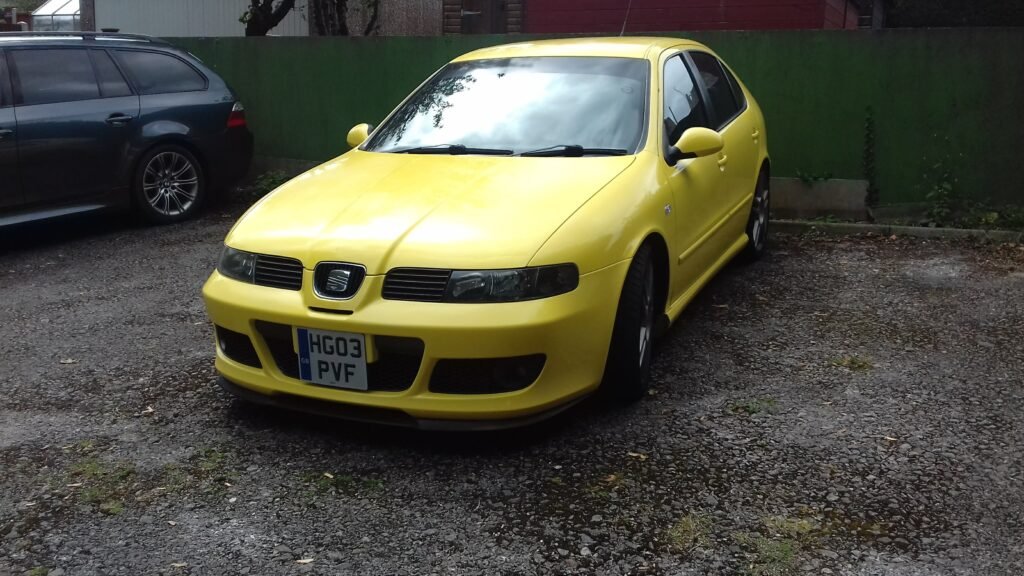
So the sharpest car on the Golf IV platform wasn’t a Golf, and it wasn’t German. Spain had history building other people’s cars, from Manuel Jiménez-Alfaro’s FASA plant onward, but this time the Spanish version was simply the better driver’s car.
Spain has another odd footnote. According to the Spanish site km77’s archives, the Golf GTI sold in Spain from late 1997 to late 2000 wasn’t a 1.8T at all. It was the 2.3-liter VR5, a five-cylinder version of the VR6 idea with its cylinders in a 15-degree V under one cylinder head, making 150 hp (170 hp from 2000 with four valves per cylinder). Americans got the VR6; Spaniards got GTI badges on a five.
The 337 Edition: Volkswagen says sorry
Volkswagen wasn’t deaf. In Europe it marked the GTI’s 25th birthday in 2001 with the Edition 25: 3,000 three-door cars with the new 180-hp 1.8T, 18-inch BBS wheels, Recaro seats, a six-speed, bigger brakes and a properly lowered suspension.
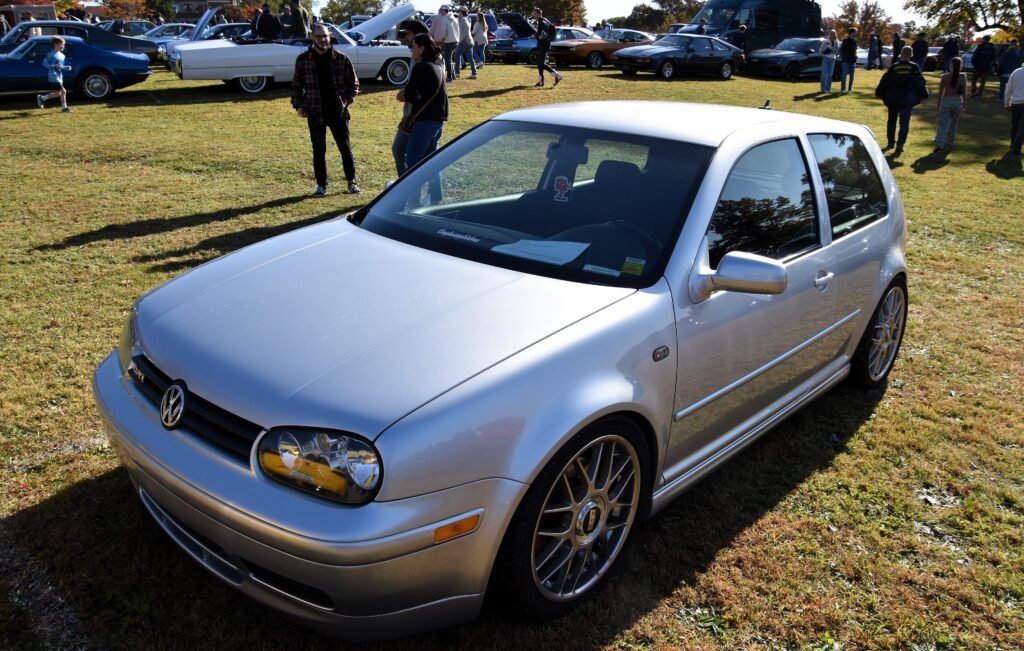
America got its own version in 2002, and its name is pure nerd catnip: the 337 Edition. EA 337 was Volkswagen’s internal project code for the original Golf in the early ’70s. Volkswagen built 1,500 of them for the U.S., with the 180-hp 1.8T, the six-speed manual, BBS wheels and Recaros. A year later came the 20th Anniversary GTI, celebrating two decades of the GTI in North America, with 4,200 built (4,000 for the U.S., 200 for Canada). Both are now the Mk4 GTIs to have if you want a GTI at all.
The R32: 240 horsepower and a gearbox from the future
Then Volkswagen stopped apologizing and built something savage, a car we’ve already given its own story. The Golf R32 arrived in Europe in 2002, and in the U.S. for 2004. It took the VR6 out to 3.2 liters, 241 PS (240 hp as rated here) and 320 Nm, or about 236 lb-ft. Power went through 4Motion all-wheel drive with a Haldex coupling, a multi-plate clutch that sends torque to the rear axle when the fronts start to slip. We’ve argued that most people don’t need all-wheel drive, but 240 hp through the front wheels of a Golf would have been a smoke show. This was one of the cases where it earned its weight. Its spiritual ancestor was the supercharged, all-wheel-drive Golf Rallye G60 of 1989.
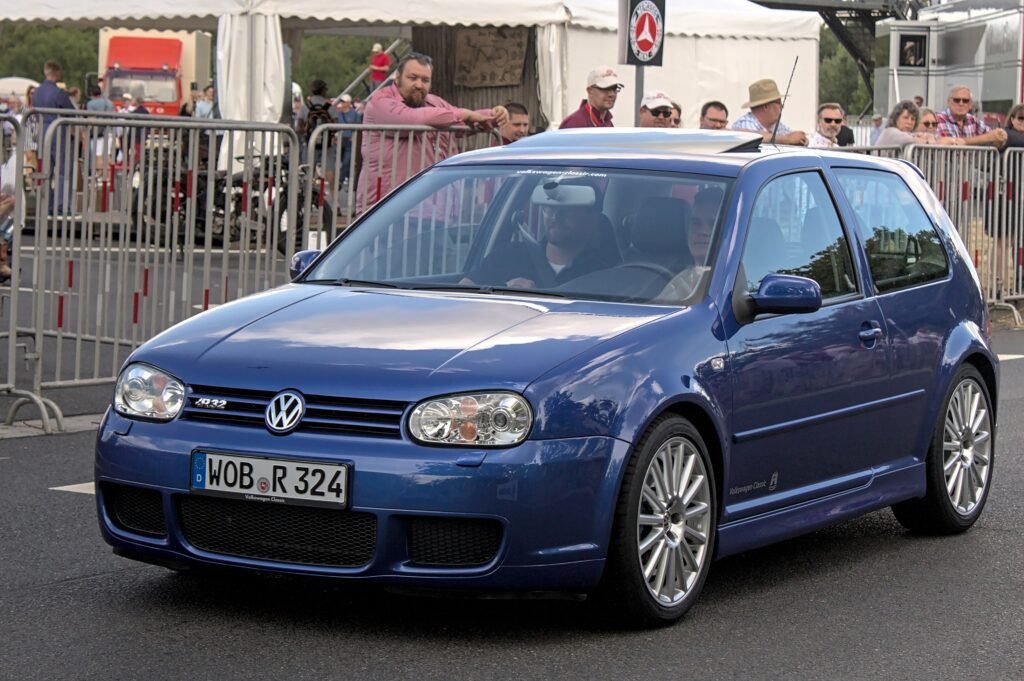
The R32 ran 0-62 mph in 6.6 seconds, topped out around 153 mph, and sat its driver in König bucket seats. Volkswagen originally planned about 5,000 cars and ended up building around 12,000. The U.S. allocation was 5,000, every one of them with a six-speed manual, and they sold out in thirteen months.
The first dual-clutch car you could buy
The thing that makes the Mk4 R32 historically important didn’t come to America on that car. In Europe, starting in 2003, you could order the R32 with DSG, and Volkswagen billed it as the world’s first series-production car with a dual-clutch transmission. Race cars had used twin-clutch boxes before, but none had been sold through a dealer. Audi’s TT 3.2 got the same gearbox a few months later.
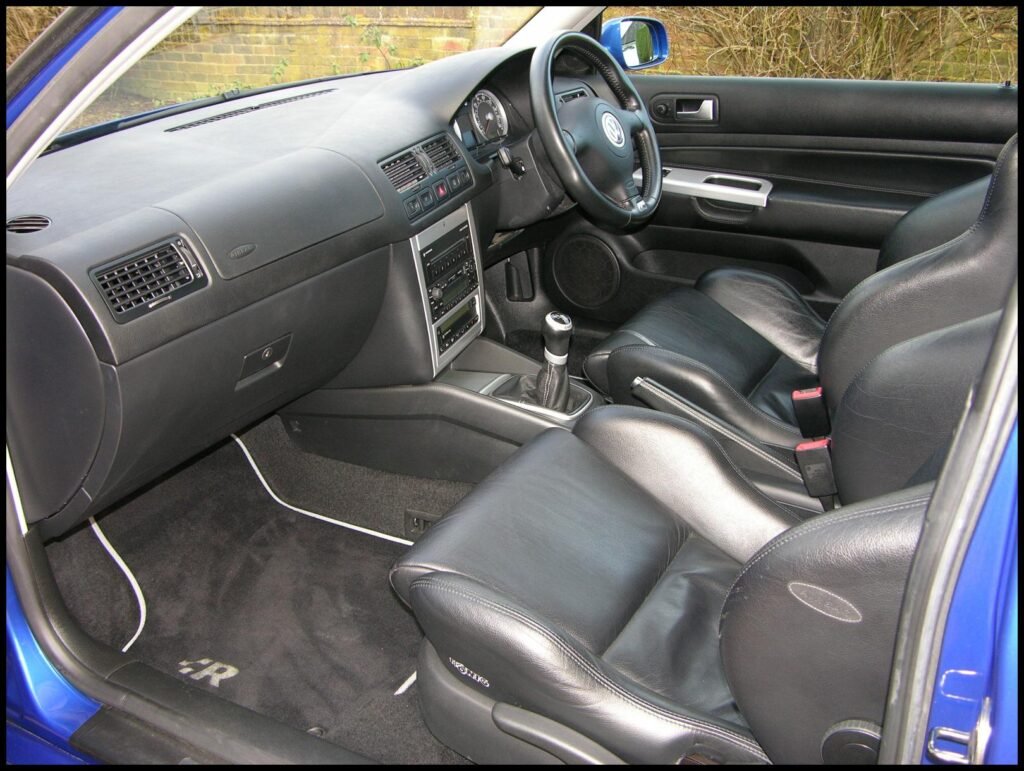
The idea is simple once you see it. A DSG is two gearboxes in one case, each with its own clutch. One handles the odd gears, the other the even ones. While you’re in third, fourth is already engaged and waiting; the shift is one clutch opening while the other closes, in milliseconds, with no torque-converter slur and no pause for a pedal. With it, the R32 cut its 0-62 time to 6.4 seconds. Today dual-clutch boxes are everywhere from Porsches to Hyundais, and the first one in a showroom was in a Golf.
What they’re worth now
Time sorted this generation out fast. A regular 1.8T GTI is a cheap used car that nobody collects. The R32 went the other way: low production, an engine no Golf has had since, and a place in transmission history. Clean, low-mile examples, especially U.S. manual cars, now trade like collector items. It’s the same thing that happened to a lot of ’80s and ’90s cars with soul: nobody kept them as an investment, and the ones that survived became one.
Two cars in one generation
The Mk4 GTI is a border car. As a product it was excellent, and as a used car it’s still a solid one. As a GTI, it’s the moment the name became a trim level, and anyone looking for the nerve of a Peugeot 205 GTI or the madness of a Fiat Uno Turbo i.e. will walk away bored.
But the same generation produced the R32, a SEAT that embarrassed it in Spain, and the first dual-clutch gearbox anyone could buy. Volkswagen lost the plot with the GTI and found it again somewhere else in the lineup. Most car companies don’t manage the second part.
Check you’re still alive.
Photos: MrWalkr (CC BY-SA 4.0); BenThaller (CC BY 2.0); Charles from Port Chester (CC BY 2.0); Carfanatic2019 (CC BY-SA 4.0); Alexander Migl (CC BY-SA 4.0); The Car Spy (CC BY 2.0). Wikimedia Commons.