Manuel Jiménez-Alfaro: The Colonel Who Beat Volkswagen to Spain
Americans love a lone car-company founder who takes on the system. Preston Tucker is the patron saint of the genre: a brilliant sedan, a fraud trial, 51 cars, and a Hollywood movie about how the big boys crushed him. Spain has its own version of that story, and the difference is that the Spanish guy won. Not because he was a better engineer. Because he had better friends.
His name was Manuel Jiménez-Alfaro Alaminos, an artillery officer who in 1951 talked a French state-owned automaker into handing him, personally, the license to build its car in Spain. He got the deal by telling Renault that if they said no, he would take his idea to Volkswagen. Then he broke a government monopoly by making the dictator’s brother his chairman. Then two banks took the company away from him.
Spain now builds more cars than any country in Europe except Germany. That industry’s first private factory came out of a bluff, a dinner table full of local investors, and a favor from the Franco family.
A gunner who wanted to build cars
Jiménez-Alfaro was born on February 8, 1898, in Sanlúcar de Barrameda, on Spain’s southern Atlantic coast, and grew up inland in Lucena, which is why at least one academic history lists Lucena as his birthplace. His father was in the Guardia Civil, the national police. He entered the Artillery Academy in 1911 and was commissioned in 1917.
Two years later, while stationed in Segovia, he asked for permission to train at the throttle of steam locomotives on the Northern Railway. That is not a normal hobby for a young artillery lieutenant. Remember it, because this story ends with a locomotive.
By 1926 he was teaching at the Army’s school for motor vehicles. In 1928 he wrote his first studies on how Spain might build its own cars. At the time the country had nothing that deserved the name of an auto industry, and it would still have essentially nothing more than twenty years later: in 1950 Spain produced 637 vehicles. Detroit built roughly 6.7 million passenger cars that same year.
Then came the part of his life that rarely makes it into the company histories. In 1931 he took the early retirement the new Spanish Republic offered to army officers. When the Civil War broke out in 1936 he was in Madrid, a retired officer the Republican authorities did not trust. He took refuge in the Norwegian legation and ended up working as the ambassador’s secretary. In August 1937 the Republican police arrested him and jailed him as a spy. He sat in a prison in Valencia until March 28, 1939, when Franco’s troops took the city.
So when he later sat across the table from a hero of the French Resistance, both men had done time on opposite sides of the same European nightmare.
After the war he went back on active duty, made lieutenant colonel, and joined the faculty of the Army Polytechnic School, which trained the military’s engineers. He taught strength of materials and engine design, rose to chief professor of automotive engineering, and by 1944 was signing letters as the school’s director. That same year he presented a paper at a metallurgy conference in Barcelona with a title that left no doubt about his plans: “Nationalization of Motor Vehicles.”
The job came with something rare in 1940s Spain, which was a passport and a reason to use it. In 1946 he toured car and tractor plants in England. In 1950 he spent a leave in Paris “studying matters related to the automobile.” That trip started everything.
Three locks on Renault’s door
Renault in 1950 was not looking for foreign partners. The French government had nationalized the company after the war, renamed it the Régie Nationale des Usines Renault, and given it a hit: the 4CV, a tiny rear-engined four-door. By late 1949 French buyers were waiting more than a year to get one, and the Billancourt works were turning out 480 a day.
Jiménez-Alfaro ran into three problems.
First, Renault management hated the idea of overseas assembly. Albert Grandjean, the Régie’s general manager from 1945 to 1959, put it on the record at a May 1951 board meeting: they were against that formula and found it a pain on every level.
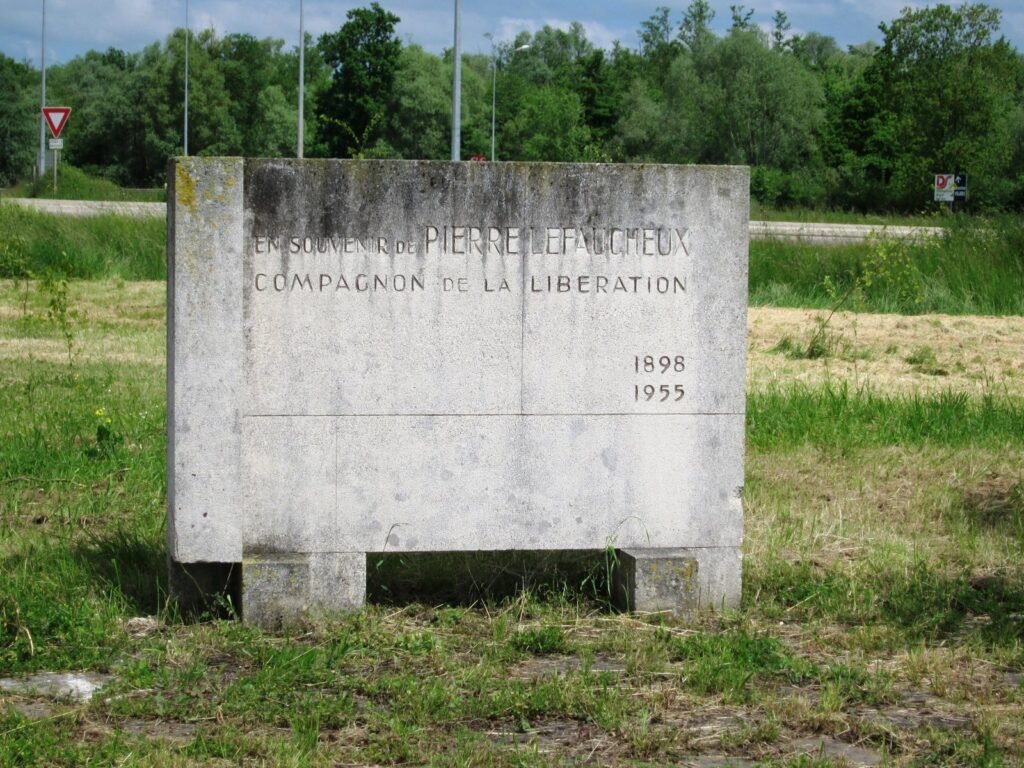
Second, the boss. Pierre Lefaucheux had led the Resistance forces in Paris, was arrested by the Germans in June 1944 and deported to Buchenwald, and got out only because his wife talked a Gestapo officer into releasing him. The idea of doing business with Franco disgusted him.
Third, Renault was short of cash.
The Spaniard’s answer to all three was a single threat. If Renault would not deal, he would go knock on Volkswagen’s door. Whether he could have pulled that off nobody knows. What we do know is that it worked. Some time later, with Lefaucheux grumbling about how badly the Spanish venture was going, Renault’s head of legal affairs, Pierre Meilhan, set him straight: without that plant it would be impossible to sell cars in Spain, and they should not forget they had snatched the deal from Volkswagen.
There is a nice irony buried in that. Lefaucheux admired the Volkswagen model so much that he was running Renault the same way, one people’s car improved endlessly on an ever more automated line. He copied Wolfsburg at home and blocked it in Spain.
The contract was signed on February 12, 1951. Renault’s Spanish sales subsidiary, around since 1909, would handle distribution. And Renault would invest nothing, or as the French historian Jean-Louis Loubet quotes the instruction, not one sou. The license was in the name of Manuel Jiménez-Alfaro. Not a company. One guy.
The dictator’s brother takes a seat
The French had been the easy part. The real wall was in Madrid.
Spain’s state industrial holding company, the INI, was run by Juan Antonio Suanzes, and his plan was simple. Passenger cars in Spain would be built by one company: SEAT, founded on May 9, 1950, with public money and a Fiat license. The same INI ran truck maker ENASA and its Pegaso brand, and years later it would stonewall Eduardo Barreiros. Think of it as a government-run General Motors with a single product line and the law on its side.
Jiménez-Alfaro did not beat Suanzes on the merits. He filed his application with the Ministry of Industry’s office in Valladolid on May 14, 1951, and then went to work on the people who mattered. One was José Antonio Girón, the Minister of Labor, one of the most powerful men in the regime, who had gone to school in Valladolid and had been thrown out of its university in 1932 for his activities in a far-right group. Another lever was a set of promises about domestic content so optimistic that nobody could have met them.
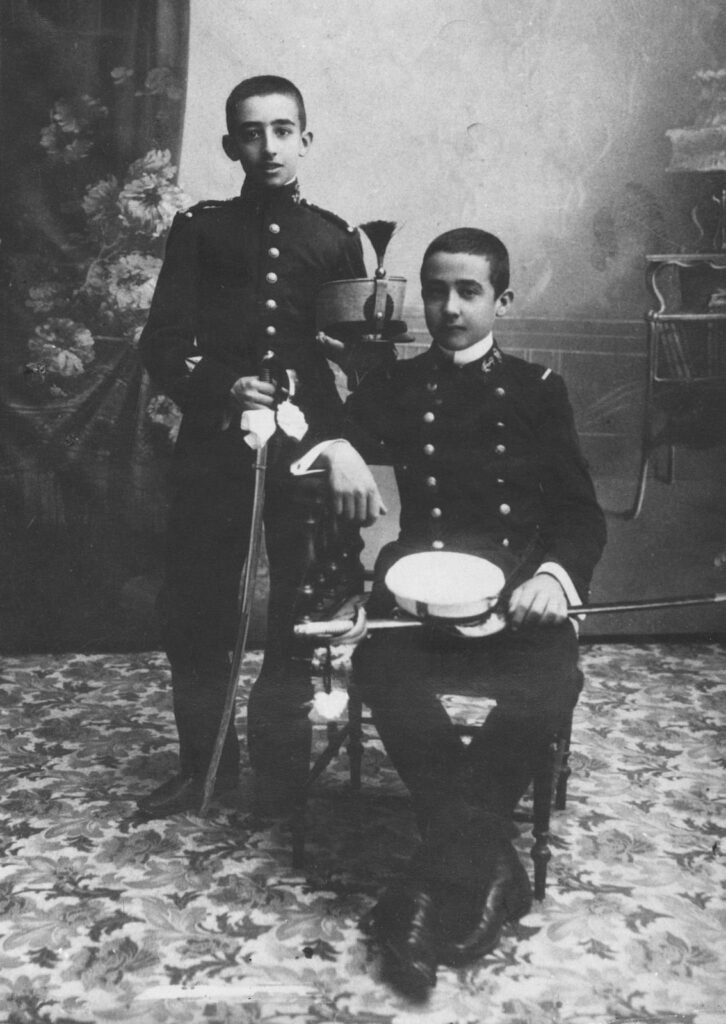
The closer was the chairmanship of the new company, which he offered to Nicolás Franco, the dictator’s older brother, a naval engineer then serving as ambassador in Lisbon. Nicolás Franco and Suanzes had been classmates at the naval academy in Ferrol.
That settled it. Two Spanish historians later wrote that, from an economic point of view, Nicolás Franco’s only qualification was being his brother’s brother. The cabinet signed off on October 10, 1951. Nine days later the official gazette published the permit with its “special rules”: 25% Spanish content before series production, 200 cars a month, half the factory price spent in Spain, then 70% after one year and 90% after three, with the engine, clutch and gearbox made in Spain. Full local manufacture within six years.
Keep that list in mind.
Why Valladolid
Spain’s first private car plant went to Valladolid, a provincial city on the high plains north of Madrid with no automotive tradition at all. The official explanation is that it had sheds, land and a rail siding available. All true, and not the reason.
The mayor, José González-Regueral, had been Jiménez-Alfaro’s classmate at the artillery academy. His mother lived in town, and so did his brother José, who ran the local state arms factory. Through the mayor he met Ramón López Mozo, who owned 59,288 square meters along the Madrid road with usable buildings and a rail siding. FASA paid six million pesetas for it, 1.2 million in cash and 4.8 million in shares, and López Mozo went straight onto the board.
Renault’s Spanish subsidiary wanted the factory in Madrid. There are hints the project had already been turned away in Madrid and Zaragoza. One founding director said it out loud at the 1954 shareholders’ meeting: when Jiménez-Alfaro could not find money, everybody in Madrid was talking about the Régie and certain banks, but the company was founded here.
The money came together in one night. A meeting at the Banco Castellano began on December 28, 1951, ran into the early hours, and the company’s papers are dated the 29th. Fabricación de Automóviles S.A., FASA, started with five million pesetas. Each board member put in 50 shares at a thousand pesetas, and more than a hundred local investors covered the rest. When capital was raised to 60 million, those original shareholders put up 39 million of the new 55, and the Renault subsidiary covered the last 16.
So Spain’s first private car factory was bankrolled mainly by Valladolid lawyers, industrialists and merchants. Jiménez-Alfaro put in no cash. He brought the license and in return got the general manager’s job and 2% of net profits for twenty years. That 2% comes back at the end.
A customs post inside the plant
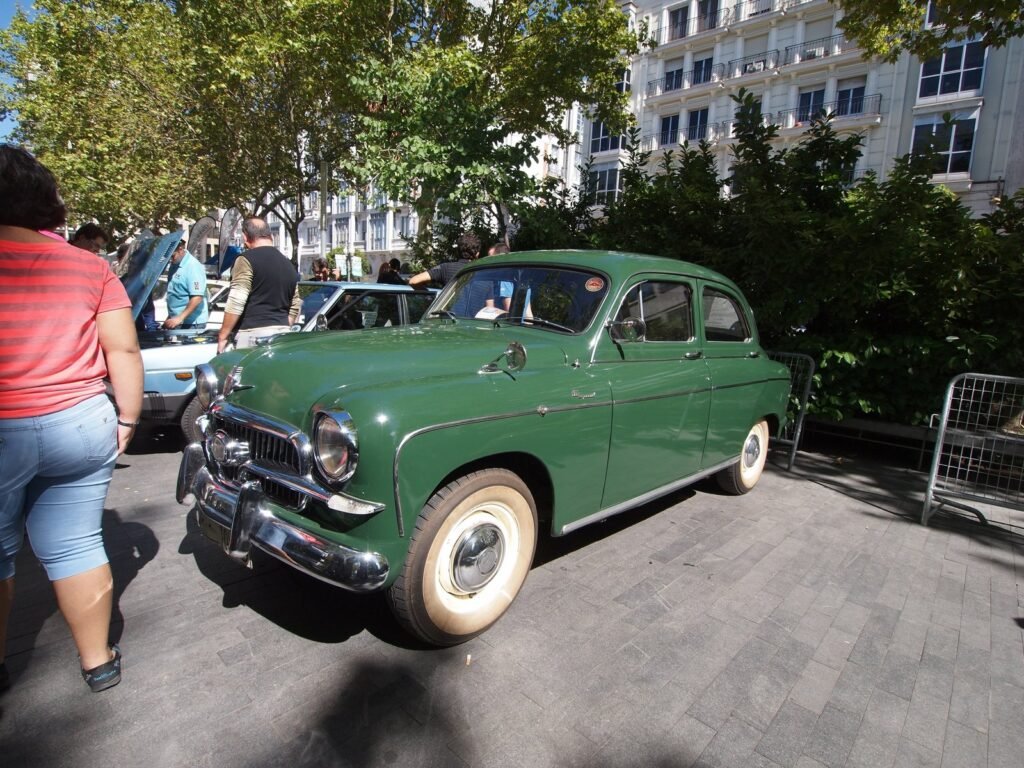
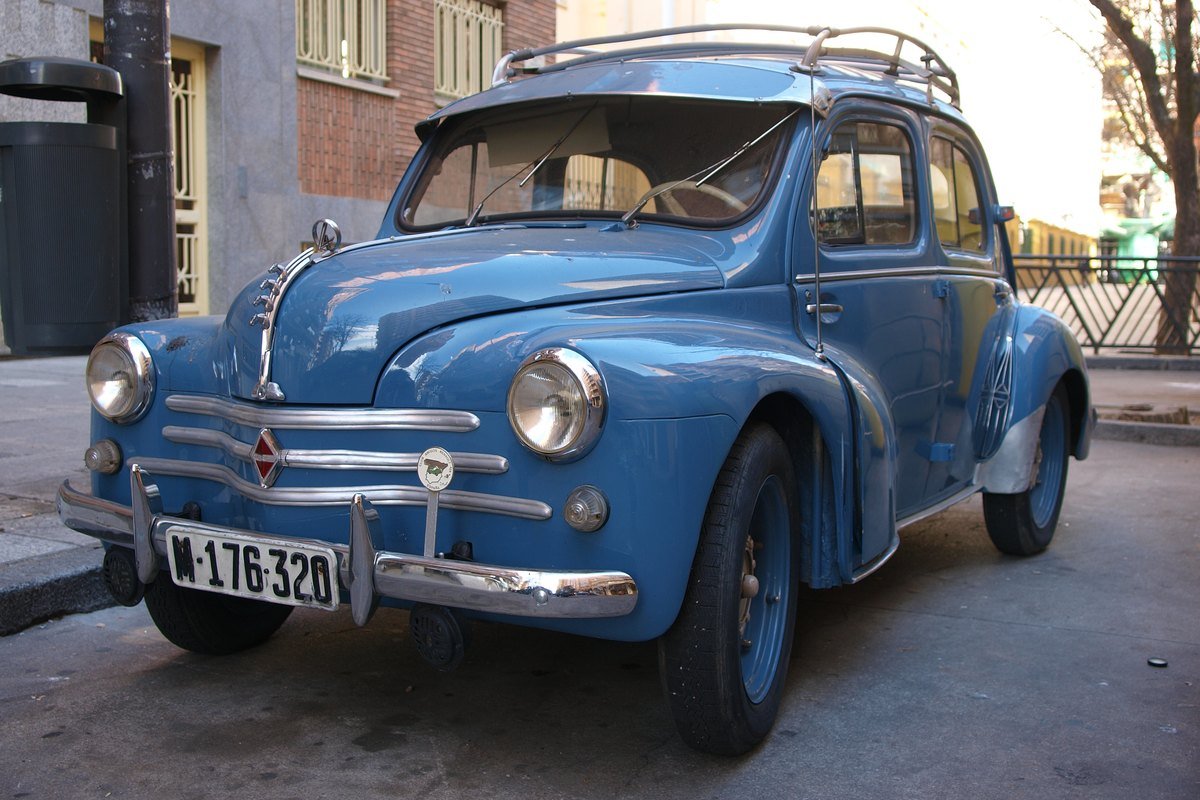
The car was the Renault 4CV, type R-1062. Its engine sat in the back: a 747 cc inline four, about 46 cubic inches, water-cooled, with wet cylinder liners, meaning sleeves bathed directly in coolant that can be swapped without scrapping the block. Somewhere between 17 and 21 horsepower depending on the year, a three-speed box with no synchro on first, about 1,370 pounds, twelve feet long, and a top speed of 56 to 59 mph. Spaniards called it the “4/4” because the ads sold it as four doors, four seats.
Its rival was SEAT’s first car, the 1400, a sedan from Dante Giacosa‘s Fiat design office that started coming out of Barcelona on November 13, 1953. It had a 1,395 cc engine, 44 horsepower, a list price of 117,000 pesetas, and a clientele of government officials, doctors and taxi fleets. The 4CV left the Valladolid plant at 67,045 pesetas, the cost estimate plus a 15% margin set by the state price board, and Renault’s sales arm added a 10,000-peseta commission on top.
People’s car? Up to a point. In 1956 a Spaniard paid 84,000 pesetas for a 4CV that cost the equivalent of 50,000 in France. Valladolid assembled twenty or twenty-five a day while Billancourt built five hundred. Demand outran supply so badly that a 4CV could fetch double its official price on the black market. And when the SEAT 600 arrived in 1957 at 65,000 pesetas, it undercut the 4CV even at the factory gate.
Assembly began on August 1, 1953. Eleven days later the first cars paraded to Valladolid city hall without license plates, eleven of them according to the company’s annual report, twelve in other accounts. Real series production began on October 1 at ten cars per eight-hour shift, with about 450 workers. FASA built 707 cars that first year.
Here is the best detail in the whole saga. The kits left Billancourt in sealed Transfesa railcars whose axles could adjust to Spain’s wider track gauge at the border. The seals were not broken until the cars reached the factory’s own siding, in front of customs officers stationed at the plant. Paris to Valladolid in six days, skipping the usual chaos at the Irún border crossing.
Brilliant logistics. Also an open invitation. With customs inside the gates, the historian who studied the company’s minutes notes, sneaking in unauthorized material and dodging import quotas got a lot easier.
And when Spanish suppliers lacked the drawings for a part, usually because the patent belonged to one of Renault’s suppliers rather than Renault, the standard practice was to copy the sample. FASA’s own purchasing chief used the Spanish slang for it in his memoirs: “fusilar,” to shoot it. French firms barely bothered patenting in Spain because the market looked too small to matter.
Not one Spanish engine
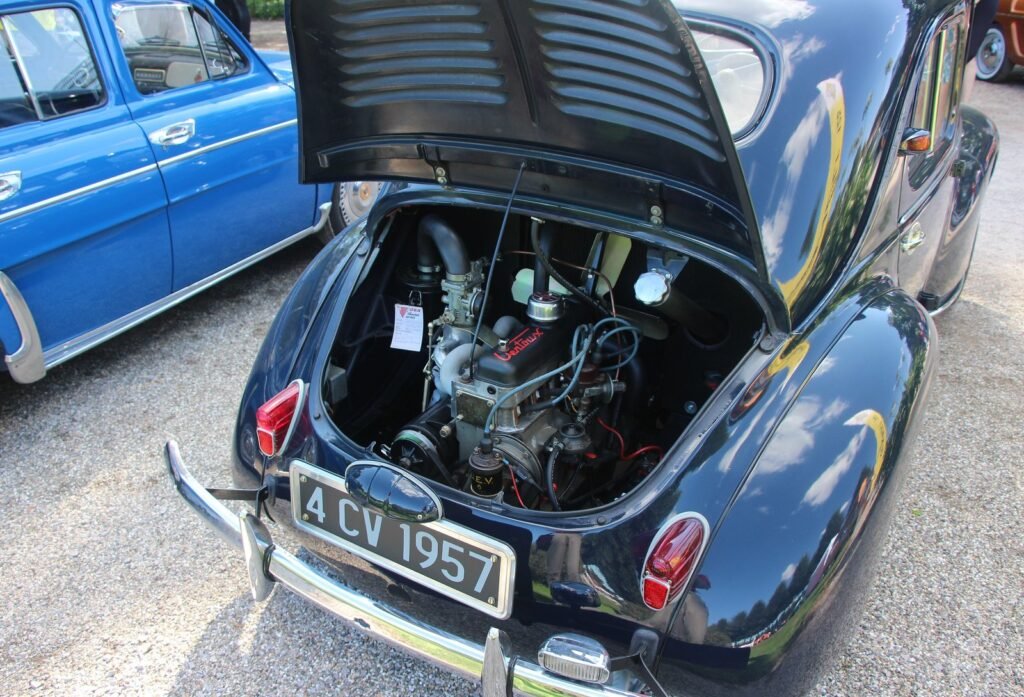
Now pull out that list from the official gazette.
By year three FASA was supposed to be building engines, clutches and gearboxes in Spain. Several respected academic histories say the Valladolid 4CV’s engines were supplied by Nueva Montaña Quijano, a steel group controlled by Banco de Santander in Cantabria.
The company’s board minutes say otherwise. The first engines from that plant reached Valladolid in 1961. Spanish gearboxes arrived in mid-1959. The last 4CV came off the line on November 21, 1958. The most the Cantabrians ever supplied for the 4CV was the steering, the axle shafts and the rear axle.
Not one Spanish-made engine or gearbox ever went into a Spanish 4CV. In November 2004 the regional government of Castilla y León declared the car a protected cultural asset, the only automobile in Spain with that status. Under the hood it was French until the end.
The rules were broken for the model’s entire life, with the dictator’s brother as chairman, and nobody enforced them seriously until a new trade minister, Alberto Ullastres, took office in 1957.
Michelin out, Firestone in
By 1954 FASA was a soap opera.
Renault’s Spanish sales subsidiary tried a quiet takeover, buying shares on the sly and buying shareholders’ votes with promises of discounts on the car. It got caught. At the board meeting of February 17, 1954, Nicolás Franco resigned and every director followed him except the subsidiary’s three. The minutes record his parting shot: either the company stayed entirely Spanish, or Renault should take full control and be done with it.
Lefaucheux backed the Spaniards. He fired the subsidiary’s director, handed Nicolás Franco all its FASA shares except a token million pesetas, and agreed at last to send an engineer. The truce lasted until Renault proposed as its board member the very man who had run the vote-buying scheme. Franco refused, the French walked out, and the war resumed.
Billancourt froze approvals for Spanish-made parts and slowed the flow of drawings. Valladolid hit back by canceling its Michelin tire orders and switching to Firestone. That one stung more than it looks, because the nationalized Renault and the Michelin family could not stand each other.
Out of all this came the line that sums up the founder. Lefaucheux wrote that the Spanish business was one Renault neither controlled nor ran, that it was going “somewhat the Spanish way,” that the chairman was rarely around, and that Colonel Alfaro, “whose energy is unquestionable, seems more an artist than an industrialist.”
He was right. Jiménez-Alfaro was a world-class dealmaker and a shaky plant manager. Output per working day was worse in 1954 than in the last months of 1953, and the plant did not top 25 cars a day until the 4CV’s final two years.
Lefaucheux was killed in a car crash on February 11, 1955. His successor, Pierre Dreyfus, saw plants in closed markets as the only way to sell cars in countries without hard currency. Under Dreyfus, Renault stopped fighting Spain and even offered to help pay for local parts.
Paid in tobacco
To build engines you need machine tools, and to buy machine tools you need dollars or francs. Spain in 1957 had neither.
The fix was a barter deal later known as Operation Tobacco. The Spanish trade ministry let FASA import Renault machinery, tooling and parts and pay for them by shipping 14 million kilos of Spanish tobacco, about 31 million pounds, to Billancourt. Roughly four million dollars’ worth of equipment, paid for in leaf. Dreyfus already used barter with the Soviet Union and its satellites, and he had no problem applying it south of the Pyrenees.
That money paid for the engine machinery at the Cantabrian plant, the equipment to build the Dauphine, and a body shop. None of it arrived in time for the 4CV.
The worst trade of his life
While the French and Spaniards fought, the banks moved in. Banco Ibérico, owned by the Fierro family and close to the Francos, bought 10% in mid-1954. Banco de Santander bought the same stake in April 1955, and that fall put Eduardo Ruiz de Huidobro on the board. By February 1956 he was vice chairman and in charge. In 1957 the youngest Fierro son and Jaime Botín, son of Santander’s chairman, joined the board.
Jiménez-Alfaro resigned as general manager in June 1956, saying he wanted to pursue his army career. The minutes are blunter: he no longer had any say in running the company and kept a board seat as a thank-you.
Then, in June 1957, he sold his 2% of profits back to FASA for two million pesetas, and paid the taxes himself. That year FASA earned 25.9 million pesetas net, so his share would have been about 518,000. In 1959 it would have been 740,000. He traded roughly four years of royalties for a right that still had fourteen years to run, just before the company took off. By the end of the 1960s FASA was building more than 100,000 cars a year.
He did not disappear, though. His “honorary” board seat lasted until 1990, almost four decades.
A locomotive called General Jiménez Alfaro
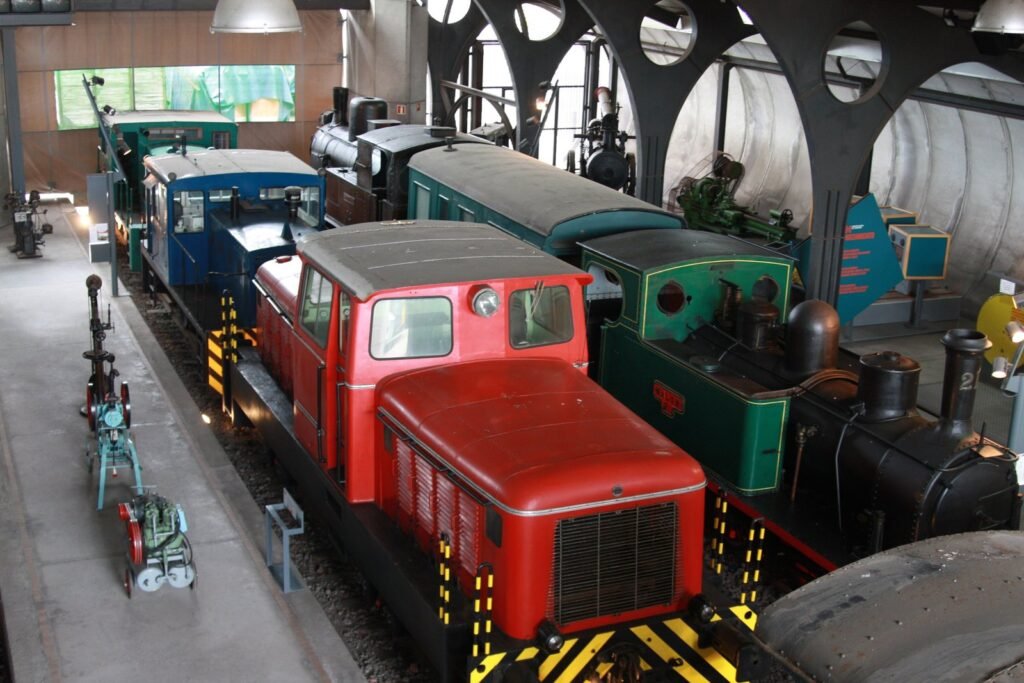
The army took him back. In January 1957 he became director of the state arms factory in Toledo. He made general in 1959 and in 1960 was named director general of industry and materiel for the army, with the military factories under him. That same year he joined the board of the INI, the state holding company that had tried to keep him out of the car business, and in 1964 he chaired its board’s management committee. Some sources put an earlier INI appointment back in the 1940s, which would make him an insider from the start; his official military biography only records it from 1960, so that point stays open.
In 1964 the arms factory at Trubia, in Asturias, took delivery of a German Deutz diesel locomotive with hydraulic drive to haul material around its internal broad-gauge tracks. They named it “General Jiménez Alfaro.” It is preserved today at the Asturias Railway Museum in Gijón.
The lieutenant who begged for time at the throttle in 1919 ended up with a locomotive named after him.
The closing argument
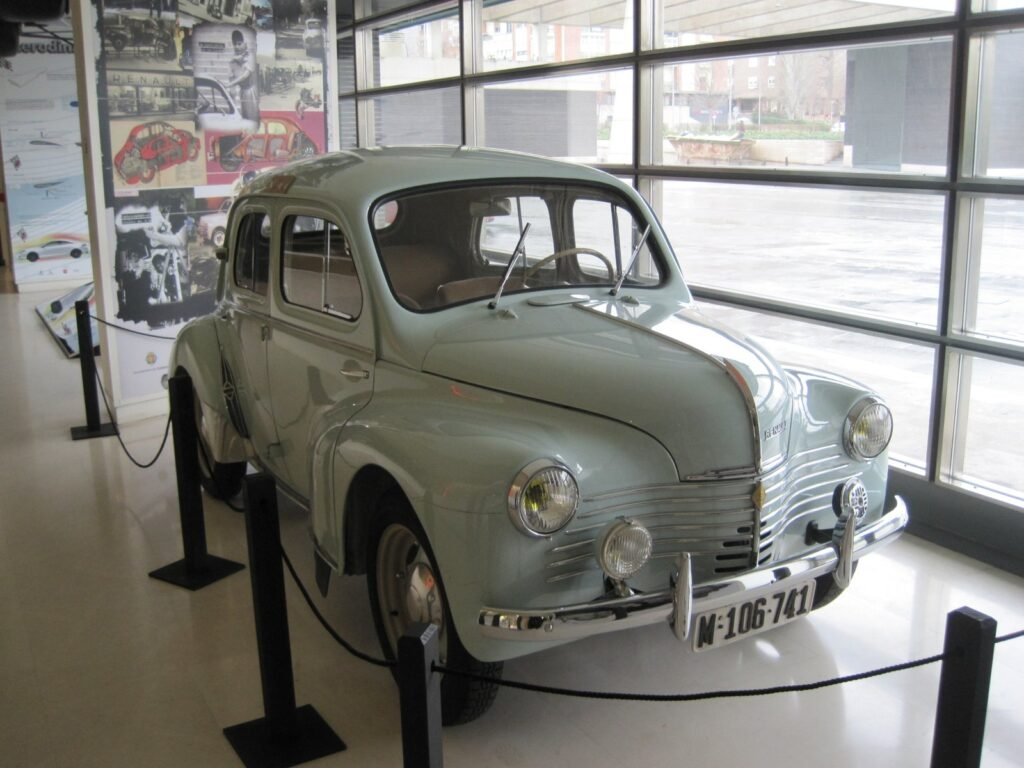
From 1953 to 1958 Valladolid built 26,298 4CVs, 29% of every passenger car made in Spain in that period, though FASA never crossed the 10,000-a-year line historians use to mark mass production. It still shared the market with near-handmade oddities like the Biscuter, built at more than 2,000 a year near Barcelona until the assembly line buried it. The Dauphine replaced the 4CV in 1958 and became known in Spain as “the widow-maker” for its twitchy rear end. In 1961 Banco Ibérico bought out Santander. In 1965 Renault went from 15% to 49.9% and the company became FASA-Renault. Renault was allowed to take a majority in 1976, and in December 2000 FASA-Renault was folded into Renault España. The plants in Valladolid, Palencia and Seville are still there.
It is tempting to sell this as the entrepreneur who beat the state. It isn’t that story.
Jiménez-Alfaro won because he knew how the regime worked: the army engineering school, a minister on his side, and the dictator’s brother in the chairman’s seat. He won because Spain was a sealed market, where Renault had to build cars on Spanish soil or watch the Germans do it. The historian who read the minutes puts it plainly: FASA was a child of protectionism. With the border closed and prices fixed by the state, you had to work hard to lose money. FASA made a profit every single year of the 4CV.
What was entirely his was the nerve. A lieutenant colonel with no company, no money and two years in a Republican jail on his record walked into a nationalized French automaker and walked out with a manufacturing license in his own name, using Volkswagen as the stick. Then he lost control to two banks inside four years and cashed out his royalty at the worst possible moment.
Preston Tucker got a movie. Jiménez-Alfaro got a locomotive in Asturias and, in Valladolid, a street with his name and the first 4/4 ever built, FASA 00001, which his family donated and which has sat in the lobby of the city’s science museum since May 16, 2007.
Check you’re still alive.
Photos: 1957 FASA Renault 4CV and SEAT 1400 B, Antramir (CC BY-SA 3.0 and 4.0); FASA 00001 at the Valladolid Science Museum, Rodelar (CC BY-SA 3.0); Francisco and Nicolás Franco in 1907, unknown author (public domain); Pierre Lefaucheux memorial, Charles01 (CC BY-SA 3.0); 4CV engine, Wikisympathisant (CC BY-SA 4.0); Asturias Railway Museum, Fernando (CC BY-SA 2.0). Via Wikimedia Commons.