
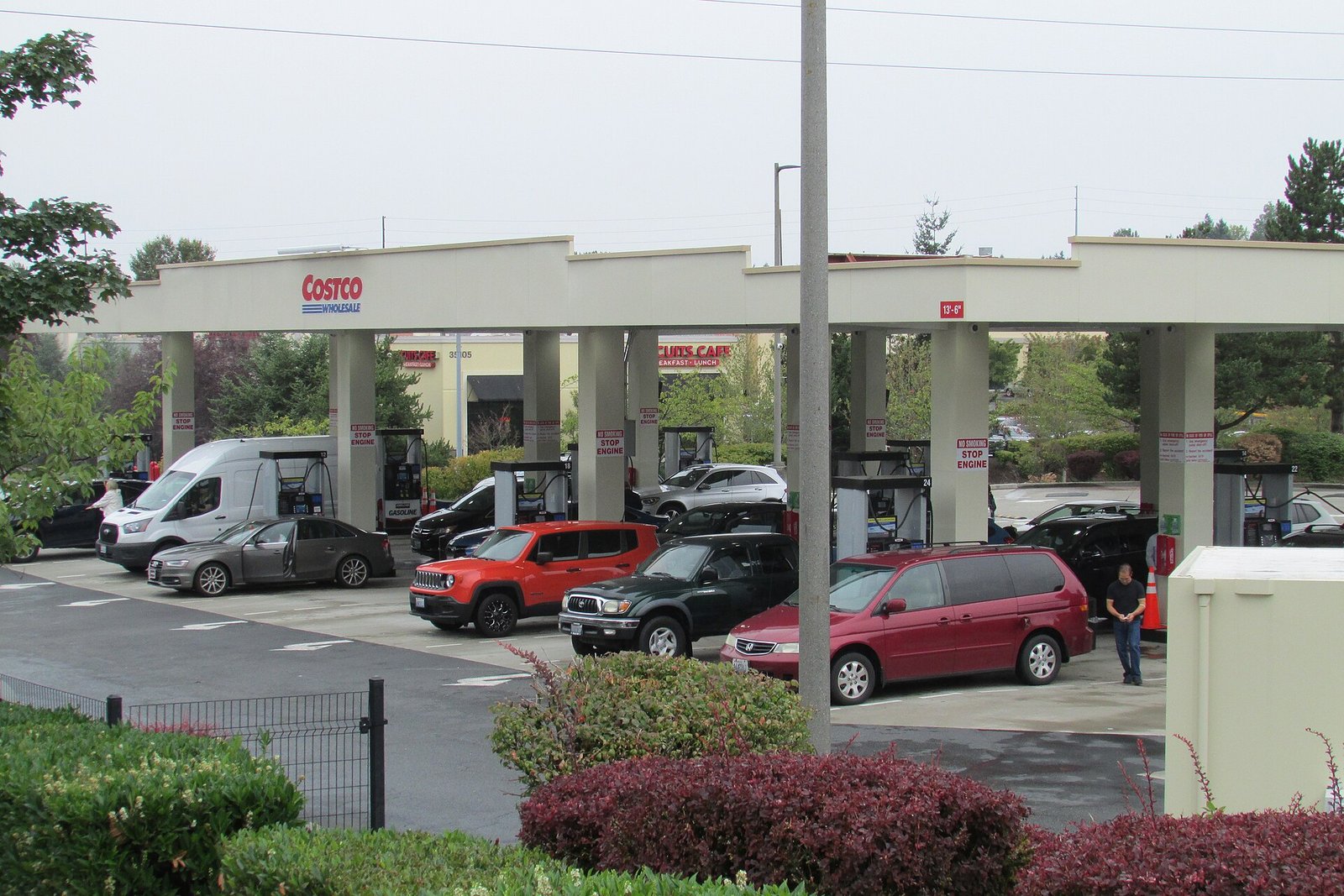
In May 2021, a ransomware attack shut down the Colonial Pipeline for several days, and gas stations up and down the East Coast ran dry. Shell stations, Exxon stations, Sunoco stations, the no-name place by the interstate. All of them, at the same time. That week gave Americans the clearest possible lesson in where their gas comes from: the same pipe.
Colonial runs more than 5,500 miles from Houston to New York Harbor and, by its own count, carries about 45 percent of all the fuel used on the East Coast. It’s a fungible system, meaning product from many shippers moves through it commingled. The brand on the canopy matters a lot less than the brand would like you to think.
But "it’s all the same gas" isn’t the whole story either. The difference is real, it’s small, and it has a name: detergent.
How gasoline gets to your tank

Refineries make base gasoline to a specification. Pipelines and terminals move it in bulk, mixed with product from other refiners. At the terminal, the tanker trucks of different companies fill up, and that’s where each brand’s additive package goes in. A Chevron truck and an unbranded truck can load the same base fuel from the same terminal and drive off with different detergent doses.
So the brand question really comes down to one thing: how much and what kind of cleaning additive goes into your gas.
The EPA floor, and why automakers didn’t trust it
Since the mid-1990s, the EPA has required all gasoline sold in the US to contain a certified deposit-control additive at or above a minimum level, the "lowest additive concentration." Before that, some retailers sold gas with no detergent at all, and the fuel-injected engines of the late ’80s and early ’90s clogged up.
Automakers thought the federal minimum was too low. In 2004, BMW, General Motors, Honda and Toyota launched their own standard, Top Tier, which requires more detergent and sets performance tests for deposit control instead of just a dosage. In 2024, seven more automakers signed on, including Audi, Ford, Mercedes-Benz, Stellantis, Subaru and Volkswagen. The program is run by an independent organization that charges fuel retailers to use the Top Tier seal. Top Tier also limits metallic additives, which can foul spark plugs, oxygen sensors and catalytic converters over time. That’s the part of the standard almost nobody talks about. It’s not only about adding more cleaner; it’s also about keeping certain things out. For a car with a long service life ahead of it, both halves matter, and both are exactly the kind of thing no driver can check by looking at the pump.
What AAA found
In 2016, AAA had an independent lab test fuels bought in the southern Texas market, which it considered representative of most of the country. Engines ran the equivalent of 4,000 miles on each fuel. The non-Top Tier gasolines left an average of 660 milligrams of deposits on each intake valve. The Top Tier gasolines left 34. That’s 19 times more gunk with the cheaper detergent package.
AAA also found that switching to Top Tier gas could clean up existing deposits, cutting intake valve deposits by 45 to 72 percent over a further 5,000 miles. And over a year, the average price difference it measured between Top Tier and non-Top Tier brands was about three cents a gallon.
That’s a strong result, and it’s worth reading carefully. It measured deposits, not breakdowns. It used a port-injected engine. It didn’t show that cheap gas ruins engines. It showed that detergents do their job, and that some gas has more of them.
The test from the other side of the Atlantic
Here’s a study most Americans haven’t seen, and it lands on the cheap-gas side. In November 2025, Spain’s main consumer organization, the OCU, published lab results on 80 samples of regular gasoline and diesel bought anonymously from 26 different chains: big brands, mid-size chains, discount stations and supermarket pumps.
Every sample met the European standards, EN 228 for gasoline and EN 590 for diesel. There was no link between quality and type of chain. The OCU concluded that the only real differences were the additives each brand uses, and that their effect on performance or engine life is very hard to prove in real-world use.
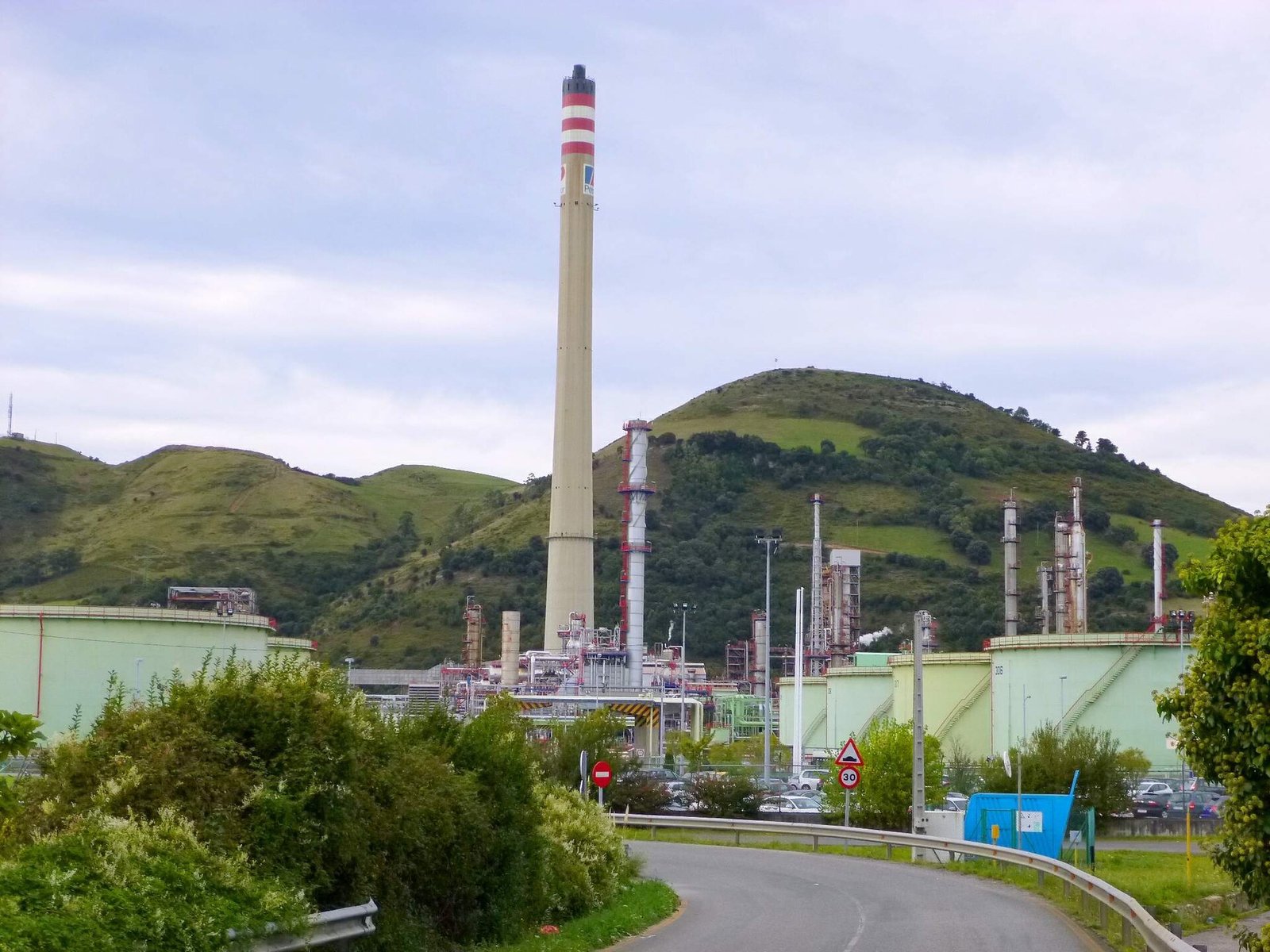
Spain is an interesting place to look, because its fuel system makes the point even more obvious than ours. The country has eight crude refineries and one national pipeline network, run by a company called Exolum, with more than 4,000 kilometers of pipe and 39 storage terminals. Almost every brand, from Repsol to the discount chains, loads from that same system. Discount stations there have nearly doubled in ten years, from 3,013 in 2014 to 5,736 by the end of 2024, and Moeve, one of the big two Spanish oil companies, has responded by growing its own discount brand. When the giant opens its own cheap gas chain, you know what it thinks the product difference really is.
The price gap is also far bigger there than here. In October 2025, the OCU found diesel at €1.47 a liter at big-brand stations and €1.32 at supermarket pumps. On a 70-liter fill-up, that’s more than ten euros. A three-cent gap per gallon, like the one AAA measured, barely registers by comparison.
Why the cheap station is cheap
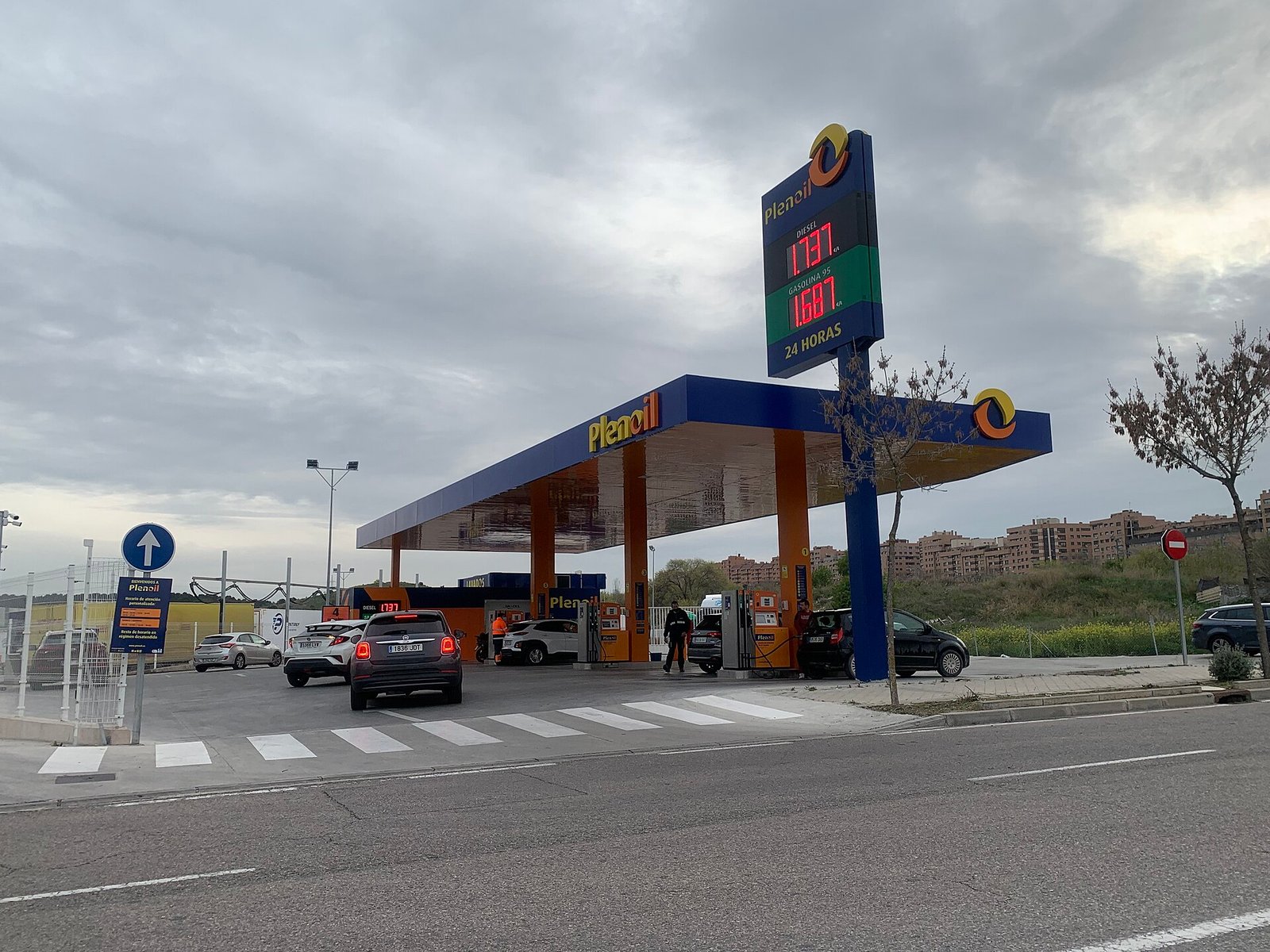
If the fuel is close to the same, the price gap has to come from somewhere else, and it does: the business model.
Fewer people. Most discount stations are pure self-serve with a minimal staff.
Cheaper land. They tend to sit on cheaper lots, off the main corners and away from the prime intersections the big brands pay for.
No loyalty machinery. No points, no app coupons that only work if you buy a car wash, no branded credit card. The discount is in the price per gallon.
Less around the pumps. A big branded station often doubles as a convenience store, a coffee stop and a car wash, and all of that has to be paid for. At a warehouse club, the gas is often there to bring you through the door, and the store makes its money elsewhere.
None of that has anything to do with what comes out of the nozzle.
The ethanol question
There’s one fuel difference that does matter in the US, and it has nothing to do with brand: ethanol. Most American gasoline is E10, up to 10 percent ethanol. E15 is approved by the EPA for cars and light trucks from model year 2001 on, and it’s increasingly common at the pump, often under the name Unleaded 88.
For a modern car, E10 and approved E15 are fine. The trouble shows up in old cars, boats, motorcycles that sit all winter and small engines like lawn mowers and chainsaws. Ethanol attracts water, and fuel that sits for months can absorb enough moisture to separate into layers, leaving a water-and-ethanol mix at the bottom of the tank where the fuel pickup is. Ethanol can also be hard on old rubber fuel lines and carburetor parts that were never designed for it.
If you’ve got a classic in the garage or a mower in the shed, ethanol-free gas, where you can find it, or a fuel stabilizer before storage will save you more grief than any brand choice. Again: that’s a fuel type issue, not a cheap-versus-expensive one.
So which one should you buy?
Put the two studies together and the answer gets simpler.
The base fuel is basically the same. Same specs, same pipelines, same terminals.
Detergents make a measurable difference in deposits. Top Tier exists for a reason, and in the US the price premium is usually small.
Neither study shows cheap gas destroying engines. If your car is maintained and you drive it normally, the gas station is very unlikely to be the thing that kills it.
There’s a specific case where detergents matter more: modern direct-injection engines. In those, fuel is sprayed straight into the cylinder and never washes over the intake valves, so carbon can build up on them no matter which gas you buy. Detergent in the fuel can’t reach those valves either. That’s partly why Toyota pairs direct injection with port injection in its D-4S system, so some fuel keeps cleaning the valves. If you have a direct-injection engine, short trips, old oil and a dirty crankcase breather will do more damage than the brand of gas. We dug into the worst carbon offender of all, the EGR valve, separately.
Many discount and warehouse-club stations are themselves Top Tier licensed. Check the official list before assuming the cheap place is the "bad" one.
Premium vs. regular
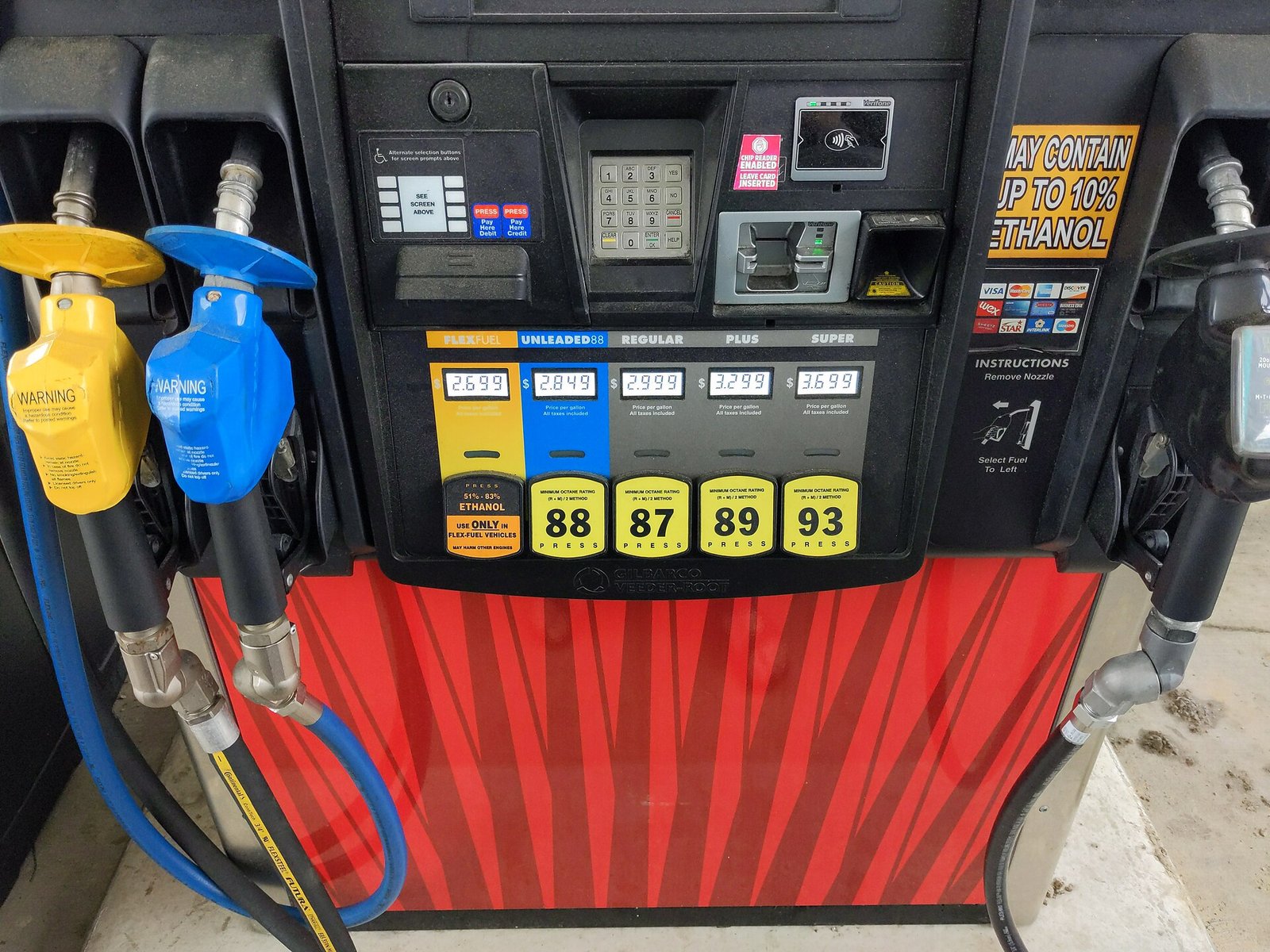
While we’re at the pump: the number on the handle, 87, 89 or 93 in the US, is the octane rating. It measures how well the fuel resists igniting on its own under heat and pressure before the spark plug fires, which mechanics call knock or pinging. High-compression and heavily turbocharged engines may require premium to avoid knock. An engine designed for regular gains essentially nothing from premium, because its computer is calibrated for regular. Read the owner’s manual or the label inside the fuel door, and don’t pay for a number you don’t need. Premium isn’t "cleaner" gas; detergent level and octane are separate things.
What actually keeps an engine alive
If the fuel is close to the same everywhere, the stuff that matters is the stuff it’s always been:
- Oil and filters on time. No additive package beats fresh oil.
- The fuel filter, especially on a diesel. It’s what protects you from dirt or water in a badly maintained tank, at any brand of station.
- How you drive. Short trips and stop-and-go are what fill modern engines with carbon. A diesel that never gets a long highway run will clog its particulate filter.
- Avoid filling up while the tanker is unloading. Refilling the underground tanks stirs up sediment from the bottom. It’s old mechanic’s advice, and it applies to every station.
And if you want a reminder of why keeping a car alive matters more than which sign you stop under, read our piece on cars with soul.
The bottom line
Buy Top Tier when it’s convenient and cheap, because the detergent data is real. Don’t believe anyone who tells you discount gas wrecked their engine without asking when they last changed the oil. In Spain, where the price gap is big, a national lab test found no quality difference at all. In the US, where the gap is three cents, buy the better detergent and move on with your life.
Photos: Chris Light (CC BY-SA 4.0); Elliott R. Plack (CC0); Zarateman (CC0); Natalia Corcobado Pinilla (CC BY-SA 4.0); Jleedev (CC BY-SA 4.0). Via Wikimedia Commons.
Check you’re still alive.