
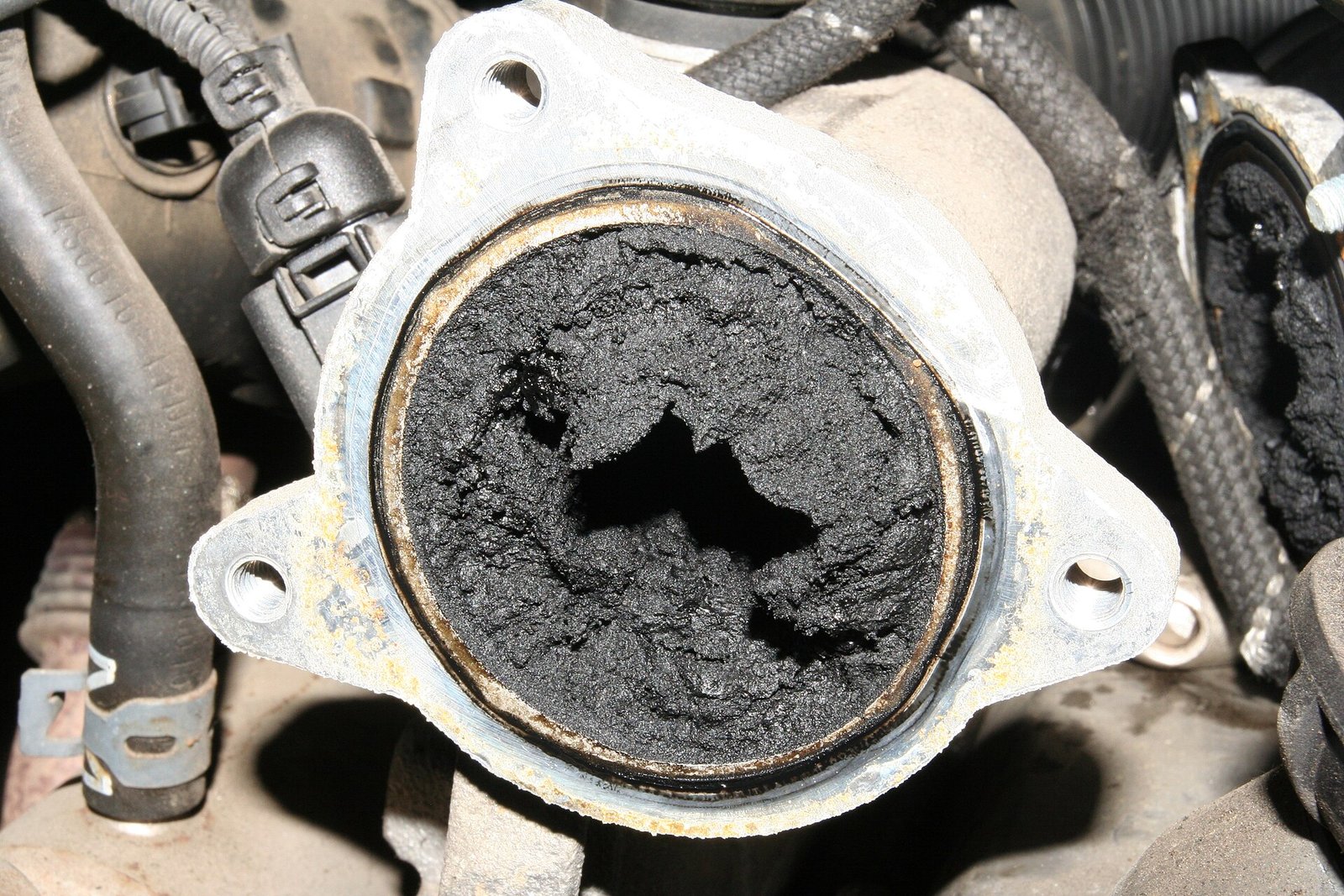
In November 2020, the EPA’s Air Enforcement Division put a number on something every diesel shop in America already knew. Based on its own investigations, it estimated that emission controls had been disabled or removed from more than 550,000 diesel pickups in the previous decade, about 15 percent of the trucks originally certified with them. Over their lifetimes, those trucks were projected to put out more than 570,000 extra tons of nitrogen oxides.
Half a million people didn’t break federal law for fun. A lot of them started with one part: the EGR valve. Here’s what it does, why it fails, and why a German carmaker’s attempt to game it became the most expensive scandal in automotive history.
What EGR is supposed to do
EGR stands for exhaust gas recirculation. Nitrogen oxides, NOx, form when the nitrogen and oxygen in the air combine at very high combustion temperatures. The hotter the burn, the more NOx. If you route some of the exhaust back into the intake, you’re feeding the engine gas that has already burned and carries little oxygen. The mixture burns slower and cooler. Lower peak temperature, less NOx. Simple, clever, and on paper, free.
Why do diesels need it so badly? A gas engine runs close to the exact ratio of air to fuel needed to burn everything, so its exhaust has almost no leftover oxygen, and a three-way catalytic converter can strip the oxygen off NOx molecules and turn them back into harmless nitrogen. A diesel always runs with extra air. That’s part of why it’s efficient, and it’s also why a three-way catalyst can’t do the job: in exhaust full of oxygen, the chemistry doesn’t work. So diesel makers had two options. Stop the NOx from forming in the first place, which is what EGR does, or clean it up afterward with a separate catalyst fed with urea. For years, most passenger diesels relied mainly on the first, because it was cheaper.
The catch is what comes along for the ride. Diesel exhaust carries soot, carbon particles and oil vapor. It meets more oil vapor coming from the crankcase breather. Together they form a black paste that coats the intake manifold, the throttle, the intake ports and the valves. Layer by layer, like plaque in an artery.
An American invention, and an old grudge
This isn’t new, and Americans met it first. EGR showed up on US cars in the early 1970s, mostly from 1973, as automakers scrambled to meet the cuts demanded by the Clean Air Act of 1970. Those first vacuum-operated valves on gas V8s were so unpopular that mechanics called them "anti-performance valves," because nearly every car ran better with the EGR blocked off. Fifty years later, the argument hasn’t changed much. The hardware has just gotten more expensive.
The three kinds you’ll run into
Old-school vacuum EGR. A simple valve opened by engine vacuum, letting a small amount of exhaust through. Not much to go wrong.
Electronic, cooled EGR. As standards tightened through the 2000s, the valve got an electric motor and a position sensor, and the gas started passing through a small radiator, the EGR cooler, so it would enter denser and cooler. It recirculates far more gas, far more of the time. Better at killing NOx and much dirtier.
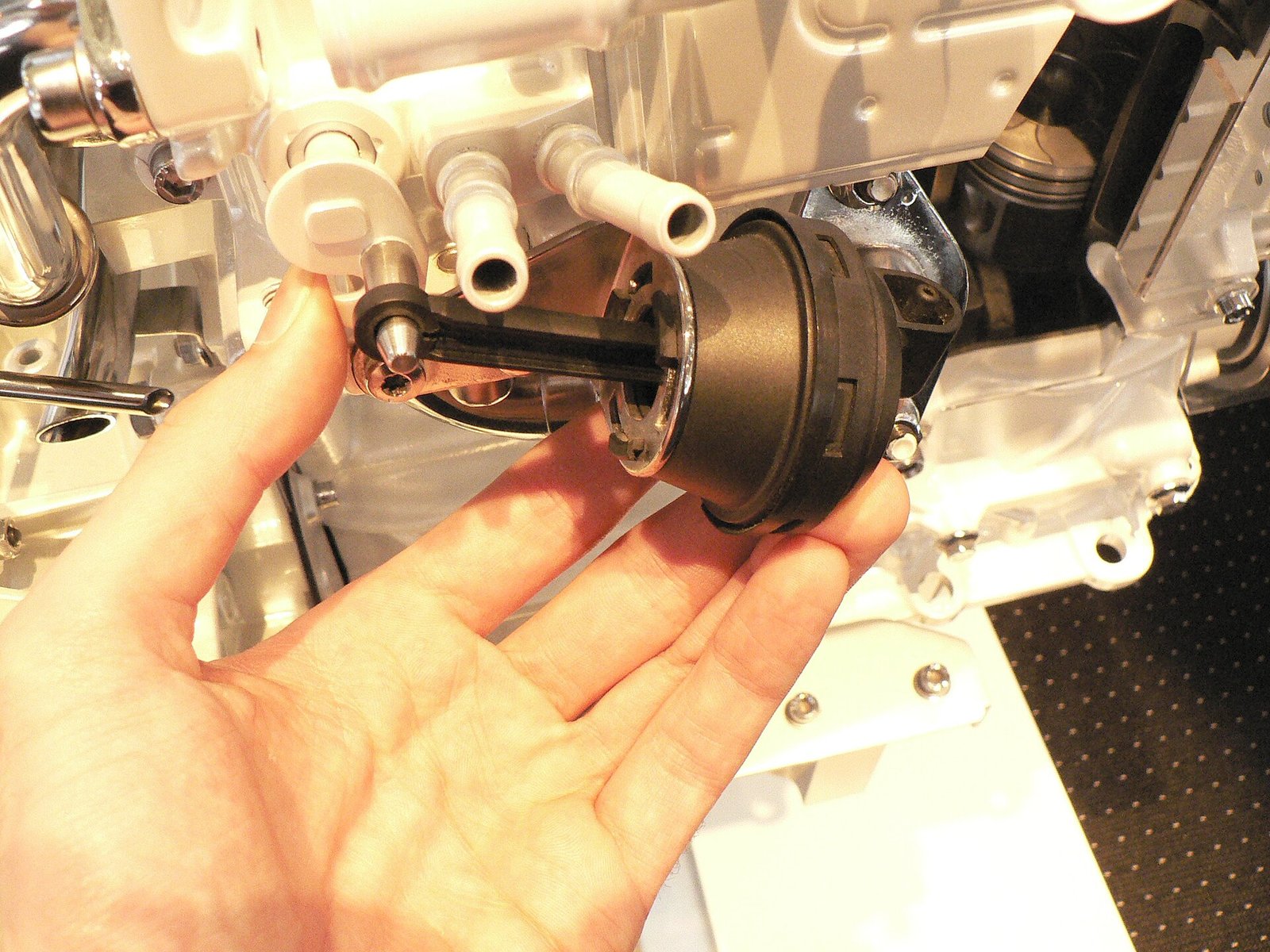
High- and low-pressure loops. Many modern diesels have both. The high-pressure loop takes exhaust before the turbo and feeds it in after the compressor. The low-pressure loop takes it after the particulate filter, already clean, and feeds it in ahead of the turbo. Cleaner, but it’s another valve, another cooler and more plumbing.
The 6.0 Power Stroke: when the cooler is the problem
If you want an American poster child, it’s the 6.0-liter Power Stroke that Navistar built for Ford’s 2003–2007 Super Duty trucks and E-Series vans. Lawsuits over that engine listed failed EGR coolers and EGR valves alongside blown head gaskets, stretched head bolts, oil cooler failures and coolant getting where it shouldn’t. Ford sued Navistar in 2007 over warranty costs, and in 2013 Ford settled a class action with owners, reimbursing part of the cost of EGR cooler and valve, oil cooler, injector and turbo repairs done before 135,000 miles or six years.
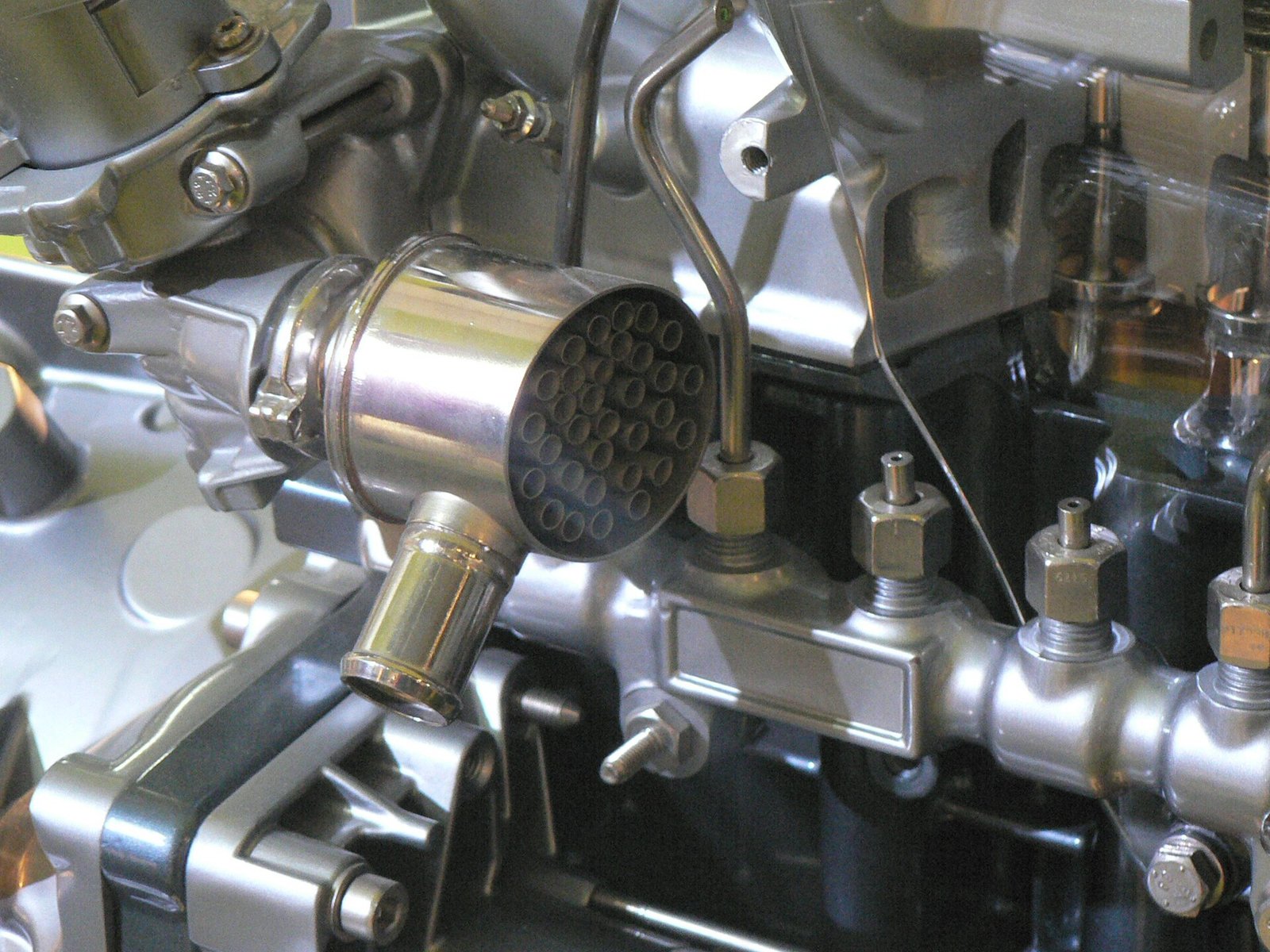
The mechanism is worth understanding. An EGR cooler is a heat exchanger with hot exhaust on one side and engine coolant on the other. When it cracks, coolant can be pulled into the intake and the cylinders, and coolant in a cylinder is how engines die.
Carbon buildup and the chain reaction
Pull the intake manifold off a high-mileage diesel that has spent its life in traffic and you’ll find a cave, not a pipe: hardened carbon that narrows the airway until the engine is breathing through a straw.
What follows is predictable:
- Gradual power loss. The engine can’t breathe, and the turbo works harder to compensate.
- Worse fuel economy. An engine that breathes badly burns more fuel to do the same work. An "environmental" part that makes you burn more diesel.
- Rough idle, stumbling and limp mode. The valve sticks open or shut, the actuator fails, and the computer cuts power to protect the engine.
- A domino effect. More exhaust in the intake means dirtier combustion and more soot. That soot loads up the diesel particulate filter faster, which regenerates more often and wears out sooner.
That’s the part almost nobody explains. EGR and the DPF are working against each other. One cuts NOx by making more soot, and the other has to eat that soot. That’s why they tend to fail together, and why our DPF breakdown is the other half of this story.
Pass the lab, fail the road
The EPA isn’t the only regulator with a lab-versus-road problem. In Europe, the Euro 5 standard allowed a diesel car 180 milligrams of NOx per kilometer, and Euro 6 cut that to 80. On paper, more than half. But Germany’s Federal Environment Agency found that in real driving, Euro 5 diesels averaged 950 mg/km and early Euro 6 cars 614. Only Euro 6d-TEMP cars, certified with on-road testing, came down to an average of 46.
Dieselgate was an EGR scam
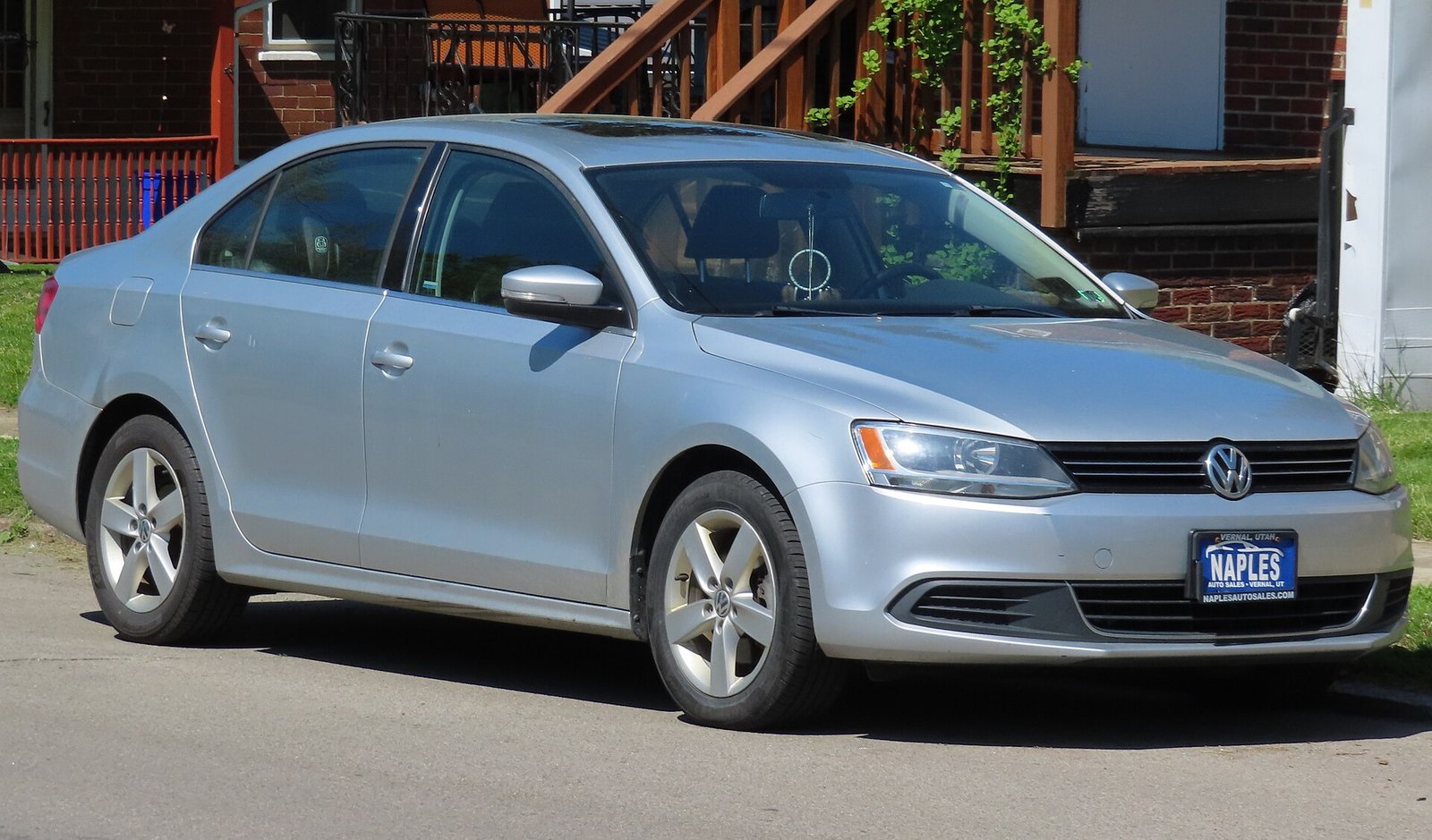
Then came Volkswagen. In 2015, researchers at West Virginia University measured VW diesels on the road and found NOx far above what the lab showed. The EA189 engines, the 1.2, 1.6 and 2.0 TDI, ran software that recognized the test cycle and switched on full NOx control in the lab, then relaxed it on the road, where the cars ran stronger, used less fuel and polluted far more. On engines with no urea-based catalyst, that NOx control was mostly the EGR. The most expensive fraud in car history came down to turning the EGR up for the exam and down for real life. Worldwide, about 11 million cars were affected.
In the US, Volkswagen agreed in 2016 to pay up to $14.7 billion, the largest Clean Air Act settlement ever, including about $10 billion to buy back or fix roughly 475,000 2.0-liter TDI Jettas, Passats, Golfs, Beetles and Audi A3s.
How Spain handled the same cars
Here’s the contrast Americans rarely hear about. Spain, where diesel dominated the market for two decades, was one of the hardest-hit countries. In October 2015, the Volkswagen Group told the Spanish government there were 683,626 EA189-powered vehicles on Spanish roads: 257,479 Volkswagens, 221,783 Seats, 147,095 Audis, 37,082 Škodas and 20,187 VW commercial vehicles.
There was no American-style buyback. Owners got a software update.
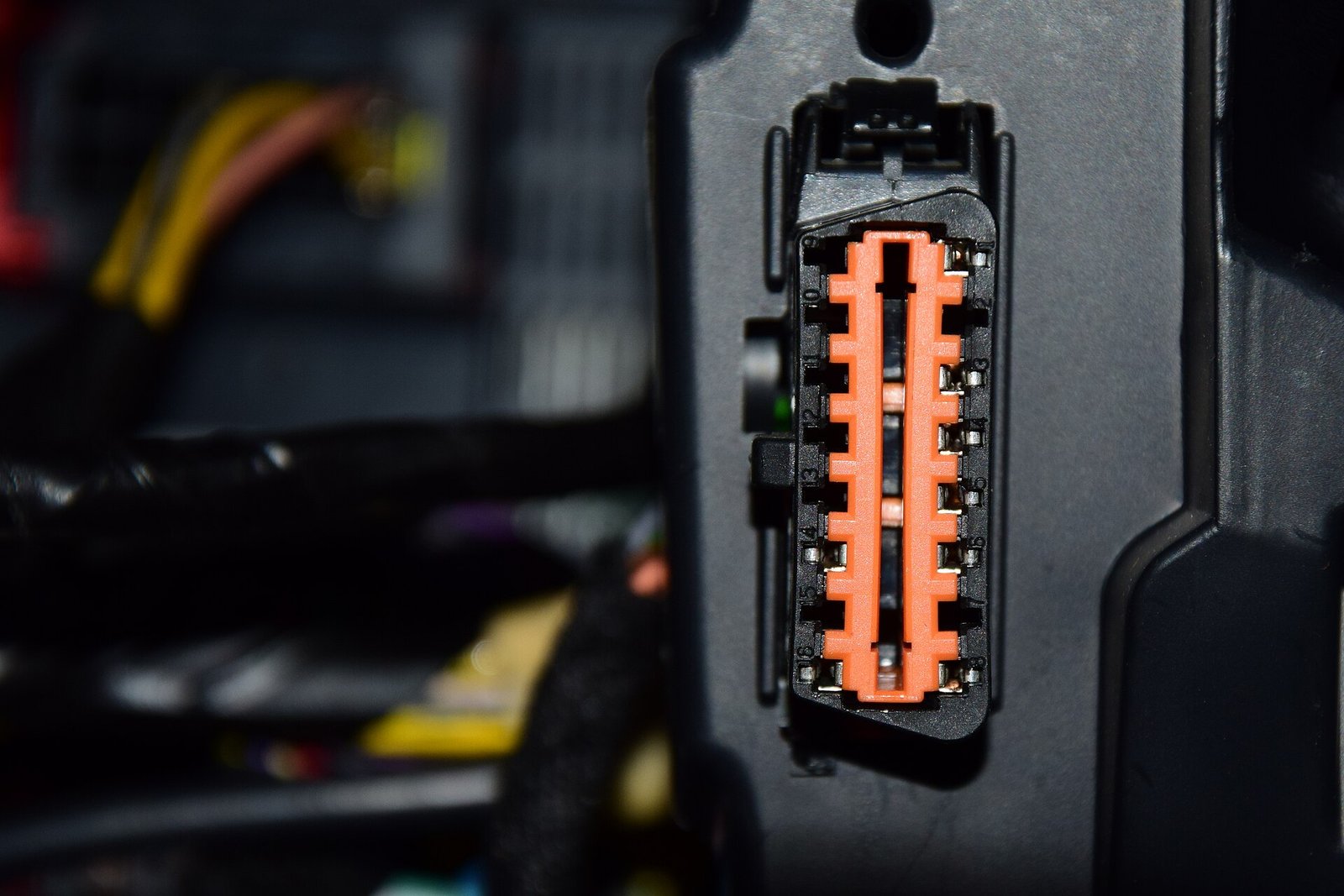
And then the paradox. Since May 20, 2018, under Royal Decree 920/2017, Spanish inspection stations can plug into a car’s OBD port and check that the emissions system has no faults or tampering. If you’ve deleted your EGR, the computer knows, the check-engine light gives you away, and you fail. So the company that rigged the EGR on 683,626 cars got to fix it with a reflash, while the private owner who blocks off a valve he’s tired of cleaning gets thrown out of inspection. Same story as the EPA’s half-million trucks, just with different paperwork.
To be clear, a delete isn’t harmless. An engine without EGR usually makes less soot, but it puts out much more NOx, which is the whole reason the valve exists. It’s illegal in both countries, and we don’t recommend it. We just understand why people are tempted.
The ’90s engines had EGR too, just not like this
A common myth says older diesels didn’t have EGR. Many did. Volkswagen’s late-’90s 1.9 TDI had one. What it didn’t have was a big cooled EGR running much of the time, with a particulate filter behind it waiting to clog. Simple, vacuum-operated, and recirculating little gas. That’s a big part of why a car like the PSA XUD-engined Peugeot earned its reputation for being unkillable: there was barely any emissions hardware to fail.
Compare that with a modern diesel stacking cooled dual-loop EGR, a DPF, a selective catalytic reduction system dosing DEF, and a dozen sensors watching all of it. Every system fixes one problem and creates another, and the owner pays for both.
Is there a way out?
Modern diesels lean more on SCR with DEF and somewhat less on EGR, which has finally brought real-world NOx down, at the cost of yet another system to maintain. Gas engines have their own carbon problem now, thanks to direct injection: the fuel no longer washes over the intake valves, so deposits build up. Toyota’s D-4S system pairs direct injection with port injection partly so fuel keeps cleaning those valves.
If you own a modern diesel, a few things help:
- Change oil more often than long-interval maintenance plans suggest, especially if you idle or drive short trips. Breather vapor is half of the black paste.
- Get it hot and keep it there now and then. A long highway run lets the DPF regenerate. A diesel that only does short hops dies young.
- Inspect and clean the EGR and intake before they fail. It’s far cheaper than waiting for limp mode.
- Ask yourself if you need a diesel. For short trips and city use, a simple gas engine causes fewer headaches. If you want to see what a well-engineered diesel looked like, read about BMW’s M57.
The bottom line
EGR is what happens when environmental policy gets written for a test cell instead of for the road. It’s a patch that creates almost as many problems as it solves, and the person paying for it isn’t the automaker or the regulator. It’s you, with a repair bill and an engine that dies younger than it should. The greenest car is the one you don’t have to throw away, a point we made in cars with soul.
Photos: Moosealope (CC BY 2.0); Ton1 (CC BY-SA 3.0); Ton1 (CC BY-SA 3.0); MercurySable99 (CC BY-SA 4.0); 0x010C (CC BY-SA 4.0). Via Wikimedia Commons.
Check you’re still alive.
9 thoughts on “EGR, the F***ing Valve: How “Clean Diesel” Learned to Choke Itself”