
PSA XUD: The Diesel That Did Everything GM’s Oldsmobile Diesel Couldn’t
Ask an American of a certain age about diesel cars and you’ll probably hear about the Oldsmobile 5.7. General Motors converted a gas V8 to burn diesel at the end of the 1970s, sold hundreds of thousands of them through the early 1980s, and watched head bolts stretch, head gaskets blow and customers swear never to buy a diesel again. That one engine set American attitudes toward diesel cars back by a generation. Meanwhile, on the other side of the Atlantic, Peugeot and Citroën were launching a small four-cylinder diesel that would do the exact opposite. It would turn diesel into the sensible choice for millions of ordinary Europeans, from bakers to farmers to families, and run up mileage numbers that sound made up. It was called the XUD, and almost nobody in the U.S. has ever heard of it.
In short: the PSA XUD was a family of cast-iron, four-cylinder indirect-injection diesels launched by Peugeot-Citroën in the early 1980s: the 1.8-litre XUD7 and 1.9-litre XUD9. Simple, low-stressed and repairable with hand tools, they powered the Peugeot 205 and 305, the Citroën BX and, above all, the Citroën C15 van, and became famous for covering huge mileages.
Small, cast iron and stubborn
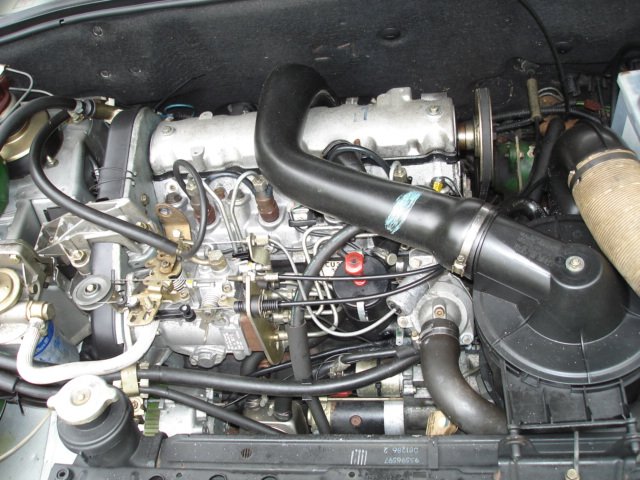
The XUD family came out of PSA Peugeot Citroën at the start of the 1980s. It wasn’t exotic. The XUD7 displaced 1,769 cc, and the XUD9 grew to 1,905 cc. Both were inline fours with a cast iron block and an aluminum head, indirect injection into a prechamber and, at first, no turbo at all. No electronics either. It was a design you could fix with hand tools, in a village shop.
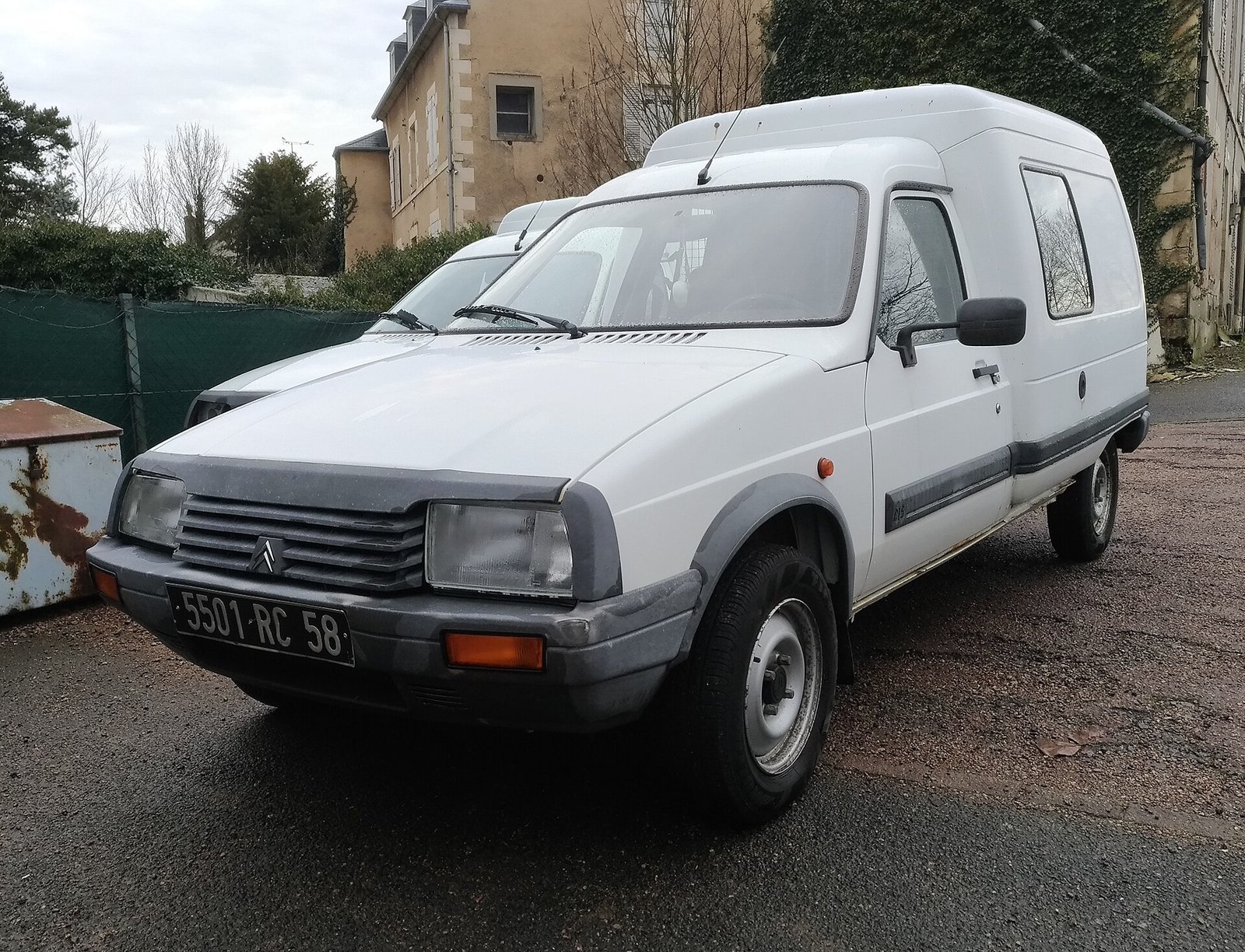
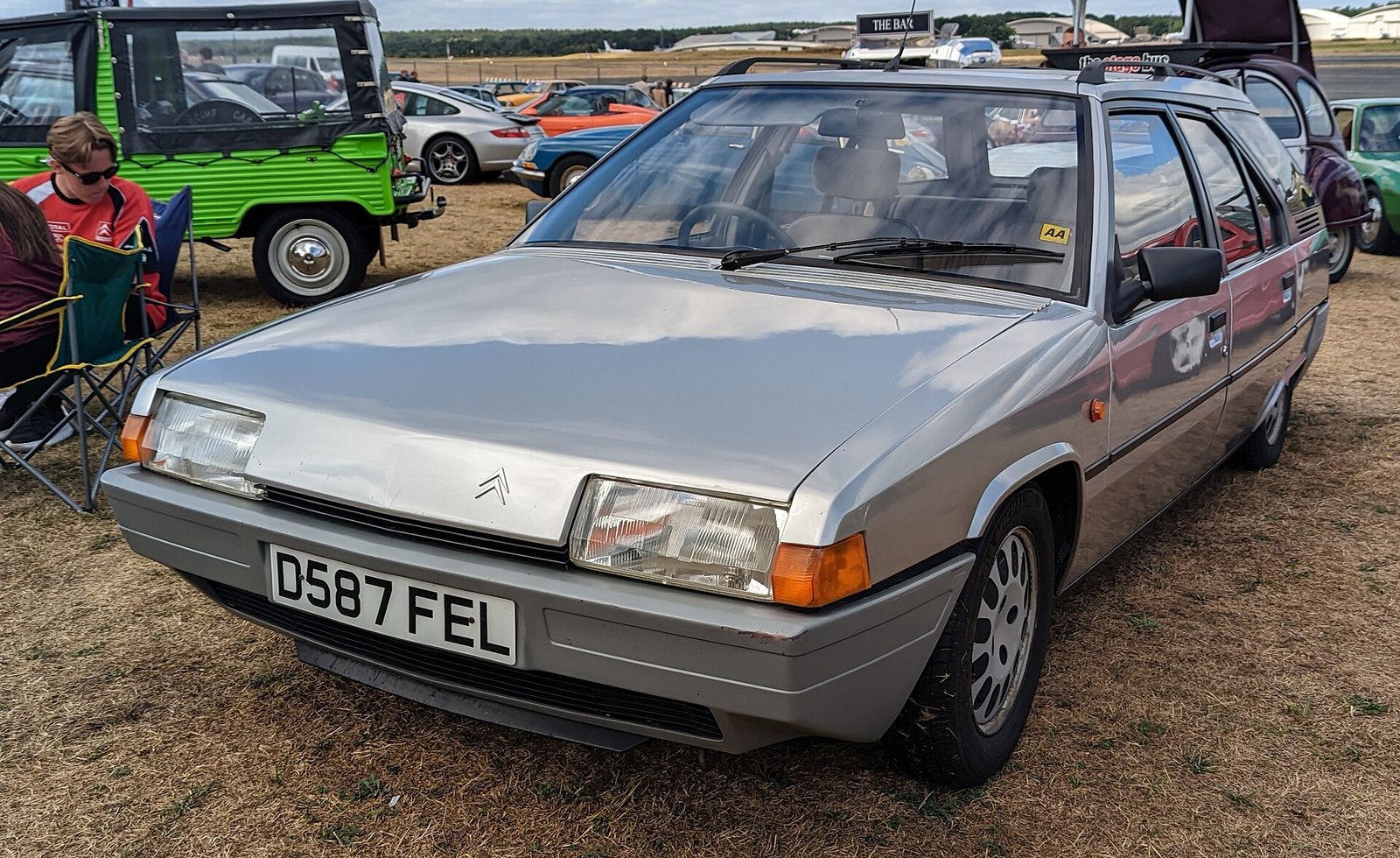
That 1.8-liter XUD7 was the one that spread across Europe. It went into the Peugeot 205 and 305, the Citroën BX and, above all, into the Citroën C15, the boxy little van that became the standard work vehicle across much of southern Europe.
The name itself tells you something. The XUD was the diesel member of PSA’s XU engine family, whose gasoline versions powered many of the same cars. Using the gas engine as a base kept costs down and meant the diesel could slot into the same engine bays without major changes, which is exactly why it ended up in so many models at once. Production centered at PSA’s engine plant at Trémery, in eastern France, which was opened at the end of the 1970s largely to build diesels.
The prechamber trick
If you’re used to modern common-rail diesels, the XUD works a little differently. Fuel isn’t sprayed directly into the main combustion chamber. It goes into a small prechamber in the head, where combustion starts before spreading into the cylinder. That costs some efficiency compared with the direct injection that came later, and it makes cold starts depend on glow plugs. The upside is that the injection system works at far lower pressure. A modern common-rail system runs at 2,000 bar or more, while the XUD’s mechanical pump got by with a small fraction of that. Lower pressure meant less stress on injectors, pump and block, and that meant a very long life.
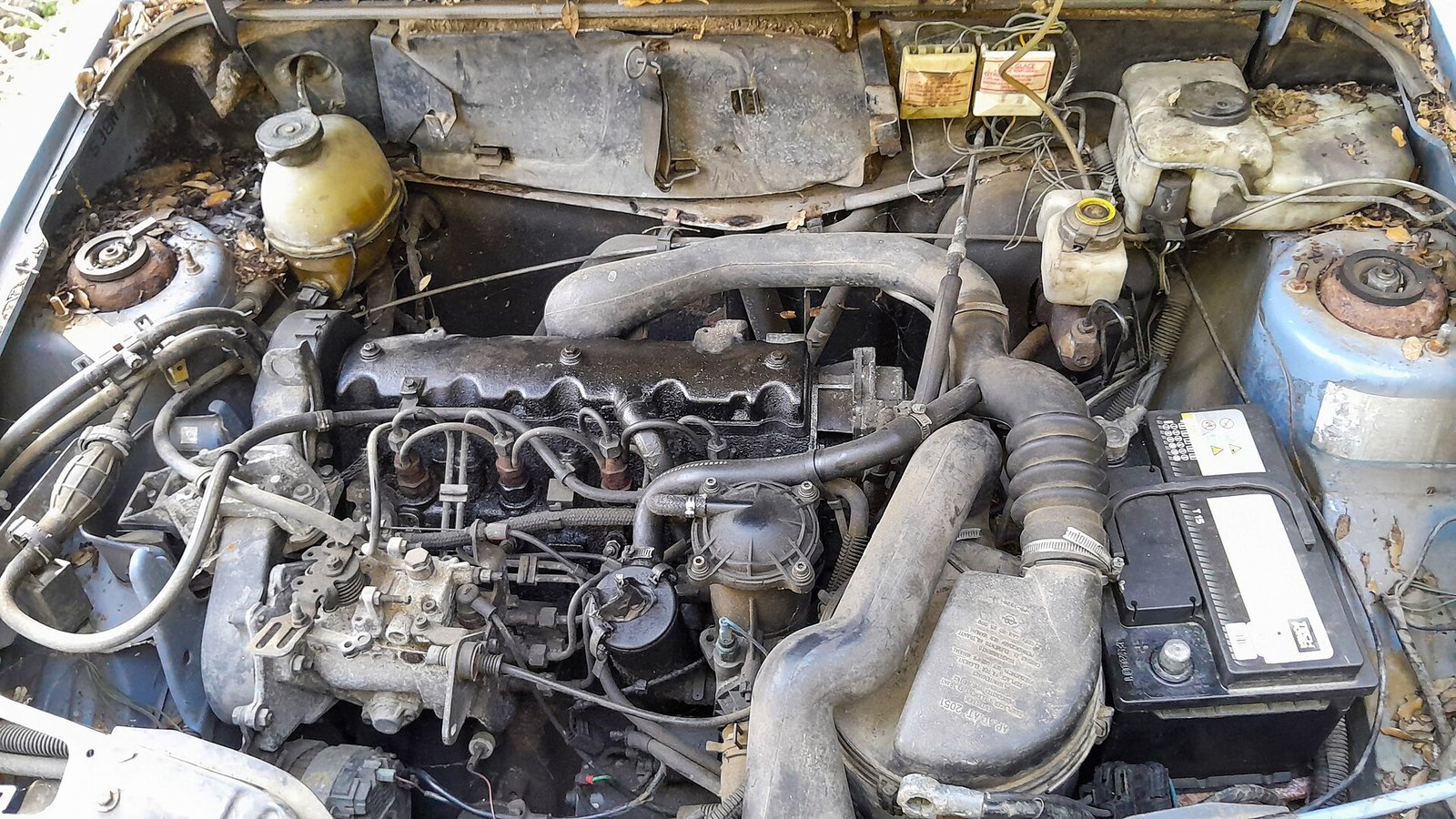
The block was thick, heavy cast iron with generous cylinder walls that could be rebored more than once, though they rarely needed it. The injection pump was a mechanical Bosch or Lucas CAV, depending on market and version, and it could be rebuilt over and over by any small diesel shop in the country. You didn’t need a scan tool. An experienced mechanic with a stethoscope, a timing light and his own ears could set one up in an afternoon.
The cheap cousin of the Mercedes taxi
American readers who know old Mercedes diesels will recognize the type. The 240D and 300D sedans from the 1970s and 1980s built their legend in the U.S. on the same principle: prechamber injection, mechanical pumps, heavy iron and modest output, with mileage figures that ended up in the stuff of legends. Plenty of them are still running on veggie oil in Oregon. The XUD did the same thing for a fraction of the money, in cars that cost less than the Mercedes’ options list. It was the people’s version of the same idea, and in Europe it reached far more people.
A little hatchback that went on forever
The Peugeot 205 is best known in the U.S. as the car behind the GTI that every hot-hatch fan swoons over. In Europe, the diesel 205 mattered just as much. A 205 GRD with the 1.8 XUD7 made 60 hp. Getting to 60 mph was an act of faith. Once it was on the highway, though, it settled at around 3,000 rpm and could cross Spain from Barcelona to Madrid on less than half a tank. Real-world consumption of about 4 to 5 liters per 100 km, or roughly 50 to 60 mpg, was normal. With diesel cheaper than gasoline in much of Europe at the time, the math was brutal.
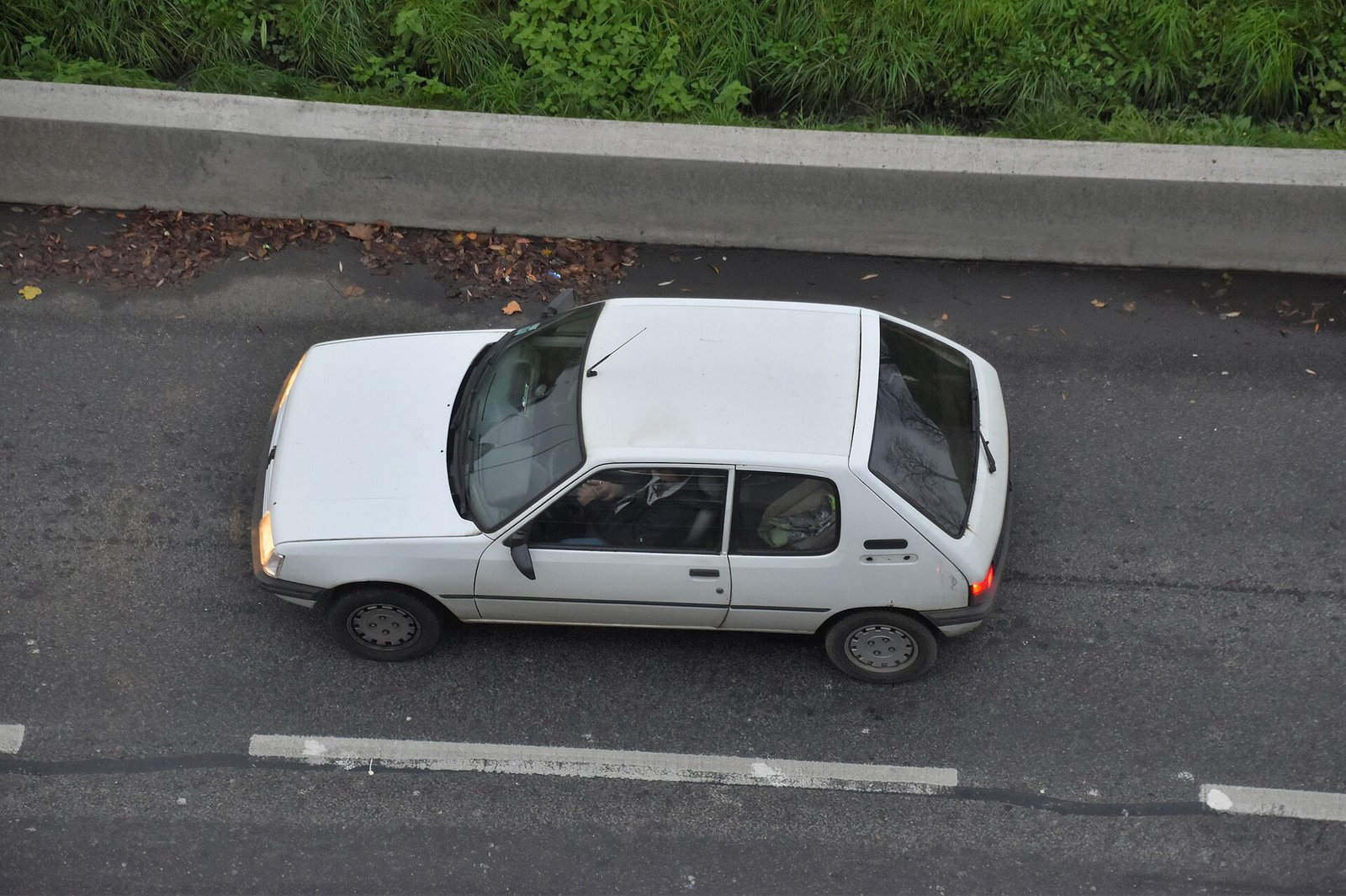
And the engines didn’t die. A typical 205 diesel would rust, wear out its suspension and need the usual consumables, but the engine was the last thing to go, if it went at all. Plenty of C15s were on their second half-million kilometers, about 310,000 miles, and stories circulate of vans that reached a million kilometers on the original engine with little more than oil changes and a set of injectors. Some of those stories have been verified. Many haven’t, and they get better each time they’re told.
Spain has a special claim on this story. The 205 was built at Peugeot’s Villaverde plant in Madrid as well as in France, and the XUD also found its way into a Spanish-built off-roader. Santana Motor of Linares, which had built Land Rovers under license for decades, assembled the Suzuki Vitara for the European market in the 1990s, and the diesel version used PSA’s turbocharged 1.9. A Japanese SUV with a French engine, built in Andalusia: Europe in a single drivetrain.
The van that kept southern Europe running
The C15, built on the Citroën Visa platform, was to European tradespeople roughly what the Ford Ranger or Chevy S-10 was to their American counterparts, except much smaller and slower. It carried plumbers, electricians, blacksmiths, bakers and farmers. Postal services, couriers, local stores and farm co-ops ran fleets of them. It was built in large numbers at Citroën’s plant in Vigo, in the northwest of Spain, which is part of the reason it became almost a national symbol there.
On the used market it defied logic. High-mileage vans held their value because buyers knew the engine would run as long again. Spanish tradesmen have a saying about these vans: they don’t die, they get passed down.
Turbo, and the rest of the family
When PSA eventually bolted a turbocharger on the bigger engine to make the XUD9TE, output went from the 64 to 71 hp of the naturally aspirated 1.9 to about 90 hp. That doesn’t sound like much now, but in a Peugeot 405 SRdt or a Citroën ZX Turbodiesel, it was enough for anything a family needed. The turbo added one more part that could fail, but well-kept turbo versions routinely went past 250,000 to 300,000 miles too.
It wasn’t flawless. The most serious weakness was the timing belt, which also drove the injection pump. The XUD is an interference engine, so if the belt snapped, valves met pistons and the repair bill was ugly. Owners who stuck to the change interval rarely had a problem. Owners who stretched it learned a lesson. Head gaskets could fail, especially on turbo engines worked hard. Glow plugs wore out, and when they went, winter starts became a ritual. The mechanical pump needed periodic adjustment. And it was loud, with the unmistakable idle clatter of an old diesel. To drivers, that rattle sounded like a promise that tomorrow it would start again.
There was one more virtue nobody advertised. Prechamber diesels are tolerant. They put up with poor fuel, cold mornings and neglect far better than a modern high-pressure system. In rural Spain, plenty of C15s ran for years on agricultural diesel, the red-dyed, low-tax fuel meant for tractors, which was technically illegal for road use and widely winked at. The XUD didn’t care. A modern common-rail engine would not have been so forgiving of whatever came out of the farm tank.
What America got instead
For U.S. readers, it’s worth remembering how differently things went. Peugeot sold diesel 505s in the U.S. in the 1980s, but they used the older Indenor family, and Peugeot left the U.S. market in 1991. Volkswagen’s Rabbit and Jetta diesels made a few loyal fans. And GM’s Oldsmobile mess had poisoned the well. As a result, the idea of a cheap little diesel that would outlast the car around it never took hold among American families. Diesel became something you bought in a 3/4-ton pickup. In Europe, by contrast, small XUD cars helped push countries such as Spain, France, Portugal and Italy toward a market where diesel took a huge share of private car sales, a shift that lasted well into the 2010s.
That’s also part of why the story ended badly. Europe went so deep into diesel that when the emissions reckoning came, it hit hard. Later engines picked up EGR valves that clogged, particulate filters and AdBlue, and with them a whole new list of expensive failures that the XUD never knew.
The end
From the late 1990s, PSA phased the XUD out in favor of the DW family and, above all, the HDi common-rail engines. They made more power, used less fuel, were far cleaner and much quieter. Objectively, they were better in nearly every way. None of them ever earned the XUD’s reputation for being unkillable. Electronics, aftertreatment systems, extreme injection pressures and growing complexity made modern diesels more efficient, but also more expensive to fix and more likely to need something big done sooner.
For a sense of what that reputation looks like elsewhere, think of the Perkins diesels in British tractors and boats, or BMW’s M57 straight six, which was the XUD’s opposite in nearly every way except that people kept them running for decades.
The workhorse
In Spain and France, mention "the C15 engine" and people smile. It’s the engine of the delivery driver, the farmer, the self-employed guy whose van had to start every single morning. It wasn’t fast or quiet or clever, but it was reliable to a degree that sounds like science fiction now, and in a working vehicle that’s the only quality that pays the bills at the end of every single month.
The Oldsmobile diesel came from a big company that tried to take a shortcut. The XUD came from one that took the long way around, with thick iron, low pressures and a mechanical pump that anybody could rebuild. Forty years later, long after the Oldsmobile diesels went to the crusher, there are still C15s running in Spain, still rattling at idle, still being handed down.
PSA XUD diesel FAQ
What cars had the PSA XUD engine?
The Peugeot 205 and 305, the Citroën BX and, most famously, the Citroën C15 van, among many others. Turbo versions came later in the family.
Why is the XUD diesel so reliable?
It has a thick cast-iron block, a low-pressure mechanical injection pump (Bosch or Lucas CAV) feeding a prechamber, and no electronics. Lower injection pressure means less stress on the pump, injectors and block, and almost any workshop can fix it.
What is the difference between the XUD7 and XUD9?
Displacement: the XUD7 has 1,769 cc and the XUD9 1,905 cc. Both are inline fours with a cast-iron block, an aluminium head and indirect injection.
Check you’re still alive.
Photos: Citroën C15, Guillaume Vachey (CC0); XUD7, Kakoula10 (CC BY-SA 4.0); Peugeot 205 GLD, Charles from Port Chester (CC BY 2.0); Citroën BX 19 RD, Calreyn88 (CC BY-SA 4.0); XUD9, Vaa (public domain). Via Wikimedia Commons.