Perkins: The British Diesel That Ran the World and Never Asked for Credit
Every country has its unsung industrial heroes — the bits of engineering that did the heavy lifting while the glamorous names took the applause. Britain gave the world Rolls-Royce and Aston Martin, the marques that end up on bedroom posters and auction catalogues. But it also gave the world Perkins, and Perkins did something those two never managed: it ended up under the bonnet of half the working vehicles on the planet, from a Spanish farm tractor to an Indian lorry to an Argentine pickup, and almost nobody who relied on it could tell you a single thing about the company that built it.
That is the strange fate of the truly useful. Top Gear was never going to do a film about a four-cylinder agricultural diesel. And yet, if you want to understand how the developing world actually got moving in the mid-20th century — how fields got ploughed and goods got hauled on a budget — you have to talk about a small firm from Peterborough that bet everything on an idea everyone else thought was daft.
A two-room office and a contrarian bet
Rewind to 1932. Britain is climbing out of the Great Depression, and the diesel engine has an image problem. To the motor industry of the day, diesel is the heavy, slow, agricultural lump you put in ships and generators — the poor relation of the lively petrol engine. Nobody serious imagines fitting one to a car or a light van. It simply isn’t done.
Two men disagreed. Frank Perkins, a born salesman from Peterborough descended from a line of agricultural engineers, and Charles Chapman, the quiet engineering brain. They’d met at Aveling and Porter, a machinery firm that went bust before they could finish the project they cared about: a light, fast-revving diesel. Rather than let the idea die with the company, they backed themselves.
On 7 June 1932, in a two-room office on Queen Street, Peterborough, F. Perkins Limited was born — four employees and one heretical conviction: that diesel could be made to rev like petrol while sipping fuel like a miser. Chapman was the technical director; Perkins was the chairman and, above all, the salesman. And he could sell.
Their first engine, the Vixen, was the world’s first high-speed four-cylinder diesel. More than a product, it was a statement: proof that diesel needn’t be a lumbering dinosaur. To ram the point home, in October 1935 Perkins took to the Brooklands circuit and set six world diesel speed records across various distances. A three-year-old company barely anyone had heard of, making diesel go faster than anyone on earth. The industry took notice.
From record-breaker to the engine of the fields
The war, as ever, changed the trajectory. Through the Second World War, Perkins built two engine families, the P4 and P6, and learned to manufacture at scale and to tight tolerances. Afterwards it went public, built a modern plant at Eastfield on the edge of Peterborough, and aimed squarely at the market that would sustain it for the next half-century: agriculture.
This was the masterstroke, and it played to Frank Perkins’ roots. Tractors, combines, work vans, delivery lorries, utility off-roaders — all of them needed an engine that was cheap to run, easy to fix, and almost impossible to kill. That was Perkins to a tee. By the late 1950s the Eastfield factory was turning out 75,000 engines a year and employing 7,000 people.
But the genius wasn’t only in building engines. It was in licensing them. Perkins worked out that it didn’t need to ship motors to every corner of the globe if it could sell the right to build them on the spot. It spread licences and distributors worldwide — from India to Argentina, where it set up a factory in Córdoba province — and turned its engine into a global standard. Models like the 4.236 and the 3.152 earned a near-mythical reputation for longevity. The kind of engine of which mechanics say, with genuine respect, that you couldn’t kill it with a hammer.
The Spanish chapter: the engine that got everywhere
Spain is where this story gets personal for a particular kind of motoring history, because in the lean decades of Franco’s Spain, the Perkins diesel was a godsend. A poor, rural country trying to mechanise its farms and move goods on a shoestring found exactly what it needed: cheap reliability.
It got everywhere. You’d find it under vans, light trucks and farm machinery across the country. VIASA, the Zaragoza outfit that built Jeeps under American licence, offered Perkins diesels from its earliest CJ-3B models, and when the Jeep Comando passed into Motor Ibérica’s network in 1974, it adopted the 1,760cc Perkins 4-108 as standard. The heavy-duty Comando HD later took the 2,710cc Perkins 4-165. That same engine, rebadged MD27, would eventually beat away under the first Spanish-built Nissan Patrol — the diesel heart of the old industrial order, fitted to the very Japanese 4×4 that came to bury it. You couldn’t write the irony.
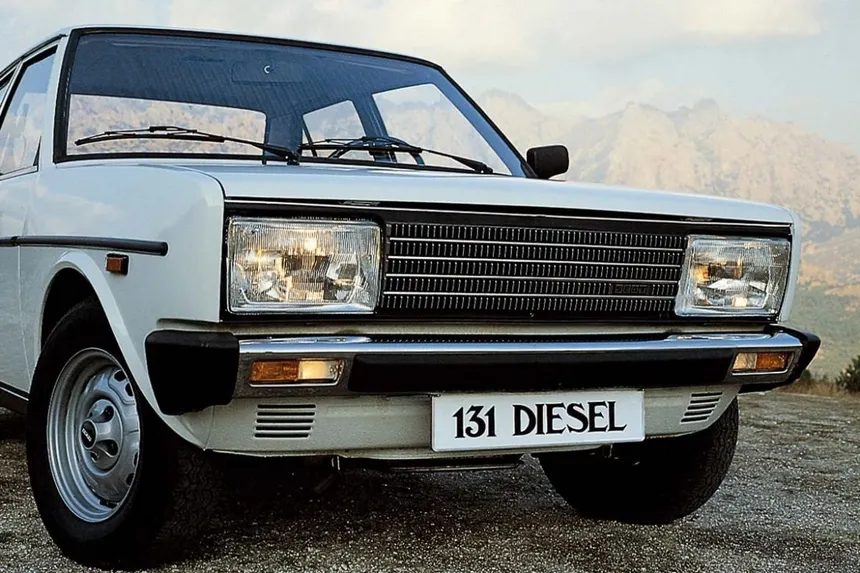
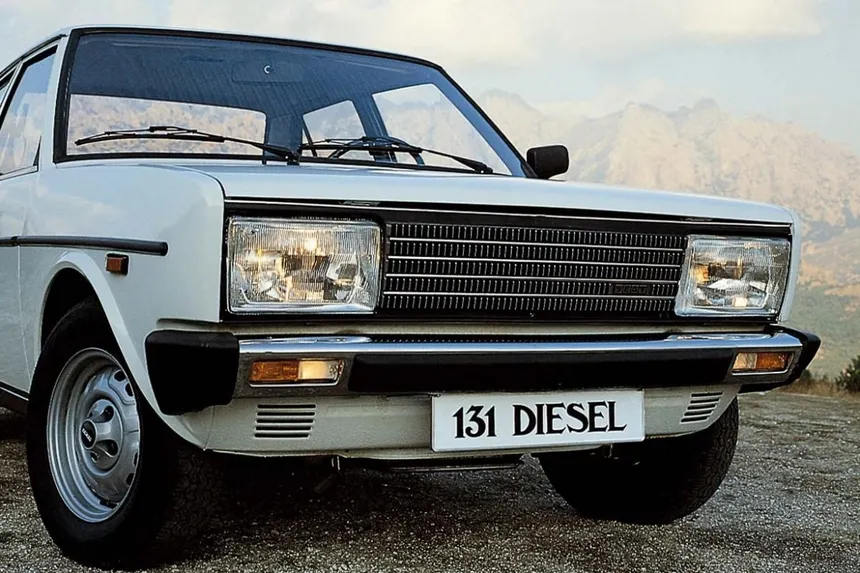
Even SEAT turned to it. The first diesel SEAT 131, in the late 1970s, ran a 1,760cc Perkins 4-108 making all of 49bhp — the very same engine that beat under the Jeep Comando. Slow, gruff, agricultural — but it finally gave Spain’s professional drivers and taxi men a factory diesel that sipped fuel. So coveted was that niche that, before SEAT offered it from the factory, drivers routinely bought the petrol 131 and had a workshop graft a diesel into it — usually a Perkins, sometimes a Barreiros, a Mercedes or a SAVA.
That points to one of the great truths of Perkins in Spain: it didn’t just come fitted, it got transplanted. The diesel-swap culture — yank out a thirsty petrol engine and drop a frugal Perkins into the hole — was a workshop phenomenon. It was done to saloons, vans, off-roaders, even the odd long-nosed American pickup whose gluttonous V8 got swapped out for a tame British four-pot. The customer asking for that wasn’t chasing power. He was chasing the end of the month with a full tank. Perkins delivered.
A word of caution, because the legend sometimes overreaches: not everything diesel in Spain was a Perkins. The Land Rover Santana, built in Linares, ran its own Rover-derived diesels, not factory Perkins — even if some ended up converted via the workshop route. Perkins reigned, but it didn’t rule alone. It shared the Spanish countryside with Barreiros, with SAVA-Pegaso, with Santana‘s own Rover units. Spanish diesel in that era was a mosaic of licences, and Perkins was simply one of the biggest, most dependable tiles.
What made the Perkins fit the Spanish moment so perfectly was less about horsepower than about economics and repairability. This was a country where a working vehicle had to last decades, where spares were scarce and money scarcer, and where the man who owned the van was very often the man who fixed it. An engine you could understand, strip and rebuild with hand tools — and that asked for cheap fuel — wasn’t a compromise here. It was the whole point. The Perkins didn’t win in Spain because it was sophisticated. It won because it never pretended to be anything other than what it was: a tool, built to work, built to be mended.
Why it was so hard to kill
It’s worth pausing on why Perkins earned that immortal reputation, because it wasn’t luck or branding. It was design philosophy.
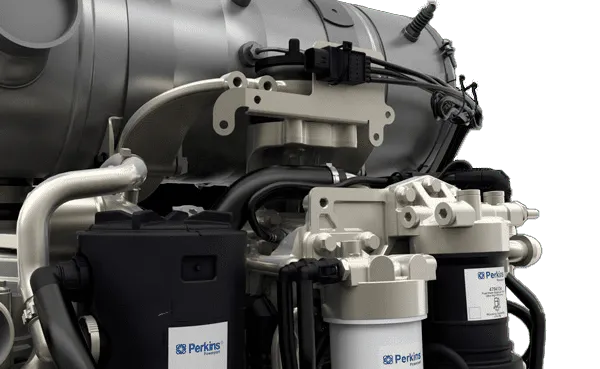
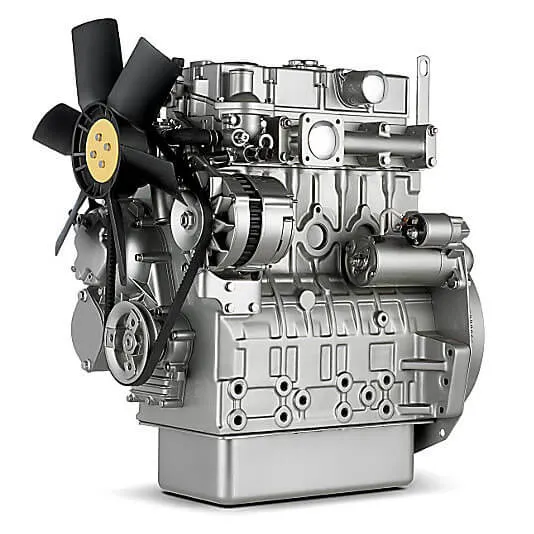
These were engines built with modest stress for their type, with contained rev ranges, generous materials and zero frills. Few parts, all of them accessible, all repairable with ordinary tools and a bit of nous. There was no electronics to fail, because there were no electronics at all — mechanical injection pump, injectors, filters, and not much else. When something went wrong, it went wrong predictably and got fixed on the spot. That deliberate simplicity is what made the Perkins the favourite of anyone who had to keep a fleet running without downtime.
It came with its own ritual, of course. Old diesels demanded a hands-on maintenance regime that sounds like another century today: change the fuel filter periodically, and above all, bleed the system. Let air into the fuel lines and the engine wouldn’t start for love nor money — so you’d crack the bleed screw and work the hand primer until the diesel ran clean, free of bubbles. A ritual any period mechanic could perform blindfolded, and one that almost nobody in today’s diagnostics-laden workshops knows how to do. Perkins belonged to that world of dirty hands and direct knowledge. Perhaps that’s why it’s remembered so fondly.
The orange full-circle: when Caterpillar took over
And here’s the twist that closes the story, with a certain industrial poetry to it.
In 1959, with Frank Perkins by then seventy, the company was bought by its biggest customer: Massey Ferguson, the tractor giant. It made perfect sense — the engine that ruled the fields passing to the firm that ruled the tractors. Perkins kept growing and diversifying, building over 22 million engines across its history for agriculture, industry, construction, marine and power generation.
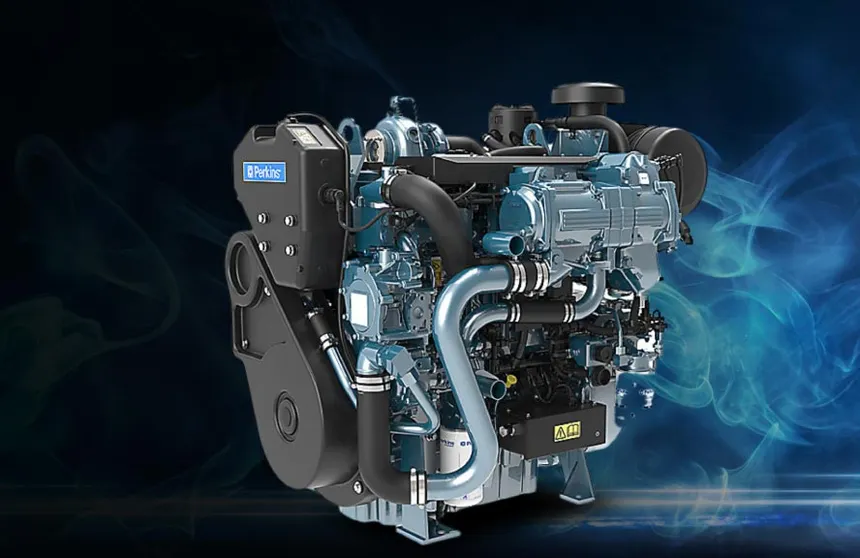
But the real kicker came in 1998: Perkins became part of Caterpillar. Yes — Caterpillar. The orange giant of Peoria, Illinois. The house of earth-moving bulldozers, of the tracked machines anyone can spot on a building site or in a quarry, of the D8s, D9s and D10s that have reshaped half the world.
Sit with what that means. For decades, in workshops and on job sites, Perkins and Caterpillar were two separate worlds that rarely met. The little English diesel you rebuilt on the bench and the orange colossus you sweated over moving earth had nothing to do with one another — two different planets in the same mechanical galaxy. And then one day, with nobody on the ground having seen it coming, they turned out to be the same company. The humble Peterborough engine and the Peoria behemoth under one roof. The one that ploughed the allotment and the one that levelled the hillside, joined by a signature on a 1998 contract.
The engine nobody named
Perkins was never a marque to boast about. It didn’t win Le Mans, didn’t sell posters, didn’t star in epic commercials. It did something harder and less glamorous: it showed up. It was in the tractor that fed people, the van that delivered, the Jeep that crossed the mud, the taxi that never stopped, the pickup tamed by sheer ingenuity. It was the engine of people who work, not people who pose.
Which is why those who’ve actually had one in their hands hold it in a different kind of regard than they reserve for a barking V8 or an elegant straight-six. You don’t admire a Perkins from across the room. You know it up close — getting filthy, bleeding the lines, hearing it catch first time on a cold morning and understanding, without saying it, that the ugly little British lump would outlast you. It belongs to Caterpillar now, and the working countryside it ploughed has all but vanished. But if you ever lift the bonnet of an old van or a forgotten Jeep and see those letters cast into the block, you’ll know: you’re looking at the engine that moved a country without ever asking anyone to learn its name.