SIATA Española: the Spanish cousin of Steve McQueen’s Siata that ended up delivering bread
Steve McQueen owned a Siata. In the 1950s, before the Jaguars and the Porsches and the Bullitt Mustang, one of the cars in his garage was a Siata 208S, a small, beautiful Italian roadster from a Turin firm that built sports cars on Fiat mechanicals. Americans who know their 1950s sports cars still recognize the name. Almost none of them know that the same name had a second life in Spain, where it was attached to tiny hand-built sports cars, an improbable factory in a dry field outside Tarragona and, in the end, thousands of delivery vans.
SIATA Española is the story of what happens when Italian design meets a country that can’t afford it. It’s charming, a little absurd and very Spanish.
The Turin original
The original SIATA was founded in Turin in 1926 by Giorgio Ambrosini. The name stood for Società Italiana Applicazioni Trasformazioni Automobilistiche, roughly "Italian company for automotive conversions," and that’s exactly what it did. SIATA took ordinary Fiats and turned them into something faster and more beautiful, with tuned engines, special parts and new bodies. It was part of a rich Italian tradition of small coachbuilders and tuners clustered around Turin and Milan.
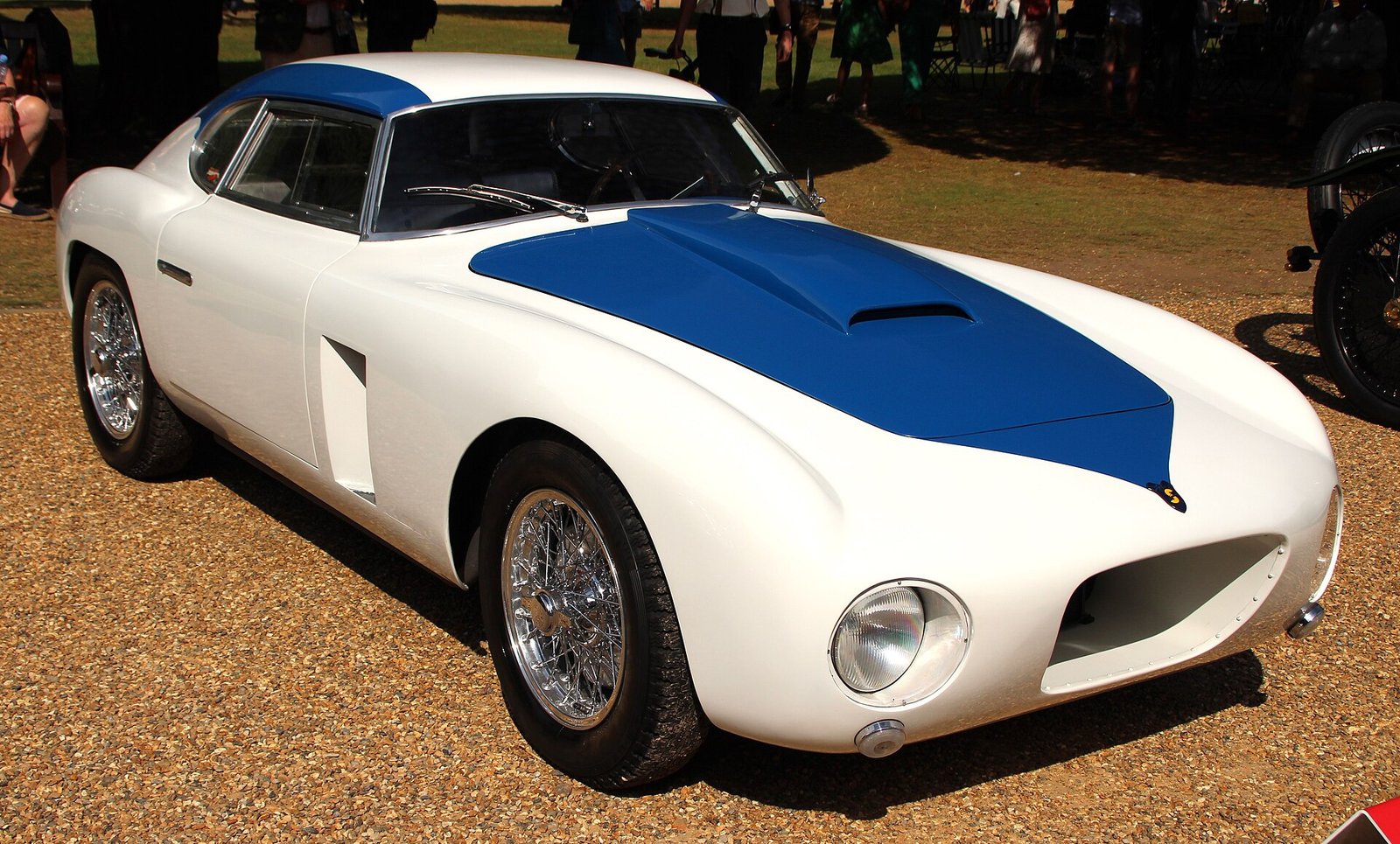
Its most famous car was the 208S of the early 1950s, which used the 2.0-liter V8 from Fiat’s unusual 8V sports car. Many were sold in the United States, where they competed in sports car races and found their way into celebrity garages, McQueen’s among them. Siata also built the Spring and other small Fiat-based cars, but in the United States it was the V8 cars that made the name. They raced in SCCA events across the country, often against cars with far bigger engines, and their light weight and Italian handling made them giant-killers in the right hands. To Americans, a Siata was an exotic: a European sports car with a V8 and Italian bodywork, rarer than a Ferrari.
A Barcelona hotelier with an Italian dream
The Spanish story starts with a man who wasn’t an engineer at all. Enrique Sala was a businessman from the hospitality trade and, above all, a car lover with a passion for Italian design. In 1954 he went to the Turin motor show, met the Ambrosini family, and came home with a license to build SIATA cars in Spain.
He came home with something else as well: the license to distribute Gaggia espresso machines. That detail says everything about him and about Spain in the 1950s. One of the first SIATA vans would later be fitted out as a promotional vehicle for those coffee machines. Cars and coffee, sold together.
The company was founded in Barcelona in 1955. The logical place for a factory was next to SEAT, in Barcelona’s Free Zone, since SIATA would be converting SEATs. But the mayor of Tarragona, a friend of Sala’s, offered land at a bargain price in an area called Entrevías, and SIATA moved there. The land had no running water and no electricity. It was a dry plot surrounded by olive and carob trees, and the factory ended up with a water tank on the roof like a frontier town in a Western. Work began on January 20, 1960.
Spain’s people’s car as a starting point
To understand what SIATA was working with, you need to know about the SEAT 600. SEAT, Spain’s state-backed car company, built Fiat models under license, and the 600, launched in 1957, was the car that put Spain on wheels. It was a small rear-engined sedan with a little four-cylinder of around 600 cc and barely 20-some horsepower. For millions of Spanish families it was the first car they ever owned. It was the closest thing Spain had to the Model T or the Volkswagen Beetle.
SIATA’s plan was to take that humble platform and dress it up.
Spain opens a crack in the door
The timing of SIATA’s factory wasn’t random. In 1959 Franco’s government, close to bankruptcy after two decades of isolation and self-sufficiency, adopted a Stabilization Plan that opened the economy to foreign investment and trade. Tourism from northern Europe began to boom on the Mediterranean coast, Tarragona included. Factories went up, wages rose, and for the first time a growing middle class could think about buying a car.
That was the window SIATA aimed for. A family that had just bought its first SEAT 600 might, a few years later, want something with a little more style. SIATA bet that there would be enough of those buyers to support a small sports car maker. The bet was early. The middle class was growing, but not fast enough, and not rich enough, for hand-built coupes.
Built by hand, for real
SIATA cars weren’t built on an assembly line. Each one was essentially made by hand, and a single car could take up to three days. Bodies were built in two halves, front and rear, then joined on the chassis of the donor SEAT. To shape each body, SIATA’s carpenters first made a wooden buck, a full-size form, over which the steel panels were hammered into shape.
Because each panel was fitted by hand to its own car, parts weren’t interchangeable. A door from one SIATA wouldn’t fit another, so workers numbered the pieces to keep them together. Every car was, quite literally, one of a kind, which is a nightmare for restorers today: a missing panel can’t simply be borrowed from another car, it has to be shaped to fit the one in front of you, just as it was in Tarragona sixty years ago.
Tarragona had no tradition of this kind of work, so Sala brought in Italian specialists and skilled panel beaters from Barcelona to train local workers. People who were there said some of the best body men of their generation came out of that factory.
Making a 600 go faster
Turning a SEAT 600 into a sports car took some simple but clever engineering. The easiest way to get more power from a small engine is to make it bigger, and the cheapest way to do that is to enlarge the cylinders. SIATA fitted larger pistons, boring out the 600’s little four-cylinder from the original 633 cc to 750, and later offered an 850. More displacement means more air and fuel burned on each stroke, and more power and torque throughout the rev range.
The other half of the job was the body. A lower, smoother shell cut through the air more easily than the boxy 600, so the same modest power produced a higher top speed. The result wasn’t fast by American standards, but in a country of 600s and Biscuters, a Tarraco felt like a real sports car.
The sports cars
Almost every SIATA started from the SEAT 600. The first serious model was the Ampurias, with the engine enlarged to about 750 cc and an elegant three-box body. Only 24 were built, which makes it one of the rarest production cars ever made in Spain.
Then came the Turisa, for many the prettiest SIATA of all, offered as a coupe or as an open spider, also with a 750 cc engine. About 228 spiders were built, and only around eleven are believed to survive. It cost about 125,000 pesetas, a fortune in Spain at the time.
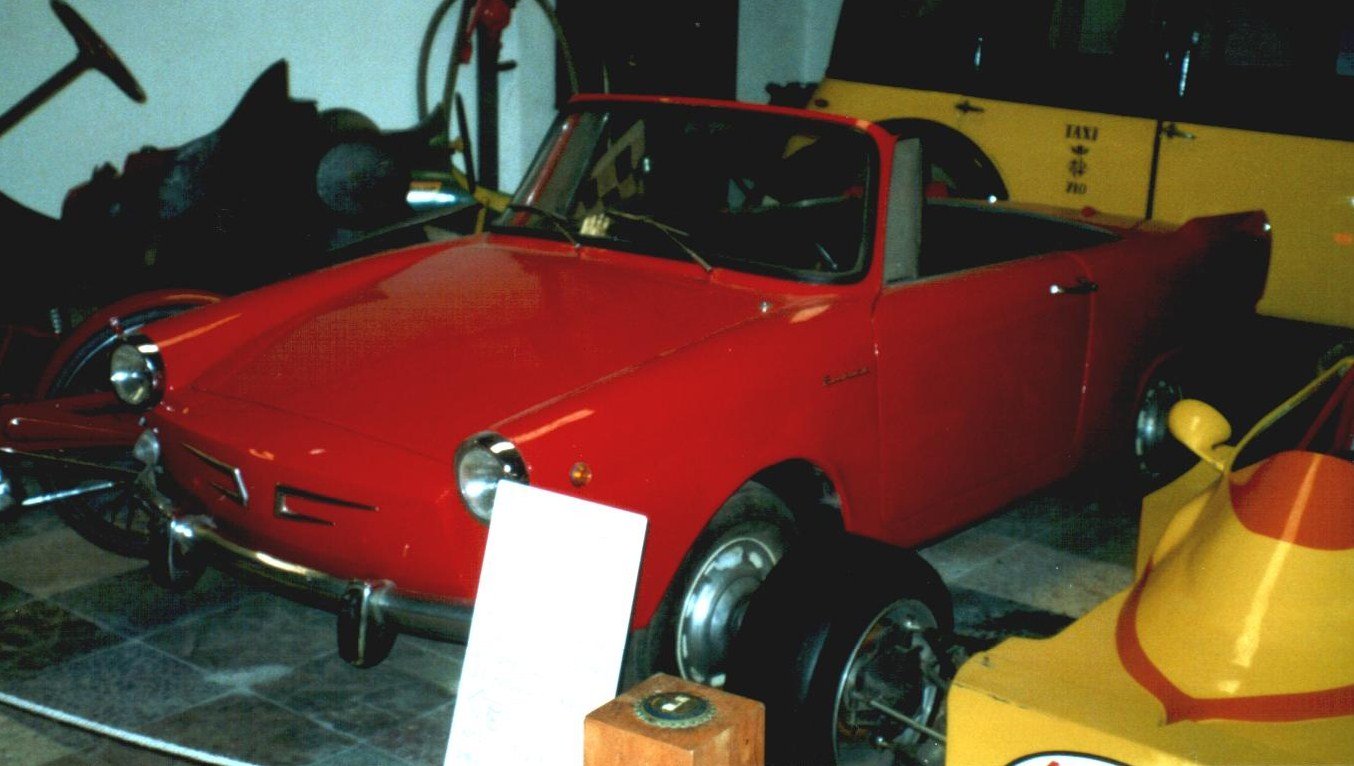
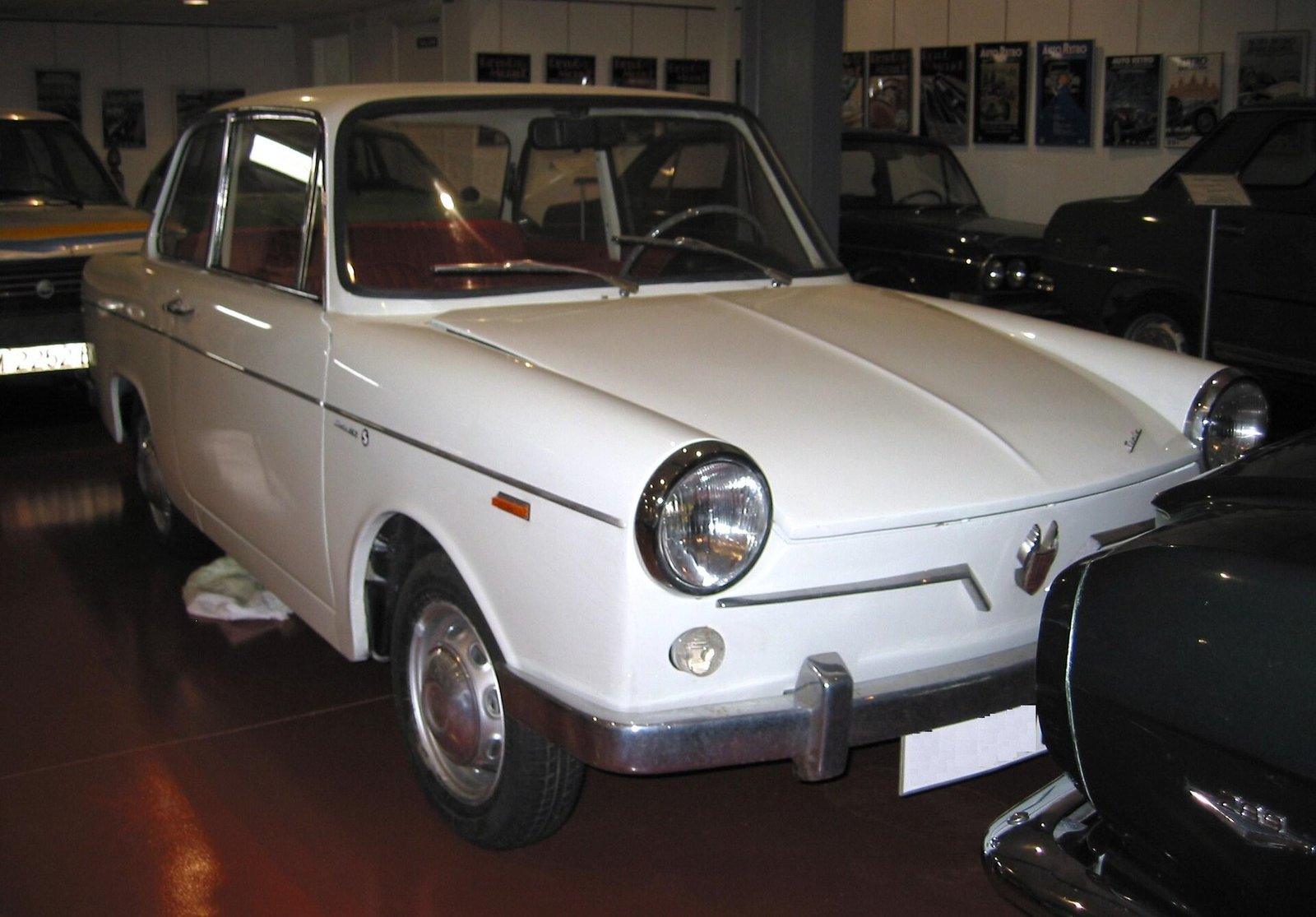
The Tarraco, named after the Roman name for Tarragona, was the company’s star. It was a small four-seat sports coupe based on the SEAT 600, with the engine enlarged to 750 cc and later to 850. With up to 31 horsepower it could approach 75 mph, which in a car that size felt fast. Like any good hand-built car of the era it was a collage: taillights borrowed from a Lancia, an instrument panel inspired by the SEAT 1500 but scaled down, and a rear window that was really another car’s windshield. The most quoted figures put production at about 598, though some sources go as high as 900. Decades later, SEAT reused the Tarraco name for an SUV that has nothing to do with it.
And then there was the Barcino, a one-off coupe shown at the Barcelona motor show in the early 1960s, built on a SEAT 1400 chassis with the engine enlarged to 1.7 liters with an aftermarket kit. Only one was ever made.
When champagne turned into bread
The sports cars were beautiful, and almost nobody bought them. In 1960s Spain, a hand-built car costing more than 125,000 pesetas was for a tiny wealthy minority. The country didn’t need spiders. It needed to move goods.
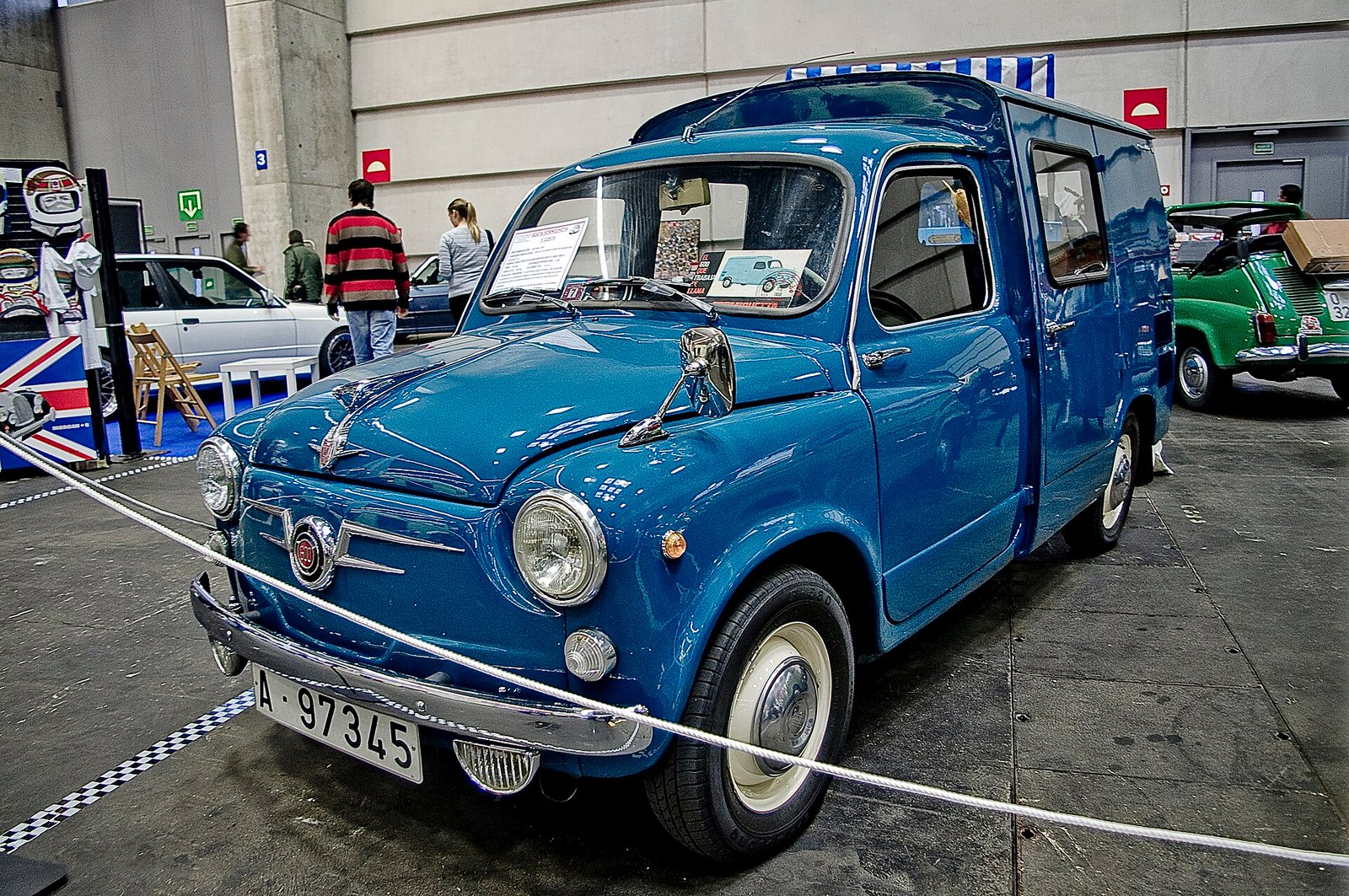
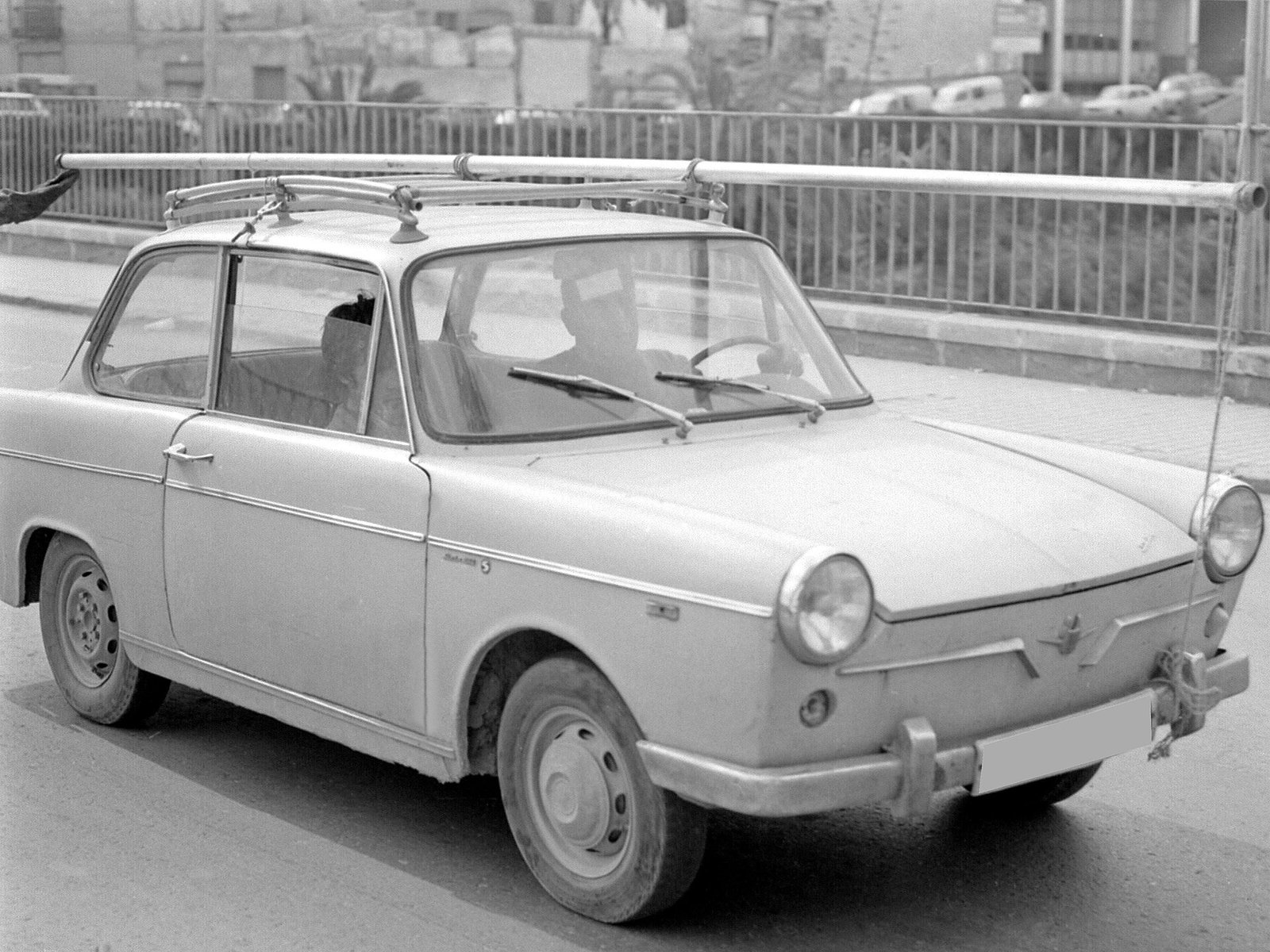
SIATA read that market better than anyone. Its salvation was the Formichetta, Italian for "little ant," a small van based on the 600, cheap and perfect for neighborhood shops and city deliveries. From the Formichetta came the Minivan, the delivery van that became SIATA’s real commercial success. Small businesses, large families and government agencies, including the Ministry of Public Works, the postal service and the airline Iberia, bought them. They became ambulances, refrigerated vans and even hearses. By 1971 SIATA was building 23 a day and had made close to 8,000.
For a Spanish shopkeeper in the 1960s, the Minivan was exactly the right tool: small enough for narrow old-town streets, cheap to run on SEAT parts that any mechanic knew, and roomy enough for crates of produce, bread or post. In many towns it became as familiar a sight as the SEAT 600 itself, often painted in the colors of the local bakery, pharmacy or grocer, and plenty of Spaniards who never heard the name SIATA remember those little vans from their childhood. The chrome grilles, hand-made brass trim and decorative moldings disappeared. A company founded to build Italian jewels became a factory for delivery mules, and that’s what kept it alive.

Spain’s other small makers
SIATA was one of several small Spanish manufacturers that tried to carve out a niche in those years. In Barcelona, Autonacional built the Biscuter, the doorless microcar designed by French aviation pioneer Gabriel Voisin. Others built vans, three-wheelers and specialty vehicles on SEAT and licensed mechanicals. Almost all of them faced the same problem: SEAT controlled the supply of the basic cars and parts, and once Spaniards could afford a proper SEAT, there was little room for anyone else.
What made SIATA different was its ambition. Most small Spanish makers aimed at the cheapest possible transport. SIATA aimed, at least at first, at beauty.
Absorbed by Ebro
The end came the way it did for so much of Spain’s small car industry: absorption. In 1972 Motor Ibérica, the maker of Ebro trucks, which had grown out of Ford’s Spanish operation, took over production of the Minivan. SIATA stopped being a brand and became a name in Ebro’s catalog: the van became the Ebro-Siata 40. When SEAT stopped building the 600 in 1973, the van was adapted to the SEAT 850 and renamed the Ebro-Siata 50.
SIATA Española as a company closed in 1973. In thirteen years it had built somewhere between 15,000 and 20,000 vehicles, depending on the source. It was born dreaming of Italian sports cars and died as a label on a delivery van.
Why it still matters
It would be easy to call SIATA a failure. It dreamed of pocket Ferraris and ended up building mail vans. But that misses the point. In a country that could barely afford basic transport, SIATA proved that Spain could build cars that were beautiful, not just useful. It did it in a field with no electricity, training metalworkers from scratch, assembling cars from parts of three different models and numbering doors so they wouldn’t get mixed up. When the dream couldn’t pay the bills, it adapted and served the country that actually existed.
There’s also a bigger legacy than the surviving cars. The empty land where SIATA built its factory became one of the industrial estates that helped turn Tarragona into the industrial city it is today. Today only a handful of cars survive, a Turisa here, a Tarraco carefully restored in SEAT’s historic collection there, a Minivan in a museum.
For Americans who know the Siata name from the 208S, the Spanish branch is an unexpected footnote. The same name that once hung on a V8 roadster in Steve McQueen’s garage ended up on a van delivering bread in Tarragona. Spain’s industry of that era also produced trucks and off-roaders under license, like those of Ebro and the Jeeps of VIASA, and the Fiat 8V engine that powered the Italian Siata has its own story.
Check you’re still alive.
Photos via Wikimedia Commons: 1965 SIATA Tarraco, Kroelleboelle (CC BY-SA 3.0); 1953 Siata 208S, MrWalkr (CC BY-SA 4.0); 1966 SIATA Tarraco and 1961 SIATA Turisa, Buch-t (public domain); 1963 SIATA Formichetta, Spanish Coches (CC BY 2.0); SIATA Minivan, El monty (CC BY-SA 4.0).