
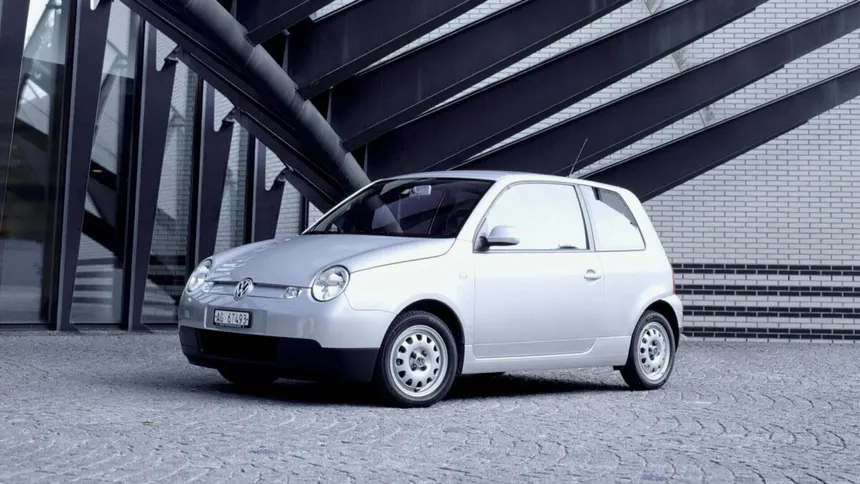
The VW Lupo 3L TDI: The Car Volkswagen Built to Save Every Last Drop of Fuel — And That Accidentally Created Europe’s Ultimate Drag Racing Platform
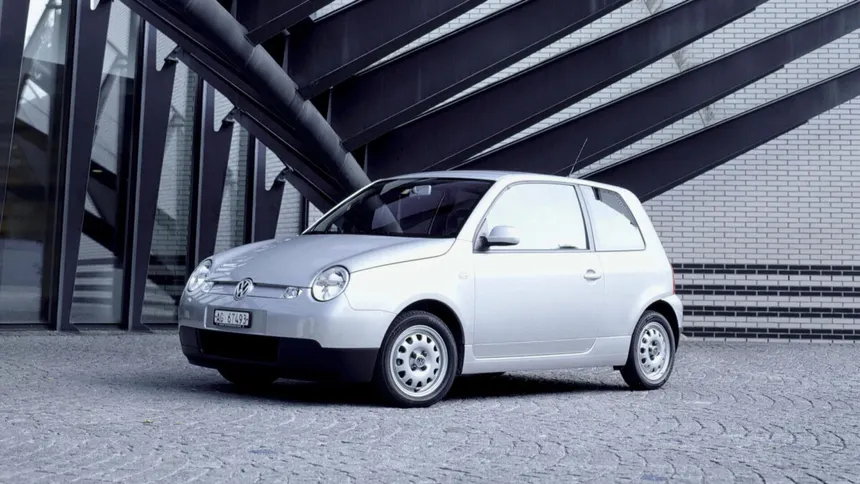
830 kg, 61 HP, 78 MPG. The Most Fuel-Efficient Production Car Ever Made, and the Most Unlikely Foundation for a 3,600 HP Drag Monster
Not Enough Cylinders
Americans have never seen a Volkswagen Lupo in person. It was never sold here. But if you care about automotive engineering — real engineering, the kind that solves impossible problems through obsessive attention to detail — then the Lupo 3L TDI is one of the most important cars of the last three decades, and you should know its story.
In 1999, Volkswagen set out to prove that a mass-produced car could consume just 3 liters of fuel per 100 kilometers — roughly 78 miles per gallon. Not a hybrid. Not an electric car. A pure internal combustion vehicle, available at any VW dealer with a factory warranty.
To achieve it, they essentially rebuilt the smallest car in their lineup from scratch, applying aerospace-level weight reduction, meticulous aerodynamic refinement, and an engine calibration philosophy that treated every drop of diesel like liquid gold. The result was an 1,830-pound city car that could travel over 430 miles on a single tank, had a start-stop system a decade before anyone else, and set a Guinness World Record for fuel economy that still hasn’t been beaten by any production diesel car.
And then, two decades later, a Romanian engineer looked at that same ultralight body and thought: “This is perfect for a twin-engine drag car.” But that’s a story for our Builds & Swaps section.
This is the story of the original. And it deserves to be told properly.
Engineering to the Gram
The Lupo 3L project was born from the philosophy of Ferdinand Piëch, the man who transformed the Volkswagen Group into the most technologically ambitious automotive conglomerate on Earth. Piëch believed internal combustion could achieve extraordinary efficiency if you attacked the problem from every angle simultaneously: engine, transmission, aerodynamics, weight, and electronic management.
The starting point was the standard Lupo — VW’s smallest car, launched in 1998 on the A00 platform (a shortened Polo/Ibiza base). But the 3L wasn’t a Lupo with a smaller engine bolted in. It was a complete structural re-engineering of the car, from the body panels to the wheel bolts.
Weight reduction: The body steel was replaced with thinner, higher-strength sheets. Doors, hood, rear hatch, and fenders were manufactured in aluminum. Seat frames were magnesium. The steering wheel was magnesium. The alloy wheels used only four bolts per wheel instead of five. Rear brake drums were alloy. Even suspension components swapped steel for aluminum wherever possible.
Sound deadening was stripped from the entire car except the firewall. No air conditioning standard. No stereo standard. Every gram that didn’t directly contribute to moving the car or protecting its occupants was eliminated without mercy.
The result: 1,830 pounds curb weight. About 330 pounds lighter than the standard Lupo SDI. For context, a current Toyota GR Corolla weighs 3,249 pounds — nearly twice as much.
Aerodynamics: The Lupo 3L achieved a drag coefficient of 0.29, versus 0.32 for the standard Lupo. For a car this small, 0.29 is remarkable — many modern sports cars can’t match it. Body panel gaps were minimized, wheel wells were optimized, and the underbody was partially enclosed to reduce turbulence.
The engine: A 1.2-liter three-cylinder inline turbodiesel (engine code ANY) with unit injector (Pumpe-Düse) direct injection, variable-geometry turbocharger, and intercooler. Output: 61 HP at 4,000 rpm and 103 lb-ft at 1,800 rpm. These numbers won’t impress anyone reading a spec sheet. But the goal was never power — it was efficiency.
The aluminum block featured low-friction internal coatings. The Pumpe-Düse injection system delivered fuel at pressures up to 29,700 psi, atomizing diesel with surgical precision for cleaner, more complete combustion. The variable-geometry turbo maintained boost efficiency across the entire rev range.
Transmission: Here’s where the Lupo 3L was a decade ahead of its time. A five-speed automated manual with electrohydraulic clutch actuation and Tiptronic mode — no clutch pedal. The system managed engagement and shifts automatically, optimizing each gear for minimum fuel consumption.
And the truly revolutionary feature: automatic start-stop. In 1999, when most manufacturers still considered diesel a truck fuel, the Lupo 3L shut the engine off automatically when the car stopped for more than three seconds with the brake pedal depressed, and restarted it when the driver released the brake. This technology wouldn’t become mainstream in the industry until 2008-2010.
The Records Nobody Has Beaten
Volkswagen’s target was 3 liters per 100 km (78 MPG). The Lupo 3L didn’t just meet it — it demolished it.
In July 2001, Dr. Miyano, a Japanese economy driving specialist, set a Guinness World Record by circumnavigating Great Britain in a bone-stock Lupo 3L. His average fuel consumption: 119.48 miles per imperial gallon (1.97 liters per 100 km). In a completely unmodified production car, straight from the dealer.
In November 2003, Gerhard Plattner drove 2,910 miles across twenty European countries in a standard Lupo 3L, proving that extreme efficiency wasn’t limited to controlled test conditions but worked in real-world continental driving.
These figures make the Lupo 3L the most fuel-efficient production diesel car ever manufactured. And it achieved this without hybridization, without electric assist, without lithium batteries. Just internal combustion, aerodynamics, reduced weight, and obsessive engineering that optimized every subsystem to its physical limit.
The Lupo GTI: The Other End of the Spectrum
While the 3L pursued absolute efficiency, Volkswagen also created its polar opposite: the Lupo GTI. Launched in 2002, the GTI packed a 1.6-liter 16-valve engine making 125 HP — more than double the 3L — with a six-speed manual and a 127 mph top speed.
The Lupo GTI has been called the true spiritual successor to the original Golf Mk1 GTI — the car that invented the hot hatchback segment. Under 2,200 pounds with 125 HP, the Lupo GTI offered an analog, pure driving experience that’s essentially impossible to find in any new car today. It was the last true lightweight hot hatch Volkswagen ever made.
477,000 Wolves and a Legacy That Won’t Die
The name “Lupo” comes from Latin for “wolf” — a nod to Wolfsburg, the “Wolf’s Castle” city where Volkswagen is headquartered. Between 1998 and 2005, more than 477,000 Lupos were produced across all variants.
But the Lupo 3L’s legacy extends far beyond production numbers. It was the first production car with automatic start-stop. It was the first to prove that 3 liters per 100 km was achievable in a series-production vehicle. It was the direct precursor to the Volkswagen 1L Concept — a prototype demonstrating 1 liter per 100 km consumption — which eventually evolved into the Volkswagen XL1.
Its 1.2 TDI engine and automated transmission were shared with the Audi A2 1.2 TDI 3L, another extreme efficiency exercise that Audi developed in parallel — the first production Audi with a full aluminum Space Frame body.
And according to its owner’s manual, the Lupo 3L could run on rapeseed methyl ester (biodiesel RME) without any engine modifications. In 1999.
From 61 HP to 3,600 HP: The Drag Racing Connection
Here’s where the Lupo 3L’s story takes a turn its engineers never could have imagined.
The same obsessive weight reduction that made the 3L a fuel economy champion also made it a perfect drag racing platform. Those aluminum doors, that aluminum hood, that aluminum rear hatch, those aluminum fenders — the only Lupo variant with lightweight body panels from the factory — are exactly what a drag car builder needs: minimum body weight for maximum power-to-weight ratio.
Silviu Ghita, founder of DOP Motorsport in Romania, understood this perfectly when selecting the base for his twin-engine project. His VW Lupo 3L with two compound-turbocharged 3.6-liter VR6 engines is now the fastest bi-motor car in Europe, running 7.71 seconds at 194 mph in the quarter-mile and accelerating from 0 to 186 mph in 7.09 seconds. From 61 HP to 3,600 HP, using the same aluminum body that Volkswagen designed to sip diesel on the way to the grocery store.
[Read the full story of DOP Motorsport’s twin-engine Lupo in our Builds & Swaps section →]
The Car We Shouldn’t Have Forgotten
The Lupo 3L TDI is one of those cars the automotive industry has buried under layers of crossover SUVs and electrification press releases. Nobody mentions it when debating the future of sustainable mobility. It’s as if Volkswagen would rather forget it once built a production car that consumed under 3 liters per 100 km without a single gram of lithium.
And yet, 26 years after its launch, the Lupo 3L remains one of the most impressive demonstrations of what internal combustion can achieve when engineering is freed from commercial compromise. A car that weighed less than many modern motorcycles. That could cover 430 miles on a single tank. That had start-stop technology a decade before the competition. And that was biodiesel-compatible from the factory.
The Lupo 3L was the future. The industry just decided the future had to weigh 4,500 pounds and carry an 800-volt battery pack.
Technical Specifications: Volkswagen Lupo 3L TDI (Typ 6E) 1999-2005
| Specification | Detail |
|---|---|
| Manufacturer | Volkswagen AG, Wolfsburg |
| Production | 1999-2005 |
| Platform | A00 (shortened Polo/Ibiza base) |
| Body | 3-door hatchback, 4 seats |
| Engine | 1.2L TDI inline-3 (code ANY) |
| Fuel system | Pumpe-Düse (unit injector) direct injection, VGT turbo, intercooler |
| Power | 61 HP (45 kW) @ 4,000 rpm |
| Torque | 103 lb-ft (140 Nm) @ 1,800 rpm |
| Transmission | 5-speed automated manual, electrohydraulic clutch, Tiptronic mode |
| Drivetrain | FWD |
| Start-stop | Yes (standard, first in production) |
| Lightweight body | Doors, hood, hatch, fenders: aluminum. Seat frames, steering wheel: magnesium |
| Steel | High-strength, thinner gauge than standard Lupo |
| Curb weight | 1,830 lbs (830 kg) |
| Drag coefficient | 0.29 Cd |
| Rated fuel economy | 78 MPG US / 94 MPG imperial (3.0 l/100 km) |
| Real-world record | 119.48 MPG imperial / 1.97 l/100 km (Guinness, Dr. Miyano, 2001) |
| Estimated range | 430+ miles (700 km) |
| 0-60 mph | ~14 seconds |
| Top speed | 103 mph (165 km/h) |
| Biodiesel compatible | RME (rapeseed methyl ester) without modifications |
| Mechanical sibling | Audi A2 1.2 TDI 3L (shared engine and transmission) |
| Total Lupo production (all variants) | 477,000+ units |
Did you know this 61 HP economy car became the foundation for a 3,600 HP drag monster? Read the full story of DOP Motorsport’s twin-engine Lupo in our Builds & Swaps section.
1 thought on “LUPO 3L TDI”