Rezvani Motors: when California decides that war is a lifestyle
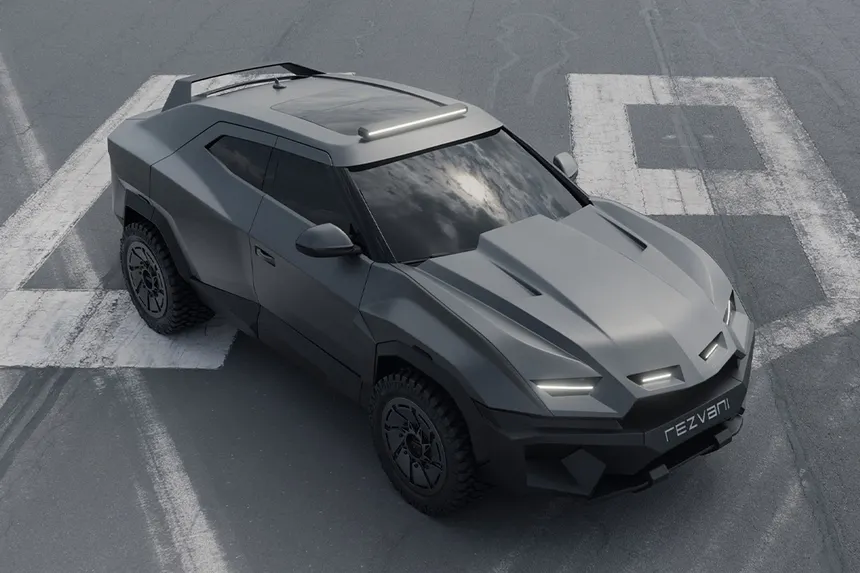
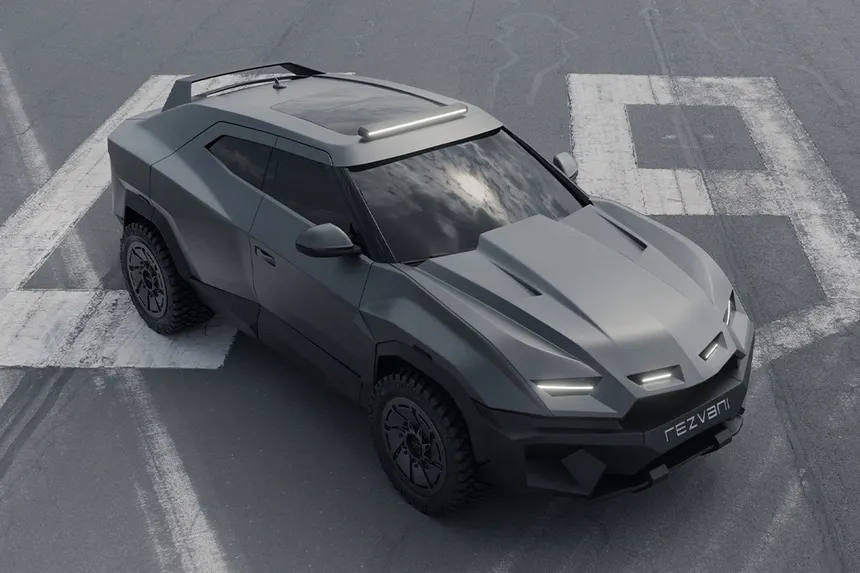
Picture this. You park your SUV at a Beverly Hills shopping mall. Someone walks up to the passenger door handle. They touch it. They receive an electric shock that drops them to the pavement. From underneath the vehicle, a thick smoke cloud billows out to cover thirty square meters. The windows would stop an AK-47 burst. The tires keep rolling even after you puncture them. You have thermal night vision on the dashboard. And you just paid 259,000 dollars for this.
You’re not in Baghdad. You’re not a head of state. Nobody is actually chasing you. You just want to feel like they might.
Welcome to Rezvani Motors. Irvine, California. A brand that has found a gap in the market nobody else knew how to see: the rich American who wants to feel like they’re living inside an action movie. And who’s willing to pay whatever it takes for the set design.
The kid who watched F-4 Phantoms take off
Ferris Rezvani grew up on Lackland Air Force Base in Texas. His father was a fighter pilot. What he watched taking off every morning weren’t little Cessnas — they were F-4 Phantoms. Twin-engine fighter-bombers shaped like projectiles. Aircraft that carried the entire visual language of the Vietnam War on their skin.
That marks you. It turns some kids into aerospace engineers. It turns others into pilots. It turned Ferris Rezvani into a builder of cars that look like weapons.
In 2014, headquartered in Irvine, California, he founds Rezvani Motors. He doesn’t come from Ford or GM or any Formula 1 team. He comes from a military-aesthetic obsession and the idea that a car can be, fundamentally, a weapon dressed for the street. Not a toy — a weapon.
The first Beast launches that same year. And this is where the story gets interesting, because Rezvani doesn’t build anything from scratch. He takes the chassis of the Ariel Atom — that skeletal British machine with no bodywork that weighs less than some couches — and drapes a double-layer carbon fiber body of his own design over it. The result: 2.4-liter supercharged four-cylinder, 300 horsepower, 998 kilos, zero to sixty in 3.5 seconds, no doors at all — you literally climbed in by stepping onto the seat — and an angular aesthetic that looked lifted from a sci-fi concept sketch.
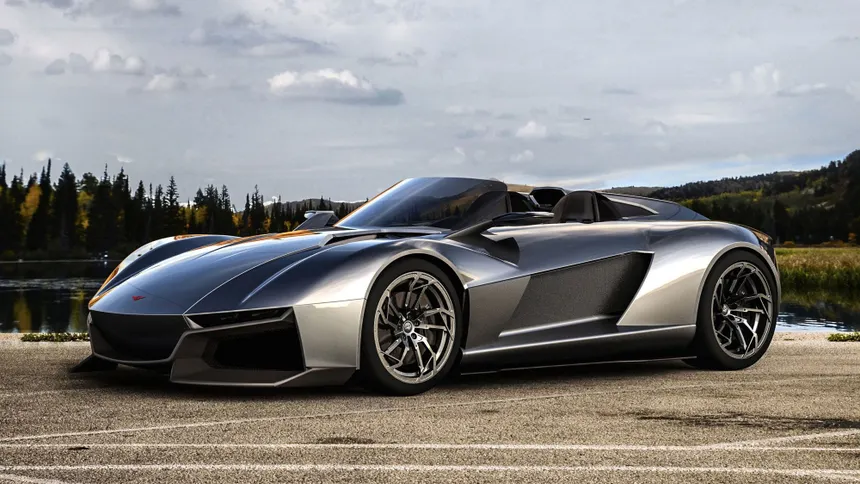
The first Beast sold for 200,000 dollars. Chris Brown — yes, the singer — bought it in 2015. Confirmed transaction, not press-release vapor.
For context: in 2014, if you wanted an ultralight American boutique sports car, your options were Factory Five, Ariel Atom USA, or some kit car with questionable warranty. Rezvani walked into a niche that barely existed and did it with European-grade finishing. That takes credit. Even if the chassis came from someone else.
The missing links: Alpha and Alpha X
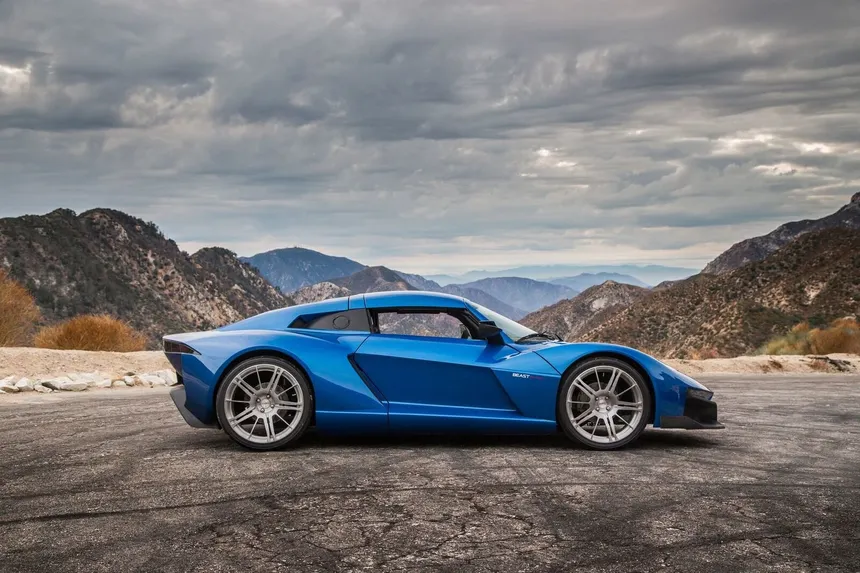
Before we get to the Corvette, there are two models most people forget and they’re essential to understanding how Rezvani thinks.
At the Los Angeles Auto Show in November 2016, Rezvani unveiled the Beast Alpha. Same philosophy as the original Beast but with a roof — a coupé version with a removable targa panel, a Lotus Elise chassis instead of the Ariel Atom, a Honda K24 turbo 2.4-liter tuned by Cosworth making 500 horsepower, 884 kilos on the scale, and zero to sixty in 3.2 seconds. Starting price: 200,000 dollars.
But what turned the Alpha into an icon wasn’t the engine. It was the doors. Rezvani patented a design called Sidewinder — doors that pop outward and slide forward, like a minivan side door but running in reverse. They don’t swing up like a Lamborghini’s. They don’t swing out like a normal car’s. They glide. No other manufacturer in the world has copied that system. Nobody is going to, because the Alpha has it patented and because, frankly, it offers no functional advantage beyond spectacle. And that’s fine — sometimes engineering exists to impress, not to solve problems.
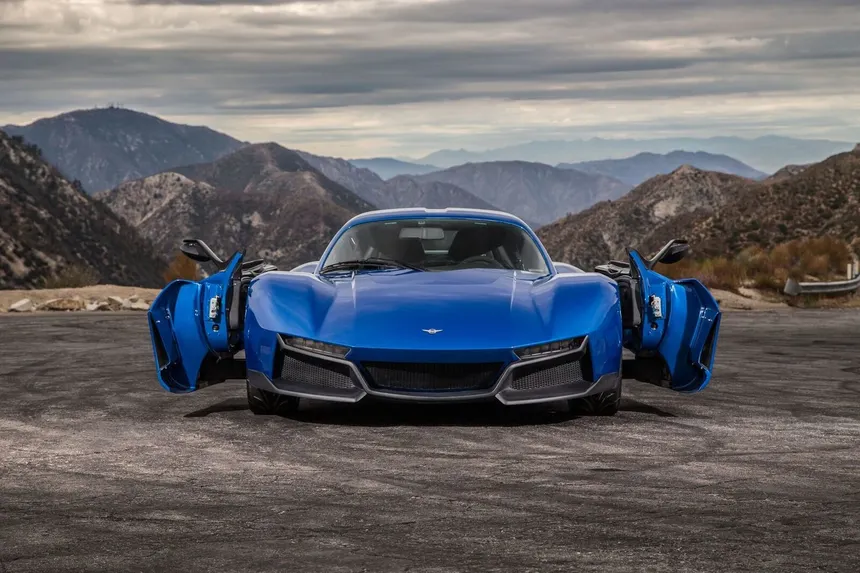
The Alpha had two mechanical lives. The original 2016-2017 model carried the Honda K24 turbo at 500 horsepower. In 2018 Rezvani cut the price to 95,000 dollars — nearly half — and swapped the engine for a Cosworth-tuned 2.5-liter supercharged four making 400 horsepower. Same car outside, different guts. The Sidewinder doors became a 10,000-dollar option. That move tells you a lot about how this industry works: what looked non-negotiable suddenly became optional the moment the market needed opening up.
And then came the Alpha X Blackbird in 2018. Here Rezvani took the filters off. 2.5-liter turbocharged Cosworth engine, 700 horsepower, 952 kilos, zero to sixty under three seconds. Price: 225,000 dollars. Lotus chassis, same as the Alpha. Twenty-five units planned. It was the first Rezvani to cross the 400-horsepower threshold cleanly and the one that pointed the way toward the 2024 Beast. Without the Alpha X, there’s no current Beast.
The third generation: when the Corvette arrived
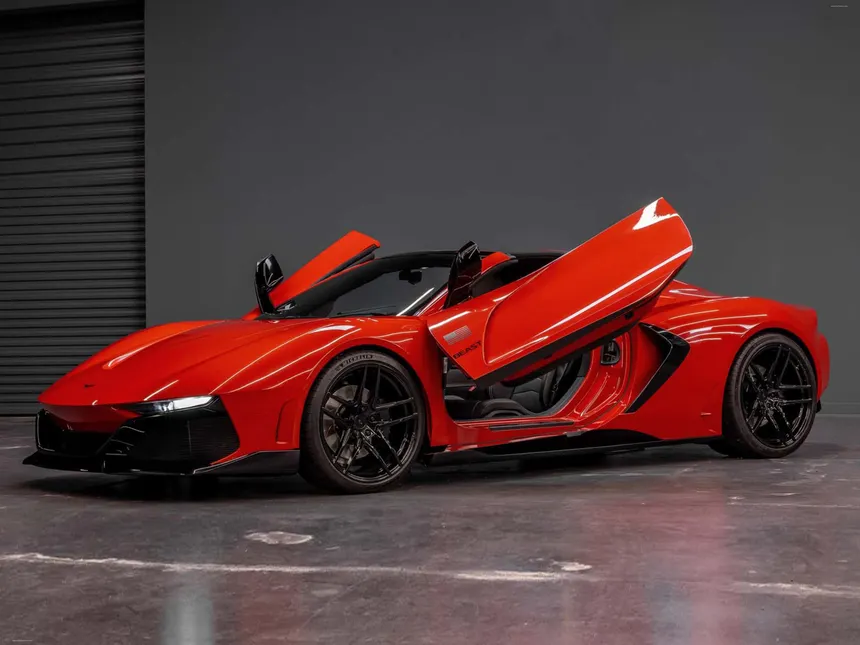
The Beast evolved again. And here the uncomfortable question that will follow Rezvani for the rest of its life as a brand starts to show itself.
The 2024 Beast is no longer based on the Ariel Atom or the Lotus. It’s based on the Chevrolet Corvette C8, the mid-engine one. Same chassis, same mechanicals, same architecture. Rezvani drops in a 6.2-liter twin-turbo V8 that makes 1,000 horsepower, wraps it in custom carbon bodywork, limits production to twenty units, and asks 449,000 dollars from the base — some sources cite up to 485,000 depending on configuration.
With that money, in 2024, you have options. A Ferrari 296 GTB. A McLaren 750S. A Lamborghini Revuelto if you stretch a little. All of them give you proprietary engineering, decades of development, global service networks, known resale values.
The Rezvani Beast gives you something else. It gives you bodywork you won’t see in any other California parking lot. It gives you the exclusivity of twenty units. It gives you American aesthetics without the European filter — visual brutality, lines that look carved with a blade, none of the Italian elegance or the German severity. It gives you, above all, the feeling of driving something forbidden — even though the engine and chassis come from the same Kentucky factory where your dentist neighbor’s Corvette was built.
Does that deserve double the price of a base Corvette? The market answers that question every morning. And twenty people a year say yes.
November 2017: the day Rezvani figured out who it was
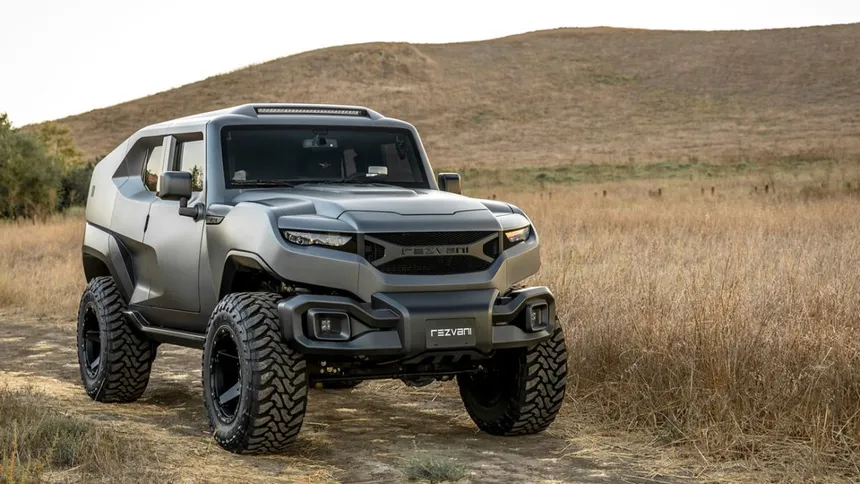
This is where everything changed.
In November 2017, Rezvani unveils the Tank. It’s not a supercar. It’s not a lightweight coupé. It’s an SUV. More specifically, it’s a Jeep Wrangler that’s been stripped of its skin, given an angular body that looks like a Star Wars gunship, and loaded with an options catalog that would embarrass a real military vehicle manufacturer.
Base engine: a 6.4-liter HEMI SRT V8 making 500 horsepower. Top engine: the 6.2-liter supercharged V8 from the Dodge Demon. One thousand horsepower in a civilian-use SUV. In America.
But the engine isn’t the business. The business is the Military Edition. For 259,000 dollars, your Tank comes with ballistic-rated armored glass, bodywork protection against projectile impact, explosive-resistant underbody plating, a smoke system that expels dense clouds to blind any pursuer, run-flat tires that keep rolling after a puncture, thermal night vision, an occupant intercom system, and yes, electrified door handles that deliver a deterrent shock to anyone trying to open the door from outside without your permission.
Read that again. Rezvani sells this. In California. To civilians.
A natural question: how does that smoke system actually work? Rezvani doesn’t explain. The company doesn’t publish technical specifications about how the cloud is generated, what reserve it carries, what visibility range it covers. They’re probably right not to publish that — any defensive engineering that advertises its limits stops being defensive. But that opacity is part of the product. You’re paying, in part, not to know exactly what you’re paying for.
Rezvani isn’t the only player in the American civilian luxury armoring market either. AddArmor armors Mercedes G-Class, Range Rover and Escalade to B6 and B7 levels. INKAS, out of Canada, has been building civilian armored vehicles for decades. The Armored Group builds vehicles for governments, high-net-worth individuals and high-profile celebrities. The difference isn’t the armoring itself — all of them deliver serious, certified, ballistically homologated work. The difference is aesthetic philosophy. AddArmor and INKAS armor a G-Class so that it still looks like a G-Class. They want your armoring to disappear. Rezvani wants exactly the opposite. They want it to be visible. They don’t hide the threat. They announce it.
That’s Rezvani’s most radical brand decision and probably its most revealing one. If you want to blend in, you don’t buy a Rezvani. If you want to be looked at, you already know where to go.
And they sell.
Who buys them? Rezvani doesn’t publish detailed numbers, but the customer profile is known: wealthy Americans who travel to areas they perceive as hostile, business owners in sensitive industries, celebrities with real or imagined threat levels, buyers in the Middle East and Latin America who import the vehicles into markets where armoring has actual functional meaning, and — let’s be direct — a considerable percentage of buyers who simply want to feel like they’re inside a Jason Statham movie.
The Tank is the moment Rezvani stops being a boutique sports car brand and becomes what it really is: a brand of military fantasies for civilians with money. And that’s the moment, however paradoxical it sounds, when it actually starts to make sense as a business.
The current lineup: an amusement park
Today Rezvani sells seven products that aren’t really seven distinct models — they’re seven variations on the same philosophy: take an existing platform, recycle its mechanicals, and sell bodywork with attitude.
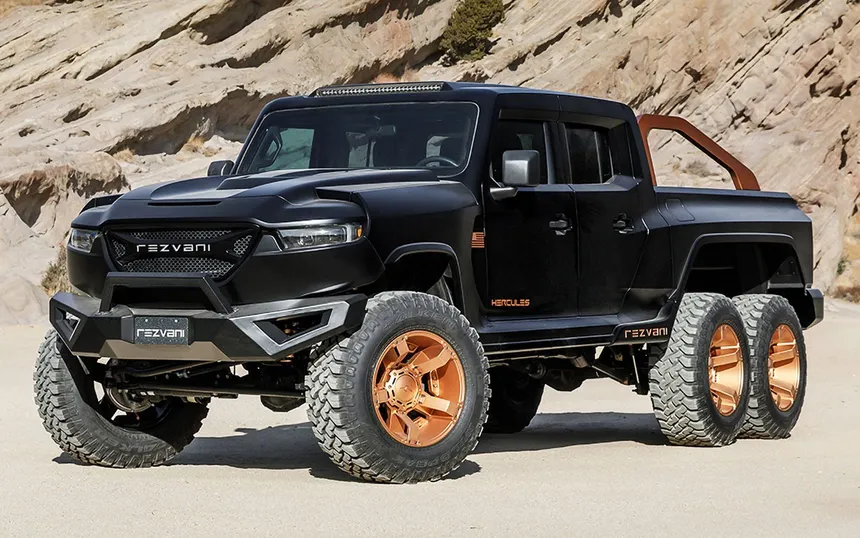
The Hercules 6×6 isn’t a Wrangler — it’s based on the Jeep Gladiator chassis, the four-door pickup. Six wheels, three axles, a 7.0-liter supercharged V8 with 1,300 horsepower in the top version. Starting price 195,000 dollars. Military Edition from 359,000. It’s the vehicle for fulfilling the fantasy of commanding a private convoy across the desert — even if your desert is probably the Whole Foods parking lot in Orange County.
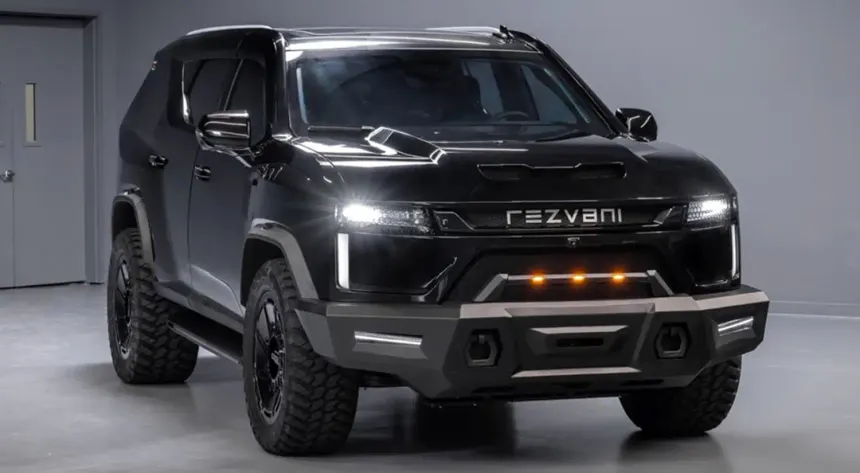
The Arsenal and the Vengeance are smaller SUVs, built on Cadillac Escalade and other General Motors platforms, meant for buyers who want the Rezvani aesthetic without Tank-sized proportions.
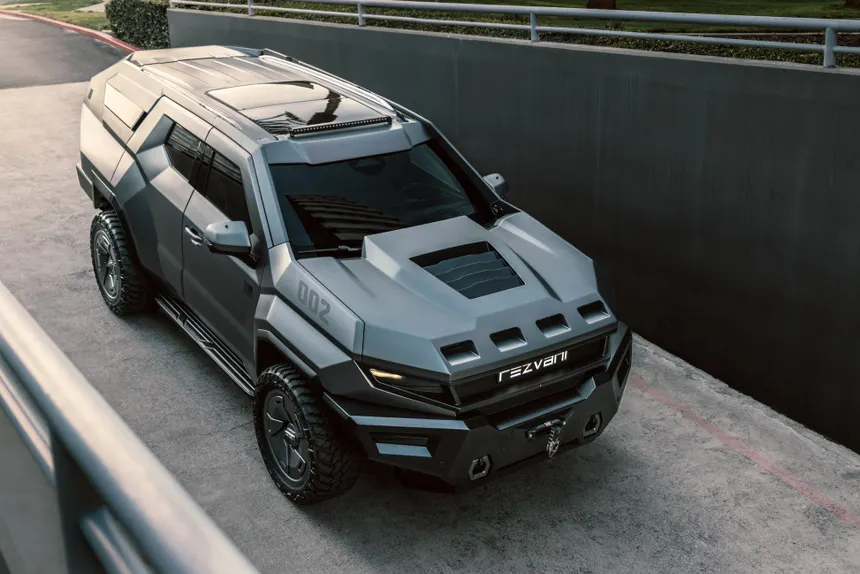
The Dark Knight is the Tank pushed to visual extreme — all-black bodywork, amplified military detailing, the look of a special-operations vehicle. Same car underneath, more theater on top.
And then there’s the new division: Rezvani Retro. This one is interesting. You take a current Porsche 911 — a 992, specifically — and Rezvani drops on it a carbon fiber body inspired by the Porsche 935 Kremer from the seventies. That 935 Kremer that won Le Mans in 1979. That extreme wide-fender look, flat nose, splitters and wings that defined an era.
The model is called the RR1. Fifty units. Two versions: the RR1 600 starts from a base Carrera, takes power up to 600 horsepower and costs 195,000 dollars on top of the donor car — the customer provides their own 911. The RR1 750 starts from the Turbo S, reaches 750 horsepower and does zero to sixty in a flat two seconds.
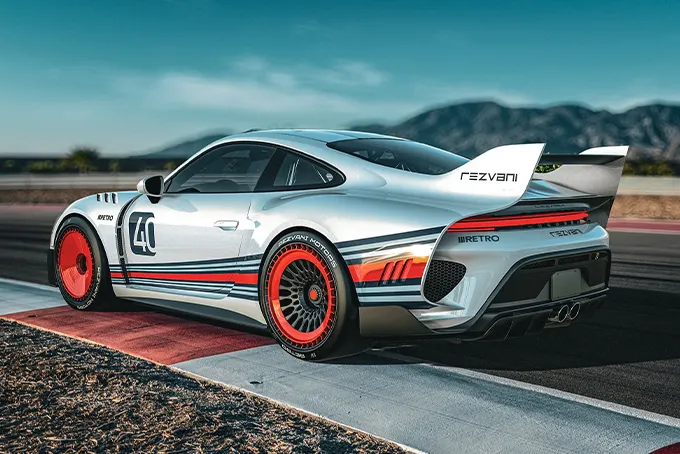
Read that last part carefully. The customer brings their own Porsche 911, worth 150,000 dollars or more. Rezvani charges them 195,000 dollars more to put a carbon body and some aesthetic details on top of it. Added up, that’s 350,000 dollars for a Porsche that looks like a classic Porsche.
Does that make sense? If you analyze it with engineer brain, probably not. If you analyze it with the brain of a collector who already has four Porsches and wants one nobody else has, then yes. Rezvani has perfectly understood that there’s a market for absolute visual exclusivity — even when the mechanical content doesn’t change a millimeter from what rolls out of Stuttgart.
The uncomfortable question Rezvani would rather not answer
Here’s the core of it. Let’s put it without rounding the corners.
The Tank is a Jeep Wrangler in new clothes. The Hercules is a Jeep Gladiator in new clothes. The 2024 Beast is a Corvette C8 in new clothes. The RR1 is a Porsche 911 in new clothes. The Arsenal is a Cadillac Escalade in new clothes.
The mechanical engineering — engine, transmission, chassis, suspension, electronics, active safety systems, brakes, power steering — all of that engineering comes from Jeep, General Motors, Porsche, Cadillac. Rezvani doesn’t develop it. Rezvani buys it and dresses it.
What Rezvani actually does is: design proprietary bodywork, integrate ballistic armoring packages, fit smoke systems and extreme passive safety elements, develop custom interiors, and assemble all of that at a California facility.
Is that building cars? Or is that dressing them?
There’s no clean answer. Brabus has been doing the same thing with Mercedes for decades and nobody denies them brand status. Hennessey does the same with Ford and GM out of Texas and has a massive fan base. Mansory turns Bentleys and Ferraris into baroque monsters and charges six figures for the privilege. Ruf starts from Porsche 911s and is recognized as an independent homologated manufacturer.
Rezvani belongs in that family. Platform takers, transformers, extreme modifiers. They’re not Ferrari and they’re not kit cars. They’re something else. Maybe something new that the industry hasn’t quite figured out how to label yet.
That said, there’s a distinction that matters and deserves to be put on the table. Ruf isn’t exactly the same thing as Rezvani. Ruf has been legally recognized by the German government as a homologated manufacturer for decades. Their cars carry their own VIN — prefix W09 — not a Porsche VIN. Ruf receives unmarked bodies-in-white directly from Porsche and assigns them their own chassis numbers. A Ruf CTR is not legally a modified Porsche. It’s a Ruf. And since the 2007 CTR3 and the CTR Anniversary, Ruf has been building its own chassis and bodywork without going through Stuttgart at all.
Rezvani operates differently. Rezvani takes complete cars with their VINs already assigned — Jeep Wrangler, Jeep Gladiator, Corvette C8, Porsche 911, Cadillac Escalade — and modifies them. The paperwork still lists the original manufacturer. Legally, Rezvani is a modifier. Very sophisticated, very expensive, very well executed, but a modifier. Not a homologated manufacturer.
That difference doesn’t make Ruf better or Rezvani worse. It makes them different. And it’s worth knowing before you lump them together.
What is different about Rezvani compared to Brabus or Hennessey is the thematic axis. Brabus chases amplified luxury. Hennessey chases brute American horsepower. Rezvani chases one thing, obsessively: that the car looks military. That it communicates threat. That whoever sees it thinks, for one second, that they probably shouldn’t be looking. That’s a brand proposition so sharply defined that even with borrowed engineering, the identity is impossible to confuse.
The Rezvani customer: who buys this and what for
The Tank appeared in Men in Black: International in 2019 — a small but visible role, fitting perfectly with the secret-agency aesthetic the film was after. The Beast showed up in Chris Brown’s Zero music video in 2015, and the Beast Alpha in Enrique Iglesias’s El Baño video. These aren’t accidental cameos. Rezvani has built its cultural presence by inserting itself into contexts where the car isn’t a supporting character but a central prop — American urban music, mid-budget action cinema, the visual culture of excess.
That’s the target customer. Not the purist collector of historic Porsches. Not the fan of German engineering. It’s someone who values the visual over the mechanical, who wants their car to communicate something very specific when they pull up, who has enough money that resale value isn’t a concern, and who fully understands they’re buying theater — and is comfortable with that.
There’s something genuine in that purchase, strange as it sounds to say. The Rezvani customer isn’t fooling themselves into thinking they’re buying a Bugatti Chiron. They know what they’re buying. They know there’s a Wrangler or a Corvette underneath. They don’t care. What they want is the full set, the complete experience, the movie feel. And Rezvani delivers it.
In a market full of 400,000-dollar cars that don’t quite know what they’re selling, that has its own kind of value.
What Rezvani represents in 2026
Twelve years after that first Beast on an Ariel Atom chassis, Rezvani is living proof that the extreme boutique market in the United States doesn’t need proprietary engineering to exist. It needs a perfectly calibrated aesthetic proposition, an audience with money and a desire to stand out, and the capacity to deliver a finished product nobody could assemble on their own even if they tried.
The comparison with the McMurtry Spéirling — that tiny British marvel of active aerodynamics that rewrote the Goodwood hill record in 2022 — is illustrative. That’s engineering at the limit, in-house development, technical obsession. Rezvani is the opposite — borrowed engineering, aesthetic development, narrative obsession. Both are boutique. Both sell few units at high prices. But they’re two opposite ways of understanding what it means to build a special car.
Neither one is wrong. But they’re not the same. And confusing them does a disservice to both McMurtry and Rezvani.
Rezvani has found its place. What started as a lightweight sports car on an Ariel Atom chassis became, somewhere along the way, a brand of military fantasies for rich civilians. California decided that war is a lifestyle and that armor is a design accessory. Rezvani builds them the wardrobe with Pebble Beach-grade finishing.
Whether that’s an automotive brand in the classical sense of the term, or something else — a design studio, an extreme coachbuilder, a fantasy manufacturer — probably depends on how you define manufacturer. What’s clear is that, love it or hate it, Rezvani has created something that didn’t exist in the American market before. And they’ve been selling it for over a decade at prices that should have sunk them three times over.
Every morning, in some private garage in Los Angeles, in Miami, in Dubai, someone climbs into a Tank Military Edition, fires up the thousand-horsepower V8, presses the button that activates the electrified handles, and heads out to pick up the kids from school. Probably nobody’s going to try to kidnap them. Probably the thermal night vision will never be needed. Probably the smoke system will sit there forever, waiting for a threat that will never come.
But they have it. And in the exact moment they need it — even if they only need it in their head — it’s there.
Check you’re still alive.