The Car Nobody Wanted. The Car Nobody Forgets.
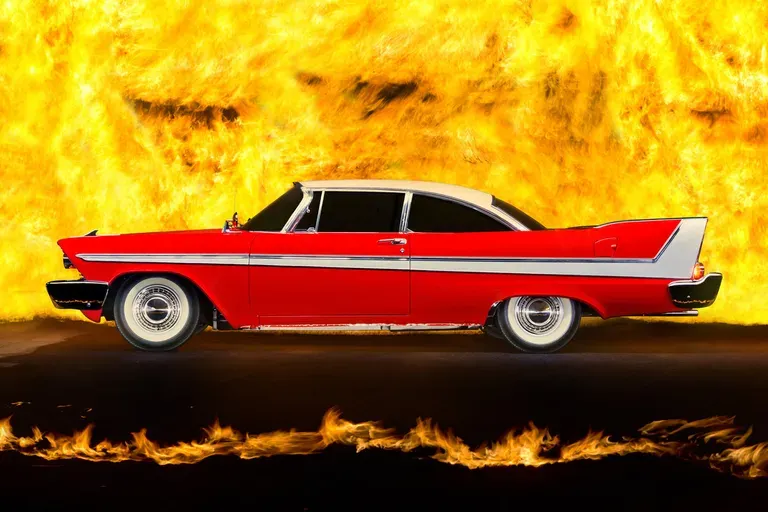
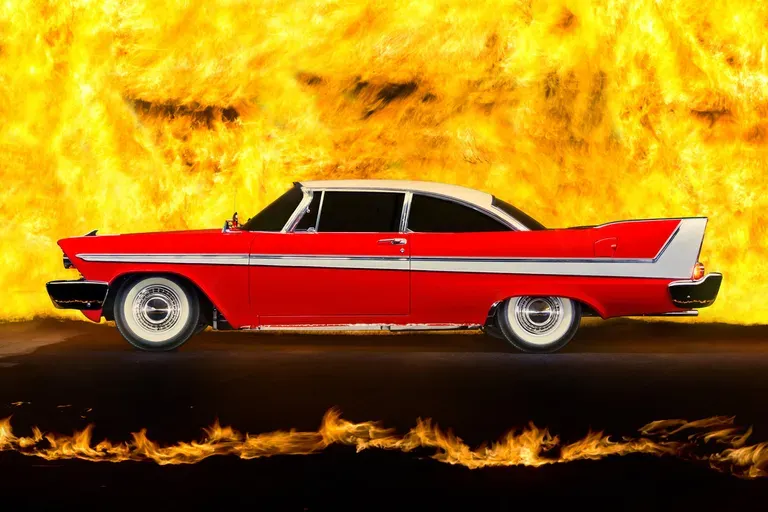
Before Christine, the 1958 Plymouth Fury was going nowhere. Not because it was a bad car. Because nobody cared. Dealers couldn’t move them. Collectors didn’t chase them. And when the decade turned, the Fury quietly faded behind the Chevrolet Impala and the Ford Thunderbird — the cars everyone actually remembered from the fifties. The Fury was the one you couldn’t quite place.
That obscurity was the whole point. Stephen King knew exactly what he was doing when he picked it.
In a 1984 interview, King explained that he specifically did not want a car with an existing legend. Not the T-Bird. Not the Galaxie. Not anything that already carried weight before he touched it. He wanted a blank canvas that the story could own completely. A car people had forgotten. The 1958 Plymouth Fury was perfect. Five thousand three hundred units. One colour. Gone from production before anyone thought to miss it. Dead on arrival as a cultural object.
King killed the obscurity. Carpenter made it permanent.
What the Fury Actually Was
To understand the 1958 Plymouth Fury, you need to understand what Plymouth was trying to do in the late 1950s — and how close they got to actually doing it.
Plymouth sat third in American sales, behind Ford and Chevrolet, mostly through inertia rather than ambition. The brand had a reputation for being sensible. Practical. The kind of car a man bought because it was cheaper than a Buick and more reliable than his brother-in-law’s advice. Not exactly a performance pedigree. Not exactly the kind of car that makes the cover of Hot Rod.
Then Virgil Exner showed up.
Exner was Chrysler’s design director, and his idea had a name: the Forward Look. Cars should look like they were moving even when they were parked. Lower. Longer. More sculptured. The 1957 Plymouth was his clearest statement — it threw GM’s styling team into genuine panic and pushed Plymouth to third place in American sales.
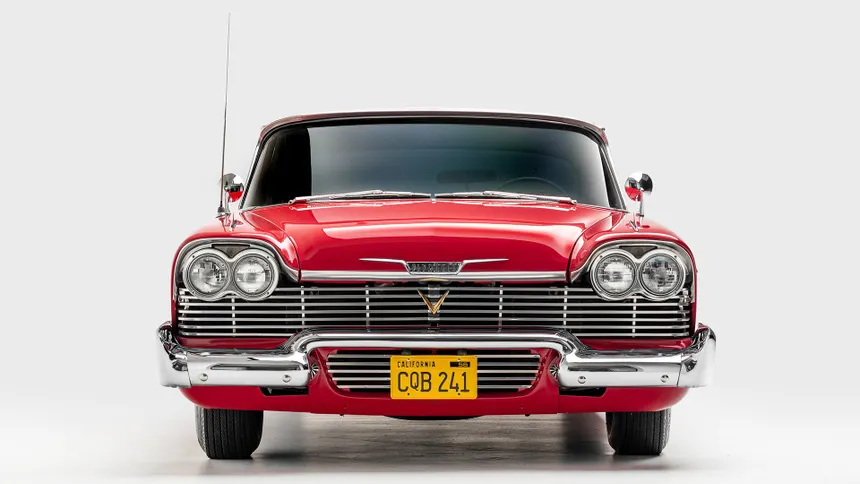
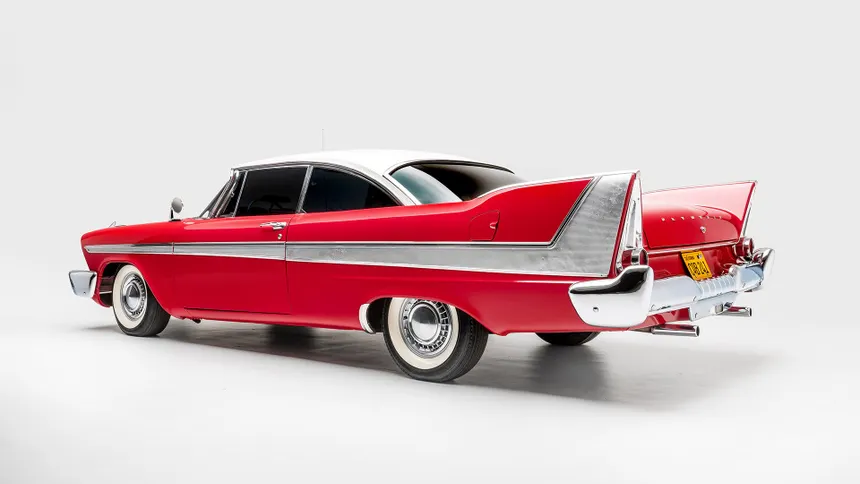
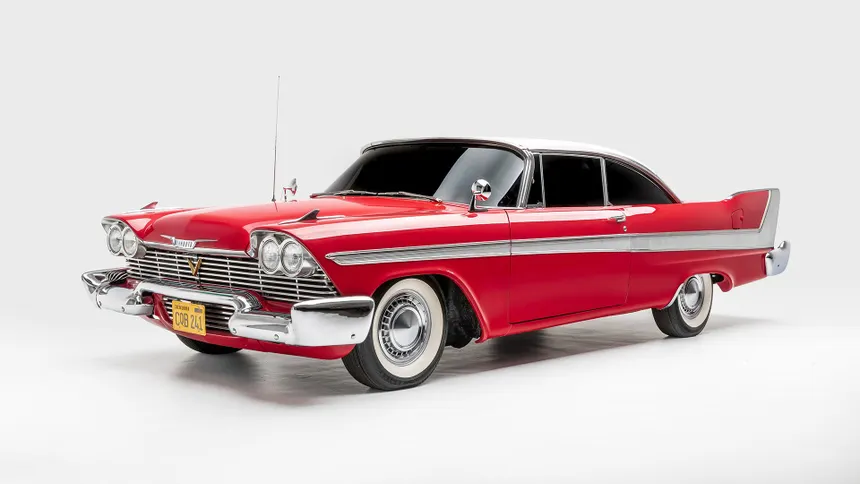
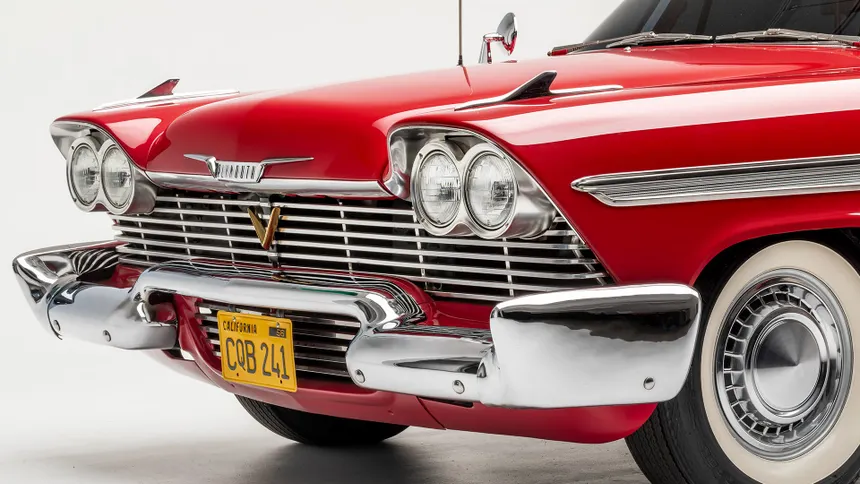
For 1958, Plymouth refined rather than redesigned. Four headlamps where there had been two. A new grille. The same high tail fins. The body sat at just 53.5 inches tall. The Fury was the cleanest example of what Exner was trying to say, and at a glance it looked a full decade more modern than its price suggested.
The Fury was the top of the Plymouth range. Base price: $3,032 in a recession year, which was real money. It only came as a two-door hardtop. It only came in one colour — Buckskin Beige — with gold anodized aluminium trim running along the body sides and a gold-finished grille that separated it from the cheaper Savoy and Belvedere siblings underneath. No options for a different colour. No convertible. One configuration, 5,303 units, end of story.
The Golden Commando
The standard engine was the 318 cubic inch V8, 290 horsepower, shared with the Dodge Coronet. Adequate. The reason anyone paid serious money for a ’58 Fury was the optional package sitting on top of that — the Golden Commando.
This was Chrysler’s first genuine big block. Three hundred and fifty cubic inches — 5.7 litres — topped by twin Carter four-barrel carburettors sitting on a matched intake manifold that fed each cylinder with balanced airflow. The engineers had been thorough: high-performance camshaft, anti-surge dampers on the valve springs, a compression ratio of 10:1 that required premium fuel but delivered 305 horsepower at 5,000 rpm and 370 lb-ft of torque at 3,600. Not estimated. Tested. Motor Trend ran a Golden Commando Fury with the TorqueFlite automatic to 60 miles per hour in 7.7 seconds. The Chevrolet Impala with its 348 V8 took 9.1 seconds. The Ford 352 needed 10.2. In 1958, the Plymouth was the quickest full-size car you could buy, and nobody knew it.
Hot Rod said it plainly: the number one full-size road car in America. That opinion was based on the numbers, not the badge.
The TorqueFlite automatic deserves its own moment. No gear lever. No column shift. Instead, a row of push buttons mounted on the dashboard to the left of the steering wheel — Park, Reverse, Neutral, Drive, Second — each one a clean press. It was futuristic in a way that felt inevitable rather than gimmicky. It worked. Chrysler eventually dropped it because the market wanted levers again in the 1960s. The market was wrong. It happens.
Underneath, the Torsion-Aire suspension came standard on all 1958 Plymouths. Longitudinal torsion bars at the front instead of coil springs. Lower centre of gravity. Less body roll. Anti-dive geometry built into the geometry to keep the nose level under hard braking. Oriflow shock absorbers to manage road compliance. In 1958, this put the Fury’s handling ahead of virtually every American competitor at the same price point. The Impala couldn’t match it. The Thunderbird — smaller, lighter, closer in spirit — was doing something else entirely.
Was the Fury perfect? No. Chrysler’s 1957-59 products had documented quality issues — corrosion problems that emerged within the first year of ownership and damaged customer confidence badly enough to hurt sales for years afterwards. After 1958, the Fury name was diluted across wagons, police cars, four-doors. The limited-edition, single-colour performance Plymouth lasted exactly three model years: 1956, 1957, 1958. Then it was over. And then, for twenty-five years, nobody noticed.
Carpenter’s Problem
When John Carpenter started shooting Christine in 1983, the 1958 Plymouth Fury had been out of production for twenty-five years and out of public consciousness for almost all of them. That was the appeal. It was also the problem.
Total production: 5,303 units. By 1983, finding enough of them — in any condition — to film a movie required running classified ads across Southern California and accepting whatever turned up. Carpenter bought twenty-four cars. He used Furys where he had them, and Savoys and Belvederes where he didn’t — all repainted, all fitted with Fury exterior trim, all photographed carefully enough that the differences didn’t read on screen. Of all the cars used during the production, only one was an actual 1958 Fury. The rest were period-correct stand-ins wearing borrowed clothes.
The colour was the first lie. The real 1958 Fury never left the factory in red. The colour in King’s novel — red with a white roof — is described as a custom factory order, which is itself part of the mythology King built around the car’s evil history. Carpenter kept the red because it worked on film and because beige doesn’t communicate malevolence. Every image of Christine that exists in collective memory is built on a colour that never existed on the production line.
The engine sound was the second lie. The growl you hear on screen belongs to a 1970 Ford Mustang with the 428 Super Cobra Jet. The Golden Commando V8 didn’t sound like that. But by 1983, sourcing a period-correct engine in working condition and recording it cleanly under production conditions was more trouble than it was worth. The Mustang was there. It sounded threatening. Done.
The self-repair sequence — Christine crushing herself flat against a garage wall and then expanding back to perfect condition — was the technical achievement of the shoot. No CGI. This was 1983. Special effects supervisor Roy Arbogast had three weeks to solve the problem. His solution: rubber moulds taken from the body panels of one of the cars, fitted with cables that crumpled them on command. The footage was shot in reverse and played back forwards. The car wasn’t rebuilding itself. It was being destroyed, and you were watching it happen backwards. Three weeks of work for one of the most memorable practical effects sequences of the decade.
After filming wrapped, most of the cars went to a California junkyard. Three survived. One lives at the Petersen Automotive Museum in Los Angeles. Another was raffled off on New Year’s Eve on USA Network’s Night Flight — 40,000 entries, one winner, a man named Scott Edminster who probably had no idea what he’d actually won. The third passed through the Ron Pratte collection in Arizona, sold at Barrett-Jackson in 2015, and eventually came to rest at the Rochester Auto Museum in upstate New York, where the 35th anniversary screening brought back members of the original cast and crew in 2018.
The fender trim you’ll see for sale at prop auction houses — occasionally at prices that make no logical sense — came from that California junkyard, retrieved after the film cars were scrapped.
What the Movie Made Permanent
Before December 1983, a 1958 Plymouth Fury was a car nobody was looking for. After December 1983, it was the car everyone suddenly wanted.
The replicas came first. Then the dedicated forums. Then the convention circuit, where Christine tributes show up at horror events still wearing their red paint and their borrowed mythology. Then the auction results — cars that would have sold for scrap value in 1982 selling for six figures forty years later, their worth entirely constructed by a story that wasn’t even true about a colour that never existed.
The name did work that no marketing department could have planned. Accord, Camry, Passat — these are names designed not to offend anyone. Fury is a name designed to mean something. King chose it deliberately. A possessed Plymouth Accord is a plot problem. A possessed Plymouth Fury is already halfway to a horror novel before anyone writes a word.
The car that nobody remembered is now the car nobody forgets.
Check you’re still alive.