
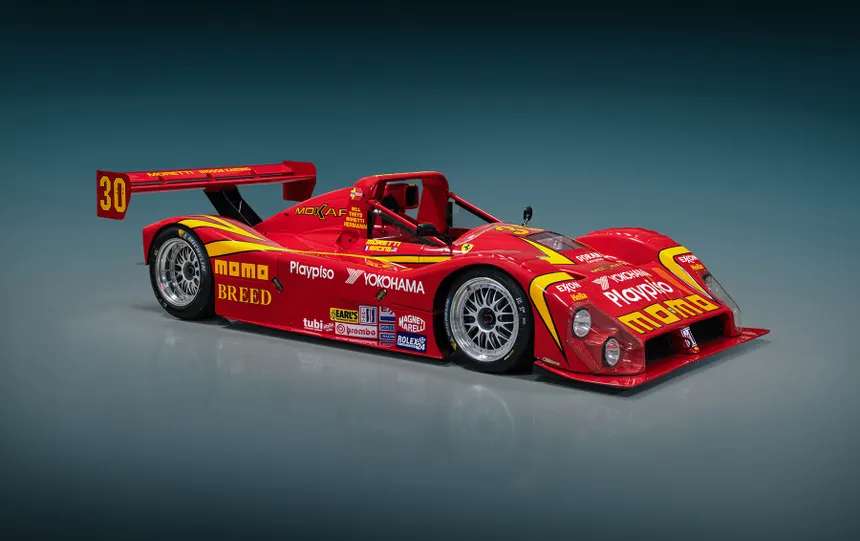
The Ferrari that Ferrari didn’t build: the uncomfortable truth about the 333 SP
Let’s get one thing straight before we go any further.
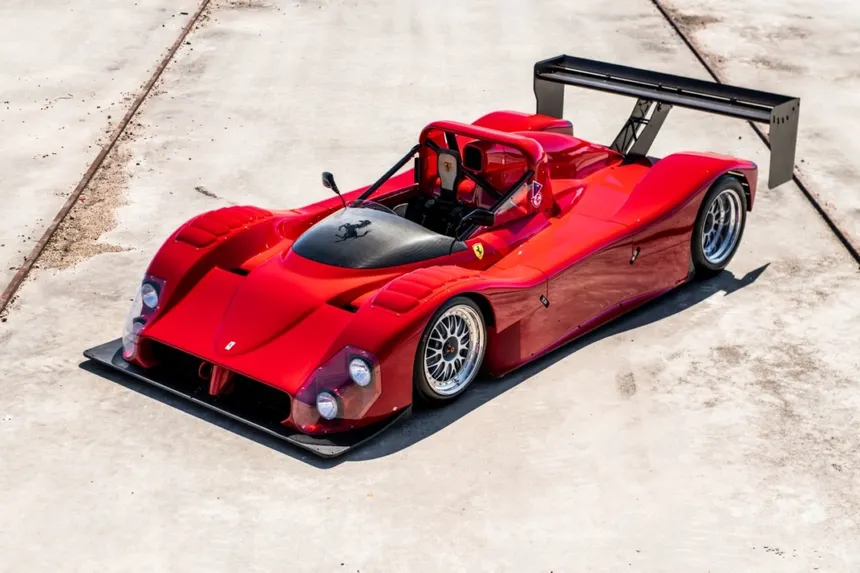
When Ferrari came back to sports prototype racing in 1994 after twenty years of absolute silence, the car that restored their dignity wasn’t built in Maranello. It was built in Varano de’ Melegari, in an industrial shed outside Parma, by a man named Giampaolo Dallara who had spent the previous decade humiliating the rest of the paddock with his Formula 3 chassis.
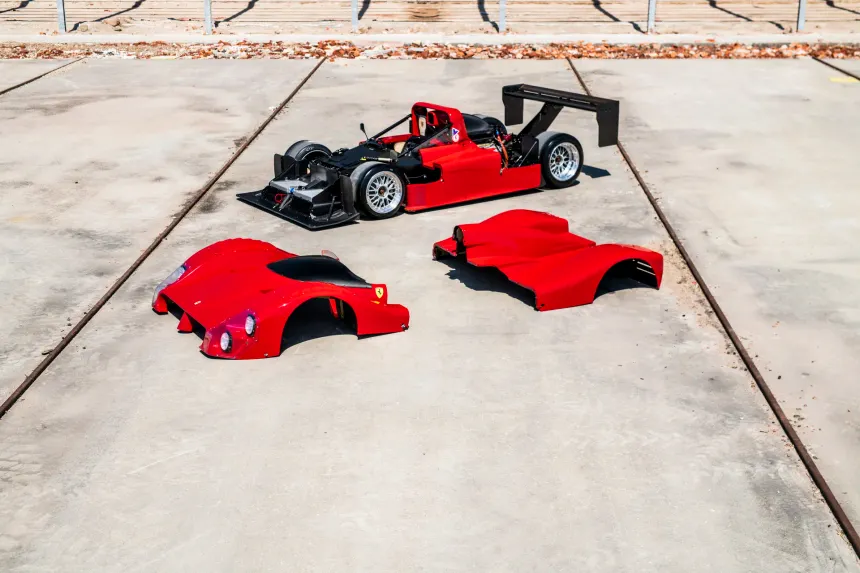
Dallara built the chassis. Dallara handled the aerodynamics. Dallara designed the suspension. Later, when more units were needed, Michelotto took over in Padua. Out of forty chassis ever produced, only the first four came out of Maranello. The remaining thirty-six were split between Dallara (eleven units) and Michelotto (twenty-six), all built outside the Cavallino’s gates.
And yet everyone calls it a Ferrari.
They’re right. Because the heart was pure Maranello, and the heart of a Ferrari is the only thing that has ever really mattered.
Twenty years off the map
The last serious Ferrari prototype had been the 312 PB. They won the 1972 World Sportscar Championship with it. In 1973 they walked away from the category to focus everything on Formula One.
Twenty years. Twenty years during which Porsche owned Le Mans with the 956 and the 962. Twenty years during which Sauber-Mercedes reclaimed silver glory, Jaguar came back from the dead, and the Group C era turned endurance racing into a knife fight while Ferrari watched from the bleachers. When the regulations shifted in the late eighties and the GTPs slowly bled out from astronomical costs, IMSA was already drafting a new format for 1994: WSC. Open cockpit. Flat bottom. Production-derived engine. Four-litre cap. Privateer entries only. The whole point was to revive the sport after the budgetary funeral of Group C.
And here’s the detail that changes the whole picture. The early WSC grid wasn’t exactly glamorous. Spice chassis with small Chevrolet blocks. Kudzus running Ford or Buick. The Riley & Scott Mk III that arrived shortly after with their big-displacement American V8s. Beautifully built cars, no question, but cars built around stock-derived engines, turbocharged or naturally aspirated depending on the team, stretched as far as a production base would let the regulations allow. The WSC category was designed to bring costs down, and the natural consequence was a grid full of prototypes with stock-car hearts.
Then Ferrari showed up with a Formula One engine.
Maranello didn’t move a muscle. They had F1 to fight, an internal crisis to digest, and a freshly appointed Luca di Montezemolo whose attention was entirely on dragging the team out of its sporting hole.
If the 333 SP exists at all, it’s not because Ferrari wanted it. It’s because a stubborn Italian who made steering wheels for a living refused to take no for an answer.
The man with the wheel
Giampiero Moretti. Founder of MOMO. Hard-knuckled gentleman driver who had spent decades racing in the United States. He’d been collecting Daytona attempts the way other men collect debts — sixteen entries since his first appearance in a 512S back in 1970, zero overall victories.
Moretti was running out of category. His old GTP cars were no longer eligible for anything. And before he hung up the helmet, he wanted one specific thing: to win Daytona. But to win Daytona in a Ferrari.
In March 1993 he set up a meeting in Modena with Piero Ferrari — Enzo‘s son, then in charge of special projects — alongside representatives from IMSA and the ACO. He explained the situation. He explained the new category. He explained that there was a hole big enough for Ferrari to fill, and that it would be cheap compared to F1 because it didn’t need to be a factory programme.
Montezemolo set one non-negotiable condition: Ferrari would help develop the car, but it would never race under the official banner. Privateers only.
It was 1993 and Ferrari refused to lose focus on F1. The project was christened Il sogno Americano — the American Dream — and outsourced.
Why Dallara, why Michelotto
This is the part that some people struggle to swallow.
Dallara wasn’t plan B. Dallara was the right plan. They had built the LC2 Group C car for Lancia, which happened to use a Ferrari-derived engine. They knew prototypes. They knew aerodynamics. They knew carbon fibre tubs at a moment when Maranello was still figuring out how to do them properly for F1.
Michelotto was the other pillar. A workshop in Padua that had spent years turning road-going Ferraris into competition cars for private clients — the 308 GTB Group B, the F40 LM. They knew exactly how to make a Ferrari survive twenty-four straight hours without grenading.
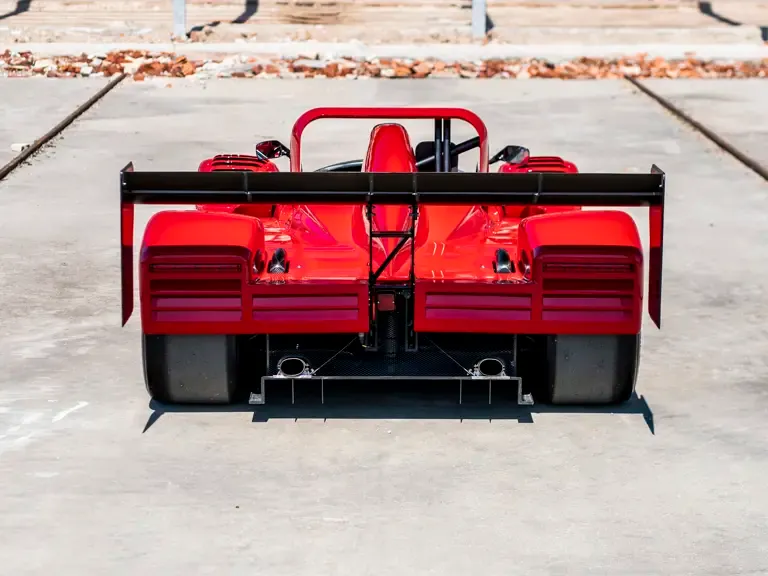
Ferrari contributed two things: the in-house designed carbon monocoque, and — most importantly — the engine.
The engine that changed everything
This is where the 333 SP stops being a customer prototype and starts being a missile.
WSC regulations enforced a four-litre maximum and a production-based architecture. That was the alibi for keeping costs in check: if you have to start from a block already on sale to a customer, you can’t afford the luxury of a pure-bred competition engine. Ferrari found the loophole. The 65-degree V12 derived from the Tipo 036 unit used in the 1990 Ferrari 641 — the chassis Alain Prost drove down to the wire of that championship against Ayrton Senna — got reworked into “production-derived” status because the same architecture would eventually go into the road-going Ferrari F50. The homologation argument was hanging by a thread, but it held. Maranello stretched the F1 block from 3.5 to 4.0 litres and renamed it the F310E.
In other words: while the Spices and the Kudzus rolled onto the grid with American street blocks massaged to the limit, Ferrari turned up with a current-generation F1 V12 carrying a homologation paper that said “this is going into a road car, I promise.”
641 hp at 11,000 rpm. About 40 to 70 horses down on the original F1 unit, but with reliability that British engineer Tony Southgate — who joined the project in early 1994 — would later call “one of the most reliable race engines I have ever worked with.”
For perspective: the 333 SP arrived with a current-generation F1 engine bolted into a Dallara chassis weighing under 900 kg. On the same grid where a Spice was wrestling a Chevy V8 stretched to the limits of the rulebook.
And it was sold to private customers for $900,000 a piece. For that money the buyer also got two spare engines and Ferrari engineering support.
To put it in perspective: a Porsche 962 at the end of its life cycle, second-hand and battered, cost roughly the same. A Toyota GT-One was never going to be sold to a customer in any timeline. The 333 SP was the last great customer prototype of the modern era.
Road Atlanta, 17 April 1994
Mauro Baldi tested the car late in 1993. It was shipped to the United States to be unveiled at Daytona, but Ferrari decided not to enter either Daytona or Sebring that year because of reliability concerns.
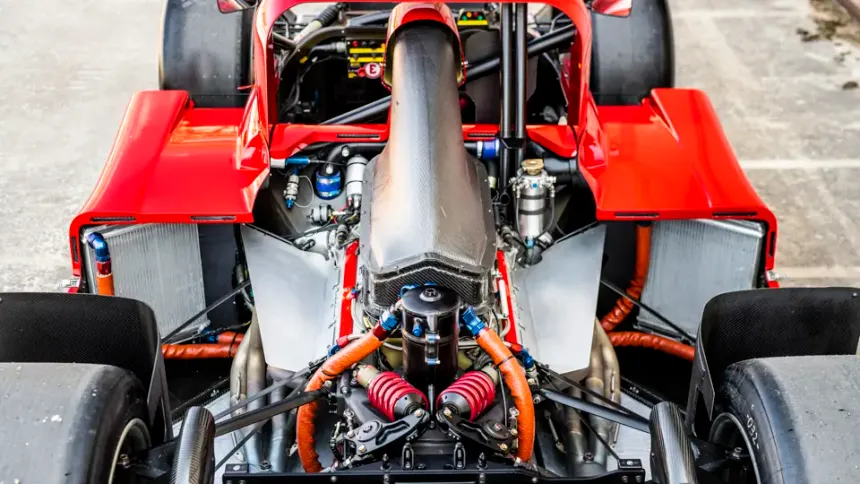
The race debut came at Road Atlanta. Four cars on the grid spread across three teams: Euromotorsport with two units, Momo Corse with one, Team Scandia with the other. Three of those four chassis came directly from Maranello — they were among the first four the factory built before handing the baton over to Dallara — and the fourth was already a pure Dallara build.
The result was a sucker punch. Jay Cochran won the race in one of the Euromotorsport cars. Moretti and Eliseo Salazar finished second in the MOMO. The next three rounds also went to the 333 SP. Five wins on the trot in its debut season.
They didn’t take the title because they had skipped the first two rounds. Oldsmobile lifted the manufacturers’ championship and Andy Evans was the best-placed Ferrari driver, fifth overall.
It didn’t matter. The message had been sent.
Sebring 1995: the official return
12 Hours of Sebring, 1995. Filthy weather. The race was halted for an hour as darkness fell. The Spice of Derek Bell, Andy Wallace, Jan Lammers and Morris Shirazi traded blows all race long with the 333 SP of Andy Evans, Fermín Vélez and Eric van de Poele.
Vélez won. The Catalan, with Evans and van de Poele alongside him, took the 333 SP to Ferrari’s first Sebring victory since 1972. The first overall win for a Ferrari product in any major race since that same year.
The championship fell on the right side. Vélez took the drivers’ title. Ferrari took the manufacturers’ crown. Four cars on the grid, consistent results, cast-iron reliability.
To grasp what this meant: in 1995 Ferrari was still scraping for F1 wins with Berger and Alesi. Schumacher wouldn’t arrive until 1996. While Maranello suffered through the grands prix, American privateers cashed in three decades of waiting on a car that, technically, wasn’t even an official entry.
That contradiction is the soul of the 333 SP.
Daytona 1998: the debt paid
Three years on. Michelotto has taken over chassis production from Dallara. The car has received minor updates. Ferrari simulates a full Daytona distance at Fiorano before the 1998 race.
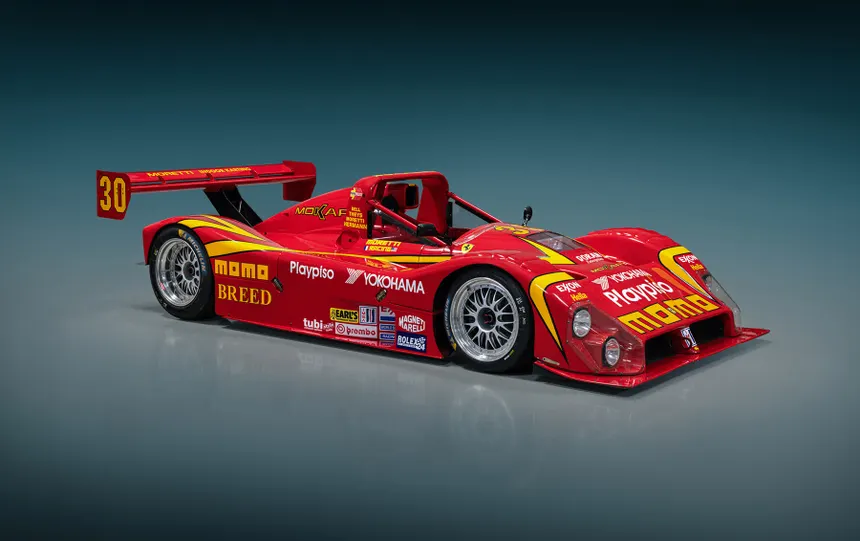
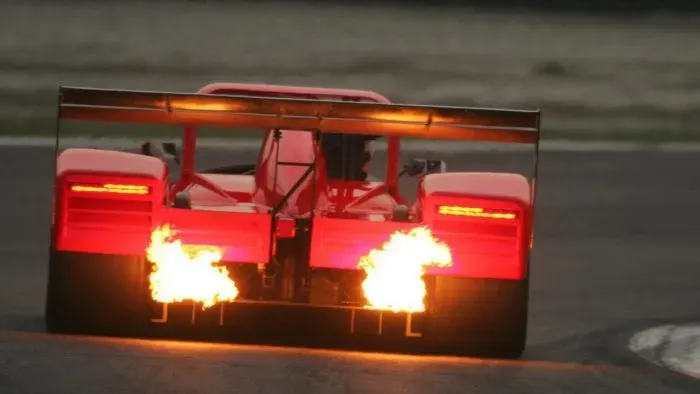
Moretti is fifty-seven years old. Five long decades fighting for a 24 Hours win. Doran-Moretti shows up at Daytona with the red and yellow MOMO livery wrapped around one of the late Michelotto chassis. Mauro Baldi, Arie Luyendyk, Didier Theys and Moretti himself behind the wheel. They qualify second.
Baldi remembers it like this: “I don’t remember every specific part of Daytona ’98, but Moretti had a small accident with another car and had to stop. It was very early on, though, and we had time to recover. From the middle of race to the end, things ran perfectly.”
They won by eight laps over the Rohr Motorsport Porsche 911 GT1 Evo of McNish, Sullivan, the Müller brothers and Alzen.
Average speed: 169.626 km/h. Over 4,000 km covered.
It was Ferrari’s first Daytona win since 1967. Thirty-one years of waiting. For Moretti, sixteen attempts. The Italian had kept his promise. That same season the same car also won the 12 Hours of Sebring with Baldi and Theys, then finished third in class at Le Mans. An unrepeatable year.
The last lap of a customer car
From 1999 onward the 333 SP started losing ground in the United States. The new American Le Mans Series brought factory programmes from Audi and BMW with budgets no privateer could touch. In 2000 Doran Racing went so far as to bolt a Judd engine into the 333 SP just to stay competitive.
In Europe the car found a second life. Marco Zadra won the FIA Sportscar Championship in 2001 — the last meaningful trophy. The final competitive appearance came at the Monza 500 km in 2003, almost a decade after the debut.
144 championship races. 56 wins. 69 pole positions. Nine Le Mans entries between 1995 and 1998, two third-in-class finishes and one class win.
Derek Bell, who drove Ferrari prototypes from several different eras, summed it up: “It drives like a wide-bodied Formula 1 car. Totally complete, flawless, balanced.”
What the 333 SP actually means
Here’s the strange part.
The 333 SP is the last Ferrari competition car of the modern era to be sold to private customers as a primary product. After it, Maranello went back to GT racing with the 550 Maranello Prodrive, then the 458 GTE, then the 488. And twenty years later, in 2023, Ferrari finally returned to factory sports prototypes with the 499P — and won Le Mans three years in a row.
But the unbroken line between the 312 PB of 1972 and the 499P of 2023 wasn’t drawn by official entries. It was drawn by a car Maranello didn’t even want to build, made in Varano and Padua, raced by privateer teams on American sponsor money, that kept the idea of “Ferrari in sportscars” alive for an entire decade while the factory was looking the other way.
Call it whatever you want. Call it a customer car, call it a subcontract, call it a historical accident. The 333 SP is proof that sometimes the most important cars in a brand’s history are the ones the brand never wanted to make.
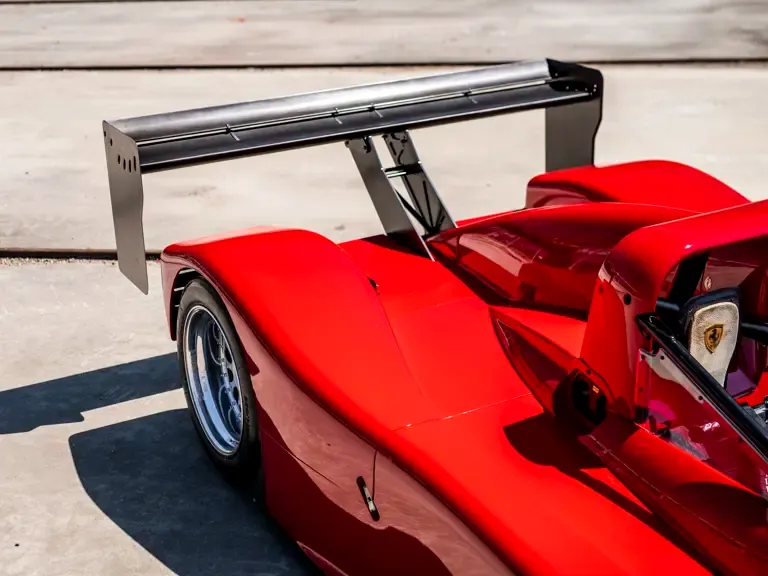
And it remains, without argument, one of the most beautiful sports prototypes ever built. Long bonnet. Open cockpit. Tightly drawn side pods. A vertical fin cutting against the Florida sun. Twelve cylinders screaming up to 11,000 rpm with the timbre of a nineties F1 engine. They don’t make that anymore. They never will again.
The 333 SP is the closing line of an era. Before hybrids. Before LMDh regulations with spec engines. Before “customer category” came to mean an Oreca wearing a factory badge. Back when a naturally aspirated V12 could climb into a sports prototype and leave the rest of the paddock standing still.
Check you’re still alive.