Oreste Berta: The Cosworth Argentina Built and Then Abandoned
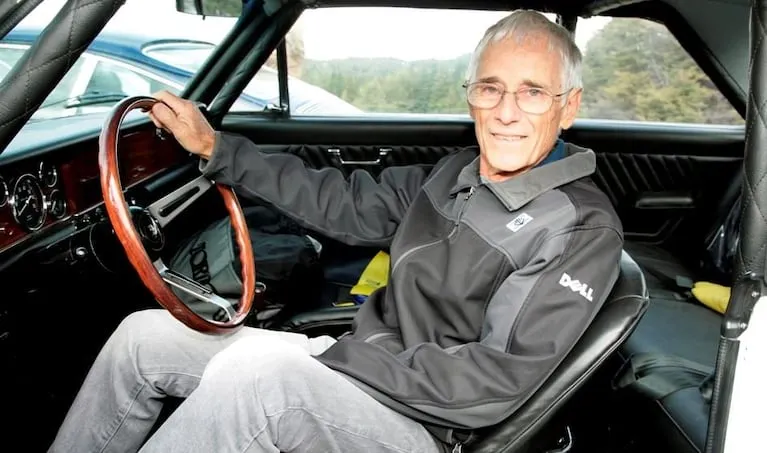
In January 1975, a flatbed trailer pulled by a tired van crossed the country from Córdoba to Buenos Aires carrying a Formula 1 car. No transporter. No team uniforms. No sponsors on the bodywork. Just a small group of mechanics, a forty-six-year-old engineer named Oreste Berta, and a single-seater that he and his crew had built almost entirely with Argentine parts. The car was entered for the Argentine Grand Prix. It was meant to start a race against the Ferrari of Niki Lauda, the McLaren of Emerson Fittipaldi, the Brabham of Carlos Reutemann, the Lotus of Ronnie Peterson.
It never made it to the grid.
That single image — a hand-built F1 car arriving at the autodrome in a battered van — tells you almost everything you need to know about Oreste Berta. The talent was real. The engineering was sound. The country he was born in could not, or would not, build the structure around him that his work deserved. So he built it himself, alone, in a workshop in Alta Gracia that the local press called La Fortaleza. And in 1975 the dream cracked open. The engine kept blowing pistons. The money ran out. The car never started a single Grand Prix.
This is the story of the engineer Argentina had and never knew what to do with. The Cosworth that never got its Cosworth budget. The man who almost won at the Nürburgring, almost made it to F1, almost forced an entire continent onto the international motorsport map — and who, instead, became the most respected race engineer in Latin America and a footnote in the global history of the sport.
That gap between what Berta did and what he could have done is the whole story.
The kid from Rafaela
Oreste Berta was born on 29 September 1938 in Rafaela, a small industrial town in the Argentine pampas. By age ten he had assembled his first engine. By twelve he was tuning motorcycle engines that won regional races, taken to the track by his mother. None of this is folklore. It is documented in his autobiography, in the racing magazines of the time, in the testimony of the mechanics who worked alongside him for half a century.
What matters is what came next. In 1961, at twenty-three, he received a fellowship from Industrias Kaiser Argentina to spend two years training at the Kaiser Jeep plant in Toledo, Ohio. He earned 125 dollars a week. He learned American industrial engineering in the most industrial country on Earth. When he came back to Córdoba in 1962, he was no longer a self-taught talent. He was a formally trained engineer with hands-on factory experience that almost no one in Argentina possessed at his age. That is the inflection point. Without those two years in Ohio, there is no Berta as we know him. The Argentine motorsport mythology likes to paint him as a miracle of pure intuition. He was not. He was an investment. The country invested in him, and then for the next half-century did not know how to collect on the return.
That is a pattern worth holding onto, because it is going to repeat.
IKA, Pronello, and the Liebres
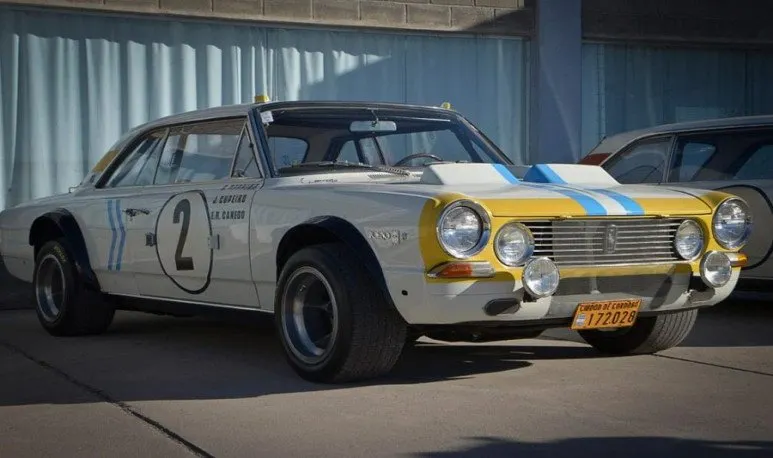
In 1966 Berta was named technical director of the IKA factory team in the Argentine Turismo Carretera championship — a brutal stock-based touring car series that had been dominated by Ford and Chevrolet since its inception. His weapon was the Torino, a sedan based on a discontinued American Rambler design, repurposed as Argentina’s flagship car. Nobody in the paddock thought it could win.
Berta partnered with the Argentine coachbuilder Heriberto Pronello to develop streamlined competition versions known as “Liebres” — long, low silhouettes shaped by intuition and trial-and-error rather than by any wind tunnel, because there was no wind tunnel. They worked. In 1967, with Eduardo Copello driving, the Torino won the championship. It was the first time in Turismo Carretera history that a non-Ford, non-Chevrolet car had won the title. Under Berta’s technical direction, IKA Torino went on to win again in 1969, 1970 and 1971. Four titles in five years against two factory teams with vastly larger resources.
In any serious motorsport country, that level of success opens every door. In Argentina it opened a few, reluctantly, and then closed them again as soon as politics shifted.
Nürburgring 1969: 56 hours in the lead
Then came August 1969, and the race that put Berta on the international map.
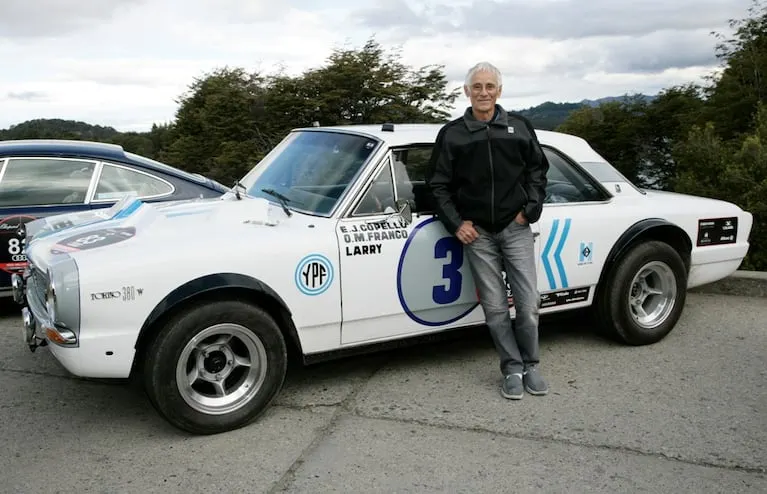
The event was officially called Marathon de la Route, but everyone knew it as the 84 Hours of Nürburgring — three and a half days of continuous racing on the Nordschleife, the longest motor race in the world at the time. Juan Manuel Fangio, by then five-time F1 world champion, retired and serving as a Mercedes-Benz brand ambassador in Argentina, brought the idea to Berta: let’s send three Torinos to Germany. Berta accepted. In six months, in the IKA plant at Santa Isabel near Córdoba, the team prepared three units of the Torino 380W. The 3,770 cc Tornado straight-six engine produced about 250 hp in race trim, fed by three Weber carburettors. Pronello did the bodywork. The cars complied with regulations that demanded the racers remain close to series production.
The race started on 20 August 1969. Within hours, the Argentine cars were running first and second. The Torino number 3 — driven by Eduardo Copello, Alberto “Larry” Rodríguez Larreta and Oscar Mauricio Franco — took the lead and held it for 56 consecutive hours. More than two full days at the front of an international endurance race against Lancia, Mazda, Porsche, BMW, Ford and Triumph factory entries.
Then the script collapsed. The number 1 lost its headlights in heavy rain and crashed. The number 2 also retired. The surviving number 3 developed a crack in its exhaust pipe that pushed its noise level above the regulation limit of 83 decibels. The stewards ordered a forced repair. By the time the team improvised a fix at the side of the track using wire and asbestos, the lead was gone. The car finished fourth, having completed 334 laps — two more than the winning Lancia Fulvia. Penalties knocked 19 laps off the official tally. The result sheet says fourth. The track told a different story.
Now, in fairness: the 84 Hours was not the World Sportscar Championship. The factory entries were modest. A fourth place is not a victory. All that is true. But it does not change the central fact. With six months of development, with Argentine money and Argentine parts (only the carburettors were imported, by regulation), a team led by a thirty-year-old engineer ran a modified production sedan at the Nürburgring for 84 hours and outpaced the winner by two laps. In any country with a serious motorsport industry, that result is capitalised on. Built upon. Funded into something bigger.
In Argentina, it was applauded. There was a parade in Buenos Aires with the drivers in an open-top Torino. Then the system moved on, and Berta was left holding the next idea.
The Berta LR and a recurring pattern
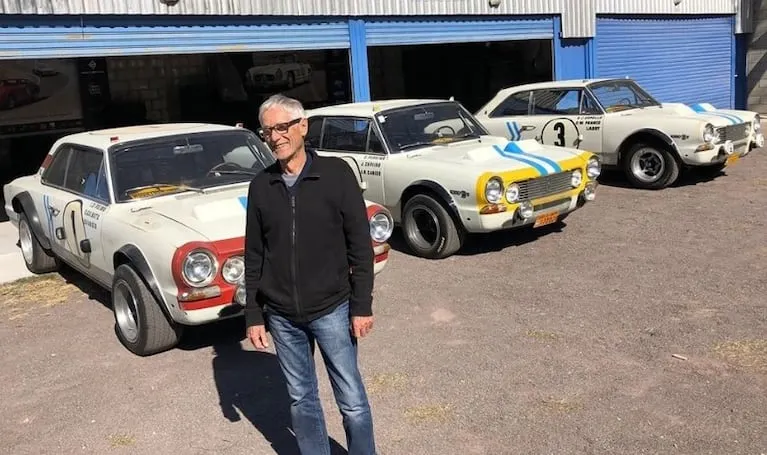
The next idea was Fangio’s. After Nürburgring, the five-time world champion told Berta the line that would define the next decade: “you’ll have to do it yourself, brother.” He meant: build an Argentine sports prototype to race the 1970 International Season at the Buenos Aires Autodrome. They had four months.
They did it. The car was named Berta LR — for La Razón, the newspaper whose owner Patricio Peralta Ramos partly funded the project. Tubular space frame, fibreglass body, Ford-Cosworth DFV V8 of three litres. It qualified third against Porsches, Alfa Romeos, Ferraris, Matras and Lolas. It briefly led one of the races. Then engine trouble forced a withdrawal. A week later, in the Buenos Aires 200 Miles, the same car finished second. That earned an invitation to the 1,000 km of Nürburgring. There, qualifying 14th, it retired after six laps.
This is the pattern that will define Berta’s entire career. Build a car. It works. It races. It impresses. Then silence. The applause does not translate into structural support. Berta SA in Alta Gracia kept building prototypes for a country that admired but did not pay. By 1971 the LR was still struggling with the Cosworth and with its own bodywork. In 1972 Berta started developing his own engine. In 1973 he sought financial support from the Argentine state. He did not get it.
Stop and think about that for a moment. In 1973, despite all its problems, Argentina had a functioning automotive industry. It manufactured Torinos, Falcons, Renaults, Fiats. It had a driver about to become a top-tier F1 contender (Reutemann was already at Brabham). It had Fangio alive, lucid and willing to push. It had Berta with a homegrown V8 on the dyno. Any country with half of that would have set up a national F1 project. England built Cosworth with less. France built Matra with less. Italy sustained Ferrari with marginally more, but with consistent political will across decades.
Argentina did the opposite. Argentina left Berta on his own.
The V8 that almost reached F1
In July 1971, the dyno at Alta Gracia ran a V8 engine designed and manufactured entirely in Argentina. Cast-aluminium block, 2,983 cc, eight cylinders in a 90-degree V, four valves per cylinder, Lucas indirect injection, electronic ignition. The first run lasted seventeen straight hours, with sustained excursions to 11,000 rpm. Nothing broke. Berta declared after the test that in the mid-range his engine made about 70 hp more than the Cosworth, that they evened out around 9,000 rpm, and that the British engine pulled ahead at peak. Eventual outputs reached 420 hp at 11,500 rpm and 30 kgm of torque at 8,500. The whole unit weighed 146 kg.
In 1975 F1 terms, that is a competitive engine. Not a championship-winning engine — let’s not exaggerate — but enough to qualify, enough to score points on circuits where raw power was not everything, enough to build a foundation.
In 1974 Berta accepted a project from the businessman Francisco Mir, the official Ferrari distributor on the United States West Coast. The brief was to build a Formula 5000 car for the American championship. Berta and driver Néstor “Nene” García Veiga flew to California with the finished single-seater. Mir, on seeing it, openly mocked it and bought two Eagles from Dan Gurney instead. The tests proved the Argentine car was actually competitive: García Veiga set a time at Willow Springs only two and a half seconds off Mario Andretti’s lap record. None of that mattered. Mir kept the chassis. Berta returned to Argentina with empty hands and a stored fury that would feed the next decision.
Back in Alta Gracia, Berta made a call. If the F5000 didn’t work, he would convert it into an F1 car. They reworked the suspension geometry for thirteen-inch tyres. Ruedas Argentinas built the aluminium wheels; Brazil’s Italmagnesio built the magnesium ones. They installed the Berta V8. The car was rechristened Berta LR F1. It was entered for the Argentine and Brazilian Grands Prix of 1975 — the first two rounds of the world championship.
To race against Lauda, Fittipaldi, Reutemann, Peterson. With a car driven to Buenos Aires on a flatbed pulled by an old van, with no uniforms, no sponsors, no infrastructure. In Argentine Spanish there is a word for this kind of effort: a patriada. A patriotic, almost reckless undertaking attempted out of pride more than calculation.
And here is where the story stops being heroic and becomes something harder to read.
The pistons that kept melting
In the weeks before the Argentine Grand Prix, the V8 began destroying its own pistons during testing. Berta tried different oil. The problem persisted. He went back to the original Argentine pistons and pushed power higher; they kept failing. Four engines were destroyed in quick succession. Two units remained, and Berta refused to risk them.
He approached the Fittipaldi brothers. Emerson and Wilson, who in 1975 were running their own patriada with the Brazilian Copersucar F1 team, offered to lend Berta a Cosworth DFV on the condition that it be returned in working order. Berta did the maths and realised that he could not cover the cost of replacing the engine if it broke. He said no.
A week before the race, the businessman Arturo Scalise called. He had made a deal with his wife, he said: they each had savings, he would gift Berta a Cosworth, and she would spend the equivalent however she wanted. The offer arrived too late. Berta was already in debt across multiple suppliers, the car was entered but not race-ready, and the deadline closed.
On Sunday 12 January 1975, the Argentine Grand Prix was won by Emerson Fittipaldi in a McLaren. The Berta LR F1 did not start.
Berta said it later, plainly: the military government supported him as long as it suited them, and then everything was cut. The Argentine treasury was emptying. Official sponsorship dried up. The industrial structure that had sent the Torinos to Nürburgring six years earlier was now distracted by other crises. Politics, economics, public attention — all elsewhere. The car that could have been the first wholly Latin American Formula 1 entry ran out of administrative oxygen.
The ending was grotesque, in the way that so many Argentine stories end. The car travelled to the United States in 1975 to race in F5000 with Bill Simpson, Luis Rubén Di Palma and a young Rick Mears. It did not perform. It was shipped back to Argentina. Customs held it for years. When Berta finally recovered what remained, the F1 had been physically dismantled inside Customs. Pieces. Just pieces. The bodywork made it back to Alta Gracia. Berta never attempted another F1 project.
What Argentina threw away
Hold this in your head for a second. In 1975, Argentina had:
- A top-tier F1 driver (Reutemann at Brabham, six podiums that season).
- A constructor with his own V8 engine, dyno-proven at 11,000 rpm.
- A homegrown chassis with track time on it.
- A workshop with dynos, a primitive test track and trained mechanics.
- A recent international result at Nürburgring 1969 that demonstrated technical legitimacy abroad.
England built the foundation of its motorsport industry on less than that. Cosworth started in a shed. McLaren started as two enthusiasts in a workshop. Williams started in debt. The difference is that in each of those cases, a state, a legal framework, a press culture and a business class decided that motorsport engineering was a strategic industry and protected it.
In Argentina, Berta’s story ends with four blown engines, a Customs warehouse that dismembered the chassis, and a man in Alta Gracia who, fifty years later, recalls those years with a quiet sentence: “at least we tried.”
That quietness is what stings most. Berta does not rage. He recounts the failure with the calm of someone who long ago accepted that the country he was born in was not built for him. And that, in NEC, is the difference between an epic story and a deep one. Epics make you cheer. Deep ones make you question what you yourself are doing in your own country, in your own workshop, waiting for a phone call that probably will never come.
The work that came after
After 1975, Berta returned to what he did better than anyone: winning national championships with engines he understood from the inside out. In 1985 Renault Argentina hired him to prepare the Coupé Fuego for TC2000. The result was years of dominance, with Juan María Traverso at the wheel. Then came the Renault 18, the Fuego, the Clío. Then, in 1997, the partnership with Ford and five more national titles, with his son Oreste Junior co-running the team. La Fortaleza in Alta Gracia kept operating: dyno cells, workshops, a private test track, engineers trained on-site. Over fifty national titles accumulated across the decades. The Argentine Senate awarded him the Domingo Faustino Sarmiento Mention. His autobiography sold well.
All of that is true. And all of it is the consolation prize. Because the question nobody in Argentina wants to ask remains open and unanswered: how many national TC2000 titles would have been worth trading for a single point in a 1975 Grand Prix with a car that read “Made in Argentina” on the nose? How many domestic championships would Berta have given back to give that V8 the resources to not melt its own pistons?
We don’t know. We will never know. And that is the verdict on the Magician of Alta Gracia: to be, to this day, the most respected race engineer in Latin America, and the only one of his calibre in the world who never, not once, had the resources his talent deserved.
Cosworth had England. Ferrari had Italy. Berta had Argentina. In this craft, that is the only difference that matters.