1950s Buick: the doctor’s car that out-chromed the whole of Detroit
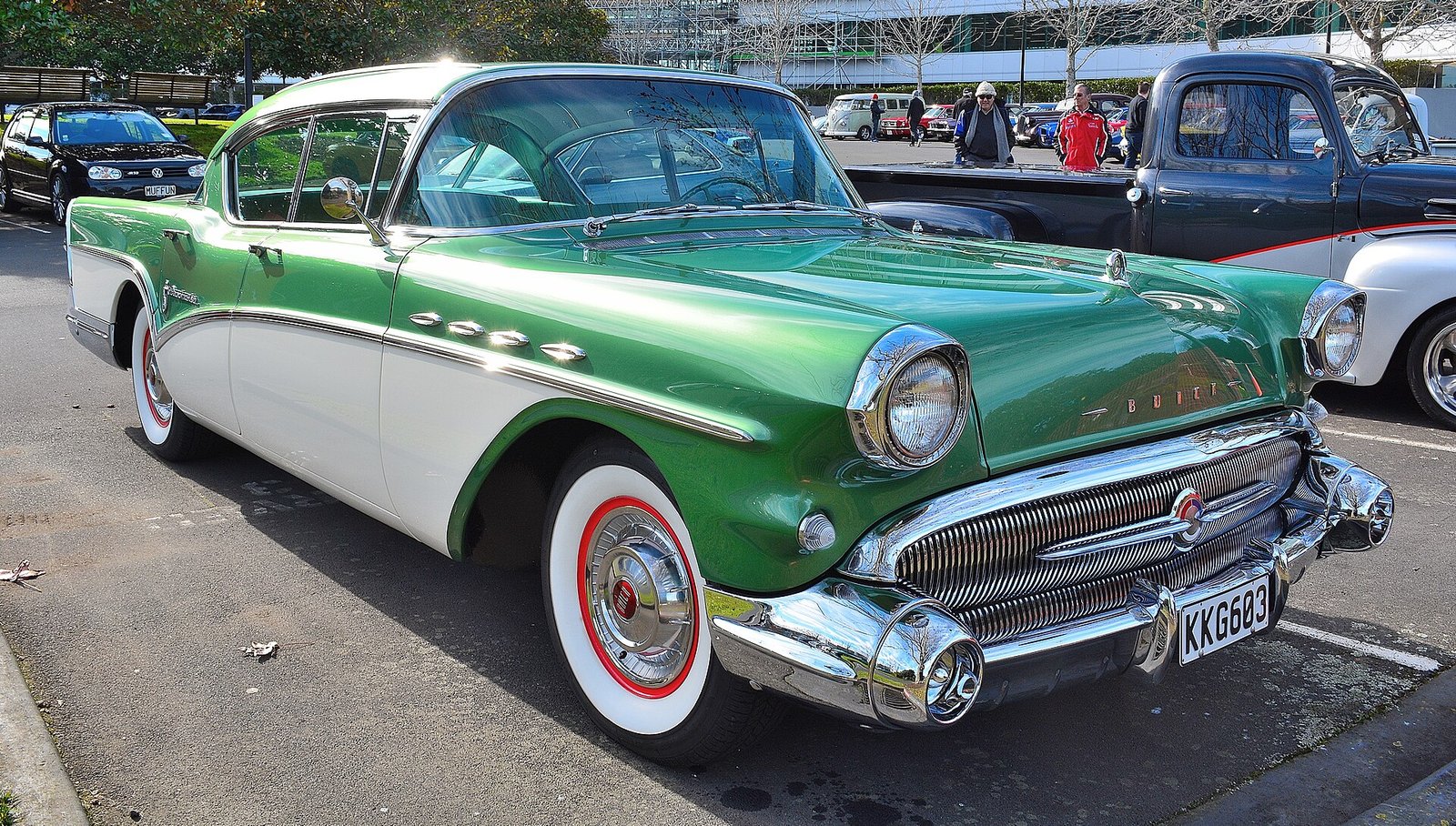
Forget the Corvette posters and the tail-fin Cadillacs everybody puts on postcards. If you want to know what America actually bought when it finally had money in its pocket, look at a 1950s Buick. In 1955 the brand built more than 700,000 cars and sat third in the national sales race, right behind Chevrolet and Ford, with a product that cost a good chunk more than either of them. That is not a niche. That is a country voting with its checkbook.
A Buick was never the cheapest car on the block, never the flashiest and never the fastest. It was the car of the guy who had made it. The family doctor, the small-town lawyer, the contractor who started with one truck and now had a payroll. Chevrolet was where you started, Cadillac was where you showed off, and Buick was where you parked once the mortgage stopped scaring you. The company’s own line put it bluntly: "When better automobiles are built, Buick will build them."
Four holes in a fender
Every legend needs a trademark, and Buick’s came out of one man’s garage. In 1948 a GM stylist named Ned Nickles fitted four little amber lights into holes along the front fenders of his own Roadmaster, wired so they flickered with the distributor like the exhaust stacks of a fighter plane. Harley Earl, the boss of GM Styling and the most powerful designer in the industry, saw it and loved it. For 1949 the lights were gone, but the holes stayed. Buick called them VentiPorts. Everybody else called them portholes.
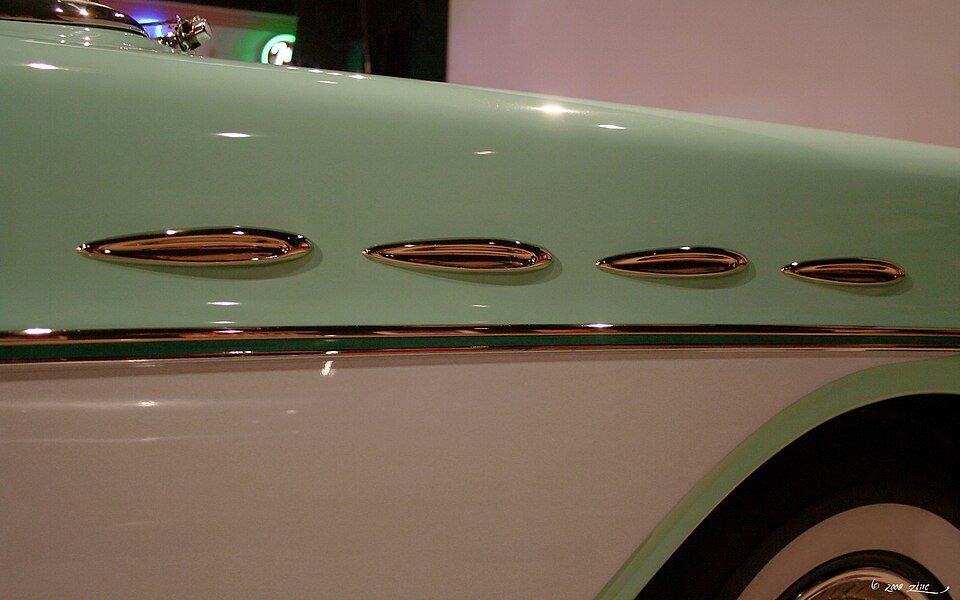
They were sold as engine-bay vents and, for a short while, they did let a little air through. Very quickly they became pure decoration, and the cleverest piece of social engineering in the American car business. The big Roadmaster got four. The Special and the Super got three. Pull into the country club with three holes on your fender and everybody knew you had bought the cheaper Buick. Nobody needed to see the window sticker.
The 1950s Buick lineup, from bottom to top
Buick ran a ladder as clear as a military rank chart, and that ladder sold cars.
The Special was the way in, aimed at young professionals and families on their way up. It started the decade with a straight-eight and switched to V8 power in 1954. In 1959 the name was retired and the car became the LeSabre.
The Super was the middle of the road, the car of solid, mortgage-paying America, and it ran until 1958.
The Roadmaster was the flagship: biggest engine, best cloth, most chrome, four portholes. Power steering, which Buick had offered since 1952, was standard by mid-decade.
The Century, revived in 1954 after a long nap, was the sneaky one. Buick took the light Special body and dropped in the big Roadmaster V8. Magazines called it the "banker’s hot rod," and the name stuck because it was accurate. The model name itself came from British slang: "doing the century" meant hitting 100 mph.
And in 1958 Buick brought back the Limited, a stretched, extra-luxurious Roadmaster that was 227.1 inches long, the longest Buick of the decade, and priced above a base Cadillac Series 62. It lasted exactly one year.
Highway Patrol and the cop car nobody expected
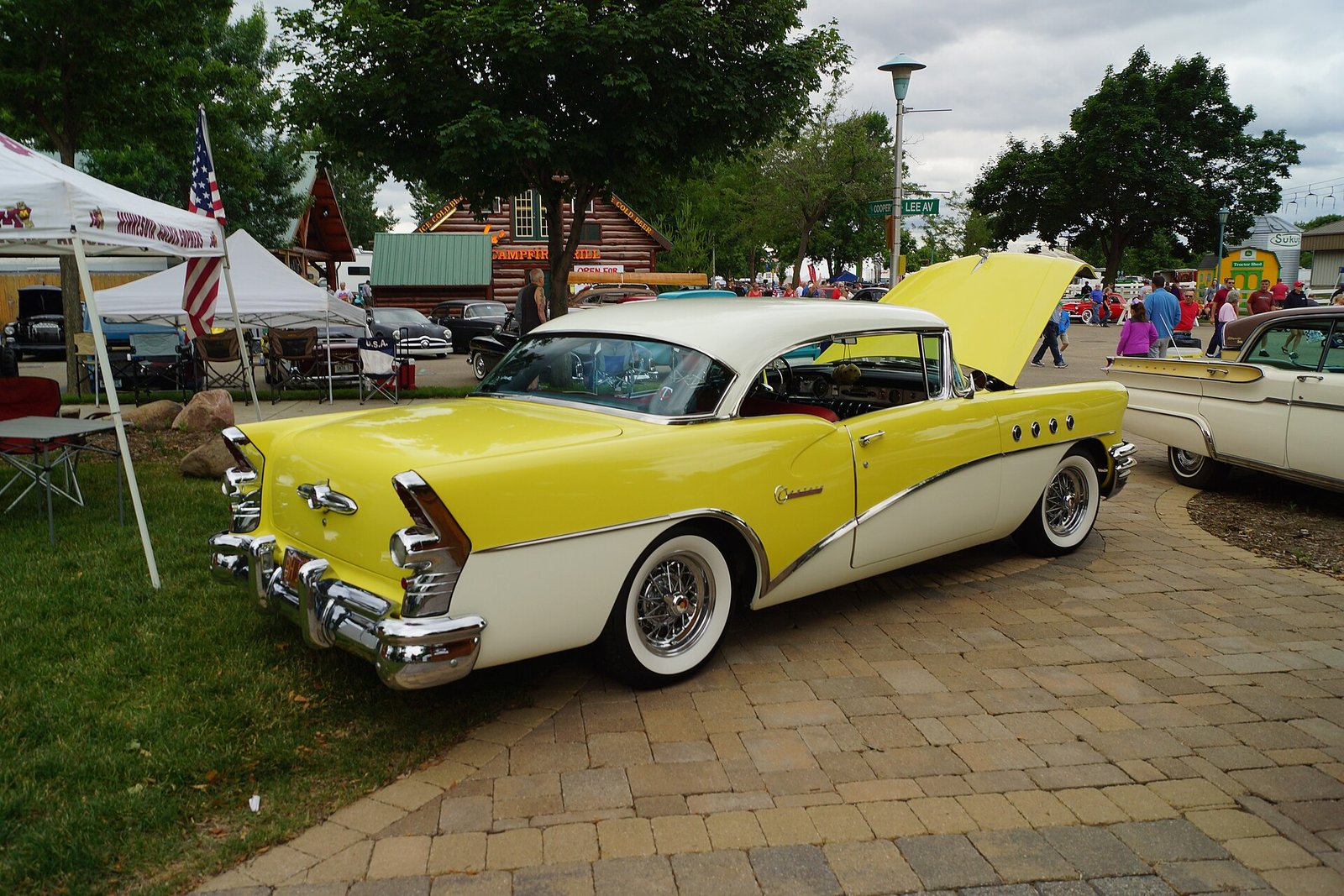
If you grew up with reruns, you have already seen a 1955 Buick Century at work. The California Highway Patrol bought Centuries as pursuit cars, and when Broderick Crawford growled "ten-four" into his radio on the TV series Highway Patrol, which ran from 1955 to 1959, he was usually doing it from behind the wheel of one. In April 1955 Highway Patrolman magazine reported that the Century had hit a wheel speed of 108 mph in its testing. That is not doctor’s-car behavior. That is a full-size sedan running down speeders on the highways of California, with chrome trim and a heater that worked.
There is also a story, repeated endlessly on forums, that Buick shot a TV commercial of a Century touching 110 mph and the networks refused to air it. Nobody has ever produced the ad, a script or a newspaper clipping about the ban. File it next to the one about Eisenhower supposedly saying that a Cadillac looks like you’re showing off and a Buick looks like you’ve earned it. Nice line, zero paper trail, and the record shows Ike rode to his 1953 inauguration in a Cadillac Eldorado.
The Nailhead: torque first, questions later
In 1953 Buick celebrated its fiftieth birthday by putting its first V8 on sale. The company marketed it as the Fireball V8. Hot rodders named it the Nailhead, because its valves were small and stood almost vertical, so from above they looked like a row of nail heads sticking out of the cylinder heads.
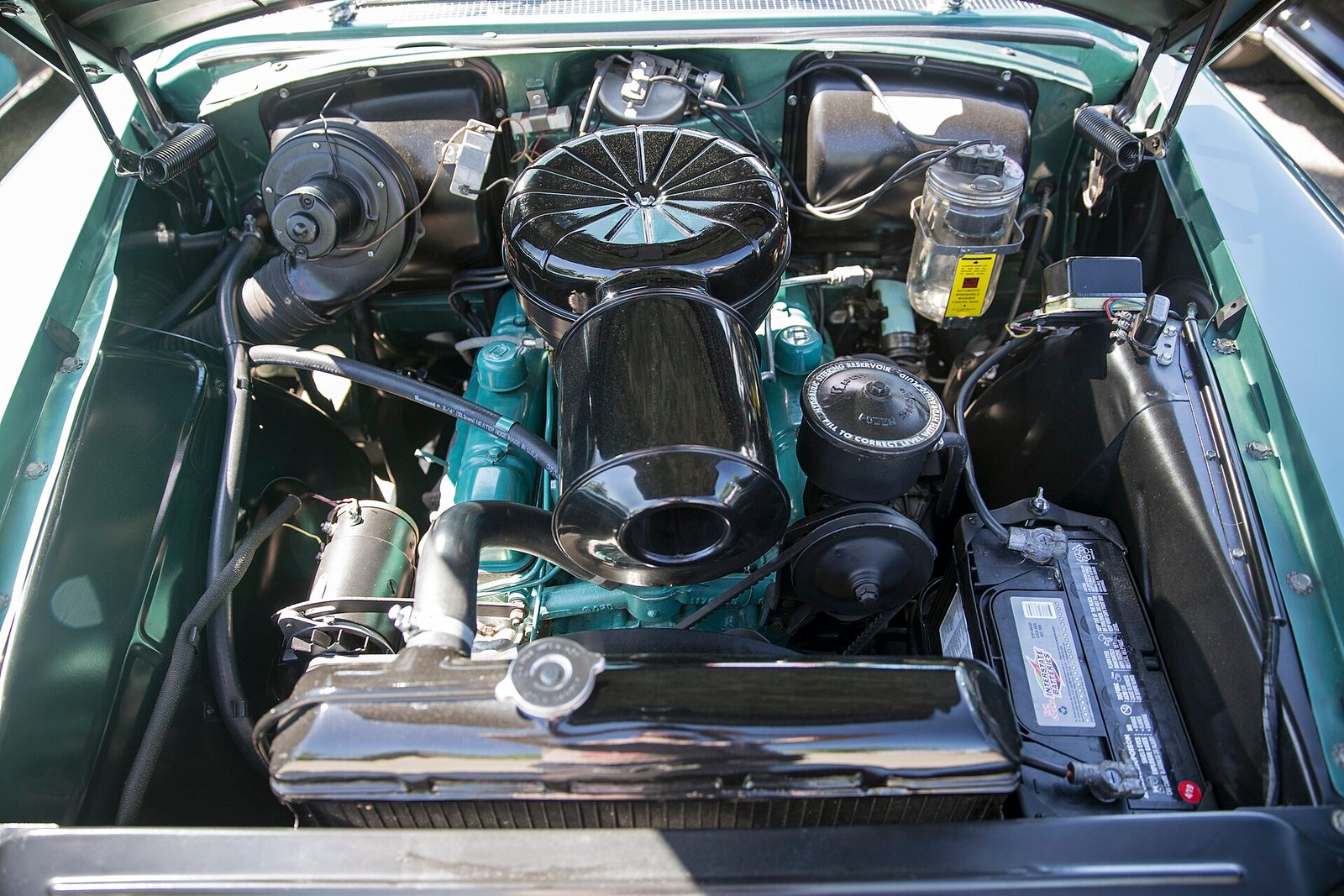
The first one displaced 322 cubic inches and made 188 hp in the Roadmaster. By 1956 it was up to 255 hp. In 1957 the bore grew and the engine became a 364 rated at up to 300 hp, and for 1959 Buick went to 401 cubic inches and 325 hp. Put that in perspective: in 1957 Chevrolet’s hottest fuel-injected 283 small-block made 283 hp, and that was a racing-flavored option. Buick was handing out 300 hp to dentists.
The small valves meant the Nailhead hated high revs and loved low ones. It shoved like a tugboat from just off idle, which was exactly what you wanted when pulling two tons of steel away from a stoplight. That same torque made it a favorite of drag racers and hot rodders well into the 1960s, which is a strange afterlife for an engine that was supposed to be refined and quiet. The Nailhead family went on to power the Wildcat and the first Riviera before Buick replaced it in 1967.
Dynaflow, or how to drive without shifting
Buick introduced the Dynaflow in 1948 as an option on the Roadmaster, and it was the first torque-converter automatic offered in an American passenger car. The trick was simple and a bit lazy: in Drive the car never changed gear. All the multiplication of torque happened inside the converter, a fluid coupling packed with turbine blades. There was a Low position for steep hills, but most owners never touched it.
The result was the smoothest launch on the market. No shift shock, no lurch, just a long rising hum while the car built speed. The result was also slow and thirsty, so critics nicknamed it "Dynaslush." Customers didn’t care. They wanted to float, and Buick sold floating. Later versions, like the Twin Turbine of 1953 and the Flight-Pitch Dynaflow of 1958, tried to fix the sluggishness with more turbines and variable-pitch blades, with mixed results.
The Skylark and the 1957 peak
For the anniversary in 1953, Buick built a car that had nothing to do with common sense. The Skylark was a Roadmaster convertible with the top chopped low, the beltline notched, wire wheels and no portholes at all. It cost about $5,000, more than any other Buick that year, and only 1,690 were built.
It was Harley Earl’s way of showing what his studio could do when the accountants looked away. Earl had form here: back in 1938 he had built the Buick Y-Job, widely considered the industry’s first concept car, and in 1951 his LeSabre and XP-300 dream cars toured the country on show stands. The Skylark was the first time some of that show-car attitude could actually be bought at a dealer.
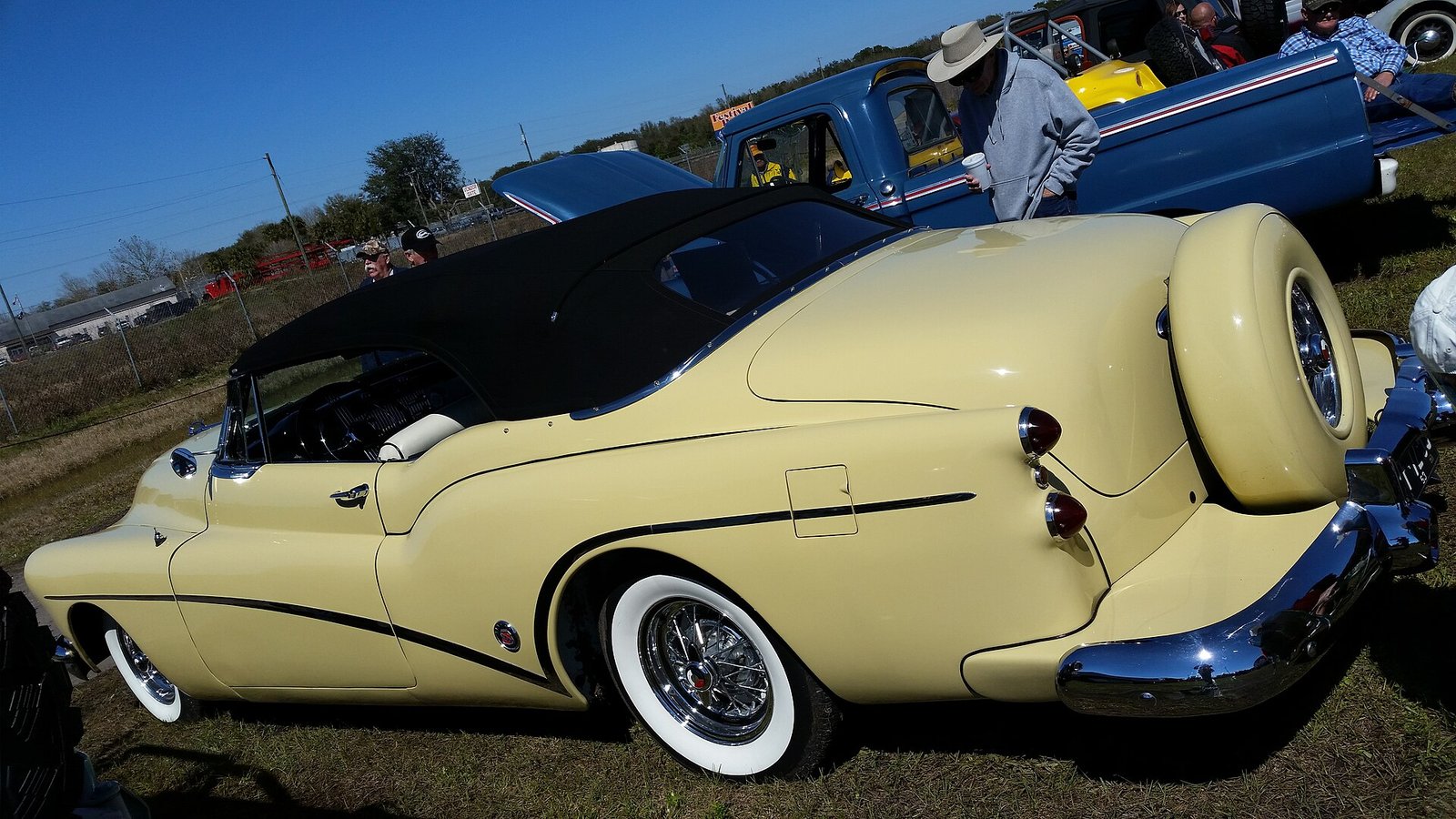
The mainstream lineup hit its stride in 1957, when Earl’s team gave the whole range a lower, wider body, a sweeping chrome spear down the sides, restrained fins and two-tone paint schemes. Prices that year tell you exactly where Buick stood. A Special four-door started at $2,596, only $358 more than a Chevrolet Bel Air. A Roadmaster convertible ran about $4,065. A Cadillac cost more than that before you even opened the options book. Buick’s whole business was sitting in the space between the two, just expensive enough to be a step up and just cheap enough to be reachable.
1958: too big, too shiny, too late
Then came the hangover. In 1958 the country slid into a recession and Buick answered with the heaviest, most chrome-plastered cars in its history. The grille alone used 160 little chrome squares. Customers took one look at the price tags and walked to the Rambler dealer instead.
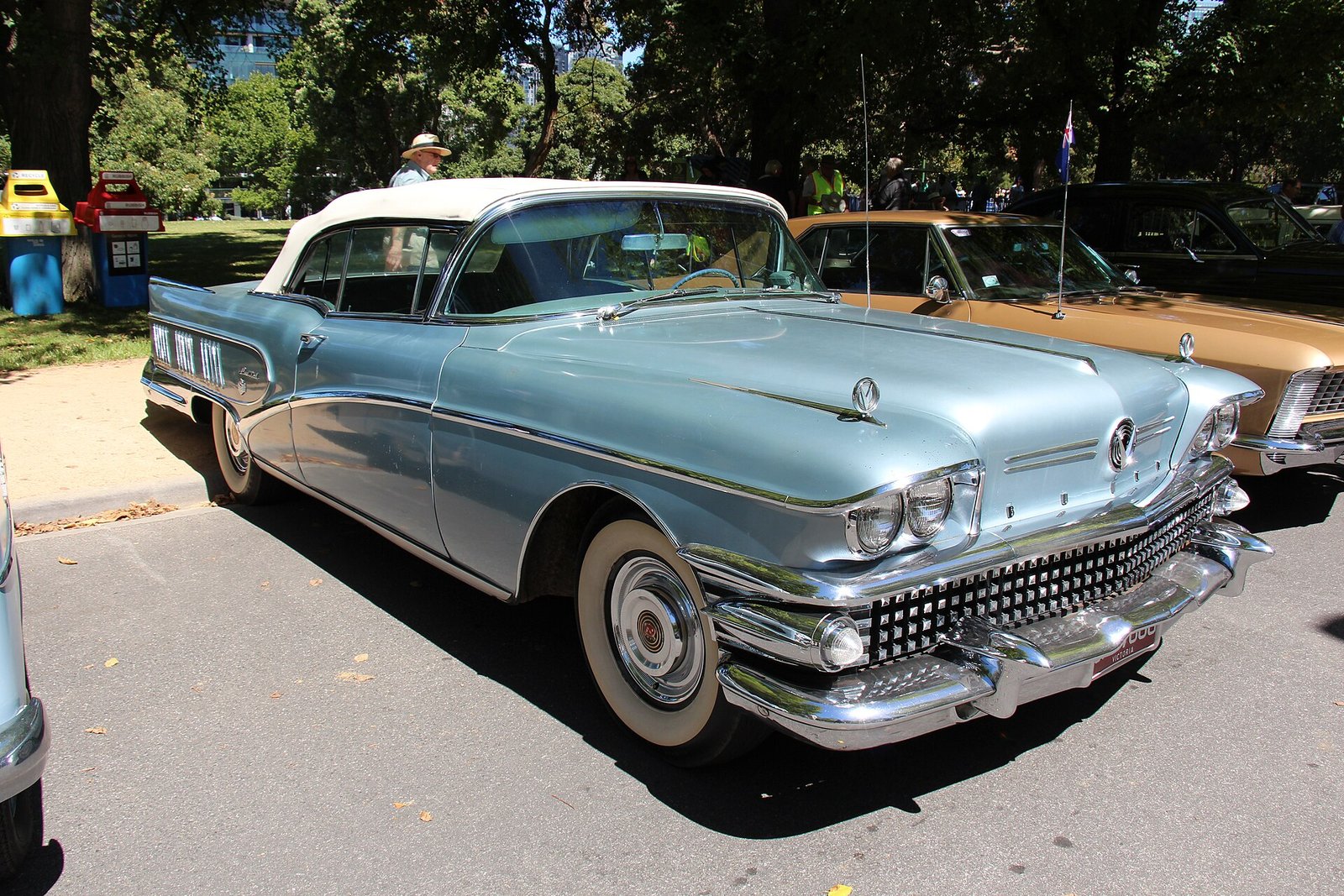
Production fell from roughly 405,000 cars in 1957 to about 242,000 in 1958, a drop of 40 percent. The Super managed just 42,388 units, its lowest figure since 1942. Elsewhere in Detroit it was the year Ford launched the Edsel and Plymouth’s 1958 Fury became the car Stephen King would later turn into a killer. Buick had no such fame to fall back on. It just had a lot of unsold chrome.
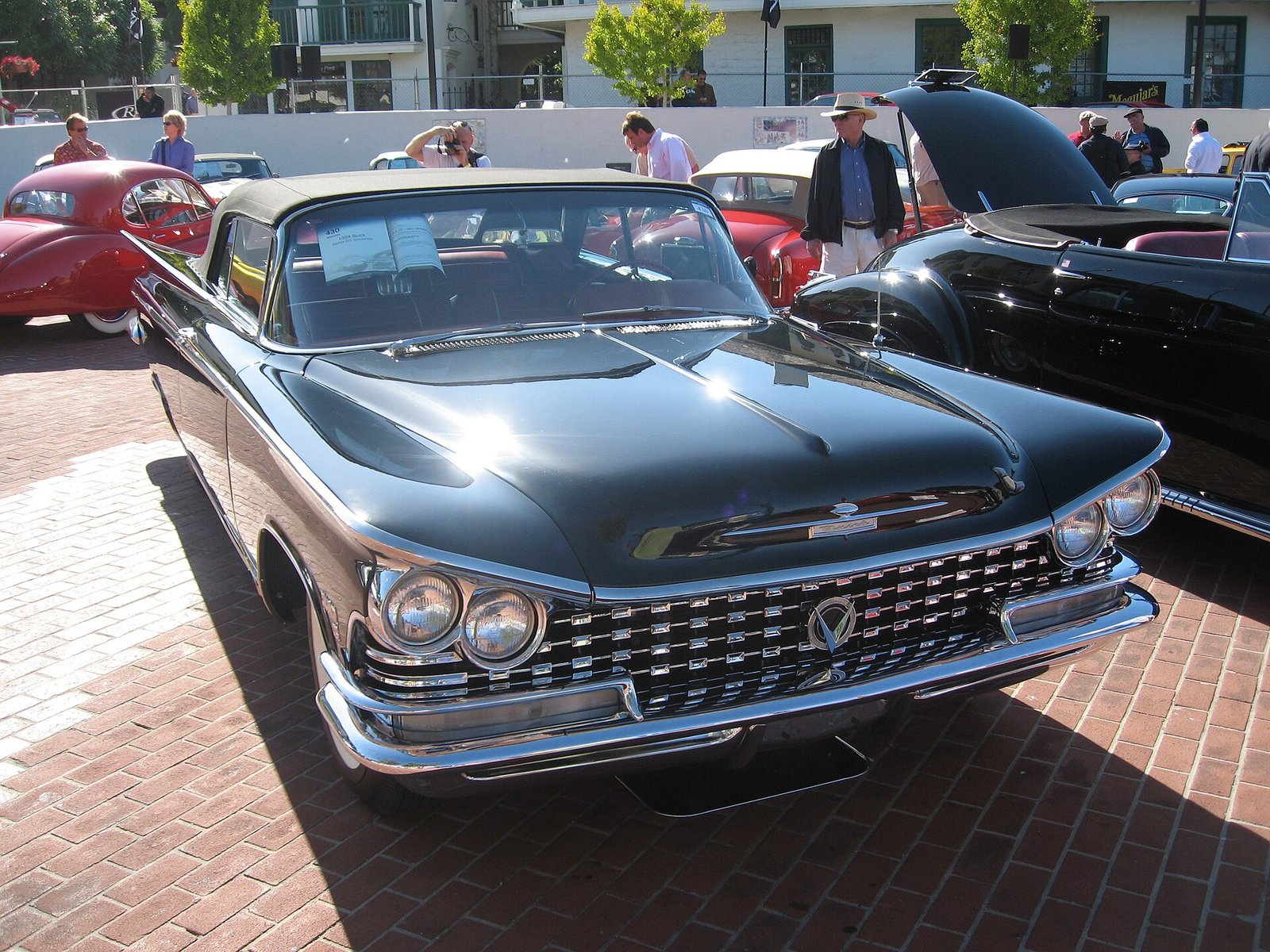
For 1959 the company threw everything out. New bodies, slanted fins, and new names: the Special became LeSabre, the Century became Invicta, and the Super and Roadmaster became Electra and Electra 225. The portholes survived. Within two years Buick would also launch a small aluminum 215 V8, the engine that ended up, via a British deal, in the Rover P6 3500 and decades of Land Rovers.
Living with one today
A 1957 Roadmaster is about 18 feet long, longer than a current Mercedes S-Class. Parking it is an act of faith. The power steering is so light it tells you nothing about what the front tires are doing. The drum brakes need planning, and a lot of it. The bench seats are sofas and the suspension irons out every pothole, which is the point. You don’t drive it. You sail it.
The market hasn’t caught up with how special these cars are. American collectors with money tend to chase the muscle cars of the 1960s, and to many of them a ’50s Buick is grandpa’s car. That keeps most sedans affordable by classic-car standards, while the convertibles and the Skylark sit in a different price bracket altogether. For the money a buyer would spend on a mediocre 1968 Mustang, they can still put a fifties Buick in the garage that is rarer, more historically important and, frankly, better looking.
Buick later found its own muscle with cars like the GSX of 1970, but the 1950s were its real golden era: the decade when General Motors’ middle child pushed past older siblings in the sales charts and sat right behind Cadillac on the ladder of American success.
Some people see these cars as rolling monuments to waste. They are wrong. A 1950s Buick is what a confident country builds when nobody has told it to stop. No crash standards, no emissions rules, no wind tunnel telling the stylists to calm down. Just chrome, steel and a V8 big enough to pull a house. Nobody will ever be allowed to build one again, and that is exactly why it’s worth keeping a few on the road.
Check you’re still alive.
Photos via Wikimedia Commons: 1957 Buick Roadmaster, GPS 56 (CC BY 2.0); 1957 Century VentiPorts, Rex Gray (CC BY 2.0); 1955 Century Riviera, Greg Gjerdingen (CC BY 2.0); 1956 Nailhead 322, Mr.choppers (CC BY-SA 3.0); 1953 Skylark, Michel Curi (CC BY 2.0); 1958 Limited, Sicnag (CC BY 2.0); 1959 Electra 225, Simon Davison (CC BY 2.0).