

On December 22, 2023, a black Dodge Challenger SRT Demon 170 rolled off the line in Brampton, Ontario. It was the last Challenger, the last Hemi-powered Dodge muscle car, and on E85 it made 1,025 horsepower. The Charger that replaced it comes as an electric car with up to 670 hp, or with a twin-turbo inline-six. Chevrolet had already said the Camaro would end in January 2024. Of the three, only the Mustang still sells a V8.
So this is a good moment to ask a question that has no rational answer: why does a big, heavy, thirsty car that brakes late and turns reluctantly, and that was technically outclassed by plenty of European and Japanese sports cars in its own day, pull on people the way it does?
From where I sit, in Spain, the answer looks different than it does from a Detroit suburb. And a few things that get glossed over at home are worth putting on the table.
How the muscle car happened
Every American knows the ingredients, so here’s the short version with the numbers attached.
Gas was cheap. In May 1973, right before the embargo, the national average was 38.5 cents a gallon. The Federal-Aid Highway Act of 1956 had kicked off the Interstate system, and acceleration mattered more than corners. Detroit already had big V8s on the shelf for its full-size cars, and dropping one into a mid-size body cost little extra. And drag racing gave every Friday night a winner that dealers could sell on Monday.
The spark came from Pontiac in 1964. Its engineers put the 389-cubic-inch V8 from the big cars into the mid-size Tempest and sold it as the GTO option. It made 325 gross horsepower stock and 348 with the Tri-Power setup of three two-barrel carburetors. Everybody followed: the Chevelle SS, the Torino, the Charger, the Road Runner.
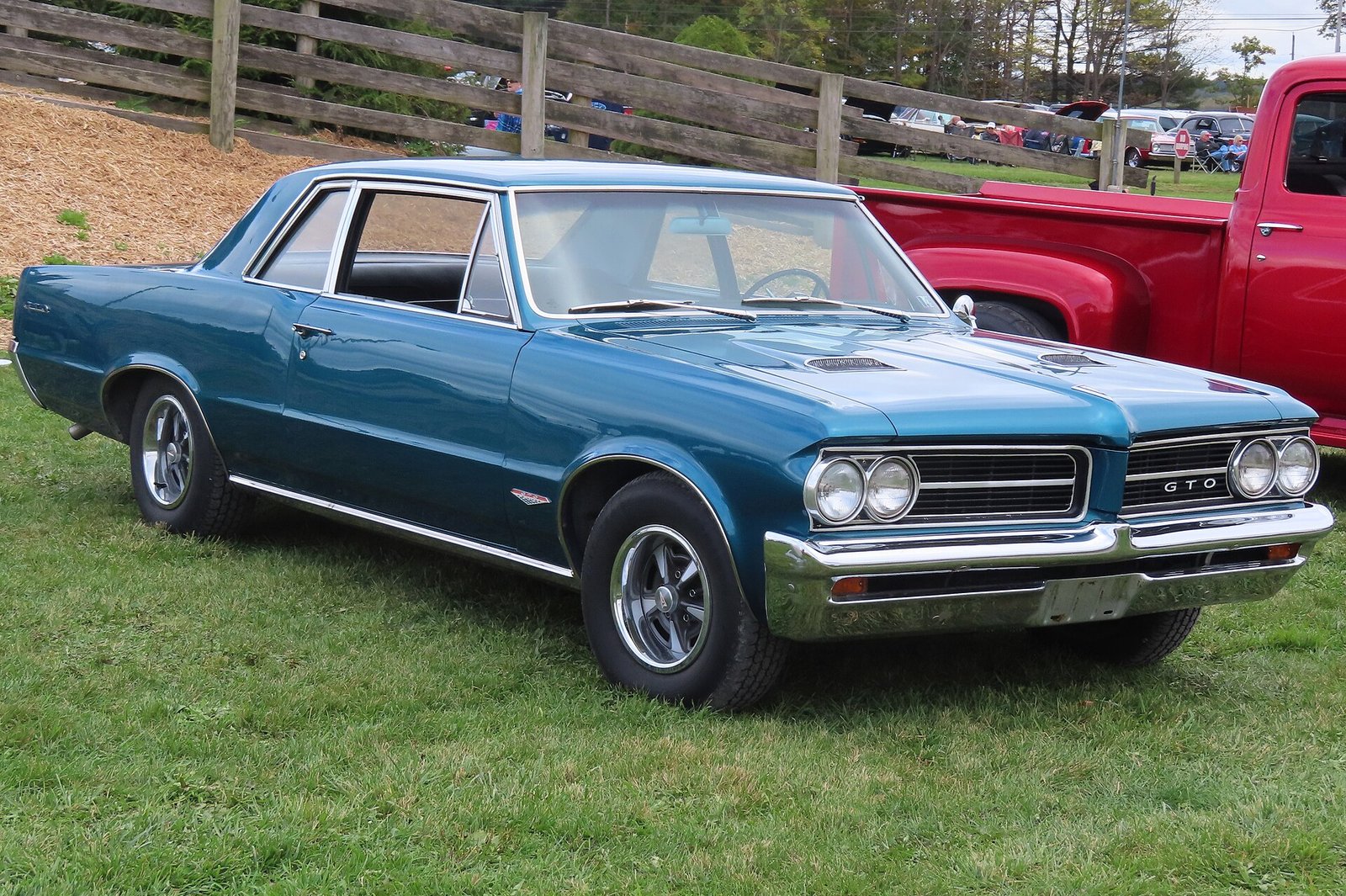
It’s worth separating two things that often get lumped together. The Mustang, launched in 1964, created the pony car: compact, sporty-looking and affordable. The muscle car, strictly speaking, is a mid-size car with the biggest engine its maker could fit in it.
The numbers everybody quotes, and the catch
The escalation was real:
- 1966 Chevelle SS 396: up to 375 hp in its strongest tune.
- 1967 Shelby GT500: the 428 Police Interceptor, 355 hp.
- 1968 Charger R/T 440: 375 hp.
- 1969 Camaro ZL1: 430 hp from an aluminum-block 427, widely believed to be underrated.
- 1970: Hemi ‘Cuda, 425 hp; Chevelle SS 454 LS6, 450 hp; Torino Cobra 429 Cobra Jet, 370 hp.
Now the catch. Every one of those is an SAE gross figure: an engine on a test stand with no air cleaner, no accessories and no exhaust. In 1972 the industry switched to SAE net, measured with the engine as installed. The same engine lost dozens of horsepower overnight without a single part changing. The 426 Hemi was listed at 425 gross and 350 net in 1971.
That’s why the Corvette numbers people throw around are a little unfair. The 1969 L71 427 with Tri-Power was rated at 435 gross. The 1975 base L48 made 165 net, the weakest Corvette engine since 1956. The real drop was huge, from lower compression for unleaded fuel, from emissions equipment and from the catalytic converter, but the paperwork made it look even worse. When somebody tells you how much power a ’70 car "really" had, ask which number they mean.
The fall
Then came the 1973 embargo. Gas went from 38.5 cents in May 1973 to 55.1 cents by June 1974, more than 40 percent, with lines at the pumps and odd-even rationing by license plate. Insurers had already been pricing young drivers out of big-block cars. The Mustang became the Mustang II, built on the Pinto.
The low point might be the 1979 and 1980 Mustang with the carbureted 2.3-liter turbo four. Roughly 132 hp, lots of lag, and lubrication problems that cooked turbos when owners didn’t change oil every 3,000 miles or let the engine cool before shutting it off. Ford dropped it for 1981 and brought it back in 1983 with fuel injection, when it finally worked.
The Fox Body, still the smartest buy
Ford kept the 5.0 V8, the 302 from the Windsor family, in the Fox-platform Mustang when others had given up. The 1987–1993 5.0 LX, with 225 net horsepower in a light body, may be the most underrated muscle car ever built: simple, cheap to fix and endlessly tunable.
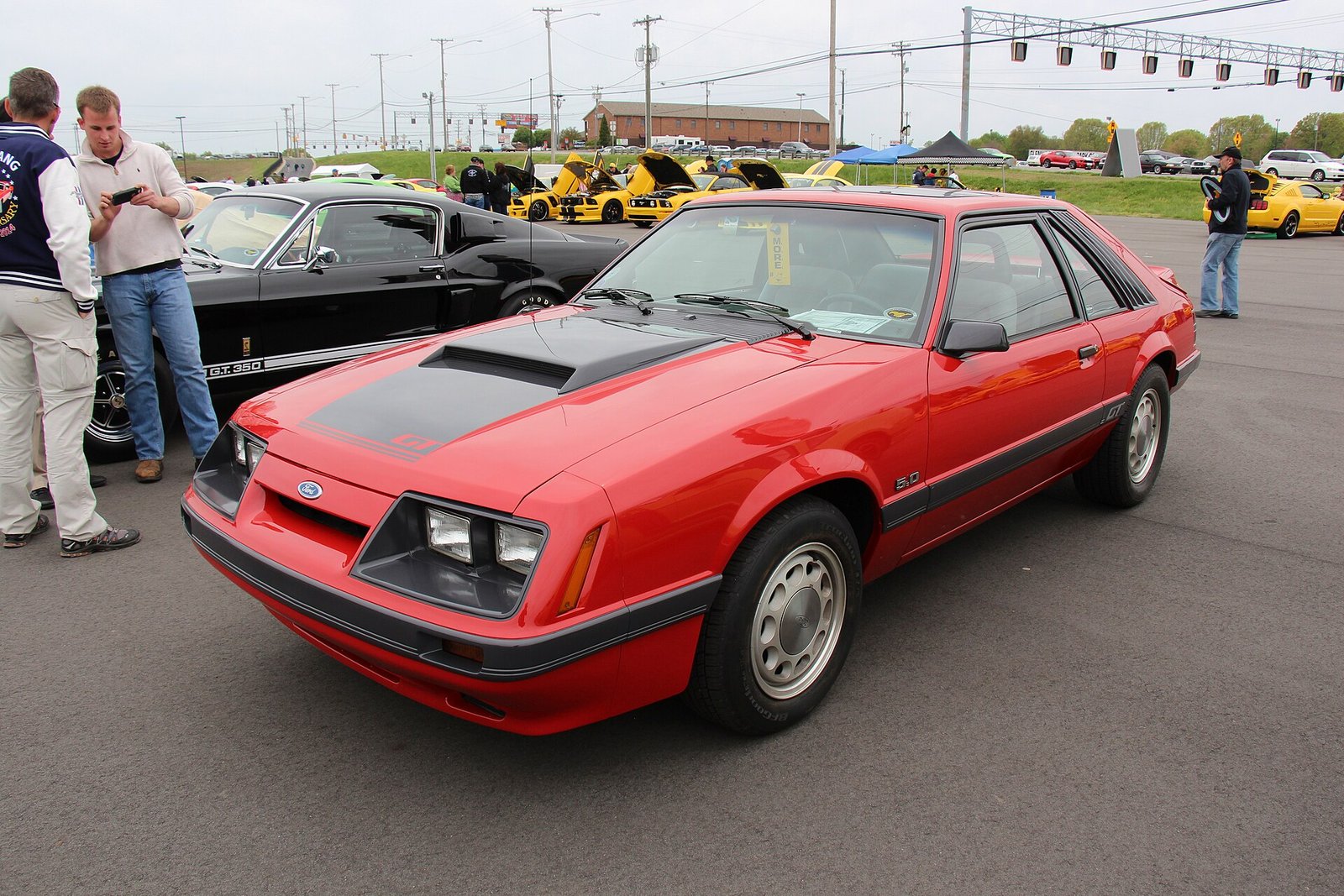
Chevrolet answered with the Camaro IROC-Z, Pontiac with the Firebird Trans Am, and the C4 Corvette arrived in 1984. Those cars, plus the 1993–2004 SVT Cobra and the 1994–1996 Impala SS with its LT1 V8, are where the real value still lives. They lack the shine of a ’69, but they’re better to drive and far easier to keep running.
A Dodge Dart made in Madrid
Here’s something few Americans have heard of. In 1963 a Spanish truck and diesel builder, Eduardo Barreiros, signed a deal with Chrysler, and from 1965 his plant at Villaverde, outside Madrid, assembled Dodge Darts from kits shipped from Argentina. The Spanish cars had their own front styling, a four-speed gearbox and disc brakes at all four corners, which most American Darts didn’t. Chrysler bought control of the company step by step and owned all of it by 1969. In 1971 the Dart gave way to the Dodge 3700 GT. Between the two, Spain built 17,589 of them.
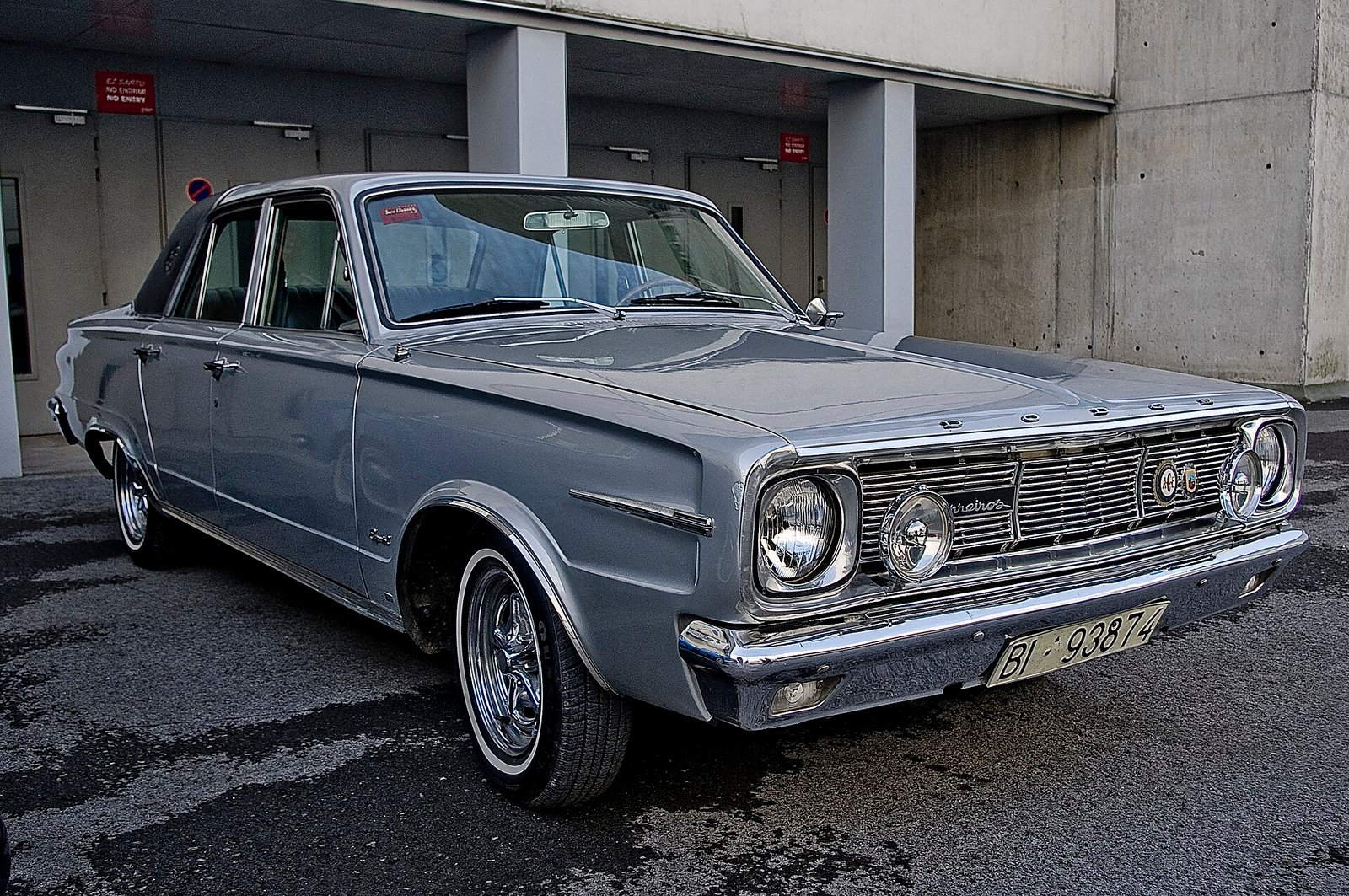
They weren’t muscle cars. Under the hood was Chrysler’s 225 Slant Six, not a V8. But in a country of small Seats, they were the closest thing to Detroit you could buy with Spanish plates, and they became the official car of the Franco regime’s ministers. On December 20, 1973, Prime Minister Luis Carrero Blanco was killed by an ETA bomb while riding in his 3700 GT. A Catalan coachbuilder, Pedro Serra, even built a coupe version with Italian designer Michele Liprandi, the Dodge Boulevard 3700 GT. Only 18 were made between 1971 and 1974.
What a muscle car isn’t
Judge it by European standards and it’s a bad car. Leaf springs out back, drum brakes on many versions, power steering that tells you nothing. A ’68 Charger is more than 17 feet long and nearly 6.5 feet wide. Build quality in the ’60s and ’70s was what it was: oil leaks, loose panel gaps, inconsistent materials. On a mountain road, a good European hot hatch from the ’90s leaves it behind.
What it is
Presence. Park a ’68 Charger on any street anywhere in the world and people stop. Kids, grandparents, people who don’t know a carburetor from a crankshaft.
Sound. That uneven burble at idle comes from the cross-plane crankshaft and the way the firing pulses alternate between the two banks. Nothing else sounds like it. In Europe we have sports exhausts that sound good. This is something older.
A direct line. No traction control, no electronic nannies. The car does exactly what your right foot says, including killing you if you’re an idiot.
Mechanics you can see. Open the hood and the whole engine is right there, with room for your hands. You can adjust the carb with a screwdriver.
A ritual. Pump the pedal so the carb squirts fuel, turn the key, let it crank until it catches with a roar.
What the modern ones lost
The 2005 retro Mustang, the Challenger’s return in 2008 and the Camaro’s in 2010 gave us the best muscle cars ever built by every measurable standard: 400-plus horsepower, real brakes, suspensions that can handle a corner and modern crash safety. They were better cars and worse muscle cars. Too heavy, too insulated, with steering that filters everything and engine sound partly piped through the speakers.
And now even that era is over for Dodge and Chevrolet. The new Charger offers a 3.0-liter twin-turbo Hurricane inline-six with up to 550 hp in its high-output version, or the electric Daytona Scat Pack with 670. The numbers are bigger than ever. The V8 burble is gone.
Seen from Europe, there’s an irony nobody in Detroit mentions. The Mustang GT sold in Spain today still has the 5.0 Coyote V8, but tuned to 446 metric horsepower against 487 in the American version, and it starts at €61,828 for the manual fastback. Europeans pay a lot more for less power, and still line up for it.
About those prices
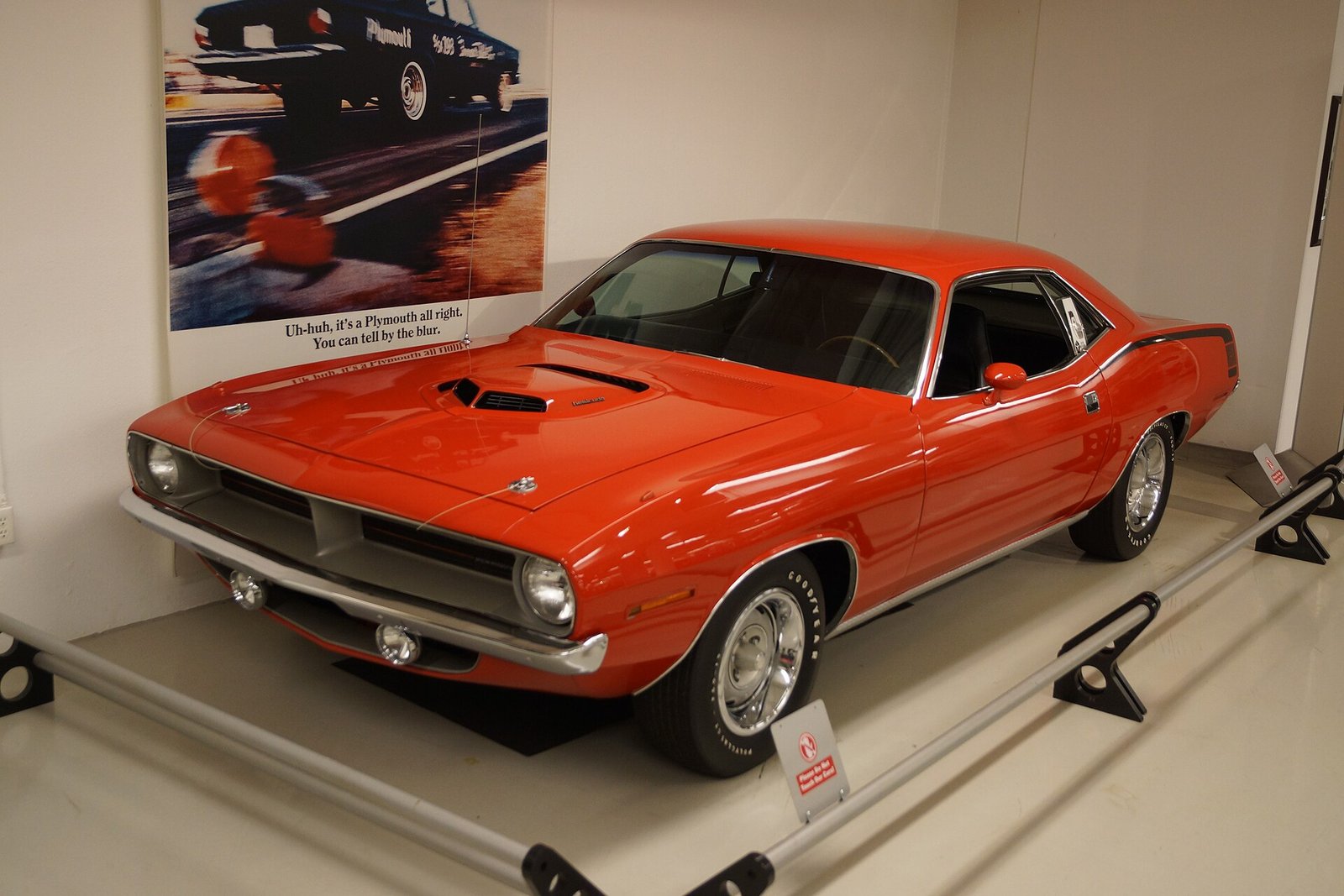
In June 2014, at Mecum’s Seattle auction, a 1971 Hemi ‘Cuda convertible sold for $3.5 million. Plymouth built about a dozen Hemi convertibles that year, and that one was the only four-speed car still carrying its original drivetrain. Good car? Sure. Worth that to drive? No. A lot of six- and seven-figure muscle cars never leave climate-controlled garages, which is its own kind of sad.
Before you buy
The common small-blocks, Ford’s 302 and Chevy’s 350, have parts everywhere and an aftermarket that will sell you anything. The rare big-blocks are a different world: a 440 Six Pack or a 426 Hemi means expensive, hard-to-find parts, and a car whose value depends on proving the engine is the one it left the factory with. That’s why paperwork matters so much at the top of the market. "Numbers matching," meaning the engine and transmission still carry the codes that match the car’s VIN, can be the difference between a nice driver and a car worth several times more. Buy the documentation as carefully as you buy the car.
You’ll also want a mechanic who still understands carburetors and points ignition, and that’s not every shop anymore. Old rubber fuel lines and today’s ethanol-blended gas don’t always get along, so expect to replace them. Brakes, steering boxes and suspension bushings on a car that has sat for years will need attention before you trust it at speed. None of it is complicated. That’s the point of these cars. But it all takes time, and a cheap muscle car that needs everything is rarely cheap by the end.
So why do we want one?
Rationally, there’s no case. A Golf R is quicker almost anywhere real. A Miata is more fun on a back road. A Corolla is endlessly more practical. None of them does what a big-block does when it fires up and that low rumble hits you in the chest. That’s the whole trick: it turns sensible people into lovestruck idiots for as long as the drive lasts.
If you’re thinking of buying one, start with a Fox Body. You’ll learn how everything works without going broke. If you’re still hooked after a year, go find the car you had on your bedroom wall, knowing you’re buying emotion, not logic.
Check you’re still alive.
Photos: HJUdall (CC0); MercurySable99 (CC BY-SA 4.0); Sicnag (CC BY 2.0); Spanish Coches (CC BY 2.0); Greg Gjerdingen (CC BY 2.0). Via Wikimedia Commons.