
Pontiac GTO: the option package that broke GM’s rules and started the muscle car war
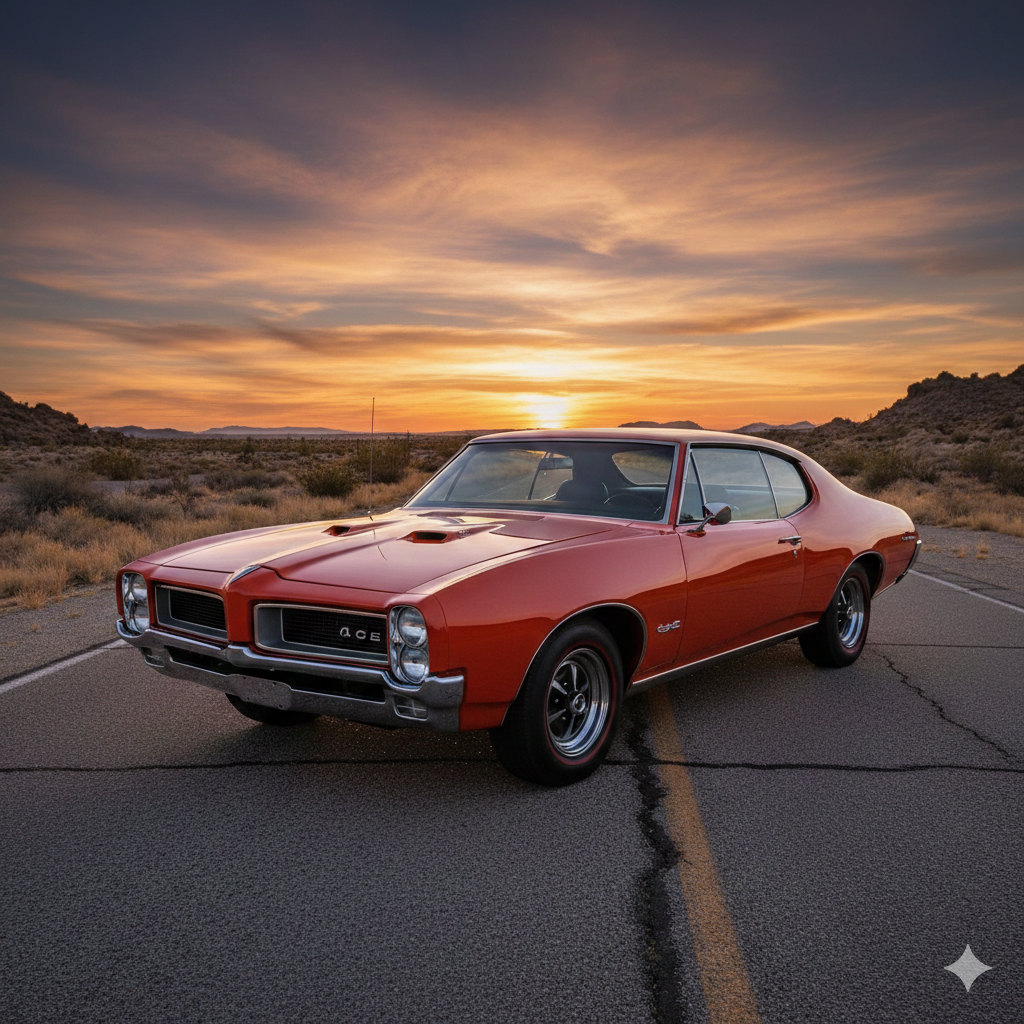
The Pontiac GTO was never supposed to exist. In 1963 General Motors had a rule against putting engines bigger than 330 cubic inches in its intermediate cars, and Pontiac broke it with a line item on an order form. For $295.90, a buyer could tick a box and turn a sensible Tempest LeMans into a 389-cubic-inch street brawler. GM expected to sell 5,000. Pontiac sold 32,450 in the first year, and every other Detroit brand spent the rest of the decade trying to catch up. That’s how the muscle car went mainstream.
Why GM banned big engines
The 330-cubic-inch rule didn’t come from nowhere. In 1957 the Automobile Manufacturers Association, Detroit’s trade group, had agreed that its members would stop backing racing and stop advertising speed, after public criticism of highway deaths. Ford, Chrysler and GM all signed it and then quietly worked around it. In early 1963 GM’s top management cracked down for real, ordering its divisions out of factory racing programs. Limiting engine size in the new intermediate cars was part of the same mood: GM didn’t want headlines about young drivers in overpowered family cars.
Pontiac, which had built its early-1960s image on performance and NASCAR, suddenly had no racing program to sell from. The GTO was its answer. If Pontiac couldn’t win on Sunday, it would put the speed straight into the showroom.
Three engineers and a loophole
The story usually gets told as John DeLorean’s, and he deserves a big share. But the GTO had three fathers. In 1963 Pontiac engineer Bill Collins and engine man Russ Gee noticed that the big 389 V8 from the full-size Pontiacs bolted into the new A-body Tempest using the same mounts as the small engine. The parts practically fell into place.
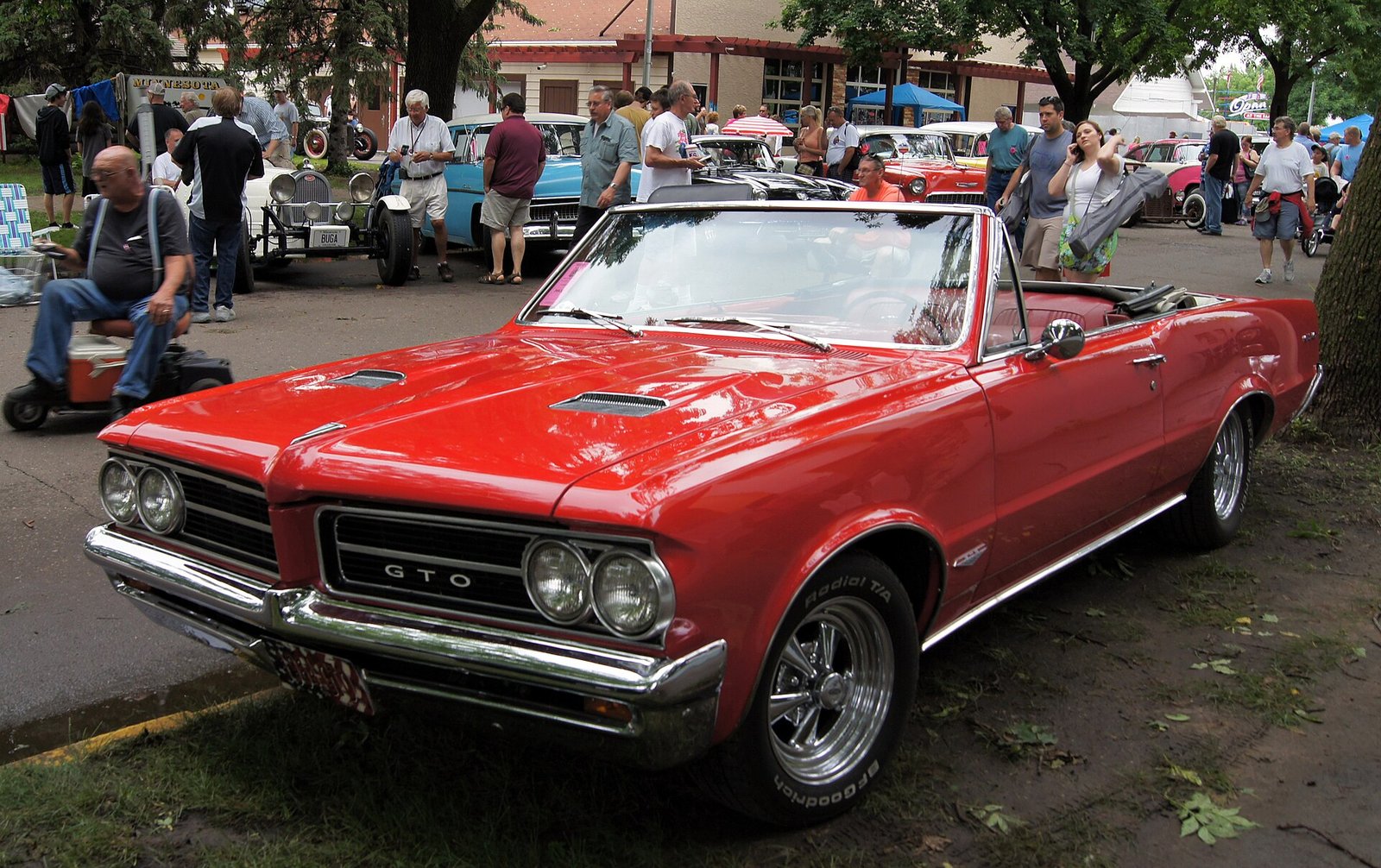
DeLorean, then Pontiac’s chief engineer, saw what they had and handled the politics. GM’s rule applied to new models, so he didn’t create one. He made the big engine part of an option package for the Tempest LeMans, which slipped under the radar of the corporate committee. Pontiac general manager Pete Estes signed off, knowing it could cost him if it flopped. It didn’t.
What $295.90 bought
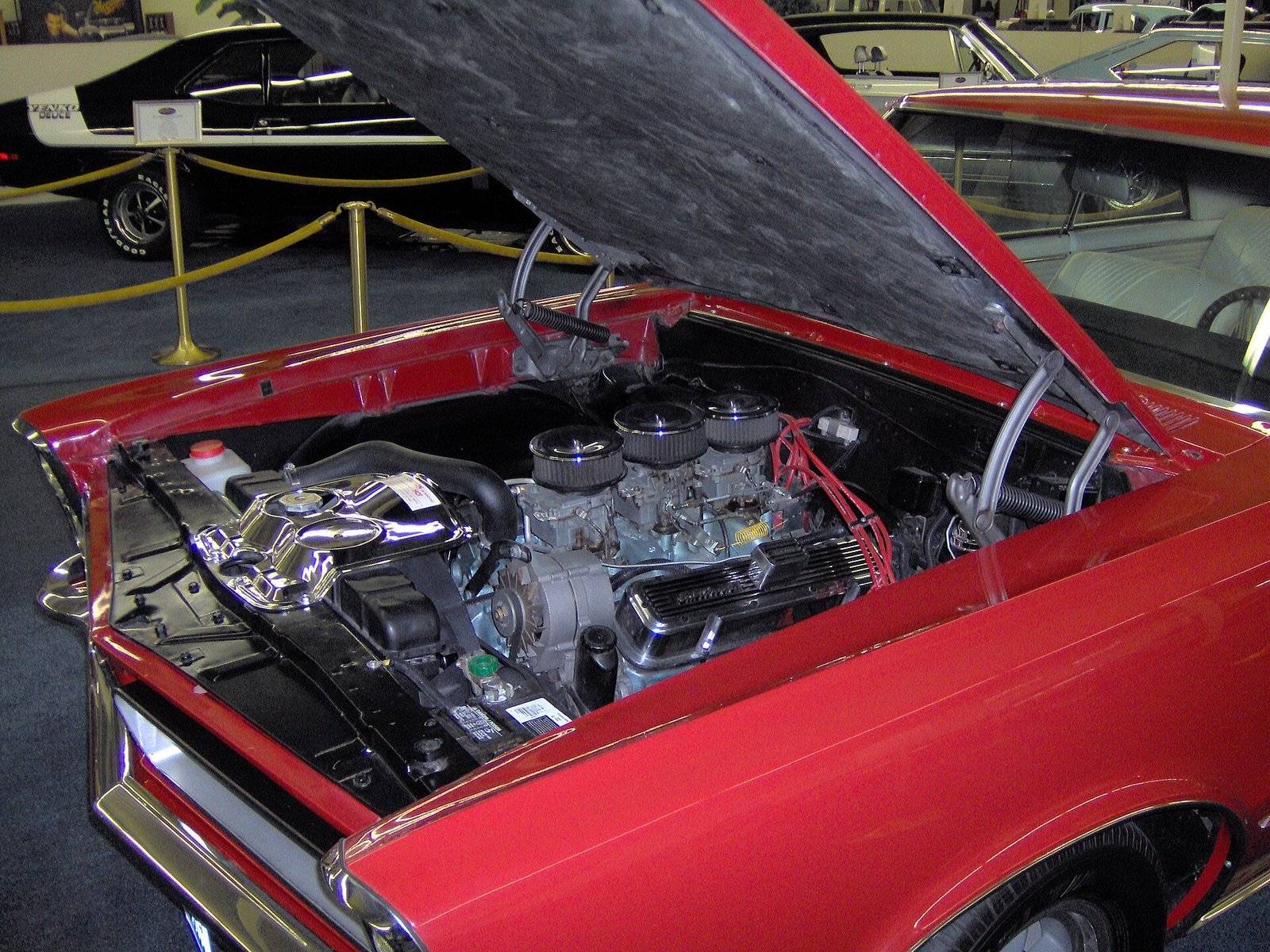
The 1964 GTO package was more than an engine. It included the 389 with a four-barrel carburetor rated at 325 hp, dual exhausts, stiffer springs and shocks, a thicker front anti-roll bar, wider wheels and a Hurst floor shifter. From there buyers could add the Tri-Power setup, three two-barrel carburetors good for 348 hp, a four-speed manual, a limited-slip differential and short gears for stoplight launches.
On the outside there wasn’t much to see: a few GTO badges, a hood scoop, nothing loud. It looked like a nice family coupe and ran like a race car. That sleeper quality was part of the appeal.
The ad man and the tiger
The GTO’s other secret weapon wasn’t an engineer. Jim Wangers, an account executive at Pontiac’s ad agency, MacManus, John & Adams, understood young buyers better than anyone in Detroit. He pushed the "tiger" theme in GTO advertising, which led to the "GeeTO Tiger" record and a string of promotions aimed squarely at teenagers.
Wangers also had ties to Royal Pontiac in Royal Oak, Michigan, a dealership run by Ace Wilson Jr. that raced Pontiacs on the drag strips around Detroit. Royal became an unofficial performance arm of the brand, building fast GTOs for magazines and customers alike. Marketing and hot-rodding worked together, and the GTO was the first car to show how powerful that combination could be.
Stealing three letters from Ferrari
The name was its own provocation. GTO stands for Gran Turismo Omologato, Italian for a grand touring car homologated, or approved, for racing in a production class. Ferrari had just used it on the 250 GTO, the 1962 car that dominated the world GT championship and cost around $18,000. Pontiac borrowed the letters for a car that cost about a sixth of that.
European purists called it vulgar. Ferrari never sued. The often-repeated story that Maranello’s lawyers dismissed Pontiac as "American tractor makers" isn’t documented anywhere, but the joke tells you how the name landed in Italy. In America it landed perfectly. GTO sounded exotic, fast and expensive, and anyone could afford it.
The Car and Driver stunt
In March 1964 Car and Driver ran a cover story that pitted the Pontiac GTO against the Ferrari 250 GTO. The magazine’s verdict made the Pontiac look like a giant killer. What readers didn’t know was that the test Pontiacs had been prepared by Royal Pontiac, the performance dealership in Royal Oak, Michigan, and at least one carried a 421-cubic-inch engine instead of the stock 389. And there was no actual Ferrari on hand: the comparison was mostly on paper.
It didn’t matter. Teenagers read that their GTO could hang with the most expensive car in the world, and sales took off. Royal Pontiac began selling its Bobcat kits, with retuned carburetion, ignition and exhaust, so any owner could chase the magazine car’s numbers.
The numbers that scared Detroit
After 32,450 GTOs in 1964 came 75,352 in 1965 and 96,946 in 1966, the year the GTO became its own model series instead of an option. The competition answered fast. Chevrolet built the Chevelle SS 396, Ford pushed the Fairlane GT, Oldsmobile had the 4-4-2, Plymouth the GTX, and by the late 1960s nearly every brand had a big engine in a mid-size body. The formula the GTO made popular, a cheap intermediate car with a large V8 and a youth-friendly image, became an industry.
There was even a hit song. "G.T.O." by Ronny & the Daytonas, the one with the "little GTO" chorus, reached No. 4 on the Billboard Hot 100 in 1964. Fans nicknamed the car "the Goat," a name Pontiac never put in an ad but never managed to shake.
Stacked headlights and a new shape
The GTO changed every year, which was part of the game in 1960s Detroit. For 1965 it got vertically stacked headlights, a signature Pontiac look, along with a slightly longer body and a more powerful Tri-Power rated at 360 hp.
In 1966 the body was reshaped with fuller, curvier rear fenders, and the GTO stood on its own as a separate Pontiac model. Buyers could choose a coupe, a hardtop or a convertible, and they had more color and trim choices than ever. It was the best-selling year in GTO history, and it was the moment when the car stopped being a clever loophole and became one of the pillars of Pontiac’s lineup.
How the GTO grew up
In 1967 the 389 was bored out to 400 cubic inches, and GM banned multiple carburetors on everything except the Corvette, killing the Tri-Power. A Rochester Quadrajet four-barrel took its place.
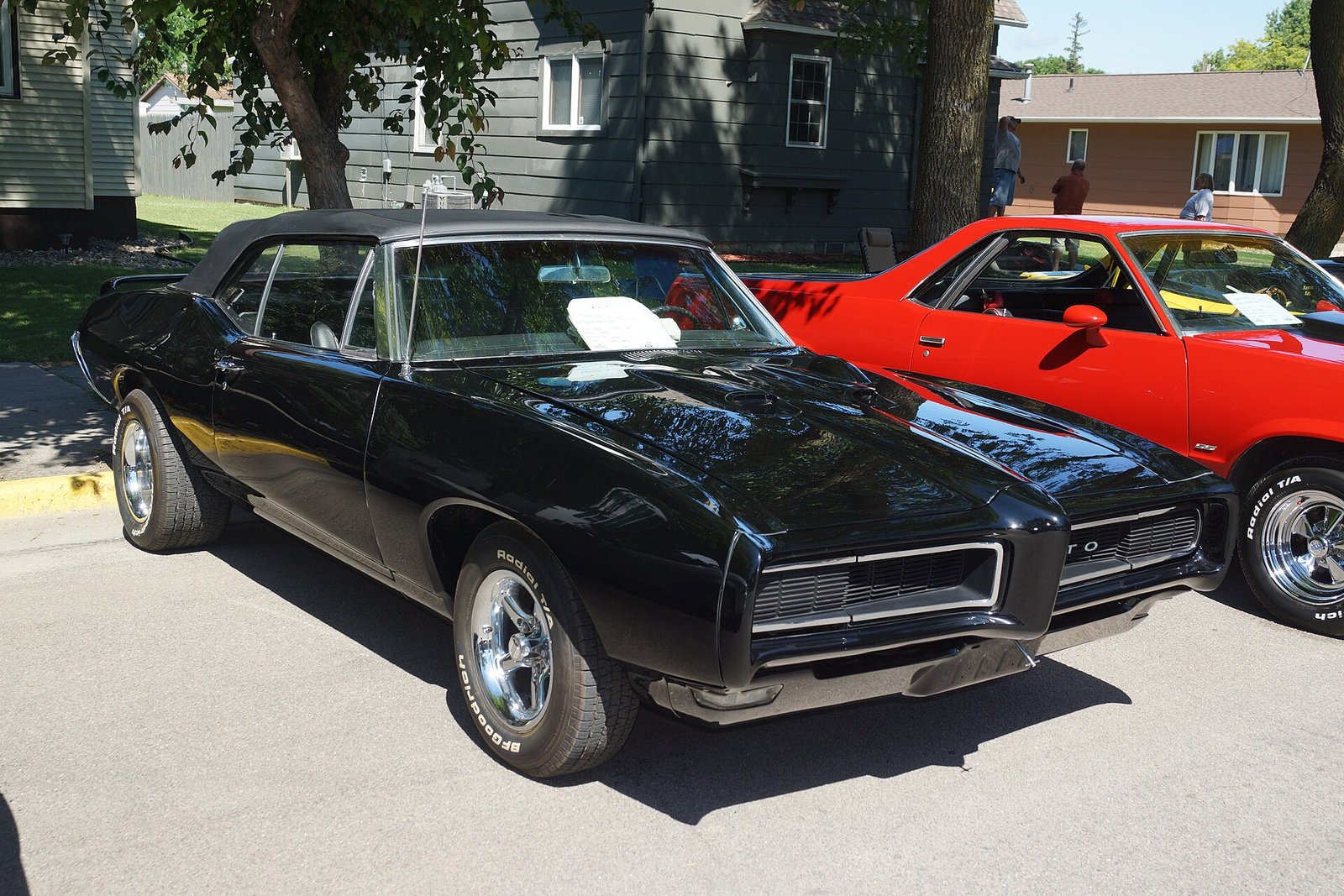
The 1968 redesign gave the GTO the curvy "Coke bottle" body and a new trick up front: the Endura bumper, made of a deformable plastic painted in body color, which could take a light impact and pop back into shape. Pontiac advertised it with a man hitting it with a hammer. Motor Trend named the GTO its 1968 Car of the Year.
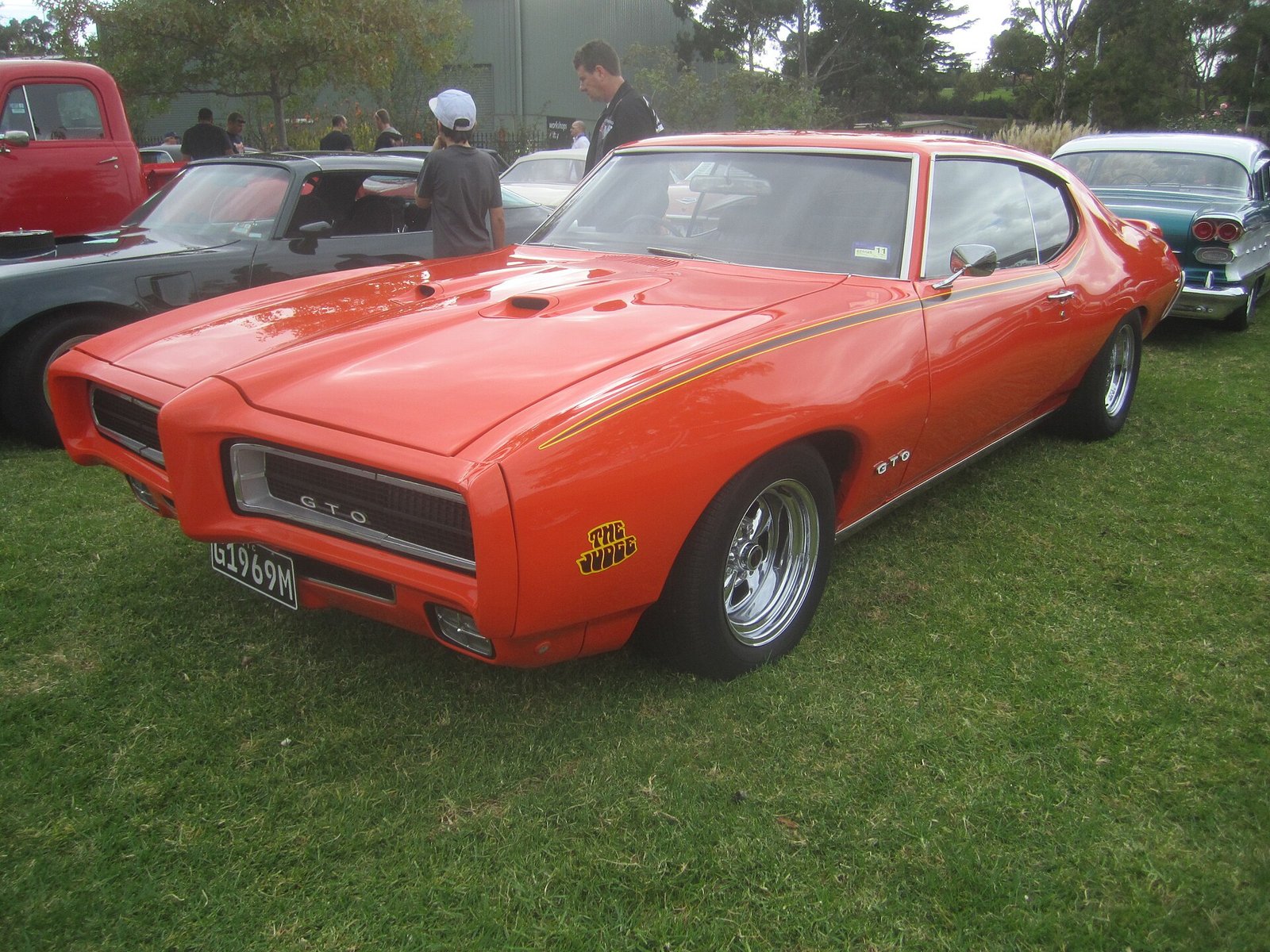
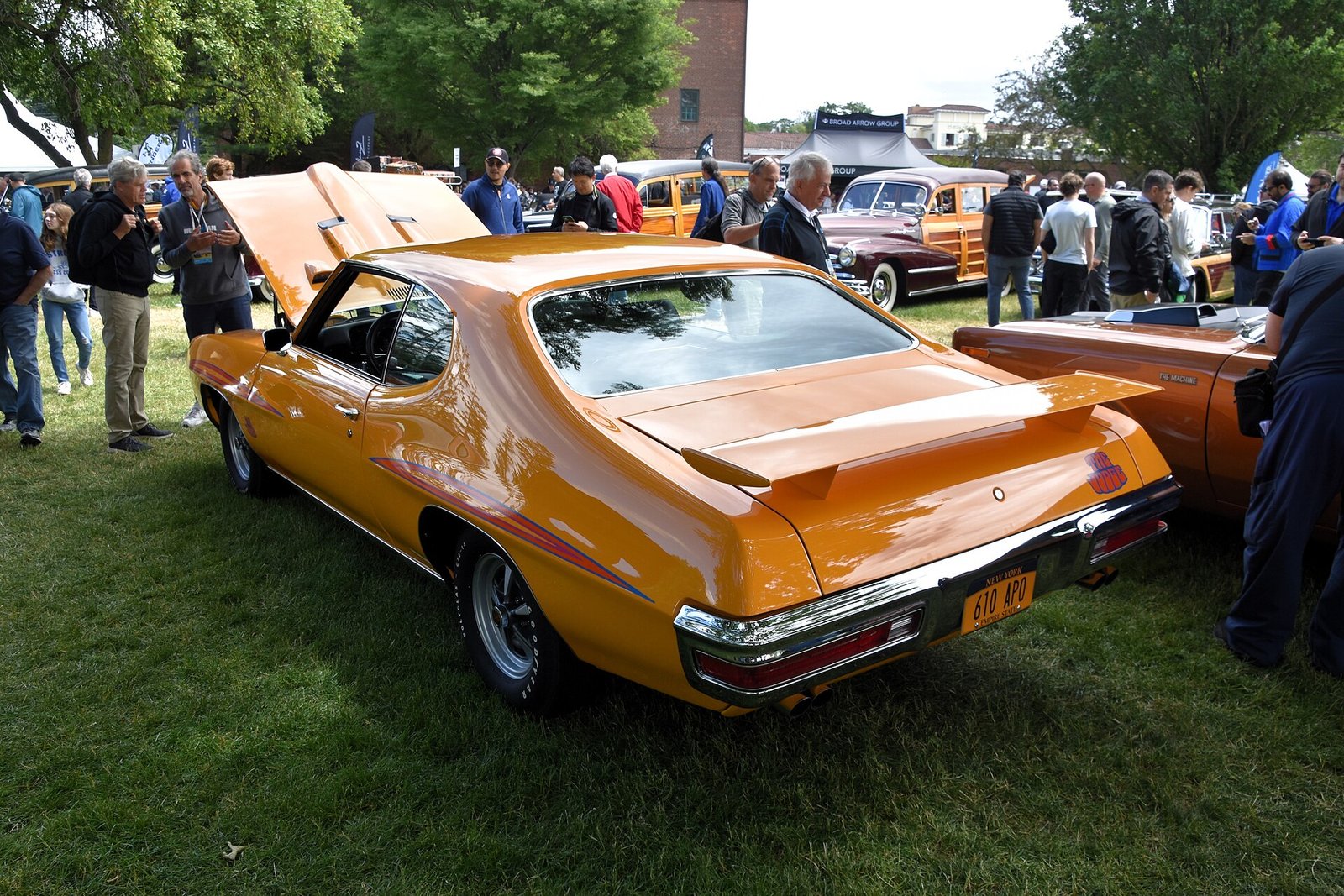
In 1969 came The Judge, named after the "Here come da Judge" routine on Rowan & Martin’s Laugh-In. It had bright colors, a rear spoiler and, with the Ram Air IV engine, an official 370 hp that most owners believed was understated. Pontiac built 6,833 Judges in 1969. For 1970 the top engine was the 455 HO, with 360 hp and 500 lb-ft of torque, more twisting force than a current Porsche 911 Carrera S.
What it’s like to drive
Modern drivers who climb into a 1960s GTO are often surprised. The engine is everything the legend promises: huge low-end torque, a deep exhaust note, and a car that lunges forward the moment you touch the throttle. Everything else is from another age. Early GTOs came with drum brakes on all four wheels, and front discs only became an option in 1967. Tires were skinny bias-plies by today’s standards, and the live rear axle could hop under hard launches. Steering was light and slow.
That was the point of the muscle car formula. These cars were built to win between stoplights, not to carve canyons, and the money went into the engine rather than the chassis. Many surviving GTOs have since been upgraded with disc brakes, radial tires and better suspension, which makes them far safer to drive but less like what buyers got in 1964.
The fall
Then everything that made muscle cars possible turned against them. Insurance companies began surcharging high-horsepower cars aimed at young drivers. Federal emissions rules forced lower compression ratios. Ratings switched from gross to net horsepower in 1972, which made every number look smaller. And the 1973 oil crisis made gas-guzzlers look irresponsible.
The GTO shrank with the market. By 1974 it was an option on the compact Ventura, with a 350 V8 rated at 200 hp. Pontiac built 7,058 that year and then let the name go.
Was the Pontiac GTO really the first?
Purists will tell you the GTO wasn’t the first muscle car. The 1949 Oldsmobile Rocket 88 put a big V8 in a lighter car fifteen years earlier, and the 1956 Plymouth Fury and Dodge D-500 were fast, powerful mid-1950s cars. They have a point.
But none of them created a category. The GTO was the first car of its kind sold specifically to young buyers as an affordable performance package, the first to spark a wave of imitators across Detroit, and the first to turn horsepower into a lifestyle. It wasn’t the first fast American car. It was the first muscle car that changed the business.
The 2004 comeback
The name returned for 2004, on a car built in Australia by Holden as the Monaro. It had a Corvette-derived V8, the 350-hp LS1 at first and then the 400-hp LS2 from 2005, rear-wheel drive and an available six-speed manual, and it was genuinely quick. On paper it was everything a modern GTO should be. But critics found the styling too plain, it missed sales targets, and production ended after 2006.
A good car, but it never felt like a GTO to people who remembered the originals. The problem wasn’t speed. It was that the new car looked anonymous, while the original had made a statement just by sitting in a high school parking lot. Pontiac itself was shut down by GM in 2010 during the company’s bankruptcy restructuring.
What they’re worth now
Prices depend heavily on engine, options and documentation. A 1969 Judge with the Ram Air IV is at the top of the GTO market, and well-documented Judges and Tri-Power convertibles routinely sell in six figures. Later, lower-powered cars from the early 1970s remain the cheapest way into a classic GTO.
A box on an order form
The GTO’s real legacy is the idea that a big company’s rules can be bent by people who understand what customers want. Collins and Gee found the parts. DeLorean found the loophole. Estes took the risk. And the young buyers who ticked that box in 1964 started a movement that still defines American cars. For more of that story, read our pieces on muscle cars, the 426 Hemi, the Firebird Trans Am and John DeLorean’s later adventure.
Check you’re still alive.
Photos via Wikimedia Commons: 1964 and 1968 Pontiac GTO, Greg Gjerdingen (CC BY 2.0); 1965 Tri-Power engine, Stephen Foskett (CC BY-SA 3.0); 1969 GTO Judge, Sicnag (CC BY 2.0); 1970 GTO, Charles from Port Chester (CC BY 2.0). Opening image: NEC.