DeLorean DMC-12: the GM rebel’s stainless-steel dream and how it fell apart
Most failed cars disappear. The DeLorean DMC-12 failed in about two years and then became one of the most recognizable cars ever built, thanks to a flux capacitor, a mad scientist and the number 88. Behind the movie prop is a story that reads like a Detroit novel: a superstar GM executive who quit at the top, a factory in a war zone, a British sports car genius with a secret Panamanian company, a cocaine sting caught on FBI videotape and a jury that let the defendant walk.
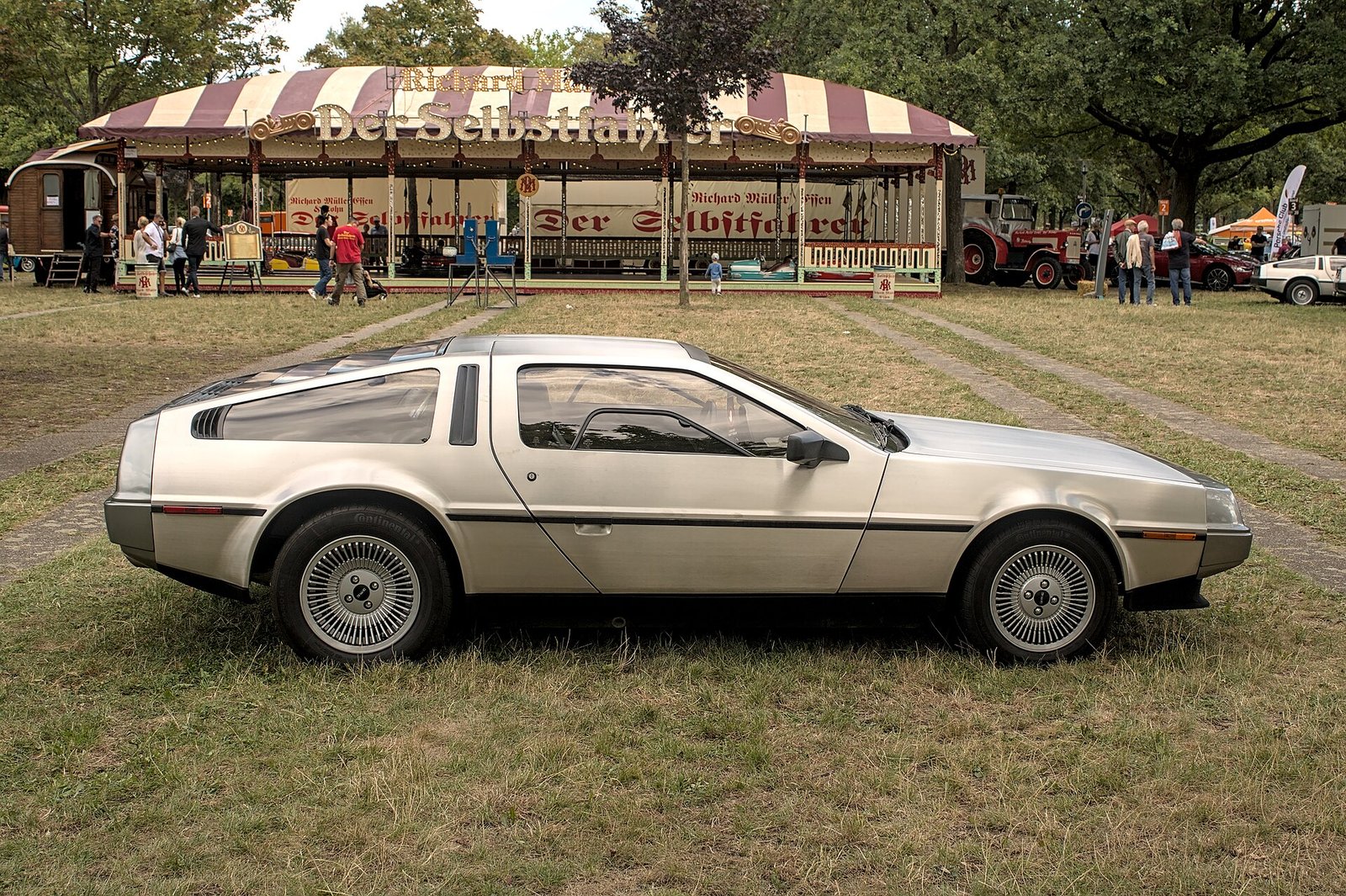
In short: the DeLorean DMC-12 was the stainless-steel, gullwing sports car of John Z. DeLorean, the GM executive behind the Pontiac GTO who quit in 1973. Styled by Giugiaro and engineered with Lotus, it was built in a government-funded factory at Dunmurry, near Belfast, and went on sale at around $25,000, double the original target. The company collapsed after about two years, and Back to the Future made the car immortal.
The man who walked out of GM
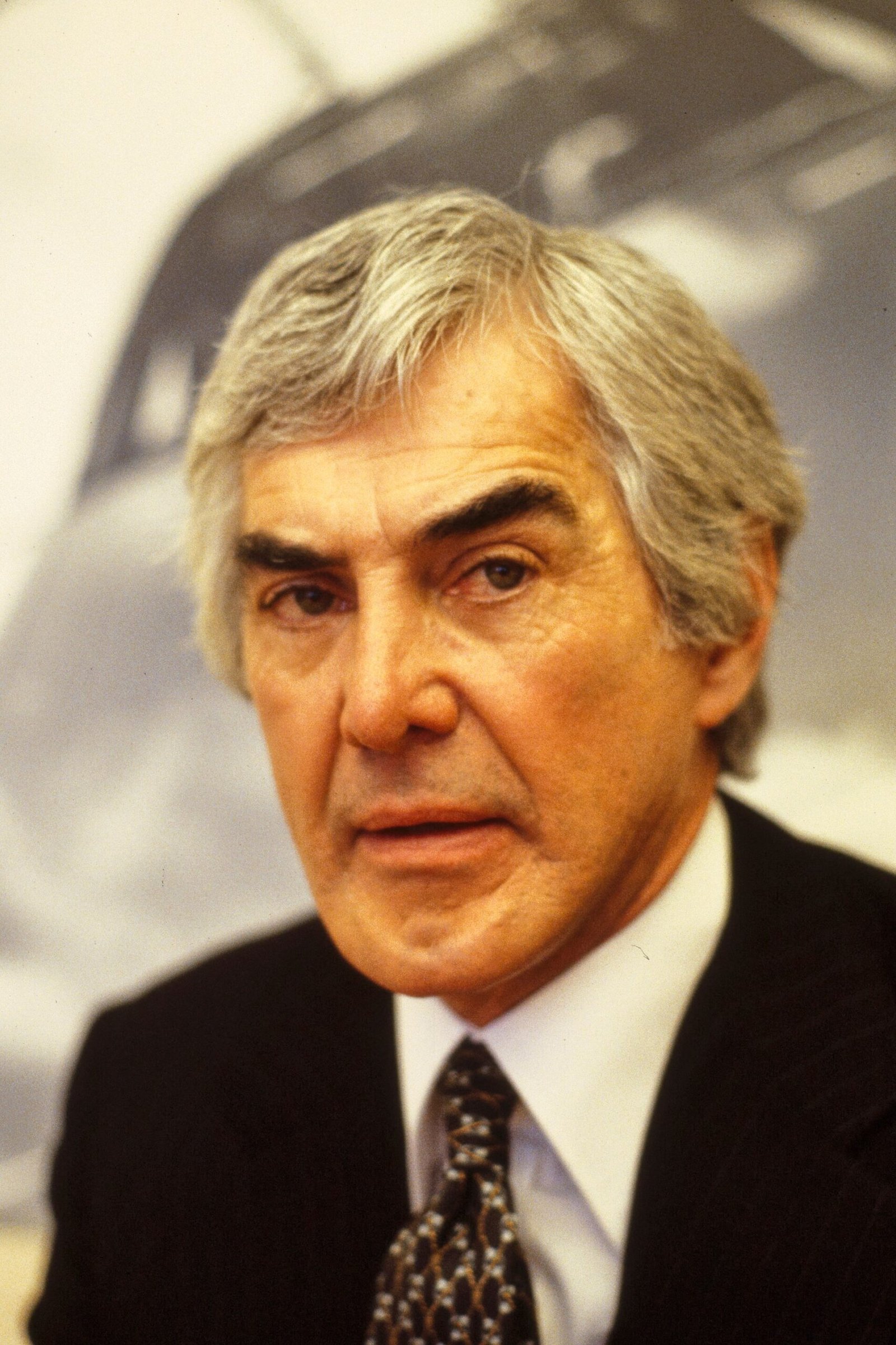
John Zachary DeLorean was born in Detroit in 1925 and grew up in the shadow of the auto plants. He studied engineering, worked at Packard and joined General Motors in the 1950s. At Pontiac he became the kind of executive Detroit had never seen. He pushed the 1964 GTO into production, a midsize car with a big V8 that is widely seen as the first muscle car, and he was behind the Firebird. In 1965, at 40, he became the youngest general manager in Pontiac’s history, and later ran Chevrolet.
He didn’t look or act like a GM man. He had long sideburns, wore open-collared shirts, dated models, married a fashion model and showed up in gossip columns. He clashed with GM’s conservative leadership, and in 1973, when many expected him to become president of the corporation one day, he walked out. His side of the story later appeared in the 1979 book "On a Clear Day You Can See General Motors," a portrait of corporate bureaucracy that sold very well.
His plan was to build an "ethical" sports car. It would be safe, durable and economical, it would never rust, and it would show Detroit what a car company could be when one visionary was in charge.
Big ideas that didn’t survive
DeLorean Motor Company was founded in 1975. The first prototype, built by engineer Bill Collins and styled by Giorgetto Giugiaro’s Italdesign in Turin, promised a lot. It was supposed to have a mid-mounted Wankel rotary engine, a body made with a new composite process called Elastic Reservoir Moulding, a stainless-steel skin and a price of about $12,000. That’s where the "12" in DMC-12 came from.
Almost none of it happened. The rotary engine plan died when its supplier, Comotor, shut down. The ERM process, whose rights DeLorean had bought, had never been proven in mass production, and it didn’t work at scale. The engine moved behind the rear axle instead of in front of it. And the price kept climbing, until the car finally went on sale at around $25,000, more than double the original target.
A factory in Belfast
DeLorean needed money and a place to build the car. Puerto Rico was considered at one point, but the winning bid came from the British government, which offered grants and loans worth tens of millions of pounds to build a factory in Dunmurry, on the edge of Belfast in Northern Ireland. It was the height of the Troubles, and London wanted jobs in a region torn apart by sectarian violence. Unemployment in West Belfast was among the worst in the United Kingdom, and a glamorous American sports car factory was exactly the kind of headline the government wanted. Thousands of people applied for the jobs, many of whom had never worked on an assembly line before. The plant was built on a site that sat between Catholic and Protestant communities, and it hired from both.
For the government it was a political bet. For a startup car company with no manufacturing experience, it was a huge challenge: a brand-new factory, a brand-new workforce and a brand-new car, all at once.
Lotus to the rescue, for a price
The car was far from ready for production, so DeLorean turned to Lotus and its founder, Colin Chapman, the most famous engineer in British motorsport. Lotus re-engineered the car almost completely, giving it a steel backbone chassis similar to the one Lotus used in its own sports cars, with a fiberglass underbody and stainless-steel outer panels.
There was a darker side to the deal. Around $17 million of DeLorean’s development money flowed through a Panama-registered company called GPD Services, which was supposed to handle engineering work. Much of it disappeared. Chapman died of a heart attack in December 1982 and was never charged. His Lotus colleague Fred Bushell was later convicted in Northern Ireland for his role and sent to prison. It’s one of the strangest footnotes in the history of a sports car legend.
What you got for $25,000
The first production DeLorean left Dunmurry in early 1981. It had some genuinely remarkable features.
The gullwing doors were the star. They used torsion bars developed with input from aerospace firm Grumman and gas struts, and they needed only about 11 inches of side clearance to open, less than a conventional door in a tight parking space. With both doors open the car looked ready to take off.
The unpainted stainless-steel body was DeLorean’s answer to rust, a real problem for cars of the era, especially in the salt-belt states. It never needed paint. But it showed fingerprints, was hard to repair after a crash and looked slightly different from different angles depending on the direction of the brushing.
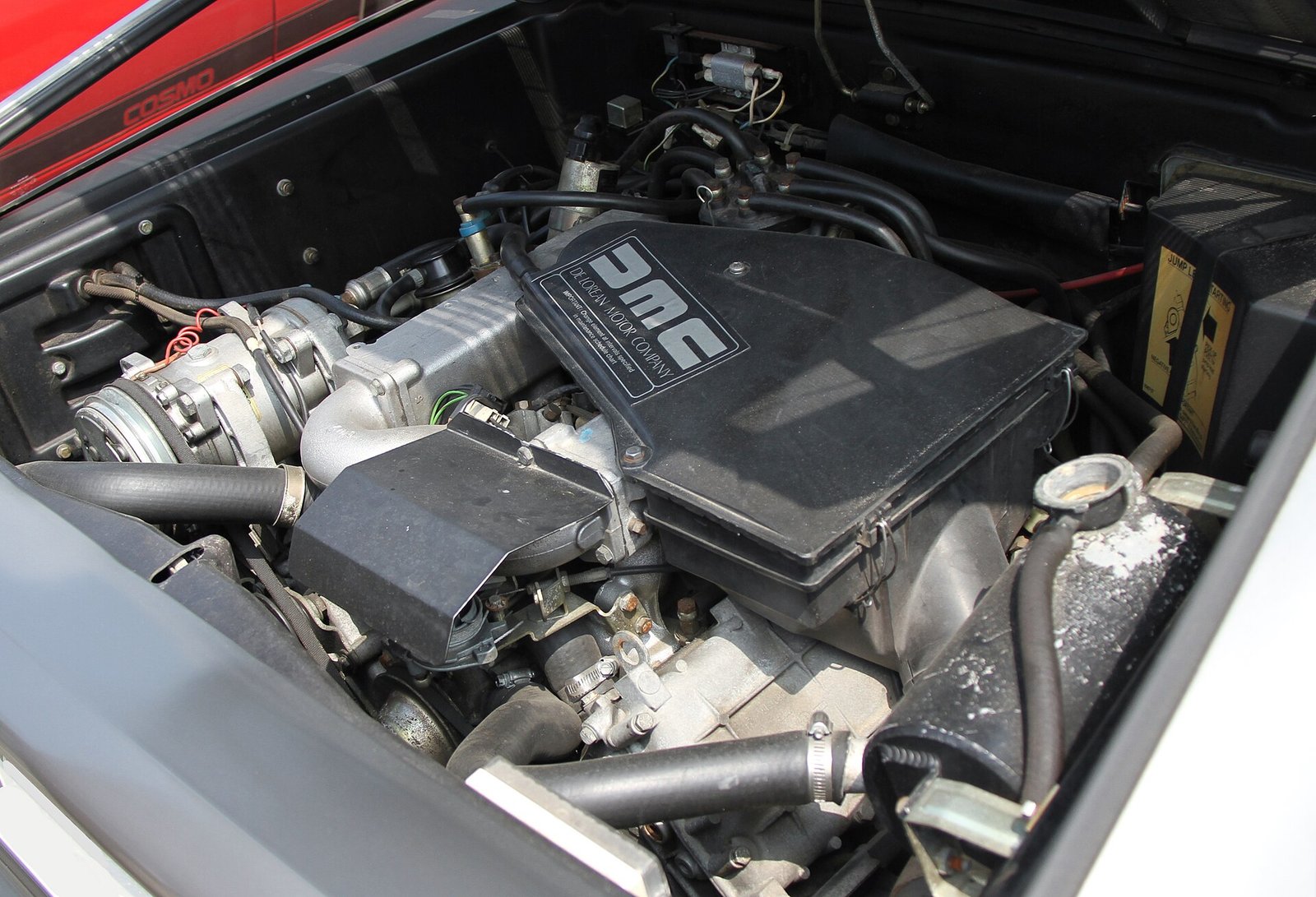
The weak spot was under the rear hatch. The engine was the PRV V6, a 2.85-liter unit developed jointly by Peugeot, Renault and Volvo, which explains the initials. It was reliable and widely used in European sedans, but with U.S. emissions equipment it made only about 130 hp. With a curb weight of around 2,700 pounds, the DeLorean took close to ten seconds to reach 60 mph.
Compare that with what $25,000 or a little more could buy in 1981. A Chevrolet Corvette cost less and had a V8. A Porsche 911 SC, at about $28,000, made 172 hp in U.S. form and reached 60 mph in under seven seconds. The DeLorean looked like the future and drove like a well-dressed sedan.
Living with one
Owners discovered the car’s quirks quickly. The stainless panels could be cleaned with a kitchen scouring pad along the grain, which was a novelty, but any dent meant replacing a whole panel rather than hammering it out. The gullwing doors were heavy, and their struts wore out over time, which could make a door drop on an unsuspecting head. The window openings in the doors were tiny, little more than toll-booth slots, because the doors’ shape didn’t leave room for full-size windows. Early cars had electrical gremlins and quality problems that the dealers had to fix before delivery, partly because the factory and its workforce were so new.
The cabin was snug, with a center console that split the two seats and a steering wheel offset slightly from the driver’s seat. Rear visibility through the louvered back window was poor. None of it was unusual for a low-slung sports car of the period, but it reinforced the impression that the car was more about looks than everyday use.
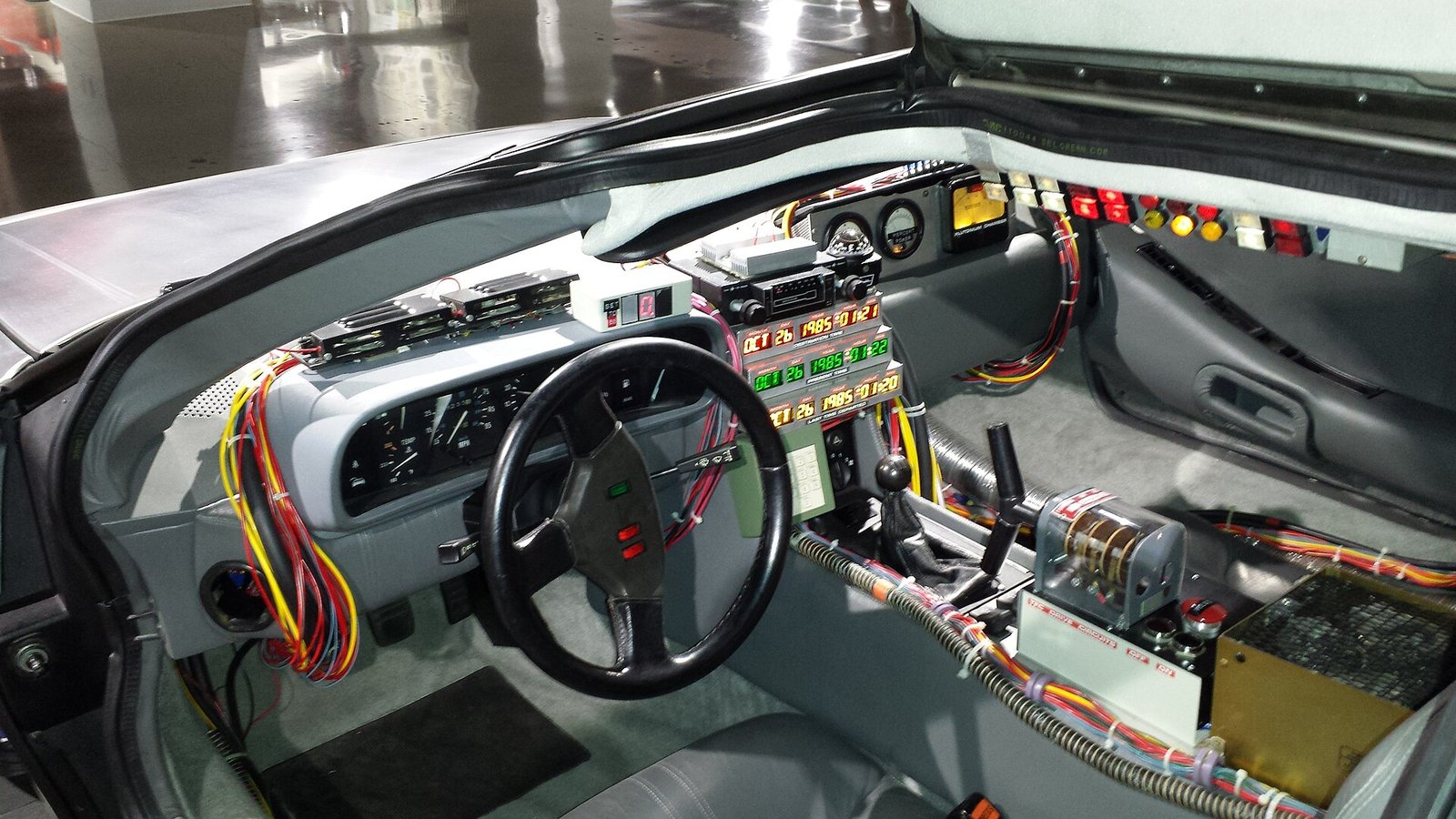
On the plus side, the Lotus-developed chassis gave the DeLorean decent handling, with independent suspension at all four corners and rear-biased weight distribution thanks to the engine behind the rear axle. Owners who drove them hard found a stable, predictable car limited mostly by its lack of power. With the right tires and a few suspension updates, it’s still a pleasant car to drive today.
Wrong car, wrong time
DeLorean launched into the worst possible economy. The early 1980s brought a deep recession and interest rates in the high teens, and buyers for a $25,000 two-seater were scarce. Reviews were mixed: the press loved the doors and the steel, and complained about the performance, the build quality and the price. Unsold cars began to pile up.
By early 1982 the company was in serious trouble. The British government refused to keep pouring money in, and the factory went into receivership. Production stopped that year. In total, around 9,000 DMC-12s were built, most of them in 1981, with commonly quoted figures around 8,500 to 9,000.
The sting
Then came the scene nobody could have written. On October 19, 1982, John DeLorean was arrested at a hotel near Los Angeles International Airport. Federal agents had set up a sting in which he appeared to agree to finance a cocaine deal worth around $24 million, apparently to raise money to save his company. The FBI videotaped him holding up a bag of cocaine and calling it "as good as gold."
The trial in 1984 became a national spectacle. DeLorean’s defense argued that he had been entrapped by government agents who pushed a desperate man into a crime he would never have committed on his own. The jury agreed and acquitted him. But the company was gone, his reputation was destroyed, and years of other lawsuits followed. He died in 2005.
Then Hollywood called
In 1985 director Robert Zemeckis and writer Bob Gale needed a time machine for Back to the Future. The original script reportedly used a refrigerator. The DeLorean was the perfect replacement: it looked like a spaceship, almost nobody had seen one on the road, and its failure gave it a slightly comic air that fit the eccentric Doc Brown. To travel in time it had to hit 88 mph, a speed the real car could reach comfortably.
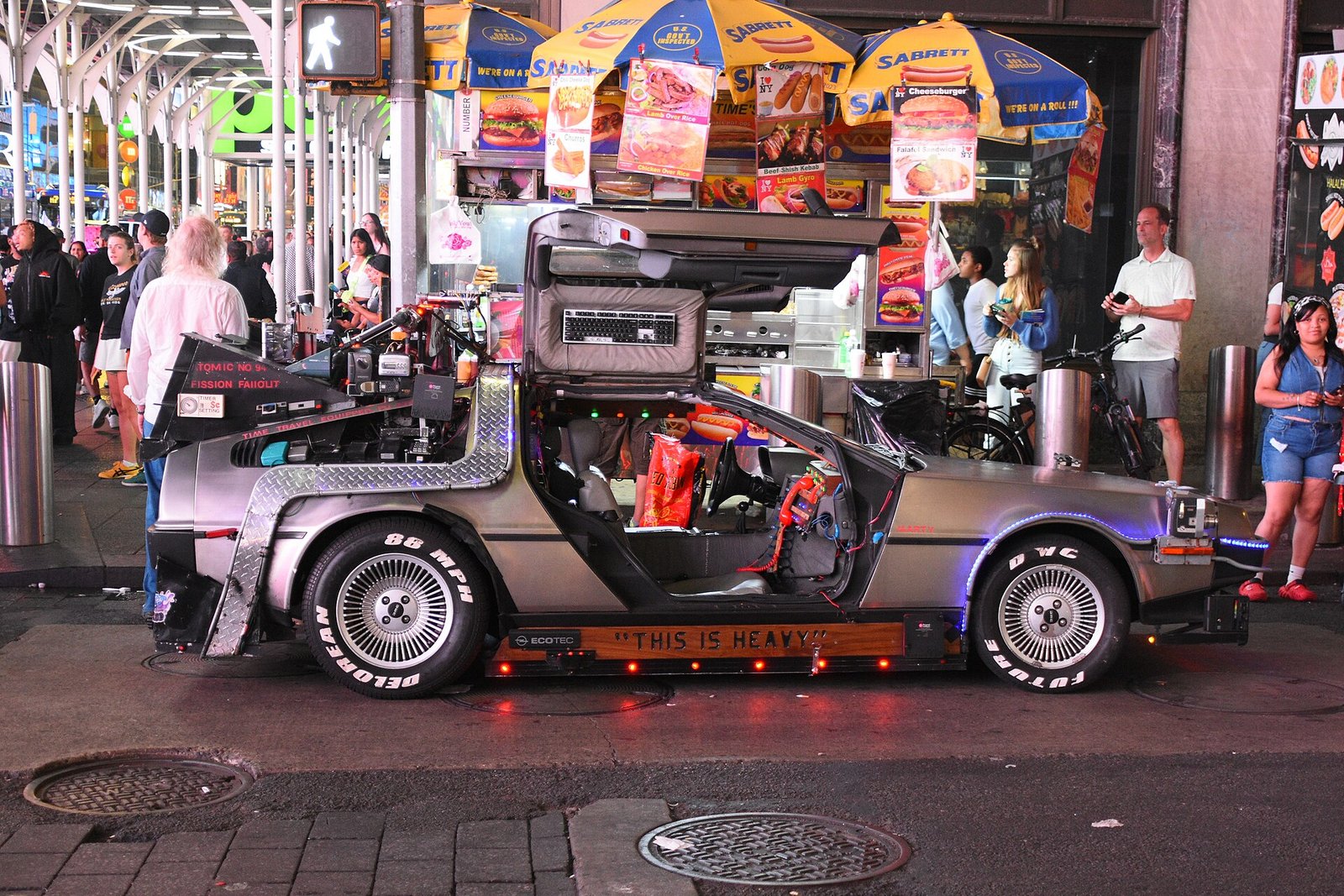
The movie and its two sequels turned a commercial disaster into a permanent pop-culture icon. Today there are owners’ clubs around the world. A company in Texas, which bought the remaining parts stock and the DeLorean name for parts and service, keeps the cars running. There are electric conversions, replica time machines at car shows and cars selling for far more than their original sticker price.
Why the DMC-12 still matters
It’s easy to dismiss the DeLorean as a movie prop with a bad engine. That misses the point. What John DeLorean tried to build, a car that wouldn’t rust, that was designed to last and that came from outside the big Detroit companies, was a radical idea in an era when American cars were known for rust, poor quality and planned obsolescence. He failed in execution. The vision was not crazy.
It also connects to a lot of other stories. Giugiaro’s Italdesign drew it, the same studio that shaped the De Tomaso Mangusta and, decades later, built the Nissan GT-R50. DeLorean himself came from the world of the Pontiac GTO, which he helped create, and which kicked off the era of American muscle cars. The DMC-12 was supposed to be the opposite of all that: efficient, durable, rational. It ended up the most famous irrational car of the 1980s.
If it had received the engine it deserved, a turbocharged version of the V6 with 200 hp or more, which Lotus and DeLorean had studied, the story might have been different. As it is, it’s the tale of a brilliant idea undone by details, money and its creator’s flaws. In the car business, the details are everything.
DeLorean DMC-12 FAQ
Who made the DeLorean?
DeLorean Motor Company, founded in 1975 by John Z. DeLorean, the former General Motors executive behind the Pontiac GTO. The DMC-12 was built in Dunmurry, near Belfast, in Northern Ireland.
Why is it called the DMC-12?
Because it was originally meant to cost about $12,000. By the time it went on sale, the price had climbed to around $25,000.
Who designed the DeLorean DMC-12?
Giorgetto Giugiaro’s Italdesign styled it, engineer Bill Collins built the first prototype, and Lotus re-engineered the car for production.
Why did DeLorean fail?
The car arrived late, overpriced and underpowered into a recession, after the planned Wankel engine and new body process fell through. In 1982 John DeLorean was arrested in an FBI cocaine sting, though a jury later acquitted him.
Check you’re still alive.
Photos via Wikimedia Commons: DeLorean DMC-12, Alexander Migl (CC BY-SA 4.0); DeLorean DMC-12 interior, Patrick Pelletier (CC BY-SA 4.0); DeLorean PRV engine, TTTNIS (public domain); John DeLorean, Bernard Gotfryd (public domain); time machine replica, Amaury Laporte (CC BY 4.0).