Plymouth Superbird: the 1970 winged warrior Chrysler built to win back one driver
The Plymouth Superbird is the only car in American history that exists because a company wanted one man to come home. In the fall of 1968, Richard Petty walked out on Plymouth and signed with Ford. Twelve months later Chrysler had a car with a 19-inch nose cone, a wing on stilts and a horn that went beep-beep, and Petty was back in a Plymouth. You probably know the shape. Kids who grew up with Pixar’s Cars know it as The King, the blue racer voiced by Petty himself. What fewer people know is how close the whole thing came to being a sales disaster, how many dealers hated it, and how NASCAR wrote it out of existence after one season.
The King walks
By 1968, Richard Petty was the biggest name in stock car racing. In 1967 he had won 27 of the 48 races he entered, ten of them in a row, a season nobody has come close to repeating. He did it in a Plymouth, and Plymouth assumed he always would. Then the speedways got faster. On the big tracks like Daytona and Talladega, aerodynamics started to matter more than raw horsepower, and Ford had the slipperier cars. Petty asked Plymouth for something that could fight them. Plymouth said no. So in late 1968 he signed with Ford, the rival he had been beating for years.
Ford knew exactly what it had done. Charlie Gray, who ran the Ford stock car program, said that signing Petty would send the message that "money rules none", meaning that even Chrysler’s most loyal star could be had. For Plymouth it was a humiliation, and in Detroit humiliations get answered with engineering budgets.
Dodge goes first
The answer started at Dodge, Plymouth’s sister brand. The Dodge Charger 500 that opened the 1969 season had been shaped with wind tunnel testing and computer analysis, which was still unusual for a stock car. When it wasn’t enough, Chrysler added a pointed nose and a tall rear wing and called it the Charger Daytona. It looked ridiculous in a parking lot and unbeatable on a superspeedway. On March 24, 1970, Buddy Baker drove a Charger Daytona around Talladega at over 200 mph, the first time anyone had broken that barrier on a closed course in NASCAR.
Ford had its own aero cars, the Ford Torino Talladega and the Mercury Cyclone Spoiler II, with long sloped noses but no wing. The aero war was on, and Plymouth was the only one of the big players without a weapon.
Building the Superbird
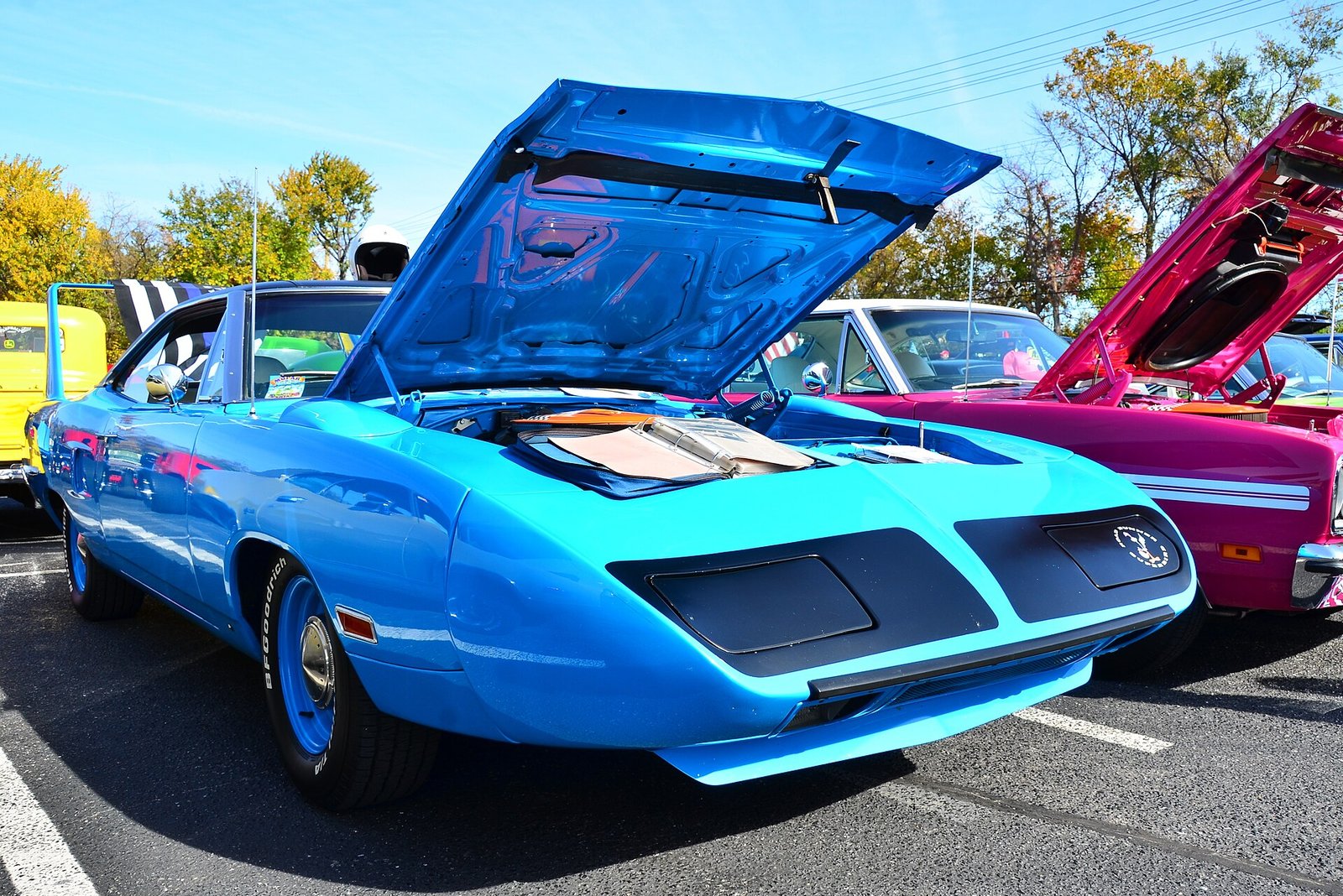
Plymouth’s version was the Superbird, built on the 1970 Road Runner, the budget muscle car whose cartoon mascot gave it its name. The Road Runner itself had been one of the smartest ideas Chrysler had in the sixties. Launched for 1968, it was a stripped, cheap, fast intermediate aimed at young buyers who could not afford a GTO, and Plymouth paid Warner Bros. a reported $50,000 for the right to use the cartoon bird’s name and image. It sold far better than anyone at Plymouth expected. Building the winged car on that platform was a gamble with a brand that was already working. It was not a simple copy of the Daytona. Chrysler took everything learned from the Dodge’s season and refined it. The nose cone was smoother and added 19 inches to the car’s length, with pop-up headlights made of fiberglass. The front fenders and hood came from the 1970 Dodge Coronet, because the Road Runner’s own didn’t line up with the new nose. The rear window was changed to sit flush with the body, and every street car got a vinyl roof, which covered up the bodywork needed for that change.
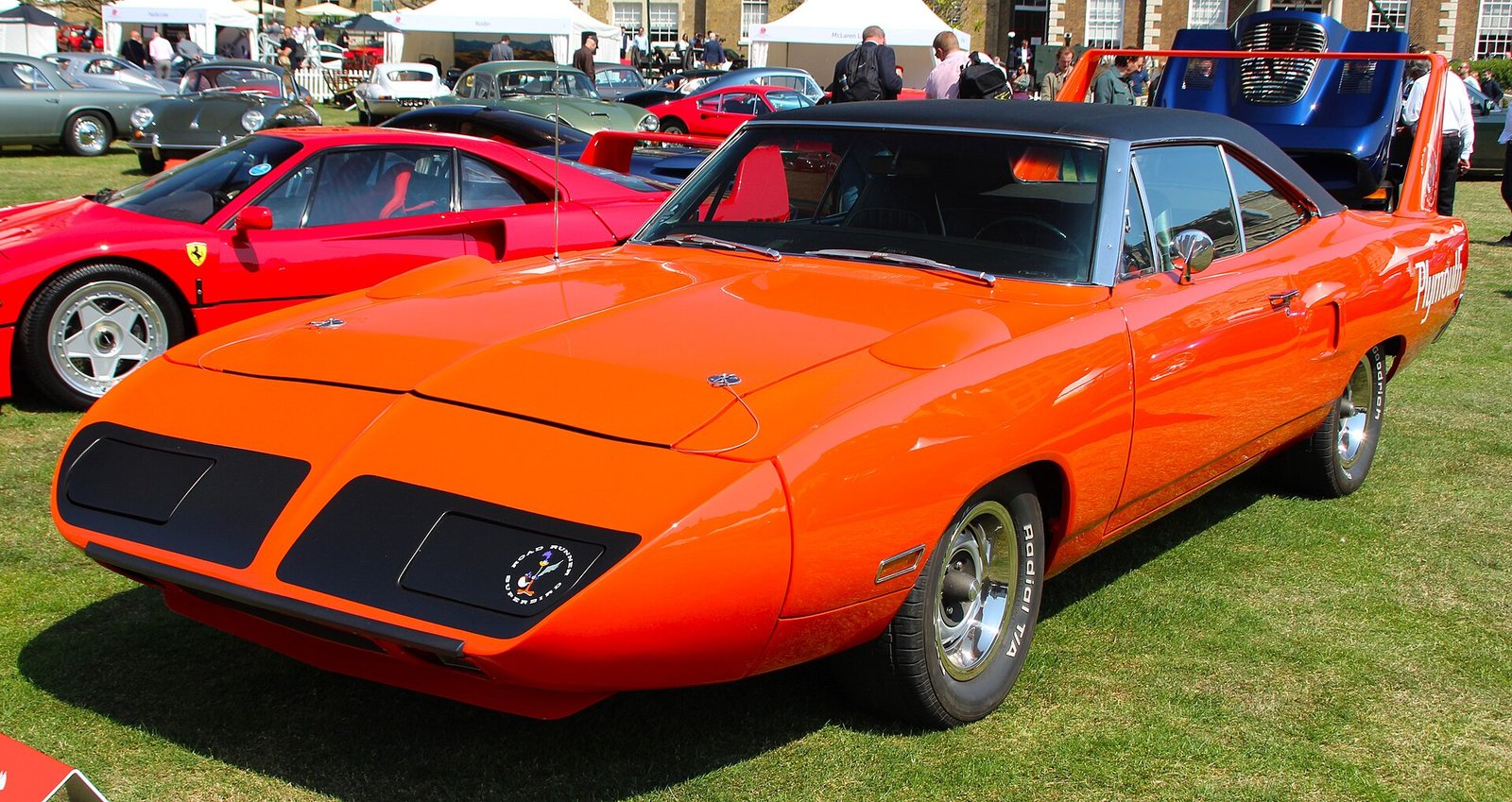
Then there was the wing. It sat on two tall vertical struts, high enough to clear the roofline and work in undisturbed air, which increased the downforce it made. For years people repeated a story that the wing was that tall so the trunk lid could open. A retired Chrysler engineer said so publicly in the nineties. It isn’t true. The height was about clean air, not luggage.
The rear-facing scoops on the front fenders are the other thing people get wrong. On the Daytona they vented air trapped in the wheel wells. On the Superbird they were there to hide cutouts the race cars needed for tire clearance. On the street cars they were cosmetic. And ground clearance on a road-going Superbird was 7.2 inches, so the nose that looked so low on the speedway sat at normal height on Main Street.
Three engines, one homologation trick
There were three engines. The standard one was the 440 Super Commando, a 7.2-liter V8 with a single four-barrel carburetor and 375 hp. Next was the 440 Super Commando Six Barrel, the same engine with three two-barrel carbs and 390 hp. At the top was the 426 Hemi with two four-barrel Carter carburetors, 425 hp at 5,000 rpm and 490 lb-ft of torque. The Hemi was the race engine, and Chrysler needed street cars with it to make it legal on the tracks, so it built the minimum. Only 135 Superbirds got the Hemi. The most commonly cited numbers give 716 with the Six Barrel and the rest, around 1,084, with the four-barrel 440.
A Hemi Superbird could run 0 to 60 mph in about 5.5 seconds. That sounds like a drag racer, but here is the funny part: on the street and at the drag strip, the aero package did almost nothing. A regular 1970 Road Runner was actually quicker in the quarter mile, because the Superbird’s nose and wing added drag and downforce that only started paying off above about 60 mph. The Superbird was a car designed for 200 mph sold to people who mostly drove at 35.
The rule that made 1,920 Superbirds
NASCAR’s homologation rules said that a car raced on its tracks had to be sold to the public in real numbers. For 1969 that meant 500 cars. For 1970 NASCAR raised it to one car for every two dealers the manufacturer had in the United States. Plymouth had a lot of dealers, so the number came to 1,920 Superbirds.
The figure generally accepted today is 1,935 built and shipped to U.S. dealers, with a few dozen more said to have gone to Canada, although published counts have varied wildly over the years. One of them claimed as many as 2,783. More than a thousand are believed to survive.
Selling them was another matter. In 1970 a Superbird was a hard car to live with. Insurance companies hated muscle cars, and they hated this one more than most. The nose made it long, the wing made it impossible to miss, and the buyer who wanted a fast Plymouth could get a Road Runner that was quicker off the line and less embarrassing in the church parking lot. Some cars sat on dealer lots well into 1971. There are well-known stories of dealers removing the nose and wing and selling them as regular Road Runners just to get them gone. Today a real Hemi Superbird can sell for several hundred thousand dollars at auction. Somewhere out there, people paid full price to have one turned back into an ordinary car.
Petty’s season
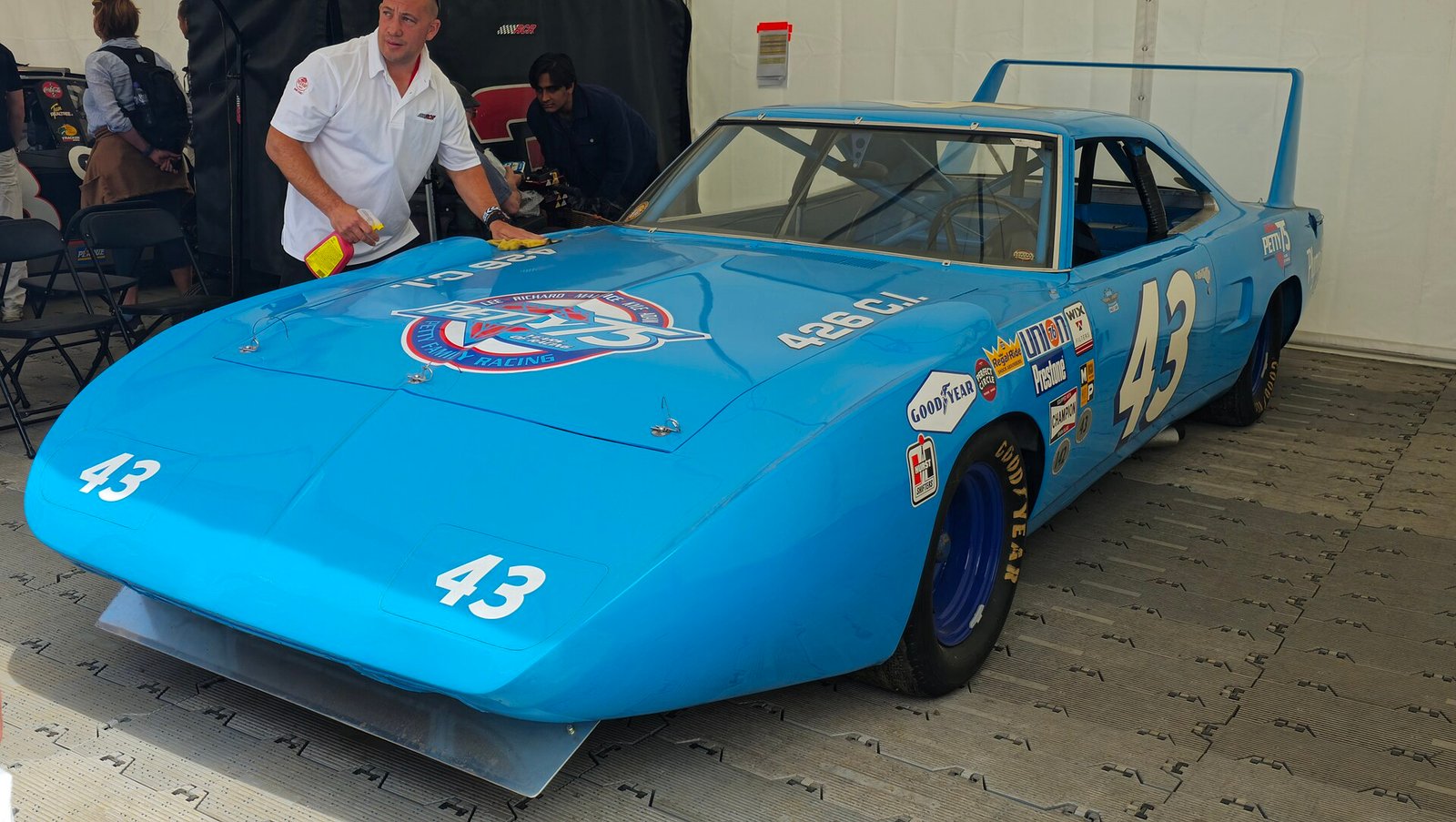
On the track, the Superbird did what it was built for. Richard Petty came back to Plymouth for 1970 and drove the number 43 Superbird in Petty Blue. He won 18 of the 40 races he entered, the most of anyone that year, plus nine more top-five finishes. He would probably have fought for the title too, but he was hurt in a crash at the Rebel 400 at Darlington and missed seven races, finishing fourth in the championship. You can read more about the man in our story of Richard Petty, The King.
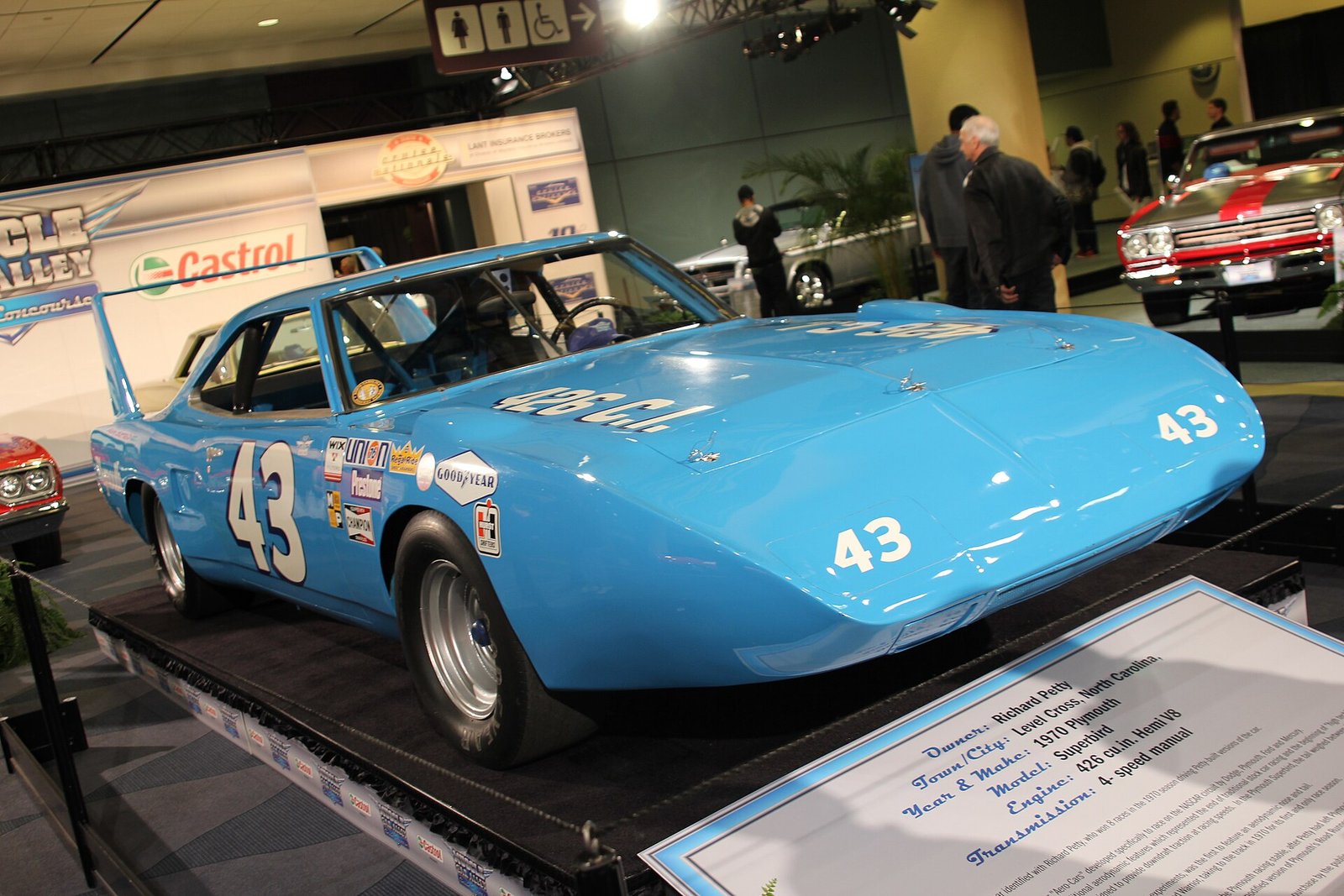
His teammate Pete Hamilton won the 1970 Daytona 500 in a Petty Enterprises Superbird, and the championship went to Bobby Isaac in a Dodge Charger Daytona. Between them the winged Mopars and the Fords turned the 1970 season into the fastest NASCAR had ever seen, and that was exactly the problem.
Banned after one year
For 1971 NASCAR changed the rules. The aero cars could still race, but with engines no bigger than 305 cubic inches, or they had to carry a lot more weight than their rivals. Either way they were no longer competitive. Chrysler did not bother building another batch. Combined with tighter emissions rules and the insurance problem on the street side, 1970 became the Superbird’s only production year. A 1971 version based on the new body had been studied, but it never got past the planning stage.
That is why there is no second-generation Superbird and never will be. It was a one-year answer to a one-year problem, and when the rules changed, the problem disappeared.
The Road Runner details
What makes the Superbird more than a homologation special is that Plymouth never forgot it was a Road Runner. The car kept the Road Runner’s horn, tuned to imitate the cartoon bird’s "beep, beep". The wing struts carried "Road Runner Superbird" decals showing the bird holding a racing helmet, with a smaller version on the driver’s side headlight door. Here was a car built to go 200 mph on the banking, and its makers put a Looney Tunes character on it.
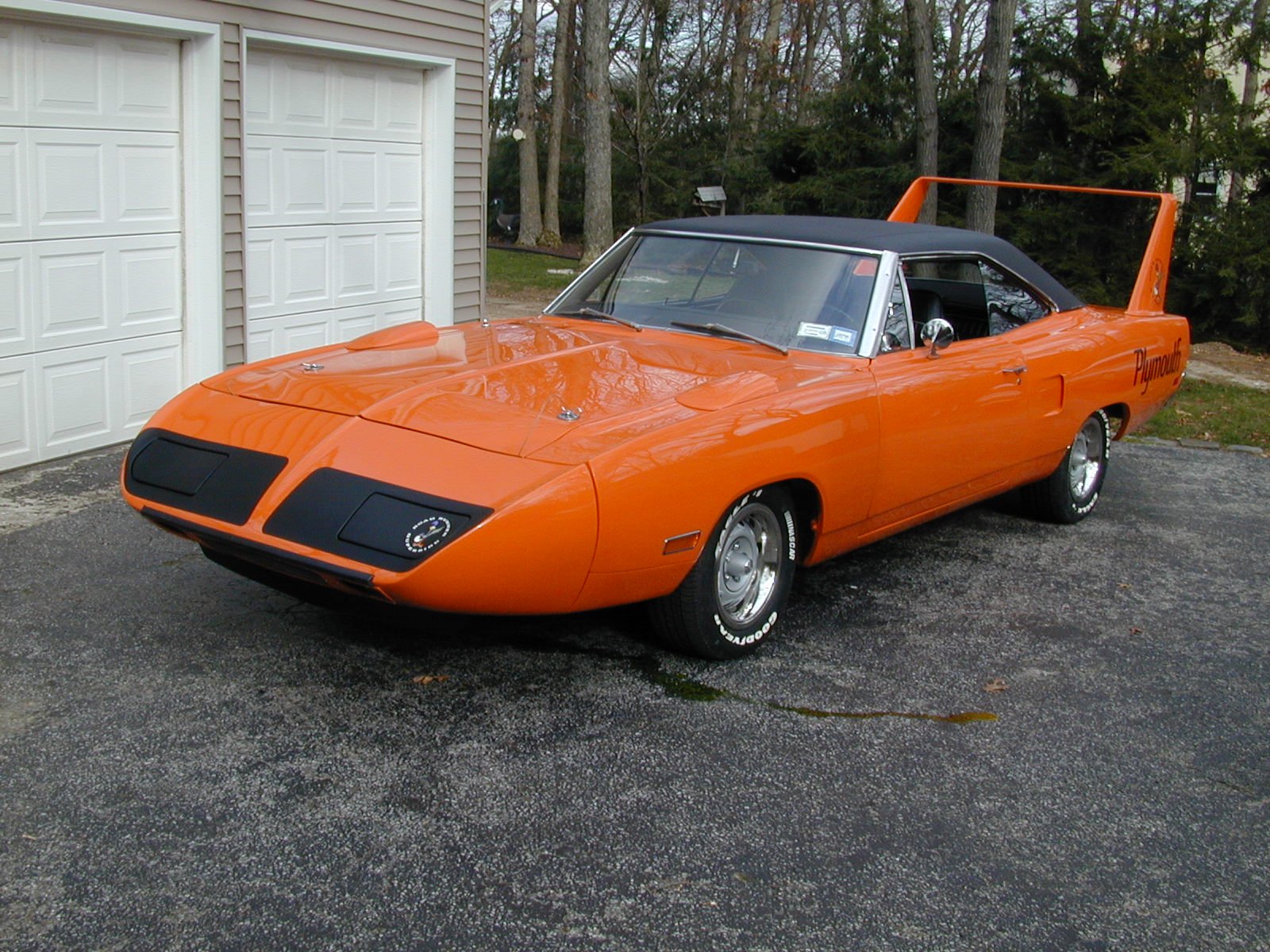
It also differs from the Daytona in more ways than the badges. The noses are not the same shape, the wings are different, and the Superbird kept the Road Runner’s own tail lights and side profile. Side by side, nobody who knows them confuses the two.
Why it still matters
The Superbird sits in the same 1970 moment as the Buick GSX, the last year before emissions, insurance and fuel prices started choking the American muscle car. The Buick was the fastest car nobody noticed. The Superbird was the opposite, a car everybody noticed and almost nobody wanted to buy.
Its real legacy is on the speedways. The fights over aero bodywork that began with the Daytona and the Superbird never really ended in NASCAR. Every rule about noses, spoilers and template sizes since then comes back to the moment when Chrysler decided that winning back Richard Petty was worth building a car with a two-foot wing. It worked. Petty came back, the Superbird won, and NASCAR made sure it never happened again.
Pixar understood the car better than a lot of auto writers. When it needed a veteran champion for Cars in 2006, it picked a Petty Blue 1970 Superbird with the number 43, called him The King and had Richard Petty voice him. A whole generation learned the shape of the Superbird from a cartoon, which seems fair for a car that already came with its own cartoon bird on the wing.
Check you’re still alive.
Photos: Calreyn88 (CC BY-SA 4.0), MrWalkr (CC BY-SA 4.0), crudmucosa (CC BY 2.0), Kalvin Chan (CC BY 2.0) and Ferrari 4 ever (public domain), via Wikimedia Commons.