In 1979, Pontiac sold more than 117,000 Trans Ams. The emissions era had choked American V8s down to a fraction of what they’d made a decade earlier, the oil crisis had made big engines a punchline, and yet the most extroverted muscle car Detroit ever built was having its best years. It didn’t get there on horsepower. It got there on Burt Reynolds, a giant bird painted on the hood, and an idea about who you were when you drove one.
Then, in 1982, it learned to talk, and the rest of the world found out what a Trans Am was.
In short: the Pontiac Firebird arrived in February 1967 on GM’s F-body platform, and the Trans Am package followed in March 1969. There were four generations until production ended in 2002. The Trans Am peaked in 1979 with more than 117,000 sold, helped by Smokey and the Bandit, and became world-famous as KITT in Knight Rider from 1982.
DeLorean’s Pontiac
The Firebird was born at the moment Pontiac was the coolest division at General Motors. John Z. DeLorean, the engineer behind the 1964 GTO, ran the division from 1965 to 1969, and Pontiac under him was the GM brand that took risks. The Firebird arrived on February 23, 1967, almost five months after Chevrolet showed the Camaro. It used the same F-body platform: unibody with a front subframe, double wishbones up front, a solid axle on leaf springs out back.
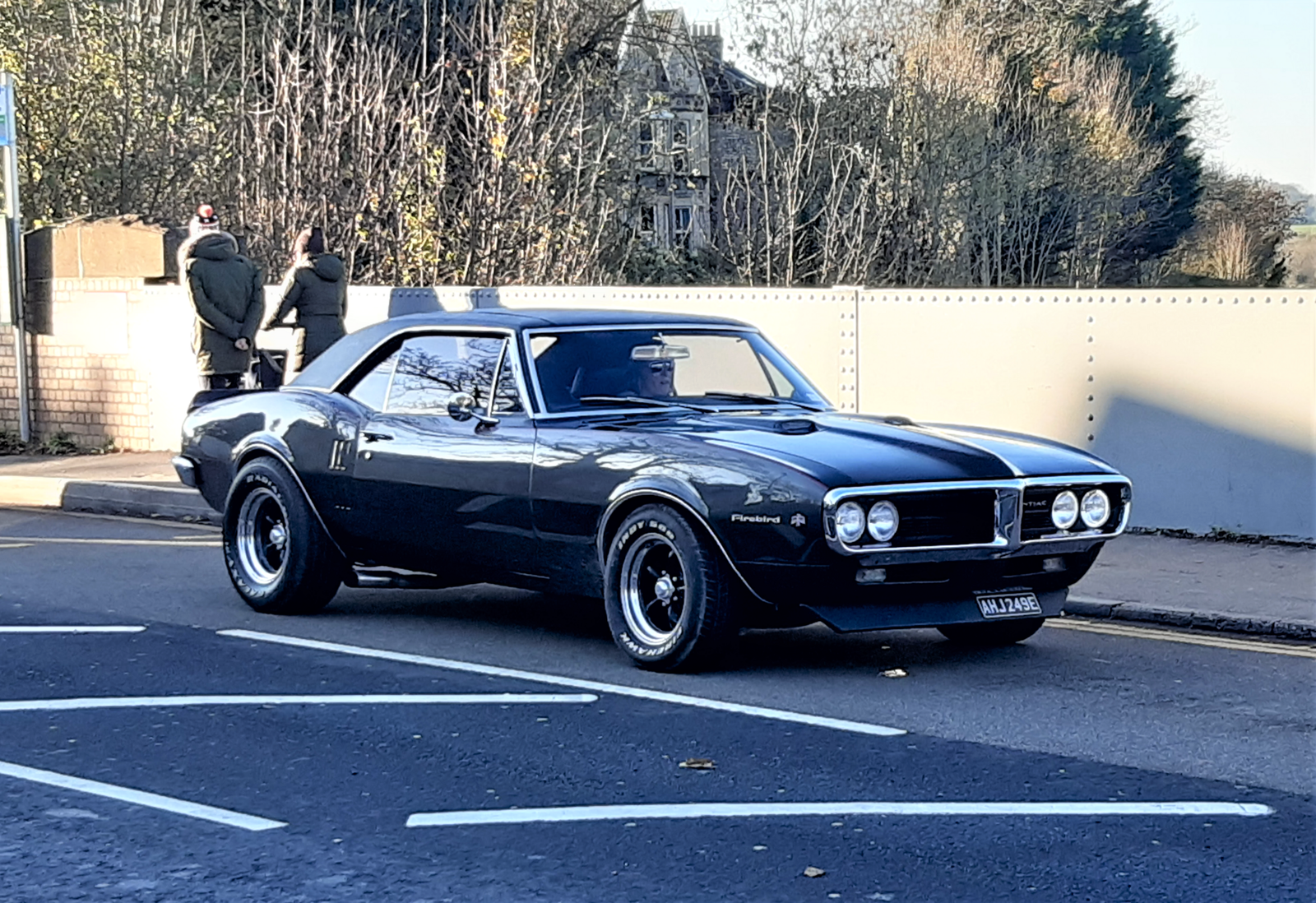
But Pontiac fitted its own engines, its own styling and its own attitude. From day one, the Firebird felt less like a Camaro clone and more like the Camaro’s louder cousin who’d done some time.
Late to the pony car fight
The Firebird was GM’s second answer to a problem Ford had created. The Mustang launched in April 1964 and sold like nothing before it, inventing a whole segment overnight: compact, sporty, cheap to buy, endlessly optional. Chevrolet rushed out the Camaro for 1967, and Pontiac, which had been pushing for a two-seat sports car of its own, was handed the F-body instead and told to make it work. The full story of that fight is in our history of the pony car wars.
Pontiac’s version came with a range that told you where its head was: a six-cylinder with an overhead cam, unusual for Detroit at the time, then V8s up to the 400. Even the base car was trying to be different from the Chevrolet sitting next to it in the GM parts bin.
1969: a borrowed name it couldn’t race under
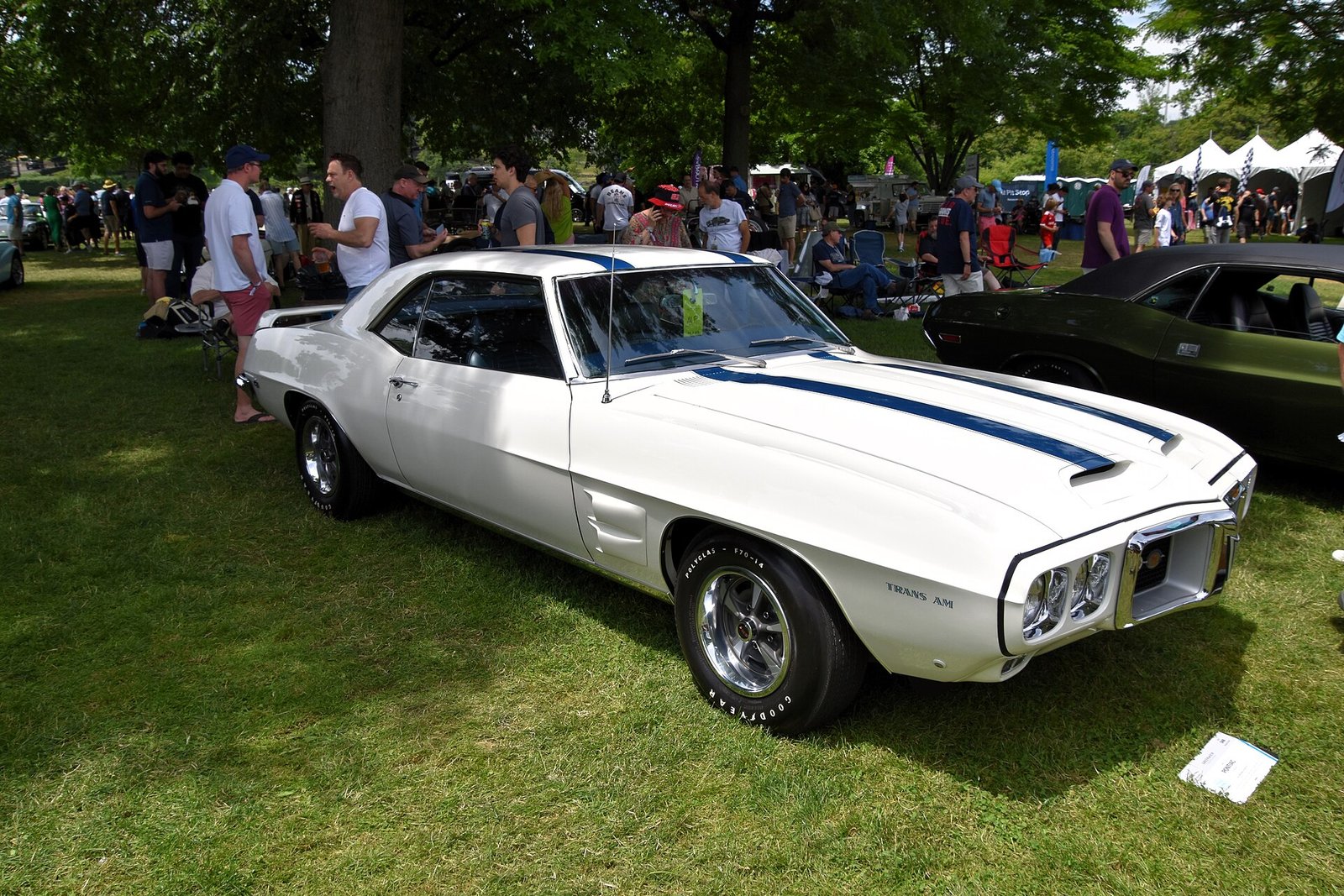
In March 1969, Pontiac added a $725 option package called the Trans Am Performance and Appearance Package, code WS4. The name came from the SCCA’s Trans-Am road racing series, and Pontiac agreed to pay the SCCA $5 for every car sold with it.
The joke was that the Trans Am couldn’t race in the Trans-Am. The rules capped engines at 305 cubic inches. The Firebird Trans Am came with a 400. Chevrolet’s Camaro Z/28, with its 302, was legal. The car named after the series was too big for it.
The first Trans Am packed the 400 Ram Air III with 335 hp, or the optional Ram Air IV with 345. Ram Air meant the hood scoops actually fed cold air to the engine. That matters more than it sounds: cold air is denser, so each cylinder gets more oxygen, burns more fuel and makes more power. Plenty of muscle cars of the era had scoops that were pure decoration. Pontiac’s were plumbed in. Polar White paint with blue stripes, a rear spoiler, a limited-slip diff. Pontiac built 689 coupes and 8 convertibles, 697 in all, which is why first-year Trans Ams are now some of the most sought-after Firebirds in existence.
The second generation and the bird on the hood
The second-generation car arrived on February 26, 1970, lower, wider and cleaner than the first, and that shape would last eleven years. The Trans Am got the shaker scoop, mounted to the engine and poking through a hole in the hood, so it shook along with the V8 at idle. Pure theater, and buyers loved every second of it. It worked.
The 455 HO arrived for 1971, and for 1973 and 1974 Pontiac built the SD-455, the Super Duty, with a reinforced block, four-bolt mains and forged rods and pistons. It was rated at 290 net horsepower, a number people who drove one considered wildly conservative. It was one of the last real high-performance engines of the original muscle car era, arriving right as the 1973 oil crisis and emissions rules started squeezing everything. More on that era in our piece on America’s muscle cars.
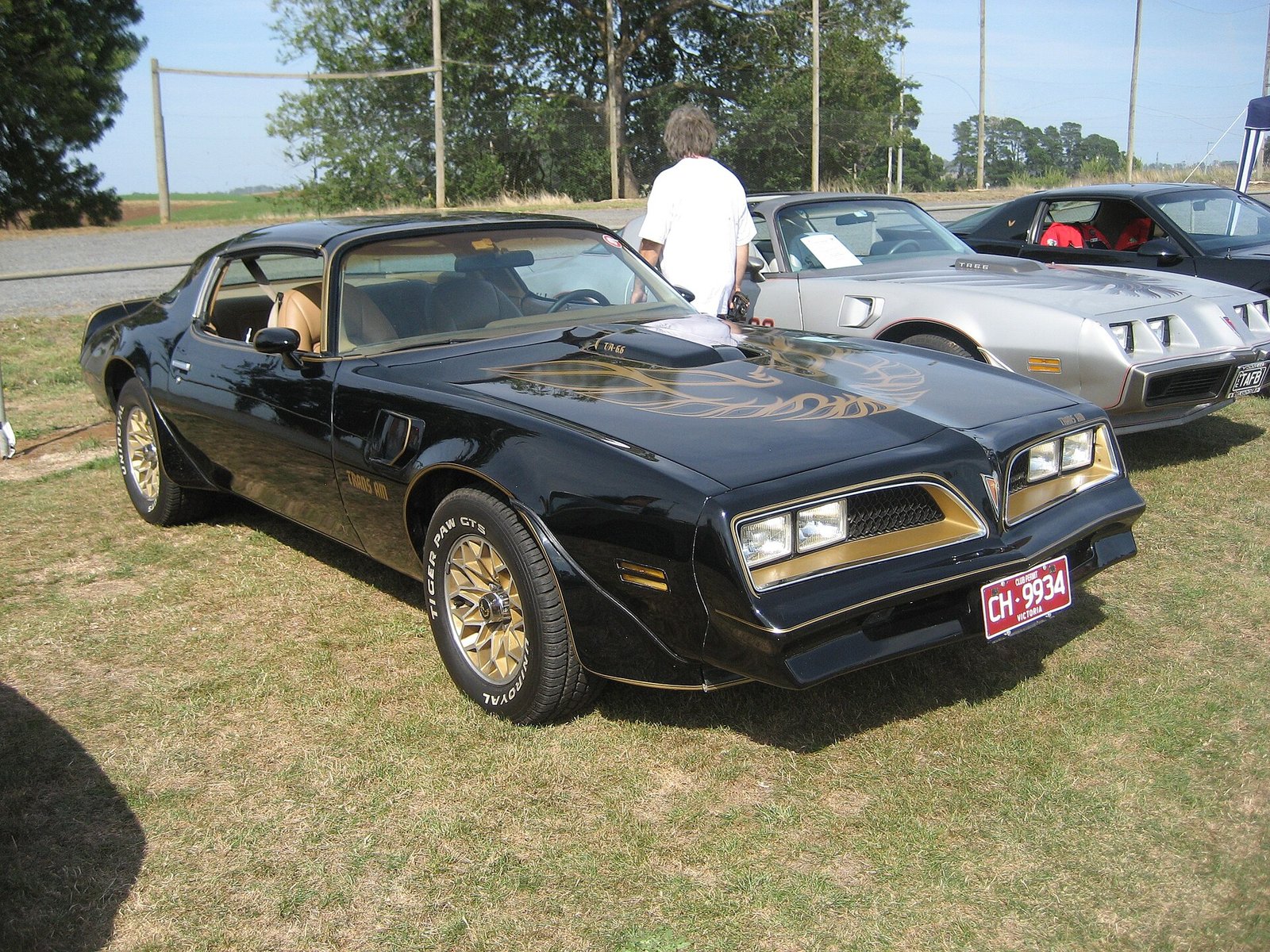
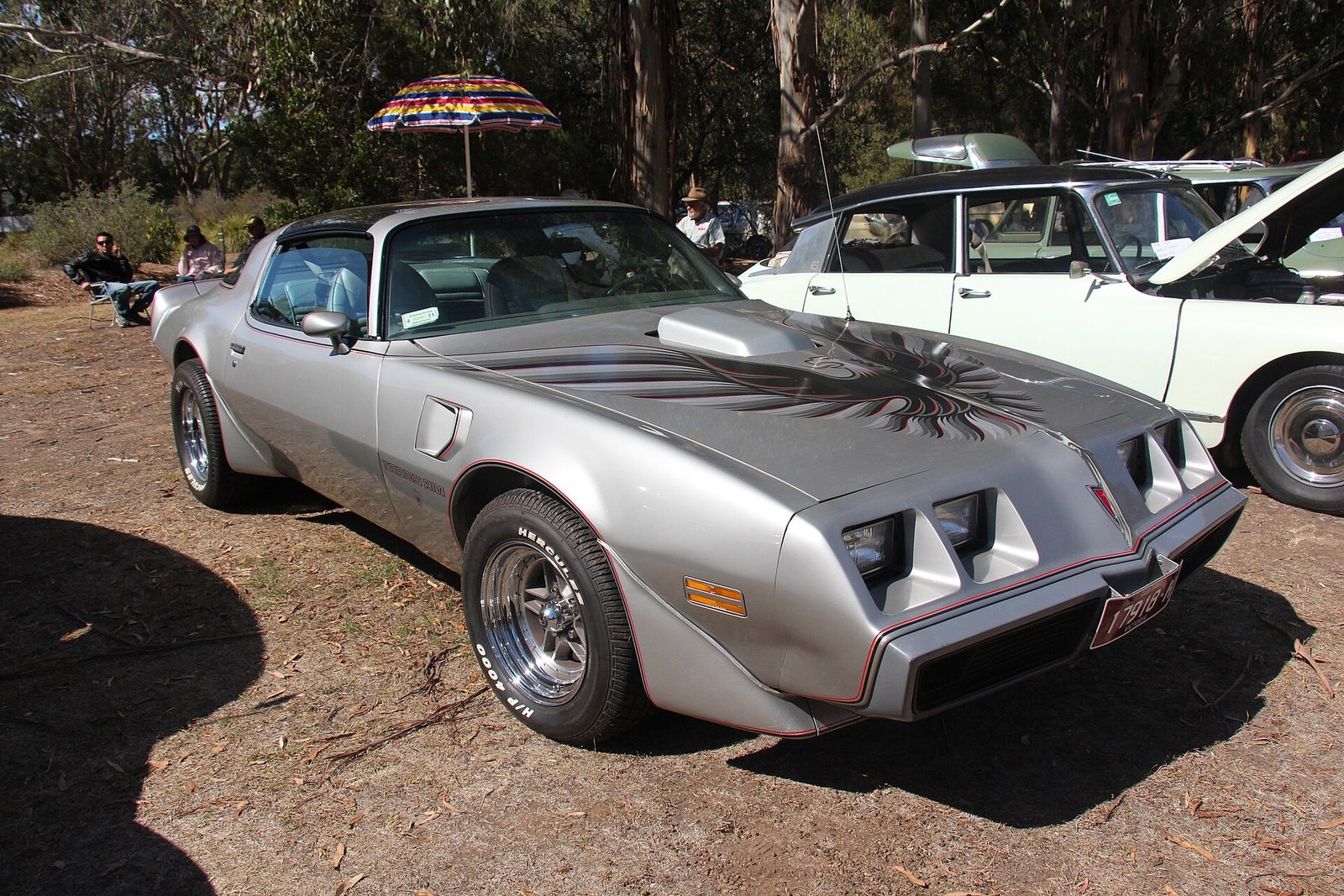
Also in 1973 came the giant hood bird, option WW7, which owners promptly nicknamed the Screaming Chicken. It started as an optional decal. It became the car’s signature.
Bandit time
For 1976, Pontiac’s 50th anniversary as a brand, it built the Y82 Special Edition: black and gold, with removable roof panels. It was the last year of the 455, already strangled to 200 hp.
In 1977 Burt Reynolds drove one in "Smokey and the Bandit," and sales exploded. Pontiac sold more than 187,000 Firebirds in 1978. In 1979 the Trans Am 10th Anniversary Edition paced the Daytona 500, and Pontiac built more than 117,000 Trans Ams that year. A muscle car with a choked engine was outselling the real muscle cars of a decade earlier. It’s the clearest case in American car history of image beating horsepower.
KITT, and how the world met the Trans Am
The third generation arrived for the 1982 model year: lower, sleeker, pop-up headlights, very ’80s. In September 1982, NBC premiered "Knight Rider," starring a black Trans Am with a red scanner in its nose that talked, thought and drove itself.
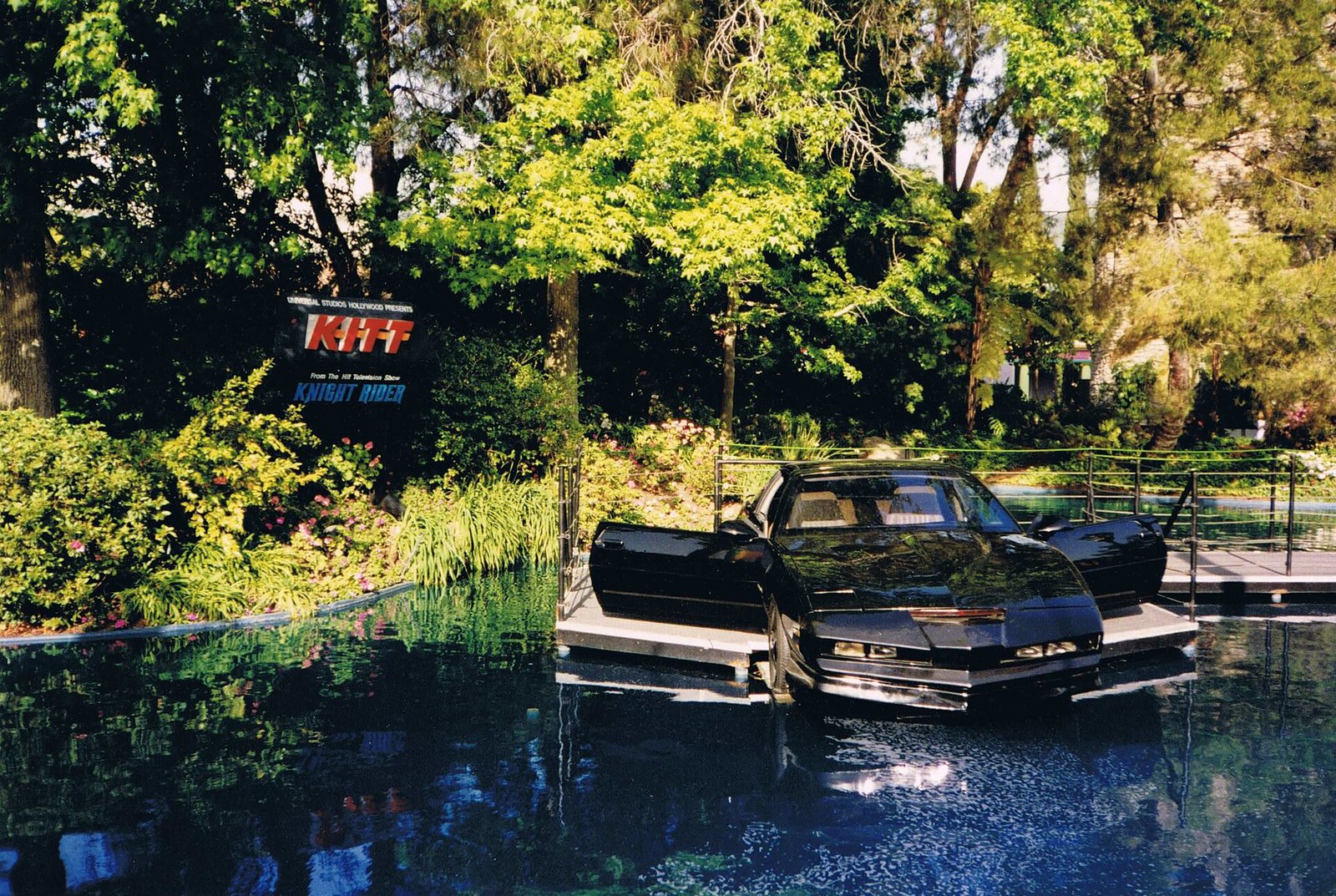
That show did something Pontiac’s marketing never could. It made the Trans Am famous in countries where Pontiac barely sold cars. In Spain, where we write from, the series reached public broadcaster TVE in 1985 as "El coche fantástico," the fantastic car, airing in the afternoon. For a generation of Spanish kids, a Pontiac Trans Am was the most famous car on the planet, even though almost none of them had ever seen one on the street and few could pronounce "Pontiac." "Smokey and the Bandit," for the record, played in Spain as "Los caraduras," roughly "The Shameless Ones."
The real cars didn’t talk, but they had numbers:
- Base cars ran a 5.0-liter V8 with roughly 150 to 190 hp in the early years.
- Tuned Port Injection from the mid-’80s brought 5.0 and 5.7-liter versions past 200 hp.
- The 1987 GTA, with the 5.7-liter V8 also used in the Corvette, was the most complete Trans Am of the generation.
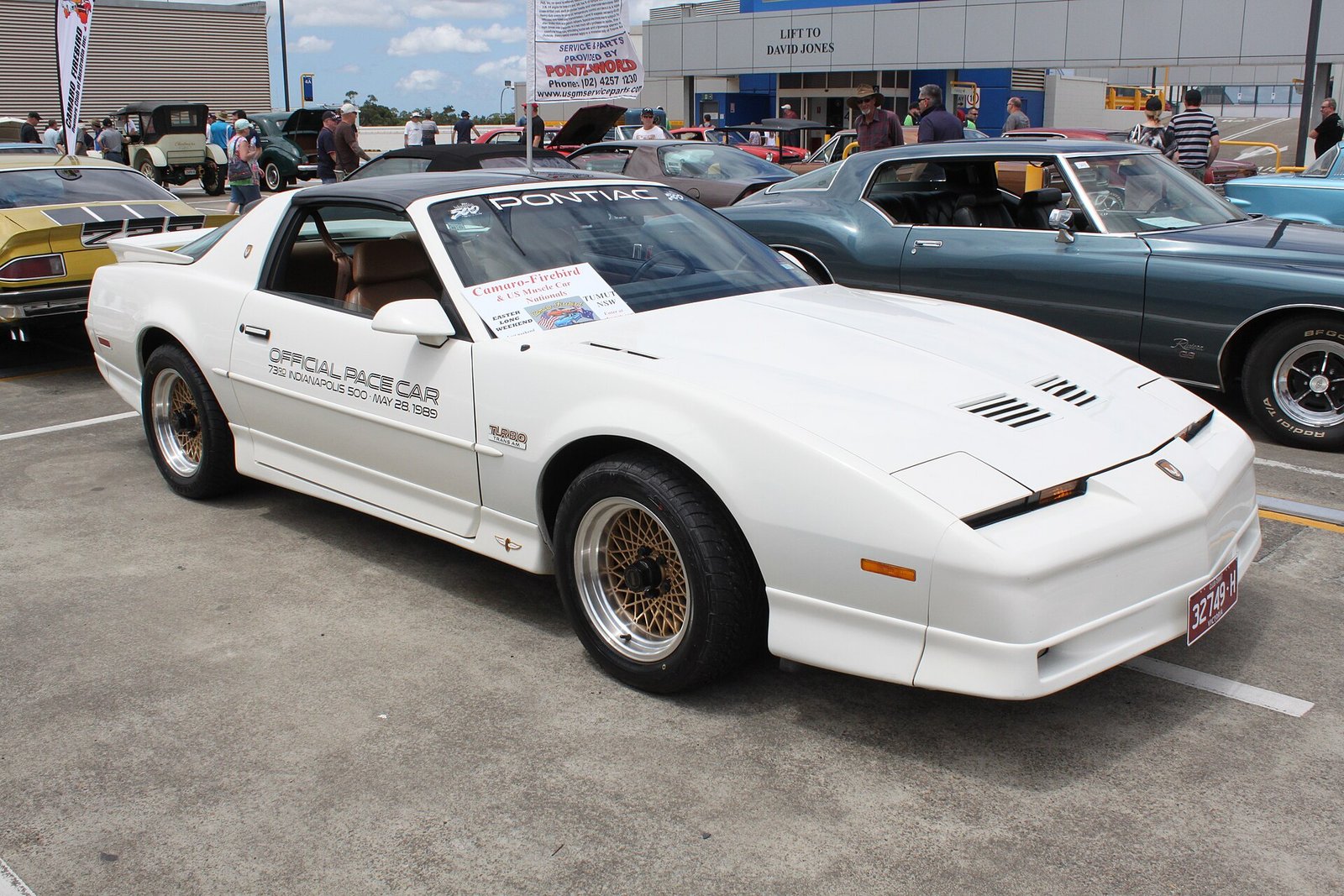
- The 1989 Turbo Trans Am used the 3.8-liter turbo V6 from the Buick Grand National, rated at 250 hp. Pontiac built 1,555, and it paced the Indianapolis 500.
That Turbo was an odd duck, a V6 in the car that had built its legend on V8 noise. Purists hated it. In a straight line, it was one of the quickest Firebirds ever made. If you want to know how a turbo V6 can run with a big V8, our explainer on how a turbocharger works covers it.
Fourth generation: the LS1 and the end
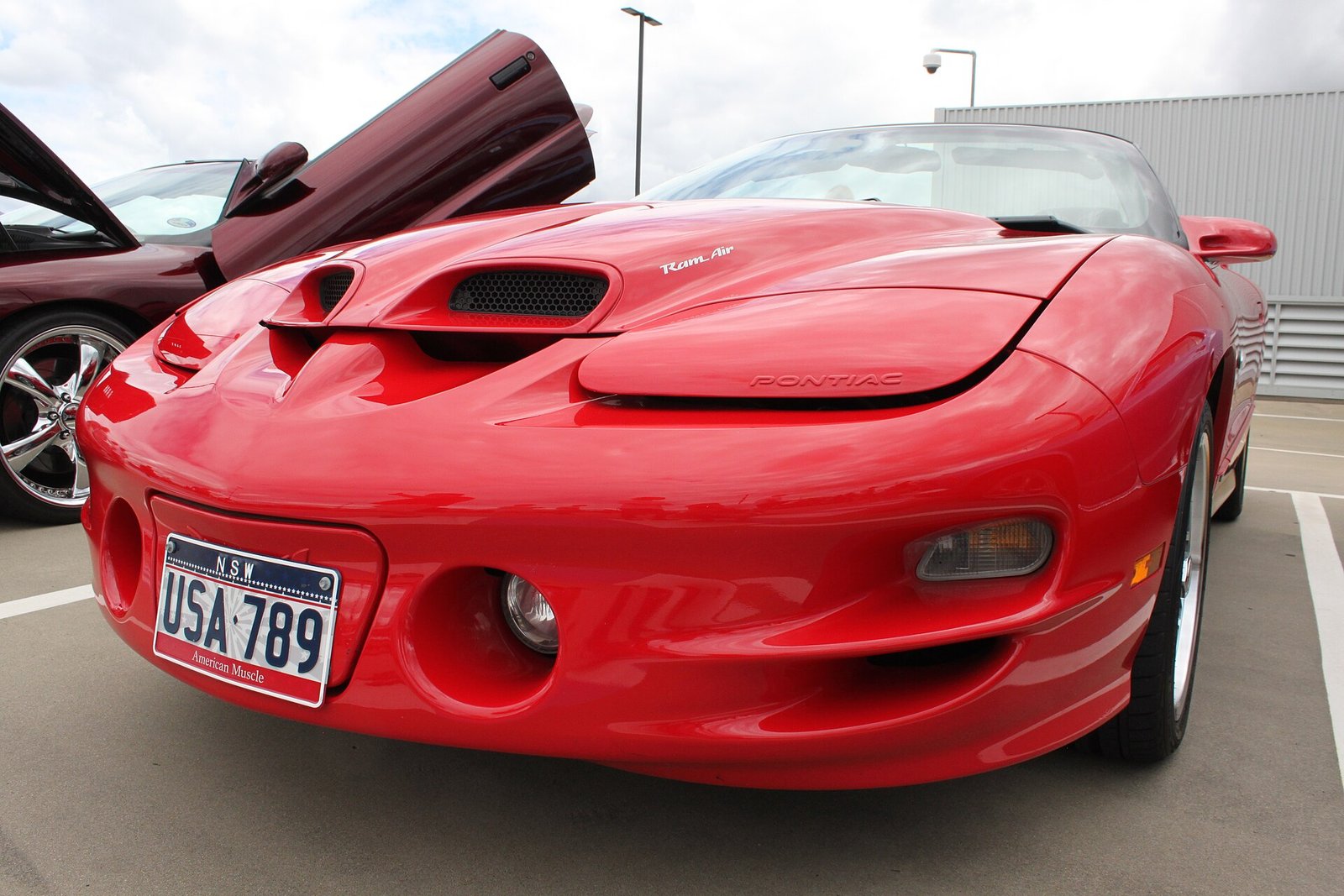
The final generation arrived in 1993 with a much rounder, almost grand touring shape. It started with the 5.7-liter LT1 making 275 hp. In 1998 came the LS1, also 5.7 liters, with 305 hp, and with the WS6 package (functional Ram Air hood, revised suspension, 17-inch wheels) the Trans Am made 320, then 325 in its final two years. That LS engine went on to become the V8 everyone swaps into everything, a story told in the LS engine.
A WS6 with the LS1 and a six-speed manual was the ultimate Firebird: the same engine as the Camaro SS, similar performance, and styling that people either loved or hated, which is part of why it’s remembered.
Production ended in 2002, along with the Camaro, as the whole segment’s sales dried up. The last fourth-generation cars weren’t even built in the US: they came out of GM’s plant in Sainte-Thérèse, Quebec, which closed when the F-body died. The Camaro came back in 2010. The Firebird didn’t. In GM’s 2009 bankruptcy restructuring, Pontiac was cut, and the brand was gone by the end of 2010.
What the Trans Am proved
Three things, and Detroit took a long time to absorb them.
First, image can sell more than horsepower. With engines choked by emissions rules, the Trans Am had its biggest years in the late ’70s.
Second, a car can outlive its performance if it keeps its identity. The bird, the stripes, the shaker, the stance. When the engine went soft, the look kept the product alive.
Third, pop culture is the most powerful advertising there is. "Smokey and the Bandit" in 1977 and "Knight Rider" in 1982 did more for the Firebird than any Pontiac campaign, and the second one carried it to places Pontiac never really sold cars.
There’s a fourth lesson, and it’s the one GM ignored. A brand that builds an icon has to keep feeding it. Pontiac spent its last decade selling rebadged minivans, a plastic-clad Aztek that became a late-night joke, and sedans that were Chevrolets with extra cladding. By the time the Firebird was gone, there was nothing left at Pontiac that made people turn their heads. When the bankruptcy came, cutting the brand was an easy call. The Trans Am had been carrying it for years.
The market now
The first-year 1969 cars are the most valuable on rarity alone: 697 built, Ram Air engines, the debut of the name. The black-and-gold Special Editions from 1976 to 1978, the Bandit cars, have climbed hard among buyers who grew up with the movie. Third-generation cars are still the cheapest way in, except for the GTA and the 1989 Turbo, which are finding their audience. And the fourth-generation WS6 cars with the LS1 and a manual are the ones a lot of people are watching now. They’re genuinely fast, the engine is tough, but many have been modified or abused. A clean, stock example is getting harder to find every year.
Four generations, one poster
The Mustang is still around. The Camaro made it to 2024. The Firebird died in 2002 and its brand in 2010. Yet ask someone who grew up in the ’70s or ’80s, in America or almost anywhere else, to picture an American car, and there’s a good chance they’ll see a black Trans Am, either with a gold bird on the hood or a red light sweeping across its nose.
The Formula was the sleeper, the Esprit was the sensible one. The Trans Am, with its bird and its refusal to ask permission, was the one on the bedroom wall. Forty years on, that still counts for something.
Pontiac Firebird Trans Am FAQ
How many generations of Pontiac Trans Am are there?
Four. The first Firebird ran from 1967 to 1969, the second from 1970 to 1981, the third from 1982 to 1992 and the fourth, with the LS1 V8 in its later years, from 1993 to 2002.
Who made the Trans Am?
Pontiac, a division of General Motors. The Firebird shared the F-body platform with the Chevrolet Camaro, but Pontiac fitted its own engines and styling. The Trans Am name came from the SCCA Trans-Am racing series, and Pontiac paid the SCCA $5 for every car sold with it.
What was the first Trans Am?
The 1969 Trans Am Performance and Appearance Package, with a 400 Ram Air III V8 of 335 hp or a Ram Air IV of 345. Pontiac built only 697, which makes it one of the most sought-after Firebirds.
Check you’re still alive.
Photos: Sicnag (CC BY 2.0); Hugh Llewelyn (CC BY-SA 2.0); Charles from Port Chester, New York (CC BY 2.0); Sicnag (CC BY 2.0); Morn (CC BY-SA 4.0); Jeremy from Sydney, Australia (CC BY 2.0); Jeremy from Sydney, Australia (CC BY 2.0). Via Wikimedia Commons.