
Ford Coyote 5.0: the four-cam V8 that let the Mustang stop apologizing
For most of the 2000s, the straight answer to "what’s under the hood of that Mustang GT?" was a little embarrassing. Ford’s 4.6-liter Modular V8 was durable, cheap and easy to live with, and in its 2005-2010 three-valve form it made 300 horsepower. Then Chevrolet brought back the Camaro for 2010 with a 426-horsepower LS3 in the SS, and Dodge’s Challenger SRT8 was already on sale with a 6.1-liter Hemi that soon grew to 392 cubic inches. In the pony car war that Ford had started in 1964, the Mustang was showing up to a gunfight with a very reliable knife.
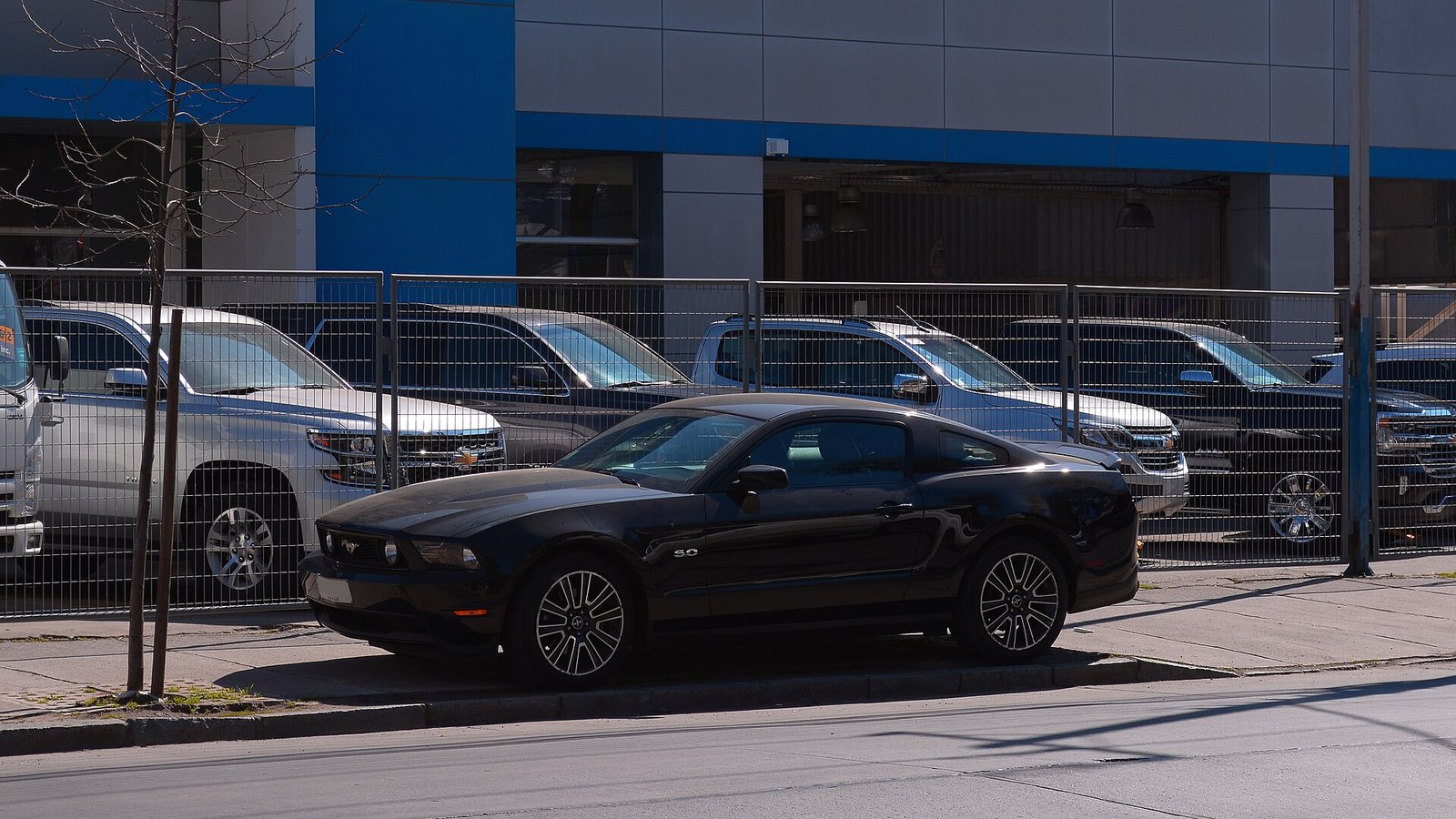
Ford’s answer arrived in the 2011 Mustang GT. It was called the Coyote, it displaced 5.0 liters, and it made 412 horsepower. More important than the number was the way it made it: four camshafts, four valves per cylinder, and a willingness to rev to 7,000 rpm that no regular-production Mustang GT engine had shown before. Fifteen years and four generations later, it is still the engine that defines the car.
Named after a race car, not a marketing meeting
The name has a backstory most buyers never hear. In the 1960s and 1970s, A.J. Foyt raced Indy cars he called Coyotes, built by his own team. In 1967 Foyt won the Indianapolis 500 in a Coyote powered by Ford’s four-cam racing V8, a double-overhead-cam engine that had been developed to beat the Offenhauser. Ford’s engineers picked the name for the new 5.0 as a nod to that lineage: an American V8 with four camshafts, wearing the name of an American race car that won with one.
It also helped draw a line under the past. Mustang fans still talk about the 5.0 of the Fox-body era, the pushrod small-block that powered the cheap, light, fast Mustangs of the 1980s. Calling the new engine a "5.0" again was a calculated move. Calling it Coyote told everyone it wasn’t the same engine.
How the Coyote is put together
The Coyote belongs to Ford’s Modular engine family, which means it shares some basic architecture with the old 4.6, but almost everything that matters is new. The block is aluminum with cast-iron cylinder liners, the same basic recipe GM used for the LS3. The first-generation engine measured 92.2 mm of bore and 92.7 mm of stroke, for 4,951 cc. It is built at Ford’s Essex Engine Plant in Windsor, Ontario.
The heads carry two camshafts each, 32 valves in total, and the key piece of technology is a system Ford calls Ti-VCT, for Twin Independent Variable Cam Timing. In plain terms, the engine computer can advance or retard the intake cams and the exhaust cams separately, depending on load and rpm. At low revs that means good torque and decent fuel economy. At high revs the cams move to let the engine breathe hard. The three-valve 4.6 already had variable cam timing, but it had only one cam per bank and could not move intake and exhaust independently.
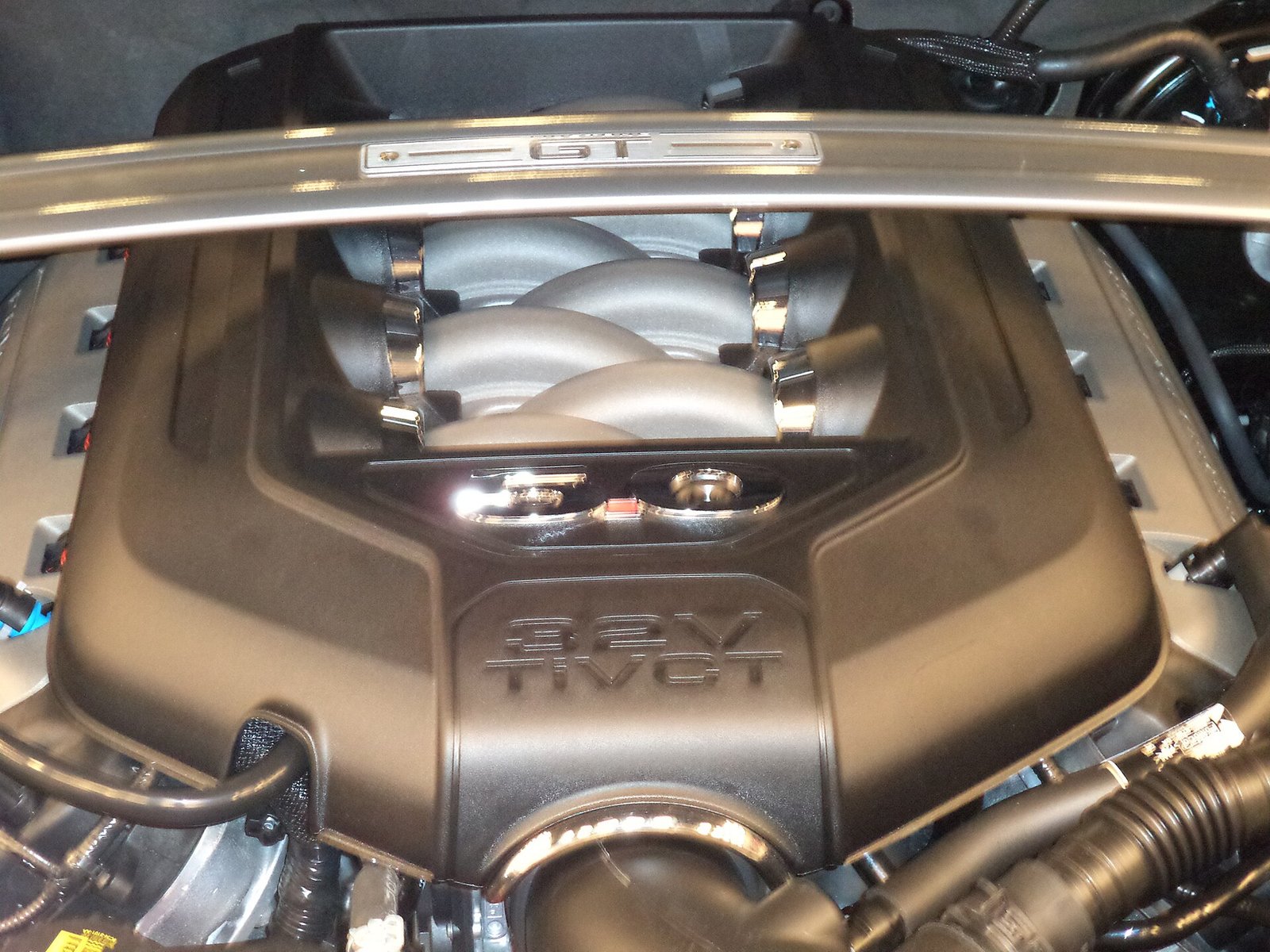
The result was a broad torque curve and a top end that felt almost European. The first Coyote made its 412 hp at 6,500 rpm and 390 lb-ft at 4,250. For an American V8 in a car that started at around $30,000 in 2011, that kind of top-end breathing was new territory.
One engine, Mustangs and pickups
The Coyote didn’t live only in sports cars. Starting with the 2011 model year, Ford also put the 5.0 in the F-150, tuned for 360 hp and more low-end torque. That decision matters more than it seems. The F-150 is America’s best-selling vehicle, which meant the Coyote went into production volumes no "performance" engine usually sees, and the parts, the knowledge and the junkyard supply exploded with it.
That supply fed the swap scene. Ford Performance sells the Coyote as a crate engine with a "Control Pack" wiring harness and computer, so that hot rodders can drop it into older cars without a degree in electronics. Coyote-swapped Fox-body Mustangs, classic F-100 pickups and even early Broncos are now a regular sight at car shows. The LS engine had dominated that world for twenty years. The Coyote became the first real Ford answer.
Coyote versus LS, the argument that never ends
Put a Coyote next to a Chevrolet LS3 and you see two completely different ideas of what an American V8 should be. The LS3 is a pushrod engine: one camshaft in the block, two valves per cylinder, operated through pushrods and rocker arms, and 6.2 liters of displacement. The Coyote has four overhead camshafts, four valves per cylinder and 1.2 liters less. Chevrolet gets its power from size and simplicity. Ford gets it from revs and breathing.
Each side has its argument. The LS is compact for its displacement, because with the camshaft in the block the heads stay small, and that makes it easy to fit in almost anything. The Coyote’s big four-cam heads make it wide and tall, which is the first thing anyone discovers when they try to put one in an old Fox-body: the shock towers usually need to be modified, and the swap takes more work than an LS would in the same car. On the other hand, the Coyote makes more power per liter, revs higher and sounds more like a race engine at the top end.
The point is that Ford stopped trying to beat GM at its own game. Instead of a bigger pushrod V8, it built a smaller, more sophisticated one, and buyers liked it. Fifteen years of arguments at Cars and Coffee haven’t settled which philosophy is better, and they never will.
Ford Performance even sells its own family of race-ready versions, the Aluminator crate engines, with forged internals for people who plan to add boost. That a manufacturer builds a catalog of crate engines around a production V8, and that customers buy them to put in cars Ford stopped making decades ago, tells you how far the Coyote has spread beyond the Mustang. The pushrod 302 of the Fox-body era had the same kind of second life. The Coyote got it while it was still in production.
Four generations, four steps up
Gen 1 (2011-2014): 412 to 420 hp. The original. It made the Mustang GT a serious performance car again and quickly embarrassed some much more expensive European coupes in magazine comparisons. For 2013 it was rated at 420 hp.
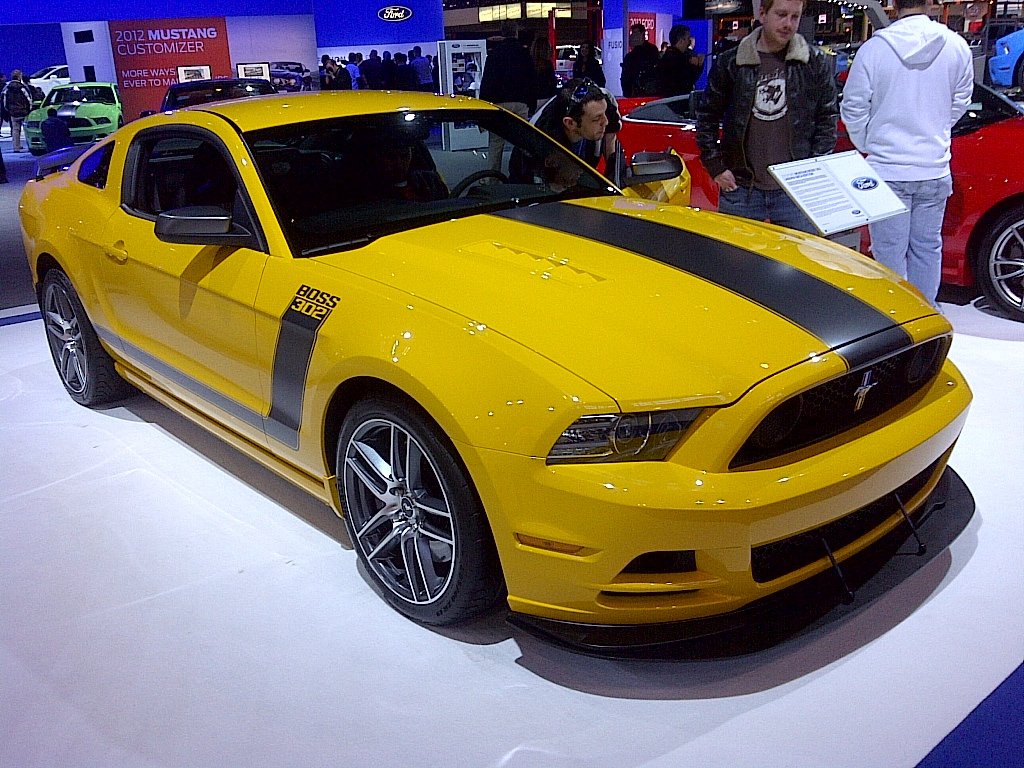
Boss 302 (2012-2013): 444 hp. Ford revived the Boss 302 name with a special version of the Coyote, code-named Road Runner, with a forged rotating assembly, revised heads and cams, and a 7,500 rpm redline. The hardcore Boss 302 Laguna Seca version was named after the California circuit where Ford tuned it.
Gen 2 (2015-2017): 435 hp. For the S550 Mustang, Ford gave the engine bigger valves, new cams and charge motion control valves in the intake that improve idle quality and cold-start emissions. The S550 was also the first Mustang Ford sold officially around the world, including in right-hand-drive markets, which made the Coyote a global engine.
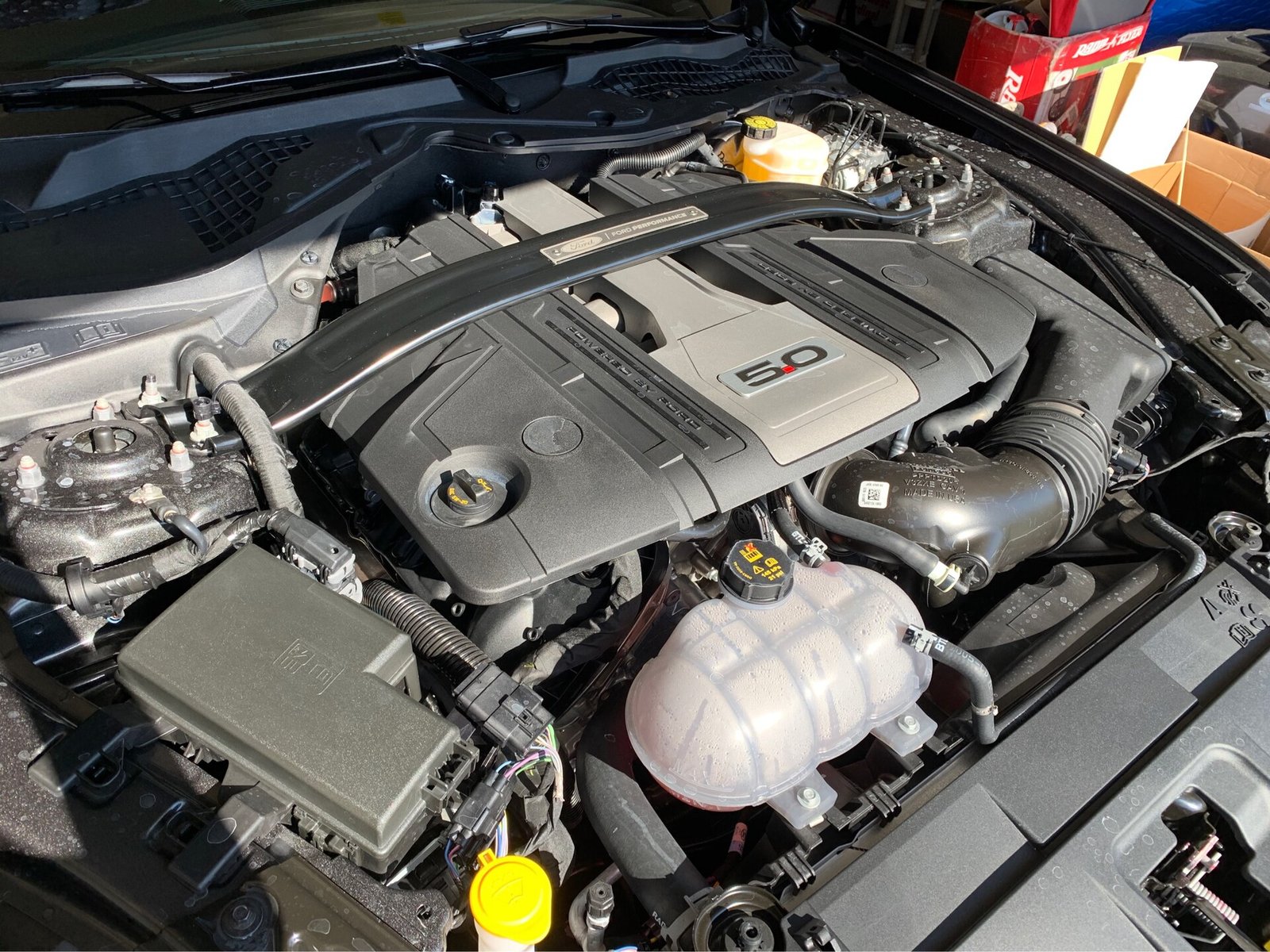
Gen 3 (2018-2023): 460 hp. This is the biggest step. The bore grew to 93 mm, displacement to 5,038 cc, the redline climbed to 7,500 rpm, and the engine gained dual fuel injection, with both port and direct injectors. Ford quoted 460 hp for the 2018 Mustang GT. The special 2021 Mach 1 got 480 hp, using parts from the Shelby GT350 program.
Gen 4 (2024-present): 480 to 500 hp. The S650 Mustang’s Coyote adds a dual throttle body intake, with two 80 mm throttles. The GT makes 480 hp, or 486 with the active exhaust, and the Dark Horse gets 500.
Voodoo: the flat-plane detour
Any story about the Coyote has to include the engine that broke the family rules. For the 2015 Shelby GT350, Ford built a 5.2-liter V8 called Voodoo, related to the Coyote but with a flat-plane crankshaft.
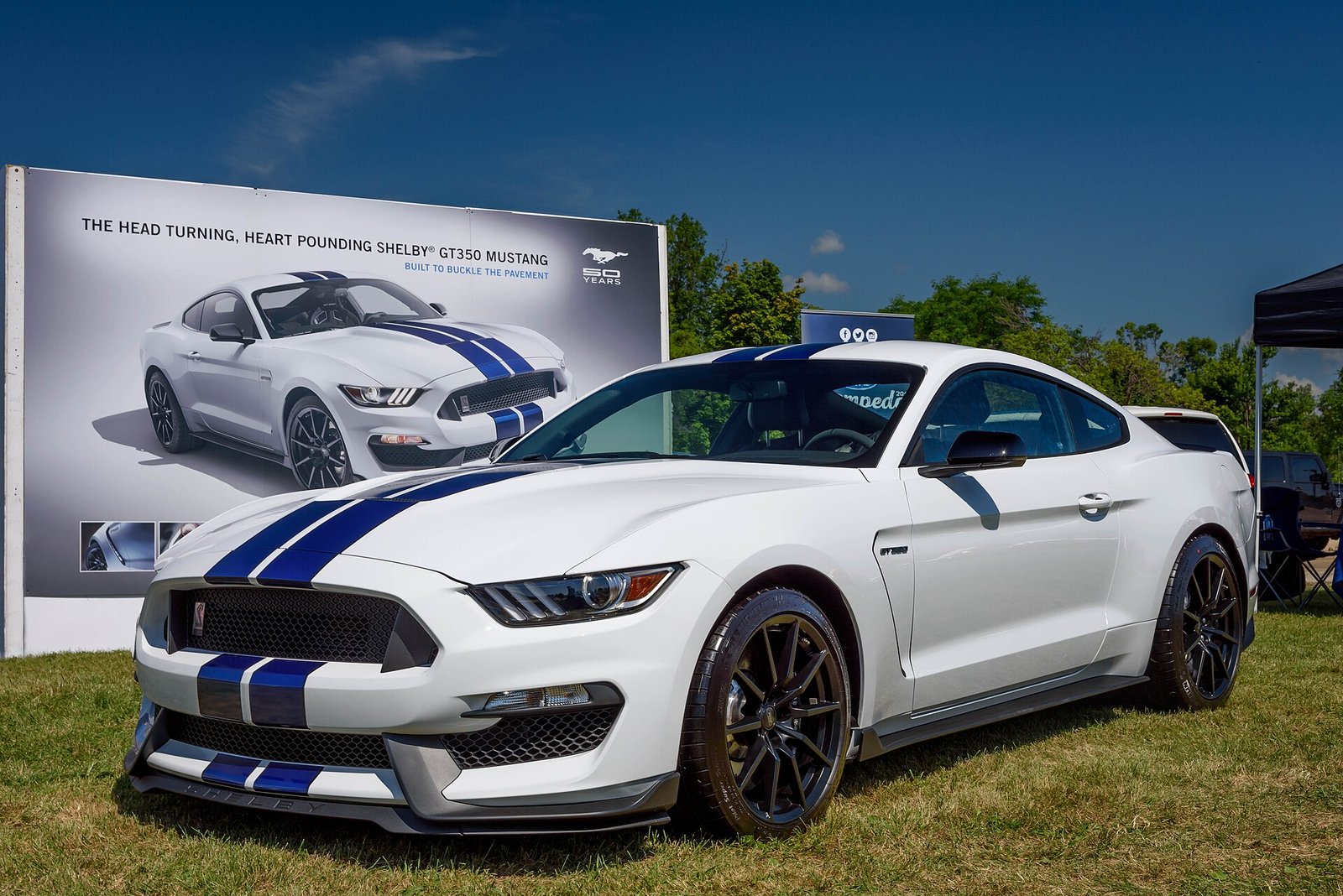
Almost every American V8 uses a cross-plane crankshaft, with the crank throws set at 90 degrees to one another. That layout gives smooth running and the classic burbling V8 sound. A flat-plane crank puts all the throws in one plane, at 180 degrees. It is lighter, it lets the engine rev more freely, and the exhaust pulses alternate neatly between the two banks. The trade-off is more vibration. It is the layout Ferrari uses in its V8s, and it is why a Ferrari V8 shrieks instead of rumbling.
The Voodoo made 526 hp at 7,500 rpm and revved to 8,250. No naturally aspirated production V8 Ford had ever done anything like it, and the sound of a GT350 at full song is still one of the best things to come out of Dearborn. The Voodoo also had a reputation problem: some owners reported early engine failures and heavy oil consumption. It remains a cult engine anyway.
Predator: the Coyote with a blower
If the Voodoo went high, the Predator went big. The 2020 Shelby GT500 used a cross-plane 5.2-liter V8 from the same family with a 2.65-liter roots-type supercharger nested in the valley. Output was 760 hp, at the time the most powerful street-legal Ford ever built, sold with a factory warranty through ordinary dealers.
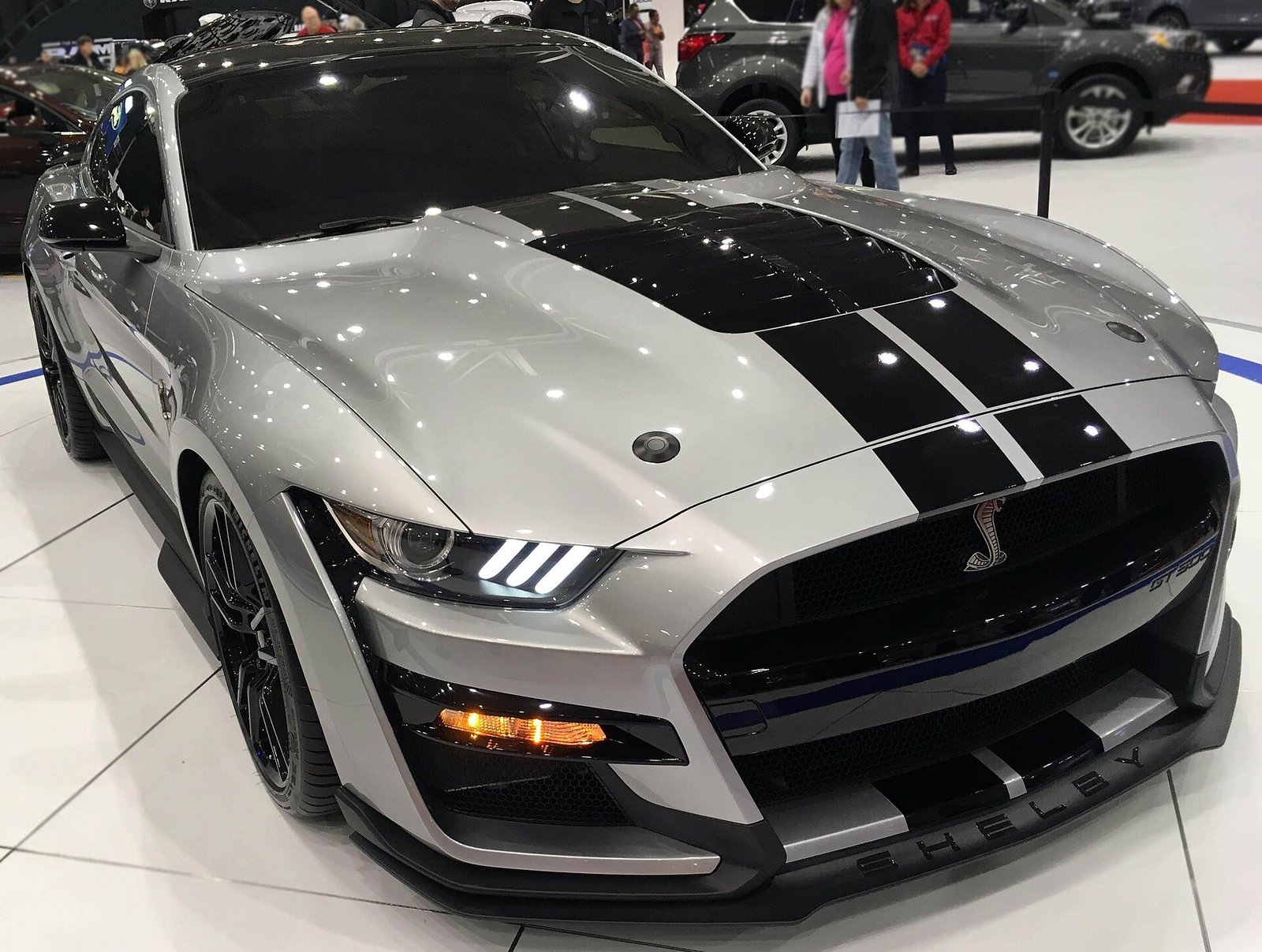
The aftermarket did the rest. Supercharger and turbo kits for the regular Coyote are common, and street-registered Coyote Mustangs running nine-second quarter miles no longer turn heads at weekend drag events. The strength of the aluminum block and the support from Ford’s own electronics make these builds easier than tuners expected when the engine was new.
The tick, and other quirks
No engine is perfect, and Coyote owners have their own vocabulary for its flaws. Third-generation engines, the ones with direct injection, became known for a light ticking noise at idle that owners nicknamed the "BBQ tick," often blamed on the fuel system. Most of the time it is harmless, but it sent plenty of new owners to dealers convinced their engine was dying. Some Gen 3 engines also drew complaints about oil consumption, and Ford issued service bulletins on the subject.
Gen 1 cars had a different weak point, and it wasn’t the engine. The Getrag MT-82 six-speed manual paired with the Coyote drew a steady stream of complaints about notchy shifts and missed gears at high rpm, a problem owners still discuss on the forums.
On track
The Coyote’s family has a serious racing record. The Mustang GT4, which uses the flat-plane 5.2 Voodoo, became a front-running car in GT4 racing in North America and in IMSA’s Michelin Pilot Challenge. Since 2024, the Mustang GT3, developed with M-Sport, has raced in the IMSA WeatherTech SportsCar Championship and at the 24 Hours of Le Mans with a 5.4-liter V8 derived from the Coyote. A Mustang at Le Mans with a descendant of the engine that sits in an F-150 is a better story than anything a marketing department could invent.
Why it matters
The Coyote did three things at once. It gave the Mustang GT an engine it didn’t have to apologize for. It proved an American V8 could use four cams and high revs without losing the low-end grunt buyers expected. And, thanks to the F-150, it became common enough to build a whole aftermarket around it.
Fifteen years in, with emissions rules squeezing every big engine on the market, Ford has kept the Coyote alive while rivals have drifted toward turbocharged sixes and hybrids. The Camaro is gone. The Challenger’s Hemi is gone. The Mustang GT still has a naturally aspirated 5.0 V8 with four camshafts.
Check you’re still alive.
Photos via Wikimedia Commons: Coyote Gen 3 engine, Jpogi (CC BY-SA 4.0); Mustang GT engine bay, Zytonits (CC BY-SA 2.0); 2011 Mustang GT, RL GNZLZ from Chile (CC BY-SA 2.0); 2012 Boss 302, artistmac (CC BY-SA 2.0); 2016 Shelby GT350, Mustang Joe (CC0); 2020 Shelby GT500, Syntaxlord (CC BY-SA 4.0).