
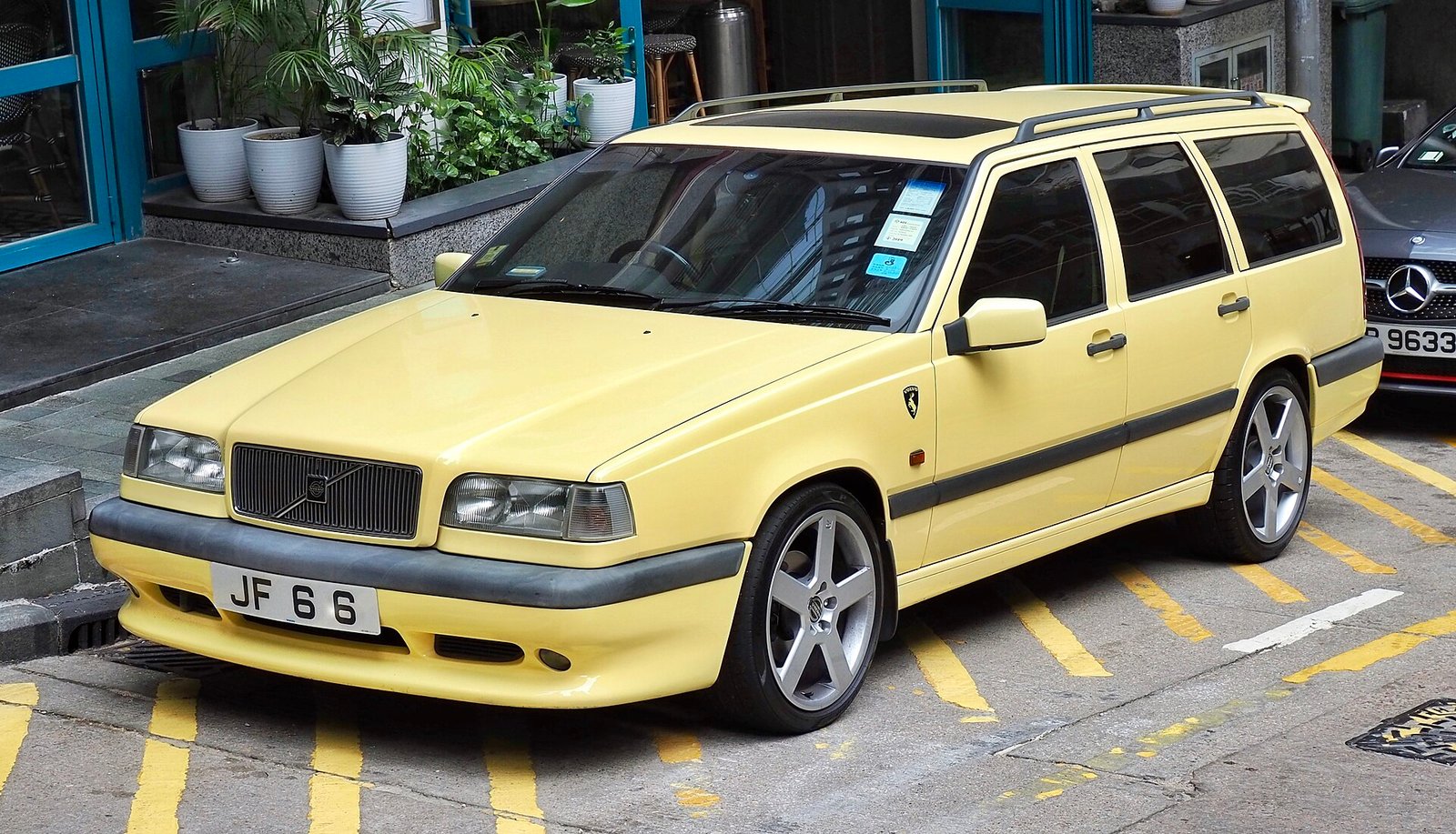
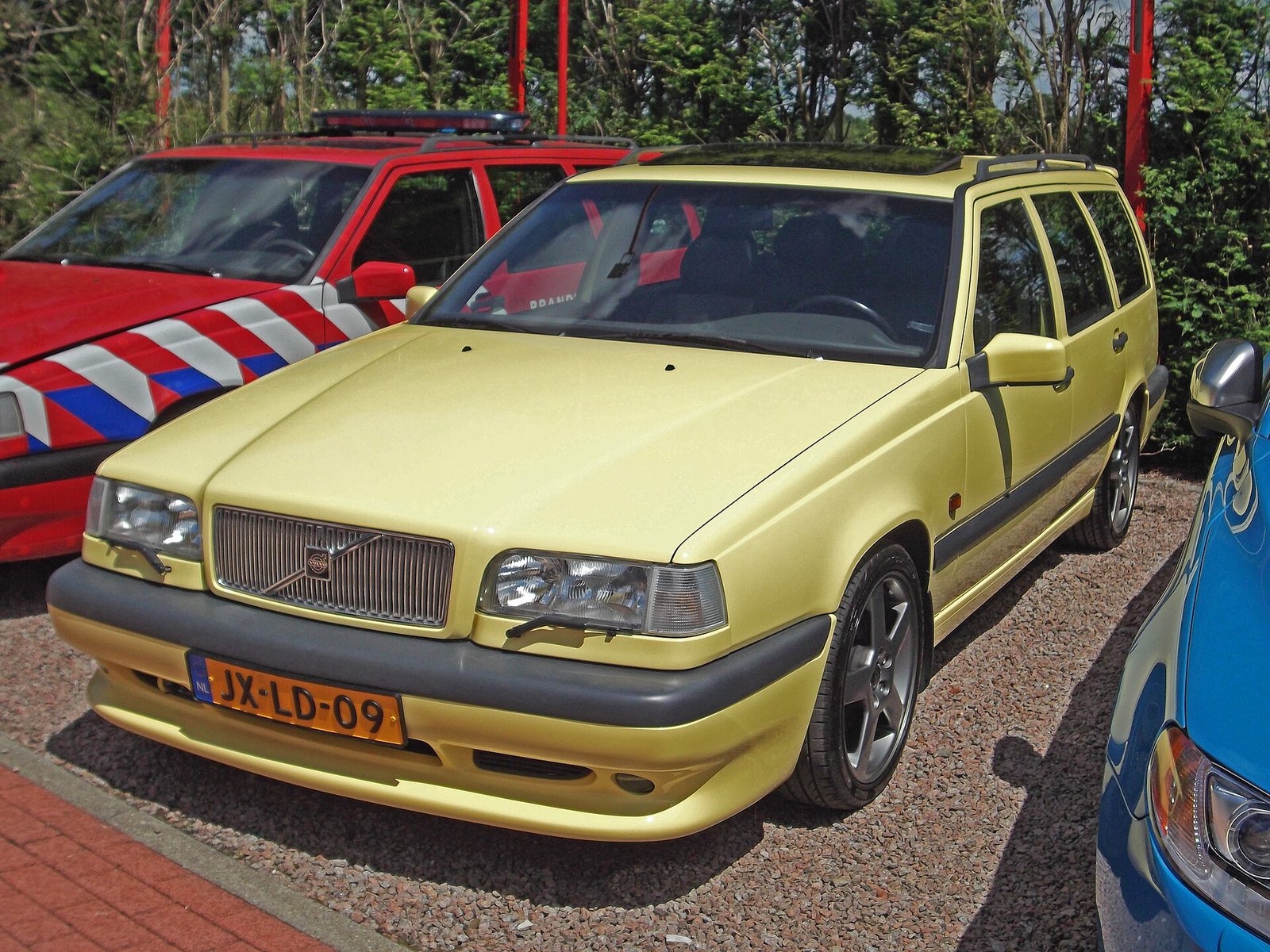
Americans got the Volvo 850 T-5R with one hand tied behind its back. In Europe you could have it with a five-speed manual. Here, it came only with a four-speed automatic. And it still showed up as one of the quickest wagons you could buy in 1995, painted a shade of yellow that made it impossible to ignore in a parking lot full of beige Tauruses.
This is the story of how the safest, squarest car brand on the road built a family hauler that Porsche helped tune, raced a station wagon in the British Touring Car Championship, and turned "Volvo" into a word people said with a grin.
The car that broke Volvo’s own mold
To understand the T-5R, start with the 850. When it arrived in 1991, Volvo had spent decades building rear-wheel-drive bricks with longitudinal engines: the 240, the 740, the 940. Americans bought them by the hundreds of thousands because they never died and because, in a crash, you wanted to be in the Volvo, not the other car.
The 850 threw out the formula. A five-cylinder engine mounted sideways, front-wheel drive, and a semi-independent rear axle called Delta-link that let the rear wheels steer slightly in a corner to keep the car stable. It was Volvo’s first big front-driver, the product of a long, expensive program the company called Galaxy.
It was also a safety story, of course. The 850 launched with SIPS, Volvo’s side-impact protection system, which reinforced the pillars, doors and floor so a side hit spread its energy through the whole body. And in the fall of 1994, by Volvo’s account, the 850 became the first car in the world to offer side-impact airbags, built into the sides of the front seatbacks. If that sounds familiar, it’s the same company that invented the three-point seat belt and then gave the patent away, a story we told in Volvo’s three-point belt.
The engine is the other half of the legend. Volvo’s five-cylinder, with its uneven firing rhythm, is one of the best-sounding engines ever bolted into a family car. The whole story is in our piece on the Volvo five-cylinder.
A station wagon in the BTCC
In 1994, Volvo wanted to shake its image. It went racing in the British Touring Car Championship, a series that was huge in Europe in the ’90s, with Tom Walkinshaw’s TWR team. That part made sense. What didn’t was the car: an 850 wagon.
Not a sedan. A wagon, lined up against BMW, Ford, Vauxhall, Renault and Alfa Romeo, driven by the Swede Rickard Rydell and the Dutchman Jan Lammers, a former Formula 1 driver who had won Le Mans in 1988 in a TWR Jaguar.
Why a wagon? Publicity, pure and simple. Volvo and TWR treated 1994 as a learning year and knew they wouldn’t fight for the title, so they picked the car that would get the most attention. Rydell has said he signed late in 1993 without knowing he’d be racing a wagon, and that if he’d known, he might have hesitated. It wasn’t as dumb as it looked: TWR designer Richard Owen reportedly said the wagon body made slightly less lift than the sedan. The real penalty was weight sitting high and toward the back, which made quick changes of direction harder.
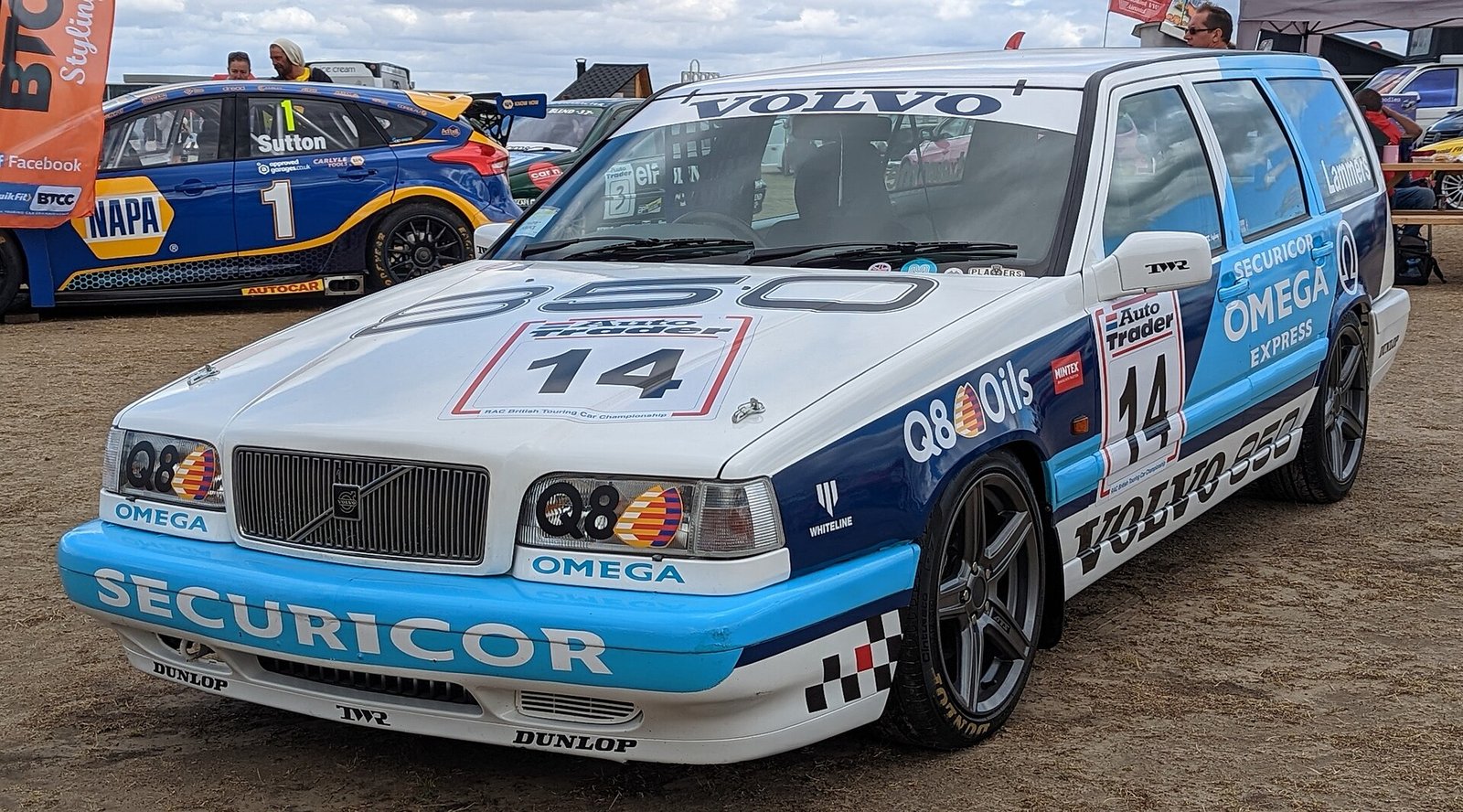
The race engine was a naturally aspirated 2.0-liter five, the maximum the Super Touring rules allowed, making somewhere around 280 to 290 hp depending on the source.
On track, 1994 was modest: a best finish of fifth at Oulton Park, one third-place start, and a mid-table season. In the newspapers, though, nobody came close. The flying Volvo wagon, lifting a wheel over the curbs, is still one of the most famous images the series ever produced.
For 1995 the rules opened up rear wings, which made no sense on a wagon, so Volvo switched to the 850 sedan and got serious. Rydell took 13 poles in 24 races, won four and finished third in the championship, then finished third again in 1996. In 1998, in an S40, he won the title.
Then Porsche picked up the phone
Volvo wanted a road car to cash in on the racing buzz. It started with the 850 T-5, the 225-hp turbo, and brought in Porsche to help with the tuning.
That sounds odd until you remember what Porsche was in the early ’90s. Before the Boxster and long before the Cayenne, it sold far fewer cars and paid a lot of its bills with engineering work for other companies. In the same period it developed the Audi RS2 Avant and assembled the Mercedes 500 E in its own plant. It was very good at this.
Its work on the T-5R focused on engine management: a Bosch ECU with its own calibration and an overboost function. According to period specifications, boost rose from 0.73 to 0.82 bar for up to about 30 seconds with the wastegate held shut. The 2.3-liter five, the B5234T4, went from 225 to 240 hp, and torque rose from 300 to 330 Nm, about 243 lb-ft, between 3,000 and 4,800 rpm while overboost lasted.
Overboost was a very ’90s trick. The computer lets the turbo push harder than the engine could sustain all the time, just long enough to pass a truck or merge onto a highway, then drops back to normal pressure to protect the hardware.
The numbers
- Engine: 2,319 cc inline five, dual overhead cams, 20 valves, turbocharger and intercooler.
- Power: 240 hp.
- Torque: 300 Nm, up to 330 on overboost. Automatic cars: 300 Nm.
- Transmission: five-speed manual or four-speed automatic. The US got only the automatic.
- Drive: front-wheel drive with an open differential, which meant torque steer: floor it, and the wheel tugged in your hands as the front tires fought for grip.
- Performance: 0–100 km/h (0–62 mph) in about 6.9 seconds with the manual and 7.4 with the automatic, with a top speed around 245 km/h, about 152 mph.
- Tires: Pirelli P Zero 205/45R17s, at a time when most family cars rolled on 15s.
For context, the hottest American family sedan of the moment, the Ford Taurus SHO, made 220 hp from its Yamaha-built V6. Volvo had more power, a turbo, a long roof and a dog-sized cargo area.
Yellow, black and green
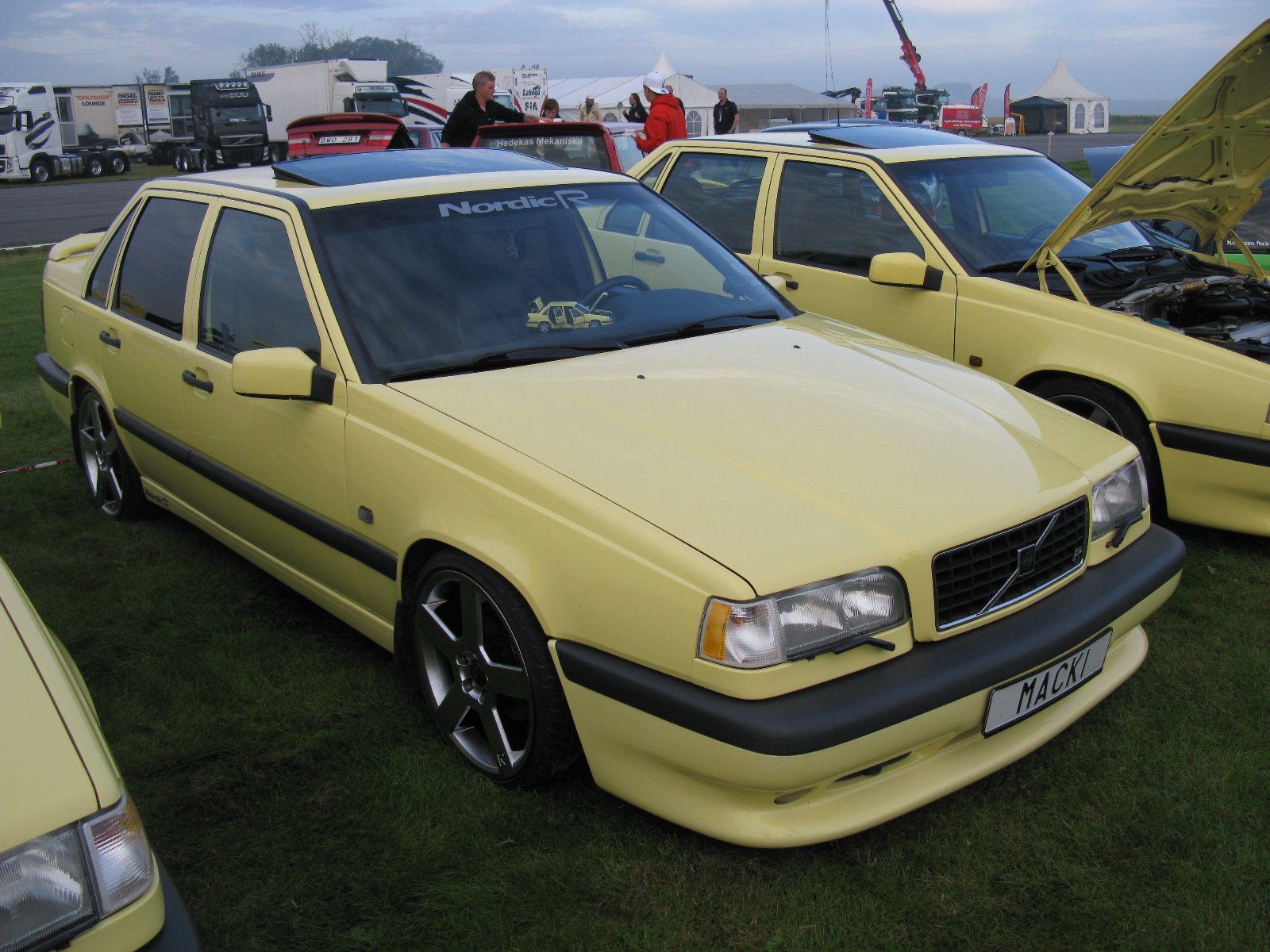
The T-5R launched in Cream Yellow, as a limited run of roughly 2,500 cars. They sold out in weeks. Volvo added a run in black and another in dark olive green metallic.
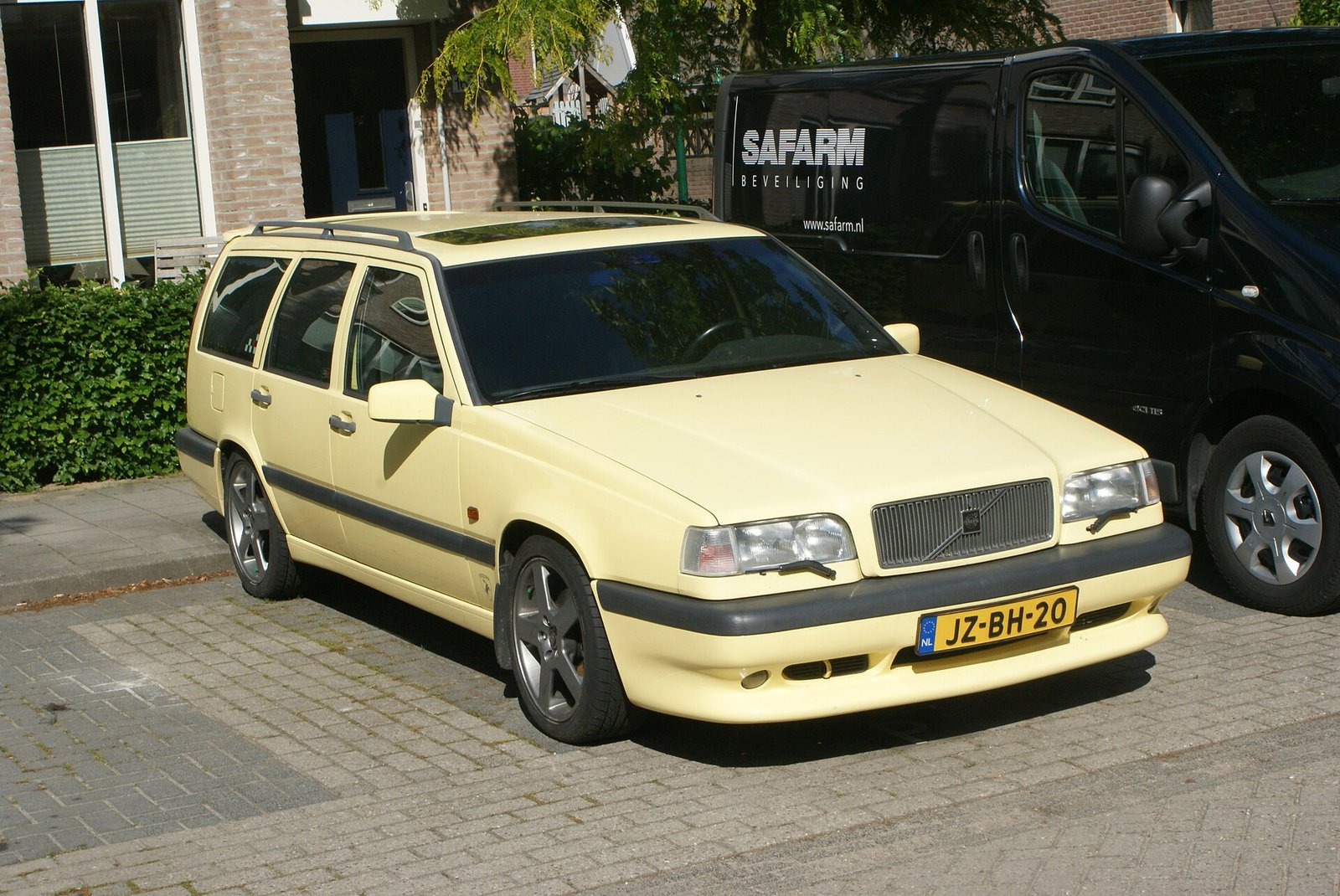
Exactly how many were built is one of those numbers nobody has nailed down. Published totals range from about 5,000 to nearly 7,000 sedans and wagons, and the split by color changes from source to source. What everyone agrees on: green is the rarest and yellow is the one everybody wants. If a seller quotes you an exact, "certified" production figure, be skeptical.
In 1996 the 850 R replaced it, with more power and a less dramatic paint chart. But the yellow one is the car people remember.
A movie star in Spain
Here’s a footnote most American fans have never heard. In Spain, the 850 had a second career on the big screen. As the Spanish site HighMotor recalled for the model’s 25th anniversary, an 850 painted blue with a white stripe across the body, Starsky & Hutch style, was the star car of "Airbag," a 1997 comedy by director Juanma Bajo Ulloa. The film drew more than two million viewers and became one of the biggest hits in the history of Spanish cinema. A square Swedish sedan dressed up as an American TV cop car, in the rowdiest Spanish movie of the decade, is about as good a tribute as the 850 could ask for.
It says something about the car’s reach. In the US it was the sensible choice with a surprise under the hood. In Britain it was the wagon that went racing. In Spain it was a movie car. Very few family sedans get three different reputations in three different countries.
What it was like to drive
It wasn’t a track car and never pretended to be. It was a fast wagon with an attitude.
The five-cylinder builds power progressively. There’s turbo lag, it’s 1995, but it isn’t the old-school kind that does nothing until 3,500 rpm and then tries to rip your head off. Floor it, and 240 hp through the front wheels with an open diff and 205-section tires made the steering wheel squirm. That was part of the fun. The car asked for a little respect, and it rewarded you for giving it some.
The sound is the best part. Not a four, not a six. A gravelly, uneven note with its 1-2-4-5-3 firing order that gets better the higher you rev. The steering had real weight, the body leaned in fast corners without drama, and at the end of the day it was still a Volvo. You could drive 500 miles and get out without a single ache.
Buying one now
The T-5R sits at that point where people have figured out ’90s cars are collectible, but prices haven’t fully exploded. Yellow cars and European manuals command a premium, and clean, unmodified examples are getting harder to find every year.
Compared with the Audi RS2, which has gone to serious collector money, the T-5R is still within reach. They have more in common than people think: both were turbocharged five-cylinder wagons from the mid-’90s, both carry Porsche’s fingerprints, and both were among the fastest ways to move a family and a dog. The RS2 was always exotic and was never sold here. The T-5R was a Volvo you could buy at your local dealer. The market still hasn’t fully caught up with that.
If you find a yellow one with service records, think fast. In the US, a European manual car is old enough to import under the 25-year rule, but make sure it’s genuine before you pay for one.
Why it still matters
The 850 T-5R didn’t try to be something it wasn’t. It didn’t have the exclusivity of a Ferrari, the precision of an M3 or the mystique of a Skyline. It was a Swedish wagon that decided to be fast without stopping being useful, the kind of car that did the school run in the morning and humiliated a Saab 900 Turbo at a light in the afternoon.
Thirty years later it still has more personality than most of the "sport" crossovers on sale today, because it was real: a real engine, real hardware and a real reason to exist. The kind of car we mean when we talk about cars with soul.
The flying brick. Nothing more, nothing less.
Check you’re still alive.
Photos: User3204 (CC BY-SA 4.0); Calreyn88 (CC BY-SA 4.0); nakhon100 (CC BY 2.0); Niels de Wit (CC BY 2.0); Dennis Elzinga (CC BY 2.0). Via Wikimedia Commons.