Renault Gordini — What’s Left of the Sorcerer When the Sorcerer Is Gone
A Name on a Hatchback
You are standing in a Renault dealership somewhere in Europe around 2011. There is a Clio in the showroom. It is blue — not just any blue, but a deep, specific shade called Malte Blue. Two white stripes run across the roof. On the flank, a word: Gordini.
The salesperson tells you it is a special edition. Sporty. Exclusive. You nod. You sign. You drive away in your blue Clio with the white stripes, and you never once wonder who Gordini was or what the name once meant.
This is not your fault. Renault did not exactly go out of their way to explain. But there was a man behind that name — an Italian immigrant who built Formula 1 cars in a Parisian workshop, who beat the Ferrari factory team at Reims with a car held together by willpower and ingenuity, and who was awarded the Legion of Honour by the French Republic for making ordinary engines do impossible things. If you want his full story, we told it here.
The question this article asks is simpler and less comfortable: when Renault puts Gordini’s name on a modern hatchback, is it an act of remembrance or an act of marketing? The answer, as with most things worth asking about, is not clean.
The Original Deal: When Gordini Meant Engineering
The collaboration between Amédée Gordini and Renault began in 1957. After Gordini’s independent racing team went bankrupt trying to compete in Formula 1 against Ferrari, Maserati, and Mercedes-Benz with a fraction of their budgets, Renault’s chairman Pierre Dreyfus offered him a lifeline: a consultancy to develop performance versions of Renault’s road cars.
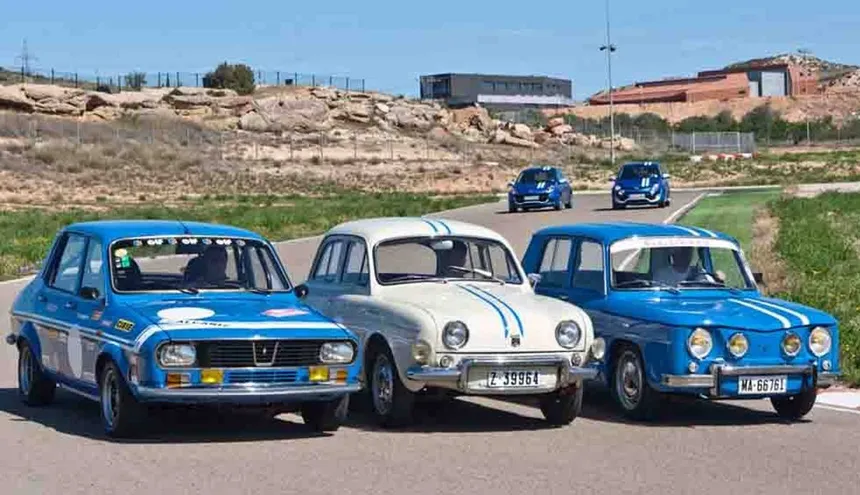
The first product was the Dauphine Gordini — an 845cc rear-engined saloon that Gordini tuned for competition use. It won rallies including the Monte Carlo and the Tour de Corse. Production ran from 1957 to 1967, with roughly 10,000 units built. It was a modest beginning, but it proved that the partnership could work: Renault provided the platform, Gordini provided the alchemy.
Then came the car that changed everything.
The R8 Gordini: The Day the Name Meant Something Real
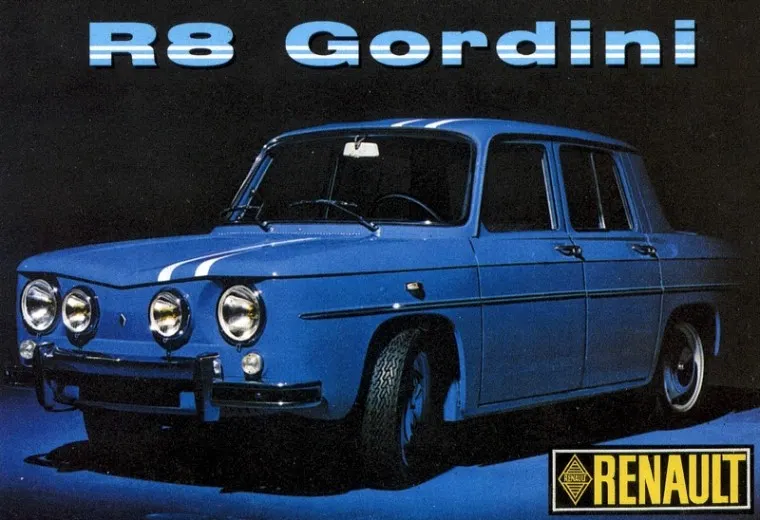
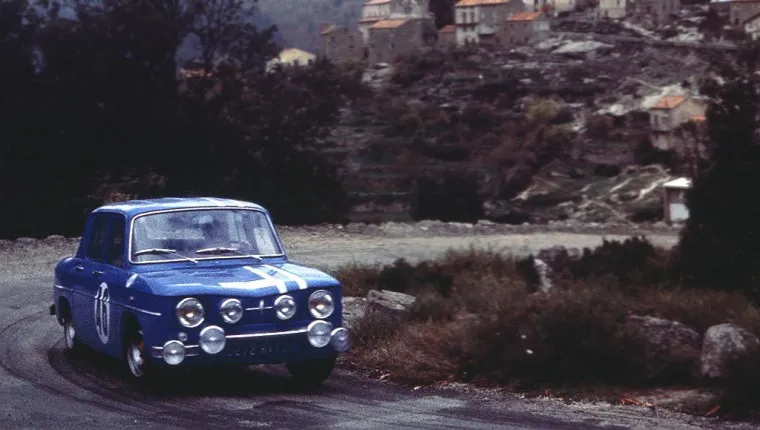
In October 1964, at the Paris Motor Show, Renault unveiled a small blue saloon with two white adhesive stripes. It cost 11,500 French francs and it could do 170 km/h. This was the Renault 8 Gordini, and it was, without exaggeration, the invention of the affordable performance car.
The standard Renault 8 Major had a 1,108cc engine producing 50 bhp. Gordini took that same engine block and applied a cross-flow cylinder head with hemispherical combustion chambers and twin dual-choke 40mm Solex carburettors. The result: 90 bhp — nearly double — from the same displacement. Weight: 853 kg. Four-speed manual. Rear engine, rear-wheel drive, four doors, four-wheel disc brakes.
To understand what this meant in 1964, you need the context of what it was competing against. The Alfa Romeo Giulia Sprint GTA, introduced in 1965, packed a 1,570cc twin-cam four producing 115 bhp in a body that weighed just 745 kg thanks to aluminium panels. It was devastatingly quick. It was also a limited-production homologation special — roughly 500 built — at a price that would make a normal buyer weep. The Mini Cooper S, with its 1,071cc (later 1,275cc) engine and approximately 76 bhp, was a rally weapon but a fundamentally different proposition — smaller, more cramped, more extreme.
The R8 Gordini sat in a space nobody else occupied. Real performance in a practical four-door body at a price the middle class could afford. It was the hot hatch before the term existed, the GTI before Golf, a blueprint that the entire industry would eventually follow.
And it backed up the theory with results. At the 1964 Tour de Corse, R8 Gordinis finished first, third, fourth, and fifth — beating Alfa Romeo Giulia TZs, Lancia Flavias, Ford Falcons, and Porsche 904 Carrera GTSs. Jean Vinatier took the overall win. Pierre Orsini repeated the feat in 1965, and Jean-François Piot did it again in 1966, beating Alfa Romeo GTAs and Porsche 911s. A four-door saloon with a shopping-car silhouette, built by the same man who once raced Simca Cinqs at Le Mans with 568cc engines and won on the Index of Performance. The Sorcerer’s touch.
In 1966, the R8 Gordini 1300 arrived: engine enlarged to 1,255cc, over 100 bhp, a five-speed gearbox, four additional headlamps. Top speed: 175 km/h. That same year, the Coupe Gordini one-make racing series launched — and became the proving ground for virtually every significant French racing driver of the 1970s: Jean-Pierre Jabouille, René Arnoux, Jacques Laffite. The R8 Gordini was not just a car. It was an institution.
If you want another story of someone building something extraordinary from almost nothing during the same era, read our piece on the Pegaso Z-102 — the same spirit, different country, equally improbable.
The R12 Gordini: Same Name, Different Soul
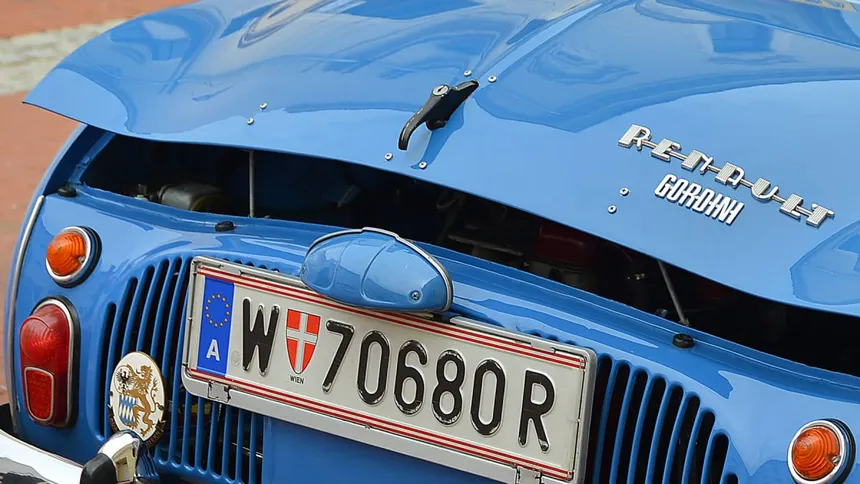
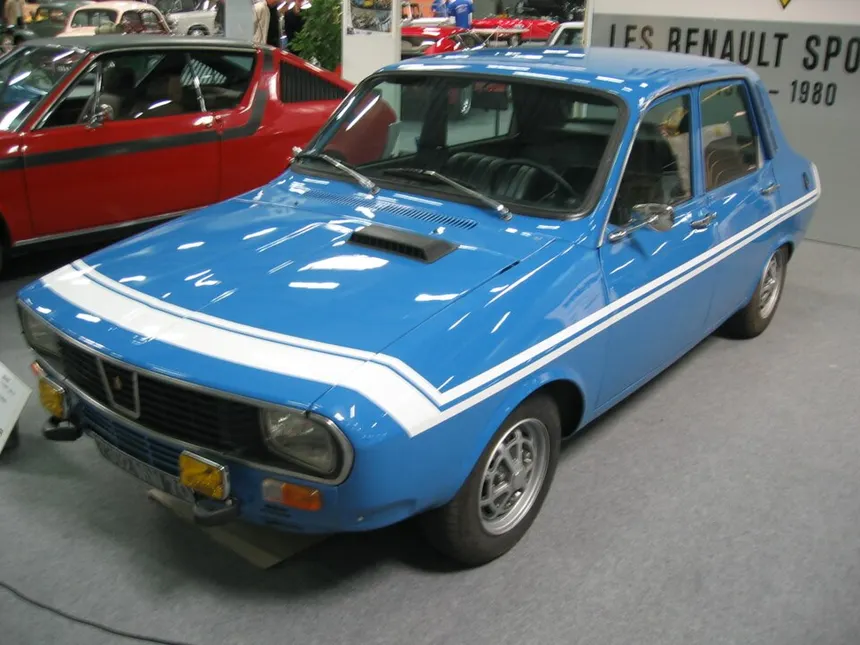
The R8 Gordini ended production in 1970. Its successor, the Renault 12 Gordini, arrived that same year. On paper, it looked like a worthy replacement: a 1,565cc aluminium-block four-cylinder borrowed from the Renault 16 TS, fed by twin Weber 45 DCOE carburettors, producing 113 bhp DIN. Five-speed gearbox, disc brakes all round, 980 kg, 185 km/h. Quick enough.
But the R12 Gordini represented a fundamental shift. The R8 had been rear-engined, rear-wheel drive — odd, characterful, alive in a way that front-wheel-drive cars of the era were not. The R12 was a conventional front-engine, front-drive saloon. Renault struggled to make the front axle cope with the Gordini engine’s output, which delayed the launch and frustrated enthusiasts.
Sales reflected the disconnect. In its best year, 1971, Renault sold 2,225 R12 Gordinis. Total production over four years: 5,188 units. A respectable number, but nothing like the cultural impact of the R8. The R12 Gordini was a competent car. It was not a special one.
The oil crisis of 1973 did not help. Production ended in 1974.
The Fade-Out
After the R12 Gordini, the name lingered but the substance evaporated. At the 1974 Paris Motor Show, the Renault 17 TS was rebadged as the R17 Gordini. Nothing else changed. It was a sticker job designed to fill the gap left by the R12’s departure.
Then came the Renault 5 Gordini — which was actually the Renault 5 Alpine, sold under the Gordini name only in the UK because of trademark conflicts with the Chrysler-Sunbeam Alpine. Same car, different badge depending on which side of the Channel you stood. In Spain it was the Renault 5 Copa, and its turbo version supplied the engine of the Renault 5 GT Turbo.
By the early 1980s, the Gordini name had quietly vanished from the Renault catalogue. No announcement. No farewell. It simply stopped appearing.
This did not mean Renault abandoned performance. The R5 Turbo was one of the most savage homologation specials of its era. The Clio Williams became an instant classic. The Mégane RS set Nürburgring lap records. Renault Sport built a formidable reputation. But none of it carried the Gordini name. For nearly three decades, the Sorcerer’s signature gathered dust.
2009: The Revival That Wasn’t Quite
In November 2009, Renault announced the return of Gordini as an exclusive performance sub-brand. The stated ambition was to mirror what Fiat had done with Abarth: take a historic name, attach it to hot versions of existing models, and create a halo of heritage. Stephen Norman, Renault’s marketing VP, told Top Gear that Gordini would sit alongside Renault Sport. When pressed on how the two brands would differ, he offered a memorably thin distinction: Renault Sport would be yellow, Gordini would be blue.
The Clio Gordini RS launched in 2010. Its specifications: the same 2.0-litre F4R naturally aspirated four-cylinder as the standard Clio RS. Same 200 PS. Same six-speed manual gearbox. Same chassis, same suspension, same brakes. Same 0-100 km/h time of 6.9 seconds, same 223 km/h top speed. The differences? Malte Blue paint, white stripes, two-tone upholstery, Gordini-branded floor mats, a white tachometer face instead of yellow. From May 2011, in several markets including Spain, Renault simply renamed the standard Clio RS as the Clio RS Gordini. No mechanical changes at all.
The Twingo Gordini RS had a 1.6-litre engine producing 133 bhp. Fair enough for a city car. But the non-RS Twingo Gordini — which also existed — was available with a TCe 100 engine putting out 100 bhp, and even with an 85 bhp diesel. An 85 bhp diesel Gordini. The name of a man who extracted Grand Prix performance from road car engines, applied to a car with an 85 bhp oil-burner under the bonnet.
Chris Harris, reviewing the Clio RS around this period, observed that Renault Sport’s own cars were already so good that there was no room for a second performance sub-brand to add anything meaningful. He was right. The Gordini revival offered nostalgia as trim, not engineering as philosophy. By around 2016, the name had quietly faded from the range again.
The Uncomfortable Question
Does it make sense to use the name of a man who built Formula 1 cars in a garage to sell cosmetically enhanced versions of mass-market hatchbacks?
There are two honest answers, and they contradict each other.
The first says yes. Without the modern revival, however imperfect, Gordini’s name would be known only to motorsport historians and French car enthusiasts of a certain age. Every person who sees the name on a Clio and looks it up discovers a story that deserves to be told. An imperfect tribute is better than none. Fiat’s Abarth revival is technically even further removed from Carlo Abarth’s original work, and yet the name survives, the history gets told, and that has value.
The second says no. Gordini’s entire identity was transformation — taking something ordinary and making it extraordinary through mechanical intervention. A car that differs from the standard version only in paint and upholstery is the precise opposite of what Gordini did. It is honouring the name by doing the thing the name’s owner would never have done. If Amédée Gordini had been given a Clio RS and told to make it a Gordini, he would have opened up the engine. Not the paint catalogue.
There is a third position, and it may be the most accurate: Gordini’s real legacy within Renault does not carry his name. The Usine Amédée Gordini at Viry-Châtillon — where the engineers he trained developed the turbocharged V6 that took Renault to Formula 1 in 1977 — that is legacy. The Coupe Gordini series that trained a generation of world-class drivers is legacy. The concept of the affordable performance car that the R8 Gordini pioneered is legacy, visible in every hot hatch that followed it.
A blue paint option on a 2010 Clio is something else. Not offensive. Not meaningless. But not the same thing.
What Survives
Names outlive people. Sometimes with dignity, sometimes as hollow shells, sometimes as something in between that depends entirely on what the reader knows and what they choose to care about.
The mid-twentieth century European ecosystem of passionate, independent builders — the world that produced Gordini, that produced Ferruccio Lamborghini, whose Miura we have written about — was a place where a name on a car meant that a specific human being had put their hands inside the engine. That world is gone. Names now belong to corporations, and corporations use names the way corporations use everything: efficiently, profitably, and without sentiment.
Amédée Gordini was born in 1899 near Bologna and died in 1979 in Paris. Between those dates, he did more with less than almost anyone in the history of the motor car. His name is still in the Renault catalogue, intermittently, usually attached to something blue with white stripes. Whether that constitutes remembrance or decoration depends on whether anyone bothers to find out what the name once meant.
You are now someone who knows. What you do with that is up to you.
Check you’re still alive.