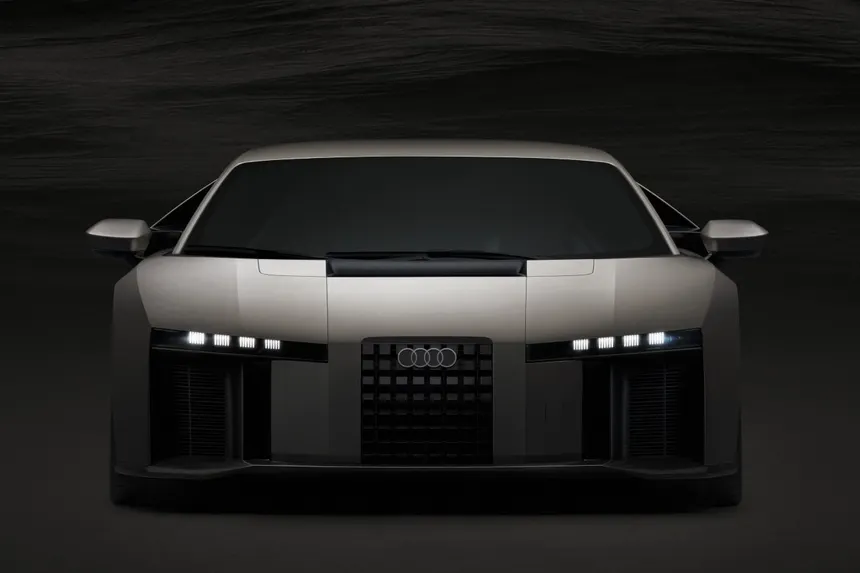
Audi Nuvolari: The V8 That Buries the Electric Promise
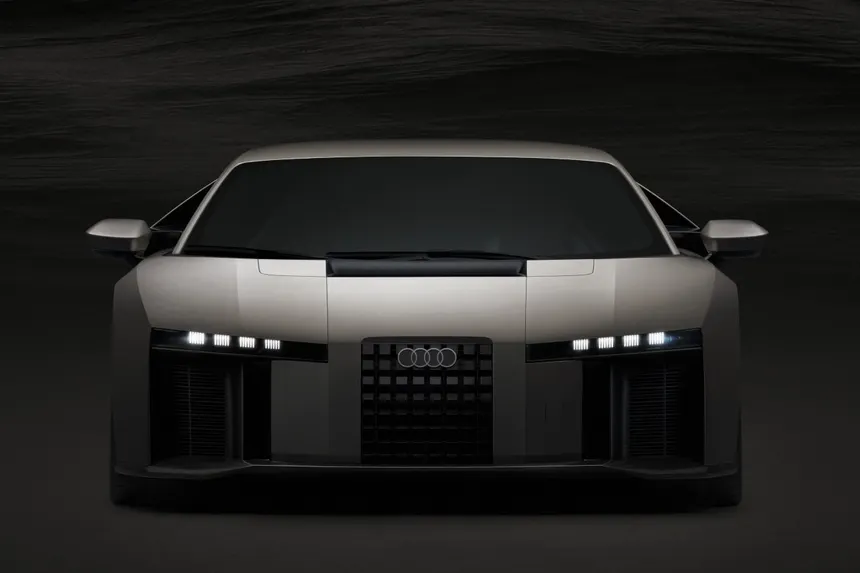
Here is a number Audi would rather you forgot: 2021. That was the year Ingolstadt told the world it would launch only electric cars from 2026 onwards. No new combustion. Full stop. The four rings were going battery-only, and anyone clinging to pistons was living in the past.
It is 2026. And the car Audi has just dropped on the table, the most powerful and fastest production model in its entire history, is powered by a 4.0-litre twin-turbo V8 that spins to 10,000 rpm. It is called the Nuvolari. And it drinks 14.7 litres every hundred kilometres.
Let that settle for a moment. The brand that vowed to bury the combustion engine has made a combustion engine its flagship. This is not a slip. This is not a transitional model that sneaked onto the calendar by accident. This is the face Audi chose to present to the world this year. It is a statement of intent. And the statement, in large print, reads: we were wrong, but we are not going to say it like that.
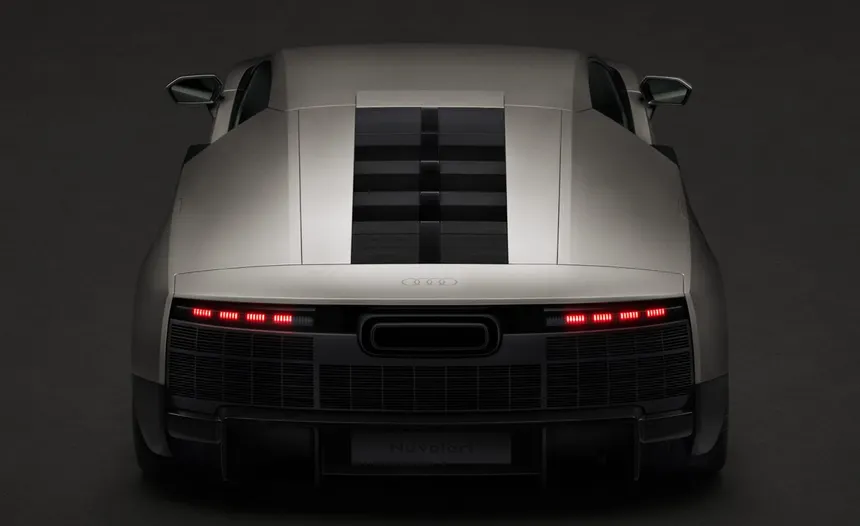
Under the skin, no make-up
Let us go to the numbers, because numbers do not lie. The Nuvolari runs a 4.0-litre twin-turbo V8 producing 588 kW. Audi calls that 800 horsepower, though the precise conversion lands closer to 789. Bolted to that are three axial-flux electric motors, 110 kW apiece. Two sit on the front axle, the third lives between the V8 and the gearbox. The lithium-ion battery holds 7.3 kWh gross. Add it all together and you get a 736 kW system. One thousand and one PS.
The figure that truly tells the story is that 10,000 rpm redline. That is not a road-car number. That is a motorsport number, the kind reserved for engines that live hard and rev harder, not for something you park in the garage. Audi put it there on purpose, because it knows that scream at ten thousand is what raises the hair on your neck, and no electric motor gives you that no matter how many kilowatts you pour in.
The pace is exactly what you expect from this league: zero to 100 km/h in 2.6 seconds, zero to 200 in 6.8, and a top speed beyond 350 km/h. Just 499 will be built, with deliveries from the first half of 2027. And a drivetrain detail worth grasping: the two front motors drive the front axle with torque vectoring while the V8 hammers the rear. That is the quattro system reinvented. It is no longer a mechanical box splitting torque, it is electronics getting ahead of the road. Audi calls it quattro predictive ride, and it reads steering angle, yaw, acceleration and grip in real time to distribute torque, braking and aero before anything happens, not after. It sounds like a marketing line, but the idea is sound: anticipate instead of react. Chris Harris will have a field day finding out whether it actually works on a wet B-road.
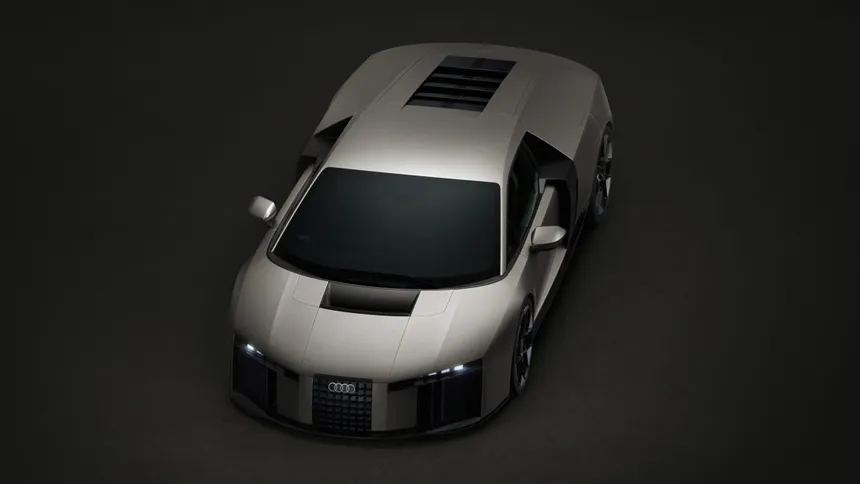
The Italian cousin nobody mentions
Here is the first nuance the press release tiptoes around. The Nuvolari was not born from scratch in Ingolstadt. It shares its fundamental architecture with the Lamborghini Temerario: the same 4.0 V8, the same three-motor layout, the same 730 Nm from the combustion block. Both sit under the Volkswagen Group umbrella, so parts-sharing surprises nobody. Audi owns Lamborghini. Both generations of the R8 were built on a Lambo, the Gallardo first, the Huracán after. This is house tradition.
What does deserve a raised eyebrow is what comes next. The Nuvolari does not merely share mechanicals with the Temerario, it will be partly assembled at Lamborghini itself. And the German starting price is 600,000 euros. The Temerario coupé opens at around 307,500 euros in Europe. Do the maths. You are paying close to double for a car that shares its engine, its hybrid layout and part of its production line with its brother from Sant’Agata.
What justifies the gap? Audi will tell you the Nuvolari delivers more: 1,001 horsepower against the Temerario’s 920, a revised braking system, the quattro predictive ride the Lambo lacks, and a chassis-and-powertrain rework so it feels Audi and not Italian. All true. The combustion block makes the same output in both, the 588 kW and 730 Nm are identical; the total power difference comes from squeezing more out of the electric side. In other words, the extra muscle is supplied by the electric motors, not the V8. Curious, in a car sold as the return of petrol.
And here a notion needs clearing up, mine first of all. The Nuvolari is not a bare V8. It is a plug-in hybrid, like almost everything sold in this league today. Those 7.3 kWh are enough to roll on electric power over short distances, just enough to leave the garage and crawl through town without firing the combustion engine. You will not cover real ground that way, it is a small battery in a heavy car, but technically it can move without petrol for a good chunk of daily use. Calling it “a V8 and nothing else” would be selling you a line. It is a V8 on an electric crutch, exactly like the Temerario, like the Ferrari 296, like half the market.
But be clear about what you are buying. You are paying the premium for the four rings, for the exclusivity of 499 units, and for a different body. The essence, the heart beating at ten thousand rpm, is the same one beating in the Lamborghini that costs a great deal less. That is not something they will tell you in Antibes with the clarity you are reading here.
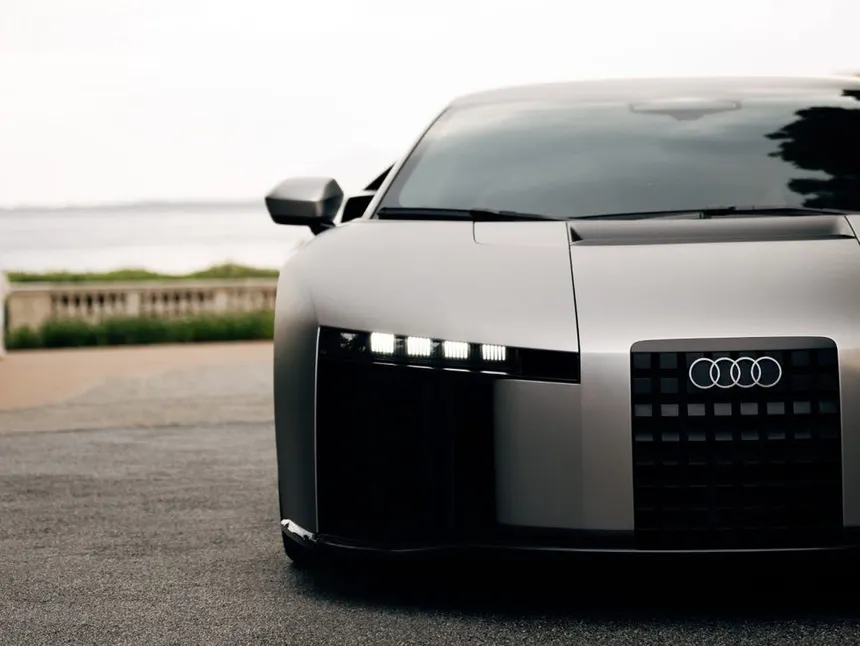
The battery lie it dare not confess
Now the main course. Because the Nuvolari is a serious machine, no argument there. A thousand horsepower, carbon fibre, active aero, technology lifted from Formula 1, the very championship Audi enters as a works team this year. As a halo car it does its job: we talk about it, we write headlines, the brand gets back a shine it had lost for a while.
The problem is not the car. The problem is what the car gives away.
Five years ago, Audi announced it would launch only electric cars from 2026 in its core markets. It said it with the solemnity of a signed brand pledge. True, it left a door open to keep building combustion where electric demand fell short, and by 2023 and 2024 it had already started softening the script. But softening the small print is one thing, and quite another for your flagship launch of 2026, the image you want to be remembered by this year, to be a V8 that drinks nearly fifteen litres per hundred kilometres. This is not a transitional plug-in that slipped through. They chose this as their face.
The galling part is that they could have done the opposite and pulled it off. The RS e-tron GT is one of the best electric performance cars on the market right now. Audi has the technology. It has the track record. It has the muscle to build the definitive electric hypercar and silence the doubters. And it chose to go backwards. It decided the image it sells, the one that puts the real money of the wealthy on the table, is still an engine that roars and smells of petrol.
And it is not just Audi. McLaren, which also swore electrification, keeps revealing combustion cars. The whole industry that five years ago was selling you the plug-in apocalypse now softens the script, slots hybrids in everywhere, and saves pure battery power for the hatchbacks and the family SUVs. For the car that thrills you, the one that makes you dream, the one they put in the window, they still reach for pistons.
Why? For the reason we have been saying from the workshop for years, the one nobody in a boardroom wanted to hear: because the person paying 600,000 euros for a car does not want silence. They want the revs. They want the noise. They want that scream at ten thousand that tells them there is a living beast behind them and not a fast appliance. Combustion is not dying because the 2021 promise was a toast to the gallery, a pose to look good in the headlines of that moment. And now, with the car in front of us, the pose collapses on its own.
What stings is not that Audi built a V8. What stings is that for five years they lectured us about the electric future while secretly preparing the biggest petrol engine in their history. That the speech was for show and the money was for the pistons. That is what hurts. Not the car. The face.
A name that turns more than the engine
There is one last layer worth scratching, because it is pure irony. Nuvolari is not a new name at Audi. Tazio Nuvolari was one of the greatest drivers of the 1930s, the Italian who raced for Auto Union, the brand from which today’s Audis descend. Ferdinand Porsche once called him the greatest driver of the past, the present and the future. Honouring that name with the most powerful car in your history makes perfect sense, right as you enter Formula 1.
But there is a detail. Audi already used the Nuvolari name in 2003, on a concept shown at Geneva. That one was a front-engined grand tourer, a twin-turbo V10, an elegant car that never reached production and ended up on display at company headquarters. Its real legacy was aesthetic: that face, that grille, defined the design of the A4 and A5 that followed. The 2003 Nuvolari concept led to no supercar. It led to a family saloon.
So the name now crowning Audi’s wildest car actually comes from a concept that ended up as an A5. The badge has turned more laps than the V8 itself. And recycling a label with heritage to dress a car that is, underneath, half a Lamborghini, has suited Audi perfectly. Good marketing. But marketing all the same.
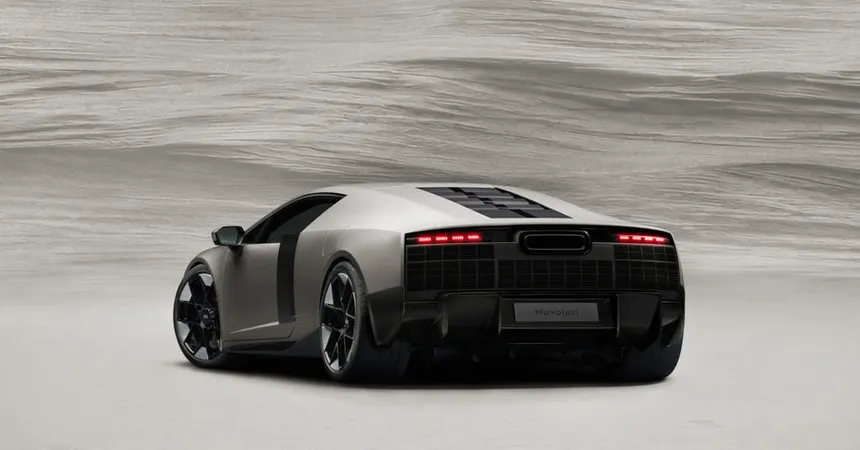
What is left when you switch off the engine
The Nuvolari is an extraordinary car. Do not doubt it for a second. A thousand horsepower, F1 technology, a gorgeous carbon body and a V8 that sings at ten thousand. Hear it go past and your skin will crawl, and that is worth more than any spec sheet.
But the Nuvolari is not just a car. It is a confession. It is Audi admitting, without saying it in words, that combustion was never dead, that the 2021 promise was worthless paper, and that when you have to put a car in the window for the world to drool over, you plug nothing in: you fire up a V8 and let it roar.
For those of us who have spent a lifetime with grease on our hands, that comes as no surprise. We knew. What we did not expect was to see it confessed so brazenly, with 1,001 horsepower and a 600,000-euro price tag.
Combustion is not dying. It has just put on a face. And what do you know, the face belongs to Audi.
Bloody marvellous.
Check you’re still alive.