McLaren: Sixty Years of Building Cars That Hurt, From a Limp in Auckland to the Top of Formula 1
Top Gear’s Chris Harris once said that the McLaren F1 is the only road car that has ever genuinely scared him. Not in the way a Lamborghini Diablo scares you with its switches and its truculence, but in the way a wild animal scares you when you realise it has decided to stop pretending you are in charge.
That is McLaren in a sentence. A company whose machines have always been a step ahead of the human who paid for them. A company whose entire history runs on a single principle: build the car the engineer wants, and let the driver figure out how to live up to it.
And the engineer behind it all was a boy from Remuera, Auckland, who could not walk properly.
The kid with the limp
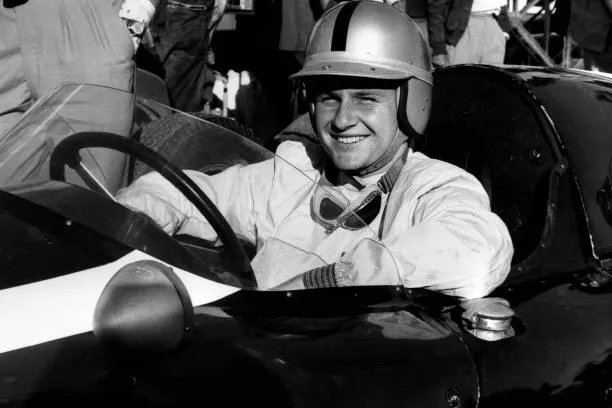
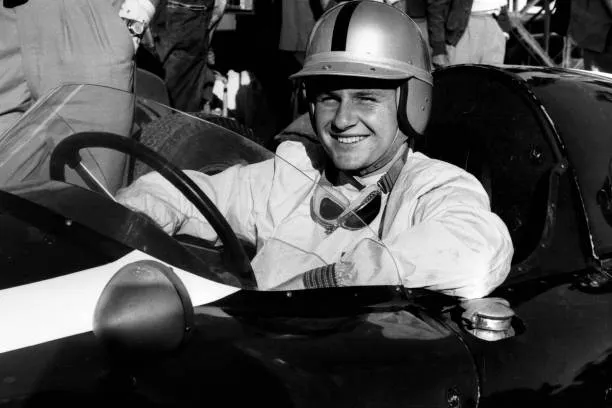
Bruce Leslie McLaren was born on 30 August 1937 to Les and Ruth McLaren, who ran a service station and workshop on Remuera Road in Auckland. The family lived in a flat above the petrol pumps. Les raced motorcycles and later sports cars. Bruce was born into oil, basically.
At nine years old, he was diagnosed with Legg-Calvé-Perthes disease, a childhood hip disorder that left him in traction for months, in a wheelchair for nearly two years, and on crutches after that. He recovered, but his left leg ended up shorter than the right and he walked with a limp for the rest of his life. Every single thing he did from that point onwards, he did with a body that did not quite work the way other bodies worked.
He started racing at 14. A hill climb in his father’s restored Austin 7 Ulster. By 22 years and 80 days he had won the 1959 United States Grand Prix at Sebring for Cooper, making him the youngest Formula 1 race winner in history — a record that stood for 44 years until Fernando Alonso broke it.
This is the part that matters: McLaren the marque exists because a kid who could not run properly decided he was going to outwork everyone with two functioning legs. And he did.
The shed in New Malden
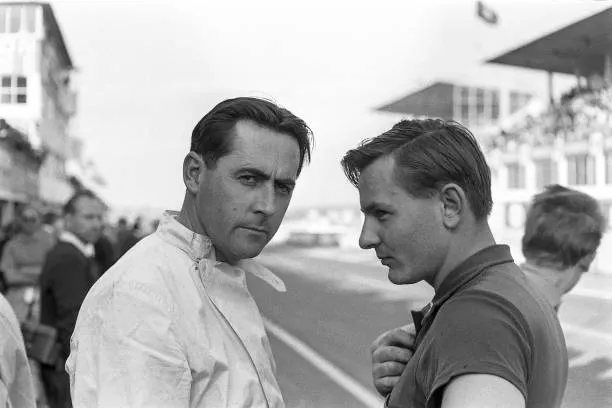
After winning Monaco in 1962 and finishing third in the championship, Bruce did the unthinkable. He looked at Jack Brabham, who had founded his own team while still driving, and decided to copy him. In September 1963 he founded Bruce McLaren Motor Racing Ltd with his wife Patty and journalist Eoin Young.
The first headquarters was a machinery shed in New Malden, southwest London. Dirt floor. No money. By mid-1964 they had moved to a 2,000-square-foot building in Feltham, where Bruce, with stylist Tony Hilder, designed the M1A, the first car to wear the McLaren name. A Group 7 sports car built around an Oldsmobile-derived 3.5-litre Traco V8. It won at Mosport in Canada in June 1964, almost immediately.
The real masterpiece, though, was the M6A of 1967. While the Formula 1 programme stalled over engine politics — Bruce had tried the Indy Ford, an Italian unit from Serenissima, and finally settled on the BRM V12, which was a nightmare — the team used the spare time to build a Can-Am beast.
Can-Am was the American series for unrestricted Group 7 cars. No rules to speak of. Huge V8s, open cockpits, slick tyres, a helmet between you and the void. The kind of racing Mario Andretti would later describe as “purely insane.” Bruce won the 1967 championship. His teammate Denny Hulme, another Kiwi who had just won the 1967 F1 World Championship with Brabham, won 1968 in the M8A. In 1969 the M8B won every single race of the championship — eleven from eleven. The American press called it “The Bruce and Denny Show” and the name stuck.
Five straight Can-Am titles between 1967 and 1971. McLaren made its name in America before it made its name in Europe.
June 1970: Goodwood
Bruce was testing the M8D, his 1970 Can-Am weapon, at Goodwood Circuit in Sussex on 2 June 1970. The M8D had a rear bodywork section hinged to lift up for engine access. At around 170 mph (roughly 275 km/h), that body section detached. The car lost rear downforce instantly. It speared off the track and slammed into a reinforced concrete flag marshal’s platform. Bruce was killed instantly. He was 32 years old.
A piece of bodywork — not the engine, not the chassis, not the driver — killed the founder of the company that built the bodywork. Read that twice.
The team buried him at Waikumete Cemetery in Auckland. Then they went back to the workshop and kept building cars. “For Bruce”, they said. Denny Hulme, Teddy Mayer, Tyler Alexander and Patty McLaren ran the team. That decision — to keep going — is why McLaren still exists today.
Fittipaldi, Hunt, and the Cosworth years
Three and a half years after Bruce’s death, in 1974, McLaren won its first Formula 1 World Constructors’ Championship with the M23 and a Brazilian named Emerson Fittipaldi at the wheel. The 1972 World Champion delivered the team’s first crown. James Hunt followed in 1976 with the Drivers’ title, beating Niki Lauda by one point in a season Hollywood would eventually turn into Ron Howard’s Rush. If you have not seen it, watch it. The drama is real, the Lauda burn is real, the rain in Fuji is real.
After Hunt, the well went dry. Three and a half years without a Grand Prix win. Marlboro, the team’s main sponsor, started looking for new management.
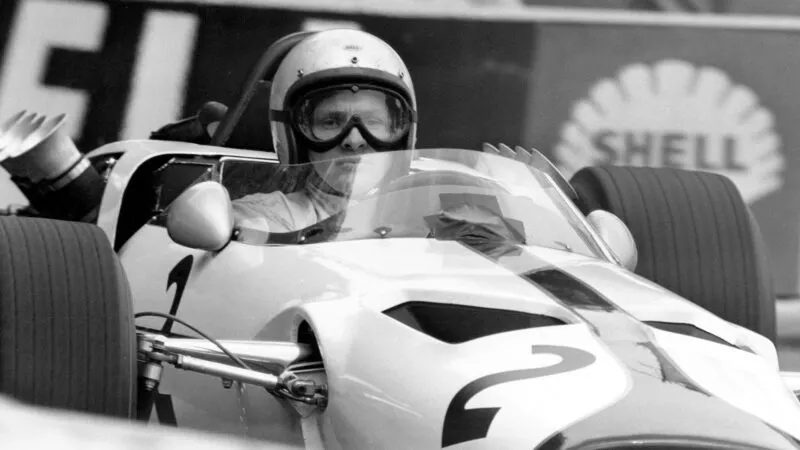
December 1980: enter Ron
Ronald Dennis, born in Woking on 1 June 1947, had served his apprenticeship as a Cooper mechanic in 1966 working alongside Jochen Rindt, followed Rindt to Brabham in 1968, and stayed with Sir Jack Brabham when Rindt moved to Lotus. He founded Rondel Racing in 1972, Project Three in 1975, and Project Four in 1976 — winning British F3 titles and the 1980 Procar BMW M1 championship with a returning Niki Lauda.
Marlboro engineered the merger. On 18 December 1980 Bruce McLaren Motor Racing and Project Four became McLaren International. Valuation: £3 million. Headcount: fewer than 100.
The moment Ron took charge, he hired John Barnard and told him to build something nobody had ever built: a Formula 1 monocoque made entirely from carbon fibre composite. The chassis was actually manufactured by Hercules Aerospace in Salt Lake City. The car was called the MP4/1 — Marlboro Project 4, model one — and John Watson won the British Grand Prix in it in 1981. First McLaren win in three and a half years. First-ever carbon-fibre monocoque in Formula 1. Every grand prix car built since 1981 owes its existence to that chassis.
Ron then went after Mansour Ojjeh of the TAG Group to fund a Porsche-built turbocharged V6. Niki Lauda came out of retirement. Alain Prost joined. In 1984 McLaren won 12 of 16 races. Lauda beat Prost to the Drivers’ title by half a point. The team won the Constructors’. The shed in New Malden was a distant memory.
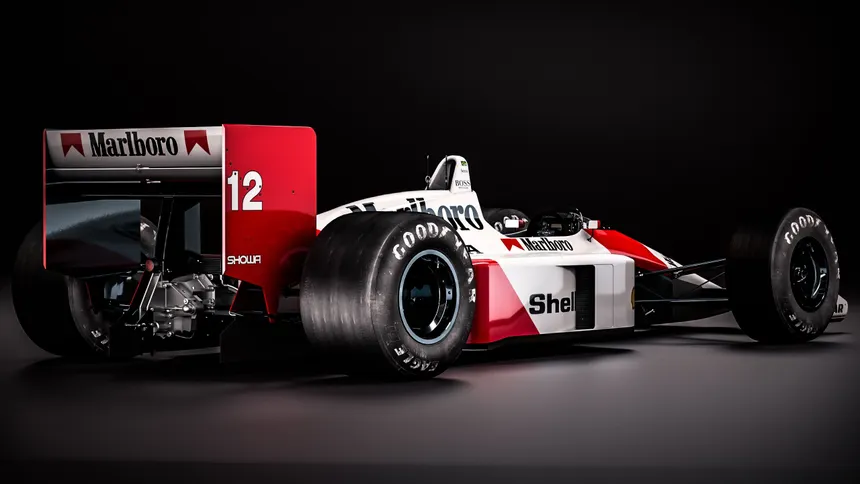
MP4/4: the most dominant season in F1 history
- Ron signed Honda as engine supplier. He convinced Ayrton Senna to leave Lotus and pair him with Prost. Two of the greatest who ever lived, in the same garage.
The car that resulted — designed by Gordon Murray and Steve Nichols — was the MP4/4. What it did in 1988 has never been repeated.
Fifteen wins from sixteen races. Fifteen pole positions. Ten one-twos. 1,003 of 1,031 race laps led. The only defeat came at Monza, when Senna collided with backmarker Jean-Louis Schlesser two laps from home, after Prost had suffered a rare engine failure. At Imola the MP4/4 was 3.3 seconds per lap quicker than anything else on the grid in qualifying. The Constructors’ was clinched in Belgium with five races still to run. Final points total: 199, more than triple Ferrari’s.
Senna took his first title. Prost the runner-up. The civil war between them — Suzuka 1989, Suzuka 1990, the press, the politics — became the greatest sporting soap opera of the late twentieth century. Senna won three titles with McLaren (1988, 1990, 1991). Prost added two (1985, 1986) plus the disputed 1989 crown.
Häkkinen, Hamilton, Spygate, and the long wait
Honda left after 1992. Senna left for Williams in 1994 and was killed at Imola that May. The team tried Peugeot. Then Mercedes from 1995. Then came Mika Häkkinen, the quiet Finn who survived a catastrophic 1995 Adelaide crash and came back from the edge to win back-to-back World Championships in 1998 and 1999 in the MP4-13 and MP4-14. Constructors’ in 1998. Pure dominance.
Then came the dry years. And these deserve their own articles — each one of them — so what follows is the headline reel, nothing more.
Kimi Räikkönen got painfully close in 2005 with the MP4-20, the fastest car of the grid that year, undermined by mechanical fragility. 2007 delivered Spygate — a McLaren engineer found in possession of confidential Ferrari technical data. The penalty: a $100 million fine, the largest in sporting history, and exclusion from the Constructors’ Championship that season. Inside the team, the Alonso-Hamilton civil war: the Hungarian Grand Prix flashpoint, the locked tyres in the pit lane, the radio static, the title decided by a single point. 2008 brought Hamilton’s only McLaren title, stolen on the last corner of the last lap at Interlagos. Then sixteen years of wandering in the desert.
Each of those headlines — the MP4-20’s wasted year, Spygate, Alonso versus Hamilton, Brazil 2008 — will open its own chapter on this site. Treat the paragraph above as a contents page, not a summary.
Until 2024. Lando Norris finished ahead in Abu Dhabi, and McLaren won the Constructors’ for the first time in 26 years — the longest gap between titles in F1 history. In 2025 Norris and Piastri repeated in Singapore with six races to spare. Norris took his first Drivers’ title.
McLaren has now won 10 Constructors’ Championships and 13 Drivers’ Championships. Only Ferrari is ahead. McLaren remains the only team to have completed the Triple Crown of Motorsport — winning the Monaco Grand Prix, the Indianapolis 500 (1972, 1974, 1976) and the 24 Hours of Le Mans (1995) as a constructor.
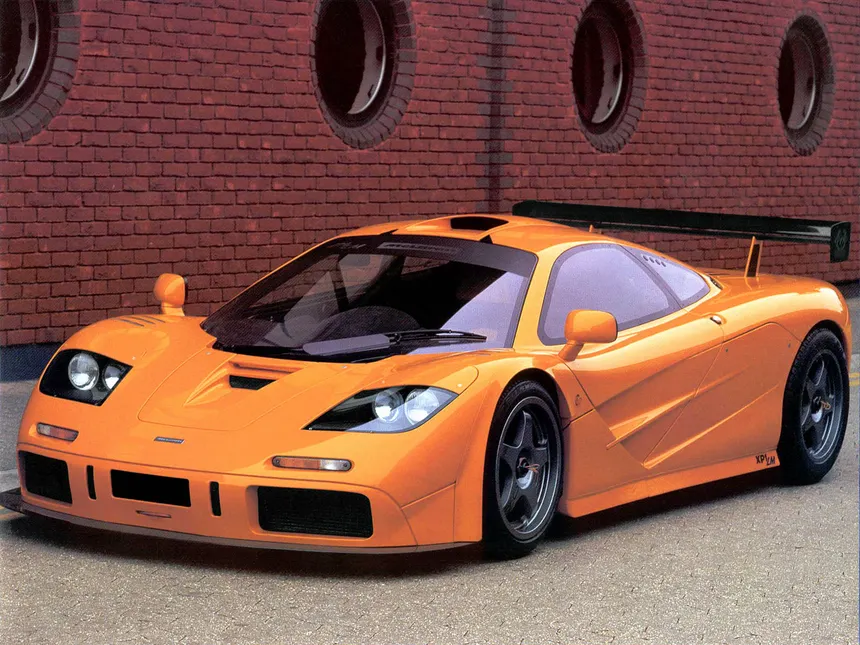
The road cars: from F1 to W1
This is the point where the timeline doubles back on itself. Because while all of the above was unfolding on the racetrack, McLaren had quietly opened a second front. And that second front began long before Spygate, before Häkkinen, in fact almost the same year Senna was lifting his third world title.
Ron Dennis founded McLaren Cars in 1989 with a single brief: build the greatest road car in the world. He gave the project to Gordon Murray. The result was the McLaren F1 of 1992. A 6.1-litre BMW V12. 627 bhp. Central driving position. Gold-lined engine bay. Held the production-car top speed record for years — 240.1 mph (386 km/h) with Andy Wallace in 1998. 106 cars built. Still the benchmark every road car is measured against. You can find the full F1 article elsewhere on this site.
After the F1, the road-car project went quiet. McLaren collaborated with Mercedes-Benz on the SLR McLaren in the early 2000s, but no independent McLaren road car appeared until McLaren Automotive was re-established in 2010. The MP4-12C of 2011 was the reboot: 3.8-litre twin-turbo V8 M838T, carbon-fibre MonoCell, ProActive Chassis Control hydraulic suspension. New rules, same philosophy: engineering first, marketing later.
What followed became the Ultimate Series:
- McLaren P1 (2013-2015): the first hybrid hypercar of the Holy Trinity alongside the Ferrari LaFerrari and Porsche 918 Spyder. 3.8 V8 plus a 132 kW electric motor for a combined 903 bhp. Production capped at 375 units. Spiritual successor to the F1. Designed by Frank Stephenson.
- McLaren Senna (2018-2020): the tribute to Ayrton. 800 PS from the M840TR V8. Just 1,198 kg dry, the lightest McLaren since the F1. 500 cars built. 800 kg of downforce at 155 mph. Jeremy Clarkson said it had rewritten the supercar rulebook on The Grand Tour. He was not wrong.
- McLaren Speedtail (2020-2021): the F1’s conceptual heir. Central driving position. Hybrid powertrain producing 1,050 PS. Top speed 250 mph (403 km/h). 106 cars — the same number as the original F1, deliberately.
- McLaren Elva (2020-2021): an open roadster with no windscreen. 815 PS. 149 units. For people who consider weather a personal opinion.
- McLaren Solus GT (2023): track-only. Naturally aspirated 5.2-litre V10, Judd-derived, 829 bhp at 10,000 rpm. 25 units. Started life as a 2017 Gran Turismo Sport concept and McLaren just built the bloody thing for real. Bruno Senna was the development driver.
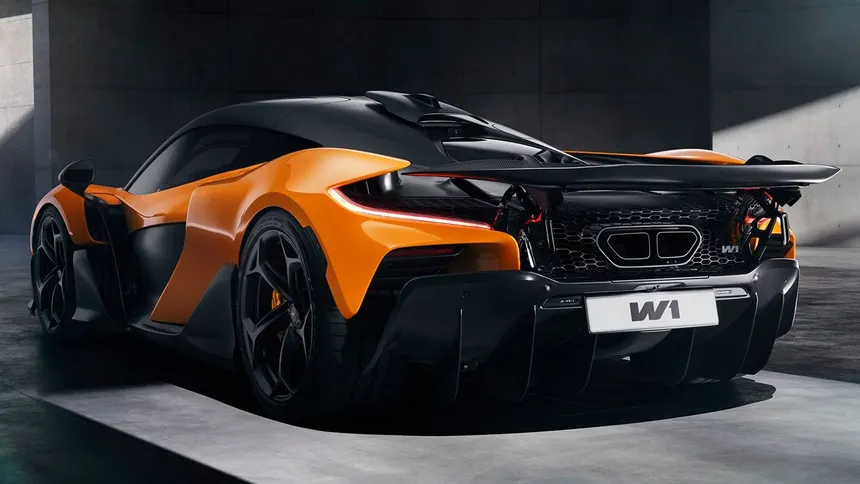
- McLaren W1 (2025): the latest. 1,258 bhp from the MHP-8 4.0-litre twin-turbo V8 paired with a 347 bhp e-module. Rear-wheel drive only — McLaren refused to compromise. Aerocell monocoque. 1,399 kg dry. 399 units, all allocated. Launched on the 50th anniversary of McLaren’s first F1 Constructors’ Championship. The “W” stands for World Champions.
What this hub opens up
This piece is the aerial photograph. Every name dropped here will get its own article. Bruce and the limp. The M6A and the Bruce-and-Denny Show. The F1 GTR winning Le Mans in 1995 at the first attempt (already covered on this site). MP4/4 and the most dominant season in motorsport history. Spygate and the Alonso-Hamilton fallout. The P1 opening the hybrid era. The Senna and its aerodynamic extremism. The Speedtail picking up where the F1 left off. The Solus GT jumping out of a PlayStation into real asphalt. The W1 closing the circle. And in the background: concept cars, MSO commissions, one-offs, the tuners who reinterpret the marque.
Sixty years. A company that started in a dirt-floored shed in New Malden and now operates from the McLaren Technology Centre in Woking — a Norman Foster design opened by Queen Elizabeth II on 12 May 2004. The main building is a semi-circular curved-glass structure facing a 50,000 cubic metre artificial lake. The lake is not decoration: it completes the building’s geometry on plan, and its water is pumped through heat exchangers to cool the complex and dissipate the heat generated by the wind tunnel. The whole facility was dimensioned so that no floor tile had to be cut to fit anywhere across the site. The glass façade lifts were built around single-piece hydraulic rams instead of telescopic ones, specifically to avoid the streaks of grease a telescopic system would leave on display. From a shed with a dirt floor to a campus where even the tiles are measured to the millimetre. A company whose name belongs to a Kiwi kid who walked with a limp and died at 32 testing his own car.
McLaren is not a story of victories. It is a story of cars that hurt. And of people who kept pushing when there was no reason left to push.
Check you’re still alive.