Amédée Gordini — The Sorcerer Who Took On Ferrari With Nothing
A Workshop Against the World
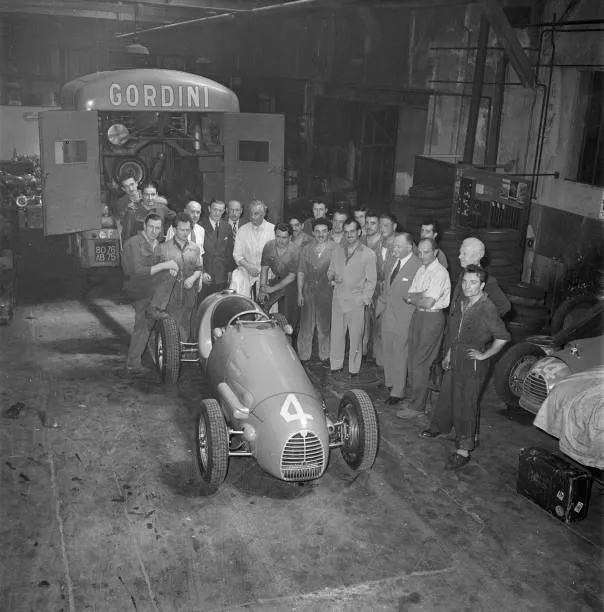
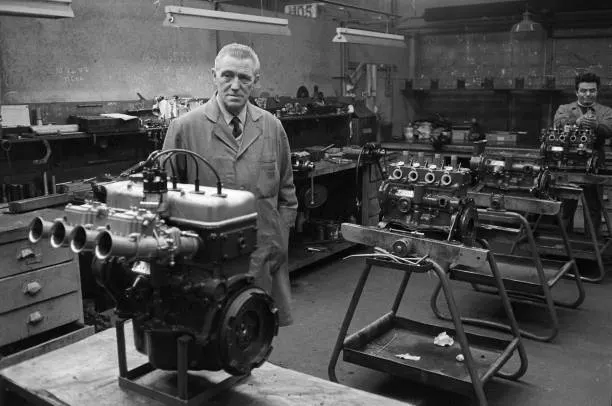
There is a man standing in a workshop on Boulevard Victor in the 15th arrondissement of Paris, sometime in the early 1950s. The floor is concrete. The tools are worn. The parts bin is half empty because there is no money to fill it. Outside, in Maranello, Enzo Ferrari has a factory, government backing, and the best drivers money can buy. In Stuttgart, Mercedes-Benz is spending more on a single Grand Prix weekend than this man spends in a season.
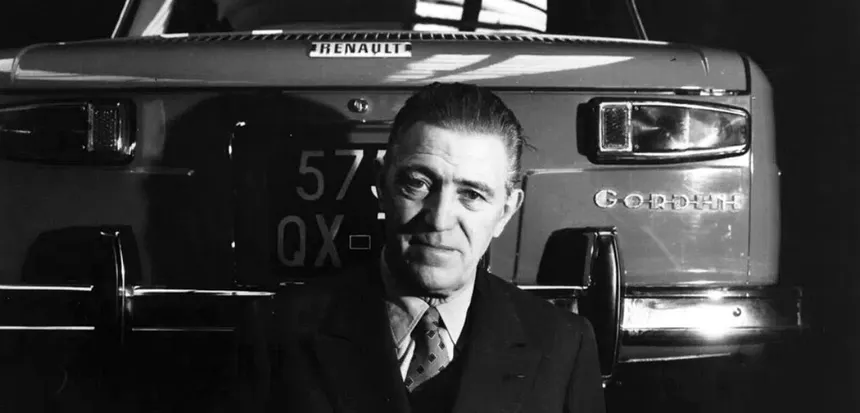
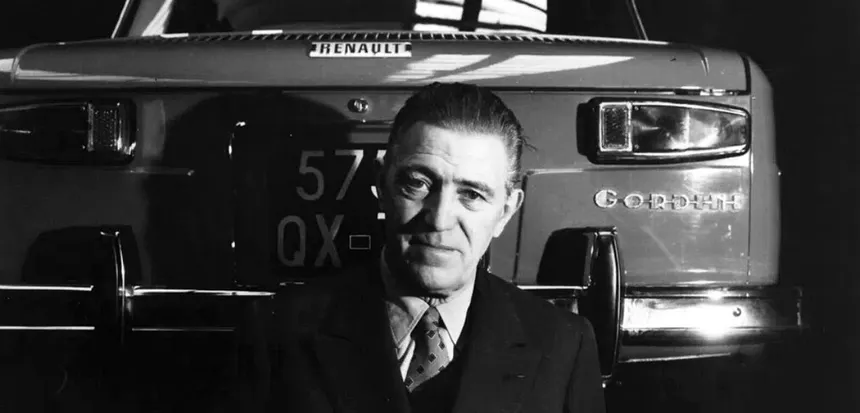
And this man — short, Italian-born, hands permanently stained with oil — is going to take them on anyway. His name is Amédée Gordini. The French press calls him Le Sorcier. The Sorcerer. Because what he does with engines that have no business being fast cannot be explained by engineering alone.
If the history of motorsport were written fairly, Gordini’s name would sit right next to Ferrari’s. It does not, and the reason is simple: Ferrari had money. Gordini had talent. In racing, talent without money gets you close. It does not get you remembered.
Until now.
From Emilia-Romagna to France, With Nothing
Gordini was born Amedeo on 23 June 1899 in Bazzano, a small town roughly fifteen miles from Modena in the Emilia-Romagna region of northern Italy. Same stretch of flat Po Valley farmland, same obsession with engines that produced Ferrari, Maserati, Lamborghini, De Tomaso, Pagani. Something in the water, clearly.
He was orphaned young and started working at eleven. As a teenager, he got a job as a mechanic for Alfieri Maserati — not building grand prix cars yet, but learning how engines breathe, where power hides inside a cylinder, what happens when you push metal past what the manufacturer intended. He served as an infantryman in the Italian army during the First World War. When it ended, he had nothing except a pair of hands that understood combustion engines at a molecular level.
The story of how he ended up in France is almost too good to be true. He went on holiday, ran out of money, met a girl, and stayed. By 1926 he was working at the Cattanéo garage in Suresnes, a dealer for Isotta-Fraschini and Hispano-Suiza, and had changed his name to the French spelling. An immigrant mechanic with no qualifications, no money, no connections. Just an ability to make engines produce power their designers never imagined.
The Simca Years and a Nickname That Stuck
By the mid-1930s Gordini was doing what he would do for the rest of his life: taking cars nobody thought were fast and making them terrifyingly quick. He started with Fiats, modifying and racing them himself. His results caught the attention of Henri Pigozzi, Fiat’s French representative, who in 1934 had moved his assembly operation to Nanterre and founded Simca. Gordini became head of Simca’s racing department.
What followed at Le Mans borders on the absurd. Gordini entered the 24 Hours with a Simca Cinq powered by a 568cc engine — the smallest displacement ever to compete in the race. Five hundred and sixty-eight cubic centimetres. For reference, some modern motorcycles have bigger engines. With that tiny powerplant, Gordini’s cars won their class three consecutive years: 1937, 1938, and 1939, taking the Index of Performance prize in 1938.
Charles Faroux, editor of the newspaper L’Auto and one of the founders of Le Mans, watched Gordini’s miniature Simcas running consistently lap after lap while bigger, more powerful machinery broke down around them. He described what Gordini did as sorcery. The nickname Le Sorcier was born, and it never left.
In 1938, Gordini personally won the Bol d’Or at Montlhéry — a 24-hour race — driving a Simca 8 he had prepared himself. Solo. No co-driver. He covered 2,456 kilometres at an average speed of 102 km/h. Twenty-four hours alone in a modified shopping car. That is not engineering. That is something closer to madness, combined with an intimate understanding of exactly how far a machine can be pushed before it breaks.
Boulevard Victor and the Impossible Dream
The war destroyed the Suresnes workshops. After the liberation, Gordini set up shop at 69 Boulevard Victor in the 15th arrondissement of Paris and started from scratch. In 1946 the first single-seaters bearing Gordini chassis numbers appeared — Fiat-engined open-wheelers that he both built and raced himself.
The driver roster reads like a who’s who of post-war French motorsport. José Scaron won at Nice and Saint-Cloud. Gordini himself won at Marseille, Forez, Dijon, and Nantes. Maurice Trintignant joined. Robert Manzon signed on. And then came Jean-Pierre Wimille.
Wimille was arguably the finest French driver of his generation — a two-time Le Mans winner with Bugatti, a member of the French Resistance who survived the war while fellow driver-agents Robert Benoist and William Grover-Williams were captured and executed by the Germans. Wimille joined the Alfa Romeo works team for 1946-48, dominating the immediate post-war period. He also raced a Gordini, winning at Nîmes and Longchamps in 1947 and at Rosario, Argentina, in 1948.
On 28 January 1949, Wimille was killed during practice for the Buenos Aires Grand Prix at the Palermo street circuit. He was driving a Simca-Gordini Type 15. The car swerved — some reports say to avoid children who had crept onto the circuit — hit a straw bale barrier that launched it into the air, and struck a tree. He died instantly. Had he lived eighteen months longer, he would almost certainly have been the first Formula 1 World Champion. Instead, that honour went to Giuseppe Farina in an Alfa Romeo. For Gordini, it was a blow from which the team never fully recovered. He lost his best driver and one of his closest friends in the same moment.
The Sorcerer Against the Machine
When the Formula 1 World Championship began in 1950, Gordini was on the grid from the very first season. Think about what that means. A workshop in a Parisian side street, with no manufacturer backing, no corporate sponsor, competing against the might of Alfa Romeo, Ferrari, and later Mercedes-Benz. If you know Chris Harris’s line about bringing a knife to a gunfight, this was that — except Gordini had sharpened the knife himself, and occasionally it cut deeper than anyone expected.
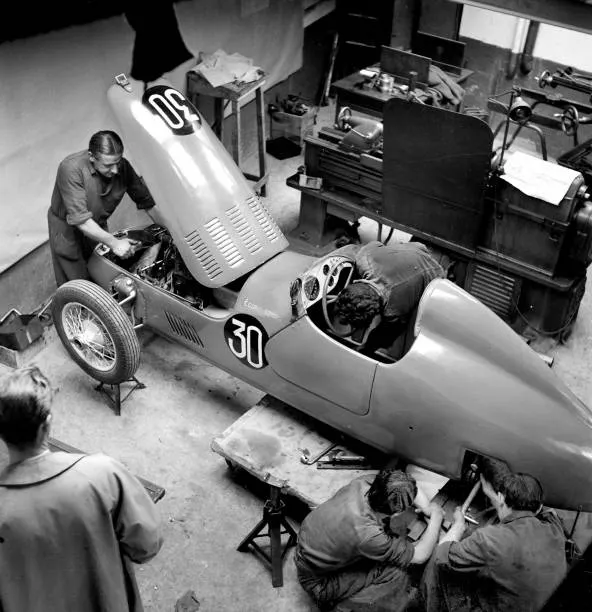
The split with Simca came in 1951 over funding. Gordini wanted to compete at the highest level. Simca did not want to pay for it. He went independent, building his own cars: the Type 16 with a six-cylinder engine, then the Type 32 with a straight-eight. Designed, fabricated, and maintained on a budget that Ferrari would spend on tyres.
Between 1950 and 1956, Gordini entered 40 World Championship Grands Prix, scored two podiums and one fastest lap. Robert Manzon finished sixth in the 1952 Drivers’ Championship. Jean Behra finished third on his Formula 1 debut at the 1952 Swiss Grand Prix. These were not the numbers of a front-running team. But they were the numbers of a team that had no business being anywhere near the points — and kept scoring them anyway.
The moment that defines everything happened on 29 June 1952 at the Grand Prix de la Marne at Reims. A non-championship Formula Two race, but the entry list included the full Ferrari factory team: Alberto Ascari, the reigning world champion. Giuseppe Farina, the first ever world champion. Luigi Villoresi. The best in the world.
Jean Behra, in a two-litre Gordini Type 16, led from the start. Ascari hung on for fourteen laps before pitting to change spark plugs, then handed his car over to Villoresi, who had already retired. Behra lapped the entire field except Farina, who finished a distant second. The French crowd erupted. Motor Sport magazine reported scenes of uncontrolled excitement not witnessed for years. A car built in a workshop on Boulevard Victor had beaten the cars from Maranello.
A week later at the championship-counting French Grand Prix at Rouen, Ferrari arrived with more powerful engines and Ascari, Farina, and Taruffi locked out the podium. Normal service resumed. But Reims had happened, and nothing could undo it.
To put this in perspective: if you are interested in another story of raw talent fighting impossible odds in motorsport during the same era, read what we wrote about the Pegaso Z-102 — another beautiful act of defiance from someone who had no right to be competing and did it anyway.
How the Sorcerer Worked
Gordini was not an engineer by qualification. He was a mechanic, a tuner, a builder. His method did not come from equations on a blackboard. It came from hands inside engines, listening to how they breathe, feeling where power is being wasted. His obsession was specific output — maximum horsepower per cubic centimetre. Not as a philosophical position, but because he could not afford bigger engines.
The drivers who raced for him knew the deal. Behra, Trintignant, Manzon — they all understood that the cars would break more often than they should, that parts were being run to their absolute limits, that there was never enough money for spares. But they also knew that when a Gordini worked, it worked in a way that defied logic. Behra became a national hero in France driving Gordinis. Trintignant started his career there before winning Monaco twice with other teams. Even Gordini’s own son, Aldo, raced one Formula 1 event for the team — the 1951 French Grand Prix.
In 1953, the French government awarded Amédée Gordini the Legion of Honour. An Italian immigrant who had arrived in France unable to speak a word of the language, decorated by the Republic. The citation noted that he had achieved Grand Prix performance from ordinary engines — a feat no one believed possible. The Sorcerer had his official recognition, even if the championship trophies remained out of reach.
From Single-Seaters to Street Cars
By 1957 the Formula 1 adventure was over. Gordini made a brief return that year with a straight-eight engine in the Type 32, but the money simply was not there. The racing team closed its single-seater programme.
What happened next is what separates Gordini from the dozens of small racing operations that simply disappeared. Pierre Dreyfus, the chairman of Renault, offered him a collaboration. Gordini applied his touch to the Renault Dauphine, creating the Dauphine Gordini — 10,000 units produced, significant success in rallying. The partnership worked: Renault provided the base car, Gordini provided the magic.
In 1964 came the car that cemented the Gordini legend for the general public: the Renault 8 Gordini. Gordini took the 1,108cc engine from the R8 Major — a modest 50 bhp unit — and transformed it into a 90 bhp motor using a cross-flow head and twin dual-choke Solex carburettors. Nearly double the power from the same displacement. The R8 Gordini weighed 853 kg and could reach 170 km/h. A four-door rear-engined saloon that humiliated cars costing three times as much.
At the 1964 Tour de Corse, the R8 Gordini finished first, third, fourth, and fifth — competing against the Alfa Romeo Giulia TZ, the Lancia Flavia, and the Porsche 904 Carrera GTS. In 1966 the 1300 version arrived with a 1,255cc engine producing over 100 bhp and a five-speed gearbox, and the Coupe Gordini one-make series was born — the racing school where the best French drivers of the 1970s learned their craft.
At the end of 1968, Amédée Gordini sold a 70% stake in his company to Renault. In February 1969 the operation moved to Viry-Châtillon, south of Paris, into a facility renamed Usine Amédée Gordini. In 1976, the merger with Alpine created Renault Sport. The young engineers Gordini had trained at Boulevard Victor went on to develop the turbocharged V6 that took Renault back to Formula 1 in 1977 and changed the sport forever.
Gordini died on 25 May 1979 in Paris. He was seventy-nine. His cars survive at the Musée National de l’Automobile in Mulhouse — a Type 16 Grand Prix car from 1954, a Type 32 single-seater from 1956, the Gordini 26 S once driven by novelist Françoise Sagan. Museum pieces now, but once the mechanical nightmares of teams with ten times the budget.
The Size of the Fight
The European ecosystem of obsessive, independent car builders in the mid-twentieth century — the world that produced Gordini, that produced men like Ferruccio Lamborghini, whose Miura we have covered in these pages — was a place where talent without capital could still get you to the starting grid. Not always to the top step of the podium, but to the grid. Gordini proved that better than almost anyone.
He never won a World Championship. He never built a road car that sells for millions at auction. He never had a factory with his name in giant letters on the gate. What he did was demonstrate that mechanical genius can compensate for a lack of money — up to a point. That point is where it hurts, because in the end money always wins.
But everything that happens between the beginning and that final point is where the best stories in motorsport live. Gordini’s story lives there. Fifteen miles from where Enzo Ferrari was born, a man with no money built cars that made Ferrari’s team sweat. If you think the history of the motor car is only about winners, you are missing the better half.
His name ended up on the Renault 5 Alpine sold in Britain, where Renault couldn’t use the Alpine name and called it the Renault 5 Gordini.
Check you’re still alive.