
The Lamborghini Miura: The Bull That Invented the Modern Supercar
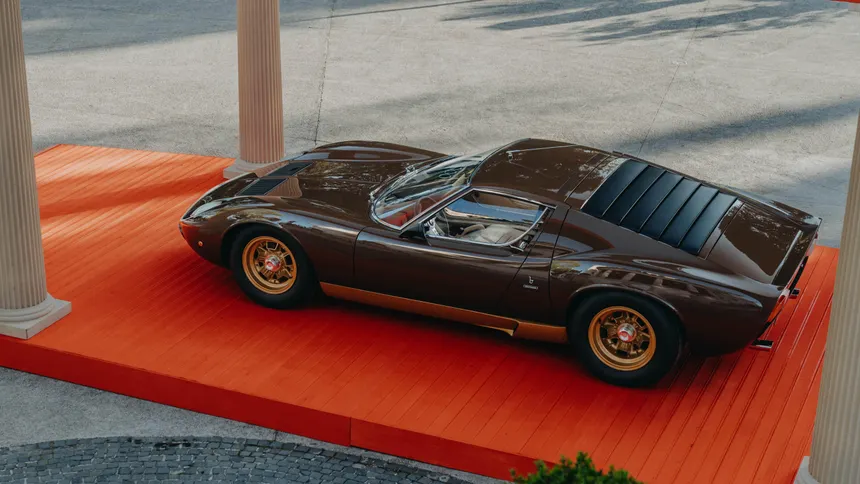
The Lamborghini Miura: The Bull That Invented the Modern Supercar
Every car has a father. But very few cars are the father of everything that came after. The Lamborghini Miura is that car. This isn’t hype. It’s not marketing speak. It’s a verifiable fact: before the Miura, the concept of a “supercar” as we know it today simply did not exist.
Mid-engine layout. Heart-stopping design. Terrifying speed. The kind of presence that stops traffic. Those four things, together, in a road-legal car, came together for the first time in Sant’Agata Bolognese, Italy, in 1966. And the automotive world was never the same.
The wildest part? The Miura was never supposed to exist. Ferruccio Lamborghini didn’t want to build it. His engineers designed it secretly, on their own time, without permission. And when they unveiled it to the world, they created the template for every supercar that followed — from the Ferrari Berlinetta Boxer to the McLaren F1, from the Bugatti Veyron to Lamborghini’s own Aventador.
Sixty years on, half a dozen things about this story are still being told wrong. Let’s go through all of them.
Ferruccio’s Grudge: Another Italian Origin Story
To understand the Miura, you first need to understand Ferruccio Lamborghini. And to understand Ferruccio, you need to know that Lamborghini as a car company was born — like the Ford GT40 — from wounded pride.
Ferruccio was a successful manufacturer of tractors and heating equipment in 1960s Italy. He made serious money and spent it on fast cars — Ferraris, specifically. But he had a recurring problem: the clutches kept breaking.
According to legend — and in Italy, the legends are better than the facts — Ferruccio went directly to Enzo Ferrari to complain. And Enzo, with characteristic diplomacy, told him that a tractor manufacturer had nothing to teach him about building sports cars.
Ferruccio, who had as much pride as money, decided to build his own grand tourer. Not a race car — Ferruccio considered racing an absurd expense — but a road car that would be better than any Ferrari. More refined, more comfortable, better built, without the chronic quality issues that plagued Ferraris of the era.
In 1963, he founded Automobili Lamborghini in Sant’Agata Bolognese, near Bologna. The first car, the 350 GT, arrived in 1964. It was exactly what Ferruccio wanted: an elegant, fast, well-built grand tourer. A gentleman’s car.
But three young engineers on his staff had a very different vision.
The Three Musketeers: Dallara, Stanzani, and Wallace
Gian Paolo Dallara was the chief chassis engineer. He was 29 years old. Paolo Stanzani was a development engineer who had joined on September 30, 1963, barely a month after Dallara. Bob Wallace was a New Zealander working as test driver and mechanic — a guy who had landed in Italy without a word of Italian, chasing a job at Maserati that turned out not to exist. The company had exactly two engineers on the payroll, and they were the first two names on the list.
All three shared an obsession: building a mid-engine road car.
In racing, the mid-engine layout was already standard — F1 had used it since the late 1950s, and cars like the Ford GT40 had proven its advantages in endurance racing. But nobody had put a mid-engine in a street car intended for series production. The idea was considered impractical: too noisy, too hot, too difficult to maintain.
And here’s a detail Stanzani told years later that almost never makes it into print. Since Ferruccio had explicitly banned them from building race cars, what they did instead was take one specific race car and turn its layout into a street car. That car was the Ford GT40, competing since 1964 and about to win Le Mans in 1966. The Miura isn’t vaguely inspired by racing. It’s modeled on a very particular Ferrari-beater built in Dearborn, Michigan.
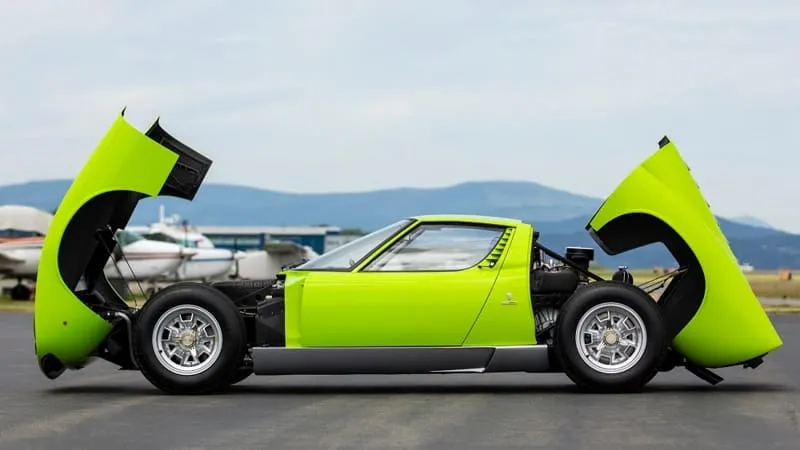
Dallara, Stanzani, and Wallace started working on the project after hours, without Ferruccio’s authorization. They designed a chassis with Lamborghini’s four-liter V12 mounted transversely behind the seats. Transversely — that was the key breakthrough. Mounting a V12 sideways allowed a shorter wheelbase and a more compact, more agile car.
The engine was designed by Giotto Bizzarrini — a former Ferrari engineer who had been part of the famous 1961 walkout from Maranello. Bizzarrini had created Lamborghini’s original 3.5-liter V12, which grew to 3,929 cc for the Miura. It featured dual overhead cams per bank, fed by six Weber twin-throat carburetors, with two valves per cylinder — not four. Counting the four camshafts as four valves is an error that shows up even in serious publications. Americans might recognize Bizzarrini’s name from the Iso Grifo — another car powered by his engineering genius, that one using a Chevrolet V8.
The Bare Chassis That Started a Revolution
The masterstroke was presenting just the chassis — no body — at the Turin Motor Show in November 1965. The naked chassis, with the transverse V12 visible in all its mechanical glory, caused a sensation. It was a sculptural object of engineering: the engine shared its crankcase with the five-speed gearbox, an incredibly compact solution.
And it’s worth saying where that solution came from, because most articles present it as a Sant’Agata invention and it isn’t. Casting engine and gearbox as one unit, sharing a sump and a supply of oil, is what Alec Issigonis’s Mini had been doing since 1959. A British economy car solved the packaging problem for the most expensive sports car in the world, and Lamborghini has never denied it. There would be consequences. We’ll get to them.
The response was so overwhelming that Ferruccio — who, remember, didn’t want this car — had no choice but to greenlight production. Orders started arriving before a complete car even existed.
For the bodywork, Lamborghini turned to Bertone. And Bertone assigned the project to a 25-year-old designer named Marcello Gandini. It was his first major commission. And what he created is, without debate, one of the most beautiful automobile designs in history.
Geneva 1966: The Debut With the Engine Cover Locked Shut
What actually happened at the launch is the best story this car has, and almost nobody tells it.
The Miura P400 arrived at the Geneva Motor Show in March 1966 and flattened the place. Orange, impossibly low, three-deep crowds. And the rear clamshell stayed locked for the entire show.
There was no V12 under there. There was ballast. Nobody at the factory had checked whether the engine fit the bay they’d drawn for it, and it didn’t. Ubaldo Sgarzi, the sales chief, spent the show turning away journalists who wanted to see the powertrain of the car everyone was talking about.
It wasn’t the first time the company had pulled that move, either. Three years before, in Turin, the 350 GTV had been displayed with its engine bay weighted down with tiles ripped out of the factory floor, because Bizzarrini’s V12 wouldn’t fit that one either. Lamborghini still keeps a piece of that flooring.
The orders came in anyway. Twenty thousand 1966 dollars for a car that couldn’t move under its own power.
Gandini’s Design: When Beauty Has an Engine
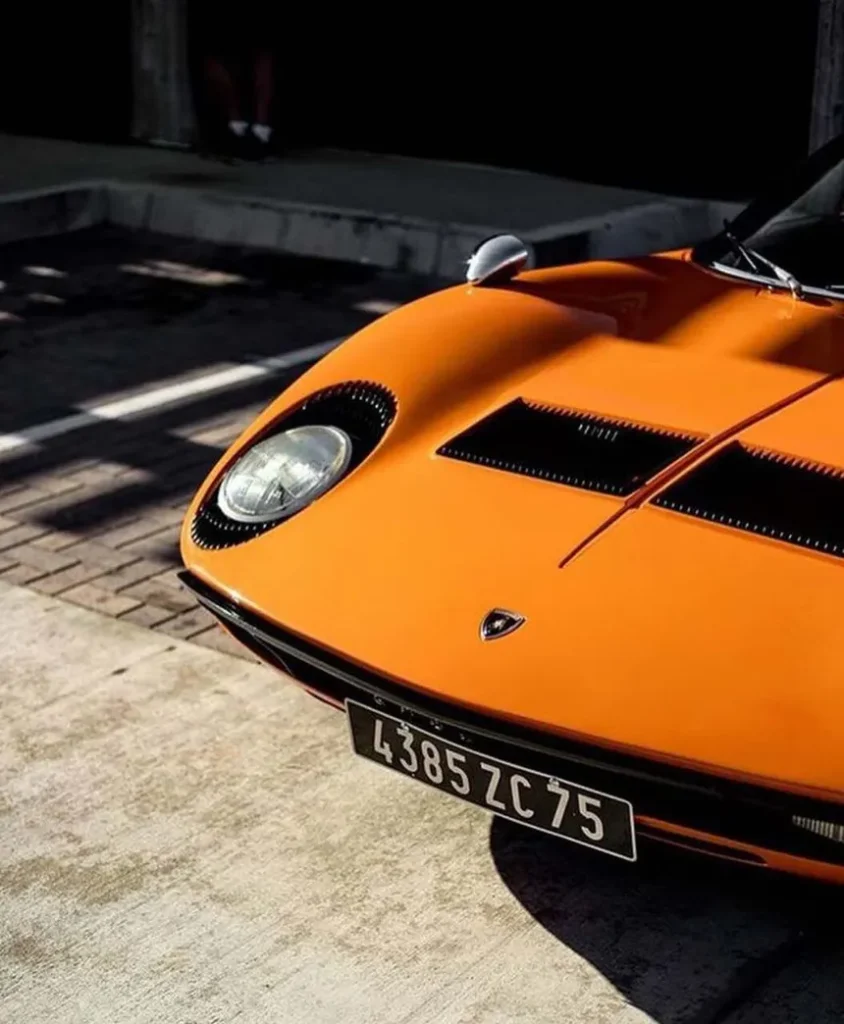
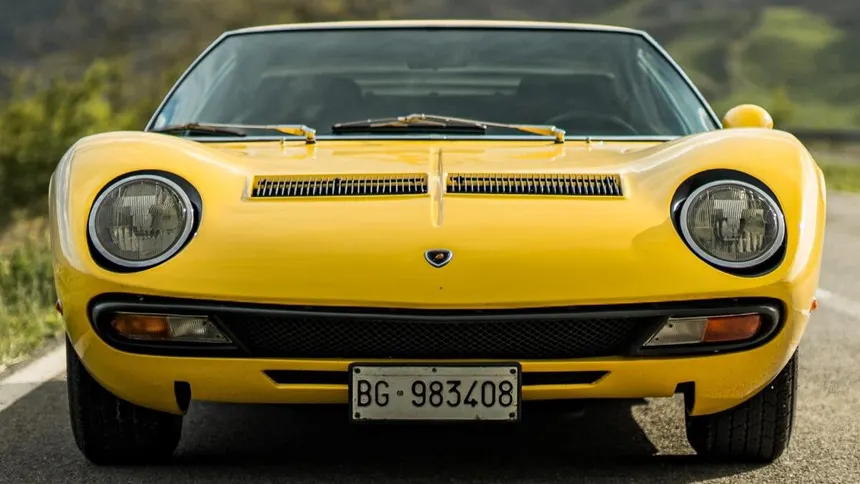
Gandini shaped the Miura with lines that, sixty years later, still look like they’re from the future. The low, pointed nose. The pop-up headlights ringed by those black eyelashes. The sensual curves of the flanks. The rear louvers that reveal the V12 breathing underneath — every line serves a purpose, and every purpose is also beauty.
The car stood just 41.3 inches tall. For a road car in the 1960s, that was radical. Width was generous (69.3 inches) for stability, and the wheelbase (98.6 inches) was short for agility.
Now the detail. Gandini went from first sketches to a finished prototype in roughly three months, and in that window there was neither time nor budget to design bespoke headlamps. So he took the units off a Fiat 850 Spider. And to hide where they’d come from, he ringed them with a black surround, louvered above and below.
Those are the Miura’s eyelashes. The signature detail of the most beautiful car ever built exists to disguise the headlights from a cheap convertible. Sixty years later, owners fight to keep them.
Gandini’s Miura design directly inspired entire generations of designers. He went on to create the Lamborghini Countach, the Lancia Stratos, and the De Tomaso Pantera, among others. But the Miura was his masterpiece. The one that changed everything.
For American audiences who know Gandini primarily through the Countach — the poster car that defined bedroom walls in the 1980s — the Miura is the car that made the Countach possible. Without the Miura’s commercial success proving that extreme mid-engine supercars could sell, Lamborghini never greenlights the Countach.
The Versions: P400, P400 S, P400 SV
The Miura evolved through three main variants:
P400 (1966-1969): The original — Posteriore 4 litri. 3,929 cc V12 producing 350 horsepower at 7,000 rpm. Five-speed manual transmission integrated with the engine crankcase. Claimed top speed of 174 mph. Cars left the factory on Pirelli Cinturato 205VR15 tires, the CN72 developed specifically for the model.
Treat the weight figures carefully, because the number everyone quotes is the factory dry figure: around 2,480 pounds. In running order the scale climbs considerably, and the commonly cited curb weight is closer to 2,850. There’s also a widely repeated claim among collectors, which we haven’t been able to confirm, that the first 125 cars used 0.9 mm steel and are lighter than everything that followed.
The chassis was a steel platform with a central tub providing rigidity, with aluminum front and rear clamshells. Suspension was independent at all four corners with double wishbones and coil springs. Brakes were ventilated Girling discs all around.
P400 S (1968-1971): The improved version, launched at the Turin show in November 1968 — the same show that had hosted the bare chassis three years earlier. The S stands for Spinto, pushed. Power rose to 370 hp through revised carburetors and optimized valve timing. Interior received better sound insulation and higher-quality materials. Power windows became standard. Chrome window surrounds outside. The P400’s known weaknesses were addressed. Approximately 338 units were built — more than double the original model, in half the time.
P400 SV (1971-1973): The definitive version. Spinto Veloce. Peak power reached 385 hp, with a claimed top speed north of 180 mph and the standing kilometer covered in a shade under 24 seconds. Rear suspension completely redesigned with new pickup points and arms, chassis selectively stiffened, and a rear track nearly 130 mm wider: rear wheels went from seven to nine inches, on 255-section tires. Gandini came back to flare the rear arches, redraw the taillights and work a radiator intake into the front lid.
And here’s a correction that a lot of published accounts need, this one included in its previous form. The SV did not have a dry sump. Late SVs got a split sump, which is a different thing entirely: it separated engine and gearbox lubrication so each ran its own oil, and so gearbox debris stopped circulating through the engine. Until then — a direct consequence of that Mini-derived packaging — every Miura shared oil between engine and transmission, and it demanded relentless oil changes. The most-cited source puts the split sump on the last 96 SVs; others put the number considerably lower. Exactly one Miura ran a true dry sump, and it wasn’t a production car.
The SV’s Eyelashes, and the One Car That Kept Them
With the SV, the eyelashes disappeared. The usual explanation is a styling call by Gandini, who did rework the nose around their absence.
The real reason was different. Each eyelash was assembled and aligned by hand, piece by piece, and it ate production time Ferruccio wanted back. They were deleted on cost. The most beautiful car ever built lost its most recognizable detail over a question of minutes per unit on the line.
With one exception. Exactly one Miura SV left the factory wearing them: chassis 5028, red, which ended up with Ferruccio Lamborghini and sits in the family museum today. The romantic version says the boss specified them for his own car. At least one account suggests the car was originally ordered by a different customer and acquired by Ferruccio afterward, which would make the eyelashes somebody else’s request entirely. That one only the Sant’Agata archive can settle.
The Jota: Why the Wildest Lamborghini Has a Spanish Name
Bob Wallace was convinced the Miura could race, and in 1970 he built himself one on chassis 5084. Stripped to roughly 800 pounds under a production Miura, with much of the steel replaced by Avional, the frame drilled for lightness, the fuel moved into tanks in the rocker panels, Plexiglas instead of glass, and the engine taken to somewhere between 418 and 440 hp at 8,800 rpm. With a dry sump — this one really did have one.
He called it the Jota. The name doesn’t come from bulls, or from Italian, or from any internal factory code. Wallace was targeting homologation under the FIA’s Appendix J, the section of the sporting code defining competition car specification. Since the letter J doesn’t exist in Italian, he reached for the Spanish pronunciation.
The wildest Lamborghini ever built is named that because a New Zealander read an FIA rulebook in Spanish. At a company already naming cars after Spanish bull ranches, it fit perfectly. Half a century later, enthusiasts say “Jota” every day without knowing whose language they’re speaking.
And there’s a detail that finishes the story off. The Jota never raced, and Ferruccio isn’t why. It couldn’t. Group 4 homologation required 500 cars built in twelve consecutive months, and Miura production never reached half that in any year of its life. The math ruled it out before the first part was cut, and everyone knew it. Wallace built it anyway.
The car was sold through the InterAuto dealership in Brescia to Dr. Alfredo Belponer, and to issue an invoice the factory had to assign it a chassis number from the SV continuation series, because on paper the car did not exist. In April 1971 it crashed and burned to nothing on Brescia’s ring road, still closed to traffic. Nothing usable survived of the only Jota ever built.
The demand it created produced the SVJ. How many were built while the Miura remained in production is unresolved: counts of four, five, six and seven circulate, with chassis lists that don’t agree with each other. One ended up in the Shah of Iran’s palace under armed guard, was seized after the revolution, resurfaced in Dubai in 1995, and sold at auction in 1997 to Nicolas Cage for $490,000.
Total Production
The usual split runs like this:
- P400: ~275 units
- P400 S: ~338 units
- P400 SV: ~150 units
Total: 763 cars between 1966 and 1973, though some counts reach 764.
And there’s a third figure almost nobody cites, which is the most interesting of the three. Researchers who have cross-referenced the historic chassis registries conclude the number of physically distinct cars is lower — around 741 — because the factory rebuilt several crashed examples and issued them new numbers. The same automobile has been counted twice for decades.
Every Miura was essentially hand-assembled in the small factory at Sant’Agata Bolognese, by people learning the job as they went.
The Flaw Nobody Mentions
The Miura was designed without a wind tunnel. With weight distribution around 42/58 and a single fuel tank under the front lid that emptied as you drove, the front end went light at speed. Approaching the claimed top figure, the nose got vague in a way that put a lot of owners off ever verifying the brochure number.
The SV reduced it with a small chin spoiler and revised geometry. Reduced, not solved. The Miura’s beauty and its aerodynamics owed each other nothing.
The Name: Fighting Bulls
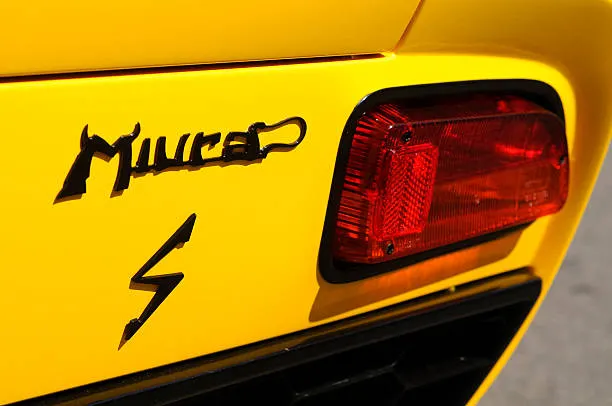
The name “Miura” comes from the Spanish ranch of Don Eduardo Miura, at Zahariche in Lora del Río, outside Seville, famous for breeding some of the bravest and most dangerous fighting bulls in history. Ferruccio Lamborghini was a Taurus by zodiac sign and had a passion for bulls. Nearly every Lamborghini model carries a name related to bulls or bullfighting — Diablo, Murciélago, Aventador, Reventón — and the Miura was the first to establish that tradition.
For Americans less familiar with Spanish bullfighting culture, think of the Miura bulls as the heavyweight champions of the ring — the ones that even the most experienced matadors feared. Naming the car after them was a statement of intent.
And this is where writing from Spain earns its keep, because here you can pick up the phone and call the source.
The version repeated by the international press says Ferruccio traveled to Spain, fell for the bulls, and agreed with Don Eduardo Miura on using the family name for the car. The dates move around: some accounts put the first trip in 1962, and credit it with the raging bull badge too; others cite 1966 and the agreement over the name.
Eduardo and Antonio Miura, Don Eduardo’s sons, tell it differently. They say Ferruccio Lamborghini never asked their permission. They point out that the ranch’s brand, mark and colors are registered, and that the family never pursued a claim. Their father dates the Zahariche visit to 1968, with the cars already there — a Miura and an Islero — and a photograph of that meeting exists. Asked what Ferruccio came for, the old rancher is blunt: publicity and photographs.
Somebody should reconcile the Sant’Agata archive with the memory at Zahariche, because right now they don’t match.
What isn’t in dispute is the other half, and it’s heavier still. The Islero, launched in 1968, is named after the Miura bull that killed the matador Manolete at Linares in 1947. Ferruccio named two consecutive cars after a Spanish ranch and after the deadliest animal it ever produced.
Lamborghini closed the loop in 2016, driving a yellow Miura SV from the factory museum all the way to the gates of Zahariche, escorted by Huracáns and Aventadors. They called it Back to the Name. Sixty years after Geneva, the name is still Spanish and the ranch is still in business.
The Legacy: DNA of Every Supercar
The Miura established the format that would define the supercar for the next six decades: high-performance mid-engine powertrain, extreme and low design, two seats, top speed far beyond what any public road allows, visual presence that draws crowds, limited production.
Every supercar that has existed since 1966 — every mid-engine Ferrari, every subsequent Lamborghini, every McLaren, every Pagani, every Koenigsegg — owes something to the Miura. It was the car that proved the mid-engine configuration wasn’t just viable in a road car but was superior in every aspect that matters: weight distribution, agility, stability, and the ability to generate pure, visceral desire.
Ferrari didn’t answer with a mid-engine road-going twelve until the 365 GT4 BB, shown at Turin in 1971 and on sale from 1973. Five years of daylight, handed to a company that had existed for three years when it showed that chassis.
For the American market specifically, the Miura’s influence runs deeper than many realize. The De Tomaso Pantera — the mid-engine Italian-American hybrid that Ford sold through Lincoln-Mercury dealers starting in 1971 — owes its fundamental concept to the Miura proving that a mid-engine exotic could be commercially successful.
And one more thing came out of this car: a word. Supercar is generally credited to British journalist L. J. K. Setright, who applied it in Car magazine to this machine. A term an entire industry now rests on was coined to describe a Lamborghini that had been displayed full of ballast.
The Bottom Line
The Lamborghini Miura isn’t just another classic car. It’s the car that defined an entire category. The one that proved three young engineers with a brilliant idea could create something that would change the automotive industry forever — even against their own boss’s wishes.
Born from rebellion. Designed by a 25-year-old genius. Named after Spain’s bravest fighting bulls.
And it isn’t a perfect car, which is exactly what makes it enormous. The nose went light because nobody put it in a wind tunnel. Engine and gearbox shared oil because that was cheaper, copied off a British economy car. It debuted in Geneva stuffed with ballast. It wore Fiat headlights hidden behind black louvers. And we still don’t know for certain how many were built.
That car could not happen today. It wouldn’t survive the second product validation meeting, and the engineer who proposed it would be in a conference room explaining why he went around the process. What makes the Miura great isn’t that it was perfect. It’s that it got built before anyone had time to stop it.
763 units — or 741, depending who’s counting. Sixty years of influence. The father of every supercar.
All because three young guys stayed late at the factory and dreamed of something nobody thought was possible.
Check you’re still alive.
9 thoughts on “LAMBORGHINI MIURA”